Categories
Living in Society

Community Volunteer

Trail walking on Nov. 22, 2025.

When I became an adult, married, and settled into steady work, it was assumed I would volunteer in the community. The volunteer impulse has its roots in the industrial period after the Civil War. People used less time to produce enough money with which to live our lives. In more modern terms, we could pay for things like our child’s college education without sacrificing a lot at home.

Perhaps the most prominent example was the robber baron Andrew Carnegie whose expansion of the steel industry made him one of the richest Americans and enabled his philanthropy to fund a number of public libraries, among other things. “The duty of the man of wealth,” Carnegie said, is “to consider all surplus revenues which come to him simply as trust funds, which he is called upon to administer . . . in the manner which, in his judgment, is best calculated to produce the most beneficial results for the community.”

I didn’t have “surplus revenues,” yet worked in jobs that created enough money to pay basic living expenses with a bit leftover. While there were limits on potential income, I was afforded regular free time and expected to use some of it to volunteer in the community. My volunteerism really took off when we moved to Big Grove Township.

I differentiate the types of volunteer work I have done since 1993. There is community work: membership on the home owners association board, election as a township trustee, and serving on the board of a senior citizen’s group. There is also what I call advocacy work: serving on the boards of peace-related organizations, politics, and two different county boards. Each had something to contribute to society. I talk about community volunteer work in the rest of this post.

Within the first year we were in our new home in Big Grove Township, I was asked to join the volunteer home owners association board and did. Any monetary considerations were insignificant. A regular person does not volunteer in the community for money. Part of living a sustainable life in rural areas is contributing to the general well-being, I believed. I felt blessed and had to give back to the community in which I lived.

Home owners’ associations get a bad rap. In our case, we managed the association like a small city. We provided a public water system, sanitary sewer district, road maintenance, refuse hauling, and real estate sales and purchases. Over time, we upgraded the roads from chip and seal to asphalt, dealt with changing government standards related to arsenic in drinking water, reduced the number of wells from three to one, complied with changing Iowa Department of Natural Resources standards for wastewater treatment plant effluent, handled a lawsuit, and coordinated activities like road use and maintenance with neighboring associations. If the board doesn’t do these things, they don’t get done. Everyone is the better for such volunteer boards. I served, off and on, for over 30 years. This was the beginning of a long period of volunteering in the community.

In 2012, when only one candidate was running for two township trustee positions, I ran a write-in campaign and won the election. Being a township trustee included managing emergency response and a volunteer fire department with other townships and the nearby city of Solon. Toward the end of my tenure, we formed a new entity to manage these functions. We maintained the local cemetery and supervised a pioneer cemetery where the first person to die in the township was buried. This work helped me understand how tax levies work and how they were used to support things the county did not, things like a small fire department or saving someone’s life in an emergency. There was only a single conflict during my time as a trustee, about the main cemetery. All the trustees showed up at the cemetery to resolve a dispute over a burial plot. No one wanted the job of township trustee and someone had to do it, so I stepped up.

When the local senior citizen’s group had an opening on their board, I volunteered and became its treasurer. This lasted about two years and provided insight into this segment of the community. Everything we did, from providing community meals, to giving home-bound people rides to medical appointments, to arranging outings around eastern Iowa, served an often-neglected segment of the population. It was a great opportunity to learn about the life of our senior citizens before I became one myself.

I am satisfied this activism did some good. I still believe it is important to stay engaged in the community.

Categories
Environment

Water Quality

Public water system well water treatment building.

The annual meeting of my home owners association last summer was good. Thanks to all of our board members for their volunteer work. It was a pleasant evening in Randall Park. As is usual, very few members showed up for the picnic-style meal and conversation.

We discussed the association water system and the need to meet new compliance standards. The most recent compliance issue is inventorying the type of pipes bringing public water from the well to and inside our homes. I began following our public water system shortly after we moved here in 1993. We comply with new numbers as they come along. When we cannot get into compliance, we make an investment in extraordinary measures. For example, we spent $400,000+ to comply with revised arsenic standards.

I said this at the meeting and it bears repeating:

The water coming out of the well house into the community water pipes is fit to drink and use. It meets state and federal standards for a public water system. The board sent our annual water quality report in the last mailing. Read it!

We talked about water softeners. When Bob was president, he announced that water softeners were no longer necessary after installation of the new arsenic treatment facility. I’m not sure that information was adequately distributed at the time. However, the quality of water in a home is a matter of personal preference and expense.

Is the water delivered to our homes potable without treatment? Yes, it is. We have data to back that up. Do you want to wash your white clothes in untreated water? Maybe, maybe not. Since the new water treatment system was installed, there have been surges with heavy concentration of iron in it. A whole house filter combined with a water softener buffers users against such anomalies.

One set of data that assists in decisions about whether to treat water in our homes is a water hardness test. Those are locally available, usually for no cost, plus a volunteer in the association is willing to test your water without charge. If you have questions about using a softener, that is a beginning place.

The wastewater treatment facility was built in 1994. While it was maintained as things broke, there is a significant project in the near term future of refurbishing the physical plant. Chloride compliance is a different question. The reason for all the attention to chlorine and salt usage is in pursuit of a reduction in the amount of chloride entering the wastewater stream. Hopefully we can get chloride numbers into compliance and avoid doing something to divert effluent flow from Lake Macbride to somewhere else more acceptable to Iowa Department of Natural Resources.

Here is some additional information:

Iowa’s recent inventory of public water supply systems was 1,838. The percentage of systems in compliance with all health-based standards in 2022 was 96.2%, while the percentage of population served by systems compliant with all health-based standards was 98.9%. Not perfect, but good.

The other segment of well water, which is significant in Iowa, is the use of private wells for household water needs. Private wells fall under the jurisdiction of the Iowa Department of Natural Resources. There is a recommended testing and treatment program for private well owners that includes free annual testing, and money for shock chlorination, well plugging, well reconstruction, and the like. There is also a fully developed program on their website. I couldn’t find information about the level of compliance with the voluntary standards.

They say water is life, and it really is. It seems important to know what the standards are and whether what comes from the tap is safe to drink. In our community we invested a lot to make sure it is.

Categories
Living in Society Sustainability

More About Groundwater

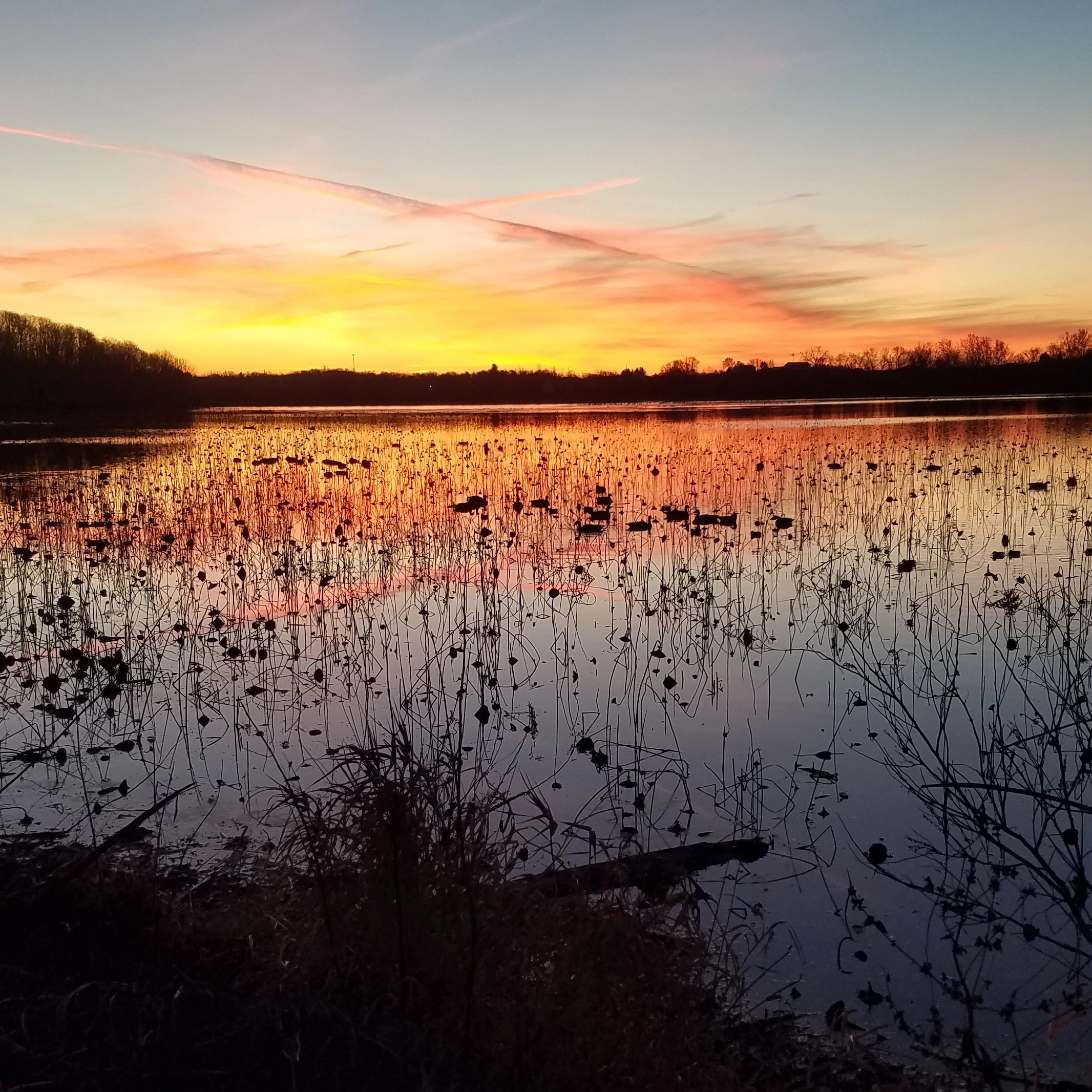
Waterfowl swimming in dawn’s light on Dec. 7, 2023.

The nearby City of Solon contributed about $1,000 to a four-year study of the Silurian Aquifer. By comparison, The U.S. Geological Survey contributed $153,000, Johnson County contributed $310,700, and the City of Marion, much larger than Solon, and a subject of the 2011 Silurian Aquifer study, didn’t give one penny. Johnson County is hosting the study and expected to eat cost overruns of about $50,000 thus far, Josh Busard, Director of the Johnson County Planning, Development and Sustainability Department said in a meeting I had with him yesterday.

I’ve been following sustainability of the Silurian Aquifer, where much of east-central Iowa draws groundwater, for almost 20 years. The meeting with Busard was prompted by County Supervisor Rod Sullivan after I sent him a link to this post. After the meeting, the good news is there is plenty of groundwater for the next couple years. Cut to the chase: Y’all should be conserving water where ever you live. The study is about a year from completion, said Busard.

The study is important locally because Solon, Tiffin, and North Liberty are among the fastest-growing cities in the state. Solon alone grew 50 percent in the 2020 U.S. Census. If Solon does nothing more than build out already approved subdivisions within city limits, it could easily add another 750 to 1,000 residents. That’s not to mention the many subdivisions surrounding the city. Each new person will bring increased demand for water. The entire area draws from the Silurian Aquifer.

I have a lot to say about what the study does and doesn’t do. I’ll save that for another post.

The main outcome of my meeting was to get up to date on what the county is doing. It is always positive to find someone else working on the same issues. We had a good conversation. Busard sent me some public documents to which I link below. If interested in the sustainability of the Silurian Aquifer, I recommend you read them.

Executive Summary for the Board of Supervisors.

Exhibit A to Scope of Work Agreement.

U.S. Geological Survey PowerPoint on the Johnson County Silurian Groundwater Model.

Read my previous post, “Enough Groundwater?” here.

Thanks for reading.

Categories
Living in Society Sustainability

Enough Groundwater?

Community well.

Will the Silurian Aquifer have enough water to support the population that draws from it? Answers to that question are a bit sketchy due to infrequent research into groundwater projections. A 2011 study published by the Iowa Department of Natural Resources had this to say about nearby Coralville, which draws water from the Silurian Aquifer.

The City of Coralville may have to limit its future withdrawal of water from the Silurian aquifer to maintain the sustainability of the resource. Contingency plans should be prepared by the City of Coralville to evaluate alternative water sources.

Groundwater availability modeling of the Silurian Aquifer in East-Central Iowa, November 2011.

Read that quote again and say after me, “Yikes!”

Last summer, water usage on our community’s public water system surged with the drought. We are also on the Silurian Aquifer. So much more water was used during the worst days of drought the well faltered. We instituted voluntary conservation practices and the issue resolved. Usage dropped by 26 percent the following month. The question repeats itself. Will there be enough water in the aquifer?

In 2006 a similar study was published by the U.S. Geological Survey. While I was on the board of health, we reviewed it, and saw it’s conclusion that until 2025, projections indicated there would be enough water to serve the population. That was good enough for the Public Health Department and the Board of Supervisors. It may be time for a new survey, and perhaps one of the involved entities has already undertaken it. I hope so. The message was clear in 2011: decrease reliance on the Silurian Aquifer.

Things have shifted. Two of Big Grove Township’s neighboring cities, Tiffin and North Liberty, are among the fastest growing in Iowa. All those people will need water and their public water systems draw from the Silurian Aquifer. Similarly, there has been an exodus of population from rural parts of the state with many moving to urban areas where there are jobs, healthcare, and commerce. This also creates more localized demand for groundwater. Finally, our rivers have been a source of drinking water, as they are in Iowa City. Surface water quality in Iowa continues to get worse with extractive agricultural operations going on in almost every square inch of the state. For how much longer can cities rely on river water for humans to use? Drawing more from the Silurian Aquifer may not be a reasonable alternative when Coralville is being told to make other plans.

My point in this post is ground water is not a limitless resource. We should each be taking steps to minimize household use and if on a public well, use more of our water during off peak hours. The talk about water used for flushing the toilet, watering the lawn, and fixing household leaks is not a liberal conspiracy. Conservation benefits everyone.

We don’t know if there will be enough water for human populations. We cannot live without adequate water and our scientists and governmental organizations should make sure the projected usage models are accurate, and then work on solutions to shortages. If the Silurian Aquifer goes dry we are in for a wake up call. I predict it won’t be pleasant.

Editor’s Note: I checked with the county and, in fact, a new study of the Silurian Aquifer is in progress. Looking forward to reading it when finished.

Categories
Environment

Iowa’s Algae Blooms

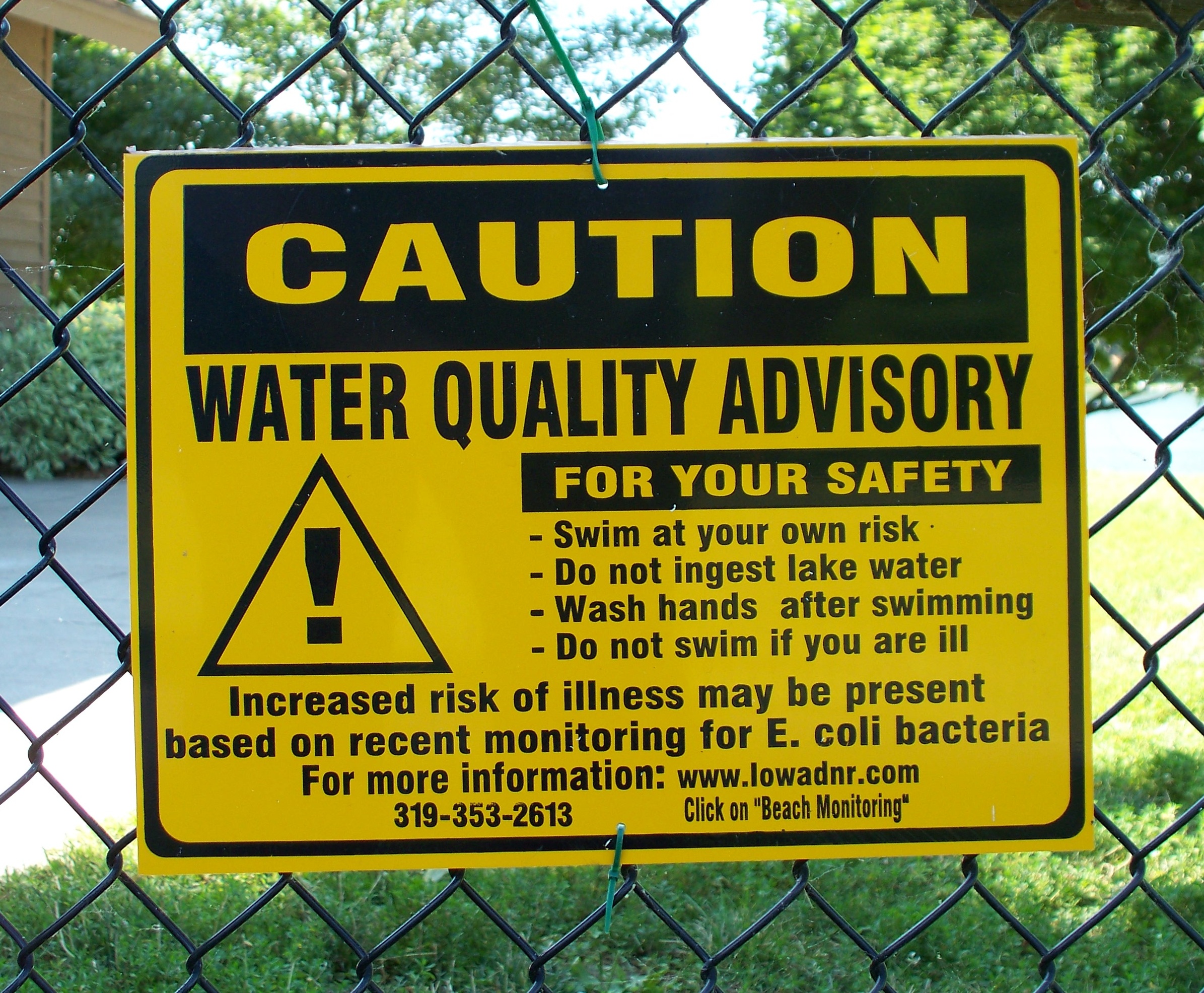
Bacteria Notice on Lake Macbride

Iowa recreational lakes have become a nutrient-rich soup in which blue-green algae thrives. The Iowa Environmental Council won’t say what I will: nutrient runoff from agriculture, and to a much lesser extent from home lawn applications, is a key ingredient in this toxic soup.

Algae can produce microcystin bacteria, which is toxic to humans and animals, and is only intermittently monitored outside Iowa DNR beaches. That means people who participate in low-impact water sports, like canoeing and kayaking may not get sufficient warning of the presence of microcystin bacteria.

While adventurers develop protective safety protocols for dealing with the unknown, the end result of recent warnings of elevated levels of bacteria was a scene where the homes of affluent locals looked on an abandoned beach on a brilliant summer day.

Cottage Reserve from Lake Macbride Beach July 14

 The Iowa Environmental Council made this press release on Friday:

Toxic algae blooms pose threat to human, animal health

DES MOINES– Summer is in full swing, and many Iowans are heading to the state’s lakes to swim, paddle, relax and cool off with family and friends. However, many Iowans are being greeted by an unwelcome sight at their favorite swimming spots: toxic blue-green algae blooms.

This type of algae, caused by a combination of high levels of phosphorus pollution and increased temperatures can produce harmful microcystin toxins that can make people sick and be deadly for dogs, livestock and other animals.

The Iowa Department of Natural Resources (DNR) has posted 14 swimming advisories cautioning Iowans to stay out of the water at 11 different State Park beaches so far this summer due to high microcystin levels. Independence Day weekend, one of the busiest outdoor recreation weekends of the year, the DNR posted microcystin warnings at five Iowa beaches – the worst week yet. Included on this summer’s list are Lake Darling, Pine Lake, Red Haw Lake and Twin Lake West beaches – all first-time toxic blue-green algae offenders.

“The threats posed by toxic blue-green algae blooms are serious,” said Water Program Director Susan Heathcote. “Iowans need to be aware of this problem, the health risks, and know how to recognize and respond to toxic blue-green algae blooms.”

Toxic blue-green algae blooms create green, murky water, visible surface scum and a foul odor. The blooms can spread across the water but tend to accumulate in shoreline areas. Beach warnings are posted by the DNR when microcystin levels exceed 20 ug/liter, a guideline established by the World Health Organization. Contact with water at or above this level can result in breathing problems, upset stomach, skin reactions, and even liver damage. Inhaling water droplets containing toxic blue-green algae can cause runny eyes and nose, cough, sore throat, chest pain, asthma-like symptoms, or allergic reactions.

After tracking microcystin poisoning cases in Iowa as part of a national pilot project, Iowa’s public health leaders recently announced plans to add “microcystin-toxin poisoning” to the list of conditions doctors must report to the Iowa Department of Public Health.

“To rid Iowa of toxic blue-green algae blooms and ensure our lakes are safe and healthy for our families and pets, we must improve our water quality and reduce phosphorus pollution caused by agricultural and urban runoff and wastewater treatment systems,” Heathcote said. “This pollution not only puts our health at risk, but also has negative economic impacts on communities that depend on lake tourism, as well as our environment.”

The DNR monitors 39 State Park beaches for microcystin on a weekly basis between Memorial Day and Labor Day, issues advisories and posts warning signs when conditions are unsafe for swimming. The weekly beach advisories can be found on their website. Last summer, the DNR posted 22 beach warnings for high levels of microcystin during the recreational season.

At this time, DNR only monitors State Park Beaches, so if you swim at other public or private beaches you need to be aware of the potential for toxic blue-green algae this time of year. Not all blue-green algae is toxic, but when in doubt, stay out of the water and call the DNR Beach Monitoring Hotline at 515-725-3434. If you think you or your pets may have been exposed to toxic blue-green algae, thoroughly wash it off with fresh water. If you or your pet are experiencing symptoms associated with high microcystin levels after suspected exposure, seek medical or veterinary care immediately.

Records showing State Park beaches with documented Microcystin levels exceeding 20 ug/L dating back to 2006 are available on the Iowa Environmental Council’s website.

~ The Iowa Environmental Council actively works in public policy to provide a safe, healthy environment for all Iowans. The Council focuses on public education and coalition building to give Iowans a voice on issues that affect their quality of life and to protect Iowa’s natural resources for current and future generations. For more information, visit iaenvironment.org.

~ Written for Blog for Iowa

Categories
Environment

We Have a Water Problem

Iowa Row Crops
Iowa Row Crops

DES MOINES—”We have a water problem,” Mayor Frank Cownie said at the state convention of the League of Women Voters of Iowa on Saturday.

Like all municipalities, the Des Moines Water Works must comply with the Safe Drinking Water Act and the Environmental Protection Agency standards for maximum contaminant level in water processed and sent into its system. Peak nitrate levels in source waters have taxed the city’s ability to meet its obligations.

The problem is nitrates in the water, however, the bigger problem for Des Moines is nitrate discharge into drainage districts in Buena Vista, Calhoun and Sac Counties which feed its source.

“The current denitrification technology is outdated and cannot continue to operate with rising nitrate levels and increased customer demand.” according to the Des Moines Water Works. “Continued high nitrate concentrations will require future capital investments of $76-183 million to remove the pollutant and provide safe drinking water to a growing central Iowa.”

Nitrate runoff is an unrecognized environmental cost of farm operations. The lawsuit filed in the case asserts that the drainage districts named are point sources of nitrate runoff and should be regulated as such.

There is a lot of chatter about the lawsuit the Des Moines Water Works filed to establish a cost to people who use nitrogen fertilizer that contributes to water pollution. Here is their rationale from their website:

  • Des Moines Water Works filed a complaint in Federal District Court – Northern District of Iowa, Western Division, on March 16, 2015.
  • The complaint seeks to declare the named drainage districts are “point sources,” not exempt from regulation, and are required to have a permit under federal and Iowa law.
  • The complaint states that the drainage districts have violated and continue to be in violation of the Clean Water Act and Chapter 455B, Code of Iowa, and demands the drainage districts take all necessary actions, including ceasing all discharges of nitrate that are not authorized by an National Pollutant Discharge Elimination System (NPDES) permit.
  • In addition, damages are demanded to Des Moines Waters to compensate for the harm caused by the drainage districts unlawful discharge of nitrate, assess civil penalties, and award litigation costs and reasonable attorney fees to Des Moines Water Works as authorized by law.
  • Des Moines Water Works’ mission is to provide safe, abundant and affordable water to our customers. Des Moines Water Works is fighting for the protection of customers’ right to safe drinking water. Through this legal process, Des Moines Water Works hopes to reduce long-term health risks and unsustainable economic costs to provide safe drinking water to our customers, via permit and regulation of drainage districts as pollutant sources.
  • Continued insistence from state leaders that the voluntary approach of the Iowa Nutrient Reduction Strategy is working does not give solace to the 500,000 central Iowans who must now pay to remove pollution from their drinking water.

While this lawsuit is specific to Des Moines, there are a lot of unrecognized environmental costs in diverse business operations. Set all the partisan chatter about this issue aside and the fact remains there is a tangible cost, that someone should pay. It is a cost measured in risks to human health, environmental degradation and inadequate financial models in business.

Thanks to the Des Moines Water Works, we can begin to put a dollar figure to it.