Categories
Environment

Introducing Myself, Again

Leftover seedlings

This is the text of an email sent this morning to the small group of Climate Reality Leadership Corps participants I am mentoring this spring. Every time I introduce myself, it seems like I am re-inventing who I am. Eventually all the stories will add up.

Welcome to the spring 2021 Climate Reality Leadership Corps training. I am Paul Deaton and will be your mentor. We’re looking forward to your participation!

Before I get too far, if you received this email and no longer plan to participate in the training just hit reply and let me know. As of last night’s mentor training, more than 4,700 people had RSVP’d for the training. There are 300 mentors.

I will be your mentor for both the training and as you begin to perform acts of leadership after the training. I use the pronouns he/him. I was born in Iowa and now live in a rural, Eastern part of the state.

I participated in the first Earth Day on April 22, 1970 and have been working on environmental issues, in addition to a career, ever since. I completed a career in transportation and logistics in 2009 and fully retired during the coronavirus pandemic. I attended the 2013 Climate Reality Leadership Corps training in Chicago and was a mentor at the 2015 Cedar Rapids, Iowa training. For me, Climate Reality has been a portal to diverse climate action all over the planet. I learned a lot and am here to help you do the same.

In retirement I spend more time writing. I started a blog in 2007 and am currently working on a book-length project. I am an avid gardener and last night I had to put a space heater in my small, portable greenhouse because of a frost warning. I start most of my own seedlings and spend a lot of time in my kitchen garden.

During my career I spent time in Texas, which is where everyone in our small group lives. One consulting project was near Sweetwater where I stayed on a 5,000 acre cotton farm during the rattlesnake roundup. (All the motel space was booked). I learned Texas is a large, diverse state. I look forward to getting to know you and other group members.

I plan to follow the lead of the Climate Reality staff as a mentor. I’m here to help as much or as little as you want. The Climate Reality staff continues to release information about the training and will up until the first day. As they do, I’m reading it and asking questions to prepare for our experience. One of the main things I will do is host the small group sessions via Zoom after each of four streamed general sessions. I want to assure you everyone’s voice is welcome to be heard during our small group meeting.

If you have questions, email is the best way to reach me. As the training takes shape, I may send an additional group email with any update. Staff will be emailing a lot, so I will keep mine to a minimum.

I hope you are as excited as I am for the training. Let me know how I can help.

Categories
Environment

Solar Arrays and Politicians

Sunset in Colorado Springs on July 11, 2011

Earth Day is coming and politicians have been reviewing Iowa’s solar electricity generation capacity. State Rep. Ras Smith posted about his trip to a solar array in Decorah. Iowa Lieutenant Governor Adam Gregg, Senator Joni Ernst, and Rep. Mariannette Miller-Meeks attended the dedication of a solar array in Wapello last week. The support for solar was bipartisan.

It’s no surprise. Solar arrays require no fuel except free sunlight. It is becoming the lowest cost option to generate electricity. Solar importantly avoids most liabilities of burning fossil fuels like coal and natural gas.

The message I hope these politicians take away from such appearances is government action is required to reduce carbon emissions in Iowa and elsewhere. Replacing coal and natural gas generating capacity with solar arrays is a way to do that.

We can install solar arrays on our homes, contributing to reduction of air pollution. Government regulation of our air and water quality is more important than individual action when it comes to reducing use of fossil fuels.

Focus on individual actions diverts our attention from what’s most important: what only government can address. Let’s remind our politicians we need government action this Earth Day.

~ Published in Little Village on April 13, 2021

Categories
Environment

Environment

1970 Earth Day Button

Where does society stand as Earth Day approaches? On shaky ground.

The Iowa legislature was unable to pass a revised bottle bill this year. Grocers and other retailers have wanted out of the responsibility to accept recycled cans and bottles since the beginning in 1978. If the legislature passes anything, it would be to relieve them of this duty once and for all. That’s how we roll in Iowa under Republican rule.

The problem with any of the states that has a bottle bill is not the amount of deposit, recycler handling fees, or the decision which containers are covered. It is that even with the best programs too much plastic, glass and metal finds its way into the waste stream. For Pete’s sake, it’s raining microplastics and the ocean is inundated with the stuff. Bottle bills create a diversion from the problem of regulating manufacturers, they assert that consumers are responsible for this form of pollution. Blaming consumers is an old sawhorse originating in the industry-backed Crying Indian campaign of 1971. If you are of a certain age, you’ll recognize this commercial.

Iowa is a state that does not care about the quality of our water except to comply with public drinking water standards. We have more livestock than people here and between manure runoff, field drainage tile, and surface runoff, our list of impaired waters is very high. Just this month, Iowa Department of Natural Resources approved a cattle feedlot in the watershed of a pristine trout stream.

“IDNR’s refusal to disapprove the plan submitted by Supreme Beef shows the sad state of affairs in Iowa when it comes to animal feeding operations. State laws and the DNR both prioritize new concentrated animal feeding operations (CAFOs) over protecting our streams, rivers, and lakes,” Iowa Environmental Council attorney Michael Schmidt said in a statement.

Perry Beeman, Iowa Capitol Dispatch, April 5, 2021.

There are two main components to environmental protection. Personal actions and government regulation of polluters. The largest corporations would like to see a focus on individual action because they seek to divert our attention from their corporate behaviors and what it would cost for them to improve. Elected officials? They mostly would like to avoid controversy with the electorate that put them in office. I eat a vegetarian diet, so I avoid most hog, cattle and chicken products. It’s not doing the job of environmental protection from livestock pollution.

Earth Day has become a celebration of Spring where individuals do things: clean up litter, plant a garden, or go on a bicycle ride. While personal action to improve the environment remains important, what matters more is corporate accountability, something a small group of industrialists is working hard to get us to avoid. Like the Crying Indian advertisement, they seek to distract us.

On Earth Day 2021, we must focus on holding corporate polluters accountable. That means working with elected officials to get something done to protect the environment. We’ll have to be persistent, though. In Iowa our federal elected officials don’t want to hear about holding their financial backers accountable. Even with our Republican office holders, one hopes repetition can lead to belief. Not contacting them about the environment is exactly what corporate interests want us to do.

Categories
Sustainability

In the Mississippi Basin

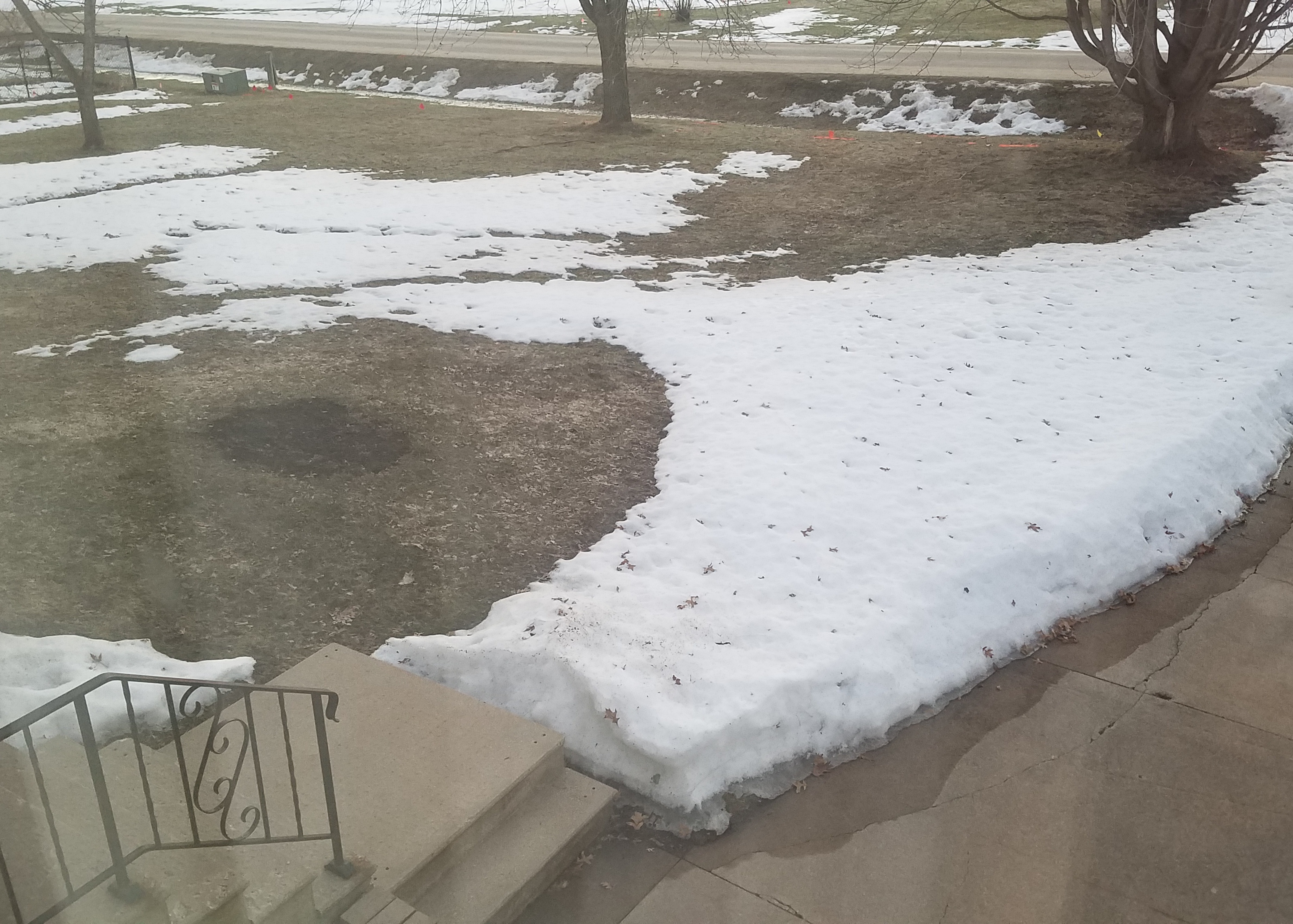
Snow melting March 2, 2021.

Snow melt began running in the ditch yesterday as late winter progresses in Big Grove. I doubt we will get more snow. It’s been pretty dry for the last nine days. The dry, cold weather combined with a substantial snow melt is a cause for concern.

What fraction of the snow melt leaves our property is bound for the state park lake a little more than a hundred yards away, then to the Iowa River which is a tributary to the Mississippi River.

The Mississippi River’s drainage basin is the third largest in the world, exceeded in area only by the Amazon’s and the Congo’s. It stretches over 1.2 million square miles and encompasses 31 states and slices of two Canadian provinces.

Under a White Sky: The Nature of the Future by Elizabeth Kolbert.

In 1966 I kept a scrapbook of newspaper clippings as an eighth grade project. Late winter, beginning in February that year, an ice jam hit the Quad-Cities area, resulting in flooding.

Unprecedented in size and steadily growing larger, a seven-mile-long “glacier” of ice is, like a giant cork, plugging the main channel of the Mississippi River from Credit Island to Buffalo.

Quad-City Times, Feb. 20, 1966.

My comparison of the ice jam was with the 1965 Mississippi River flood, one of the worst in Iowa history.

The great flood of 1965 on the Mississippi River, along the eastern border of the State, exceeded any flood known in 139 years. It caused damages probably in excess of ten millions of dollars in the State of Iowa. … The underlying cause of the flood was an abnormally cold winter which prevented the melting of an excessive snow cover in the upper reaches of the basin. Heavy rains late in March followed by rapid melting triggered the runoff which caused the floods.

The 1965 Mississippi River Flood in Iowa by Harlan H. Schwob and Richard E. Myers, United States Geological Survey, October 1965,

We are in that scenario — a cold winter which prevented snow melt the first two months of the year — at least until now. If the weather remains dry, the Mississippi may not flood downstream. If we get rain, there could be record flooding. Here’s hoping rain holds off until the snow melts. I say this despite the drought parts of Iowa have experienced this winter.

The 1965 and 1966 flooding formed my outlook about floods and how they happen. It is important to note the City of Davenport chose to do nothing to prevent the levee from flooding after these floods. City officials said it was to preserve the look of the levee, which later became the home of a jazz festival celebrating native son Bix Beiderbecke. Annual flooding and the damage it caused was acceptable in favor of aesthetics. At the time of the decision, the Quad-Cities was under economic pressure because businesses were curtailing manufacturing there. The economic boost of Bix made a difference, they said.

I visited the confluence of the Missouri and Mississippi Rivers near Saint Louis with an eighth grade classmate some years ago. It’s a lot of water, as far as one can see. The idea there is an engineering solution to tame the Mississippi basin seemed preposterous when standing at water level and seeing the vast mixing of the two differently colored rivers. I doubt it can be done, especially with the unpredictable nature of climate change and how it is changing the hydrology of the Mississippi basin. The massive engineering projects to control the river in the Mississippi delta have made it a kind of hybrid human-nature phenomenon as Kolbert describes in her book.

A lot has happened (since 1989) to complicate the meaning of “control,” not to mention “nature.” The Louisiana delta is now referred to by hydrologists as a “coupled human and natural system,” or for short, CHANS. It’s an ugly term — another nomenclature hairball — but there’s no simple way to talk about the tangle we’ve created.

Under a White Sky: The Nature of the Future by Elizabeth Kolbert

The river will eventual prevail in the Mississippi delta, despite humans’ best efforts, it’s easy to predict.

Each spring I think of our connection to the river and our place in the Mississippi basin. Ours may be a small role, yet it serves as another way we are connected to the rest of the world. As I contemplate working outdoors today, it is difficult to forget how powerless humans are against what’s left of the natural world.

Categories
Living in Society

Three Weeks Until Spring

Snow melts first over the septic tank.

The thaw began and there is no stopping it. The ground remained covered with snow for most of February, yet no more. Snow cover is slowly melting and will soon be gone. Above the septic tank was first to go.

36 hours after the COVID-19 vaccination I still feel normal. Even the soreness around the injection spot feels better. I emailed the farm to see if we can make arrangements for my return after the booster shot in a couple of weeks. The farmers are all twenty and thirty somethings so their priority group has not been approved for vaccination yet. There are protocols to negotiate before making my way back to farm work.

I applied to be a mentor in the Climate Reality Leadership Corps U.S. Virtual Training beginning on Earth Day. There are three virtual trainings this year, one in the U.S., one for Latin America, and one global training. To find out more, follow this link. If I’m accepted, this would be my third time attending, the second as a mentor. I’m feeling bullish about reengaging in society after getting the first dose of vaccine.

Democrats got solidly beaten in the 2020 Iowa general election. I’m not sure what I want to do to help rebuild the party. I’m also not sure the party can be rebuilt in a way to win elections anytime soon. In any case, it’s time for the next generation to take the reins. While I will remain supportive, I’m stepping back. Politics won’t be a priority as we slowly exit the coronavirus pandemic.

Getting out of the pandemic is a first priority. We are doing our part to follow the governor’s guidelines and hope others will too. What’s certain is I’m getting spring fever and can’t wait to get outside and do normal things again. It’s only three weeks until Spring!

Categories
Sustainability

2021: A Pivotal Year

With Al Gore and Company at the Climate Reality Leadership Corps training in Chicago in 2013

2021 will be a pivotal year. We have a new American president, a new Congress, and abundant hope for progress in arms control and in mitigating the effects of warming atmosphere and oceans.

Each person can do something.

No matter your background, I encourage readers to consider participation in one of the Climate Reality Leadership Corps virtual trainings this year. The April 22 training is United States-focused to align with the opportunity our new government presents. There will be a virtual Latin America-focused training in July, and a virtual global training in October. Here is Al Gore’s announcement video and a link to the training page for more information.

Categories
Environment

Warm January

Open water on the driveway, Jan. 31, 2021.

This winter is shaping up to be a scary one. There has not been a substantial cold snap where the ambient temperature remains below zero for a week or more. We need that to suppress the insects living in the ground that feed on our plant life in the garden and yard when it gets warmer. Cold weather is also the best time to prune fruit trees.

It’s no surprise it’s getting warmer.

Atmospheric CO2 concentration hit 413.95 ppm at the Mauna Loa Observatory in Hawaii in December 2020. In my birth year of 1951 the global average was 311.80. There is a direct correlation between atmospheric CO2 and planetary warming. Our best hope is it’s not too late to mitigate rising CO2 levels.

According to NASA, 2020 tied 2016 as the warmest year on record in global average surface temperature. According to this chart, the rise in global surface temperature is in an accelerating upward trend since the baseline period of 1951-1980.

In the general election of 2020, Americans took a necessary step toward climate action by electing Joe Biden and Kamala Harris, the president and vice president willing to examine and understand the science of climate change and take action. Because Biden served as Barack Obama’s vice president, he knows what to do. It would have been better to elect a stronger majority in the legislative branch of the federal government, yet we didn’t. The majority we have will serve as we can’t wait two years to increase the majority of science believers in the midterms.

The United States rejoined the Paris Agreement within the United Nations Framework Convention on Climate Change. Like the election, it’s a beginning step. The Paris Agreement is flawed, yet it is difficult to see how the world makes progress toward reducing greenhouse gas emissions without the kind of cooperation it envisioned. Our country simply must be part of the discussion.

As a single citizen, or a small family, it is difficult to see how to help. We can and should reduce our personal carbon footprint, especially by doing things that don’t require a lot of capital: use less hot water, set the furnace thermostat lower, run the air conditioner at a higher temperature, use less gasoline and natural gas, eschew air travel and long automobile trips. The coronavirus pandemic kept many of us at home and that had a direct impact on greenhouse gas emissions. Eventually we will learn to live with the coronavirus and when we do, the need to control emissions will remain.

These are scary times. One view is there is nothing to be done about all this. The apocalypse is coming and the best we can do is mitigate its impact on us as individuals. It’s a vision of doomsday preppers, isolated and remote enclaves of the wealthy, and an attitude of preserving self as the catastrophe hits. I reject this view. We are stronger together and together we should remain in mitigating the impact of climate change.

It also seems important to focus on the big picture. Political leadership is required to make progress. For some of us, such leaders won’t be as bold as we want or feel is needed. We can’t relent on our politics.

Iowa has had its recent climate-related difficulties, floods in 1993 and 2008, tornadoes, straight line wind, a derecho, and drought. At the same time row crop yields were decreased due to climate change, as in the 2012 drought, a new, diverse agriculture remains possible because of our growing conditions. Gardeners like me contribute to resolving climate change by growing more of our own food. The process would be scalable if the importance of growing more local food were more generally accepted. We do what we can with local resources and conditions. We could do more.

Scary as it is, we can’t get depressed. It is human nature to be hopeful and hope is one of our most powerful attributes. It is important to be realistic about where we stand on mitigating the effects of greenhouse gases. For the next years, the picture isn’t going to be pretty. We can’t give up. We must persist in the effort to make our communal lives better. That’s what I plan to do.

Categories
Sustainability

This is Our Moment

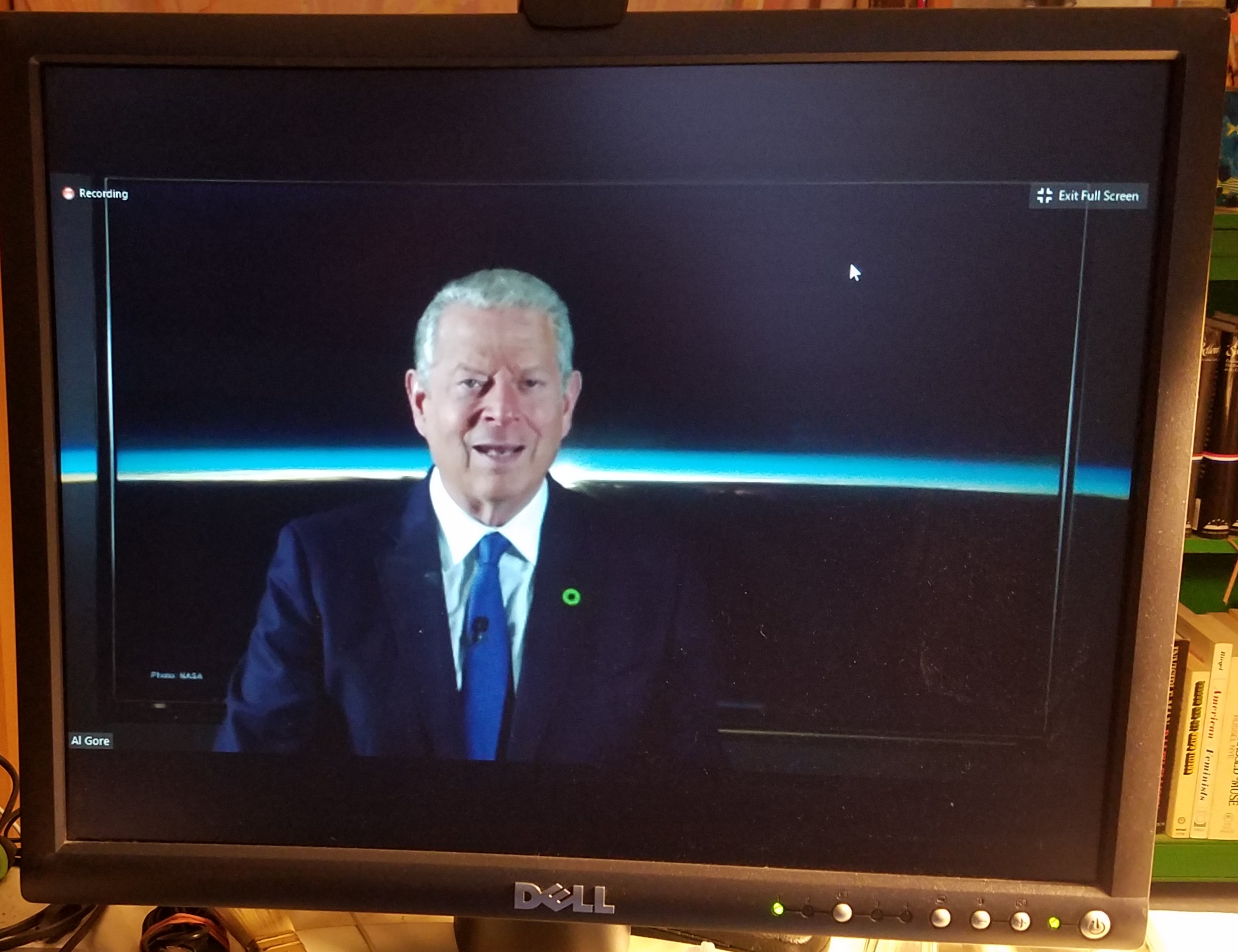
Al Gore via Zoom, Dec. 15, 2020

After the Electoral College vote for president and vice president on Dec. 14, Senate Majority Leader Mitch McConnell publicly congratulated president-elect Joe Biden and vice president-elect Kamala Harris on their win. He noted Harris is the first female vice president-elect, a historic achievement.

In the kabuki dance that is our nation’s capitol, “(McConnell) urged Senate Republicans not to join a long-shot effort led by conservatives in the House to challenge the electoral college results when Congress formally tabulates the vote Jan. 6,” according to the Washington Post. Such an action is doomed to failure as on a straight line party vote it will fail in the U.S. House. Media outlets indicated McConnell wants to avoid such a vote in the Senate.

Former Vice President Al Gore was one of the first world renown environmental leaders to meet with president-elect Donald Trump at Trump Tower in New York after the November 2016 election. The conversation was kept private.

Yesterday, during a 45-minute webinar with members of the Climate Reality Leadership Corps, Gore said, “This is our moment.” The next four years represent an opportunity to address the climate crisis, beginning with the Biden administration’s intent to rejoin the United Nations Framework Convention on Climate Change, better known as the Paris Agreement. Gore had a long to-do list and there truly is a lot to get done to reduce global greenhouse gas emissions. We all must do our part.

McConnell’s announcement and Gore’s speech are the beginning points for a long, difficult journey. Not only does Washington need to recognize scientific truths, we must return to the Obama era practice of embedding climate action in every aspect of the U.S. government. Biden is willing to do so. With the appointment of John Kerry and Gina McCarthy to new roles devoted to addressing the climate crisis, the structural framework is being built.

The Climate Reality Leadership Corps has a number of members across Iowa. The May 2015 training event in Cedar Rapids helped increase our numbers. There are two Iowa chapters of Climate Reality leaders, one in Des Moines, and another in Ames. I joined the Des Moines chapter this morning. Having organized the state for other projects, I’m not sure of the efficacy of developing this chapter, or another in Eastern Iowa, when so many other environmental groups exist in the state. Efforts to pull them together have proven difficult because there is a lack of consensus on priorities. There is also plenty of diverse work to be done. In a society where internet connectivity plays an increasing role, efforts to organize people willing to take action on the climate crisis is energy that should be used to address the climate crisis directly. It is important to be a part of this and other groups. It is more important to focus on the work.

The Sierra Club has a strong presence in Iowa and I support and will work on some of their priorities, such as regulation of companies that seek to pump water from the Jordan Aquifer and ship it out of state. There are other groups as well. In Iowa there are issues that merit our attention. I described them to some long-time friends in an email:

I don’t know what people feel about carbon sequestration as a way to impact greenhouse gas emissions, but it’s all the rage in Iowa. Because it’s all the rage, it is possible, although unlikely, something can be done on it. The danger is it supplants other, more important action that could be taken to reduce GHG emissions.

Another concern is ethanol production. We need a resilient form of agriculture that relies less on making combustible fuel from corn and other biomass. We’ve been at loggerheads for a long time over ethanol yet if we could drive a wedge into this issue in 2021 it would be a positive development.

I don’t know where the University of Iowa is on their blending of biomass with coal, but after numerous attempts, I don’t see any headway in influencing what they do. They should retire the coal plant, and if we could figure out a method or argument to persuade them, that would be a balance between barking up the same tree and a major breakthrough.

Email to Iowa Physicians for Social Responsibility, Dec. 14, 2020.

The elephant in the room is the 2023 Farm Bill. Biden indicated addressing the climate crisis in it is an important priority. While Department of Agriculture secretary-designate Tom Vilsack is known for his alignment with large agricultural interests, and has been no friend to the environment, he is also a good Democratic soldier who will do what Biden asks and who deserves our support as the Farm Bill works its way through the process. Advocates for addressing the climate crisis in Iowa should monitor and devote some bandwidth to the emerging Farm Bill.

Gore waited to make his speech until after the Electoral College vote. We knew what was coming and are ready. There remains a lot to do to address the climate crisis and it will take all hands on deck. This is our moment.

Categories
Living in Society

Fall Cleanup 2020

Big Grove Township, Nov. 8, 2020

While returning from a walk in the state park I picked up four yard signs a neighbor placed in their yard. Two of the candidates are poised to win and two are not.

While crossing the street, another neighbor called out but I couldn’t hear them. They walked over to discuss Saturday’s events in the general election. They had considered leaving the country if the president were reelected. Like many in our neighborhood, they keep their politics private. Sigh of relief the president was defeated. They are good neighbors.

After my walk I drove over to a damaged street sign and removed the signs from the pole. It is hard to get the screws loosened so I brought it home to repair in the garage if I can. Leaves are mulched with the mower so the minerals can return to the soil. The smell of neighbors burning leaves permeated the neighborhood. What fall work remains in the yard is optional. Today looks to be in the 70s so it is a chance to work outdoors.

Emails began arriving from groups with which I associate after the election. This one from the Climate Reality Project is typical.

We will mobilize support like never before for federal-level climate policy, and will bolster this with continued state and local-level work, which has been so instrumental in building this movement since 2016. We will persist in fighting for climate justice, by forging partnerships and adding capacity to campaigns that address systemic ways the climate crisis hurts historically marginalized communities. And we will continue to the grow the Climate Reality Leadership Corps, ensuring we have even more voices conveying our clear message. We have the solutions at-hand, and there is no more time to waste.

Ken Berlin, President and CEO, The Climate reality Project

To work on any of the received requests, I had to get organized. Here is what I came up for post-election priorities from an email to friends:

My first Iowa work will be determining a leverage point to advocate for mitigation of the coronavirus pandemic. The virus prevents us from organizing as we are accustomed. I plan to follow State Senator Rob Hogg’s lead on this. As you likely know, experts are saying we will be challenged by the virus into 2022. This is a high priority.

I’m working on nuclear arms control issues with the Arms Control Association, and on the climate crisis with the Climate Reality Project. I’m also working with the Sierra Club on the Pattison Sand proposal to pump water from the Jordan Aquifer and ship it to arid western states. However those things dovetail with your organization will be our points of opportunity to work together.

The Biden administration will quickly become besieged with its efforts to undo the four years of the current administration, therefore I view moving the ball forward on our issues as something our folks in DC should lead. My expected local contributions include writing an op-ed for the Cedar Rapids Gazette every 4-6 weeks (arms control and social topics), organizing a group in Solon to help me work on issues including politics and political advocacy, and set the stage for a Democratic comeback in the 2022 election. Tall orders all.

I don’t see Iowans devoting much bandwidth to the TPNW (Treaty on the Prohibition of Nuclear Weapons) until there is an opportunity for the administration to listen and take action on the treaty. I forget who’s having the Zoom meeting that includes Rose Gottemoeller but I plan to listen in. For the time being, the U.S. government and those of the other nuclear states are ignoring the treaty. If that changes in the next couple of years I’ll get more involved.

If we don’t get organized ourselves, we will be hindered in working with others. Onward we go!

Categories
Sustainability

Going Alone on Climate

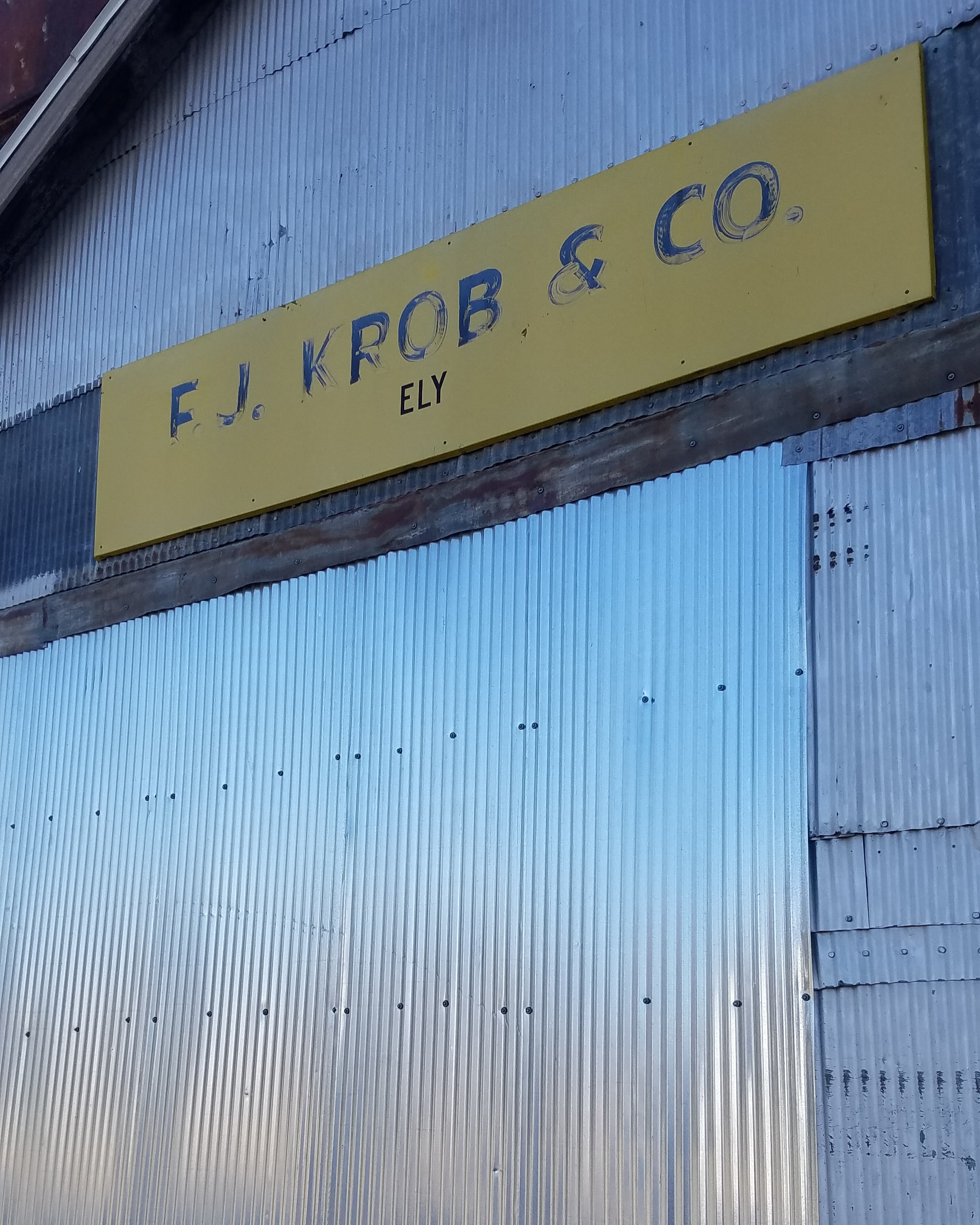
F.J. Krob and Company grain elevator. Ely, Iowa.

The 2020 general election produced a poor result for battling our biggest problems: income inequality, the climate crisis, environmental degradation, racial justice, nuclear weapons proliferation, and the coronavirus pandemic — even with election of a Democratic president. All of these issues are important yet the most significant is acting on the climate crisis.

Yesterday the United States formally exited the United Nations Framework Convention on Climate Change. While waiting for votes to be counted, Candidate Joe Biden said, “Today, the Trump Administration officially left the Paris Climate Agreement. And in exactly 77 days, a Biden Administration will rejoin it.”

German Budestag member Karl Lauterbach noted the results of the American election this morning, saying they set up gridlock in which “Biden hardly gets a law through, least of all in climate protection. Europe has to go alone.”

It’s not possible for any state to successfully go alone.

The failure of Democrats to secure a Senate majority makes the work more difficult. We know what Senate Majority Leader Mitch McConnell will do as we saw him obstruct the legislative goals of the last Democratic administration when Republicans were in both the minority and majority. While the work will be difficult, now that voting is finished, it must begin.

Wednesday morning, Jen O’Malley Dillon, Biden-Harris campaign manager, and Bob Bauer, campaign adviser for voter protection, laid out the path to 270 electoral college votes and Trump efforts to suppress vote counting. After waking up with not enough sleep and in a fog, the information was assuring. Biden won the election and once the votes are counted it should be revealed. Now what?

The clear message from this election is there is too little work being done to move toward consensus on important issues. Of my list above, there is denial that any of them are problems. As if people say, “I’ve got mine, and that’s enough.” While I can devote time to advocacy it means little if I don’t bring others along with me. By “others” I mean people who currently don’t agree with me.

The ambient temperature was 50 degrees so I donned my riding shorts, took the bicycle down from its ceiling hooks, and aired the tires to 90 psi. I rode 13.7-miles to Ely and back to get things going after missing daily exercise on Tuesday while at the polling place. The long, straight stretch of trail from the roundabout to Ely was a chance to get some thinking done. After descending the steep hill beginning at Highway 382, I entered the zone and miles passed quickly. Not sure how much thinking I did, yet the sun and wind felt good as I pedaled and rolled north. A new beginning.

While coalition building begins alone, that’s not how it will end. It’s hard to know who will join. I helped build diverse, successful coalitions before and believe we can do it again. That work begins today.

When Joe Biden said the 2020 election was about “the soul of the nation” he got it right. Who will we be as Americans? For too long our worst impulses have dominated our public life. As a nation, we are better than that.

Abraham Lincoln said in his first inaugural address, “I have no purpose, directly or indirectly, to interfere with the institution of slavery in the States where it exists. I believe I have no lawful right to do so, and I have no inclination to do so.” What we know now is Lincoln signed the Emancipation Proclamation a few years later. Was he being disingenuous? No, clearly not. He did what was needed to bring the Southern states, which had seceded, back into the imperfect union the United States represented since its founding. So it may be with addressing our most significant current challenges going forward.

We don’t want to upset the apple cart of public opinion as represented by the 2020 election results, but we must. It will be complicated and challenging, beginning with the idea going it alone solving society’s problems is no longer an option.