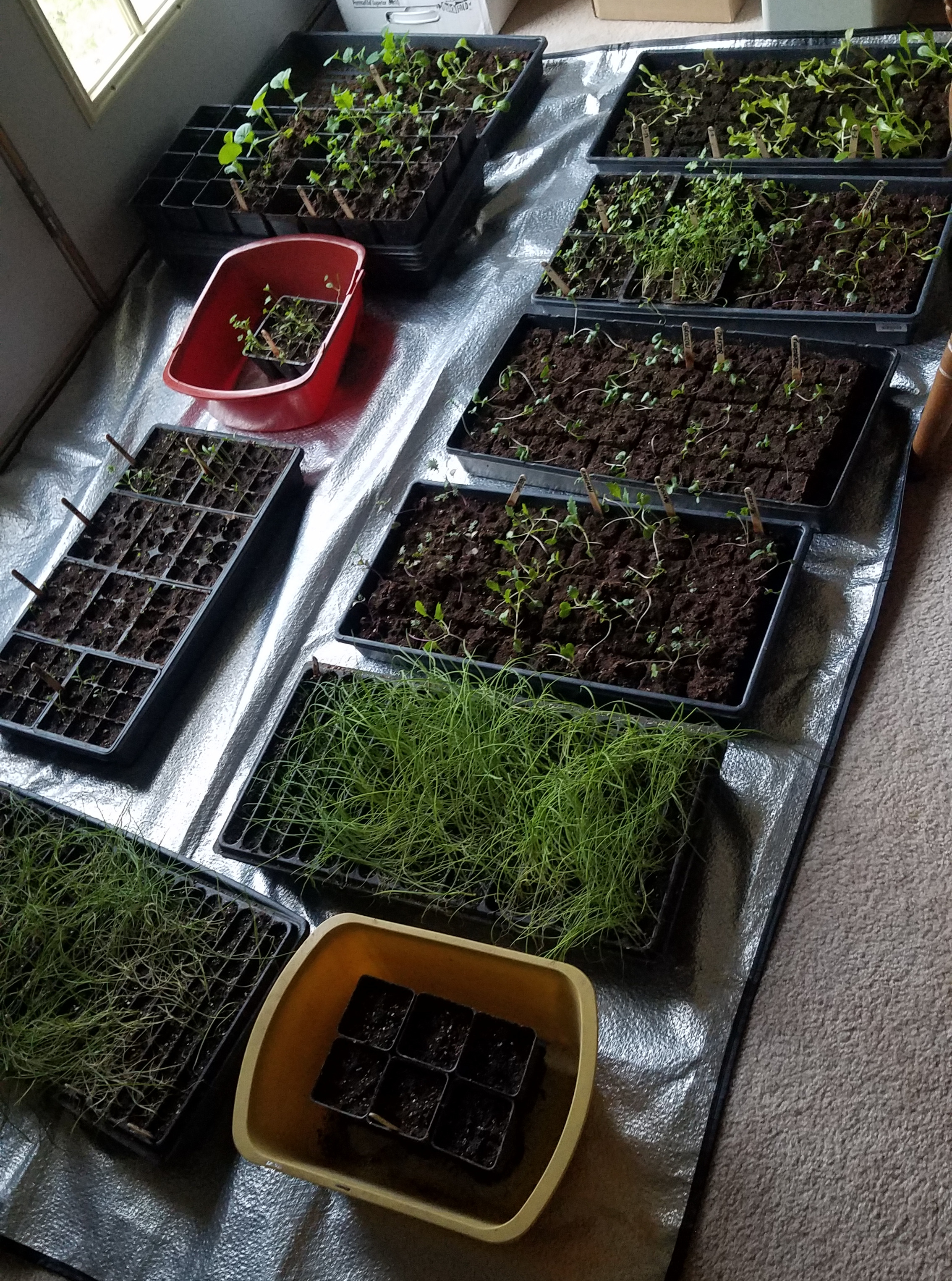
Seedlings back inside the house while it has been cold.
Ambient temperatures are expected to rise by 20 degrees during the next two hours. Winds are down and skies clear. It is time to turn the first spade in the garden.
This is the latest I’ve begun gardening and there is a long to-do list. Once indoors chores are finished, I’ll get after it.
If the ground is frost-free the order of business is set up the first plot with row cover and plant seeds and seedlings for early harvest. Once that is finished, preparation for potato planting is next. I’m keeping the buried containers, although moving them. Also on the list is transplanting kale and other leafy greens to a bigger pot to help them grow before going into the ground closer to last frost. Any tear-down of fences and ground cloth from last year’s garden will be a bonus. I scheduled a five-hour shift and hope to work all of it.
Society is getting busy again. As the coronavirus pandemic appears to be normalized, my hope is people can be reasonable in preventing the spread of infectious disease. COVID-19 vaccination should be rolled into vaccine schedules that already govern our health.
Spring has sprung and people are anxious to get busy doing things they couldn’t during the pandemic.
Open Road on the Lincoln Highway in Iowa, Sept. 8, 2012.
Sunday morning the road was clear and dry with little other traffic. While my spouse slept in the passenger seat, people attended church, and commercial traffic took a break, my mind raced with ideas about what should go next in my life. As we pressed toward our destination, there were no easy answers. The same is true for the return trip. It was a great day for driving and that had to be satisfaction enough.
During her move, my sister-in-law found an extra television and gave it to us. Its age is uncertain yet it is an early flat panel television, at least 12 years old. I brought it home and began configuring it. It will be an improvement over the tube set we had. The reason we keep cable television service is to view the weather in case of severe storms. We can’t pull in a signal with an antenna.
I discovered we have access to 119 channels. Who has time for 119 channels? I quickly learned how to control what shows up with the channel selector. The first hidden was FOX News, followed by religious ones. Next call is to the cable company to see if there is a plan that would cost less while providing access to local weather. Ten years away from television has me hating any time spent with the medium today.
We have three banker’s boxes full of movies on VHS. While connecting our Emerson VHS player to the new television I found it is on the fritz, as in it’s dead. That could be a problem. The movie industry made the last VHS cassette in 2006 and player manufacturers have moved on to other products. Walmart sold them recently, but even that source has dried up. Used and refurbished players are available on line. If I want to spend a couple hundred dollars, new ones are available combined with technology I don’t need like an additional DVD player. The world changed to online streaming and while I don’t like the idea of paying again for the same movie, technological obsolescence may force my hand.
I connected our SONY DVD player to the television and it works like new. The screen quality is good, as is sound. Over two days, to try it out, I viewed the Martin Scorsese picture No Direction Home Bob Dylan. We have a couple dozen movies on DVD, although outside our cult-like ones, like The Matrix, Blade Runner and The Lord of the Rings, I don’t envision watching most of them. I have a copy of Finding Nemo, in the unlikely event we have a person of an appropriate age over for an extended period of time. The movies our daughter watched when young are on VHS.
It is difficult to envision a return to television viewing. The next step is to turn in our tube televisions to the electronics recycling bin at the landfill. There is no going back.
It started to rain about half way home. Not enough to loosen dust on the road, and barely enough to turn on the windshield wipers. We need rain. Televisions, however, remain optional.
Open Letter From Nobel Peace Prize Laureates and Citizens of the World Against War and Nuclear Weapons:
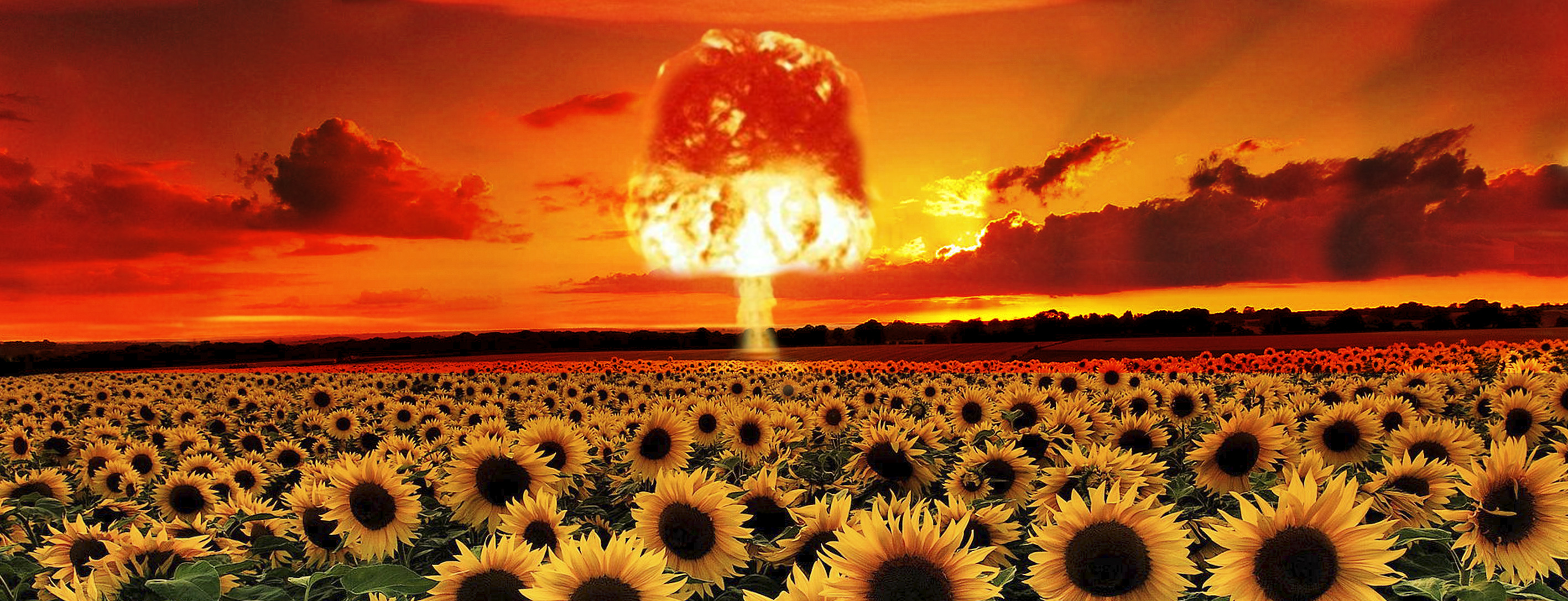
We reject war and nuclear weapons. We call on all our fellow citizens of the world to join us in protecting our planet, home for all of us, from those who threaten to destroy it.
The invasion of Ukraine has created a humanitarian disaster for its people. The entire world is facing the greatest threat in history: a large-scale nuclear war, capable of destroying our civilization and causing vast ecological damage across the Earth.
We call for an immediate ceasefire and the withdrawal of all Russian military forces from Ukraine, and for all possible efforts at dialogue to prevent this ultimate disaster.
We call on Russia and NATO to explicitly renounce any use of nuclear weapons in this conflict, and we call on all countries to support the Treaty on the Prohibition of Nuclear Weapons to ensure that we never again face a similar moment of nuclear danger.
The time to ban and eliminate nuclear weapons is now. It is the only way to guarantee that the inhabitants of the planet will be safe from this existential threat.
It is either the end of nuclear weapons, or the end of us.
We reject governance through imposition and threats, and we advocate for dialogue, coexistence and justice.
A world without nuclear weapons is necessary and possible, and together we will build it. It is urgent that we give peace a chance.
Signatories list of Nobel Peace Prize Laureates:
His Holiness The Dalai Lama (1989) International Physicians for the Prevention of Nuclear War (1985) International Campaign to Abolish Nuclear Weapons (2017) Juan Manuel Santos (2016) Kailash Satyarthi (2014) Leymah Gbowee (2011) Tawakkul Karman (2011) Muhammad Yunus (2006) David Trimble (1998) Jody Williams (1997) Jose Ramos-Horta (1996) Pugwash Conference on Science and World Affairs (1995) Óscar Arias Sánchez (1987) Lech Walesa (1983) American Friends Service Committee (1947) International Peace Bureau (1910)
If you would like to join more than 780,000 other citizens of the world in signing this open letter, which will be presented to the leadership of NATO and Russia, click here.
“Extreme (weather) events are becoming more numerous in every season, so Iowans should anticipate more floods, droughts and heat waves,” Iowa State Climatologist Justin Glisan recently said.
Farmers and gardeners recognize this. What I didn’t realize is a third of the major natural disasters hitting Iowa since 1980 have occurred in the last five years. Tornadoes, derechos, severe thunderstorms, heat waves and drought have become commonplace. While adaptation in small garden plots like mine is possible, the scale of the problem is much bigger than any one person’s experience or ability to cope.
The last few days have been colder that usual. By that, I mean the historical average high has been 52.5 degrees and today the forecast is ten degrees colder than that. There is expected variation year over year, so it’s not time to wig out about extreme weather just yet. All the same, by now I’d have something in the ground besides garlic planted last fall if ambient temperatures were closer to normal. Adaptation serves gardeners as there is a wide range of suitable conditions for growth.
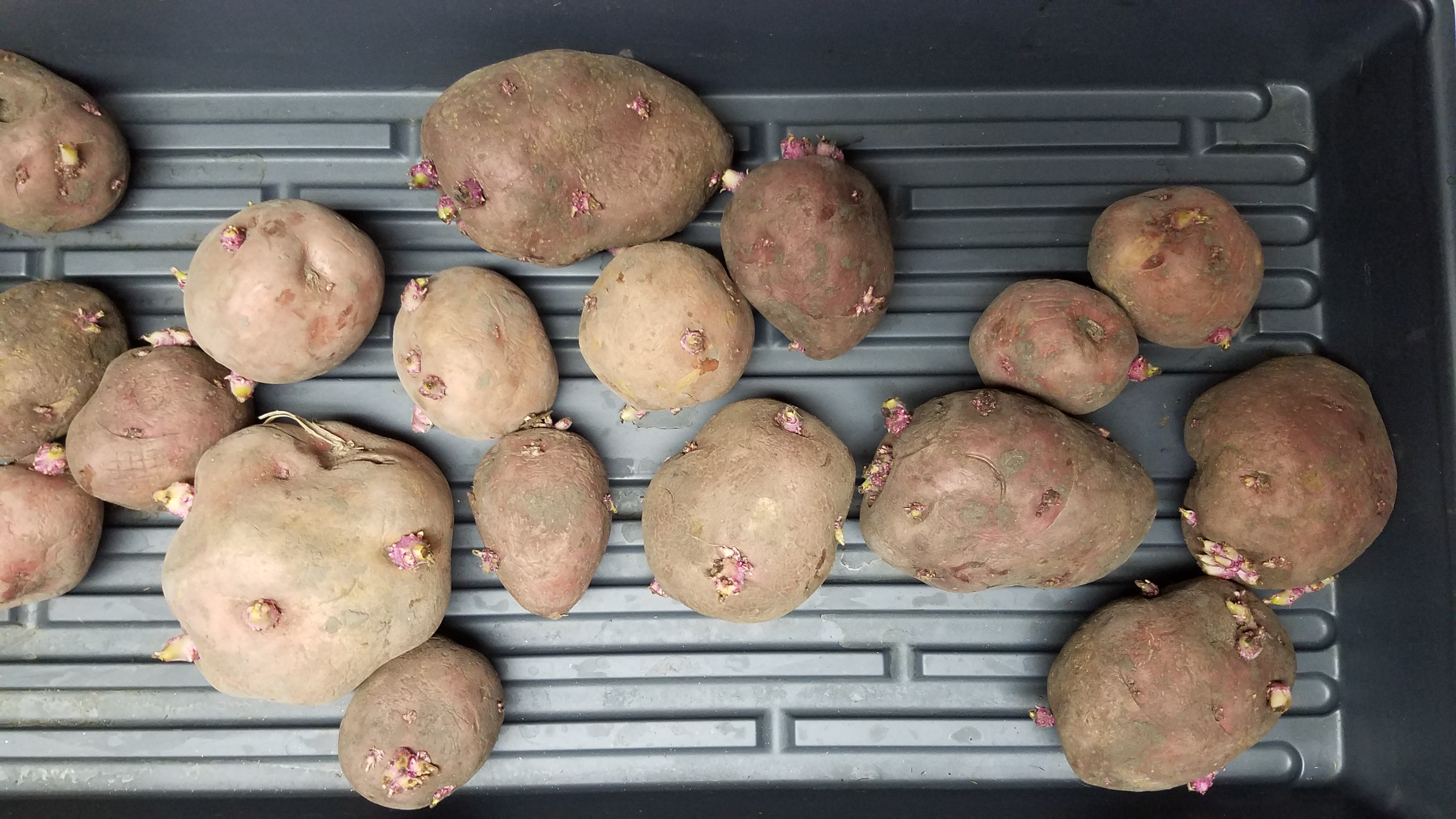
Ten days before Good Friday, I’ll cut seed potatoes for seasoning before planting. I have a notebook of previous gardening years that serves as an indoor planting guide. It is time to start Brussels sprouts, tomatoes, peppers and eggplant, according to last year. Following the agenda is the kind of activity gardeners relish. It creates a sense of understanding that helps us get by in a turbulent society.
When I was working full time, there was no time to work through seasonal climatic variation in the garden. Vegetables either made it or they didn’t. Attention to earning an income in a career blinded me to what was going on around me. We each avoid unpleasantness in order to preserve the secure bubble we create and in which we live most of our lives. This type of insularity is a main reason governments take inadequate action on climate change: people are caught up in their personal world construct. The real world is too ugly to contemplate so we avoid thinking about it and in some cases enable disaster.
Even with climate change and increased frequency of extreme weather events, garden cycles remain. We work through them each year and recognize variations. Producing a harvest is always rewarding. A garden can give us grounding in reality. It’s something sorely needed in this household and in society more broadly. At present, most are oblivious to garden cycles as Earth continues to orbit the sun, grocery stores have food on shelves, and our nest seems protected from the ravages we see on media coming into our devices.
It is easy to turn away from garden cycles, yet we shouldn’t.
Joint Statement from the Nuclear Weapons and Arms Control Working Group Condemning Russian Nuclear Threats
WASHINGTON, DC— Senators Edward J. Markey (D-Mass.), Jeff Merkley (D-Ore.) and Representatives Don Beyer (VA-08) and John Garamendi (CA-03), co-chairs of the Nuclear Weapons and Arms Control Working Group, today issued the following statement condemning Russian nuclear threats:
“On Sunday, Russian President Vladimir Putin ordered his country’s nuclear deterrent forces to be put into an alert status, further intensifying his unjustified and unprovoked invasion of Ukraine by threatening a nuclear attack.
“We, the Co-Chairs of the Nuclear Weapons and Arms Control Working Group, condemn President Putin’s threats to escalate a conflict of his own creation into nuclear war. His invasion of Ukraine has already resulted in the tragic loss of life, and an escalation to nuclear war would bring untold additional suffering.
“President Putin should recall what he said in January, along with leaders from the United States, France, China, and the United Kingdom, that ‘a nuclear war cannot be won and must never be fought.’
“We applaud the Biden administration for trying to deescalate against such provocative actions and for making clear that America’s own alert status has not changed. It is in the fog of war that there is the greatest risk that a conventional conflict escalates into a nuclear one. That is why it is imperative that the United States, Russia, and all nuclear powers back a No First Use nuclear policy and affirm that the sole purpose of nuclear weapons is to deter the use of nuclear weapons. The crisis in Ukraine is evidence that there are no plausible military options for direct confrontation between the United States and a nuclear armed adversary – and the folly of investing $1 trillion in unusable new U.S. nuclear capabilities.
“At the same time, as the U.S. works in lockstep with our European allies to rebuff Russian aggression, we must coordinate closely on our nuclear policy as well. The U.S. Department of Defense should also continue its efforts to open military communication channels with Russia, as they have done in other theatres where the Russians are present, so that “red-lines” are not inadvertently crossed.
“President Putin has already made his country a global pariah by launching an unjustified and unprovoked war against Ukraine. His threat to escalate his meritless invasion of Ukraine into nuclear war would cross a line from which our world cannot return. The United States and its allies must do everything in their power to disincentivize this dangerous and costly mistake.
“We continue to stand firmly with the people of Ukraine in this crisis as they fight to preserve their sovereignty and democracy,” the lawmakers said.
The craftsmanship of Bet the Farm: The Dollars and Sense of Growing Food in America by Beth Hoffman is good, better than many books I read. For people unfamiliar with the challenges of Midwestern, sustainable agriculture, it is a good introduction, covering most issues.
Hoffman is a member of Practical Farmers of Iowa and so am I, so there are some connections. Even though we never met, I know people she mentions in the book and we would likely have friends and acquaintances in common. The PFI community is not that big.
For nine seasons, I worked with beginning and experienced farmers who operate community supported agriculture projects, large vegetable or fruit farms, and raise livestock, so I know some of the work and the challenges. In total, I worked on or did interviews for newspapers on a dozen or so of them.
As she mentions more than once in the narrative, she is from the coast and the land was owned outright by the Iowa family. The former is more typical of beginning farmers, the latter isn’t. It is a good book, yet I hoped there would be a connection to the author and her narrative. There wasn’t.
Bet the Farm was a quick read and if a person is interested in this topic, there are a number of other works by beginning farmers I’d read first.
I wish Beth and John good luck on their farm and would read another book about their progress after they have been farming five or ten more years.
Around midnight I woke with my mind racing. There was a high-pressure fire hose full of news on Monday. It is continuing into Tuesday.
With Ukraine being eight time zones ahead, there were a lot of reports coming in via Twitter when I looked at the mobile device in bed. Much of the information was negative. The fact there is a war in Ukraine at all is negative. If Russian Federation President Vladimir Putin intended to make quick work of conquering Ukraine, he failed.
Putin put Russian nuclear forces on high alert and no one is certain what that will mean, other than creation of an opportunity for unintentional detonation of nuclear warheads. Monday President Biden said people should not fear a nuclear war. He obviously has information I don’t, yet knowing this is happening raised my personal tension a notch.
The Intergovernmental Panel for Climate Change released their latest report yesterday. The last sentence of the 3,675-page report says it all. “Any further delay in concerted anticipatory global action on adaptation and mitigation will miss a brief and rapidly closing window of opportunity to secure a livable and sustainable future for all.”
The U.S. Supreme Court heard oral arguments in West Virginia v. EPA on Monday. Justice questions centered around “major questions” which should be decided by the Congress, not by a regulatory agency. The fear is SCOTUS will severely limit the kind and amount of regulation the Environmental Protection Agency can introduce, sending any action on controlling greenhouse gas emissions back to a stalemated Congress. With a 6-3 conservative tilt, Republicans got what they wanted when President Trump appointed three justices during his term in office.
Republicans in the Iowa Legislature are making laws without regard for dissenting voices. They have a clear majority and are passing whatever laws pop into their heads. The degrading of intellectual standards among lawmakers is obvious and frustrating.
I continue to wait for dust to settle and determine personal next steps. Spring will soon be here, I’m working on income taxes, and once garden planting begins there will be a rush toward Memorial Day. Things seem a bit out of control.
Later this morning I will take a nap. Otherwise, I’m unlikely to make it until supper time. With everything going on, it is hard to sleep and unlikely there is any returning to normal. It is hard to know what the new normal will be.
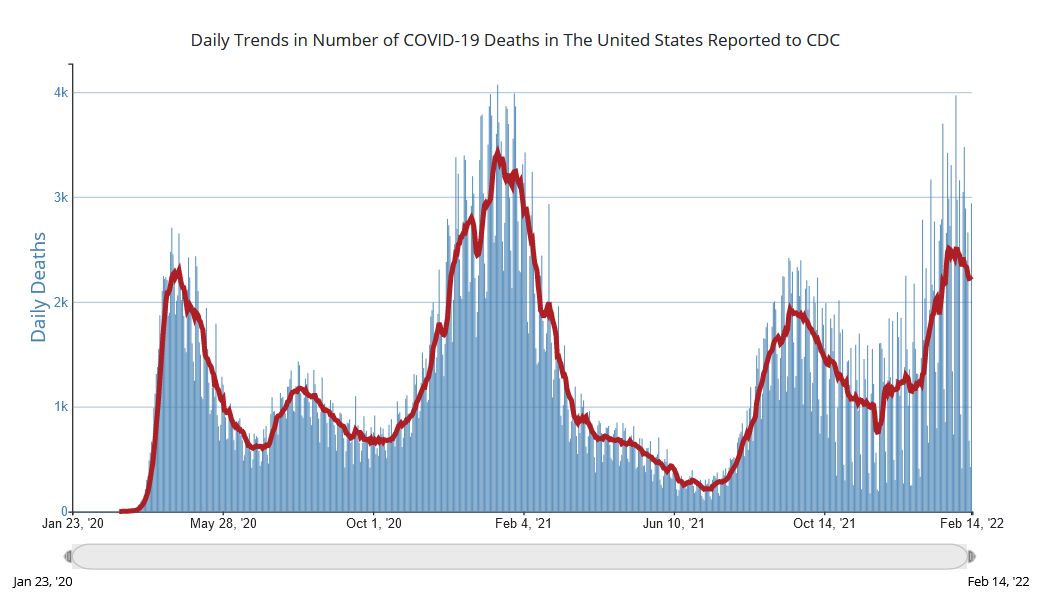
Chart from Centers for Disease Control and Prevention, Feb. 15, 2022
As we enter the third year of the coronavirus pandemic, no end is in sight. The United States is proving to be less competent than we thought in managing this pandemic. I lost track of how many people I know contracted COVID-19 because there are so many. The virus is penetrating my close circle of family and friends more deeply and effectively this year than it did in 2020 and 2021. Fortunately, my spouse and I have been able to avoid it.
The total number of COVID-19 deaths reported to the CDC as of yesterday was 920,097. The number of excess deaths since the pandemic began already exceeds one million, they reported. With climate change and degradation of our environment, we expect other viruses presently unidentified to affect humans. It was not helpful that the Trump administration dismantled and hobbled the mechanisms we had in place to monitor and mitigate new infectious diseases. The coronavirus seems likely to persist among other viruses and diseases.
In February 2022 we are ready for the pandemic to end. The pandemic continues unabated. We made adjustments.
The main impact personally is we seldom leave the property. When we do, we wear a mask and clean up thoroughly when returning home. I’ve been starting the automobile once or twice a week. When I have been outside the house in winter it has been to take compost out to the bin, work in the yard, take a walk, or head into the retail centers for provisions. The restaurant food I’ve had was delivered by a service, and only when I helped move our daughter from central Florida last summer. Local restaurants have gotten no business from us since March 13, 2020. I picked up vegetables last spring at the farm using a pandemic protocol. We attended no in person meetings, except with our daughter. I severed relations with most of the groups to which I belonged. Combined with my retirement, the pandemic brought substantial change.
What is next? I haven’t done a deep analysis of the COVID-19 death march, although I know enough to see it targets the elderly, people with compromised immune systems, and people who have not been vaccinated. We must remain vigilant so as to avoid getting COVID-19, and that means continuing to make do on our property as much as is possible. There is plenty to do. That the pandemic coincided with the beginning of our pensions and retirement from paid work means it impacted us less than younger people who must work for a living.
March 11 is the two-year anniversary of the World Health Organization declaration that COVID-19 is a pandemic. Yesterday the Iowa governor ended her proclamation of disaster emergency. Today, the death march continues.
The North Liberty Leader, a local newspaper with about 300 subscribers, announced today will be their last issue. If that’s all the subscribers they had in a city with a population of more than 10,000 they deserve to go out of business. Harsh assessment, yet true.
The Dubuque corporation that bought them, Woodward Communications, Inc., likely knew this fate was coming before the acquisition. Today they informed readers of the Solon Economist unless something is done, they are on the chopping block as well.
Folding the Economist seems inevitable when community leaders surveyed felt ambivalent or indifferent about the newspaper’s future. I sent a note around to the Facebook group of neighbors to which I belong, encouraging them to subscribe. It may be too little, too late. Facebook is likely part of the problem causing a decreased subscription rate.
I’ll do my part by encouraging people to subscribe, providing free content if we can work something out, and advertising if I have need. In the transition of local culture, the demise of local newspapers is just one more unwelcome step.
Editor’s Note: Apologies to those who read this in 2016 or previous times I posted it. I continue to return to these paragraphs because the pandemic has driven me to seek ways to return to normalcy. One of them is by creating a weekend. It’s French!
A benefit of an American lifestyle is having the occasional weekend off.
Yet the weekend is more French than American – le weekend!
In June 1977, over two weekends, I was in France with the French military. Those days imprinted the meaning of “weekend” on me.
My guide for the exchange officer experience was an infantry marine platoon commander stationed at Vannes. The unit was on alert to deploy to Djibouti, which had recently declared its independence from France. If there was trouble in the transition, my unit would head there.
Upon arrival at the train station Friday afternoon, my escort took me straight to the officer’s club. I drank too many pastis before attending a reception in my honor. No one told me about the reception until several pastis had passed my lips. The non-commissioned officers lined up one aperitif after another in front of me with glee. Too drunk to be embarrassed, when someone mentioned the reception, I decided to leave the remaining drinks on the table, sober up, and listen and learn about the culture.
I practiced my French and mustered a dim comment about the Concorde, which was still new, at the reception. Because of the alcohol it was the best I could do. I’m not sure I made a positive impression.
In homes and apartments in which I lived, I did as French people did. Weekends continue to be French in Big Grove, although with much less alcohol and no drunkenness. God’s in his heaven, all’s right with the world.





 Journey Home
You must be logged in to post a comment.