The word “progressive” got bandied about more this year than it has in a while.
Who is a progressive? Who is a “real” progressive? Who will continue a progressive legacy after the 2016 election?
Hillary Clinton and Bernie Sanders debated what it means to be a progressive at the beginning of the 2016 Democratic presidential nominating process, with both claiming progressive bona fides.
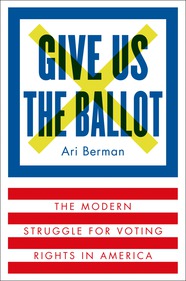
Here’s what I say. You are not a progressive unless you have read Give Us the Ballot: The Modern Struggle for Voting Rights in America by Iowa’s own Ari Berman.
In this extensively researched, easy to read text, Berman reminds many of us of the reason we became politically active: as a way of engaging in progress toward racial and social justice centered around the Voting Rights Act (VRA) signed into law by President Lyndon B. Johnson on Aug. 6, 1965.
There has been a concerted, well-planned effort to suppress provisions of the VRA. The June 25, 2013 decision by the Supreme Court of the United States to overturn Section 4, which required certain states to get pre-clearance of changes to voting laws from the Department of Justice, was only the most obvious, recent incident. Berman’s account of the Nixon and Reagan administrations provides insight that de-fanging the law was part of Republican intent from the beginning. My reaction was incredulity at everything that was happening before my eyes without me understanding it.
Berman interviewed Rep. John Lewis extensively for the book (along with many others) and it shows. Lewis wrote in the Washington Post,
“(Give Us The Ballot) should become a primer for every American, but especially for congressional lawmakers and staffers, because it so capably describes the intricate interplay between grass-roots activism and the halls of Congress . . . Congress must fix the Voting Rights Act, and Berman’s book explains why, without passion or favoritism. It is the first history of the contemporary voting rights movement in the United States. It is long overdue, but Berman’s extensive reporting makes it well worth the wait.”
It’s hard to disagree.
Be a progressive. Read Give Us the Ballot this summer.
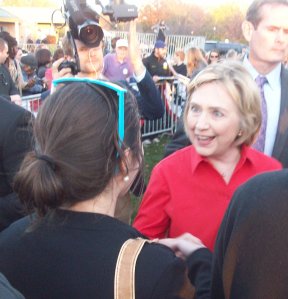
BIG GROVE TOWNSHIP, Iowa — On Tuesday, June 7, Hillary Clinton won the California, New Jersey, New Mexico and South Dakota primaries, securing enough delegates to win the Democratic nomination for president at the July 25 national convention.
I agree with Jeff Weaver and Tad Devine, key Bernie Sanders advisors, that Clinton isn’t nominated until the convention. However, under what circumstances won’t she be? Today’s popular usage is “Clinton clinched the nomination.”
For me, my mother, and women I know Tuesday was a momentous occasion as the first woman ever has been selected for president by a major political party in the United States. A century ago, women weren’t allowed to vote here.
The formalities of July are minor points as key figure after key figure in the Democratic Party gets behind Clinton’s candidacy. We now turn toward the general election.
As the last days of spring yield to summer warmth, and the garden produces vegetables for the table, political campaigns go on the back burner. There is more to life than politics.
As it does, it is important to note that on June 7, 2016 Hillary Clinton made history. Whether one likes her or not, that is something.
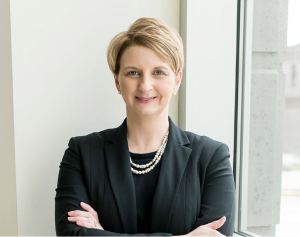
Once Amy Nielsen of North Liberty set her mind on getting involved with government in one of Iowa’s fastest-growing cities there was no stopping her.
When Mayor Tom Salm died unexpectedly in 2014, she pursued a council appointment after nine-year councilor Gerry Kuhl was appointed mayor. The city council chose someone else.
Nielsen then ran for mayor and defeated Kuhl in a tight race, garnering 55 percent of the vote.
She’s running for election in the June 7 primary to represent Iowa House District 77 in the Iowa legislature. I believe there will be no stopping Amy Nielsen now either.
There is a lot to like about her.
“My primary ‘career’ is being a mom,” she said in a recent email.
Nielsen was born in Keokuk and grew up in Eastern Iowa. She attended Kirkwood Community College before moving to South Carolina where husband Jason took a job with Kimberly Clark. Nielsen took a job in a bank there. They followed his work to Utah, where their first daughter Catie was born, to Tennessee where son Ben was born, and to Wisconsin where daughter Jillian was born. The family next moved to Atlanta, which they found was “not a good fit.”
“We decided it was time to come back to Iowa,” Nielsen said. “We knew we wanted to raise our kids here. My husband was hired at Alliant Energy and we chose to settle in North Liberty.”
In 2007 the family moved and a few years later Nielsen burst on the scene of public engagement. She worked as a volunteer in a number of community organizations including local schools, the Iowa City Blue Zones Project, the North Liberty Community Pantry and more.
Nielsen is engaged fully in life and has the audacity to run for office to get things done for her family and her constituents.
“As a graduate of Iowa City Public Schools, and a parent of three children currently enrolled in those same schools, I know first-hand how important a world-class education is to our state’s future,” Nielsen said in a press release for her house bid. “I’m deeply concerned that some in Des Moines are shortchanging our children by refusing to invest in Iowa’s public schools.”
When asked how she would replicate outgoing State Representative Sally Stutsman’s connections in rural parts of District 77, Nielsen responded.
“I will do what I have always done,” she said, “which is proactively seek input from individual stakeholders that have more knowledge and experience to learn about their specific needs.”
Part of living in a fast-growing community is the expansion of low-wage jobs and North Liberty has more than its share of them.
“I am in favor of a state-wide higher minimum wage,” Nielsen said. “I would like to find a way to close the loop holes that allow for exemptions or advantages for doing things like using ‘temporary’ workers or ‘subcontracting.’ This is just a way to boost profits on the backs of low wage earners.”
Check out Nielsen’s campaign website, amyforiowa.com for her position on other issues. However, policy isn’t the only reason to like Amy Nielsen.
In the face of disparaging remarks by outgoing Mayor Kuhl in 2014, Nielsen handled herself well.
“I have largely ignored the criticism of Gerry Kuhl,” Nielsen said. “He was quoted after the election as saying ‘the mayor doesn’t have any power anyway’ and he was wrong. The mayor sets the attitude and tone of not only the council and staff, but the entire community. I firmly believe certain opportunities have come our way because of the change in leadership.”
I’m proud to offer my support to Amy Nielsen in her bid to win the Democratic primary in House District 77.
SOLON, Iowa — At a table under a locust tree on Main Street I chatted with Kurt Friese, his wife and son as people gathered for his political meet and greet.
Most of the small group of attendees are not in my circle of political friends. Maybe they should be.
I’ll support Friese in the June 7 Democratic primary. With that decision made, I can move on to more engaging endeavors. That means digging in the dirt in my garden until the initial planting is done.
I brought a lawn sign home and found the two from previous supervisor campaigns. After sizing them up for wires in the garage, they will go out on Friday for the weekend traffic in front of our home.
Sizing Signs for Wires in the Garage
I took the time to meet and have a conversation with five of the six supervisor candidates before deciding, also considering the work of the two incumbents. Comparing what I know about the job of supervisor, the needs of the county, and how each candidate seemed as a person, Friese was the best fit to fill out my votes. The five candidates I met would each bring something different to the table. (I still don’t get what the helicopter pilot is doing). This slate fits the direction the county should go during the next four years.
Someone on social media asked why Friese over Heiden? First, I have more in common with Friese and his circle. Second, Heiden didn’t take my advice a month ago about getting on top of her recent switch in party registration. The switch itself is not an issue. The way she handled it publicly is. Finally, my pick was about having a business person on the board of supervisors. Being a successful restaurateur and author carried more weight than being executive director of a retirement home for the affluent. Either one would make a competent supervisor.
JOHNSON COUNTY, Iowa — Talk about politics is everywhere as the June 7 Democratic primary approaches.
There is a lot to think about in the two races with a field: U.S. Senate and county supervisors.
Well maybe not that much.
The four U.S. Senate candidates participated in a foreign policy forum in Des Moines last night and this tweet summarizes why I support State Senator Rob Hogg:
Hogg says unless global climate change is addressed, work on all other issues is “rearranging deck chairs.” #iasen#iapolitics
Addressing anthropogenic global warming is high on my priority list.
I’ve written about the county supervisor race a couple of times and I’m still where I was with my three votes: Sullivan, Green-Douglass and either Pat Heiden or Kurt Friese.
Heiden comes with strong endorsements of people I know and respect in and out of politics. On the positive side, she is an experienced businesswoman turned political newcomer with credibility on the three issues she is highlighting during the primary campaign: good governance based on her experience as executive director at Oaknoll Retirement Community; attention to the needs of the elderly — the county’s fastest growing population segment, and addressing mental health care delivery in the wake of the state’s poorly executed consolidation of services.
On the challenged side, Heiden was registered as a Republican voter as recently as last year. Already the whisper campaign has begun: she is a Republican in Democratic garb and will undo the progressive agenda, they say.
I asked her about the recent switch in registration. While she didn’t have a good answer, she made clear she was new to politics and didn’t fully understand the importance of one’s registration in the so-called People’s Republic of Johnson County. It is not an issue for me, and the idea she would help undo progress is a stretch.
As for Friese, he appears to be working his campaign as one would expect a candidate to do. Information is readily available and he scheduled an event in each of the towns in the county. That he’s riding his bicycle to each town is a positive, unique twist. The importance of community outreach is high on my list. Thus far, only he, Sullivan and Heiden have made a noticeable effort to campaign outside the peculiar enclave that is Iowa City, Coralville and North Liberty.
On the positive side, Friese’s issues list includes social justice for people living in poverty, who are food insecure, and without affordable housing and access to mental health care. His list of endorsements is a mixed bag of people I know and respect, with some clinkers mixed in.
On the challenged side, Friese is a denizen of Iowa City with all the negative connotations that includes. His business is there and he participates actively as a notable person in society. Outside the county seat, people don’t know him and he has managed to get sideways with a couple of people I know and respect.
To an extent, he panders to the Newport Road gang and their method of slowing urban sprawl. His early tagline, “stop pouring concrete on good farm land,” is evidence of this. He has strong support on Newport Road. This is about the land use plan and how the supervisors administer it. At least Friese is engaged in this issue and expected to be a predictable vote on development in the northern part of the county.
As one of the liberal centers in the state, Johnson County has some responsibility to lead by example and support gender equity on boards and commissions, including the board of supervisors. The current status is two females and three males and I feel strongly we don’t want to walk that back to one to four. Gender equity is an important issue, although not the most important one. It’s worth considering when there are plenty of good potential supervisors in the race. With three of five seats up for election, the decisions made in the primary will presumably be ratified during the general election and set the agenda for the next four years.
It is important people take time to learn about the candidates before voting.
Mexican Wolf – Photo Credit: Wikimedia Commons Colin Burnett
As bad as the Ronald Reagan presidency was for middle and low wage earners, a Donald J. Trump presidency could be worse.
Last week’s tit for tat about jobs for West Virginia coal miners is an example of how Reagan’s policies resulted in decimation of an industry, people forgot, and then Trump asserted he could bring those jobs back.
With a peculiar presentism Hillary Clinton became the villain because she spoke the truth about coal mining.
“We’re going to put a lot of coal companies and coal miners out of business,” she said.
Clinton walked her statement back while campaigning in West Virginia last week, however, its urgent reality stands: a majority of fossil fuels need to stay in the ground.
Not only is Trump the presumptive Republican nominee for president, there is a path to him becoming president. As progressive Thom Hartmann has said, his campaign should not be taken lightly.
His candidacy strips away everything we thought we knew about how the world works, about how people do things in society. Like a wind of rage blowing throughout the continent, it desiccates the landscape, and sets the stage for an extended and devastating wildfire season in which wage earners would take the brunt of change. The ongoing wildfire in Fort McMurray, Alberta is emblematic of this.
Trump would be Reagan on steroids and a lot of people wouldn’t mind.
It is time for folks to reduce the attention given to each outrageous statement made in social media or during interviews and speeches, and work to stop the rise of the mogul. It’s time to treat his candidacy less as a source of jokes and more as a threat to an already eroded way of life.
The Bernie Sanders campaign is laying off hundreds of staff members, indicating either he is planning to throw in the towel after California, or that he won’t be placing people currently on his staff in local political organizations for the fall campaign. Maybe both.
The presidential nominating party may not be over, but most of the guests have left and the hosts have begun cleaning up the mess, getting ready for a return to normalcy, which in Iowa means organizing for the June 7 primary elections where there are contested races, and the fall campaign beginning after the Labor Day weekend.
Political campaigns will work through the summer, and there is a filing period in August, but each year, regular people engage in the election cycle later and closer to the election. For folks like me, politics takes a holiday after the primary elections until the fall campaign. We have lives to live.
I’ve written about the county supervisors race which has been reduced to a series of special interest forums in Iowa City and Coralville, along with fund raisers and whatever else each campaign sees fit to do.
I missed the first forum last night. Bottom line was I couldn’t afford the $5 in gasoline and an hour of driving on a work night. Stephen Gruber-Miller covered the forum for the Iowa City Press Citizen and here’s a link to his article. They say people in the county seat can access video of the event on their local cable television channel, but the service does not include Big Grove Township.
My trouble with picking three candidates for supervisor is besides the incumbents, I don’t share a view of the county with any of them. My relationship with the county seat is tenuous at best, although I likely benefit from the economic engine that is the University of Iowa. I’ll pick one of the two business people for my third vote and see what decision the urban centers make for me. No need to decide until late in the race, early June most likely.
The other primary election that matters is for U.S. Senate and I support State Senator Rob Hogg over three other candidates.
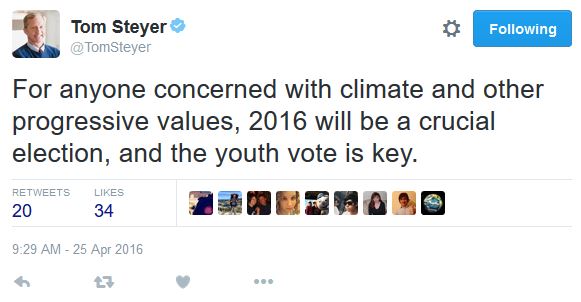
Politicization of our lives has become a detriment to living, so the compulsion I felt toward campaigns during the George W. Bush years is in remission. I work on issues, but like with the climate crisis, they represent human values and shame on those who politicize them or frame them in the false paradigm that is conservative vs. progressive. People like billionaire Tom Steyer is who I have in mind, but it applies equally to all of the billionaire class members.
My summer will be eking out a living on the margins of society, hopefully making enough money to live on, reducing debt, and finding joy in simple pleasures. We don’t need politics for that.
The Johnson County League of Women Voters is hosting a public forum with the candidates on Wednesday, April 27. I plan to attend and listen to what each has to say.
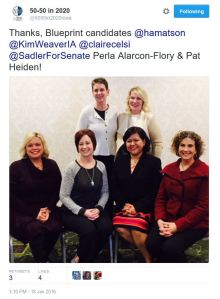
Pat Heiden is a blueprint candidate for 50-50 in 2020, a non-partisan group whose mission is to achieve political equity for Iowa women. Heiden said she was inspired politically when her parents hosted candidates like the late Harold Hughes at their home.
She seeks to give back to the community by running for office. This seems a tangible goal after more than 30 years working at Oaknoll Retirement Community.
Heiden is well connected and has a natural constituency. She has the support of former supervisor and state representative Sally Stutsman and retiring supervisor Pat Harney. She also has behind the scenes support from the significant political players who associate with 50-50 in 2020. Having three of five supervisors being female would not be a bad thing. Heiden has not been politically active.
The other leading contender for my third vote is Kurt Michael Friese, a local businessman and author. He chose not to run in the special election to fill the seat vacated by Terrence Neuzil. Lisa Green-Douglass won that election.
The strength of Friese’s campaign is his endorsement list. Some people I respect and know reasonably well, including Francis Thicke, Ron Clark and Jody Hovland, are publicly endorsing him.
At a recent event I overheard him tell another attendee he had the Laurie Tulchin endorsement. Tulchin is a member of the so-called Newport Road gang, a politically active, resource laden and well-connected group of people working to avoid development in the area around their homes. There is a conflict between the gang and the county land use plan which designated their area as open for development while preserving the farm land south of Iowa City. This endorsement will persuade some.
Friese’s name is widely recognized among city dwellers, but his universe of Iowa City is not strongly connected to mine. Despite the negatives, he is a contender for my third vote.
There are two in the also ran category, Jason T. Lewis and Mike Hull. Both are just getting their campaigns organized, so my prejudice is unfair.
Lewis works for the University of Iowa and we have enough influence on the board of supervisors from this dominating county economic engine. People I respect hold Lewis in high regard, but he’ll have to be persuasive at some level on April 27 to get my vote.
Hull is a medical helicopter pilot who got his flight training from Uncle Sam. He has been active in county veterans groups and had he inquired about or joined our chapter of Veterans for Peace, I might give him a second look. It seems doubtful a person who spends significant time with the American Legion will be my pick unless he is like Al Bohanan who served as a legion commander, is a member of Veterans for Peace and is very active in Democratic politics. Hull doesn’t appear to be like Bohanan.
My ballot in the primary looks pretty straight forward. Two incumbents plus one of two business people with a lean toward gender equity on the board. That could change by the election, and the League forum will be an important event to see how candidates handle themselves in public, and in reaction to each other.
The first two lambs were born at the farm last Sunday, evidence of spring. I’m ready to work in the garden as soon as time off work aligns with precipitation-free days — maybe Saturday morning.
Despite heavy winter precipitation it looks like the upper Mississippi River basin will be spared severe flooding this spring.
The Corps of Engineers has been lowering the water level at the Coralville Lake in preparation, and society is getting used to the threat of perennial flooding. A season without it would be welcome reprieve.
I have been getting ready for spring. Before I leave for work today and the garden tomorrow a few thoughts about political life.
We elected delegates to the district and state convention last Saturday. I stayed until all committee seats were filled and delegate and alternate names were recorded. That was my role in this quadrennial presidential campaign.
On Wednesday a group of political friends from the caucus gathered. While we are engaged, there will be a lull in political action until after Labor Day and the fall campaign in the general election begins.
As the presidential primary season finishes out, it is hard to see a path for Bernie Sanders to overcome Hillary Clinton’s lead in delegates. The fact he didn’t win a single state in the March 15 elections is the sound of the death knell tolling for his campaign.
People want this to be settled, yet the 2008 election of Barack Obama is evidence these things are never really settled. In fact, Clinton’s long history of being assailed by conservatives and liberals alike, predating Obama by decades, suggests there is no such thing as “settled” in national politics any more.
In the Democratic primary for U.S. Senate, four people have announced. I have had multiple conversations with each of them and even have a photograph of Chet Culver, Patty Judge and me at Old Capitol the night before Culver’s inauguration as governor. If you have been reading this blog at all, it’s clear why I would align with State Senator Rob Hogg, who like me is a graduate of Al Gore’s Climate Reality Project.
Congressman Dave Loebsack may or may not have an opponent in the second congressional district. A physician from Iowa City has expressed interest, and they could nominate someone at their district convention. If one considers who ran against Loebsack since he beat Jim Leach, Republicans really have no one.
In the state legislature races, our State Senator Bob Dvorsky isn’t up this cycle, and Republican Bobby Kaufmann doesn’t have a challenger for his seat in the House of Representatives. There is unlikely to be a Kaufmann challenger until 2022 after decennial redistricting.
Five Democrats have announced for three county supervisor seats up this cycle. Rod Sullivan and I have a relatively long relationship, including his two votes to appoint me to the county board of health. Lisa Green-Douglass demonstrated she has political legs and is just getting started as a supervisor. I plan to vote for both incumbents in the primary.
The third choice is more difficult. Three people with careers have announced. Jason T. Lewis is a University of Iowa employee; Kurt Michael Friese is a successful restaurateur and author; and Patricia Heiden is executive director of Oaknoll Retirement Community. All live in the large urban area that includes the county seat.
When one considers the community impact of these three candidates, Pat Heiden stands out. A political newcomer, Heiden seeks elective office after 36 years at Oaknoll, 21 of those as its executive director. I’ve given three talks at Oaknoll and have known a number of its residents. It is a culturally significant social group which makes positive contributions to the growing population of 60 plus citizens of the county. Heiden shares some responsibility for this.
I met Kurt Friese at the county convention, but only briefly. Even though he purchases a significant amount of locally grown food for his restaurant, virtually no one I know in the local food movement mentions his name. I need to understand him and his candidacy better. I also plan to read his book about hot peppers.
Jason T. Lewis announced at the convention and I know a little about him. He has been following the Iowa City Community School District and ran for school board twice unsuccessfully. I need to know him better.
My initial assessment of the race is we have too much board of supervisor influence from people who live in the county seat. I plan to vote for three candidates and favor people who have worked in business over government employees. That means after casting my vote for incumbents, selecting one of the two business people, Friese or Heiden.
We’ll see how it goes as winter ends, spring arrives. I plan to set politics aside as the work to sustain our lives in a turbulent world continues.
Hillary Clinton Delegates and Alternates at the Johnson County Democratic Convention, Tiffin, Iowa, March 12, 2016
JOHNSON COUNTY, Iowa — Democratic delegates met in all 99 Iowa counties on Saturday, March 12. The day was overcast, but hopeful.
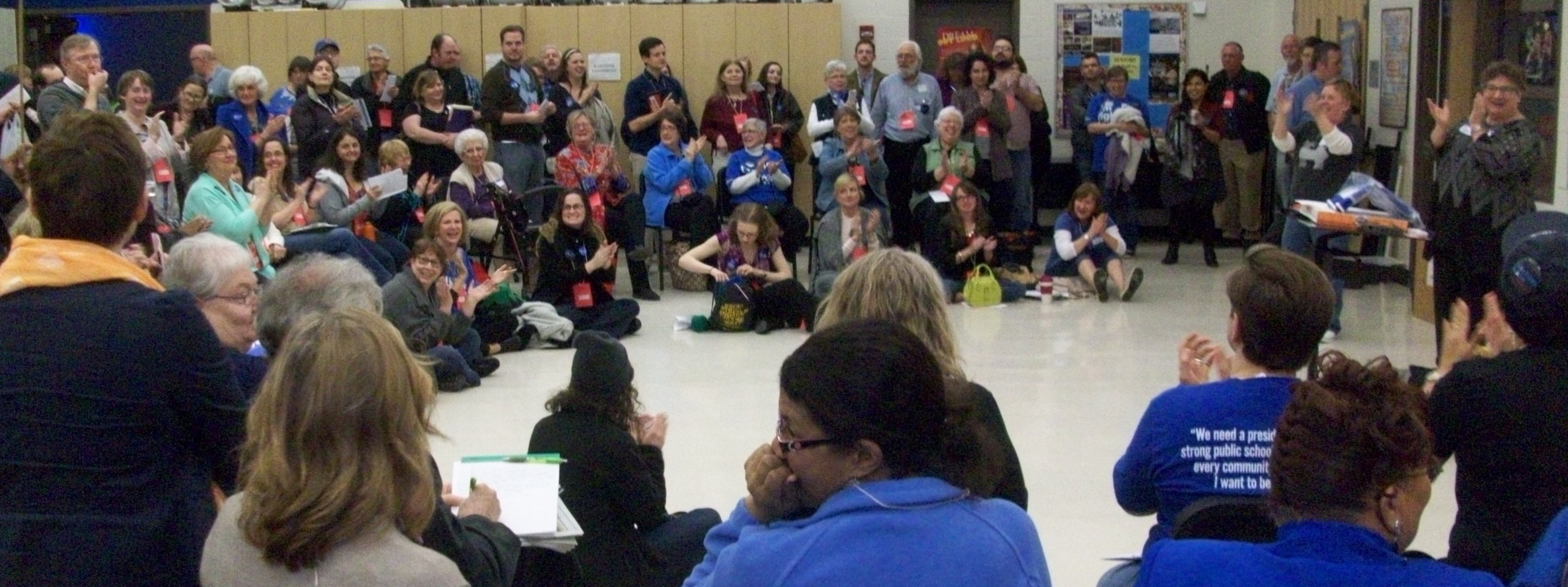
A bellwether was the fact I didn’t recognize many of the hundreds of people at the Tiffin High School auditorium where our county convention was held. Old timers are giving way to a new generation of Democrats brought in this election cycle by the contested presidential primary and Iowa’s first in the nation caucuses.
The results of the presidential horse race were similar to caucus night — Hillary Clinton had four more state delegates after the conventions than Bernie Sanders, ratifying her historic Iowa win 704-700.
The convention was about more than the presidential nomination.
With delegates intoxicated by the allure of the presidential race, Congressman Dave Loebsack and State Senator Bob Dvorsky attempted to sober them up with focus on the importance of the 2016 Iowa legislative races. For six years, Democrats have held the Senate Chamber by the slimmest of margins 26-24, Dvorsky said. If Democrats lose the Senate, Iowa could go the way Wisconsin and Kansas have.
“There are 12 Democratic Senate races this year, and we have to run the table,” Dvorsky said.
First term State Senator Chris Brase has a competitive race in nearby Senate District 46 which includes Muscatine County and parts of Scott. Since none of the Johnson County Senate delegation will be on the ballot in 2016, Dvorsky encouraged delegates and alternates to help with Brase’s campaign.
“Embrace Brase,” he said.
Loebsack was in sync with Dvorsky, affirming his support for Hillary Clinton, saying he would support Sanders if he were the nominee. He then explained that the presidential race, even his race and the challenge to six-term U.S. Senator Chuck Grassley, were less important to Iowa than the state house races.
During the caucus of Clinton delegates and alternates to elect district/state delegates, former Iowa Democratic Party chair Sue Dvorsky affirmed the strategy of the presidential campaign returning to Iowa after the Democratic National Convention. The presidential campaign will bring much needed financial and organizational resources to prop up the Iowa Democratic Party.
There was other news at the convention.
Abbie Weipert of Tiffin announced she will join North Liberty Mayor Amy Nielsen in the June 7 Democratic primary to nominate a candidate in House District 77. Nielsen was first to enter the race after two-term Representative Sally Stutsman announced her retirement last month. I met Weipert during the 2012 campaign when her now husband Travis was elected Johnson County Auditor.
There was no announcement of a challenger to two-term Republican Bobby Kaufmann who represents House District 73 with six precincts in Johnson County along its border with Cedar County. During a previous discussion with Cedar County Democrats chair Laura Twing, no challenger is forthcoming. At this writing, Democrats appear ready to cede this seat.
Jason T. Lewis announced a bid for county supervisor in the June 7 Democratic primary. Lewis joins four other candidates, including incumbents Rod Sullivan and Lisa Green-Douglass, and newcomers Kurt Michael Friese and Patricia Heiden. Heiden, until recently a registered Republican, was the only one of the five who didn’t address the convention Saturday morning. Three seats are up this cycle.
Sullivan and Green-Douglass have the upper hand going into the primary. Sullivan is arguably the most liberal of the current supervisors and has strong rural connections that are important in a county dominated by the City of Iowa City and the University of Iowa.
Green-Douglass was elected in a special election Jan. 19, however, her strong showing during the 2014 primary contest gives her better name recognition than Friese, Heiden or Lewis. Mike Carberry beat Green-Douglass 3,459 to 3,333 on June 3, 2014, which was a respectable showing for both candidates.
What likely tipped the win to Carberry was better county-wide name recognition combined with support of the Newport Road gang. Before the January election, I heard a gang member refer to Green-Douglass as “no good,” so their support may be an issue for her again this cycle. During his speech at the convention, Friese, a friend of Carberry, aligned himself with interests of the Newport Road gang with his campaign tagline, “Stop pouring concrete on good farm land!” He also parroted the Newport Road position of developing the county by filling in existing lots rather than through additional rezoning. It will take more than alignment with any one group to win the Democratic primary. According to the cowboy card Friese distributed at the convention he has a broader palette from which to paint his campaign.
Johnson County’s leaders asserted a focus more on down-ticket races than the presidential or U.S. Senate ones. It’s hard to argue with that.
Best political speech of the day, maybe of all time? Two letters, “Hi,” from County Attorney Janet Lyness who had laryngitis.





 Journey Home
You must be logged in to post a comment.