In Iowa there is more to living in society than any single issue or election. Unlike members of the Congress, we aren’t in a constant state of campaigning. We view those with whom we interact as people first, which makes life more tolerable. There are cultural nuances where we chose to live.
Some voters I know pick politicians based on their position regarding abortion. A significant part of the electorate finds that to be sufficient qualification to earn a vote and serve in elected office.
In Dobbs vs. Jackson Women’s Health Organization, the U.S. Supreme Court created a political mess with real-life consequences by upending established precedent in Roe v. Wade. Straightening the resulting mess will be part of the work of the 118th Congress.
Several years ago, I volunteered with a group that served the needs of older citizens. Almost everyone from the community volunteered to help in some way. The topic of politics almost never came up in conversation among volunteers. It was avoided. Such restraint was a form of glue that held the organization together enough to accomplish good work.
A focus on abortion alone does injustice to everything else we value. Where is the role in our politics for addressing environmental issues? What about economic issues? What about corruption? What about access to health care? Regardless of election outcomes, our work on these issues and more will continue.
Our values persist beyond a single issue or election cycle.
~ First published on Oct. 5, 2022 in The Little Village. A version also appeared in the Quad-City Times on Oct. 7, 2022.
The Nov. 8 midterm election will be here before we know it. What then?
What we value persists beyond elections. Voters I know pick their politicians based solely on their position on abortion. Right next to that in importance is same-sex marriage. Other issues are deemed less important or not worthy of consideration. If a politician is anti-abortion and anti-same-sex marriage, half the electorate finds that to be sufficient qualification to earn a vote and serve in elected office.
In rural Iowa there is more to living in society than any single issue. Unlike members of the Congress, we aren’t in a constant state of campaigning. There are cultural nuances in the places we chose to live. We view those with whom we interact as people first and that makes rural life tolerable for most.
Several years ago, I volunteered with a group that served the needs of older members of society. Almost everyone from the community volunteered in some way. It was almost expected. Unless one knew the politics of another person among volunteers, the topic almost never came up in conversation. It was avoided. Our politics were something held private and kept from social discourse. Such restraint was a form of glue that held the organization together. That organization and others like it accomplished and continue to accomplish good work.
As we head into the midterms, candidates are focusing a message on the U.S. Supreme Court’s decision that overturned Roe v. Wade this year. The issue resonates because while we once had legal precedent that was settled law, with President Trump’s three appointees to the high court, we discovered it wasn’t as settled as we thought. Whether that is a winning issue for politicians, I don’t know. However, the ground shifted below us, requiring us to re-invent all the terms of Roe, something that may or may not be possible. It is, however, a political mess with real life consequences.
A focus on Dobbs, the case that overturned Roe, does injustice to everything else we value. Where is the role in our politics for addressing environmental issues? What about economic issues like the concentration of wealth among a small percent of the population and the damage that does? What about corruption in our politics without proper limits on campaign contributions? What about our inability to enable residents of our state to access needed health care? If we talk mostly about Dobbs during the remaining days of the election cycle, these issues and more get relegated to the back burner.
I guess we’ll just have to pick them up again after the election because they won’t resolve by themselves.
On Saturday former president Jimmy Carter celebrated his 98th birthday with a parade in his hometown of Plains, Georgia. I had no dog in the 1976 campaign that elected him president. I was serving in the U.S. Army in Germany and felt that with Nixon gone, the electorate should have free reign to either keep Gerald Ford or pick someone else. I feel Carter was unjustly criticized during his administration.
However, I broke with Carter after his July 15, 1979 speech, known as the “malaise speech,” in which he said, “The erosion of our confidence in the future is threatening to destroy the social and the political fabric of America.” I couldn’t abide by that and caucused for Ted Kennedy at the 1980 Iowa caucuses.
In his concession speech at the Democratic National Convention, Kennedy said, speaking of Ronald Reagan,
The great adventures which our opponents offer is a voyage into the past. Progress is our heritage, not theirs. What is right for us as Democrats is also the right way for Democrats to win. The commitment I seek is not to outworn views but to old values that will never wear out. Programs may sometimes become obsolete, but the ideal of fairness always endures. Circumstances may change, but the work of compassion must continue. It is surely correct that we cannot solve problems by throwing money at them, but it is also correct that we dare not throw out our national problems onto a scrap heap of inattention and indifference. The poor may be out of political fashion, but they are not without human needs. The middle class may be angry, but they have not lost the dream that all Americans can advance together.
Protecting women from the intervention of politicians in their health care is important. It is also an issue precipitated by Democratic failure to adequately support Hillary Clinton during the 2016 general election. This failure enabled Trump’s three Supreme Court picks.
What are the values that bring communities together? A right to self-determination is one of them yet there are more. As we head into the midterm elections, we would do well to recall what Kennedy said at the end of his speech, “For me, a few hours ago, this campaign came to an end. For all those whose cares have been our concern, the work goes on, the cause endures, the hope still lives, and the dream shall never die.”
Jack Kerouac’s 1950 book The Town and the City was a white whale of fiction, rejected by most publishers. It was a conventionally-styled book, written before Kerouac developed his own style. It is said to be influenced by Thomas Wolfe. The problem for publishers was the book’s 1,100-page length. Paper and binding costs money and a long first book would eat into their profits. Eventually, the book was shortened and 15,000 copies were printed by Harcourt Brace, with 4,500 held in a warehouse without bindings in case it sold. It didn’t sell. Today, few are interested in this roman à clef comparison between Lowell, Massachusetts and the New York City of the beat poets. It is probably for the best.
Today we talk about the migration of people from the countryside to cities, as rural areas are being hollowed out. Patrick J. Carr and Maria J. Kefalas wrote about it in their 2009 book Hollowing Out the Middle: The Rural Brain Drain and What it Means for America. Robert Wuthnow examined the sociology of rural America as it related to the ascension of Donald Trump to the presidency in his 2019 The Left Behind: Decline and Rage in Small-Town America. There are trends in rural life, yet there is more than that.
Rural elected officials are the ones cutting budgets that handicap the Department of Natural Resources in doing their job. How regulations pertaining to water and air quality are enforced impact rural residents especially. Why do rural folks so often vote against their best interests? I submit it’s because they vote for candidates who reflect their position on LGBTQ+ (against same-sex marriage) and abortion (none permitted) and look no further. The crap legislation that moves state revenue from public schools to private and hollows out rural community life are part of the package. It is easy to say vote Democratic to avoid this.
The national media persist in depicting American society as divided along clear ideological lines. In rural Iowa life is more nuanced than that. I know how most of my neighbors vote. Practically, that’s a minor consideration in being part of a community.
When I say nuanced, a long time Republican neighbor stopped their car to comment while I was putting out political yard signs. I mentioned the candidates were both on the right side of issues important to our subdivision. These conversations are the glue that binds the community. We don’t have enough of them.
What I’m saying is don’t be like Kerouac and bloviate about divisions the popular culture left behind. Take time for a conversation with a neighbor. Donate to the food bank. Write a letter to the editor of the local newspaper if you are lucky enough to still have one. Forget about the divide between rural and city folk as is depicted in media.
If you talk to enough voters in rural Iowa, it is easy to see where things land on abortion and same-sex marriage. The best we can do is encourage people that there are other, equally important issues.There may be no changing one’s firmly held beliefs on an issue or two. At the same time, our lives go on and there are real threats to the environment, our economy, and our way of life. While we hold fast to our beliefs, we must also be open to change in areas that serve the common good. The false division of rural and city should be relegated to history the way Kerouac’s book has been. It turned out his second book, On The Road, was a much better read in any case.
Christina Bohannan – Photo Credit Bohannan for Congress
Control of the U.S. House of Representatives could boil down to whether Christina Bohannan beats incumbent Mariannette Miller-Meeks in Iowa’s First Congressional District on Nov. 8. I’m voting for Bohannan. You should, too.
I met Bohannan before the pandemic at a coffee shop in Iowa City. My first impression was she was smart and engaged. As I’ve gotten to know her, she proved to be a compassionate, knowledgeable leader: the kind we need in the Congress. She will represent every district resident.
Her opponent made a case to elect Bohannan by going off the deep end once she got to Washington, D.C. Miller-Meeks quickly swallowed the extreme Republican Party narrative hook, line, and sinker. Bohannan remains a normal Iowan. There is value in that.
Like former Congressman Dave Loebsack, Bohannan is a college professor. She is a current colleague with former Congressman Jim Leach at the University of Iowa College of Law. Both have endorsed her. She is a mother and a state representative. What else is there to say?
Christina Bohannan is the Democrat in this race. That may be enough to earn our vote on Nov. 8: a Congresswoman who listens to and acts on behalf of all constituents.
~ First published in the Southeast Iowa Union on Sept. 20, 2022.
We had already entered the fall campaigns after Labor Day. Seven days of summer remain and there are 53 days until the midterm election when a lot rides on the outcome. Will it be a fair election? We hope so.
In Iowa, where Republicans dominate the political landscape, Secretary of State Paul Pate prides himself on following election rules. As long as Republicans win, I don’t anticipate any funny business counting votes. Lately, especially after the recruitment of church-going folk to register and vote, Republicans tend to turn out.
Four congressional seats plus one U.S. Senate seat are on Iowa ballots. Most voters are interested in federal races. Pollsters and political prognosticators I read show Iowa favoring Republicans. Democratic candidates in these races have other ideas. It is conceivable there will be close races, yet Democrats are all playing catch-up.
After the Democratic build up to the 2016 and 2018 elections, and the subsequent deflating when Republicans won by a lot, I’m not hopeful. In 2020, my precinct in Johnson County turned solidly Republican. Iowa is returning to its Republican roots, although it is not the same Republican party as it was when Robert Ray held the governorship for 14 years.
My main volunteer work this cycle have been writing letters to the editors of newspapers and financial donations from a limited budget. I do not attend a lot of fund raisers because my funds are spent the day after my pension hits the bank. I wrote post cards to voters a couple of times. I attend meetings of the Johnson and Iowa County Democratic central committees. I am getting too old for door knocking and telephone canvassing. I stay busy with politics, but it’s different from when I re-activated after the 2004 Iowa Precinct caucuses. As a septuagenarian, I slowed down.
As we head into the home stretch, a large majority of voters have made up their minds and are simply waiting to vote. The rest of the campaign involves finding those who haven’t decided and persuading them to vote for our candidate. Candidates who do a good job of that have a chance to win. If they aren’t organized to do so, they don’t. It’s pretty cut and dried.
I retain hope Democrats will win some races. Some of the local races have Democrats running unopposed: County Attorney, County Treasurer, and County Recorder. It’s time to do what good we can before polls close on Nov. 8.
Kinney is the Democrat running in Iowa Senate District 46.
I hadn’t received a push poll telephone call until yesterday. I participated in the whole thing, yet it was terrible. The pollster must have been seeking dim-witted jamokes to persuade voters of the efficacy of their chosen candidate, in this case Dawn Driscoll, who is running against Kevin Kinney for the Iowa Senate in District 46.
Driscoll did almost no visible campaigning before Labor Day. A few campaign signs appeared along major thoroughfares after that. She recently held an event with Governor Kim Reynolds and Congresswomen Mariannette Miller-Meeks. If her campaign begins with a push poll, there is no telling how much mudslinging there will be from Republicans before the Nov. 8 election.
“A push poll is an interactive marketing technique, most commonly employed during political campaigning, in which an individual or organization attempts to manipulate or alter prospective voters’ views under the guise of conducting an opinion poll,” according to Wikipedia. The key word here is “manipulate.” This poll attempted to manipulate me by misrepresenting Kinney’s positions. Because I know better, the sole alteration of my views of the campaigns was to reaffirm support for him.
I’ve been represented by Democrats in the Iowa Senate since we moved here, notably with the long tenure of Senator Bob Dvorsky (1993-2018), followed by Zach Wahls (2019-present) after Dvorsky’s retirement. It is only with the recently completed decennial redistricting we have to contemplate a Republican representing us. While the urban centers in the county remain strongly Democratic, Republicans have been able to peel off a few precincts around the central cities.
The contest with a new district that leans Republican is proving to be the worst of modern politics for regular voters like me. Push polling is just the tip of the iceberg of the Republican threat.
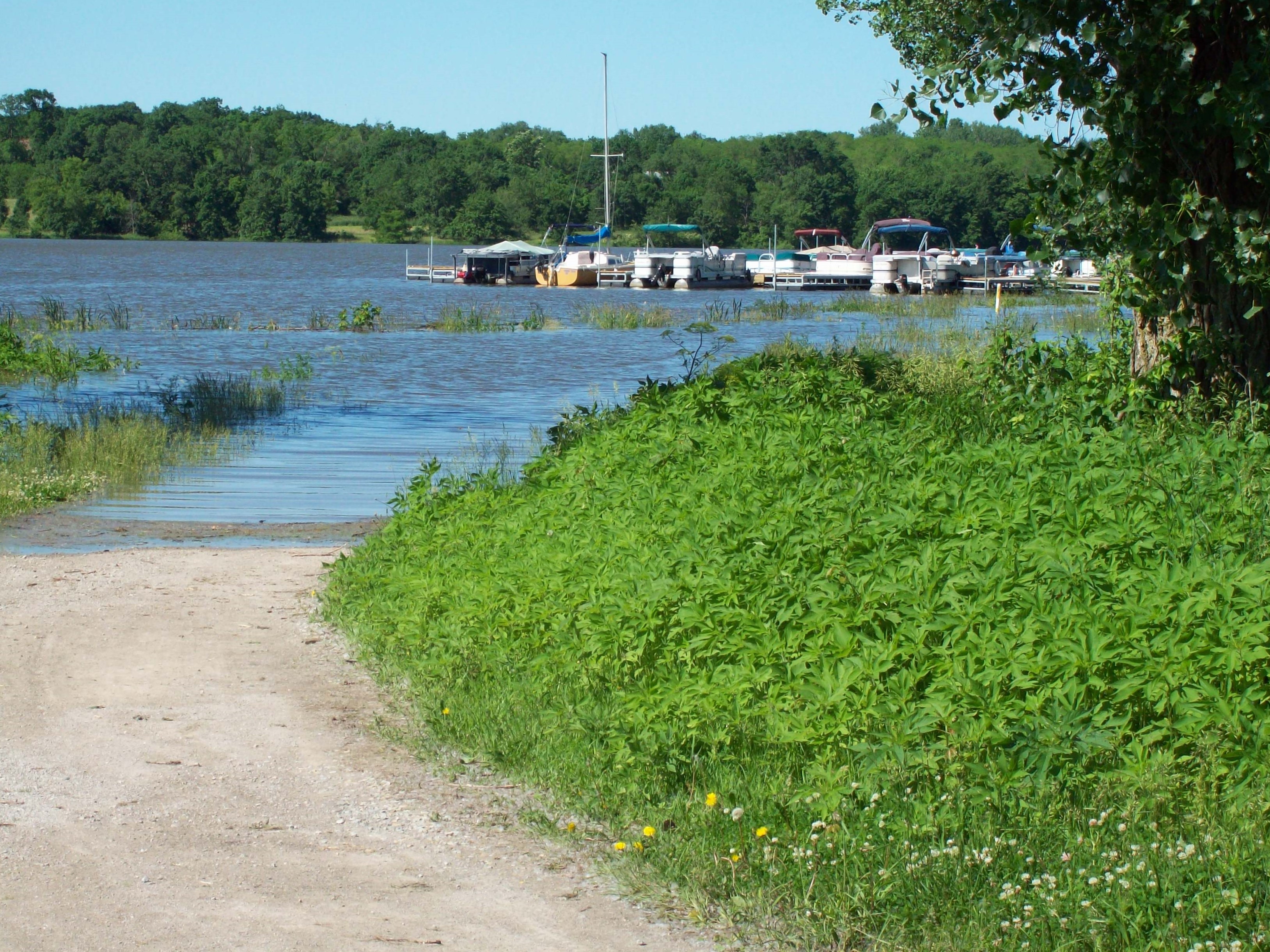
Flood water from Lake Macbride reached within 600 feet of our home on June 14, 2008
We did not fear the 2008 flood, even though it rendered roads and bridges near us impassible and destroyed significant parts of Cedar Rapids and Iowa City. There was a lesson to be learned from it.
As the water level rose, flowed over the Coralville Dam spillway on June 10, then back-filled Lake Macbride, it would have taken much more than there was to flood our home near the lake. When the flood crested on June 15, we were relieved.
Lake Macbride is part of the water storage system for the Coralville dam and the reservoir created behind it. 2008 flooding was greater than any in recorded history, yet the system worked as well as it could have given the volume of water. Because news media were focused on the natural disaster, we had plenty of information upon which to make decisions: Should we sand bag the house? Should we move everything to the upper level? Should we evacuate? By closely monitoring the news, we were able to survive with minimum disruption in our lives.
The Aug. 10, 2020 derecho was another catastrophic weather event, only this time, there was little advance warning. The City of Cedar Rapids may never be the same after much of the tree canopy was destroyed. Straight-line winds have become a repeating occurrence on our property. The 2013 event did more damage than the derecho, yet in the latter electricity was out for four days. It took time to recover from this event, have a tree service remove broken limbs, and clean up debris. Everyone in the neighborhood had piles of firewood after the storm.
To what extent were the 2008 flood and the 2020 derecho made worse by climate change? In his essay on the 2008 flood, Eugene S. Takle summarizes where we are.
When rare and extreme weather events seem to increase in frequency, either locally or regionally, both statisticians and thoughtful lay people begin to wonder if something unusual is going on. They ask not only whether climate change was involved, but also — and more urgently — whether such extreme conditions will be repeated soon or nearby. The question is much more than academic…
Was Climate Change Involved by Eugene S. Takle. Published in A Watershed Year: Anatomy of the Iowa Floods of 2008, edited by Cornelia S. Mutel.
Our troubles as a society lie elsewhere, outside the rational thinking of scientists.
The lesson learned from these natural disasters is to be alert and pay attention to what one can’t control. The lesson applies to more than natural disasters.
Sixty years ago I did not foresee where we would arrive in our politics and society. The idea that corporations could and would spend countless fortunes to manipulate voters to support candidates who did not serve their best interests is mind-boggling. Yet here we are.
Everything is corrupt, including political office holders, news media, law enforcement, our judiciary, our distribution system, and an extraction economy that impoverishes people who remain out of plain sight. It is a harsh judgment, yet is increasingly and undeniably true. We may have been able to survive floods, derechos, and straight line winds, yet our biggest problem is one we made for ourselves.
The approaching danger to be addressed is one of our politics. Republicans controlled both chambers of the Iowa legislature and the governorship after the 2016 election. They used their majority to advance policies that serve interests which align with right-wing conservatives and business concerns. At the same time, 45 of 150 Iowa legislative races have candidates running unopposed this cycle. The apparent lack of interest in running for office is as much a problem as the Republican trifecta.
This year, because of the recent U.S. Supreme Court decision on Dobbs v. Jackson Women’s Health Organization, which overturned Roe v. Wade, the number of female voter registrations is up. It is hard to know what this means, other than that women who value the right to an abortion, to make their own health care decisions without intervention of politicians, are taking action by registering to vote for candidates who support that right. Whether this movement will persist after the Nov. 8, 2022 election is an open question.
The American political system is far from perfect. If we want to address the dangers of climate change in the form of extreme weather events, as we must, that political system is our only, best hope. We must all get more engaged than we have been.
In 2021, 15.8 million wage and salary workers, 11.6 percent of the workforce, were represented by a union according to the Bureau of Labor Statistics. It is a small, yet mighty segment of the American people.
The flip side of this is 313.7 million Americans are not represented by a union. To me, that is the more significant number. Most of us have plenty of non-paid work to do.
I wrote about my relationship with unions in 2007.
I have been on just about every side of the union issue, beginning with my membership in what was then called the Amalgamated Meat Cutters and Butcher Workmen of North America in 1971 (where I hold a retirement card). I worked at the University of Iowa while AFSCME unsuccessfully tried to organize us in the early ’80s, and supervised groups of teamsters from Local 238 in Cedar Rapids, and Local 142 in Philadelphia. In Philadelphia I negotiated the contract with the local business manager. My mechanics signed cards when I ran a trucking terminal near Chicago, and ultimately decided the teamsters union was not for them. Based on this experience, I know a bit about unions.
If you believe unions are strong in 2022, some of them are. There are high profile news stories about organizing Amazon workers and Starbucks employees. Time Magazine reported last October the number of work stoppages over contract issues had doubled. Simple facts of the American economy emerging from the coronavirus pandemic — higher corporate profits, a Democratic president who supports organized labor, and a shortage of workers — have created a pro-labor sentiment. My advice is for workers to get what they can, while they can, as this environment may not endure once corporations determine how to cope with workforce changes.
Rick Moyle, executive director of the Hawkeye Area Labor Council AFL-CIO, wrote in this morning’s Cedar Rapids Gazette we should hold elected officials accountable.
The bottom line is that we can no longer allow our elected officials to say one thing on the campaign trail and do just the opposite once elected. They bank on people forgetting the statements and promises they have made. Working people can no longer afford to be duped into partisan rhetoric and hot button topics. We must come together and hold our elected officials accountable, regardless of party affiliation.
On Labor Day Hold Politicians Accountable by Rick Moyle, Cedar Rapids Gazette, Sept. 5, 2022.
Ahead of Labor Day, AFL-CIO launched what it believes is the largest voter organizing drive in history to restore America’s promise. “All told, more than 100,000 volunteers will reach at least 7.7 million working people between now and Election Day,” according to an article at Iowa Labor News.
On June 28, 1894, Congress passed an act making the first Monday in September of each year a legal holiday. President Grover Cleveland signed it into law. Even though I retired during the pandemic, and its been many years since I carried a union card, I believe I’ll take the day off, work at home, and thank a union.
Coffee with Congressman Dave Loebsack, Feb. 22, 2020. Left to Right: Christina Bohannan, Dave Loebsack, Brad Kunkel, Elle Wyant, Paul Deaton. Photo Credit – David Leshtz.
I first met Christina Bohannan at a coffee shop in Iowa City, at my last political event before the coronavirus pandemic. My first impression was she was smart and engaged. As I’ve gotten to know her, she has proven to be a compassionate, knowledgeable leader, of the kind we need in the U.S. Congress. She will work hard to represent every resident of the First Congressional District. We should elect her on Nov. 8.
Republican incumbent Mariannette Miller-Meeks made the case for electing Bohannan by going off the deep end to adopt the crazy talk of today’s Republicans. Bohannan remains grounded and sensible.
Bohannan is a mother and a state representative. Like former Congressman Dave Loebsack was, Bohannan is a college professor. She is also a current colleague with former Congressman Jim Leach at the University of Iowa College of Law. She has both of their endorsements.
Bohannan is on the right side of issues. We’ve come to a place in society where rational arguments about specific policy positions will have little bearing on the 2022 midterm election. This election will be based, in large part, on visceral reactions people have had to the legacy of the Trump administration, including stacking the Supreme Court of the United States (ex. Dobbs v. Jackson Women’s Health Organization which overturned Roe v. Wade), attempts to overturn any and all government regulation of the economy (ex. Executive Order to review the Environmental Protection Agency’s Clean Power Plan), and cutting government budgets without fear or awareness of consequences (ex. Tax Cuts and Jobs Act of 2017).
Bohannan has plenty more in her campaign kitbag.
For further reading, Bohannan’s biography is on her website. Viewing a recent speech the Iowa State Fair will get readers up to speed on current policy positions. What else is there to say?
She is the Democrat in the race. In 2022, that’s what we need.
This is a reply to a letter of support for Brad Sherman in this week’s The Hometown Current. He is running against Elle Wyant in the Iowa House District 91 open seat.
Response to Kesterson Letter
I read with interest Kris Kesterson’s letter to the editor of The Hometown Current titled, “Brad Sherman – a true patriot.” Why doesn’t the author explain why he is a patriot instead of listing assertions that have long been discredited?
In a free country, Kesterson is entitled to her opinion. I hope there are additional letters in the newspaper laying out the reasons to support him or Elle Wyant, the Democratic candidate for House District 91.
What I see in this letter is a litany of radical, right-wing talking points. If Sherman believes or supports these things, he lies on the fringe of our society. Wyant would be the better legislator for her ability to represent all Iowans and bring focus to what’s most important: education, economic development, and equity.
As it stands, the letter informs us the candidate holds radical, fringe positions which have no place in the Iowa state house.




 Journey Home

You must be logged in to post a comment.