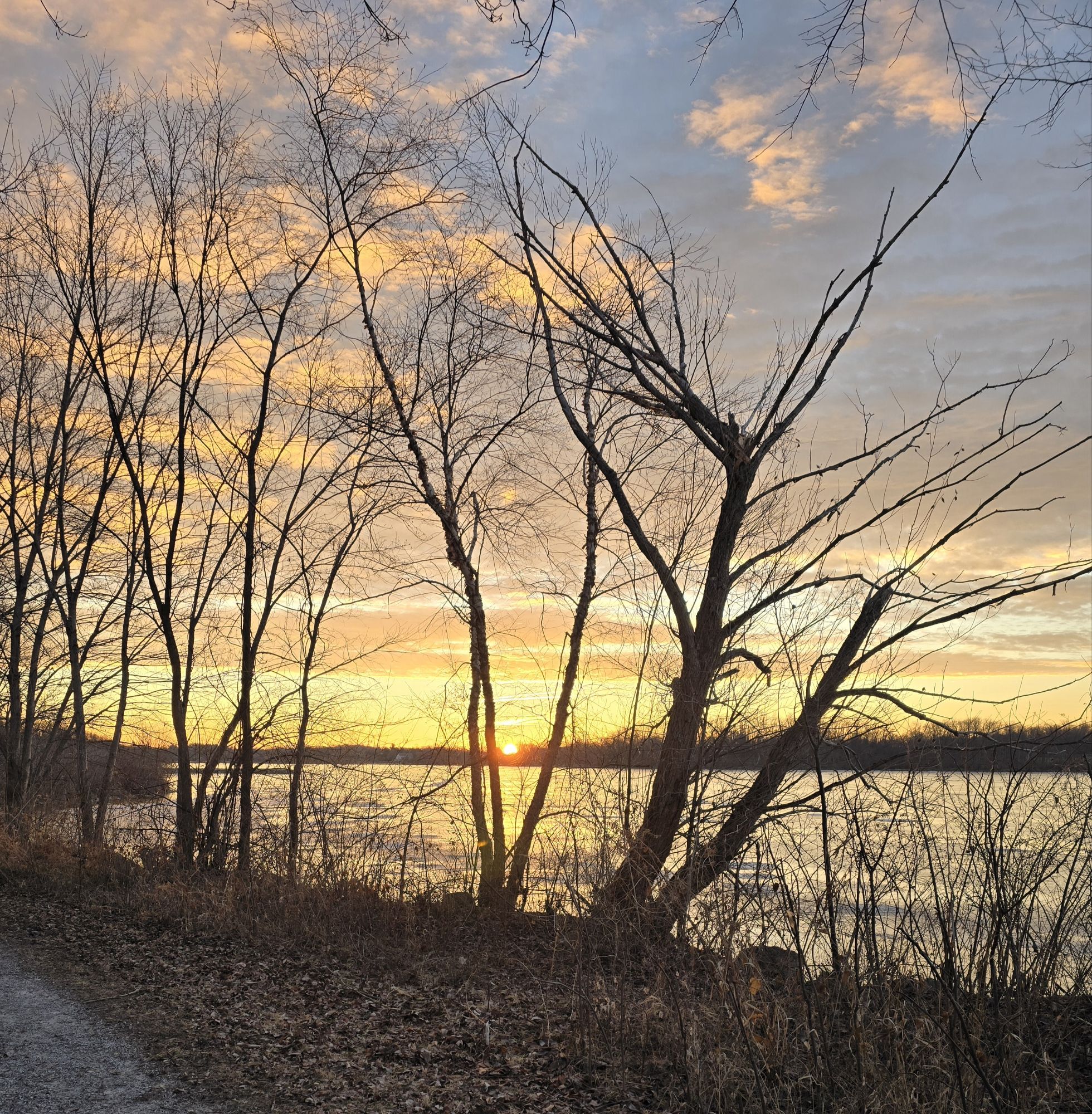
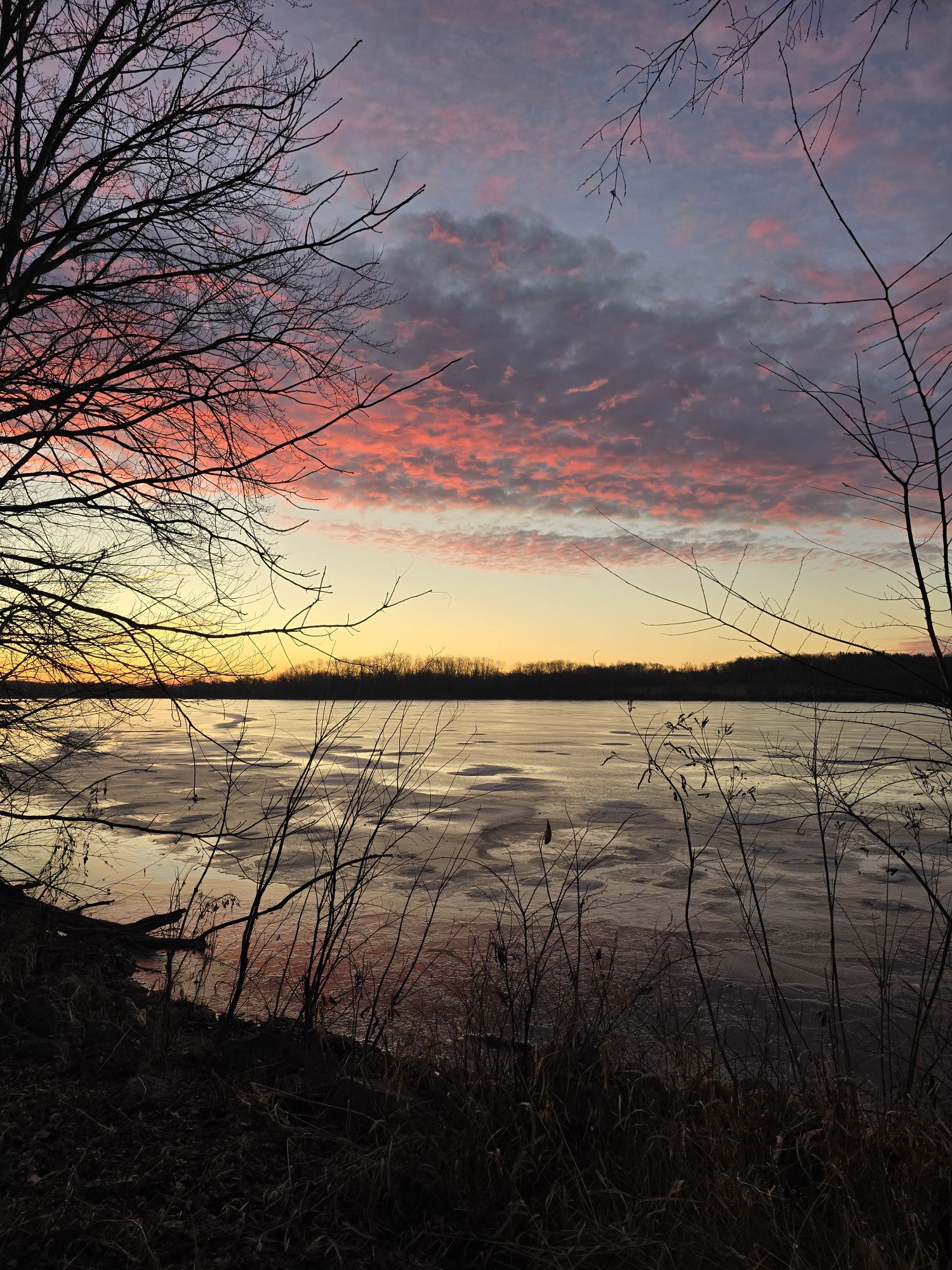
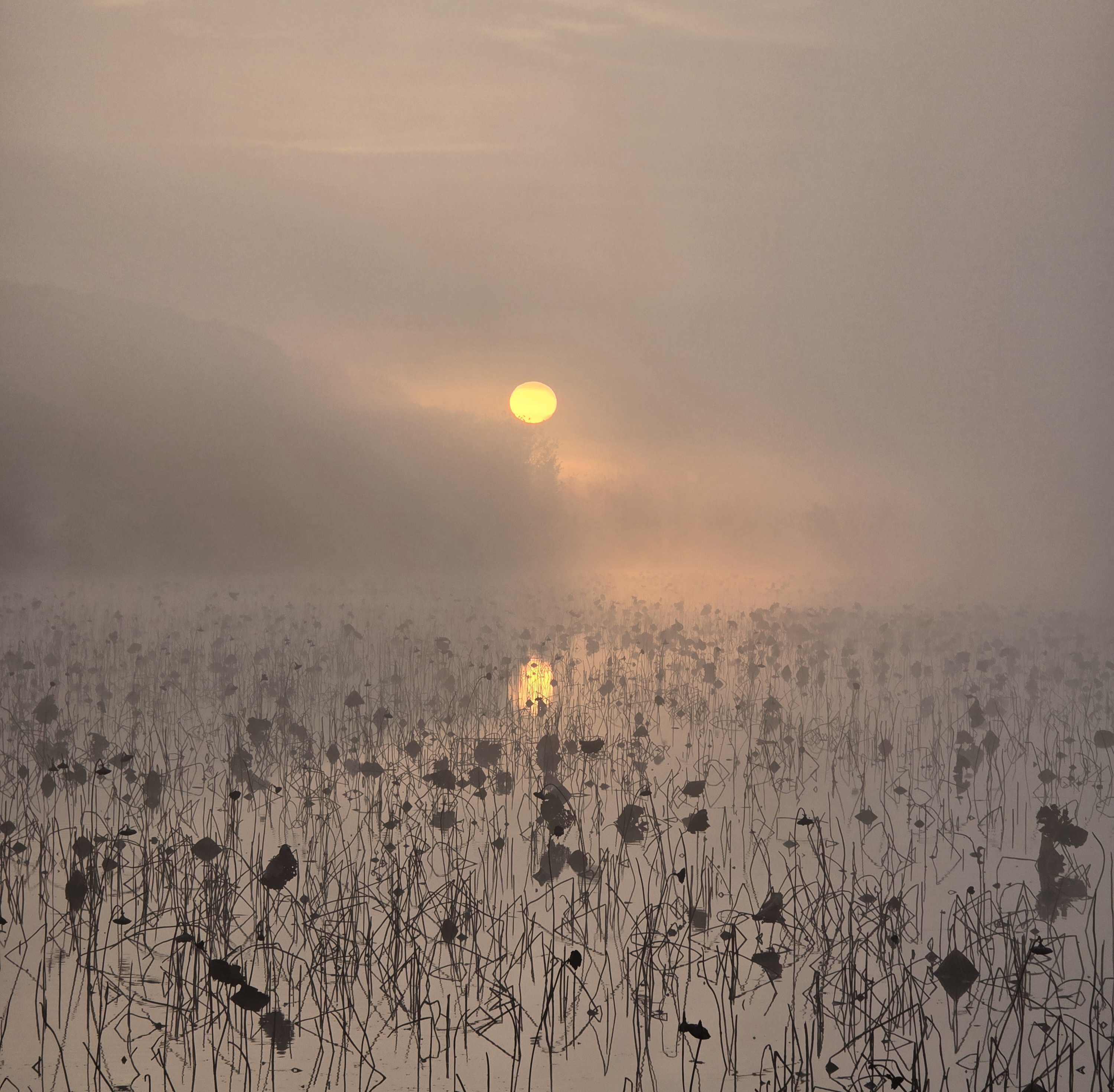
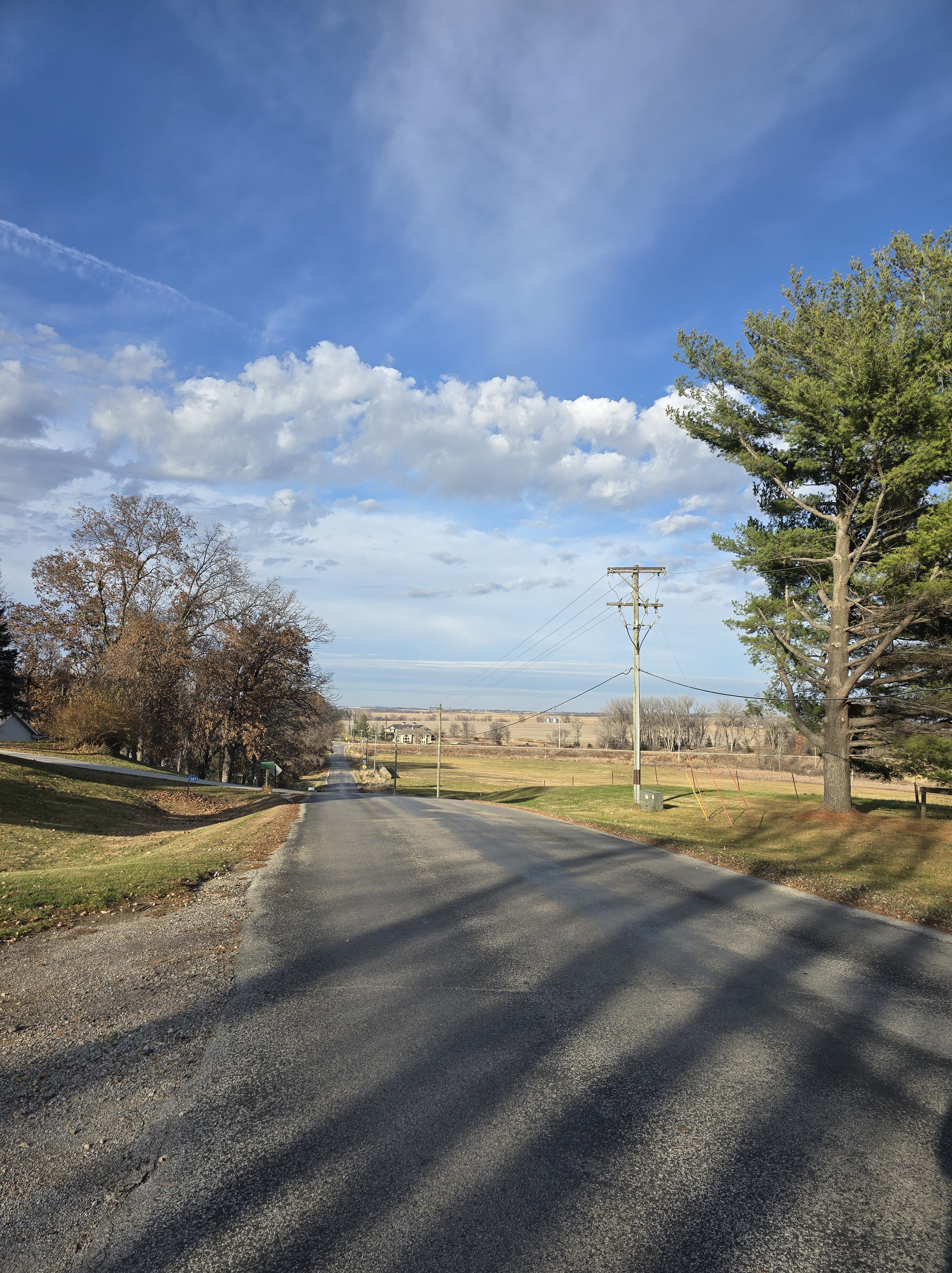
I spent a good part of yesterday on the road to Des Moines and back. There was fog around Grinnell, yet visibility was good. By the time I returned, I was beat — a person only has energy to describe the Iowa landscape as a post so many times. So here are two photos from the state park trail earlier this week. The sun puts on a better show than I ever could.
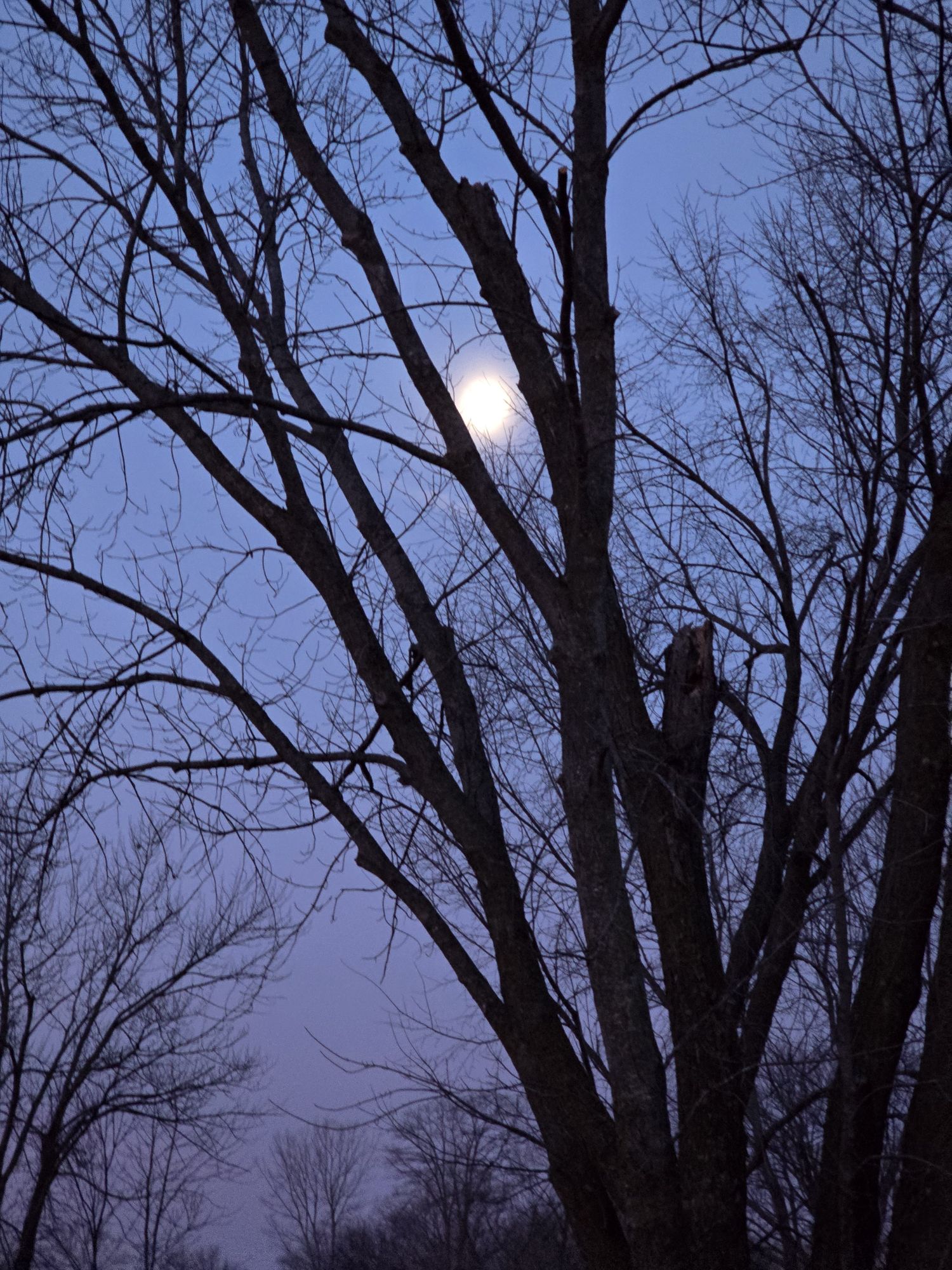
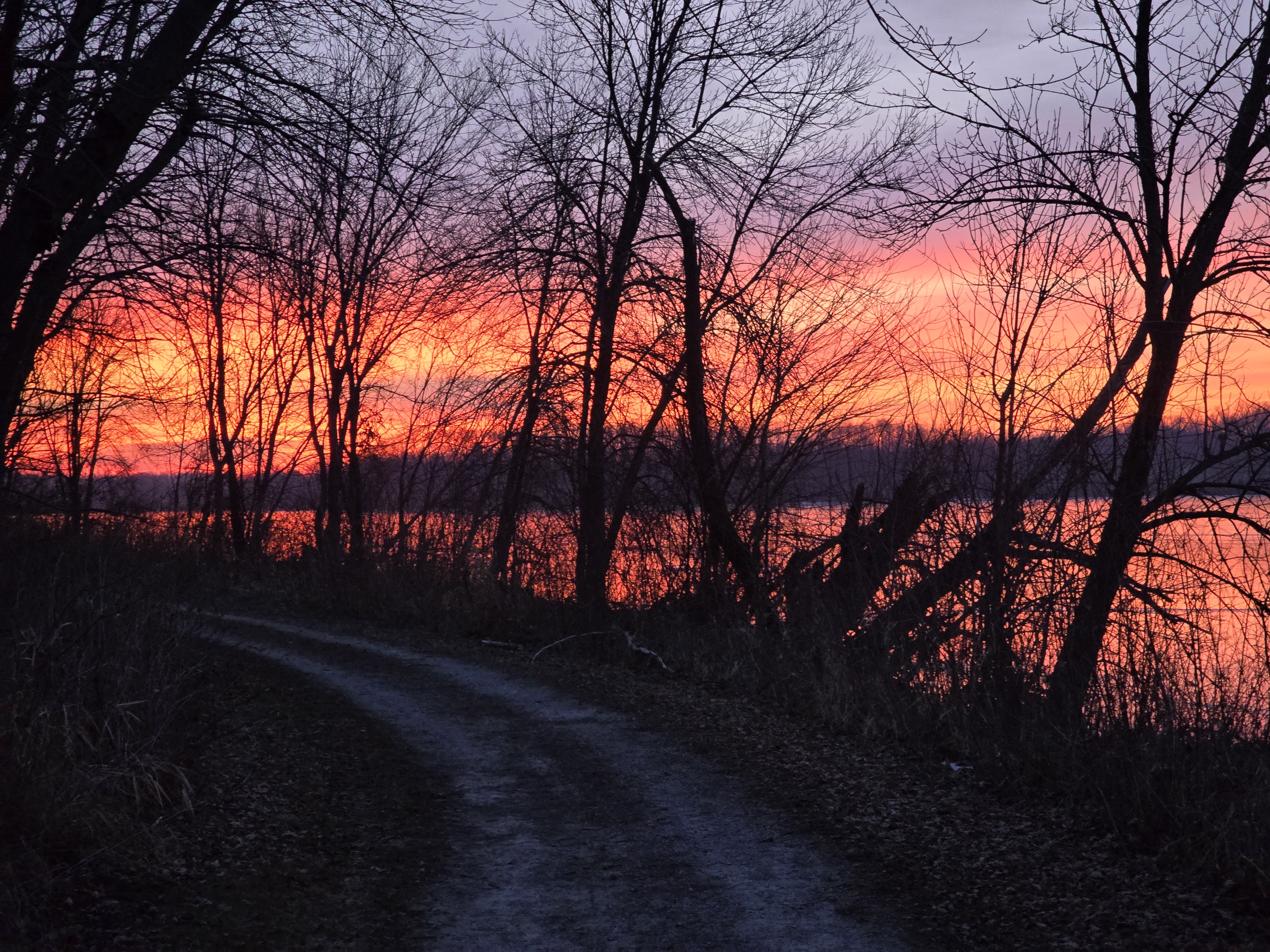
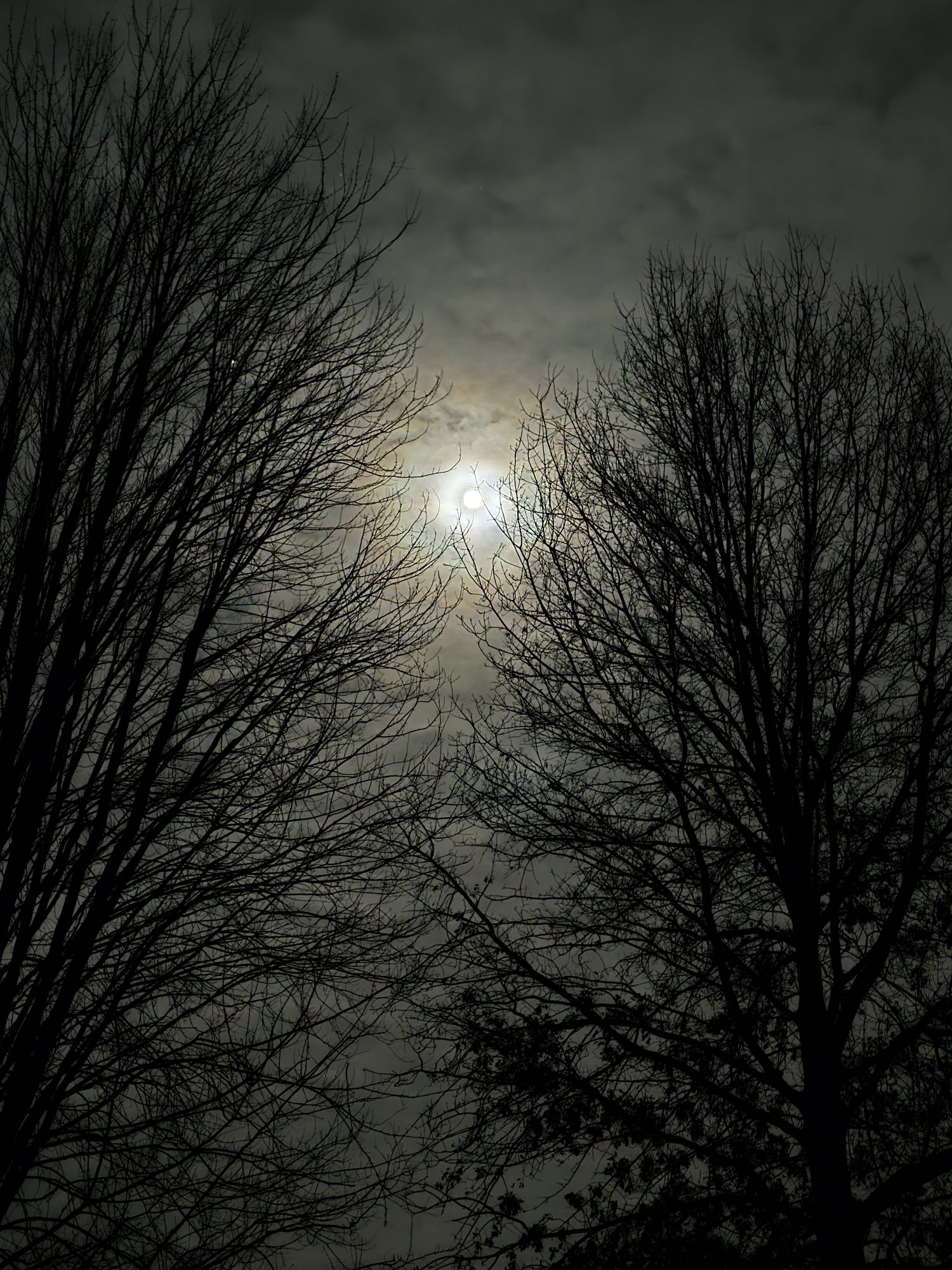
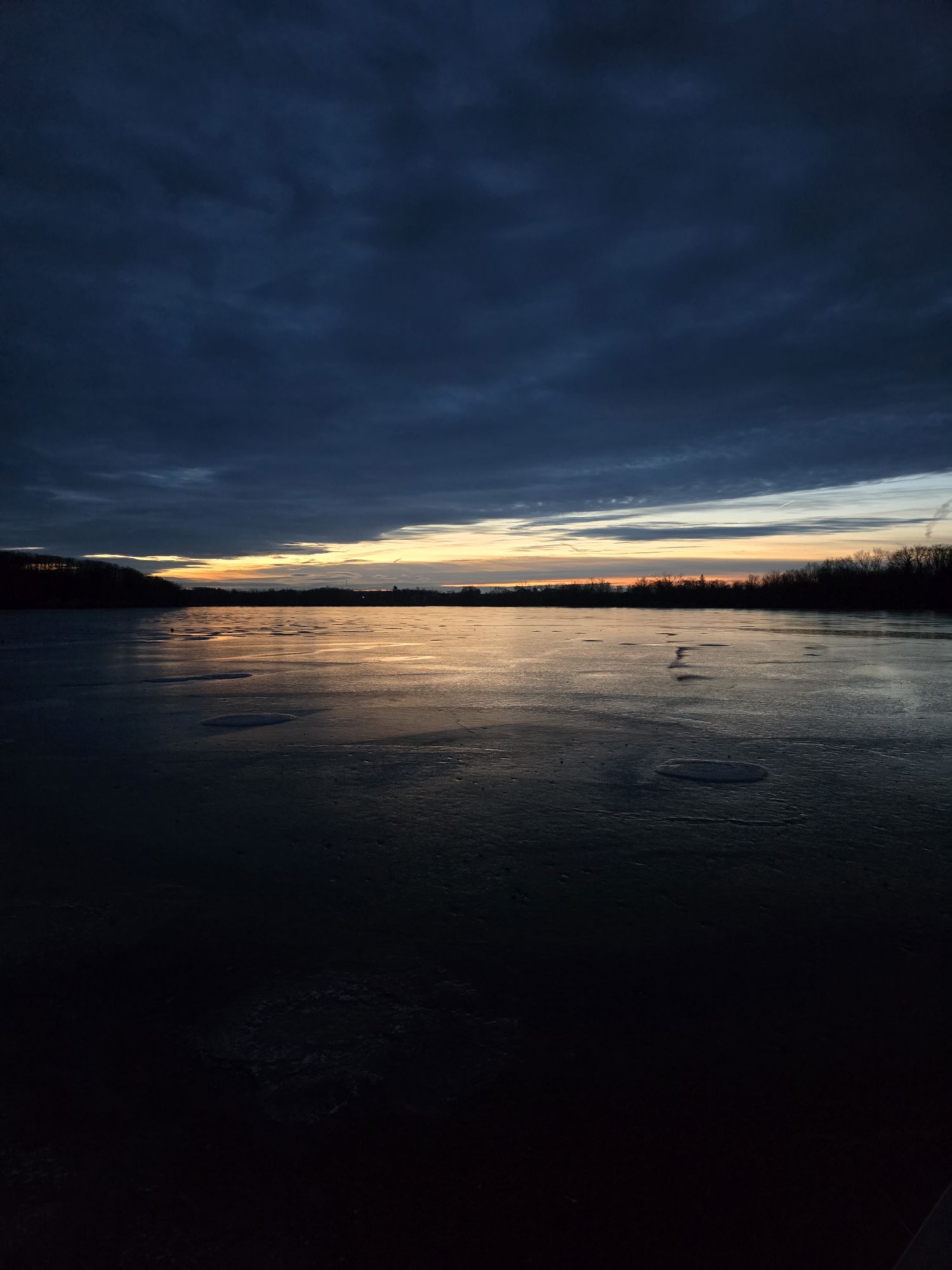
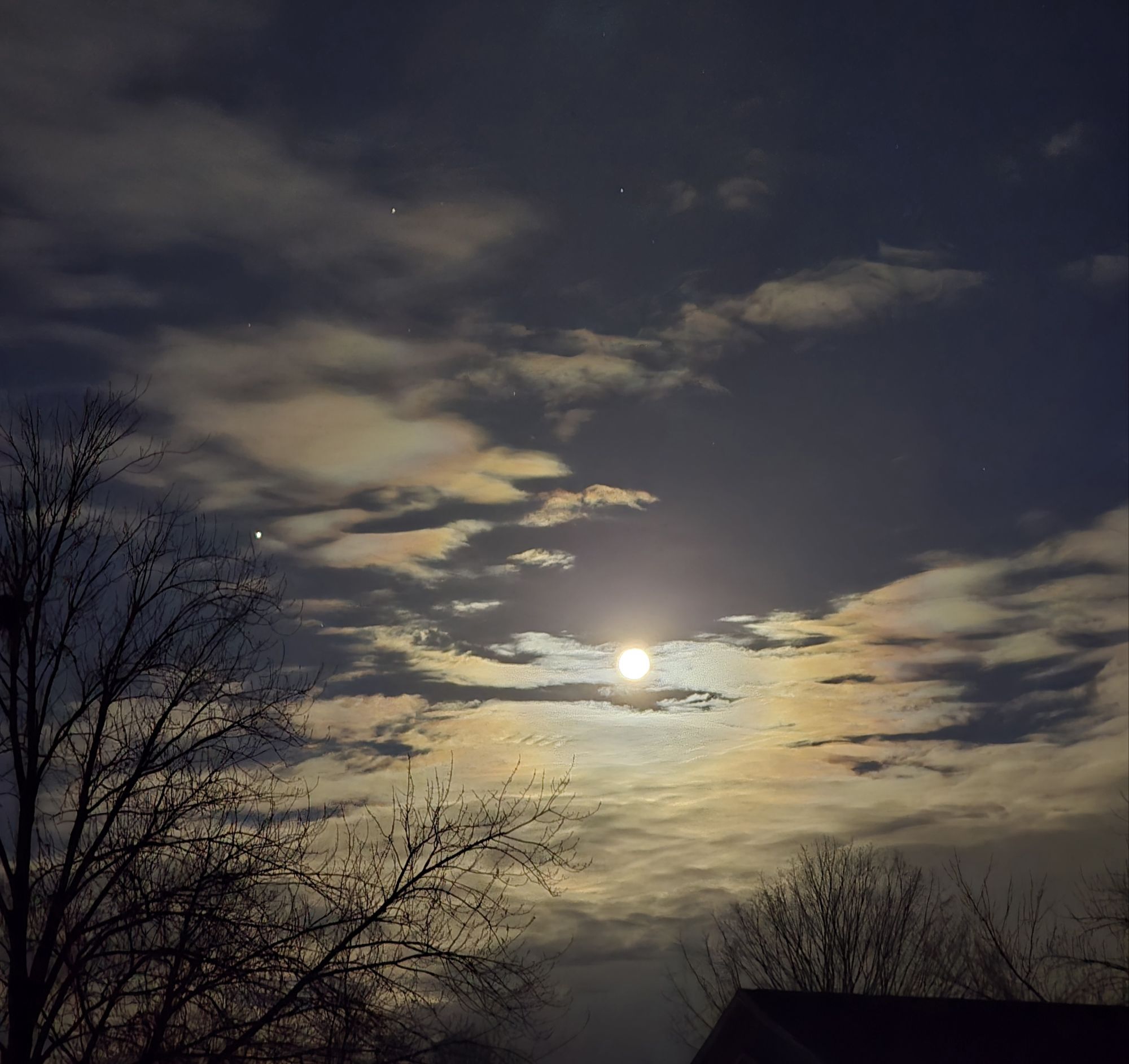
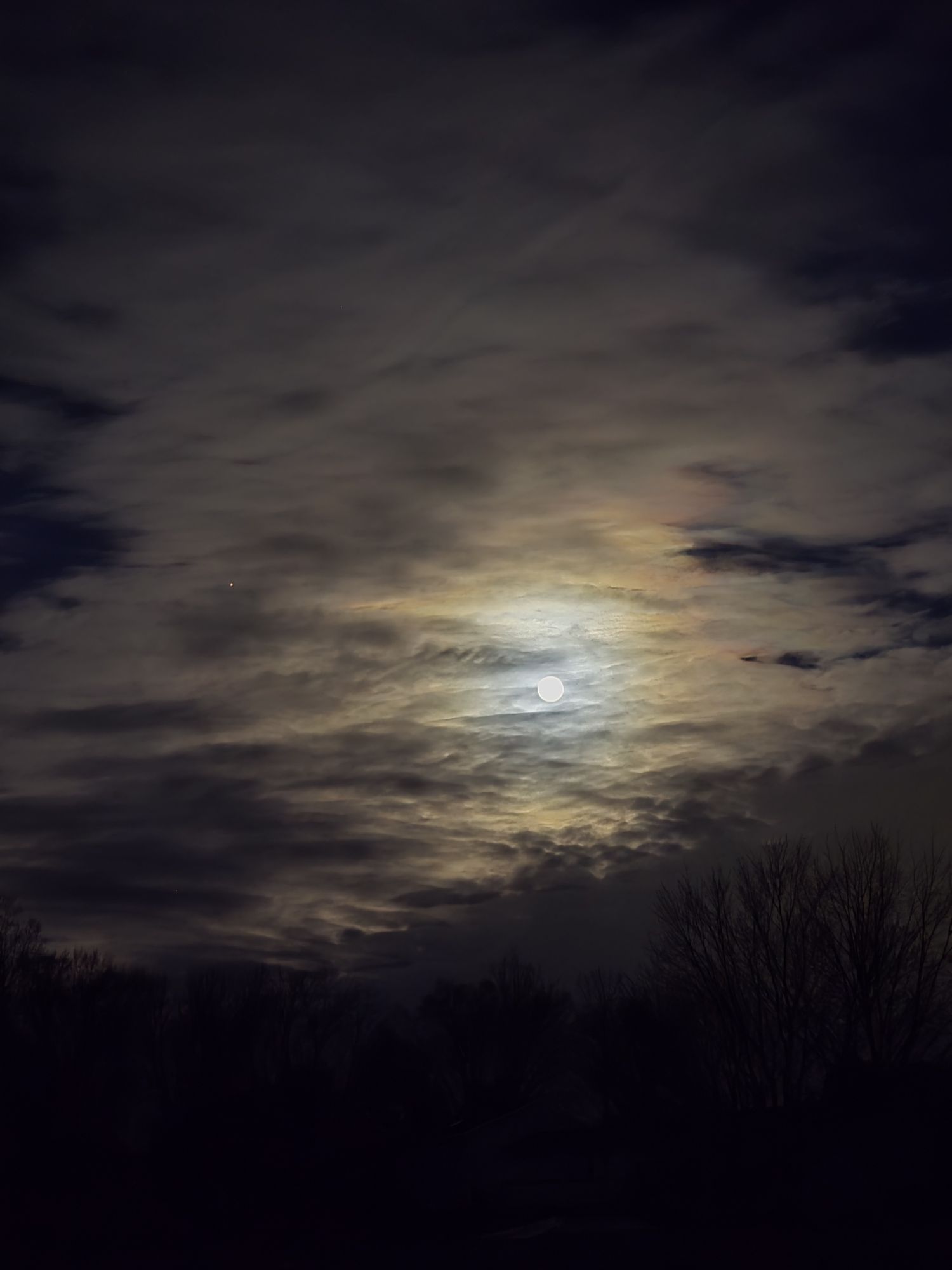
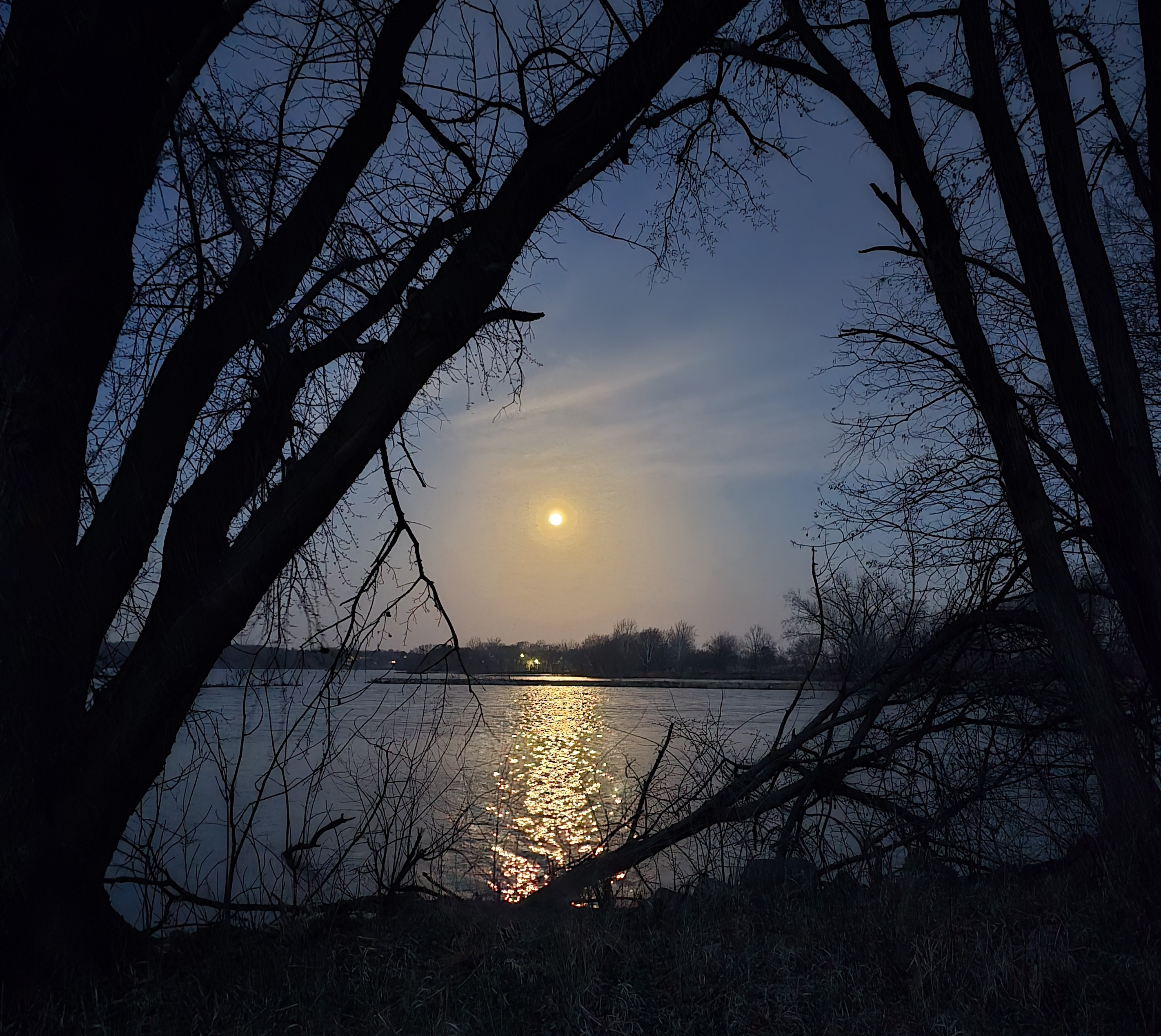
A few photos from the first days of the year. The moon shots were one night when I couldn’t sleep so I went on a very early trail walk before sunrise.
Before sunrise.Before sunrise on the state park trail.Moon setting in early morning.On the state park trail.Moon setting in early morning.Sunrise on the state park trail.
Are photographs reality or not? My answer is yes, they are, despite all the self-aggrandizing selfies on the internet. Are artificial intelligence images reality? Yes, and are distinct from photographs. Is time spent off the internet reality? Yes, and not distinct from time spent on the internet. If it is possible to evaluate photography in light of the internet and artificial intelligence, we should. However, I believe we will have the same outcome, that all of it is a form of reality.
My belief runs against the pundits who say we should limit the amount of time we spend on the internet. If it is all a form of reality, then what does it matter that a person spends an equal amount of time sleeping, on the internet, and off the internet? There is a case to be made we shouldn’t worry about addiction to the internet. There is also a case to be made that we should. What I know is I need my daily trail walks to breathe fresh air and clear my thoughts while getting needed exercise. I mostly disconnect from the internet when I walk. If I see something that might make a good photograph, I take out my handheld computer, take some shots, and post the best image on social media.
Same image rendered by artificial intelligence as a watercolor painting.
From time to time, I enjoy getting out old photographs printed on paper. They convey a reality I experienced, although a focused aspect of it that hides much of what life was then. I used the photo below on the cover of my autobiography. It’s me standing on the back porch of the duplex where Mother brought me home from being born at a nearby hospital. I don’t recall her taking this photograph, yet I do recall a lot about living here. In particular, I remember the point at which memory began when confronted about something in the recent past I could not remember. This photograph serves as a mnemonic device.
On the Back Porch
Another type of photograph is the “artistic” one. That is, I took it as a form of creative endeavor with a specific intended outcome. For example, when I first got my Minolta SRT-101 camera, I drove my Volkswagen microbus out to the Coralville Reservoir and took photographs of the vehicle. Someone was with me as there were posed photos of me next to the bus. Those images stand distinct from the “artistic” photographs which were my main intention on the trip. Artistic photographs are a separate genre, one in which I have very little activity in 2025.
I have taken a lot of photographs to capture something about an event.
Montana Gov. Brian Schweitzer on Sept. 14, 2008 at the Harkin Steak Fry in Indianola, Iowa.
Like my early printed photographs, this one is a mnemonic device to recall that day in Indianola. The big Harkin Steak Fry had been in 2007 when six presidential candidates stood together on the stage just prior to the First in the Nation Iowa Precinct Caucuses that selected Barack Obama as the party’s nominee. Over the years, I captured a lot of politicians in photographs. These types of posed photographs are ubiquitous in social media. I’ve forgotten more than I remember about politics and these images help me re-live those experiences.
Are photographs posted on social media a throwaway? Often we take a photograph solely to post it on social media. It becomes a way of defining who we are. It also controls our self-image. For example, I rarely post a selfie, yet they are important in defining an “online presence.” I have been very bad at defining a self-image, which is why I don’t take or post many selfies. I could work on it, the way I worked on my restless nights to get better sleep, but why would I want to spend that time when everything, sleeping, waking, on the internet and off the internet are part of the same reality?
I may have more to say about how the internet changed photography. I need to study up, and that will take time. In the meanwhile, I plan to continue to take the kinds of photos I do and hope I won’t ruin them with too much study. Photography has become an important part of my reality.
Some favorite images from the last week. As much as it looks like it is here already, winter begins next Sunday.
Sunrise on the state park trail, Dec. 11, 2025.Footsteps in the freshly fallen snow.Sunrise on Dec. 5, 2025.No one home until spring.Returning home.Animal tracks on the frozen lake, Dec. 9, 2025.Sunrise on the state park trail on Dec. 9, 2025.Seeds arrived for the 2026 garden.
Here are my current favorite photos from the thousands taken in 2025.
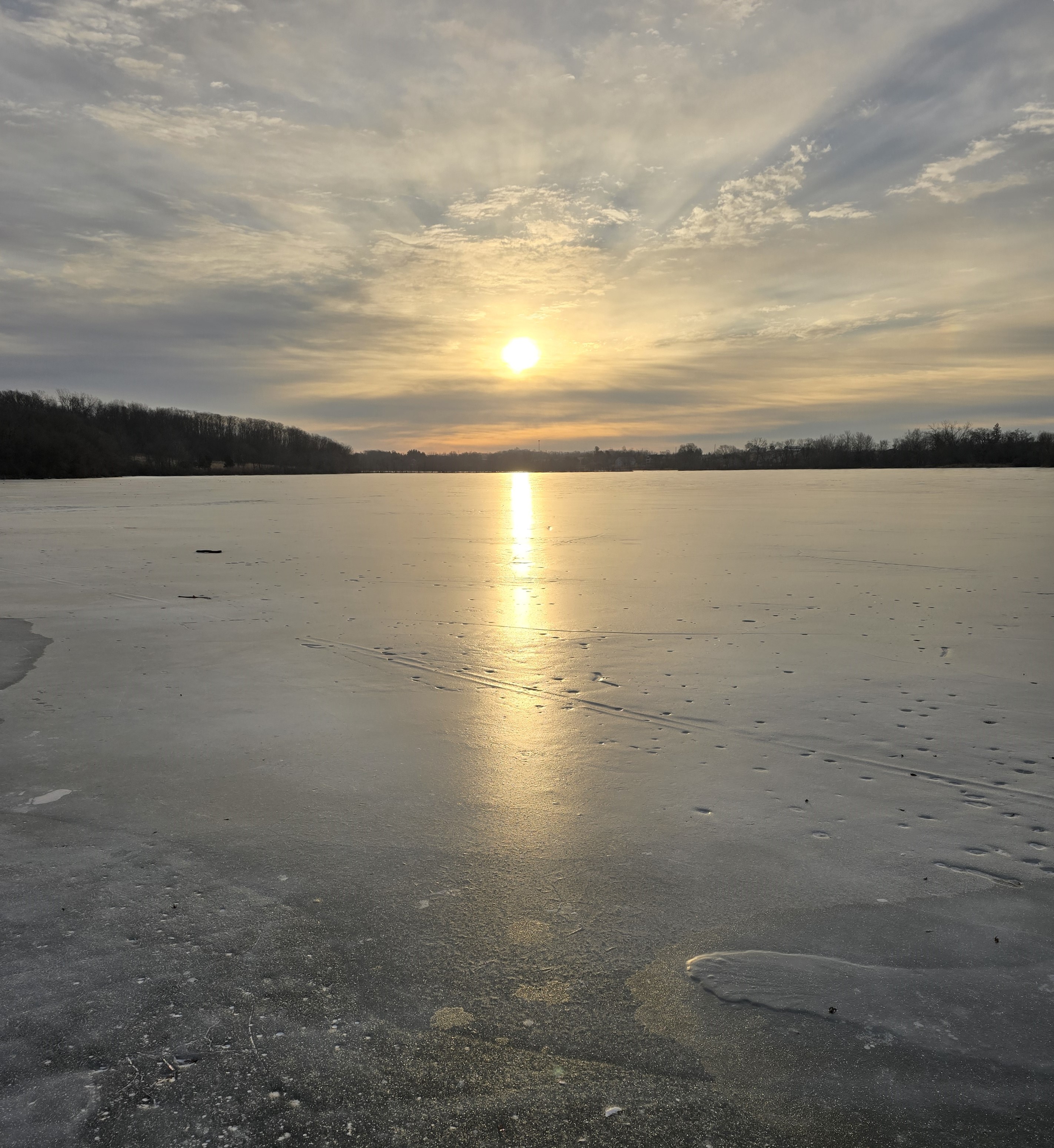
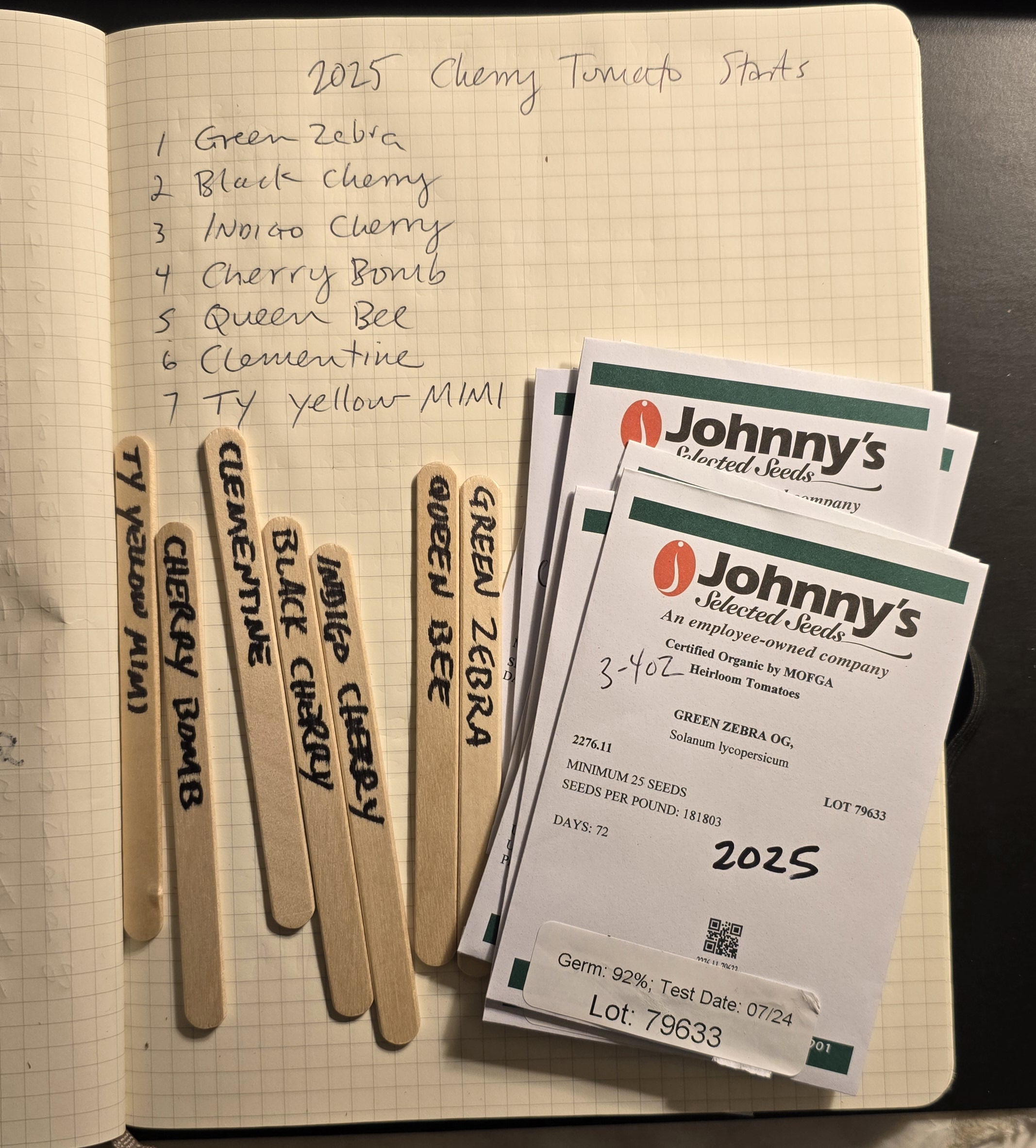
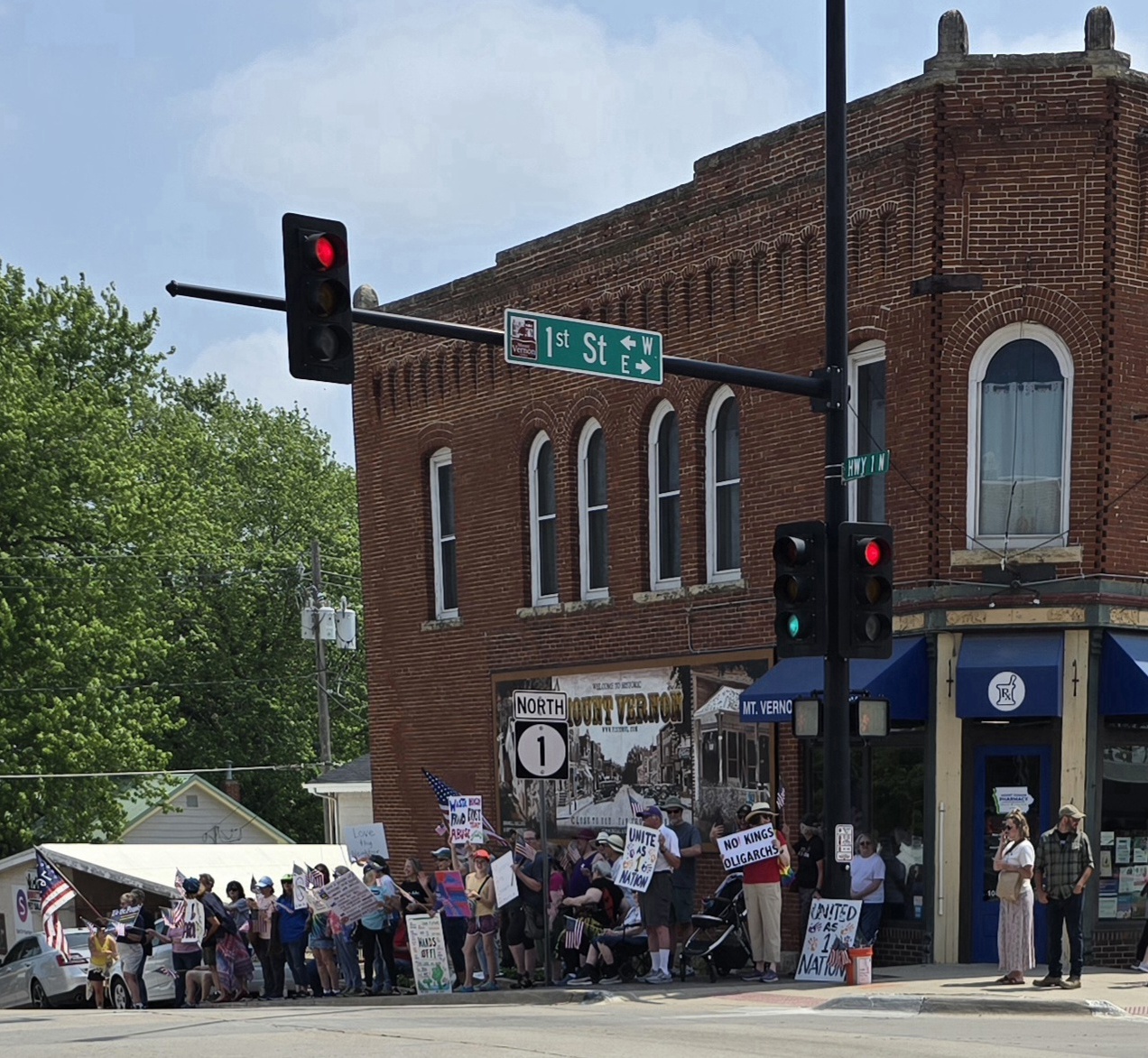
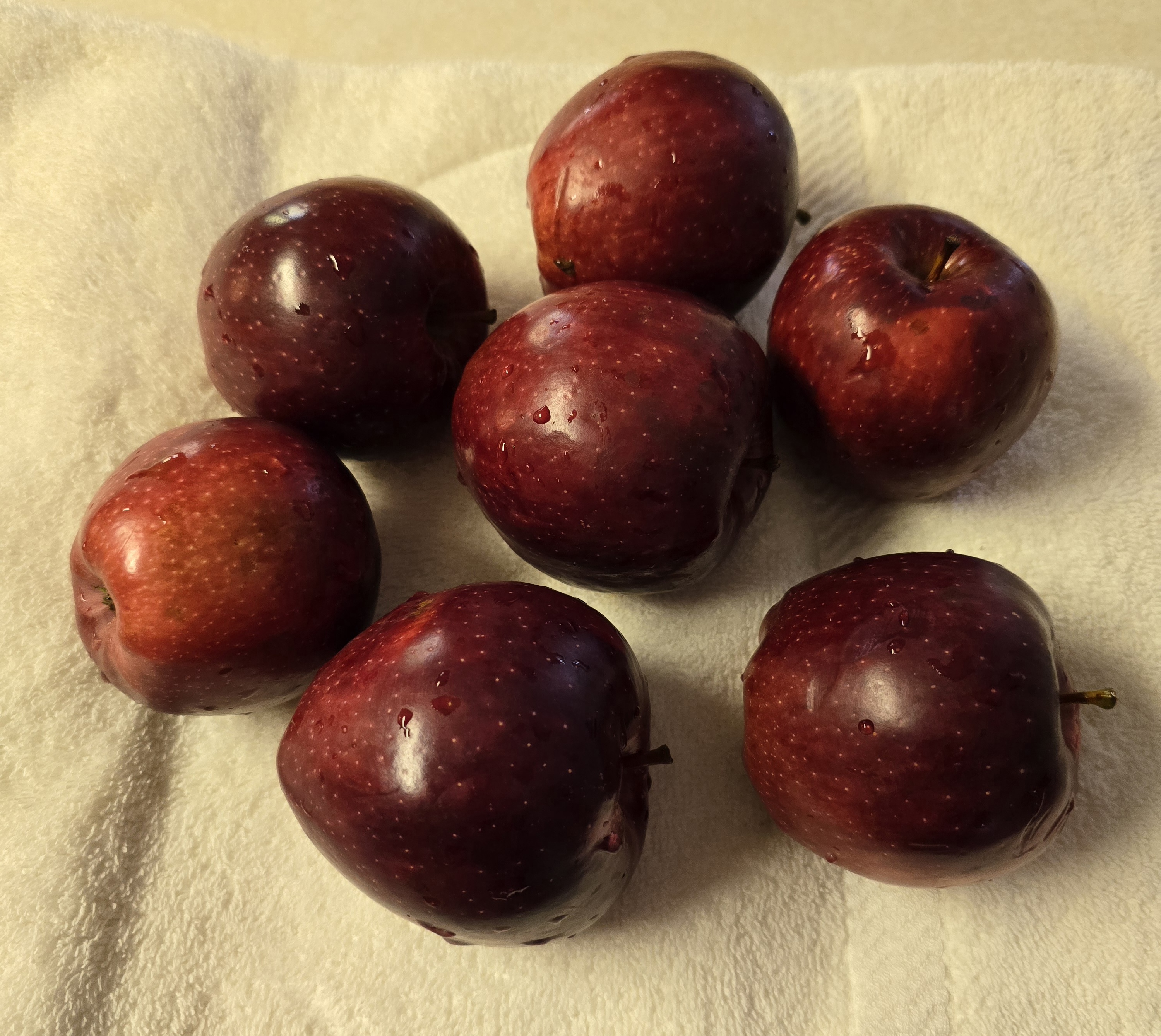
Ice on the lake — February 2025.Chili and cornbread — March 2025.Time to start seeds — April 2025.Spring brush fire — May 2025.No Kings Day demonstration in Mount Vernon, Iowa –June 2025.Zestar! apples were first harvested — July 2025.Garlic was late getting out of the ground — August 2025.Pears were special this year — September 2025.Red Delicious apples — October 2025.Foggy sunrise — November 2025.Moon set on March 14, 2025.
I’ve been meaning to get out on the eastern part of the state park trail and Saturday I did. When we moved here, I said to my spouse that all of the land between us and the nearby city to the east of us would eventually be developed. It didn’t happen in the first 32 years, yet it’s got a good start.
My normal walk is designed to be 30 minutes along the same part of the trail. The walk I took Saturday afternoon was much longer at 80 minutes. It was no hill for a climber.
Road leading to the Hoover Trail.
The Hoover Trail has been a tremendous perquisite for those living in the area. The paved trail is wide enough for bicycles to pass each other going in the opposite directions. It is also clean. During the coronavirus pandemic I rode my bicycle on it almost daily. One of the first things to see is this old barn.
Historic barn in Big Grove Township.
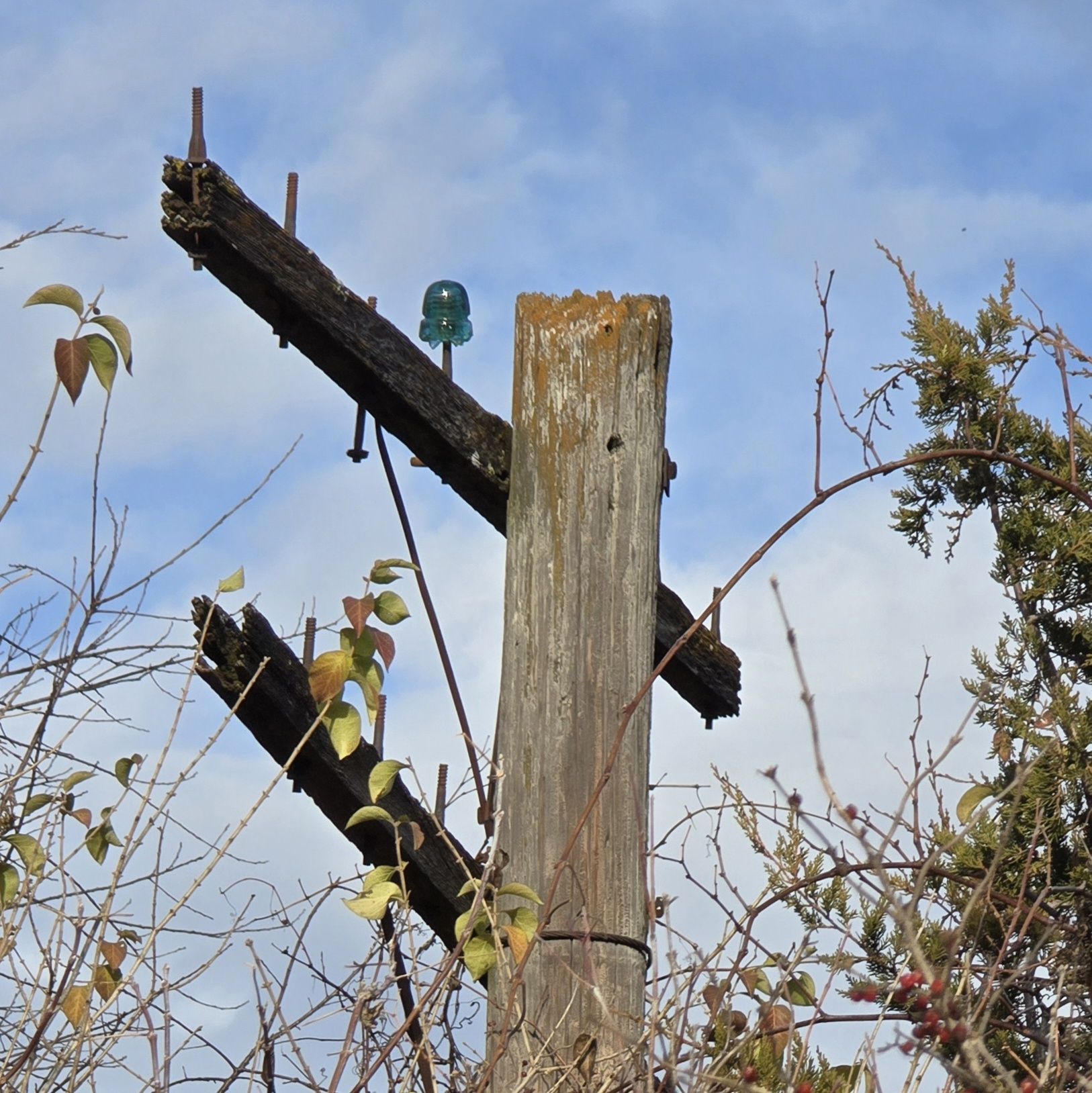
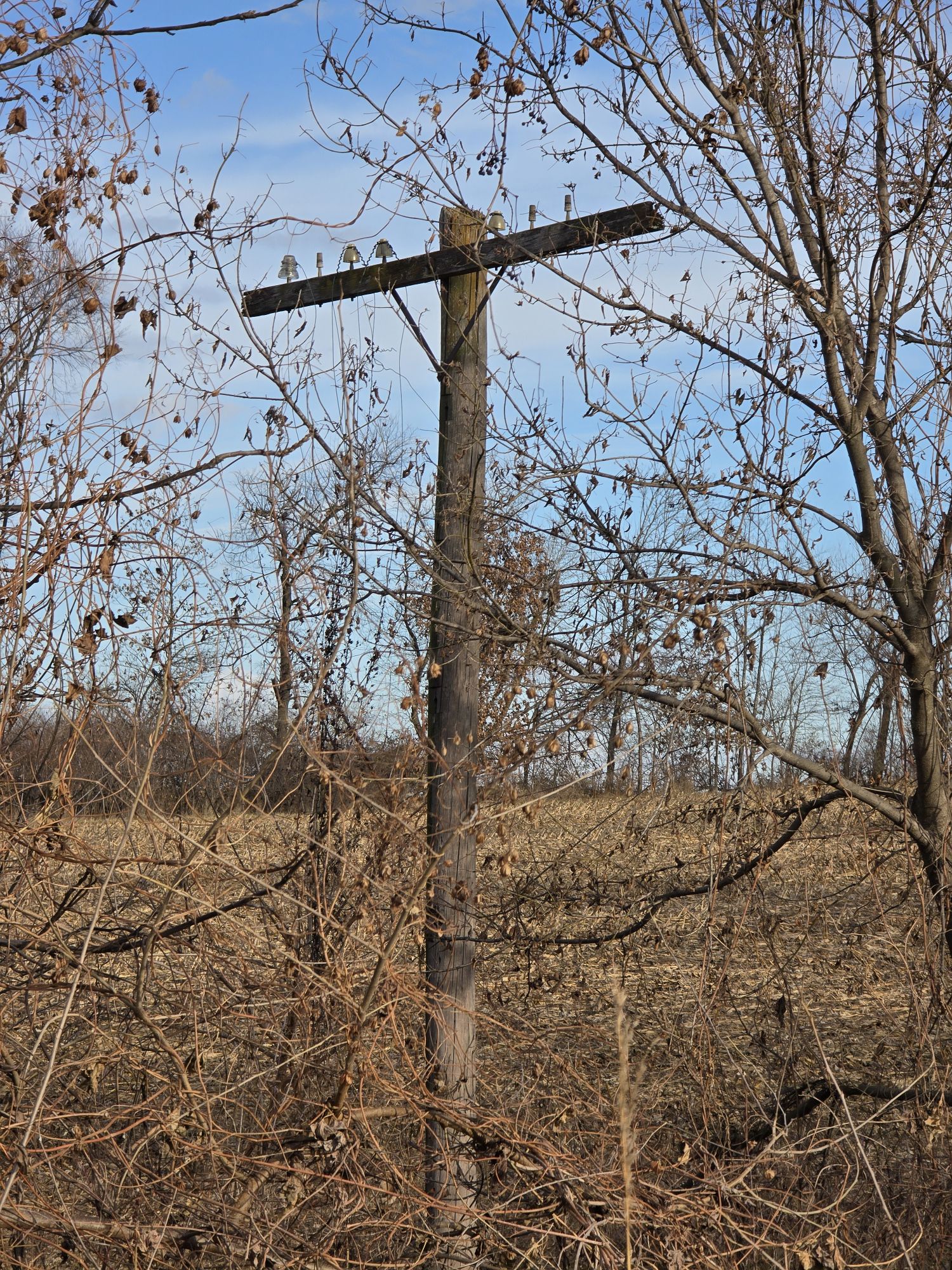
The trail was made in the bed of an old railroad track. The power lines have been moved, leaving the old poles to decay in the encroaching woods.
Trail runs along the former railroad tracks.
There are only a few glass insulators left on the poles. I found one blue one and these clear ones.
Note the clear glass insulators. These are some of the last ones left on a pole.
The worst part of the trail walk is the development. The homes in this photo were not there the last time I was on this stretch of trail.
This construction is all new since last time I was here.
In addition, a lot of the wooded and prairie areas were cleared and mowed. We are moving the opposite direction from a nature preserve.
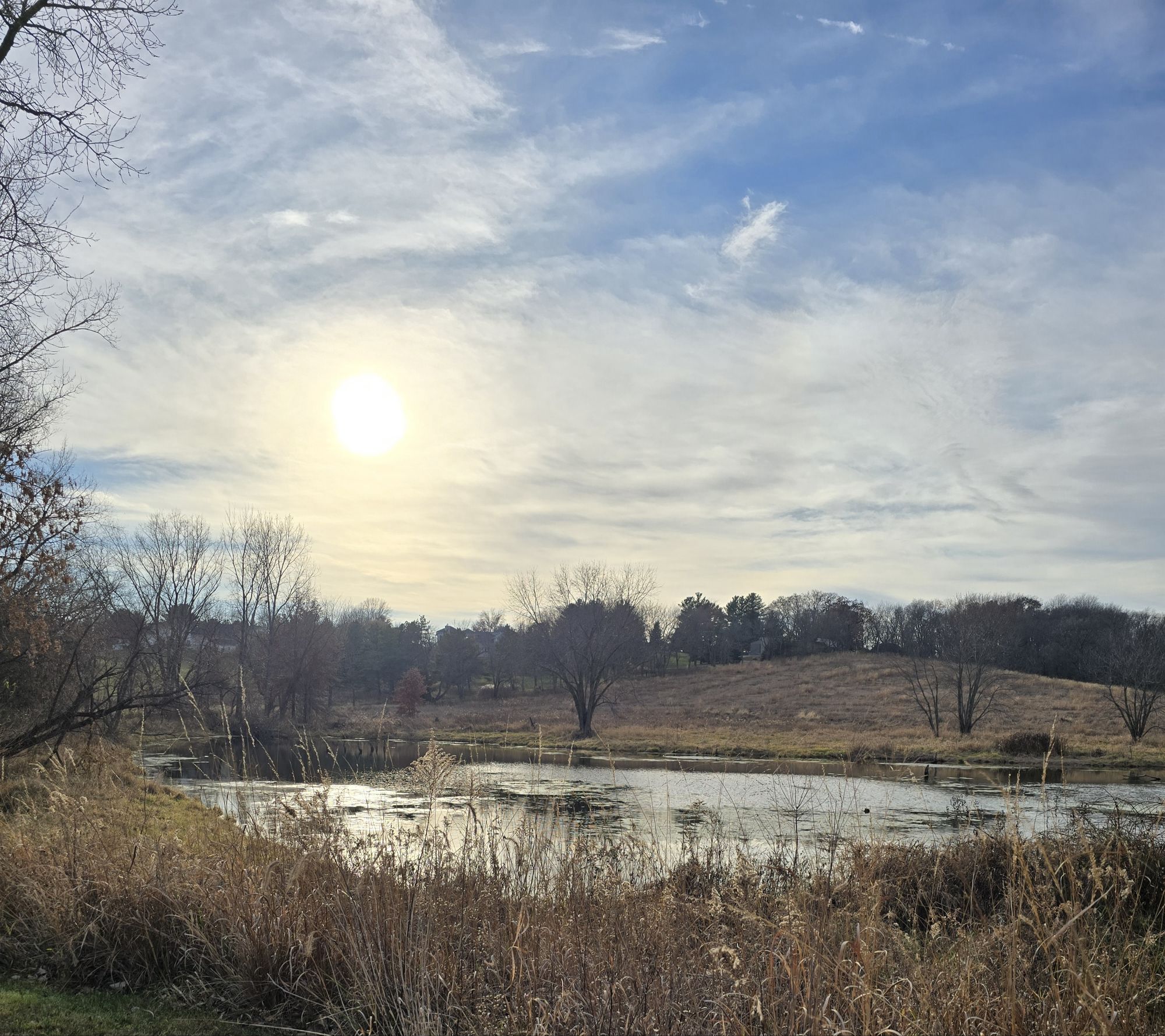
Pond near a rest area along the trail.
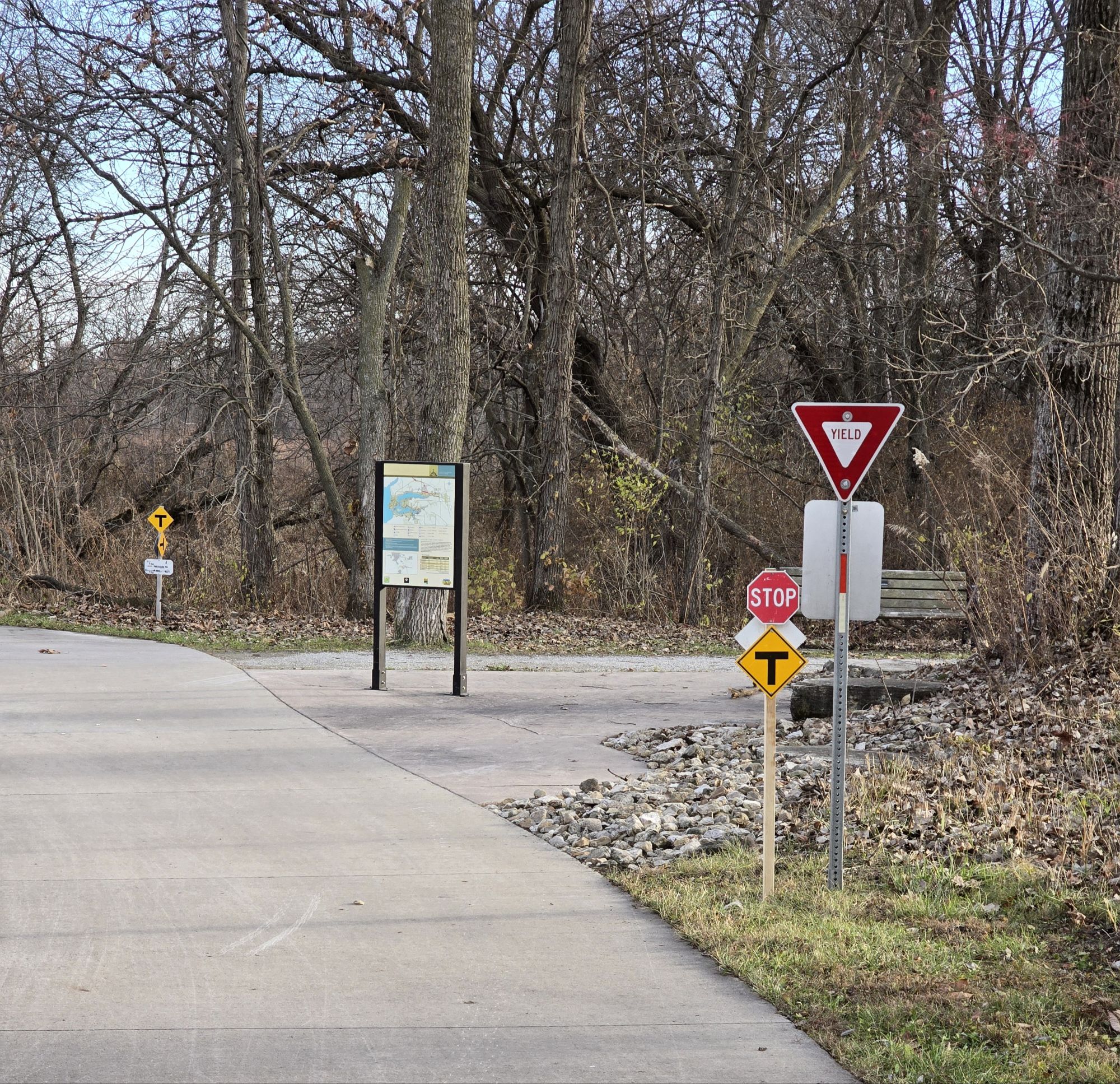
There is a fancy intersection where the Lake Macbride State Park Trail intersects with the Hoover Trail.
Busy trail intersection.
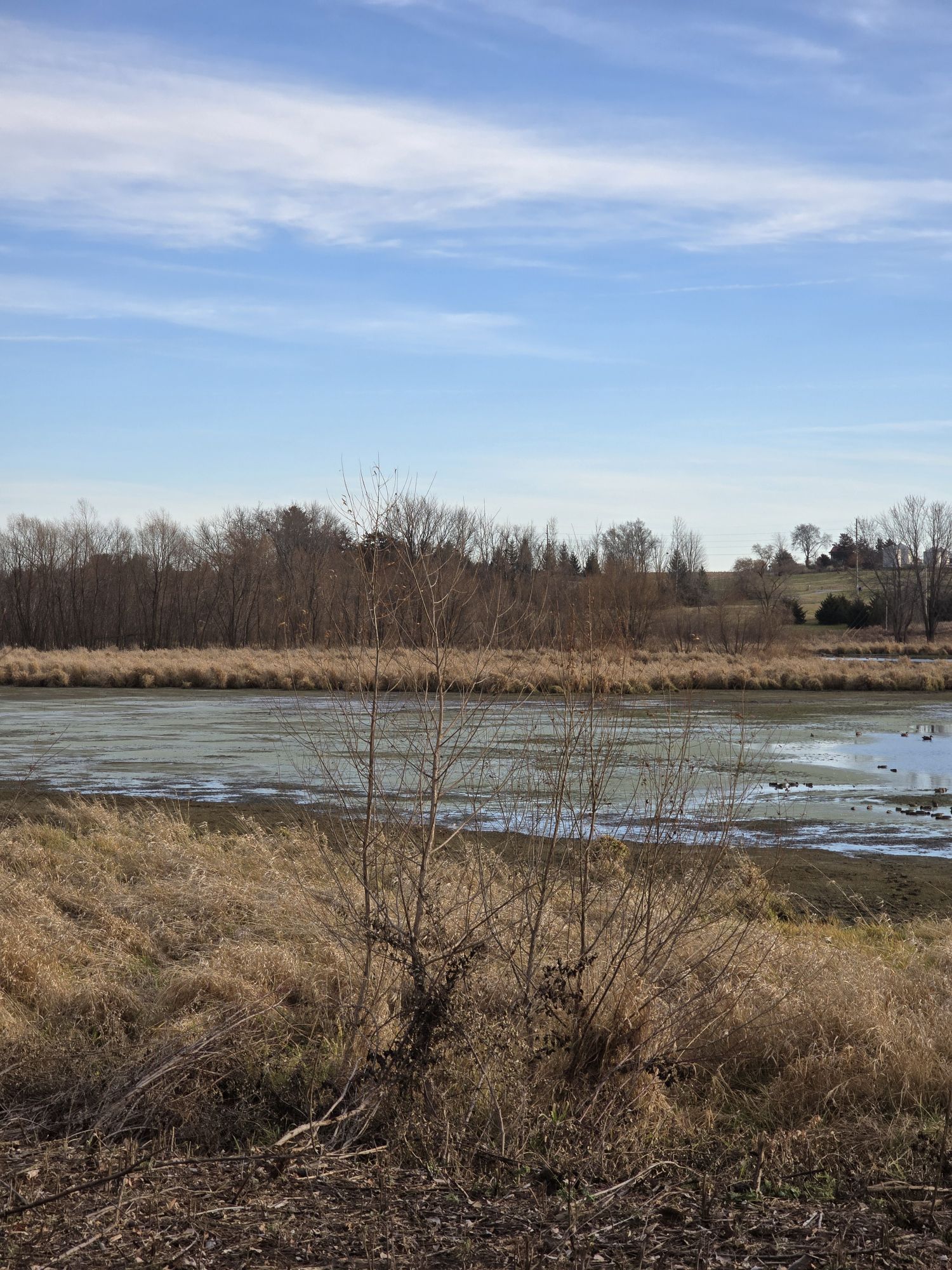
Waterfowl like the east end of the north branch of the lake. Probably because the growth prevents we humans from getting too close. That and the relatively shallow water makes it easier to catch fish.
East end of the north branch of Lake Macbride.Pelicans like the shallower water at the eastern edge of the lake.
Development may be encroaching, yet there are still plenty of good photos to be taken.
These trees were mere sticks when I first saw them.Another view of the lake.Heading toward home.Sun setting.
Sunrise on the state park trail. Taken with my Samsung Galaxy S24 Ultra smartphone.
If it seems impossible to curate my life-long collection of analog and digital photographs, that’s because it is. My presumption is of making a useful archive for others to use when I’m gone. However, that is an old school idea poorly aligned with the way photographs have come to be used. I am fine with sharing photos via social media and email. I also believe they have more than transient value. This is at the core of my struggle to make progress in curating my photographic work.
I am interested in technology. My maternal grandmother participated in photography culture and bought a Kodak Brownie and Instamatic 126 at the local drug store. She developed her exposed film at the same drug store. It was a creative outlet for her, creativity being something her family discouraged when she was young. When she asked us to pose in our Easter best clothing, how could we refuse? She had the camera and wanted to preserve the moment. That felt important.
In college, I experimented with a Minolta SRT-101 I bought from one of my band buddies. I got away from posed photographs to the extent possible and captured where I lived, both in my residence and on day trips to neighboring places. I bought a small 35mm camera and a dozen rolls of film to take on my 1974 trip to Europe. When my backpack was stolen in France, I lost all the film and ended up with only two rolls to develop after three months away. When I bought a mobile flip phone, I took a few photographs with the built in camera, notably one of Senator Barack Obama at the 2006 Harkin Steak Fry. In 2008, I bought a Kodak EasyShare digital camera, and then when I converted to a smartphone in 2012 the smart phone became my primary photographic method. There is a whole story in technology. My experience since the 1950s is likely not that different from other amateur photographers in my cohort.
The cultural aspect of my photographic history is more interesting. I was able to own a simple camera because I had an income from delivering newspapers. I became the person in the family called upon to record an event when Grandmother was not available. My early photographs are packed with domestic images of holidays and birthdays, vacations, and the stuff in our lives like pets, houses, cars, and more. In high school, I worked part time at a department store and had means to use photography. I accumulated photographs in shoe boxes and a few albums. Mother had a short filing cabinet on wheels where all of her photographs migrated. Photography has always been a simple, affordable, and happy thing to do. There was always a half life of attention given to photographs. However, we couldn’t bear to get rid of them.
To some extent, my photographs are a visual record of how I lived. At the same time, I have been journaling since 1974 and have given more thought to what I wrote than I did to photographs. As I write an autobiography, I decided to use only one photograph in the first book, and am not sure whether or how many I might use in the second. To avoid consideration of photography as part of my life would be decidedly wrong.
Social media changed how we use photographs. With digital cameras and smartphones, photographs have no operating cost other than the time and attention paid to them. When I take a photograph like the sunrise in this post, I make multiple exposures and edit them to pick the “best” one to post. This form of curation was not easy in analog photography, yet is basic to posting photographs on social media. I archive all my saved photographs on the cloud, yet seldom go back to them.
On social media, we get to know people a certain way. For example, on BlueSky, the 99 accounts I follow post photos and create an account ambience I came to recognize over time. This is a real thing, yet not the same as having an in real life relationship with a person. I submit I have a different relationship with someone I know in real life as compared to their social media account. Both seem valid.
Photography in 2025 does not entail a lot of curation. We take photographs, briefly edit and share them, and then forget them. Seldom do we have a processor make prints. I’m okay with that. When I curate four photos for a post on social media, that suffices to sate my urge toward a creative life. Maybe I will use the same photographs in a blog post, or maybe not. I want to believe there is more to this creative process as I look at thousands of images captured over a life and work to define their meaning and gain insights. Because of my current autobiography project, I am willing to devote time to photography. I continue to believe the words are paramount.
Will I end up with a usable archive? It may seem impossible now, yet I hope it ultimately isn’t. Figuring this out is just another part of my life.
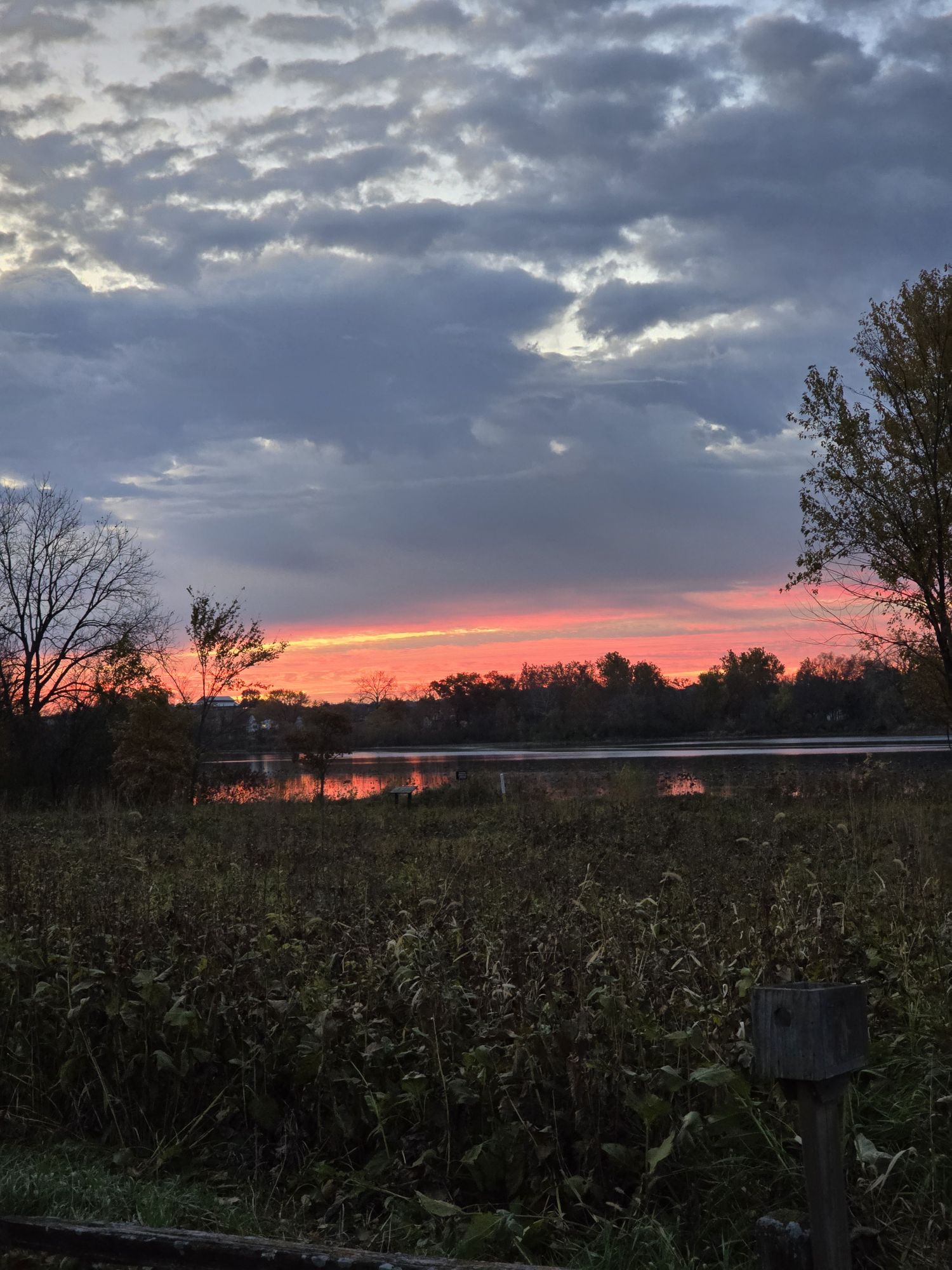
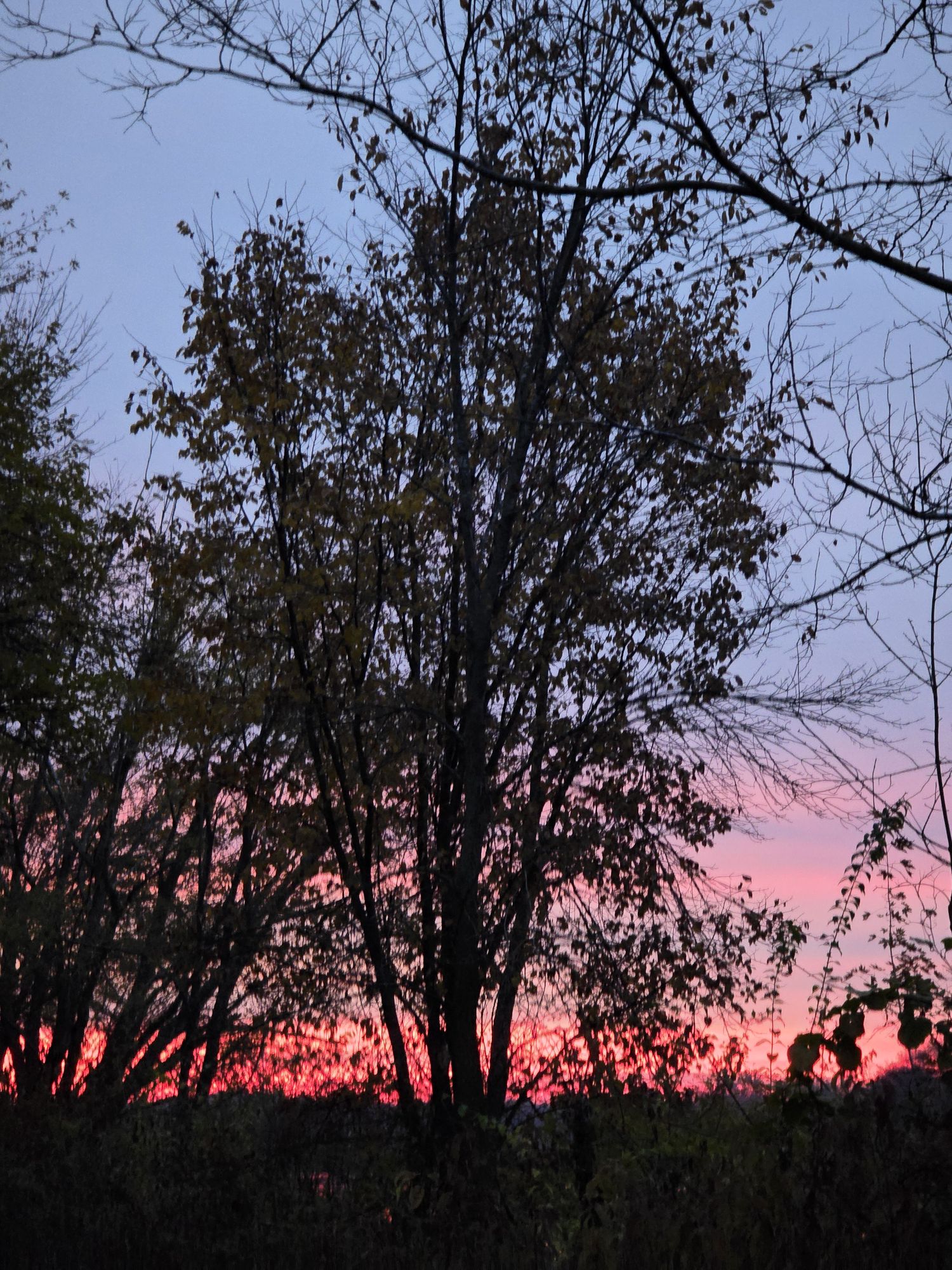
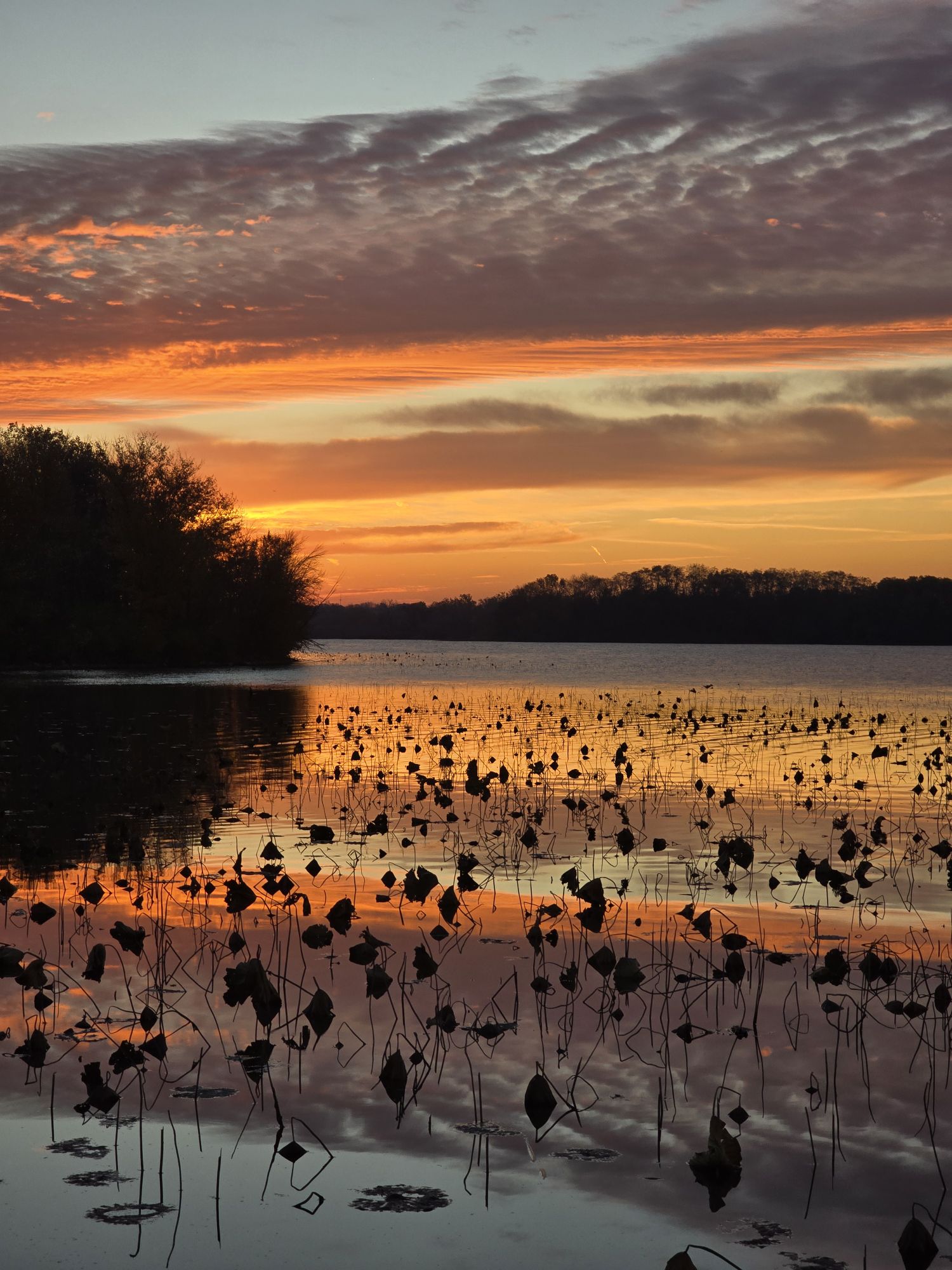
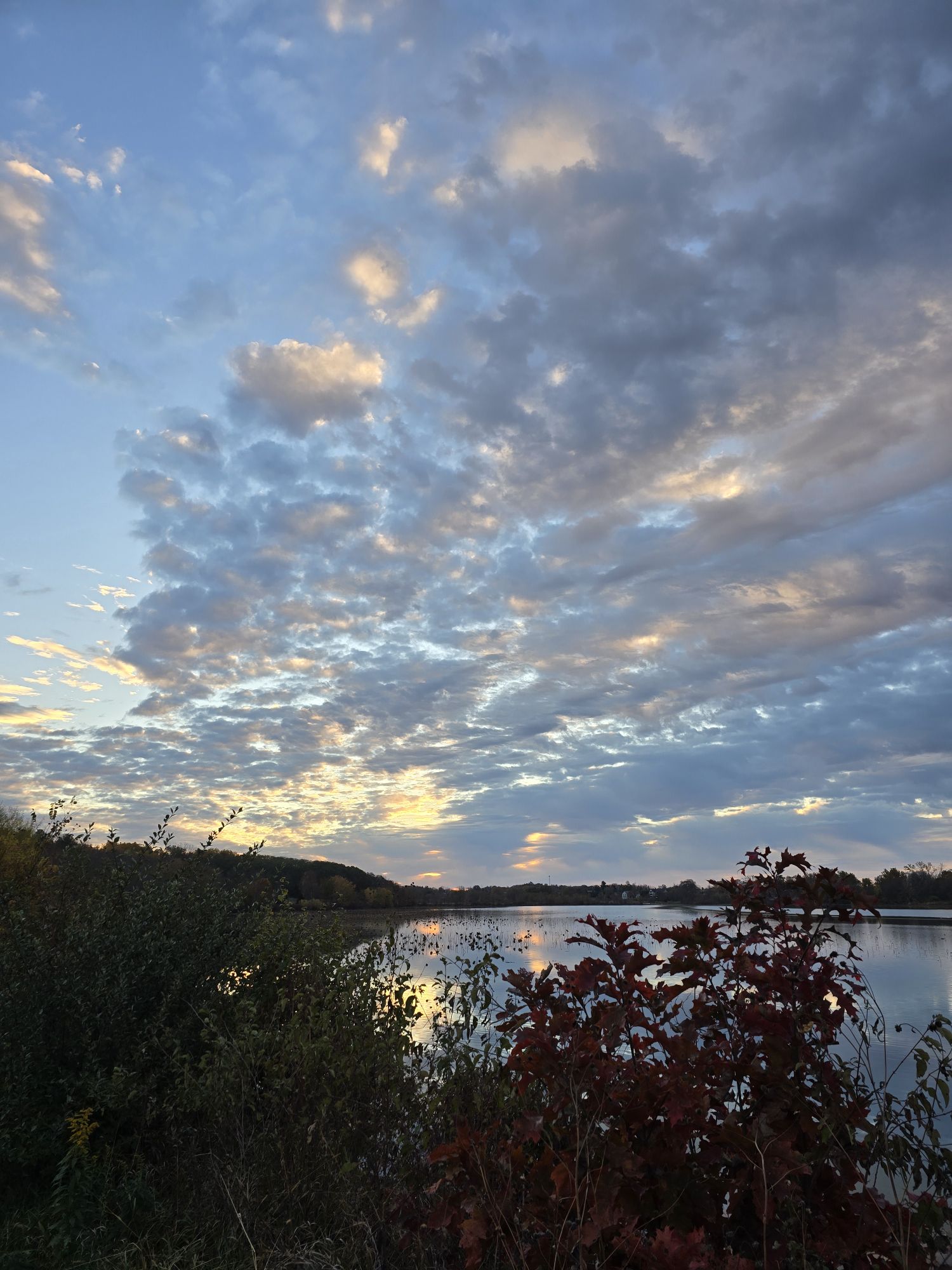
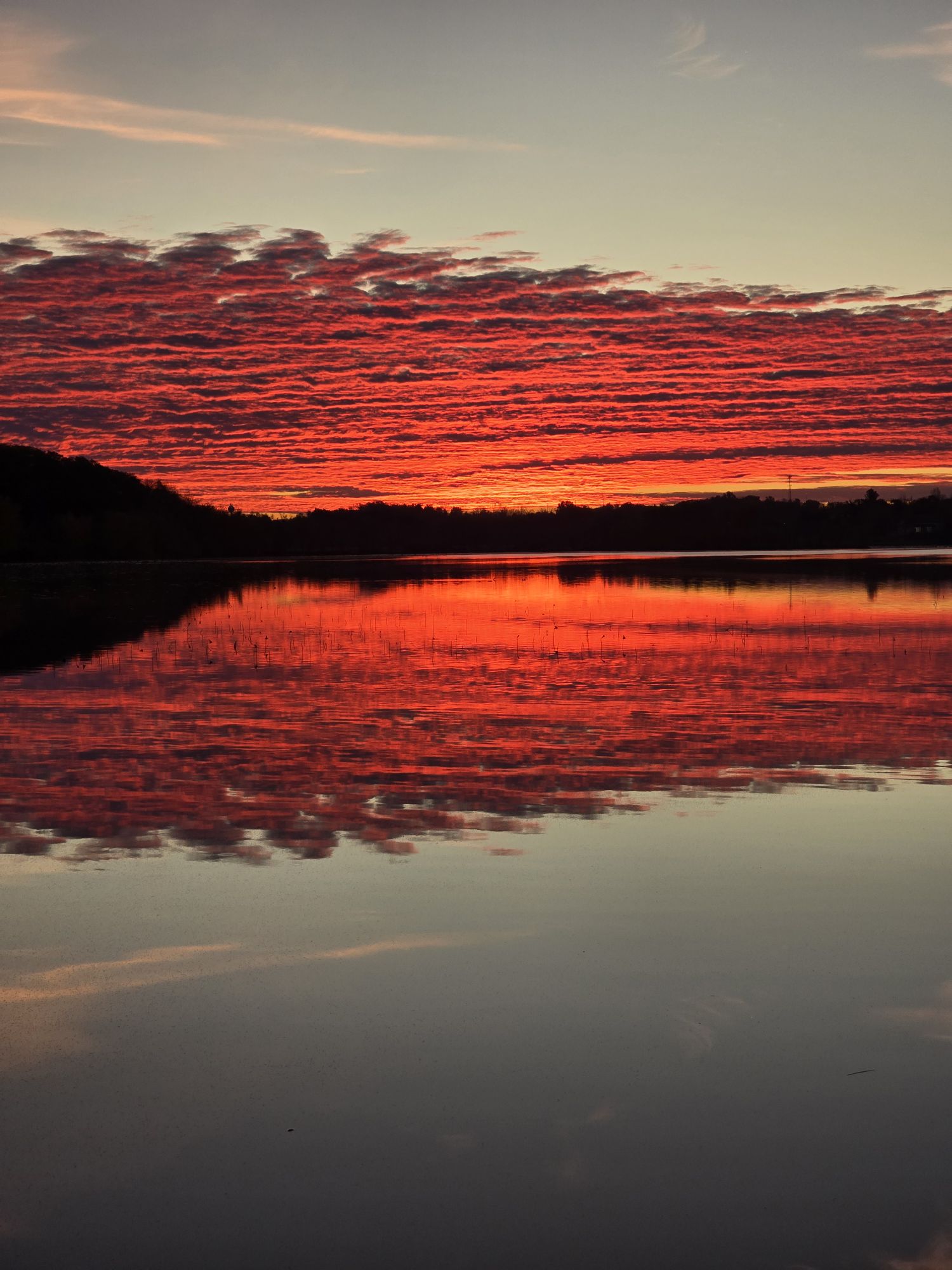
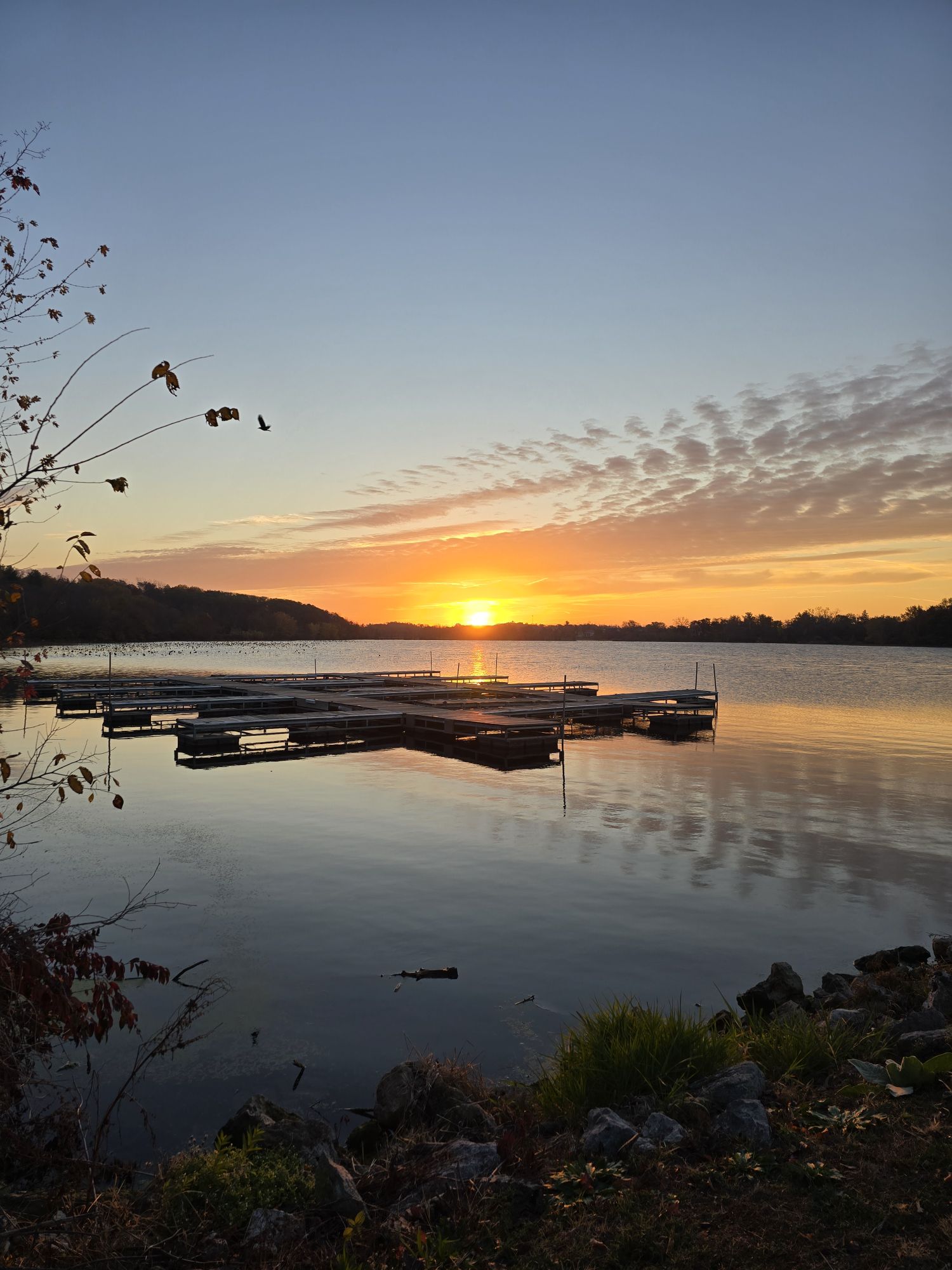
I walk for 30 minutes on the state park trail almost every day I’m home. The timing is about 20 minutes before sunrise so I can view the transition in the sky. I don’t think I will ever tire of seeing a sunrise.
Sunrise on the state park trail.Sunrise on the state park trail.Sunrise on the state park trail.Sunrise on the state park trail.Sunrise on the state park trail.Sunrise on the state park trail.Sunrise on the state park trail.
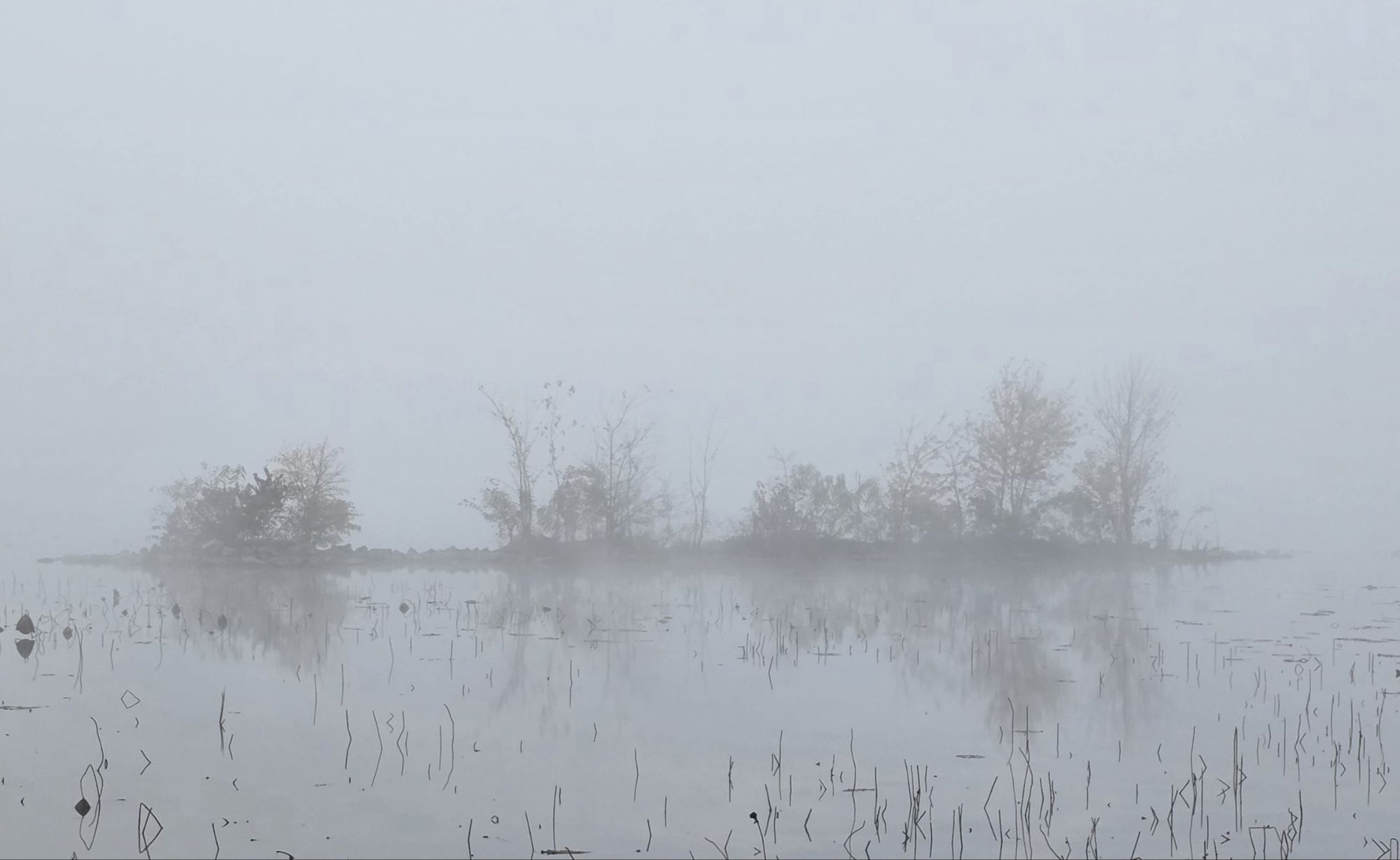
It is usually quiet on the state park trail during my morning walk. If someone is coming I hear their footsteps, or if they are on the phone or in a group, their talking voices carry a long distance. It was foggy Sunday morning when I heard young women talking. Before long, I could see headlamps bobbing above the trail. It was plenty light, yet the idea of a headlamp gained prominence over whether or not one was actually needed. I wished them a good morning as they passed me going the other way. They returned the sentiment. Even at dawn there is traffic on the trail.
I leave for the trail 20 minutes before sunrise. It is usually light enough to see and the transition period presents great light for capturing photographs. On Saturday I started walking on the boat dock to get an unobstructed view of sunrise. There was frozen frost on the deck and I slipped and fell on my backside. I let loose my mobile device and feared the worst. When I got up it was just less than halfway over the edge of the dock. I had visions of it plunking in the water, yet not this time. I am one lucky guy.
Last winter I walked the trail almost every morning regardless of ambient temperature and snowfall. I expect to do likewise this year. The state park trail is the perquisite that comes with living here I enjoy most. It also provides an opportunity to work on my photography.
It’s hard to believe it is November already. Following are some photos taken in the last two weeks.
Late harvest of Red Delicious apples.Pelicans returned.School bus.Morning light on the state park trail.Last gleaning of kale.View of our Autumn Blaze maple tree.The trail goes on forever.Autumn Blaze maple tree at peak color.Before sunrise on the state park trail.Kroul Farms specialty pumpkins.Autumn Blaze maple tree.











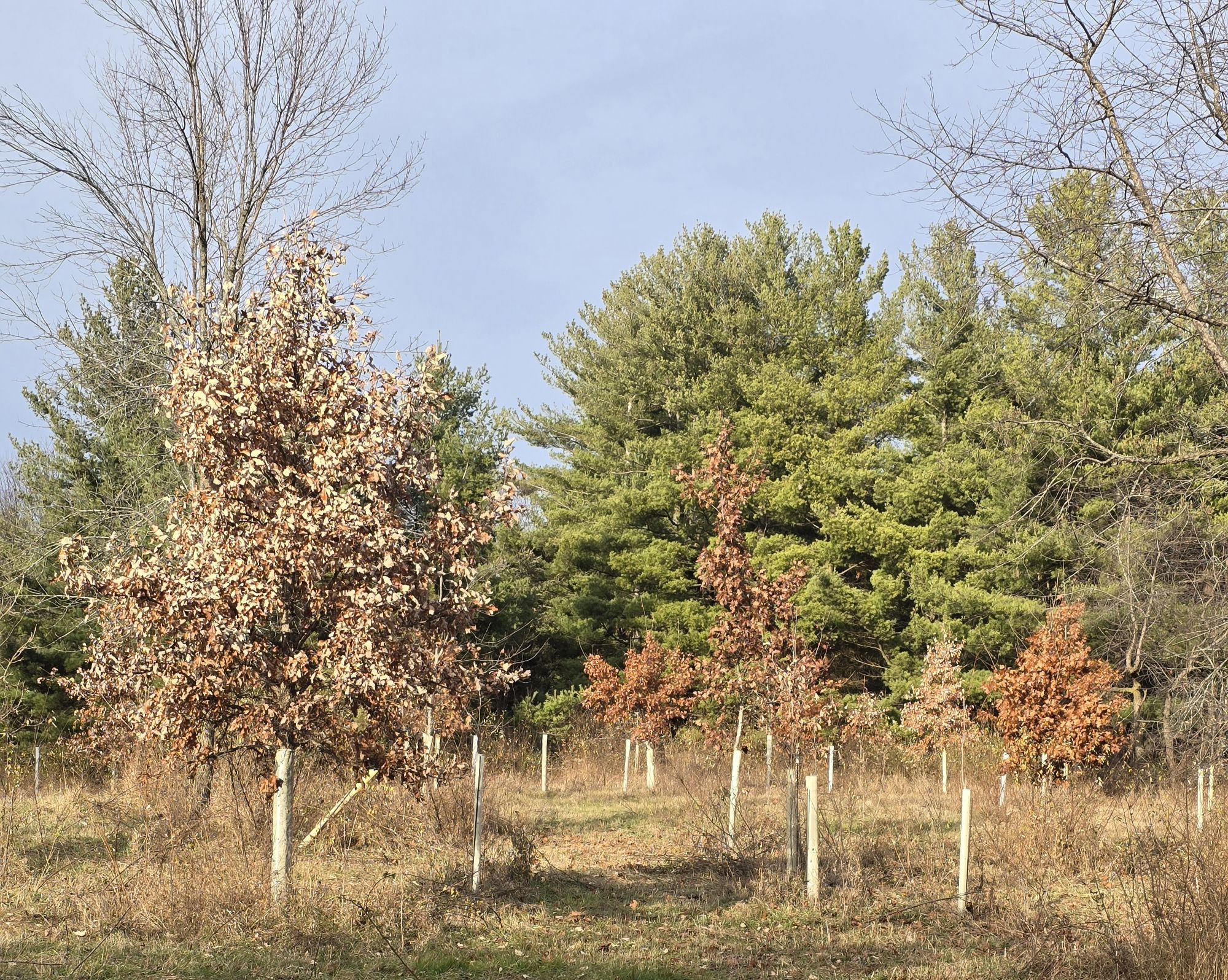


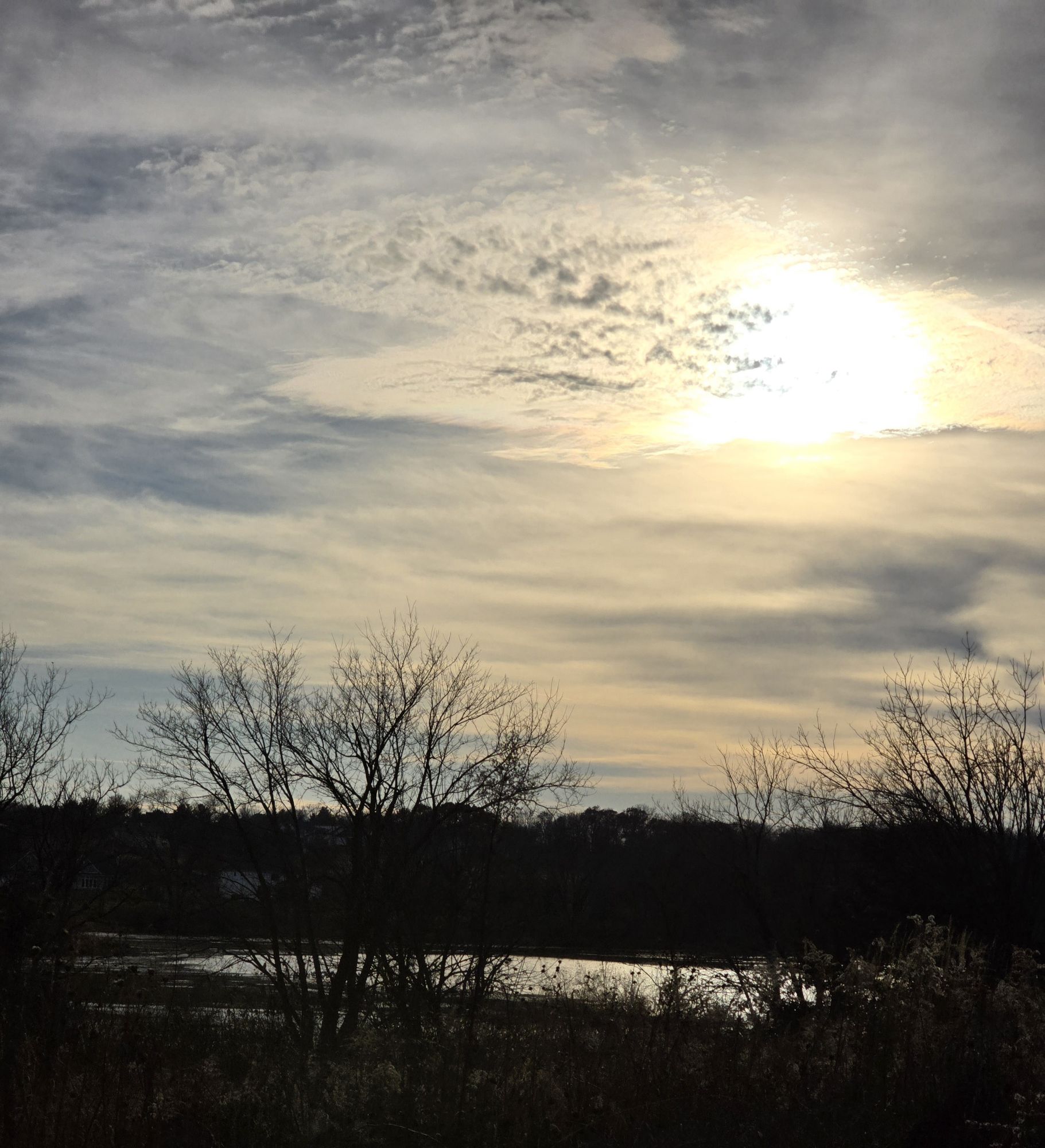
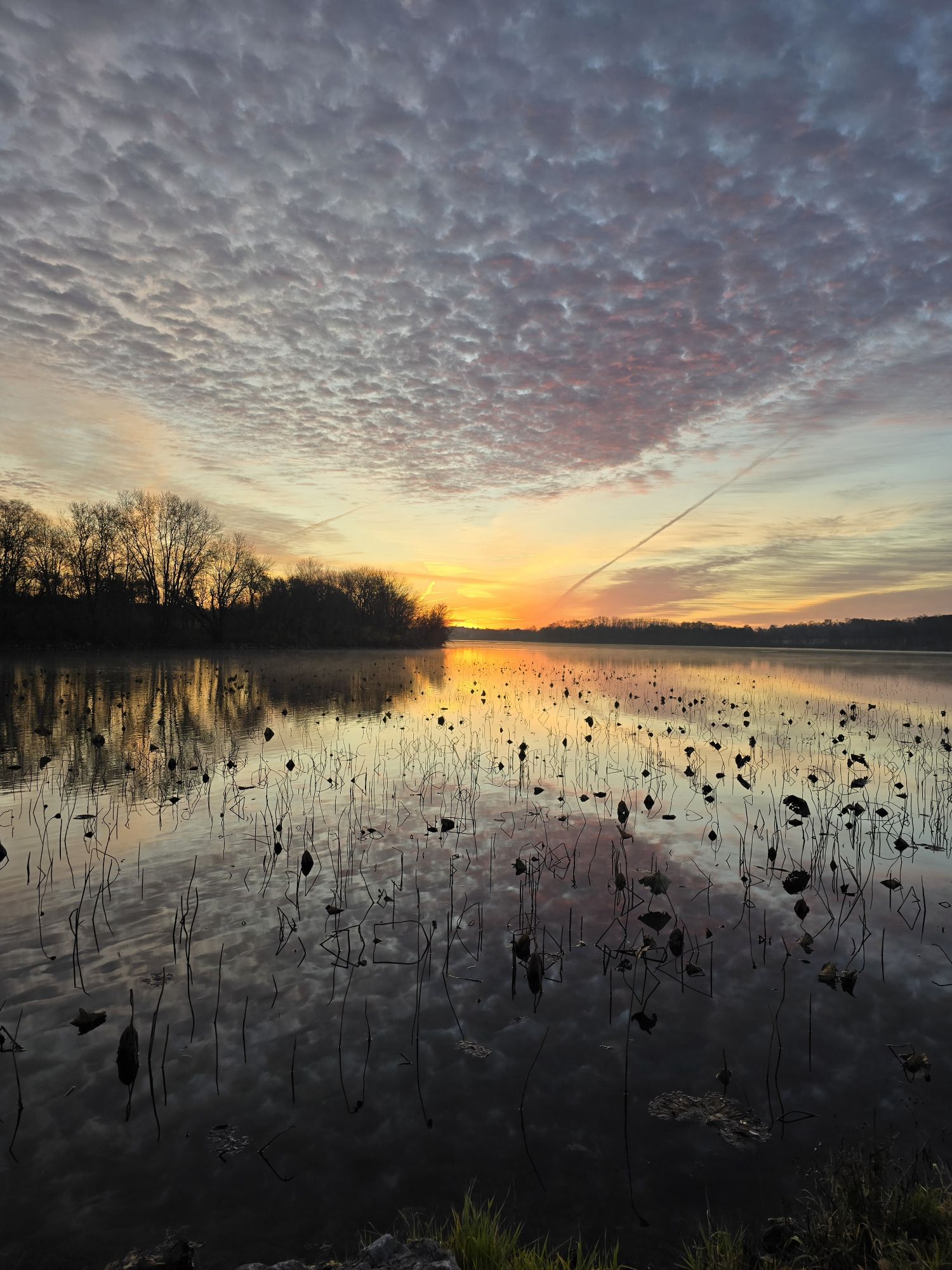

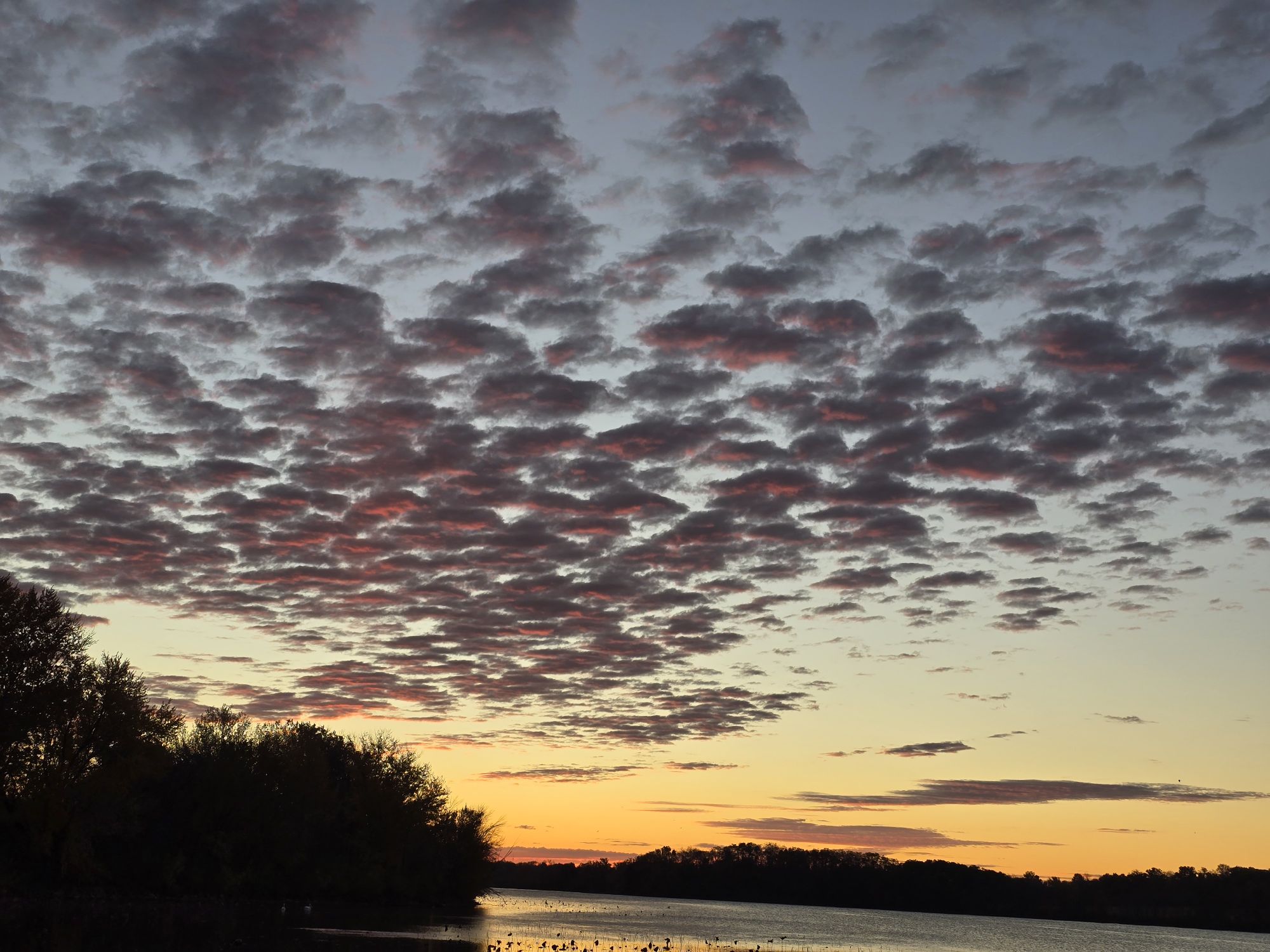


 Journey Home
You must be logged in to post a comment.