Try though I did to reach out, my Republican members of Congress did not hear the message. All of them voted yes on the reconciliation framework. Following is what I wrote my congresswoman:
Rep. Miller-Meeks, Vote no on the reconciliation bill. During your recent telephone town hall you mentioned the reconciliation bill and ways to offset the tax incentives it creates/extends with savings from Federal government operations. I have studied the matter, and some of the proposed budget cuts, and have more to learn. Based on what I have learned, I urge you to vote no on the reconciliation bill. Providing tax cuts to the well-off in Iowa and in the country at the expense of programs less well-off people depend upon is the wrong direction. In part, your parsing of the Medicaid cuts at the telephone town hall helped me understand the direction, and I thank you for that explanation. Good luck making your decision. I hope you vote no on the final reconciliation bill. Regards, Paul Deaton, resident of the first Congressional District.
Somewhere in Miller-Meeks D.C. office likely rests a tick list on the bill with my email registered as a no.
Because the Republican House is so narrowly divided, they know they have to stick together to get anything done. So far, they are. As the chaos in the federal administration unfolds, there will be pressure on members of congress to do the right thing. Regarding my senators and congresswoman, I won’t take no for an answer, so they will hear from me again during the remainder of this spring and summer. That’s when it counts the most because after that, it’s time for the 2026 midterms.
Here is Congresswoman Miller-Meeks’ response to me email.
Lafayette Flats, Buffalo, New York. Photo Credit – Wikimedia Commons.
Millennials seem unlikely to purchase homes in the same numbers as my cohort did. So many are sharing an apartment or house and paying rent. It becomes difficult for them to build equity the way I did when we paid down a mortgage. There are other consequences of living with others in a shared apartment or house.
The worm has turned on millennial home purchases according to some. When student loan payments were paused during the coronavirus pandemic, newly available funds were directed into home-buying. According to CNN, “The Department of Education said Wednesday it has approved the cancellation of nearly $5 billion more in federal student loan debt, bringing the total amount of student debt relief provided under the Biden administration to $132 billion for more than 3.6 million borrowers.” This should be a catalyst for more home-buying in the millennial cohort. Maybe they will catch up.
The other part of this financial equation is the lack of good-paying jobs. In part, this is driven by consolidation and outsourcing of functions in the business world. Pay packages have changed so more of compensation goes into hourly wages or contractor fees. Thanks Ronald Reagan and the Republicans for this crappy economic environment for younger people.
The change in types of jobs available also has to do with automation. The automation revolution began some time ago, yet it is taking off with force in 2023. Anything that can be done by a computer or robot will be. Human workers? Not needed as much any more.
Stuck living together with unrelated others is an issue, in particular, during the continuing coronavirus pandemic. According to the University of Minnesota, older adults made up 90 percent of U.S. COVID deaths in 2023. While the younger people the virus targets may be less likely to die of COVID, they continue to get sick and it’s debilitating. A goal for mixed households is to prevent the coronavirus from entering the residence. If it does get in, isolating individuals so they don’t contract it in close proximity to each other is a priority. For some that means shutting the door to a private room if they have one and not leaving one’s room except to use the plumbing.
I had a conversation this week about what food could be eaten in isolation from COVID without going to the kitchen or refrigerator often. It came down to only items that could be eaten as is, or made with boiling water. It didn’t take long to develop something both nutritious and filling. I had some ideas to contribute to the conversation.
When I was younger, I rode buses a lot. From time to time I encountered Hispanic men heading North for agricultural work from Mexico and points south. They solved the food issue for a long journey by making a meal of two cans of food: one beans with sauce and the other some kind of vegetable. They carried the full trip’s supply with them in their bags. It was shelf stable, filling, and reasonably nutritious. They could eat them while standing in a bus station and did.
When my group of Army officers left Germany in 1979-80, one of my buddies was assigned to the U.S. Army’s Fort Natick Labs. He participated in development of meals, ready to eat (MREs). Modern versions of these are available to the public, yet are too expensive for a person who has to share an apartment in order to live in a large city. They make nutritional eating, and people keep them in their bug-out bags to use in case of an emergency. The reality is there exists a generation that can’t afford to live, even in the most ideal economic circumstances, let alone in difficult situations during a time of contagion.
Eventually all the housing stock will become available as older generations die off. Perhaps prices will decline enough for millennials to buy. When I was born, I came home to a three generation home where an aunt and uncle lived along with Grandmother, Mother and Father. It was how they coped with limited income from mostly menial or low-skilled jobs. If I believe being related to housemates makes a difference, it’s because I have experience it has. Multi-generational households are a tradition that goes back deeply into my Appalachian roots. My forebears were dirt poor in many cases.
Being unrelated to others in a shared house is something different, though. I don’t have good advice for those who must do so. What may be the first step is realizing shared households have become a permanent fixture in the American landscape, a significant change from what has been. With such acceptance may come peace of mind if not riches. Peace of mind is well needed in a modern society that evolved around wealth migrating to the richest among us. It’s become a place where we must fend for ourselves.
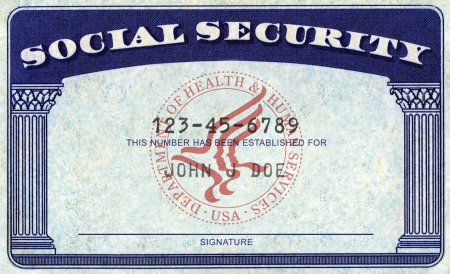
On Aug. 14, 1935, Franklin Delano Roosevelt signed the Social Security Act into law. FDR is rightly credited with leading the United States out of the Depression and re-framing the relationship between government and society. It is hard to imagine what modern life would be like without The New Deal.
By the time I made my first payroll contribution to Social Security in 1968, the program was stable. One hoped to be able to earn a pension or save money for retirement but I didn’t know how that would unfold during my work life. The job I held as a stock boy in the drug department of an early big box store wasn’t intended to pay for the retirement of a 16-year old entering the work force. I knew then Social Security would be there for me when I retired, no matter the financial outcome of a lifetime of work. This freed me to do other things, like being a teenager.
As I wrote in 2017, the Social Security Administration is currently doing fine. It follows a plan that begins to deplete the trust fund in 2034. In the current Trustees Report, that date holds true. The problem is longer term.
Social Security and Medicare both face long-term financing shortfalls under currently scheduled benefits and financing. Costs of both programs will grow faster than gross domestic product (GDP) through the mid-2030s primarily due to the rapid aging of the U.S. population. Medicare costs will continue to grow faster than GDP through the late 2070s due to projected increases in the volume and intensity of services provided.
A summary of the 2022 Annual Reports from the Social Security and Medicare Boards of Trustees, Social Security Administration website.
The Republican plan to address this can be found in U.S. Senator Rick Scott’s plan to rescue America, in this sentence, “All federal legislation sunsets in 5 years. If a law is worth keeping, Congress can pass it again.”
When asked about sunsetting Social Security and Medicare, Senator Scott said, “No one that I know of wants to sunset Medicare or Social Security, but what we’re doing is we don’t even talk about it. Medicare goes bankrupt in four years. Social Security goes bankrupt in 12 years. I think we ought to figure out how we preserve those programs.”
The fact is Democrats are talking about it and have introduced appropriate legislation to address the long-term problems presented by the Trustees. For Massachusetts Senator Elizabeth Warren, fixing the program is straight forward, “As Republicans try to phase out Social Security and raise taxes on more than 70 million hardworking Americans, I’m working with Senator Sanders to expand Social Security and extend its solvency by making the wealthy pay their fair share, so everyone can retire with dignity.” Warren and Sanders introduced The Social Security Expansion Act in the U.S. Senate.
The weasel-words of Senator Scott are evident. Rather than offer solutions to long-term problems, he speaks vaguely about the people he knows and what they believe. The only purpose this serves is to raise doubts about choices pensioners like me made over the last 54 years. It is a scare tactic from Republicans’ long list of them.
As much as I’d like to see Democrats and Republicans engage together in solving the long-term issues with Social Security and Medicare, I don’t think that’s possible in today’s divided Congress. As President Joe Biden has demonstrated with a series of recently passed legislation, finding common ground and passing laws is possible even in the toxic political climate of Washington, D.C. We need to do more of it.
Pensioners and other senior citizens vote, so I’m confident Social Security will be addressed at the ballot box. Just give us the facts, without your political spin, and we can make a good decision. Today we appear to be in the spin cycle.
Sorting the facts from bogus assertions is an ongoing issue. Democrats have a good story to tell about expanding Social Security. We need to bring Republicans in, if we can, and solve the long-term problems. If we can’t bring them in, we must solve them on our own.
Image of Earth 7-6-15 from DSCOVR (Deep Space Climate Observatory)
The climate crisis continues in the coronavirus pandemic.
The pandemic with its economic downturn threatens years of progress addressing climate change and sustainability. It’s now or never for the environment.
Governments are expected to spend trillions of dollars in stimulus to get the economy going again. Addressing the climate crisis can’t wait. Climate solutions must be integrated with stimulus spending.
“We now have a unique opportunity to use (the economic crisis) to do things differently and build back better economies that are more sustainable, resilient and inclusive.” said Saadia Zahidi, World Economic Forum managing director.
WEF warned that “omitting sustainability criteria in recovery efforts or returning to an emissions-intensive global economy risks hampering the climate resilient low-carbon transition.”
Sustainability should be integrated into recovery efforts because the health crisis, economy, and environment are inextricably connected. There is only one chance to manage this recovery. Trillions can be spent only once. Given the scope of the climate crisis, its pressing urgency, society must choose to address the climate crisis now.
The International Energy Agency has ideas on how to do that. They developed a 174-page essay titled “Sustainable Recovery.” However, no single solution applies to global matters. We need multiple solutions implemented synchronously.
Global carbon dioxide emissions reduced by 17 percent in April as people sheltered at home, industry reduced production, and automobile use slowed. Since then, emission levels surged back. A conscious decision to integrate smart energy use into the recovery is needed. The issue has been politicized so thoroughly it seems doubtful any such action will be taken in the United States. One is being political whether they say something about climate change or not when discussing the economic recovery. We must persist in demanding a solution.
Fiona Harvey, environmental correspondent for the Guardian reported, “The world has only six months in which to change the course of the climate crisis and prevent a post-lockdown rebound in greenhouse gas emissions that would overwhelm efforts to stave off climate catastrophe.”
No one knows how long we have. It’s common sense that stimulus money could be used in a holistic way. Ideas are out there. What’s lacking is political will.
That few in our government talk about addressing the climate crisis as we “open up” the economy is part of the problem. Oil and gas interests have so infiltrated our government politicians don’t want to hear about solar or wind generated energy, even if they are the least expensive and least damaging regarding carbon dioxide emissions.
Think about it though. When has doing what makes sense gotten so politically out of fashion? Among other things, that needs to change.
Al Gore recently said, “Moving forward from COVID-19 means we have an obligation to rethink the relationships among business, markets, government and society. We must deliver a sustainable form of capitalism.”
That’s not going to happen without a change in our government.
People ask me how I plan to address the climate crisis. My answer?
It’s time to stand up for what is needed in our country right now: moral revival and transformative change. That means voting for Democrats in November.
Postscript: Since I wrote this post Joe Biden released his plan to ensure the future is “‘Made in All of America’ by all of America’s workers.” The word climate is mentioned once in a paragraph to “apply a carbon adjustment fee against countries that are failing to meet their climate and environmental obligations.” I support Biden for president and encourage readers to read his Made in America plan here. Like any plan it will be subject to modification if Biden is elected president. One modification I expect is to integrate addressing the climate crisis in the plan.



 Journey Home
You must be logged in to post a comment.