The three spring months of March, April and May averaged 45.5° or 2.8° below normal while precipitation totaled 8.82 inches or 1.40 inches less than normal. This ranks as the 32nd coolest and 68th driest spring among 142 years of record. This season was uneventful compared to the two previous springs with 2012 setting a record for warmest spring and 2013 being the wettest on record.
Plants in the garden, including weeds, seem to be thriving, despite the news.
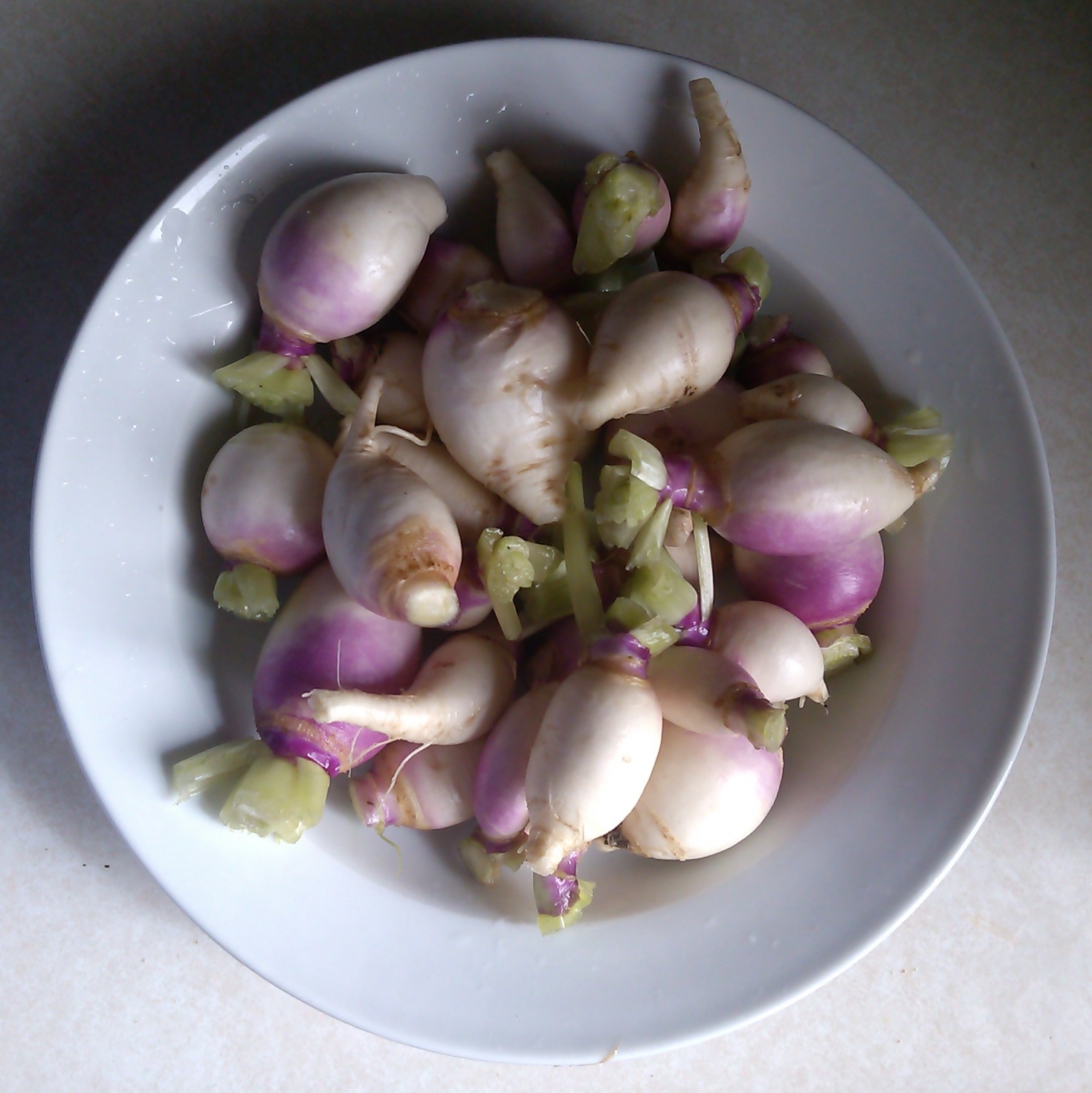
Turnips
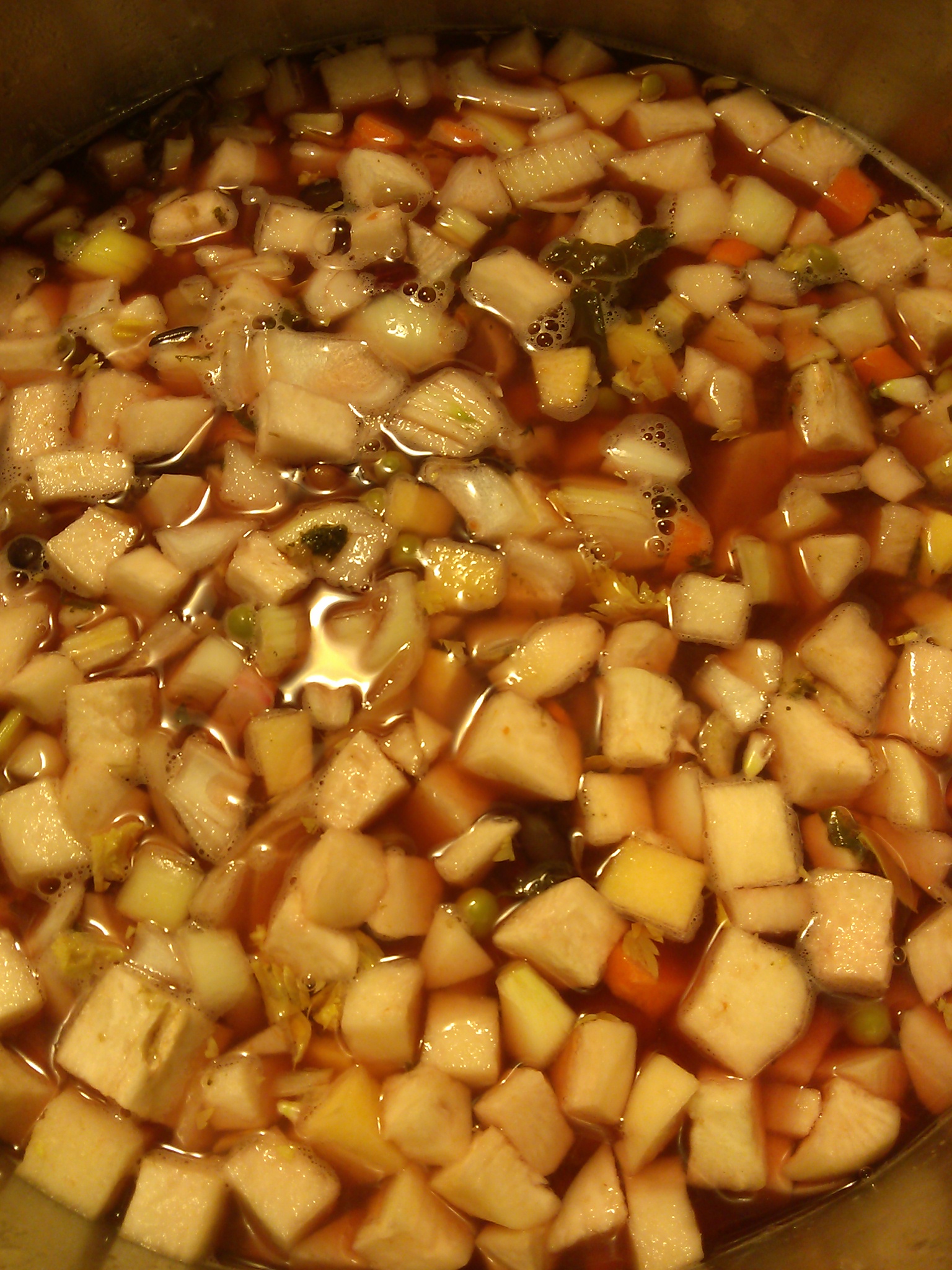
With the recently referenced turnip harvest, it became time to make summer soup. Here are some basic directions, however soup doesn’t have many rules, so readers should feel free to add what’s fresh, going bad and available.
Peel and slice a bowl of spring turnips into 1/8-inch rounds and place into the bottom of a Dutch oven. Pour a quart jar of soup stock on top and turn the heat to high.
Peel and cut two large carrots into rounds, dice a stalk of celery and an onion and add them to the pot.
Roughly chop cooking greens and add.
Drain and wash one can prepared black beans, and add.
When the liquid comes to a boil, add a quarter cup pearled barley. Add dried chervil leaf, dried bell peppers and three bay leaves. Salt and pepper to taste.
Add a quart of canned tomato juice and more soup stock to cover.
After coming to a boil, reduce the heat to a slow simmer and put the lid on, stirring occasionally.
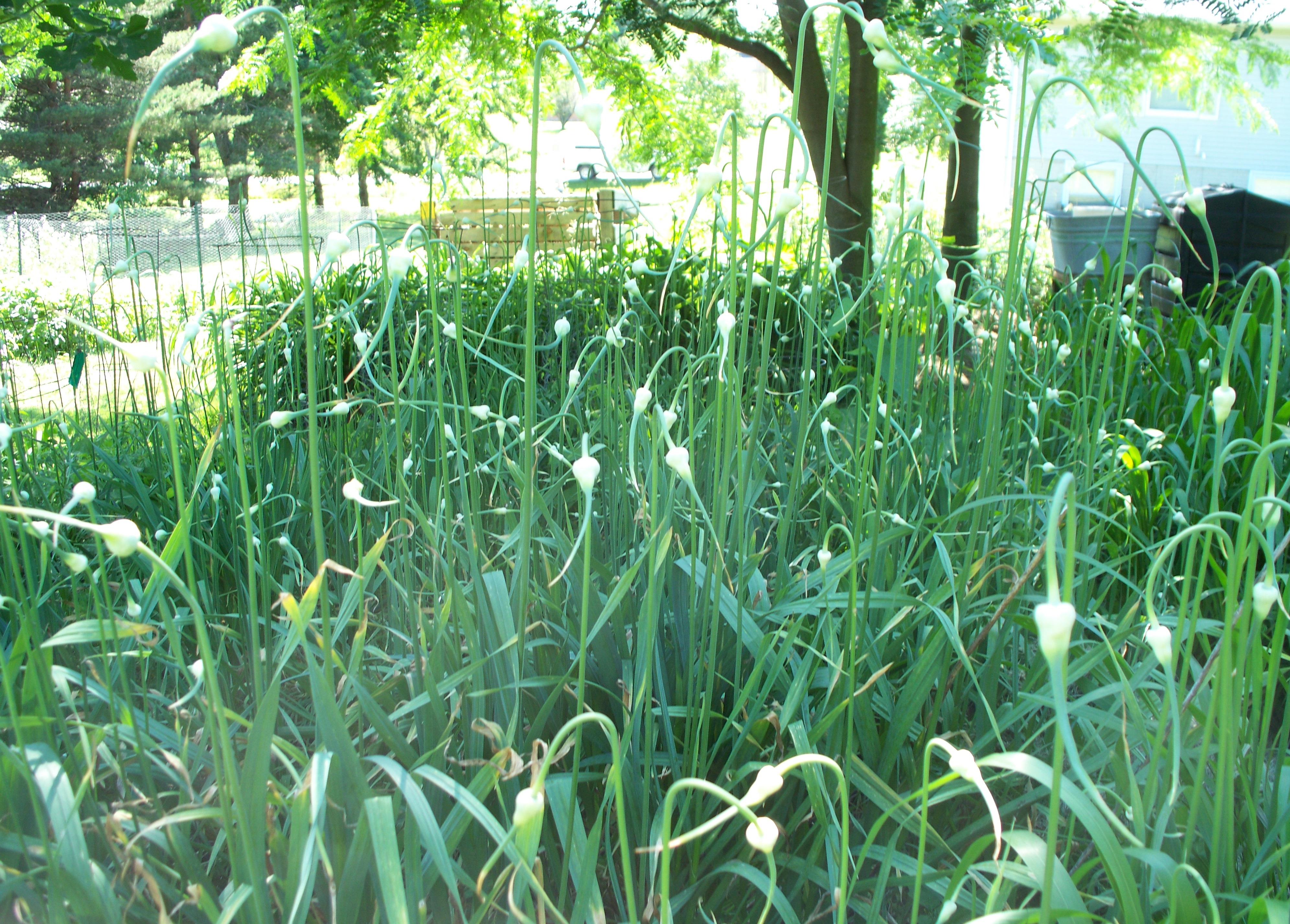
LAKE MACBRIDE— There were big coolers full of garlic scapes and kale available at our CSA pickup point this week. It’s time to make:
Kale and garlic scape pesto
2 cups garlic scapes cut into thin slices
8-10 leaves kale, stems removed and rough chopped to make processing easier
2/3 cup toasted walnuts
Extra virgin olive oil to achieve desired texture (1 to 1-1/2 cups)
1 cup grated Parmesan cheese
Salt and pepper to taste
Place scapes, kale, and nuts in the bowl of a food processor and grind until well combined and somewhat smooth but not completely pureed. Slowly drizzle in oil and process until desired texture is achieved (hint: not too much). Empty the contents into a mixing bowl and add cheese, salt and pepper to taste. Put it into small canning jars and keep one in the refrigerator and freeze the rest.
LAKE MACBRIDE— The Cedar River was swollen with recent rain as I crossed on the Solon-Tipton Road bridge for my sawyering job. Water moving to the sea on this water planet.
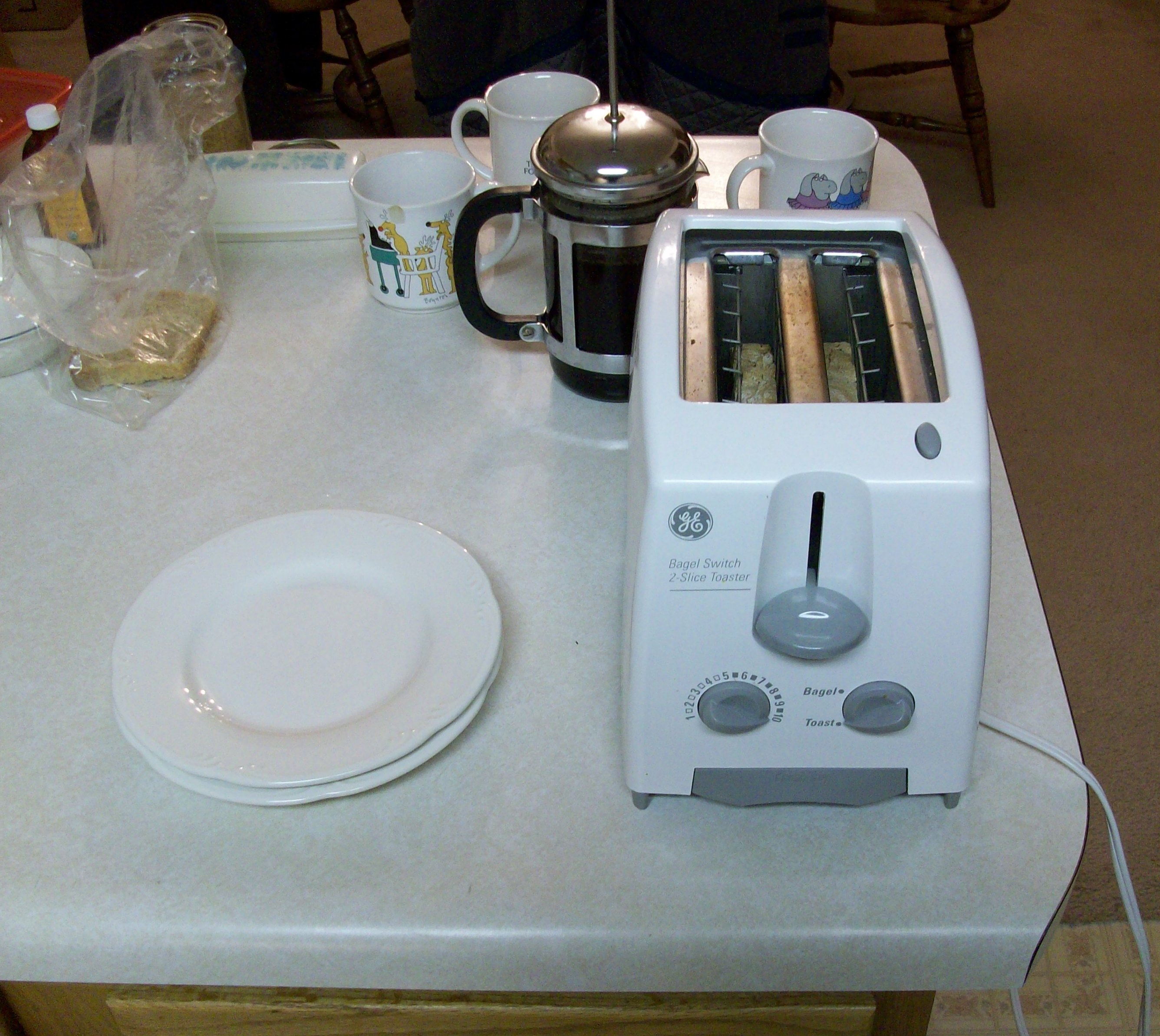
It was a physically demanding day, and I slept well last night. What for breakfast? Now the trouble begins.
Being a wheat eater, the first meal of the day usually includes bread, pancakes, muffins, or the like. There may be dairy in the form of milk, eggs, cheese or butter. If I feel like grating potatoes for hash browns, that will do. All of this indicating a diet that has changed little since my forebears arrived in North America from the British Isles some 350 years ago.
Occasionally I make some granola, or buy a box of cereal at the market. Oatmeal is a winter staple, and if there is fruit around, that’s nice too. The fact that a leftover grapefruit sits in the refrigerator since Saturday indicates fruit has not been an important part of breakfast, even if it should be.
The pantry is loaded with things to spread on toasted bread. Several kinds of pesto, half a dozen types of apple butter, preserves from locally grown grapes, wild blackberries and raspberries. There are more types of spreads forgotten than remembered. Too, there is more to life than jam on toast.
In the end, breakfast is easy to figure because the ingredients have been around for a long time. It typifies my cooking that I don’t really want a plan of what to have for breakfast.
If we rethink breakfast, it should be in the moment, a creation based on what’s available, what’s going bad soon and what’s possible. The list of variables is not that long, so “creation” is the better usage.
Lately breakfast has been my main meal, with snacks and sandwiches carrying me through the rest of the day. It is time to better consider this important meal and make it better.
LAKE MACBRIDE— A friend was coming to overnight, so I baked a cake— an applesauce cake with rhubarb sauce.
The challenge of growing and preparing local food is cooking, and I don’t mean heating up the latest frozen concoction from H.J. Heinz. It is understanding what types of fruit and vegetables can be consistently sourced locally, then working those items into a localized cuisine— a micro cuisine specific to a household.
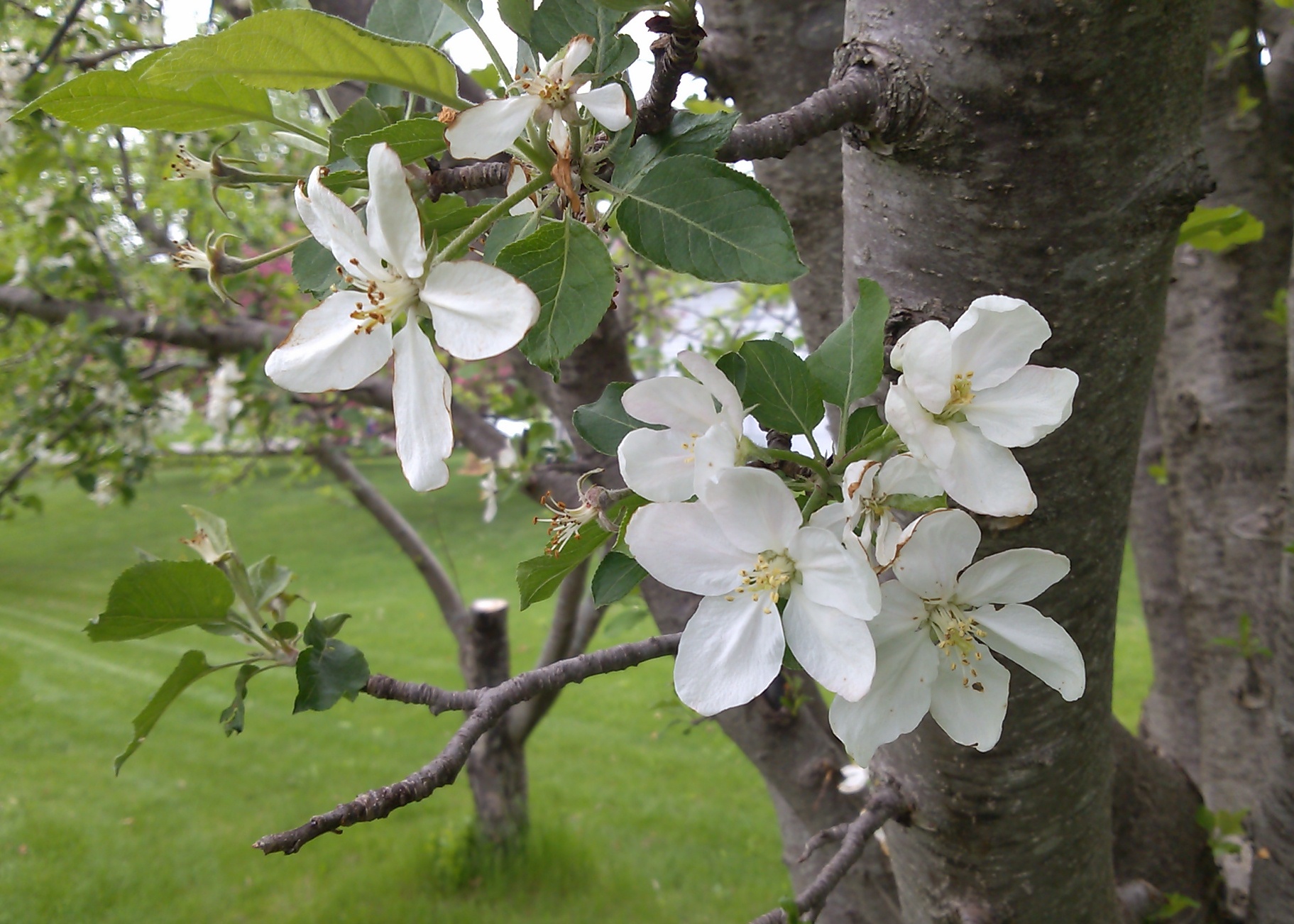
For example, we have four apple trees, and at some point we stopped letting them fall for wildlife and started processing them into food. Among other things, I make applesauce— quarts and quarts of it— from the Red and Golden Delicious apples grown on our trees. Are Red Delicious the optimal choice for applesauce? Probably not, but they are what we have.
Over the years I developed two critical things: a recipe for applesauce cake as a way to use up the abundance of canned sauce; and occasions like the visit of a friend to prepare and serve them. Both are important.
This spring we received an abundance of rhubarb from the CSA, so we needed a way to use it. A bag or two from last year is in the freezer, so we don’t need more there. Nor do we dip it in sugar and eat it raw, so I decided to get sauced, making a simple rhubarb and raw honey sauce to top slices of applesauce cake. The recipe is simple cutting, mixing and tasting.
Rhubarb Sauce
Finely dice a large bunch of rhubarb stalks and place into a saucepan.
Add a tablespoon of water to create the initial steam. The rhubarb will produce a lot of its own moisture, so much that most of it can be removed before adding the honey.
Add a generous amount of local honey to the cooking rhubarb. I used raw honey from the same farm where the rhubarb grew.
Stir until it is incorporated, bring to a boil, and then turn the heat to a simmer and cook. Taste the sauce and adjust honey. No spices are needed, but feel free to add if you like. The rhubarb-honey taste will carry the sauce as it is served.
Cook until the sauce thickens a bit. Serve hot or chilled.
Applesauce Cake
1 cup brown sugar
1-1/2 cups applesauce
1 tablespoon cinnamon
1/2 teaspoon ground cloves
2 teaspoons baking soda
1-1/4 cups whole wheat flour
1-1/4 cups unbleached flour
1/2 cup melted butter
1 cup raisins
Cook the raisins in water until plumped. Drain and set aside.
Incorporate applesauce, sugar, cinnamon, cloves and butter in a large bowl.
Sift the flour and raisins into a separate bowl and add the raisins. Stir until the raisins are coated with flour.
Add the dry ingredients to the wet ones and beat well until fully incorporated.
Line a cake pan with parchment paper and pour the cake batter in.
Bake in a 350 degree oven for 45 minutes.
Place the cake on a cooling rack.
Serving suggestion. Cut a 1-1/2 inch wedge and place on a small plate. Pour 1/4 cup rhubarb sauce on top and serve. Add whipped cream if you like, or decorate the plate with fresh fruit.
LAKE MACBRIDE— Jaime Oliver and Gennaro Contaldo taught me to make pasta without tomato sauce. The two television chefs went searching around London for wild rocket, brought it to Oliver’s kitchen, and made a simple pasta dish with it. That local greens could be the beginning of a pasta dish was a new idea I am adopting into my cooking.
We have an abundance of baby bok choy from the CSA and a large bag of leaves separated from the stems was the starting point for last night’s dinner.
Ingredients: a bread bag of roughly chopped baby bok choy leaves, three full heads of garlic peeled and sliced thinly, bits and pieces of aromatic vegetables leftover from salad making (carrot and bell pepper), a cup of grated Parmesan cheese, a half pint of last summer’s pesto thawed from the freezer, a roughly chopped large onion, and salt and pepper to taste.
Process: Bring a pot of water to boil for the farfalle. While the water is heating, perform the chopping work: rough chop a large onion, dice the carrot and bell pepper, rough chop the greens and peel and slice the garlic heads. This is a lot of garlic, and our kitchen has two dozen from last year needing to be used up before the spring garlic comes in.
In a large frying pan sauté the onions and carrots in olive oil. Add salt. Add the bell pepper next and when the onions begin to soften, add the sliced garlic, stirring to prevent the garlic from burning. Once everything is soft, add the baby bok choy leaves, turn down the heat and cover to let them wilt. Take the pan off the heat and let it rest until the pasta is done.
Drain the farfalle and put it in a large bowl. Add the cooked greens mixture, half a pint of pesto and a cup of grated Parmesan cheese. Mix gently with a spoon and serve, adding freshly ground pepper on top, and salt to taste.
Notes: The greens mixture is a form of mirepoix, and my ingredients were chosen because they were on hand: the operative principle in this local food dish. Farfalle is used because of the broad surfaces for the sauce to adhere. Most other forms of dried pasta would work well. Last summer I made and froze three different kinds of pesto based on what was coming from my garden. Any pesto would be fine in this dish. Other ingredients to consider would be pine nuts, fresh herbs, leeks or shallots.
LAKE MACBRIDE— During the late 1990s I worked on a logistics project in Ochlocknee, Ga. for four months. I don’t remember much about the town, except it was a poor place, with a per capita income of $10,112. When I encountered locals outside the job site, the conversation was a mix of complaining, gossiping and harshness. The place and its people defined hard-scrabble.
The project was located at the largest employer in the area, which was and is involved in mining and processing minerals for a variety of consumer applications. No local ever complained to me about the mines. The rest of the economy was agricultural: peanuts, cotton and pecans. It was a common practice to let cattle roam without fences, and we frequently had to stop the car on Main Street to let them cross. I decided to stay in the nearby county seat at a motel with cable television— a needed escape after working 14 hour days.
TV Food Network, as it was known, occupied my non-working time, and I developed an insatiable curiosity about food and its preparation. Emeril Lagasse, Mario Batali, Susan Feniger, Mary Sue Milliken, Julia Child and others prepared food on screen, and I was captivated, watching episode after episode on Georgia weekends. Food is a common denominator for humanity, and I couldn’t get enough. My involvement in the local food movement today has its origins in the contrast between that uninviting place in South Georgia and my food escape.
There is a broader point to be made than one person’s transient addiction to a television network while away from home. It is that American food pursuits, and the economy around them, continue to be based partly upon curiosity.
I discovered a confection made of dark chocolate, quinoa, blueberries and agave syrup. Why would any informed person want that, given the problems?
Maybe blueberries could be cut some slack, but cocoa production is a fragile and labor intensive operation. The growing demand for cocoa products is leading to deforestation and its negative impact on the environment. Consumer demand for quinoa has elevated prices so that indigenous people in Peru, who used it as a staple food, now can’t afford it. Agave syrup has 50 percent more calories per tablespoon than refined sugar, and like sugar and corn syrup, is a highly processed food. According to WebMD, “the American Diabetes Association lists agave along with other sweeteners (table sugar, honey, brown sugar, molasses, fructose, maple sugar, and confectioner’s sugar) that should be limited in diabetic diets.”
The answer to the question is people like chocolate and are curious about food.
It seems clear that American curiosity about food and food preparation drives what we find in stores. It is a commonplace that corn syrup can be found in every aisle of a traditional mega mart, but it is the endless combinations of diverse ingredients that attract our attention then get us to buy.
By developing and marketing new things— quinoa mixed with chocolate or chicken, troll or pole and line caught tuna, gluten and GMO free products, and a host of others— purveyors of the consumer economy seek to engage us through the current sales cycle. I suspect we will stop buying at some point, returning to staple foods, or moving on to what the food marketers deem next.
In a free society, people should be able to do what they want with only minimal restrictions to protect the commons. In our consumer society, that is a joke. For a local food system to be sustainable beyond the initial curiosity of trying it out, something fundamental must change. It is a need— perceived or real— to change from the act of consuming to the act of production. That involves a lot of hard work, and I’m not sure it could be done in the current society.
If we are serious about sustainability and local food systems, we must get beyond curiosity, and distraction from the challenges of a turbulent world. We must get to the production of things that matter in our lives on the prairie.
LAKE MACBRIDE— Canned beans are delightful because the processor calculates the moisture content of each batch and cooks them accordingly. The product is consistent, and we use a lot of them. We are also willing to pay a premium for USDA organic. Recently, we began buying them by the case from our local grocer.
In our town of 2,200 the cost of goods is much higher than what can be found in large grocery and box stores a few miles away. Sometimes items are ridiculously high.
Most locals don’t buy organic, and the store manager is reluctant to carry slow moving goods. There is a carrying cost of inventory. They do have buying power and access to warehouse inventory. When asked, the buyer was willing to buy special items for us as long as we bought a case or more. We tried our first bulk order this week.
It was simple. Two cases of dark red organic kidney beans and one case of organic black beans for an average price of $1.07 each. A savings of 23 percent over the closest chain store, and 30 percent over buying them from the shelf when they used to be offered. I ordered on Thursday, and they were ready to pick up on Monday. It’s hard to beat the deal.
What is significant is that by special ordering in bulk, we could leverage our local retailer’s network and save money on things we buy, but others don’t. This could have broader implications, not the least of which is expansion of bulk purchases in town to include other items currently being purchased through Walmart, HyVee and others.
What matters is not where we shop, but how we live. By negotiating with local retailers and growers, there is an opportunity to eliminate what is worst about the big box stores and grocery chains… things that make them unsustainable.
By buying locally more often, and custom ordering, society might take a step toward reduction of the carrying cost for a broad and mainly idle inventory. There will always be a need for impulse items, and there should be a premium for them. Yet with proper planning, negotiating and bartering, grocery expenses could be less, and the quality of food higher. A paradigm shift is in the works.
How shall we live? At least in part by buying organic canned beans from a local retailer.
LAKE MACBRIDE— Dressing pasta is a culinary practice with so many variations, it is difficult to justify a single recipe over others. It is a matter of taste, available ingredients and tradition, so far be it from me to set anything in stone.
Prepared pasta sauce— the industrial food kind— is available at warehouse clubs and grocery stores, but it is hard to imagine ever bringing a jar home when it is so easy to make it in the kitchen. Here’s how.
Drain a quart of canned whole tomatoes in a colander, reserving the liquid.
Heat a skillet on medium high heat and coat the bottom with extra virgin olive oil. Use the best oil you have.
Dice a medium onion according to preference and sautée in the heated oil.
Season with salt and pepper.
Mince five cloves of garlic and add to the pan. Cook until the onions are translucent. Don’t let the garlic burn.
Season with dried oregano and basil, fresh if you have it.
Add six ounces of tomato paste. Stir and heat until you can smell the tomato.
Add the drained whole tomatoes, chopping them with the edge of a spoon while stirring the mixture.
It is optional to add protein at this point. We use Morningstar Farms® Recipe Crumbles, although browned ground beef, pork, chicken, tofu, seitan or others could be substituted.
Once the ingredients are thoroughly incorporated, add the reserved tomato juice until the sauce has the desired fluid characteristics. Store any leftover juice in a jar in the ice box, or drink it.
Adjust seasoning.
Turn the heat to low and and simmer until the pasta is cooked.
LAKE MACBRIDE— The trouble began with the bountiful harvest of local produce last year. The larder was filled to the brim, and we had fresh vegetables until this month. In the end, I made a gigantic pot of soup, filled with root vegetables, onions, and a host of other ingredients. It is delicious, and I’m tired of it at the same time. There is another gallon left in the fridge and freezer.
I want to be working and dining from outdoors, and until this past weekend, that proved to be impossible. Indoor pantry cooking has becomes too quotidian. If we were living on a subsistence basis, we would be okay. There’s more to life than that.
So to get out of the early spring doldrums caused by the delay of warmer temperatures, here comes a series of posts to alleviate the sad state of cookery that has befallen this kitchen.
LAKE MACBRIDE— Taking the last of the root vegetables– four kinds of potatoes, three kinds of turnips, and beets– and six jars of canned goods, two kinds of beans, barley, peas, onion, celery and carrot, I made the last batch of winter soup last night. It cooked until bed time, when we turned the heat off to sleep. In the morning, I brought the mixture to a boil, then turned the heat down to simmer until it becomes soup.
All that’s left in the fridge from last year’s local harvest is a couple of daikon radishes and some cabbage. There is plenty of garlic in the pantry, and a single spaghetti squash, but that’s it for fresh. It will be a few weeks until spring produce begins to come in at the markets. The soup and remaining canned goods will have to last.
Yesterday, I finalized plans for a presentation titled, “Living Non-traditional Lives: Focus on Finances.” It is part of the American Library Association “Money Smart Week,” which is a national initiative in its fourth year between the ALA and the Federal Reserve Bank (Chicago) to provide financial literacy programming to help members of our community better manage their personal finances.
Here’s the blurb I posted on Facebook: “Will be speaking at the Solon Public Library on April 12 about living without working a conventional 5 x 8 job as part of Money Smart Week. I plan to focus on: my personal work history, including what it means to be a writer in a time of social media; the role of jobs, the role of households and family, and personal finance in alternative lifestyles (banking, debt, income, taxes, bartering, health care, transportation, communications), deciding what’s important (community engagement, family, stress management, health, time management).”
My Climate Reality colleagues are meeting in Johannesburg, South Africa today where Al Gore is making his slide show presentation. The organizers didn’t know the exact number of attendees, as visa and finance problems deterred some who had registered. However, it looks like about 700 new members of the Climate Reality Leadership Corps, from many nations, will join us at the conclusion of the 24th training session.



 Journey Home
You must be logged in to post a comment.