When visiting my sister-in-law’s home I bring my own coffee. It’s instant espresso I can make without a lot of noise in an unfamiliar kitchen while the rest of the household sleeps in early morning. Even though I sleep on a cot I bought for these visits, my sleep pattern from home was duly replicated: I got eight hours after retiring early.
I have a buzz on from the caffeine as I type on my mobile device.
A winter storm is coming–expected to snow nine inches in the next 48 hours. We should arrive home before the first snowflakes fall.
In the meanwhile, we will prepare for departure while being as productive as possible. Away from home the routine is different. The meal we all helped prepare was satisfying. Another Thanksgiving is in the books.
When I became an adult, married, and settled into steady work, it was assumed I would volunteer in the community. The volunteer impulse has its roots in the industrial period after the Civil War. People used less time to produce enough money with which to live our lives. In more modern terms, we could pay for things like our child’s college education without sacrificing a lot at home.
Perhaps the most prominent example was the robber baron Andrew Carnegie whose expansion of the steel industry made him one of the richest Americans and enabled his philanthropy to fund a number of public libraries, among other things. “The duty of the man of wealth,” Carnegie said, is “to consider all surplus revenues which come to him simply as trust funds, which he is called upon to administer . . . in the manner which, in his judgment, is best calculated to produce the most beneficial results for the community.”
I didn’t have “surplus revenues,” yet worked in jobs that created enough money to pay basic living expenses with a bit leftover. While there were limits on potential income, I was afforded regular free time and expected to use some of it to volunteer in the community. My volunteerism really took off when we moved to Big Grove Township.
I differentiate the types of volunteer work I have done since 1993. There is community work: membership on the home owners association board, election as a township trustee, and serving on the board of a senior citizen’s group. There is also what I call advocacy work: serving on the boards of peace-related organizations, politics, and two different county boards. Each had something to contribute to society. I talk about community volunteer work in the rest of this post.
Within the first year we were in our new home in Big Grove Township, I was asked to join the volunteer home owners association board and did. Any monetary considerations were insignificant. A regular person does not volunteer in the community for money. Part of living a sustainable life in rural areas is contributing to the general well-being, I believed. I felt blessed and had to give back to the community in which I lived.
Home owners’ associations get a bad rap. In our case, we managed the association like a small city. We provided a public water system, sanitary sewer district, road maintenance, refuse hauling, and real estate sales and purchases. Over time, we upgraded the roads from chip and seal to asphalt, dealt with changing government standards related to arsenic in drinking water, reduced the number of wells from three to one, complied with changing Iowa Department of Natural Resources standards for wastewater treatment plant effluent, handled a lawsuit, and coordinated activities like road use and maintenance with neighboring associations. If the board doesn’t do these things, they don’t get done. Everyone is the better for such volunteer boards. I served, off and on, for over 30 years. This was the beginning of a long period of volunteering in the community.
In 2012, when only one candidate was running for two township trustee positions, I ran a write-in campaign and won the election. Being a township trustee included managing emergency response and a volunteer fire department with other townships and the nearby city of Solon. Toward the end of my tenure, we formed a new entity to manage these functions. We maintained the local cemetery and supervised a pioneer cemetery where the first person to die in the township was buried. This work helped me understand how tax levies work and how they were used to support things the county did not, things like a small fire department or saving someone’s life in an emergency. There was only a single conflict during my time as a trustee, about the main cemetery. All the trustees showed up at the cemetery to resolve a dispute over a burial plot. No one wanted the job of township trustee and someone had to do it, so I stepped up.
When the local senior citizen’s group had an opening on their board, I volunteered and became its treasurer. This lasted about two years and provided insight into this segment of the community. Everything we did, from providing community meals, to giving home-bound people rides to medical appointments, to arranging outings around eastern Iowa, served an often-neglected segment of the population. It was a great opportunity to learn about the life of our senior citizens before I became one myself.
I am satisfied this activism did some good. I still believe it is important to stay engaged in the community.
When I was younger, Thanksgiving marked the beginning of a rush to year’s end. Whatever work I was doing could stand down to encourage a tribal time of memory and good cheer. Our tribe is diminished in numbers these days, so the end of year rush has become a place to meet obligations and juggle schedules for time together via video chat. If we are lucky, we can share a meal in person. It is not the same.
It is a given that Americans will experience loneliness as we age. How we cope is the measure of how sustainably we led our lives. When my maternal grandmother was my current age, she lived on her own and would get together at Mother’s home for holiday events, typically for part of a day. The build up to the event, and resting after it was over were all part of the experience. It was a situation far removed from the idea of spending from Thanksgiving until New Year’s Day isolated from the broader world with immediate family doing tribal things.
This year I expect to take more time with living. I expect there will be things to do, maybe a place or two to go, and perhaps some special food. I have low expectations. It should be a great time to get ahead on my writing project.
I’m not sure what happened, other than the truth came out about the story of Thanksgiving and the holidays… how commercial interests took over the space and dominated it for too long. In a position to push that aside, I find it easier to identify what’s most important and who we can count upon. That will be enough.
Saturday I went to town to view the selection at the public library used book sale. There wasn’t much of one. The perimeter of the room had the usual tables of young adult, romance and adult fiction books with an ample amount available. My interest is usually in the center tables, which this year were only four or five, compared to the usual 10 to 12. My goal was to buy no more than three for a free will donation. I couldn’t find a single one, so I came home.
It shouldn’t be surprising so few books were donated. The bottom line, according to Gallup, is fewer people are reading books in 2025. Reading appears to be in decline as a favorite way for Americans to spend their free time. Less reading, fewer books at the annual sale. Life as it is in Big Grove Township.
I participated in the People’s Union national retail boycott on Friday. The plan for no shopping changed when we received a new prescription at a doctor’s appointment. I bought gasoline, since the car was running on fumes, and made two stops for supplies related to the clinical visit. A lot of people were out on the street in vehicles. Costco had the fewest people inside on a Friday afternoon since I can remember. Not sure any impact will be felt or that demand for goods and services changed. The boycott was something small that people could support. These days, we need stuff like that.
I have a lot to say about the meeting between the presidents of the United States and Ukraine yesterday. Here’s what Ben Rhodes posted yesterday, which reduces it to an easily understandable paragraph: “People need to understand that we are in an entirely new paradigm. It is now Russia (and) the US against Ukraine and Europe. This is not a shift in US policy, it is a transformation of what kind of country the United States is in the world.”
There is widespread support for Ukraine in the United States. It just can’t be found in the oval office.
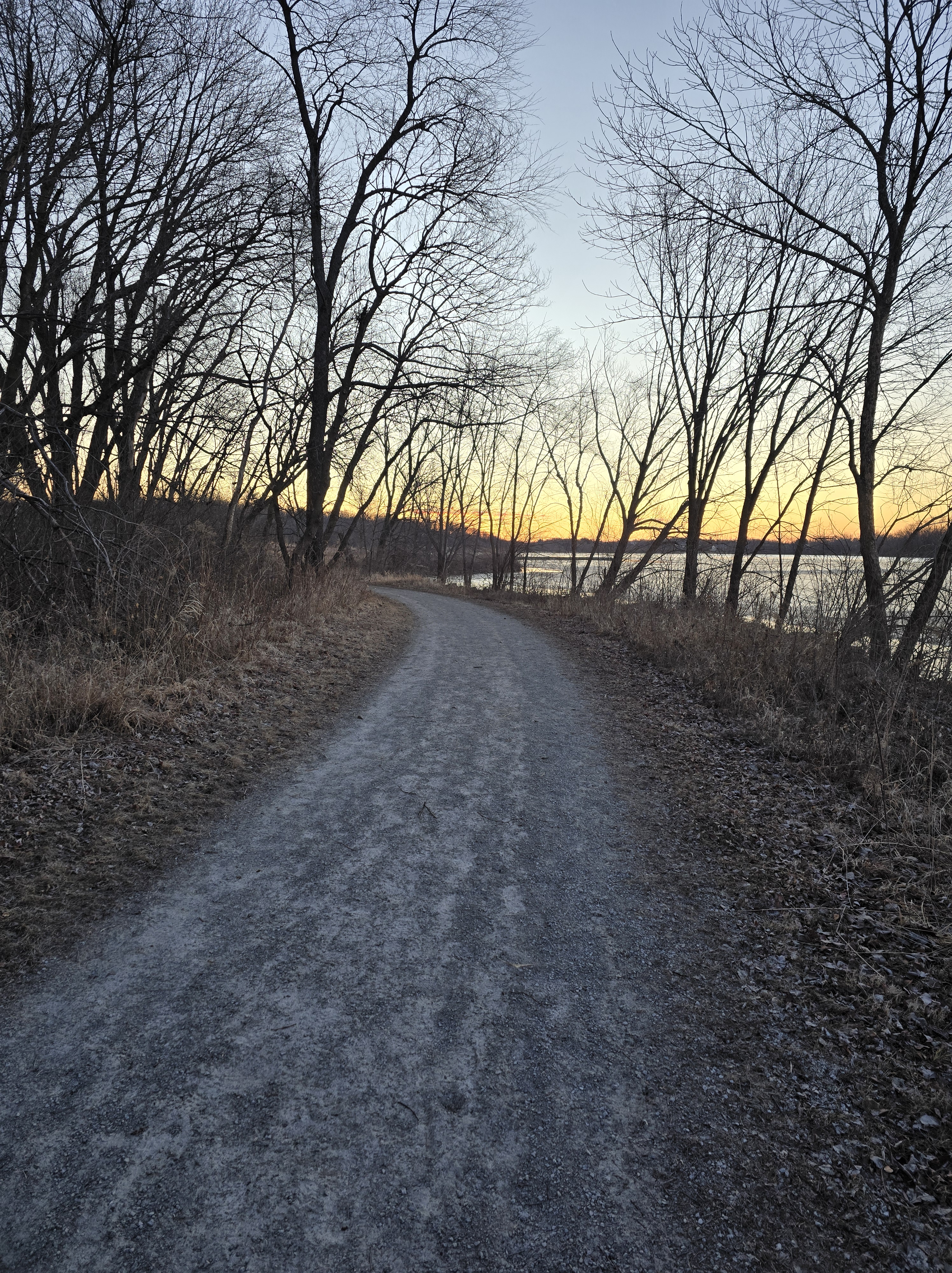
I read each morning near a window with an eastward view. As I sip my coffee, I notice light in the east when the sun begins to rise. All of a sudden it is dawning before 6:30 a.m. I feel compelled to get out in it and watch for a colorful sky along the state park trail. Longer days mean a hastening pace for the year, a late winter rush until summer solstice. When the days are longer, our lives feel shorter as we must rise and engage with the challenges of a new day, setting aside quotidian things like reading.


 Journey Home
You must be logged in to post a comment.