Categories
Environment

The Heat Backed Off

Daylilies in front of the house.

The heat and humidity backed off, making Tuesday a pleasant summer day. Ambient temperature got up to the mid eighties, yet a lack of high humidity made everything outdoors tolerable. I spent a good amount of time there.

Like many, I’m not happy the U.S. Senate passed the budget reconciliation bill. It apparantly came down to Alaska’s Senator Lisa Murkowski who, fearing retribution for a no vote, changed her mind and provided the 50th yes vote. That enabled the vice president to break the tie and deliver a win for Republicans. It is now up to the House to concur… or do what they will.

There is a lot to deal with. Senator Adam Schiff pointed this out in the bill:

If it passes, this will be a setback for environmental quality. Many environmental advocates may feel like the U.S. is back to square one. Me? I can’t give up.

For now, we have perfect summer weather. For how long is hard to say.

Categories
Environment

Extreme Weather #2 1988-1990 Drought

It snowed overnight on March 20, leading into spring.

The year we moved to Indiana’s Calumet Region in 1988 marked the onset of the worst U.S. drought since the Dust Bowl. The 1988-1990 North American Drought covered a smaller amount of geography compared to the 1930s Dust Bowl yet it was the most expensive extreme weather event in terms of monetary damages in U.S. history until that time.

Nearby Milwaukee, Wisconsin, set a record 55 consecutive days without measurable precipitation. During summer heat waves, thousands of people and livestock died. The drought led to many wildfires in western North America, including record fires in Yellowstone National Park in 1988.

While living in the Calumet, I understood the region’s activities were adding carbon dioxide to the atmosphere, enhancing the greenhouse effect that causes planetary warming. This includes the enormous Amoco Oil Company refinery located 23 miles from our house.

In 1988, we were turned inward, living our family life. We also had air conditioning. I did not understand how prevalent the deleterious effects of climate change would become in our lifetimes. It was one of what became a series of extreme weather events leading through time to when I wrote this post. We understand now.

The United Nations suggests ten thing we can do to address climate change. They even have an app! It is not too late to begin addressing our contributions to global warming and environmental degradation. Click here to learn more about what you can do.

Categories
Sustainability

Big Grove Township Extreme Weather #1

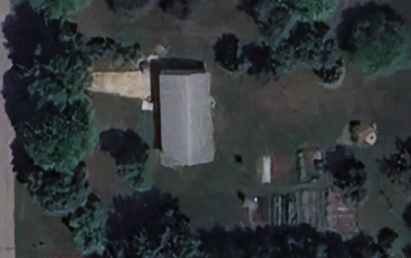
The home we built in 1993 from Google Earth.

Editor’s Note: Our arrival in Big Grove Township was marked by the first in a series of extreme weather events: the 1993 flood. It was called a once in 500-years flood, yet we would soon find out flooding had become more common, including the next 500-year flood event in 2008. I plan to weave at least six extreme weather events into my memoir, beginning with this chapter on Big Grove Township.

Big Grove Township was established before Iowa Statehood. The first sawmill was built here in 1839 by Anthony Sells on Mill Creek. Put the big groves of trees together with the sawmill and you have us. The oak, walnut, hickory, ash, elm and cottonwood that once thrived among numerous pure springs were gone when we bought our lot here. What dominates is the culture we and others brought with us to an area where all trees indigenous to the Northwest once existed in abundance yet no longer do. There is something essentially American in that.

There is a subdivision named Mill Creek today, suggesting this history. Throughout the area, people refer to early settlers and builders of homes instead of the people who now own and live in those structures. The names Cerny, Beuter, Andrews and Brown persist, as does the more recent name of Don Kasparek upon whose former farm our home is situated.

On the vacant lot we purchased, there were scrub grasses and a lone mulberry tree. The tree appeared to have been planted by a bird’s droppings while it perched on a surveyor’s re-bar marker. The ground had a high clay content which suggested Kasparek had removed the topsoil before subdividing the plats. When he died in 2003, I recognized him in our association newsletter. We speak of him from time to time in the neighborhood, although not always in a positive way.

I looked at an old picture of a building on Main Street in Solon, the nearest city. In sepia tones, seven teams of horses and wagons are lined up in front of a building on the dirt street. We can make out the lettering on the shop windows: Cerny Bros Grocery, Cerny Bros Hardware, and Cerny Bros Feed. While the roads have been paved for many years, much of downtown and the surrounding area resonates with the area’s origins in history before automobiles.

We built our home during the record-breaking floods of 1993. Governor Terry Branstad described the extreme weather event as ā€œthe worst natural disaster in our state’s history.ā€ The Des Moines Register published a commemorative book titled Iowa’s Lost Summer: The Flood of 1993. Extreme weather delayed construction of our home that summer, causing us to stay with relatives and in motels for about a month after we moved from our house in Indiana. We moved in during August 1993. I was used to severe flooding from growing up in Davenport where the 1965 Mississippi River flood broke records. I was not used to flooding, 1993-style.

I couldn’t help but believe who I was represented itself in any of local history. My culture was what I brought with me, rooted in coal mining, factory workers, farming, home making, and the rural cultures of Virginia, Minnesota and LaSalle County, Illinois. Our history as a family goes back on both sides to the Revolutionary War. My line in Virginia goes a hundred years prior to the revolution.

That my ancestor Thomas Jefferson Addington is a common ancestor to the Salyer girls of the Salyer-Lee Chapter 1417 of the United Daughters of the Confederacy stands in contrast to the story of Maciej Nadolski working in coal mines in Allegheny, Pennsylvania after the Civil War and then buying land from the railroad in Minnesota. What of my father’s birth in Glamorgan, Virginia? What of the suppression of Polish culture by the Russians after 1865 that led to a massive migration of Poles to North America? If I weren’t here, we wouldn’t speak much of these things in Big Grove Township. Perhaps with time we will.

Categories
Environment

Winter Days

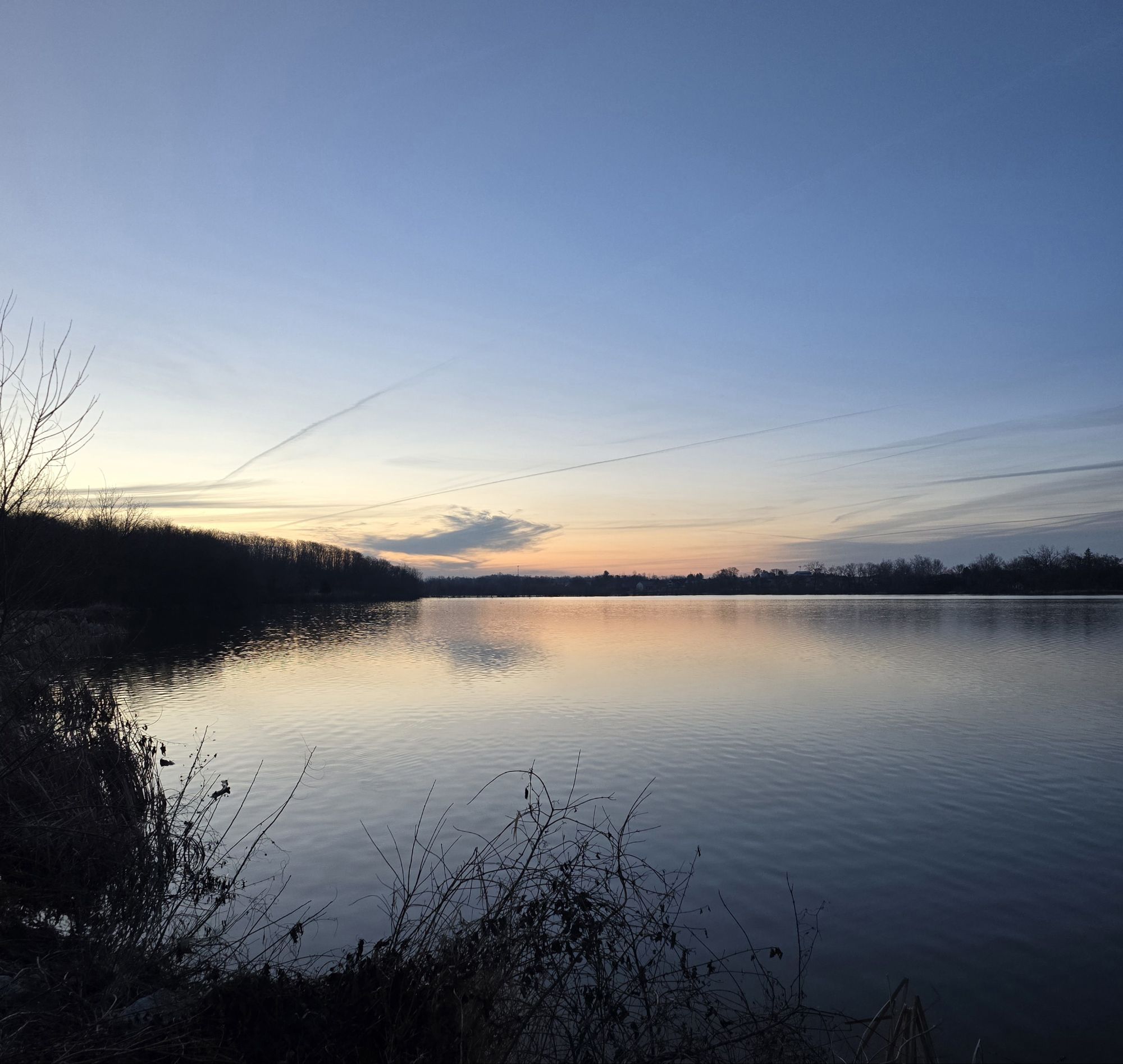
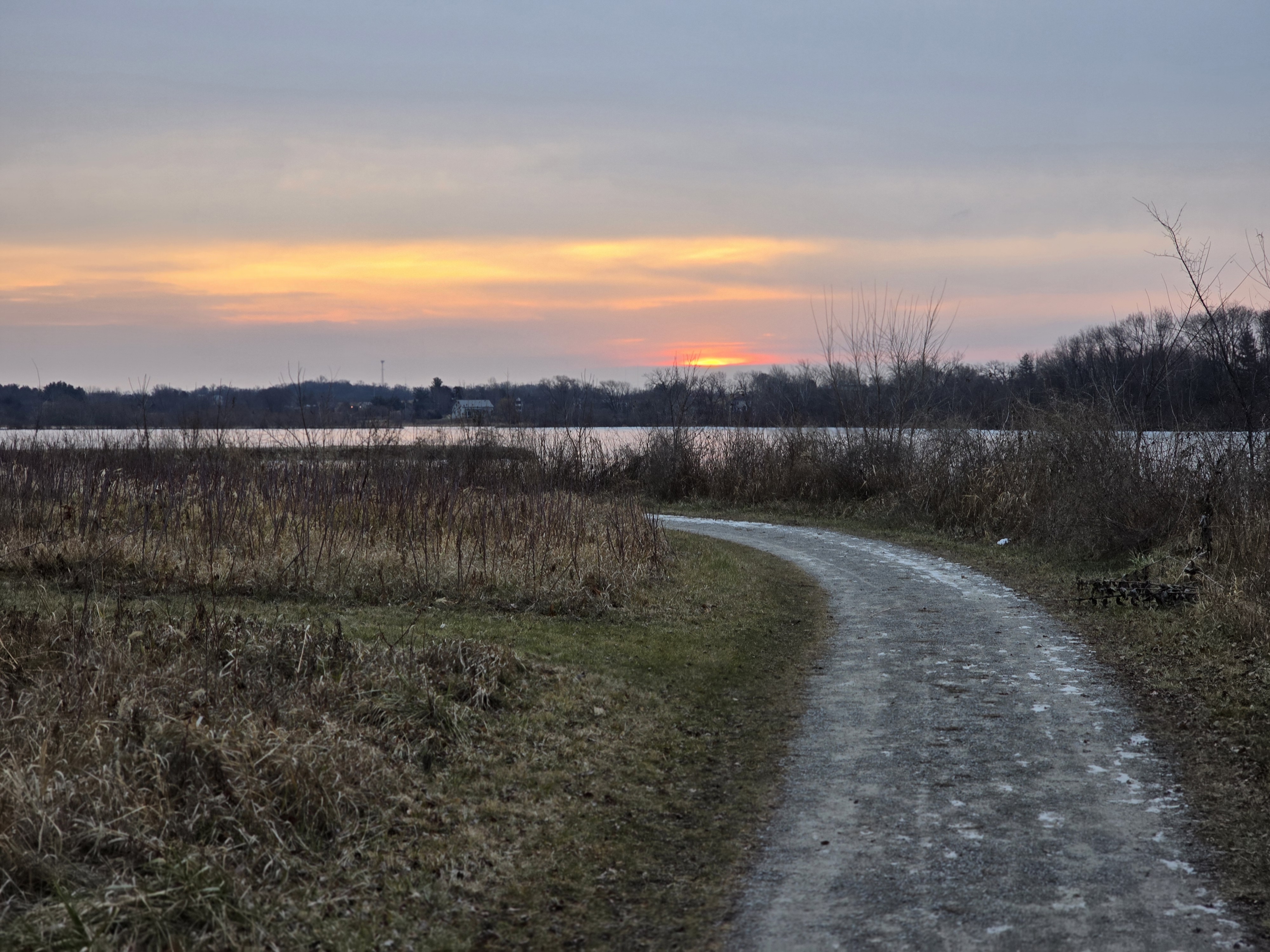
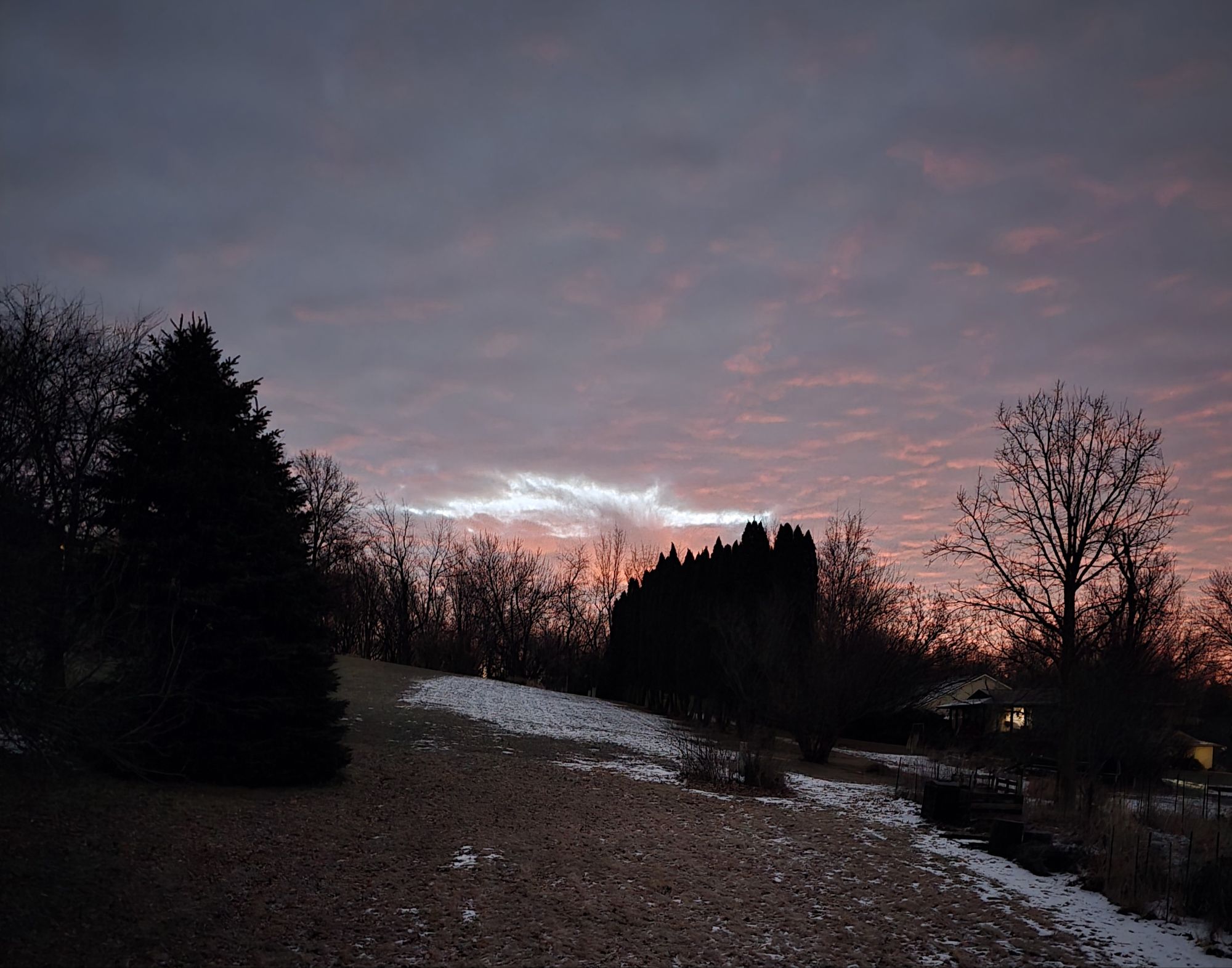
Trail walking at sunrise.

According to the sensor installed on the north side of the house, the ambient temperature was 13 degrees below zero Fahrenheit when I began writing this post. The sun is rising and it warmed up. We’re not at zero yet, although the high is forecast at 25 degrees. Today the weather is weird again.

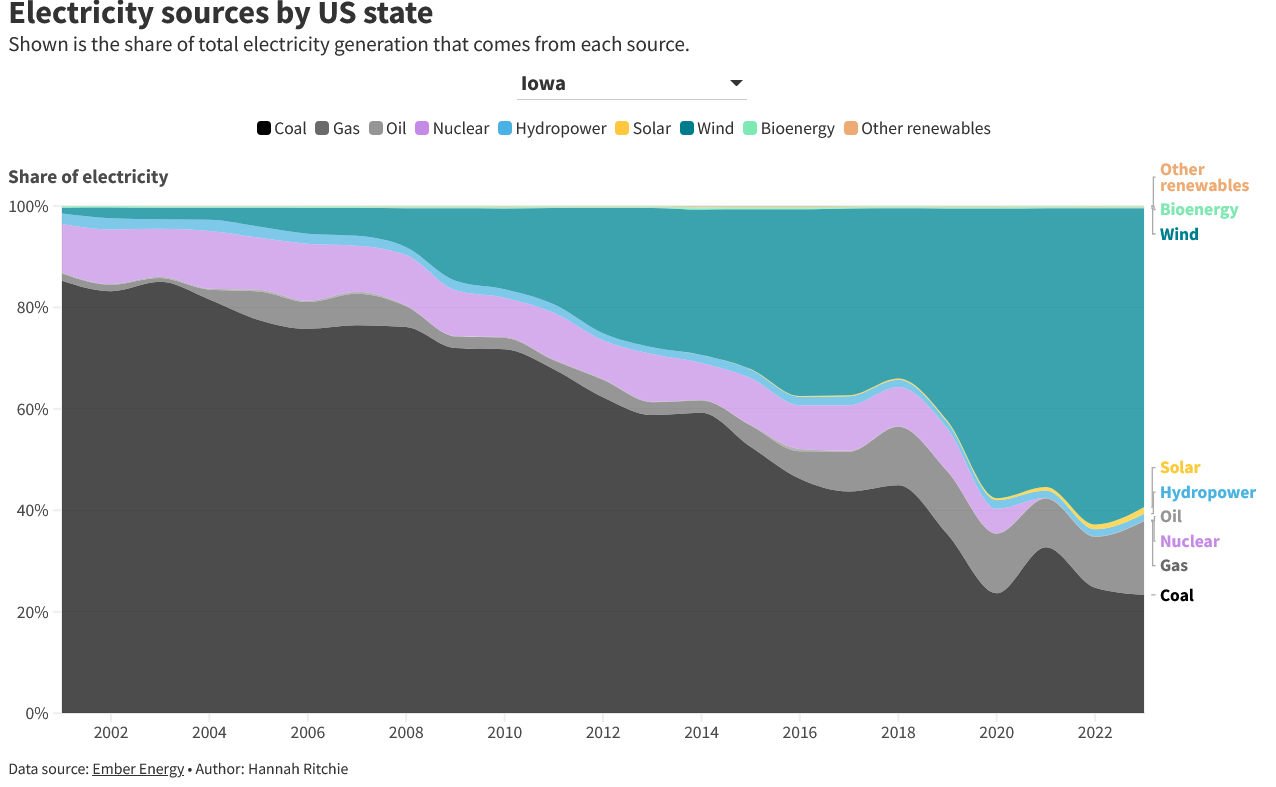
Hannah Ritchie, author of Not the End of the World: How We Can Be the First Generation to Build a Sustainable Planet, posted a widget on the internet with a state-by-state analysis of electricity generation sources. Find it here. Here is where Iowa lands:

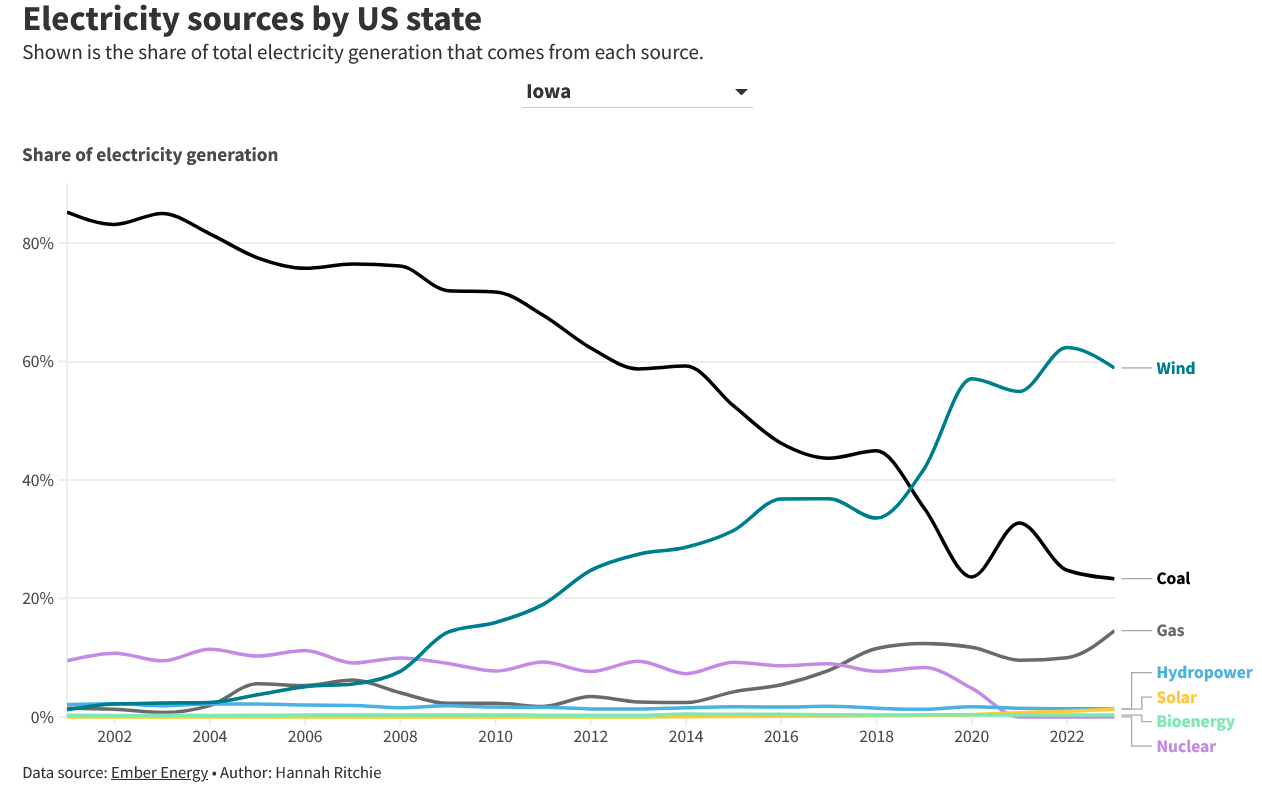
Here is another chart:

Iowa is a leader in wind energy and has plenty of room to improve our solar capacity. There are environmental issues with every form of electricity production, yet burning fossil fuels is our most immediate danger because of the role of carbon dioxide in enhancing the greenhouse effect. Despite today’s low temperatures, Iowa is simply too darn hot.

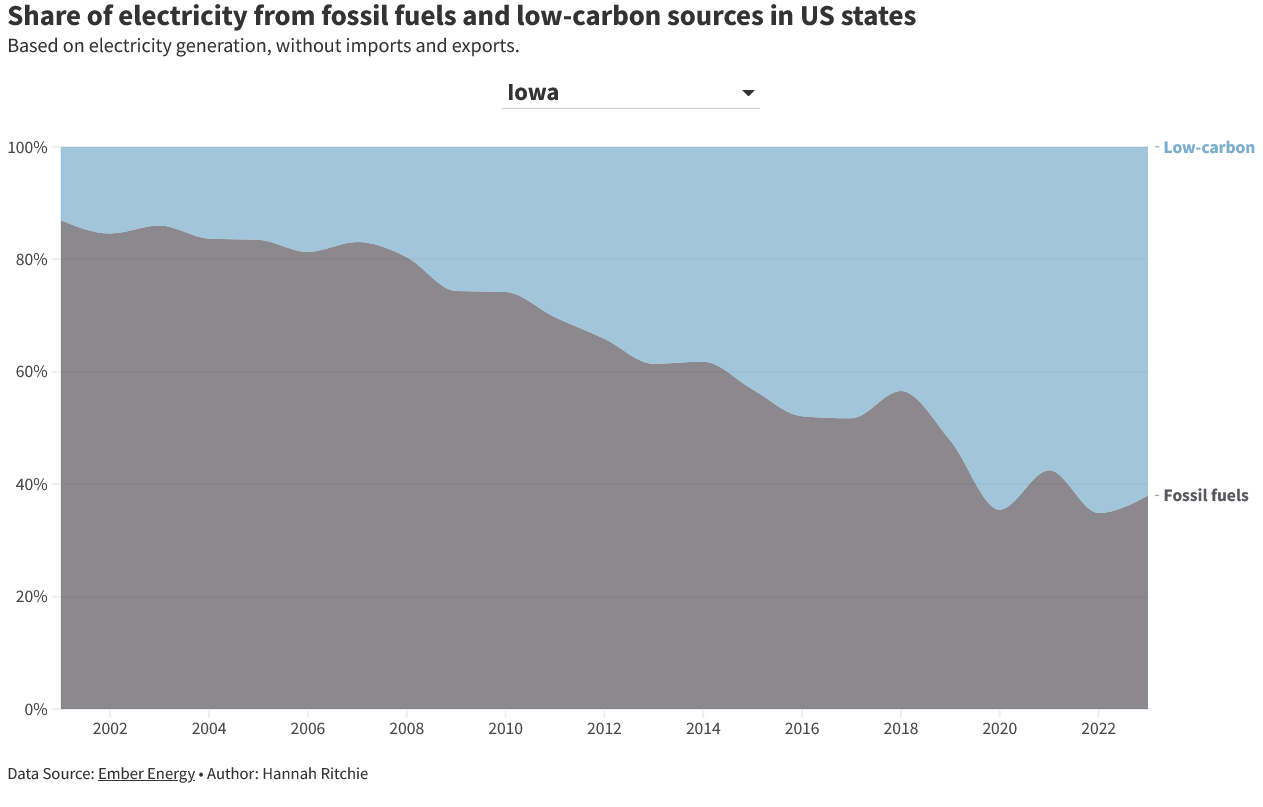
The trend on the following chart is the right one. As a state, we need to move more quickly.

It seems obvious to me that to get to zero fossil fuels used to generate electricity Iowa needs to install many more solar panels. There are issues with both wind and solar generated electricity.

The wind doesn’t always blow and the sun doesn’t always shine. They can be addressed. One of the key strategies to deal with intermittency, which is what this is called, is to improve the forecasting and planning of renewable power generation and demand. Another strategy is to invest in storage and integration solutions that can balance the supply and demand. A third strategy is to foster innovation and adaptation. This involves developing and deploying new technologies, designs, and practices that can enhance the performance, efficiency, and resilience of renewables. We need the will to solve these problems.

So the news about electricity generation in Iowa is positive. We just need more renewables and technological solutions to deal with intermittency so we can replace fossil fuels altogether. To a reasonable mind, this can be accomplished. Now we just need our regulatory and governmental authorities to get on board.

Categories
Living in Society

Travel Day

Morning light show.

Just posting this photo today while I use windshield time to wonder.

Categories
Environment

After COP29

With Al Gore and Company in Chicago 2013. This is about half the attendees. I’m in there somewhere.

The 29th Conference of the Parties was a disappointment. Fossil fuel interests hindered the ability to accomplish constructive things since the beginning of the process. Now, they stopped anything except the most minimal action at COP29. Former Vice President Al Gore summarized the situation in this statement:

November 23, 2024

While the agreement reached at COP29 avoids immediate failure, it is far from a success. On the key issues like climate finance and the transition away from fossil fuels, this is — yet again — the bare minimum. 
 
We cannot continue to rely on last-minute half measures. Leaders today shirk their responsibility by focusing on long-term, aspirational goals that extend far beyond their own terms in office. To meet the challenge of our time, we need real action at the scale of months and years, not decades and quarter-centuries.
 
This experience in Baku illuminates deeper flaws in the COP process, including the outsized influence of fossil fuel interests that has hobbled this process since its inception. The Kingdom of Saudi Arabia has been particularly obstructive. Putting the future of humanity at severe risk in order to make more money is truly disgraceful behavior. Reforming this process so that the polluters are not in effective control must be a priority.
 
On climate finance, our primary task in the coming years must be to not only fulfill and build upon the financial commitments agreed to at COP29, but to unleash even larger flows of affordable and fair private capital for developing countries. 
 
Ultimately, coming out of COP29, we must transform disappointment into determination. We can solve the climate crisis. Whether we do so in time to meet the goals of the Paris Agreement will depend on what comes next.

The climate is changing. Do humans have the capacity to protect all we hold dear from the ravages of the climate crisis? Time will tell. The Conference of the Parties is our last, best hope to stave off the worst impacts of human-caused climate change.

Categories
Sustainability

COP29

Image of Earth 7-6-15 from DSCOVR (Deep Space Climate Observatory)

President-elect Donald Trump is expected to withdraw the United States from the Paris Climate Accords, as he did during his first term. His re-election cast a pall over the 29th Conference of the Parties which began Monday in Baku, Azerbaijan. The United States has been a world leader in mitigating the worst impacts of climate change. Trump’s direction of breaking down the international order where the United States is a leader seems clear.

Azerbaijan is the third consecutive petrostate to host the conference, and arguably intends to stop decarbonization if they can. The work must continue, yet it is expected to slow because of the prospect of the U.S. intentionally hobbling it. In an email this week, the Climate Reality Project said, “Wealthy petrostates and fossil fuel companies are misleading the public, lobbying country leaders, and taking over the COP process, trying to stop progress every step of the way.” Addressing the climate crisis will continue to be an uphill struggle.

Based on the seven days since the election, Trump seems better prepared to implement policies the Heritage Foundation handed him in the form of Project 2025. I must pick which parts of society in which to exert my personal influence. I need more dust to fall and settle before deciding what to do. The climate crisis ranks highly on my list.

Categories
Sustainability

Lilacs and the Climate Crisis

Lilacs in bloom on Sept. 13, 2024.

A sure sign the period of annual warm ambient temperatures expanded is the fact our lilac bushes are flowering a second time this year. I planted them some 30 years ago and only recently have we experienced a double bloom. The flowers are pretty, but the reasons behind their twice a year appearance are not.

The Intergovernmental Panel on Climate Change (IPCC) members are skeptical that warming will be limited to the Paris targets of well below 2 °C, but are more optimistic that net zero CO2 emissions will be reached during the second half of this century. What does that mean? We, as a society, are inadequately moderating the rise in atmospheric temperatures by getting to net zero fast enough. I don’t see any of my neighbors concerned about this, even if they should be. I doubt many of them even know what is net zero.

Whether we like it or not, large online retail sellers provide an efficient service. Not only do companies like Amazon compete on pricing, their distribution network prevents untold automobile trips to retail establishments. That may be a pox on smaller retail stores, yet Amazon is committed to achieving net zero carbon emissions by 2040, much sooner than society as a whole seems likely to achieve it. We citizens may be skeptical of Amazon’s Climate Pledge, but what else is there in a world increasingly controlled by large corporations?

A person can only do so much. Our combustion engine subcompact automobile remains parked in the garage five or six days each week. When we bought it, electric vehicles were simply not available when we needed one. I mow the lawn with my gasoline-powered mower only once per month. I set the thermostat for our HVAC system higher in summer and lower in winter. If everyone did these things, our aggregate actions might have an impact. Like with net zero, this is something our neighbors don’t talk much about. Whether they take similar action is sketchy at best.

To address the lack of awareness, I learned to interpret visual cues in the environment. Things like the second blooms of a lilac bush. It seems essential to do more than appreciate the beauty we find in nature. At the same time, we must question why long-standing botanical and animalia behaviors are changing. With few exceptions, such changes lead us back to new, polluting emissions since the Industrial Revolution.

We won’t undo the changes of the Industrial Revolution quickly enough. We, as a society, should be working on that. Imperfect though it may be, achieving net zero carbon emissions is a worthy goal. Midwestern lilac bushes seem to be adjusting to a changing climate. Now it’s our turn.

Categories
Environment

To EV or Not to EV

Photo by Mike Bird on Pexels.com

Moving the automotive economy toward electric vehicles is a good thing for multiple reasons. An important benefit is to decrease reliance on burning stuff in an internal combustion engine. In the late 19th Century, Rudolph Diesel invented an engine that could burn almost any liquid fuel, including whale oil, tallow, paraffin oil, naphtha, shale oil, and peanut oil. Despite the initial available diversity, the economy followed a track to perfect the gasoline engine and use it for transportation. To a large extent, that’s where we are now, with Diesel’s namesake fuel relegated to trains, buses, heavy trucks, boats, and power generators.

In 2022, we needed a new car and could not confirm a delivery date on available electric vehicle models. They were in high demand and manufacturing could not keep up. We ended up with a three year old used car that got 38 miles per gallon of gasoline. In addition to supply falling short of demand, there are other problems with electric vehicles.

Electric vehicles reduce emissions and are often much kinder to our planet than gasoline and diesel alternatives. Those are positive attributes. The world is not ready for EVs and people experience barriers to using them in the form of charging station infrastructure, insurance, and affordability, in addition to the ability to timely buy one. The federal government has begun to create an environment for the advancement of EVs and Republicans are fighting it tooth and nail.

The latest conflict between doing what’s right for a majority of U.S. citizens, and Republican support for the fossil fuel industry, occurred after March 20, when the U.S. Environmental Protection Agency released a new tailpipe rule on vehicle emissions. “Joe BidenĀ has launched a relentless onslaught of regulationsĀ infringing on American consumer freedom,” Congresswoman Mariannette Miller-Meeks wrote in her weekly newsletter. She decried that the administration’s “heavy-handed mandate forces American automakers to prioritize electric vehicle (EV) production and sales.” Well, yeah. That’s the point, along with preserving a livable world. The member of congress failed to mention all the positive things the president is doing to make EVs affordable for consumers.

The decision to EV or not to EV is not the choice of a single consumer. As individuals we have rights, yet the government must not leave the choice of whether we have a livable world in the hands of personal choice. To move the ball where it is needed regarding EVs, the government can and should be involved in nudging industry and consumers to move toward them. Under Biden, government accepted this role. The scale at which the administration proposes to increase EVs as a percentage of the global fleet is staggering. It is also what is needed to address the climate crisis.

My choice would be to use public transportation for every thing. As long as I have to drive because I live in the country, I expect to eventually convert to an EV and learn to love it. We must support the administration as we can, perfect what is flawed about their approach, and never lose sight of the big picture of slowing the greenhouse effect so we can maintain a livable world. In our current political situation, that means electing Democrats.

Categories
Environment

Al Gore Receives Presidential Medal of Freedom

With Al Gore and Company in Chicago 2013.

On Friday, May 3, Al Gore was awarded the Presidential Medal of Freedom by President Joe Biden. Al Gore is deserving of this recognition.

Here is the announcement. Al Gore was one of 19 people to receive the medal yesterday:

Al Gore is a former Vice President, United States Senator, and member of the House of Representatives. After winning the popular vote, he accepted the outcome of a disputed presidential election for the sake of our unity. He was awarded the Nobel Peace Prize jointly with the Intergovernmental Panel on Climate Change for his bold action on climate change.

My decision to associate with Gore through the Climate Reality Project was a game changer, introducing me to climate activists all over the planet. Joining Climate Reality upgraded my understanding of the climate crisis and everything around it.

What is next for the Climate Reality Project? I don’t know yet presume succession plans are already in place for Gore’s retirement.