Categories
Writing

Writing from Journals

It snowed most of Saturday and I blew the driveway once. It’s winter in Iowa. That’s what we expect. I’m waiting for three days in a row of below freezing ambient temperatures. Once that happens, I’ll prune trees for the year, especially the fruit trees. I expected to have finished that winter work, yet with a warming climate, who knows if it will even happen this year.

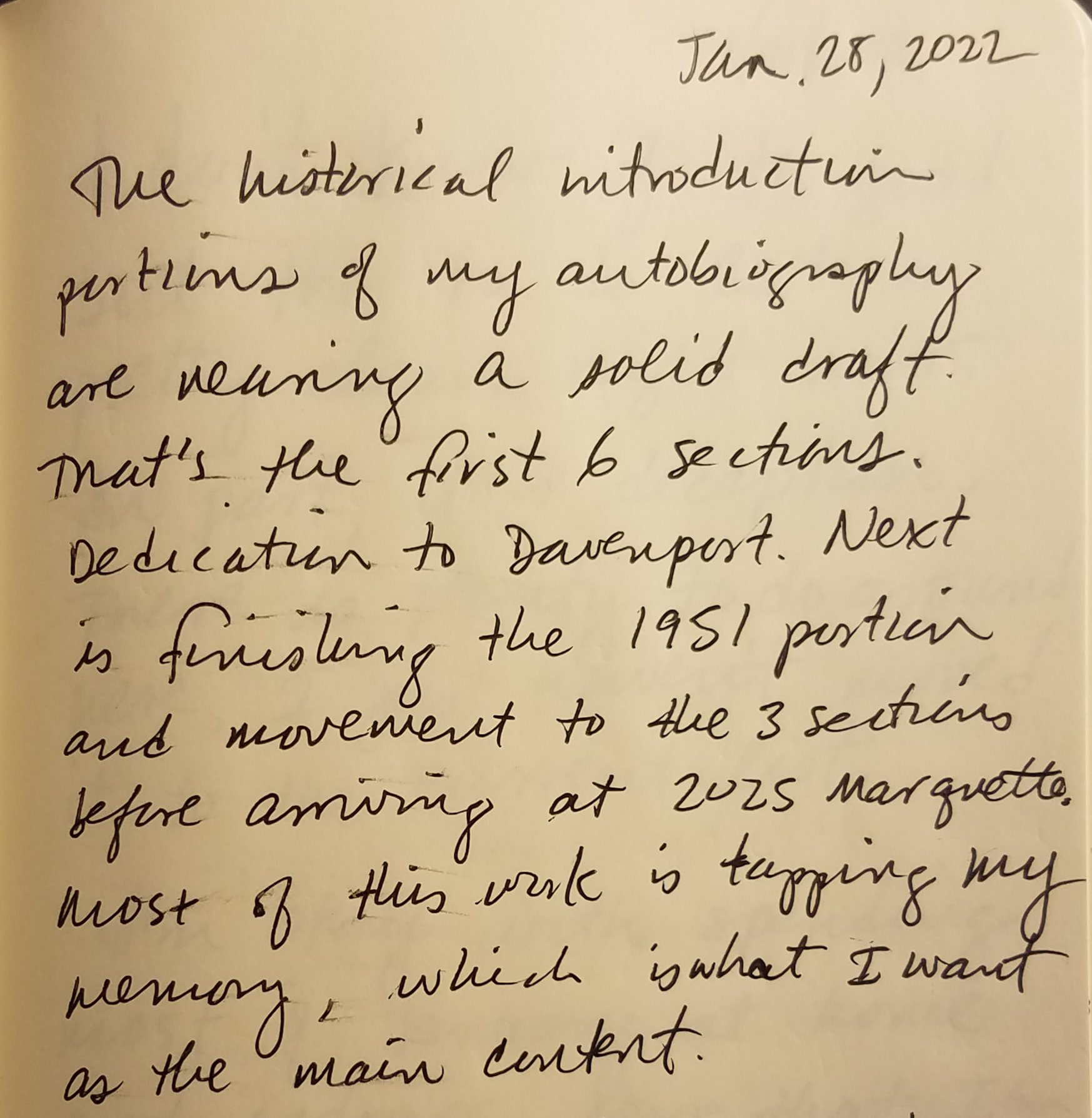
I’ve been posting a few poems and hope readers enjoy them. I don’t know the person who wrote some of them almost 50 years ago. Most of what I wrote as poetry wasn’t the best. A few of them seem serviceable. The rest reside in my journals and papers. Prose has been my main thing since the beginning.

I’m at a transition point in my autobiography beginning after university graduation in 1974. Before then, I did not keep a diary or journal, and the paper trail of my life was scant. After that, beginning with my trip to Europe that autumn, there is a nest of supporting documents. The paper context of my life increased dramatically each year after 1974.

The first ten sections of the work in progress were written from memory and research into the historical record. The next 20 or so sections will benefit from journals and other papers yet to be rediscovered. These are different kinds of writing and I’m having to adjust.

I don’t want to simply print my journal. I also don’t want multiple long, sequential excerpts. The debate I have with myself is whether and how to modify old journal writing to support the current narrative. With 92,262 words and 355 double-spaced pages written one might think I’d have figured that out. I’m used to the type of writing I did in the first third, so it came easier than what’s ahead. I didn’t really think about changing how I write until I got to this point in the chronological narrative.

The next four-year section of the book is about military service. In addition to a journal, I have file folders on all the military operations I was in while stationed at Lee Barracks in Mainz-Gonsenheim, Germany. There is a whole banker’s box full of those. I also used a camera to take photos. Just in those three categories there is a lot to read, understand and assimilate. I also have artifacts like clothing, plaques, and dishes. I have a piece of a sign brought back from the West-East Germany border. It gets complicated.

Most journals are edited into the book. I can’t bear the thought of overuse of the words “that,” “the,” and “many.” Likewise, some of the sentence construction is beginner-style writing. I use the phrase “lightly edited” to describe what I’m doing when I change the source document. If the narrative is strong enough, readers will join for the journey, I believe.

My main interest in life has been in being a writer. I eschewed a university course of study that would get me a job. I didn’t know what it meant to be a creative, yet that’s what I wanted. Society falls short of offering paid work like that. Over the years, especially during my transportation career, the writer side of me was suppressed from time to time. It has always been present.

Some writers do very well. Some scratch out a living. Some work for someone else and do their writing on the side. Now that I’m living on a pension, I can focus my efforts on finishing this book and identifying the next project. As a septuagenarian, there are only so many projects that will fit in.

Categories
Writing

On Mississippi Avenue

1028 Mississippi Ave., Davenport Iowa. Provenance unknown.

My twelve-week stay at a 5,175 square foot Queen Ann Victorian that had been divided into apartments was an important turning point in my life.

Even though Fall 1975 was the first time I lived alone, there was a lot of stuff to cram into a single room with a shared bath at 1028 Mississippi Ave. in Davenport. I parked my 1961 Chevy Impala on the street, and had a telephone connected. I cleared my mind of the distractions of living in a busy, rundown neighborhood on Seventh Street. I rested, attended events and considered my future. It was calm before the storm.

I began with a journal entry on Sept. 11, 1975:

This new apartment already begins the rebirth which is so much needed by my soul at this time. The neighborhood is quite quiet and the apartment that I rent is at the end of a small hallway off the main one.

Across the street is another large house that has been subdivided into apartments and it is quite a ways away. Further up the block there is a Jewish synagogue, Temple Emmanuel. The river is about three or four blocks away.

It seems there are some well to do neighbors to the south of this building, who at this time are having a dinner party of some sort. But at the same time I believe the area is on the fringes of the poverty area mostly to the west. The wealthy area of the town, the Heights, is to the east.

The landlord’s brother lives upstairs in the attic and he mysteriously comes and goes. “Sometimes he’s there, sometimes he’s not. Ask him if you need anything,” the landlord said. Time will tell as I ask God to manifest His will. My major tasks at this time are to set up my own household for what is to be the first time. All for the honor and glory of God.”

Personal Journal, 1028 Mississippi Ave., Davenport, Iowa, Sept. 11, 1975.

The previous six years, since leaving home for university, were a period of experimentation and trial of one thing or another. If anything, my activities resulted in me being what I was and being able to live with myself.

There were things I would have liked to change, like getting off the graveyard shift at the dairy store, and better nutrition. Those things could be worked on. At the time, I felt closer to God than I had for a long time. “He gives me strength,” I wrote.

During my time there I read and wrote in my journal, attended local events, made trips to Chicago, Des Moines, and Iowa City, and prepared for the big project that felt imminent. I didn’t know what that was when I moved in. I viewed myself foremost as a writer, although I didn’t have enough income to do anything but get by.

I attended a Chaim Potok reading at Temple Emmanuel, a Mike Seeger performance at Saint Ambrose College, and heard a lecture by Philip Berrigan at the Friendly House. I was struck enough with Berrigan to write a quote about his notion of life in my journal, “exerting one’s will over this existence to make a life.” That’s what I thought I wanted to do.

I invited Mother over for dinner and made tuna and noodle casserole. It was the only prepared dish in my culinary repertory in 1975. She tolerated the meal, and we went for a walk to nearby Prospect Terrace Park. While my apartment was modest, it served as a good place to sort out my life. It was fitting my first dinner guest was Mother.

I explored my religious self during this period. In part, it was a reaction to living alone.

What are the problems that face me? It seems that the biggest one is that of faith. I believe that God is manifest in this world, something which I did not or rather suspended  belief for a while, yet I cannot come to accept the Church as his manifestation. There are others similar to me in this sort of belief, but I do not seek the approval of other people in my beliefs. That is something I have taken upon myself to bear. In this belief, I am quite alone, although I seek communication with others, it is only for the making contact with God in their souls that I do this and in behaving in ways people seem to have difficulty in understanding me. Be that as it may, I am.

Personal Journal, 1028 Mississippi Ave., Davenport, Iowa, Nov. 2, 1975.

A year earlier I considered entering the Roman Catholic priesthood, yet that seemed like a wrong path. My friends talked me out of it.

The transition at Mississippi Avenue was in part a lack of other intellectual outlets. I met with and spoke to a lot of people at the dairy store. I encountered people I’d known a long time. There was no likely relationship-building as I sold them a pack of cigarettes or gallon of milk. I was cognizant of the fact most old friends did not hold my employment at a dairy store in high regard.

I planned my next move, signed my enlistment papers on Nov. 14, 1975, and left work at the dairy store on Dec. 14. The apartment near the Mississippi River served me well

Categories
Writing

Early Journaling

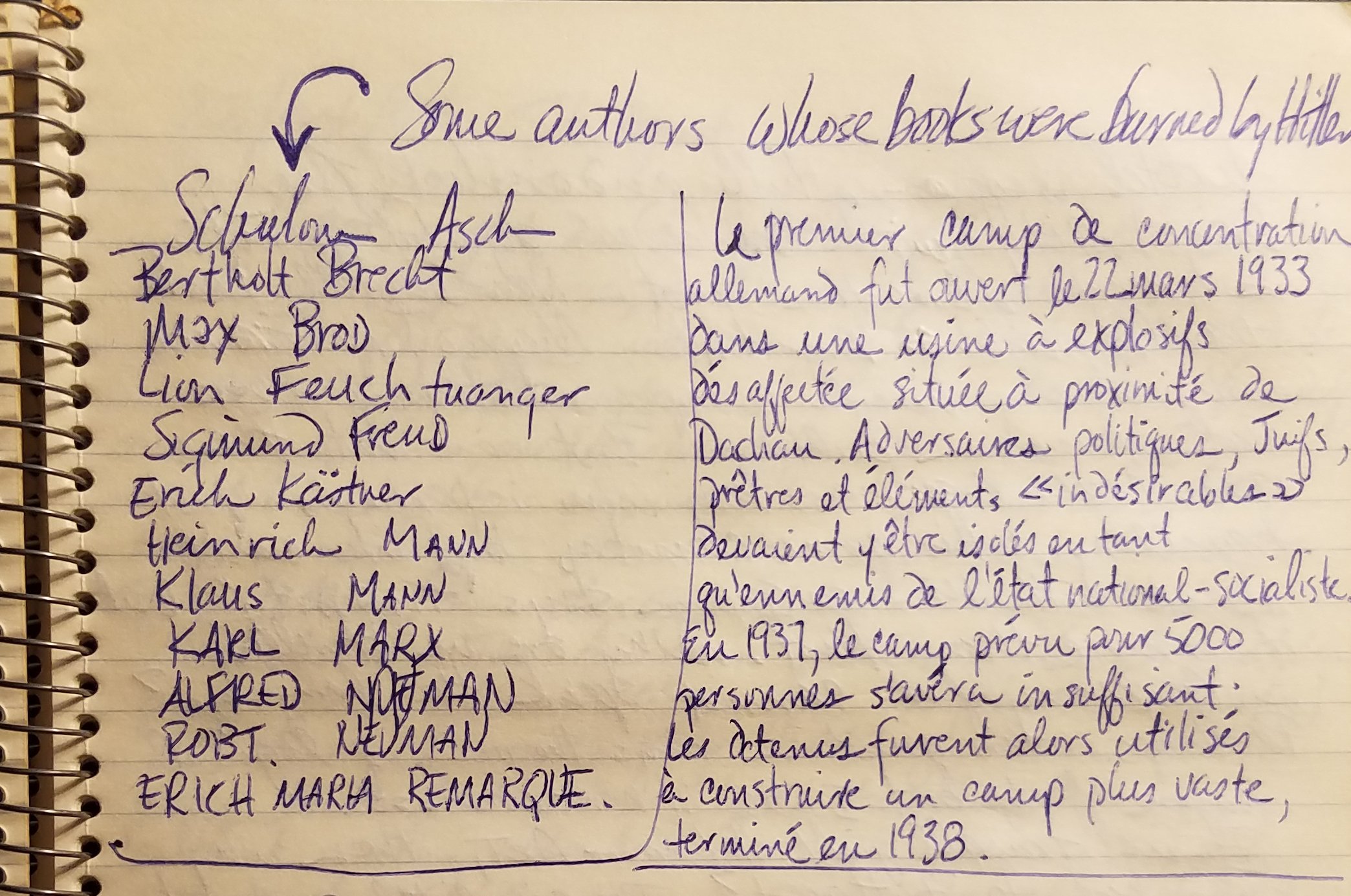
Handwritten journal after a visit to the former Dachau concentration camp by the author. October 1974.

I’ve been reading journals written while I was traveling in Europe during the Fall of 1974. I wasn’t very good at journaling 50 years ago.

“An Italian whose uncle is a cardinal took me to the Vatican to get me a ticket to the papal audience tomorrow,” I wrote. Today, I would rewrite this sentence in different ways: reduce word count, clarify, simplify. I would add more detail and maybe another descriptive sentence.

I’d like to read about that general audience with Pope Paul VI today. I have to rely on my faulty, septuagenarian memory and a couple of photographs to get me through revisiting that time. My journal is lacking if my memory is not.

For some reason or in these events and environments I dream very much, dreams which I have never had so many of before ever. My archeologist friend from Australia says that they are the result of being in strange surroundings and my body trying to cope. If what he says be true then the distinction between my mind and body is even more subtle than I had imagined.

Personal Journal, Winston Churchill Gardens, Salisbury, England Aug. 27, 1974.

Good God! what awful writing! The punctuation! I hope I am better than that now.

I made a special trip to Ravenna to see the Byzantine mosaics I studied in art history class at university. I had been practicing my Italian for weeks to prepare for this less traveled destination. The mosaics did not disappoint. However, my journal did. The entries in Ravenna were mostly about the logistics of closing down my tour and heading back to Iowa. Feeling like Henry David Thoreau, I enumerated my expenses in the journal instead of observations about the ancient artwork. I bought a book, Ravenna: An Art City by Giuseppe Bovini, to aid memory in later years.

I began journaling after graduation from university. My first book of journals was stolen when I stayed at a youth hostel in Boulogne, France after crossing the English Channel. The thief swiped my whole backpack! All I had left was a small blue shoulder bag Grandmother made for me that contained my passport, American Express traveler’s checks, my camera, and a few other necessities. I had to spend part of the $2,000 I brought with me replacing the bag and buying clothing: an unwelcome expense.

I continue to journal. In 2007 I began using Moleskine plain notebooks, although I also use up whatever notebooks are on hand. Moleskine products are getting a bit expensive. While designed in Milan, Italy, they are manufactured in China. The margin on these popular notebooks must be substantial. Their future is uncertain when I have a dozen or so spiral notebooks, bought for a dime each, in inventory and a need to cut expenses.

The 1974 journal is useful in recalling things. In the first draft of this section of my autobiography, I completely forgot about the papal audience. In addition to the journal, I have enough artifacts collected on the trip to remember what happened.

I possess living memory of those places. If the poorly crafted journals do anything in 2023, they prompt those memories, however imperfectly. I was a different person in 1974. Alone in Europe, I did what I could to express what I was experiencing. Without a steady travel companion for conversation, I wrote in my journal. We do the best we can.

I am thankful to have made that trip. I am thankful to be living with the ability to remember it.

Categories
Writing

At a Youth Hostel

Tours, France, Sept. 7, 1974 For the sake of record I’ll mention that in Boulogne all my things were stolen and since then I spent $300 replacing them and another $185 on a Student Rail Pass. Also for the record I’ve been to Paris by hitchhiking in a Renault van a fellow bought for 800 francs and fixed up himself who was also going to the Fête de l’Humanité where the Kinks and Leonard Cohen were supposed to play. Got picked up with a Canadian from Ontario with whom I stayed in Paris, mostly at Hotel Excelsior #37 15 francs a night. Four nights in all in Paris. The large Raft of Medusa, Napoleon Coronation, Ingres all hold much attention (although the Oath of Horatii still didn’t seem that great).

Tours, France, Sept. 8, 1974 Gare à Bordeaux were much more impressive in person than the slides I saw in classes. A tad more appreciation of artistic value. Louvre for the most part was ostentatious and gaudy but the treasures Mycienne et Minoanne were well worth the visit. Also DaVinci’s Mona Lisa was very good as well. It’s fame well deserved. The show of Joan Miró was very complete and what impressed most were the ceramics and weaving. The paintings lacked something in such great numbers, better just a few to contemplate rather than such overdose. Cézanne was his normal boring self, only one or two paintings of interest.

But by far the most consuming artwork in Paris is the Nymphaes of Claude Monet. These truly change my opinion to the better. Formerly I despised Monet’s haystacks and cathedrals but when seen correctly, as preparatory to his monumental Nymphaes and also Water Lillies in New York, they are well worth Monet’s time although the preparatories are are not really worth much of our time.

Walking down Champs-Élysées was something to dig with overstuffed tourists, young people, Hare Krishna and all. Dug that scene several times. In vain searched for nite time W.C. at Arc de Triomphe. Oh well. Also Africans peddling wares all over Montmartre was very impressive and that seems to be the place where the tourist should go to avoid crowds. The Latin Quarter, although good books, was too crowded.

Shopped TATI for many low-priced goods. With a very heavy new bag full of new goods, I left Paris by train on Sept. 7, yesterday.

Versailles was very big with 75-100 buses full of tourists there. The place was so crowded that at times I had to keep my guitar over my head. It is fitting that decadents wander like that through that gaudy, poor taste palace.

Next I stopped at Chartres Cathedral where I heard Mass. Very, very impressive place, especially the window to the right as you walk in. The Catholic service seems very strange among all the flash bulbs and whispering tourists, but the cathedral is very good. What else can you say?

Spent last night in Tours youth hostel where I was interrupted while writing by two English students, one Manchester and one Cambridge. They were traveling to beaches down south for one week before school starts. Received a gift from two Japan travelers of some folk craft sandals. He pointed out in his dictionary.

Am on a fast train to Bordeaux where I will station myself for a few days and look at the countryside of Toulouse, Lourdes, etc. Like also to visit the Lascaux caves, but I can’t remember where they are found. Am madly running to Spain and Portugal where clothes will be cheaper to buy.

~ Journal entries, Sept. 7-8, 1974

Categories
Writing

Postcard Sorting

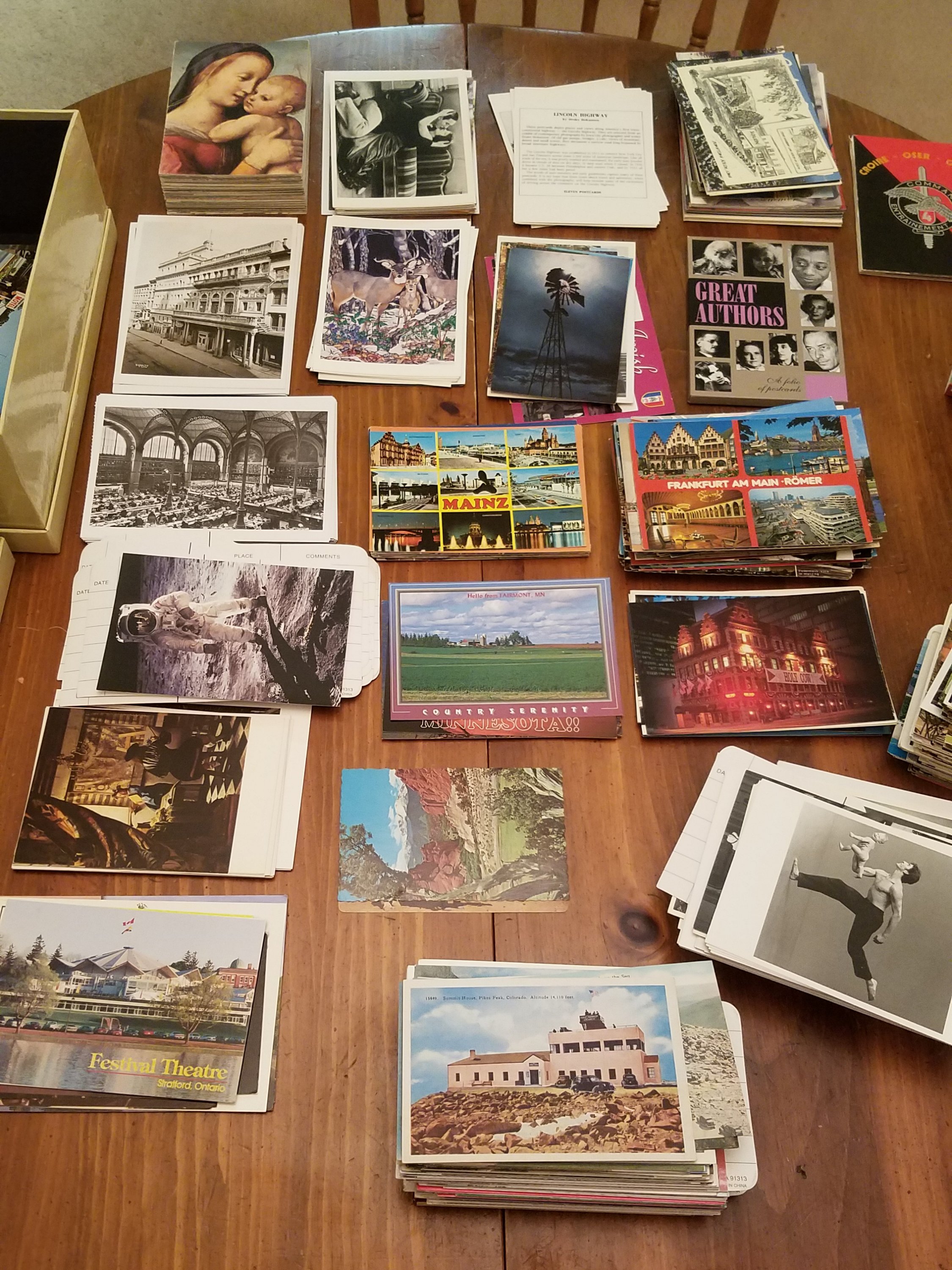
Postcards spread out on the dining room table.

The first two weeks of the year were spent organizing for writing. The process is to locate and engage with source material, then methodically go through it. Once sorted, I decide whether it serves my current writing. If it is for the autobiography, it goes into the outline for placement and the writing. I spent the last couple of days with my postcard collection.

Time with the collection was enjoyable. My spouse is visiting her sister for a few days, so I could spread out and work in spells. I savor the remembrances evoked by these mass-produced works of art. I stuck a postcard Father sent me in 1962 on my bulletin board.

Easily half of the cards can be given away or shredded for garden compost. I put those in a separate box. Many were purchased at auctions and thrift stores. I bought some in a fit of collection fever. Not many of them have any intrinsic value beyond my interest.

A stack was postcards sent to me. Those have a place in my working binders where they will be sorted by date. I picked a couple out to pin on bulletin boards. Some went into related books, and most of what remains will get tucked away until the next round of use. When there are hundreds, it is hard to pick a couple for varied uses.

I favor sending friends note cards in envelopes these days. I have a roll of forever postcard stamps, yet I’d rather keep most messages private. It is a sign of the times that I no longer send or receive many postcards. The ones I set aside from the collection should yield some decent daily drafts.

I read the entire double-spaced, 336-page manuscript. While this took a while, it was essential to understanding where I am in the narrative. I’m ready to proceed with a daily writing goal and get started. There are still a couple of months of winter remaining.

Categories
Writing

Picking Public Photos

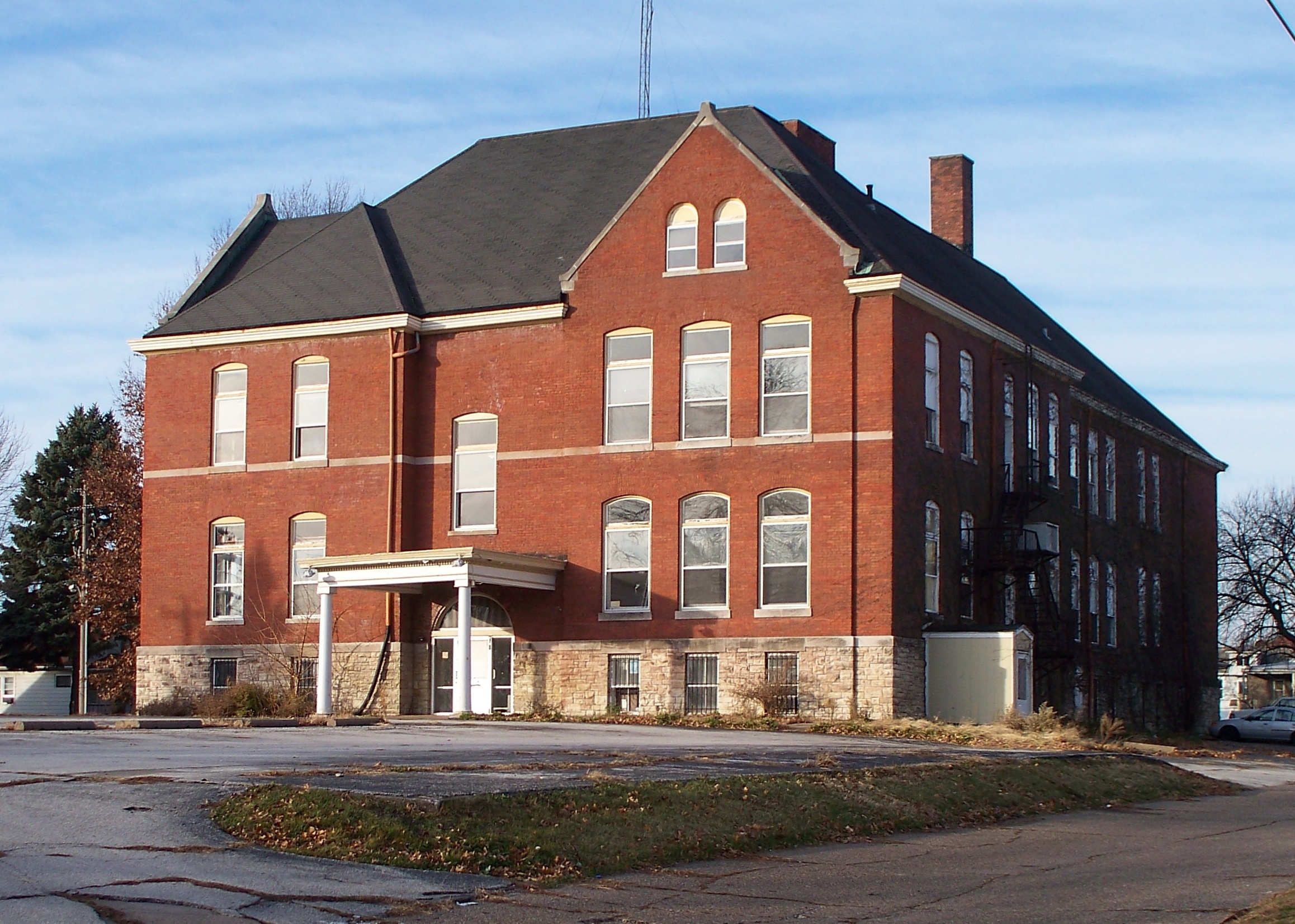
Jackson School building acquired by Holy Family Church for a first through eighth grade school in 1944. Photo by the author.

Yesterday I read a short book of photographs depicting a narrative of important events, people and things in the history of Davenport, Iowa. It covered a broad range of topics under the umbrella of the dominant white culture. It served its purpose, yet it wasn’t the best.

Davenport: Jewel of the Mississippi by David Collins, et. al., was published by Arcadia Publishing in 2000. It is one of a series of similar single-subject books made available at large, chain bookstores like Barnes and Noble, which may be where I bought it. Like many short books (128 pages) more is left out than included about the city.

The story is told in photo captions, so there is little detail. For example, there is a photo of Joe Whitty who founded Happy Joe’s Pizza and Ice Cream Parlor, which had hundreds of franchises in its best days. The caption doesn’t mention the name of his restaurant, relying on the reader’s knowledge to invoke that memory. If that’s all one knew about Joe Whitty, it would be fine. It makes a point in the narrative.

As with anything, personal memories are more important when writing autobiography. I remember when Joe Whitty and his family came to Davenport and rented a home two houses north of our family. He opened a bake shop at Mercy Hospital and became its dietary director, according to his obituary. I used to play with his eldest son, who assumed responsibility as president of the company for 39 years. I also know a franchisee who had multiple restaurants. There is a lot more to the story. Rather than reflect what the picture-book says is history, I should draw on my own experience in telling my story.

How does one use such a picture-book when writing autobiography?

If nothing else, reading the book created epiphanies about my life. The narrative is a certain kind of boosterism, highlighting things that may have been important to the authors. If I made a list of topics to cover from the book, they would be selected based on what memory I have of them. That could be useful.

For example, there are more photos of Bix Beiderbecke in the book than of any other person. He was born in Davenport and lived on Grande Avenue in early life. He became a world renown cornet player and died of pneumonia at age 28. In 1971, the Bix Beiderbecke Memorial Society was organized after a musical group from New Jersey came to see Beiderbecke’s birthplace and play music near his grave. Following that, the Davenport BixFest became an annual event in the band shell on the levee near the Mississippi River.

I have little interest in Bix boosterism. I attended the BixFest once or twice and ran multiple times in the Bix 7, which is a 7-mile foot race through Davenport that attracts some of the best runners in the world. Other connections include that the first thing I saw when emerging from the Paris Metro on the left bank in 1974 was a large poster of Beiderbecke. I also lived with one of my band mates on Walling Court near the Beiderbecke home. These stories, I believe, are more interesting than the broad cultural aspects of Bix commemoration. They are important to my autobiography.

Despite my dislike for the picture-book narrative, I plan to get a pad of Post-It Notes and annotate photos that prompt significant memories. I’ll pick a few people I knew — Rep. James Leach, Father James Conroy, and Mayor Kathryn Kirschbaum — and leave out more famous or special ones who had little connection to my life. There is no need to re-tell the story of Ronald Reagan living at the Vale Apartments and working at WOC Radio.

There are also plenty of important buildings among the photos. Places like the Lend-A-Hand Club, Sacred Heart Cathedral, and the Mississippi Hotel are all meaningful. I envision using them to evoke something in my narrative when needed.

I have two copies of the book, so I can write in the margins of the one used for research. I doubt I will. As curator of a several thousand book library, I resist writing in books. This project is more about me than the history the picture-book posits. I want to preserve the books in good condition as long as I own them.

It was a good day reading this book.

Categories
Writing

Local Institutions in 1951

Holy Family Catholic Church, Davenport, Iowa on July 28, 2013 – Wikimedia Commons.

When Mother brought me home from being born to Fillmore Street, the major institutions in our neighborhood – health care, church, and school – were well established.

On Dec. 7, 1869, the first patient was admitted to Mercy Hospital at Marquette and Lombard Streets, situated on what was then the outskirts of Davenport. The hospital had been home to the Academy of the Immaculate Conception of the Blessed Virgin Mary, established in 1859. Parents were unwilling to send students so far from the city center and the Academy moved. The property was placed on the market for sale, and then given to the Sisters of Mercy to start a hospital. Over the years there had been substantial expansion of the hospital.

Holy Family Catholic Church was established August 18, 1897 when the Diocese of Davenport, the Right Reverend Bishop Henry Cosgrove, appointed Father Loras J. Enright as pastor. Like Mercy Hospital, Holy Family was situated on the outskirts of Davenport, surrounded by farmland. Following is a lightly edited excerpt from the current church website:

In 1898, the first Holy Family Church was built. It almost immediately proved to be too small for the needs of the congregation. That same year, the present church building was begun. Its basement served as the church for almost 10 years. The entire church building was completed in 1909.

Before the turn of the century, the original church building was utilized as a two-room schoolhouse. It remained the education center of the parish until 1944 when the Right Reverend Monsignor T.V. Lawlor, Holy Family’s second pastor from 1943 until 1961, purchased the old Jackson public school for Holy Family students.

History of Holy Family Catholic Church website.

My maternal grandmother was a devout Catholic, despite being excommunicated. Her religion infused our home life before my brother and sister were born. The Sisters of Mercy and the relationship between the Catholic Church and early Davenport settlers provided an ever-present background to life in my hometown. Our family visited the cemetery on River Drive where 1873 cholera victims were buried in a mass grave. Sisters of Mercy tended the sick at the time in a makeshift hospital at a downtown warehouse. Antoine LeClaire’s grave marker is prominent near the entrance to Mount Calvary Cemetery where many of my family members are buried. In the mid-20th Century, there were multiple obvious connections to the city’s 19th Century foundations.

Categories
Writing

Main Pivots

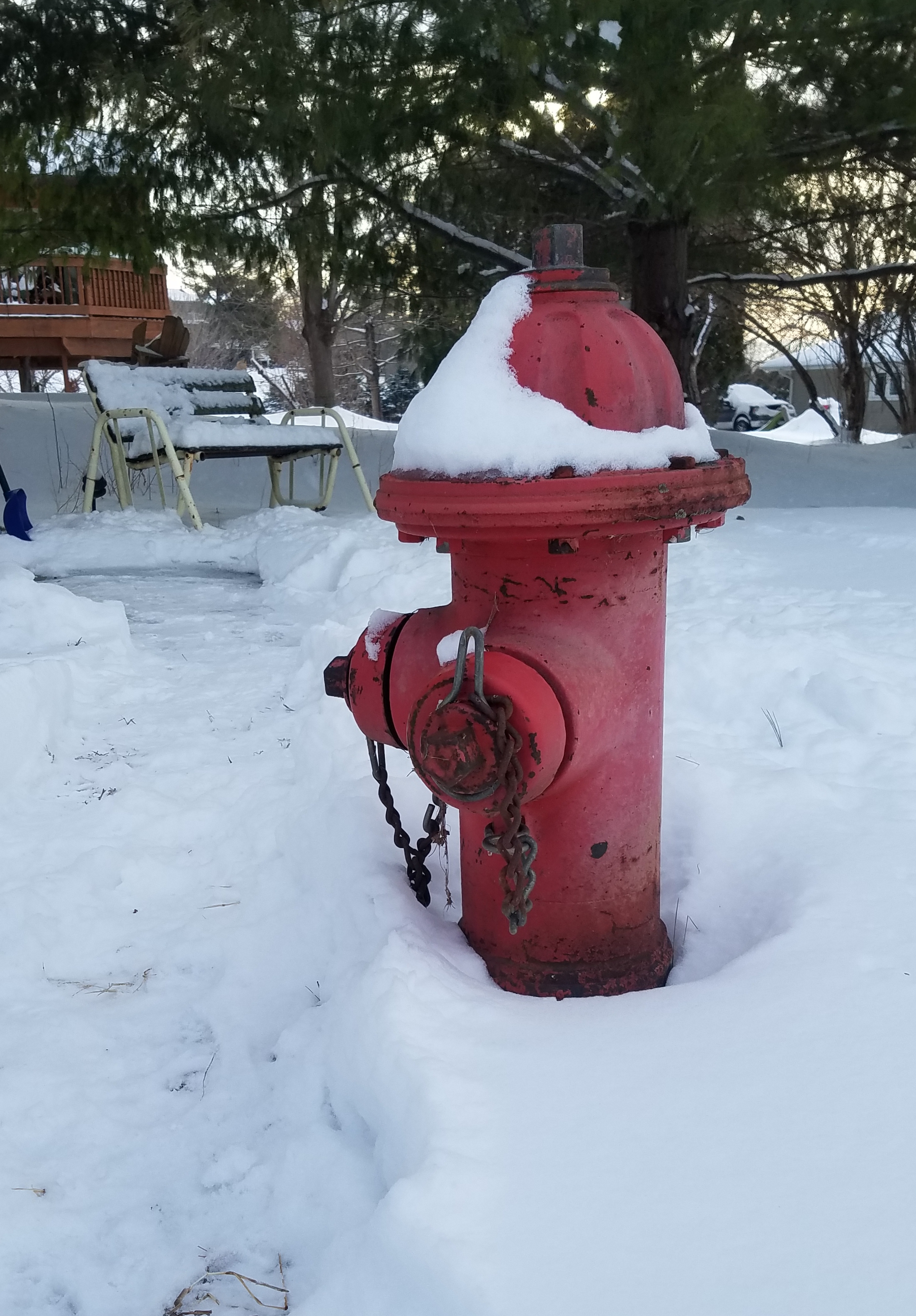
Fire hydrant at the village well.

Today is the third day of renewed effort on my autobiography. Since last winter, I lost my place. Searching for it led me down a different path, one of considering structure different from the chronological timeline I wrote last year. There are considerations.

The first part was written in chronological sequence, which is okay and will likely persist. I tell a story from history, memory, and a few artifacts from the first two decades of my life. This part of the writing was engaging. My parents and maternal grandparents did not tell a single narrative of how they came to be in the Quad Cities by 1950. My grandfather did not live there. I didn’t know my paternal grandparents who both died before I was born. Every tale about the past came in asynchronous short stories. The few times any longer narrative was woven, mostly in writing by Mother, it seemed imbued with interpretation rather than facts. If I pieced the stories together in a new narrative there would be significant gaps and flaws, both mine and theirs. Getting a chance to write my story may have biases, yet by making it mine, the narrative is more complete and satisfying.

As I begin the 2022-2023 winter writing project I need to finish the narrative I started, yet want to break it and present different threads going forward in time. There are natural breaks which I will call “pivot points.” A pivot point was a time when, in a specific place, I considered my options and made a decision about where I would take my life. Here is my current reckoning of these pivot points as I navigate through this winter’s writing.

Leaving Davenport

Most young people make a decision in high school whether to graduate and what to do next. This was complicated for me by the death of Father during my junior year. There was never a question about finishing high school. It was going to university that hung in the balance after he died.

I had begun to look at options my junior year and had discussions about them with Mother and Father. I was on a trajectory to attend University, yet Father’s death brought a pause in moving forward.

I remember the conversation with Mother clearly. It took place during daylight in the living room where she sat on the couch and I sat on the chair next to where we kept the telephone. I explained I was willing to give up university in order to stay in Davenport and help her get through the loss of Father. In no uncertain terms she told me to leave and I did.

Living at Five Points

Before I left for military service I put my belongings into storage. Some were at Mother’s house, some in storage with a moving company before the advent of commercial storage units, and I took a small amount of belongings with me based on a conversation with my Army recruiter. When I returned from Germany I got an apartment near Five Points in Davenport to figure things out. I reunited most of my belongings, including a considerable number of new ones brought back from Germany.

I reconnected with friends who stayed in Davenport. We had one of the few parties of my life at Five Points. I cooked a lasagna dinner on Nov. 25, 1979 and we sampled wine mostly from the Rheingau region of Germany where I lived. I was a terrible cook yet dinner was eaten. At the end of the evening, I cut up my military ID card recognizing it was the official last day of my active service. We toasted the event with shots of Jägermeister.

At Five Points I felt like youthful times were ending and weighed what to do next. I decided life in Davenport was not for me and that was that. I was eligible for the G.I. Bill, applied and was accepted to graduate school, and in Summer 1980, moved to Iowa City and never looked back to my home town.

Marriage

After finishing graduate school in May 1981 I went on a trip down south to visit friends from the military. I evaluated returning to military service and decided visiting those who stayed after their initial enlistment would give me an idea of what it was like. I drove my yellow Chevy pickup to Fort Benning, Georgia, Fort Rucker, Alabama, and then to Houston where I stayed with a buddy who went to work for Exxon Oil Company. After the trip, I decided to stay in Iowa City and find a job.

At 30 years old, I recognized that I hadn’t found a mate, and would be unlikely to do so unless I worked at it more than I did. Iowa City offered the best opportunity in the state for people like me, so I got an apartment on Market Street and found a job. It was a complicated time, yet one of the main decisions was to settle in and see if marriage would be possible. We married on Dec. 18, 1982. I remember being at the church like it was yesterday.

Empty Nest

When our child left home in 2007 for a year-long internship with the Walt Disney Company in Orlando it set things in motion to be who I am today. My interest in the paid work I had been doing since 1984 waned. I wanted more from life. With our child a two-day car trip from home, I began to look at options. On July 3, 2009 I left work for the transportation and logistics company that employed me for almost 25 years.

Transportation and logistics has been part of who I am from the time I got my first newspaper route in grade school until I left paid work at the home, farm and auto supply store permanently during the pandemic. The decision to end it as a career in 2009, while still young, was hard to make. I’m glad I did it. The company bought me one of those big sheet cakes and I brought cupcakes baked by a neighbor working from home the next day. I got a phone call from the owner, and looked around at what I helped build for the last time.

I remember sitting in the car in the parking lot after my shift. I sat for a while in that moment. I turned around and exited the parking lot the back way, an exit I had never before used. That pivot made the difference in who I am.

Hard to say if this is a final list of pivot points. As always, writing a post helps me formalize what had been vague notions floating through my consciousness for a while. Now I better figure out where I left off last winter.

Categories
Writing

Writer’s Week #7

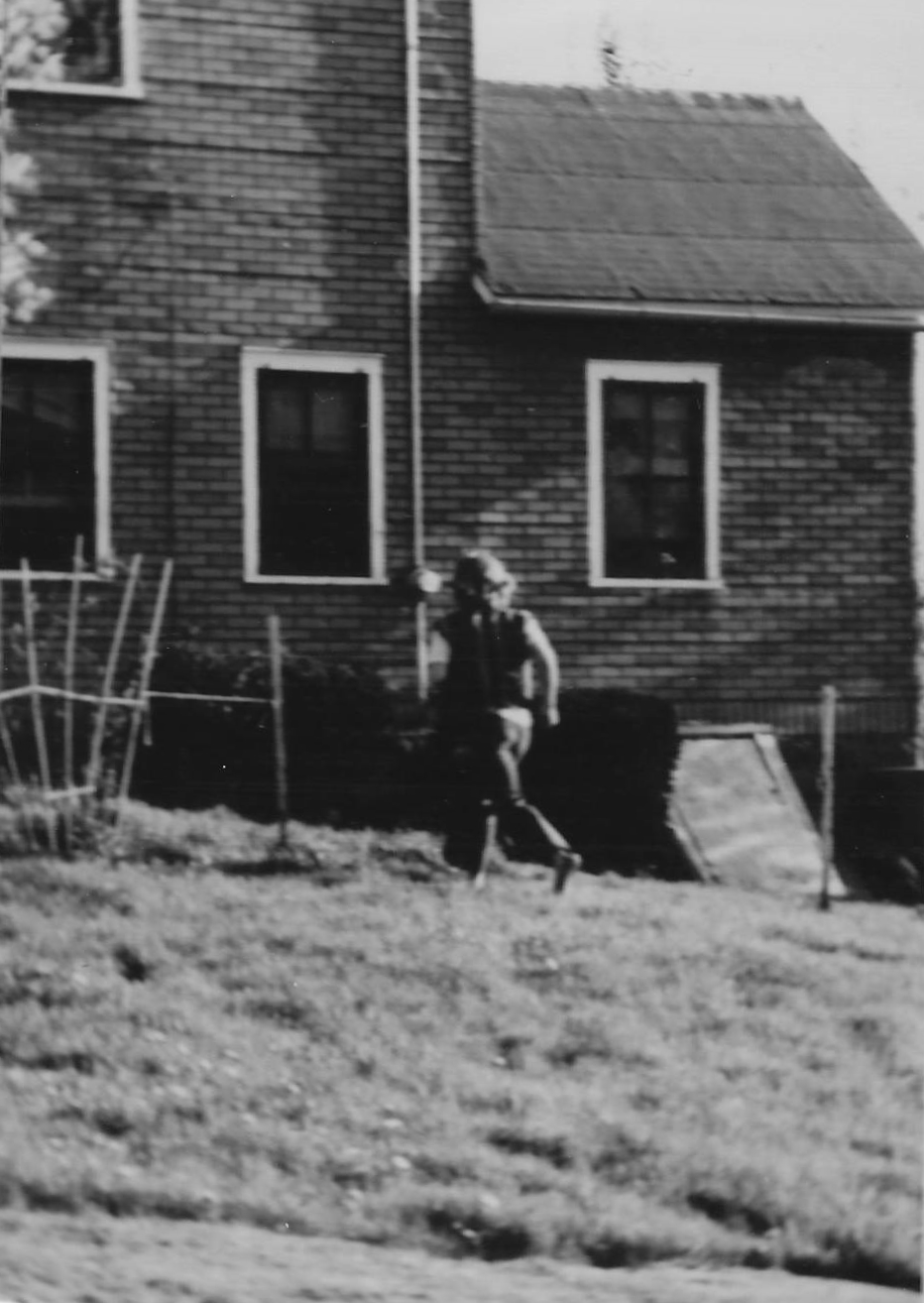
Playing with a Frisbee on Gilbert Court in Iowa City.

It isn’t clear when it began yet I’ve reached a stopping point in writing my autobiography. I had intended to breeze through my undergraduate education at the University of Iowa — touching key points only — so I could focus on my trip to Europe, military experience, and the time leading up to our wedding and the birth of our only child. I’m inside those years in Iowa City pretty deep and the dive has only begun.

As I wrote about my early and K-12 years in Davenport, it was easier to paint with a broad brush. The narrative I sought to reduce to paper had been forming for a long time, comprised of specific memories and a small set of people, places and things. I had never thought of my years from birth to high school graduation in a structured manner before. I’m learning about those times in a way I hadn’t considered. It was easy to avoid complexities as moving away from home, and what I became at university, gained more narrative importance. I have had to stop and take stock. That’s where I remain for the time being, likely for the rest of summer.

My last year of university was transformational and I’m just beginning to understand how much so.

Senior year, when I lived in a shared home on Gilbert Court, was the time when Oscar Mayer & Company offered me a job as a plant foreman. I appreciate the offer. They didn’t have to make it. Yet when they funded most of my education in the form of a grant from the Mayer family after the death of my father at the Davenport plant, it seemed appropriate. I recall the first summer I worked at the meat packing plant. One of the millwrights I was helping offered to take me to see the elevator which collapsed and killed Father. I had no interest in reliving that history then, or on a daily basis while working there. I declined the offer.

I had not developed any strong relationships with women by the time 1974 arrived. It seemed unlikely I would be ready to do so for a while. During summer gatherings with male high school classmates, they were often ready for sexual action. I was not and those nights we departed company so they could pursue their desires. I developed relationships with women at university, yet wanted to be friends. I couldn’t bear the possibility of a romantic breakup forcing us to separate. Lack of a “girlfriend” was a background tension I dealt with by living a full life in other ways.

The most important transformation may be coming to terms with the desire to be creative. After graduation I spent years considering what that meant. A group of poets and artists gathered at our house from time to time. Some are better known than others yet it was David Morice, Darrel Gray, Alan and Cinda Kornblum, Jim Mulac, and others who stopped by. I was enamored of Actualists, perhaps. In any case, I learned from them that a conventional approach to poetry, fiction writing and book making wasn’t necessary for success. I didn’t know any of them well, yet hanging with them in the living room helped me grow creatively.

I was taking art and art history classes to complete my degree in English. I dabbled in ceramics, tie dye, music, photography and other media. I realized there was no clear path to success as an artist, let alone the multi-media creator I vaguely wanted to become. I gave up a conventional career in the meat packing plant, in favor of a speculative future. It was unlike what I expected in high school and held a sketchy future at best. The desire to pursue this idea drove much of what I did throughout the rest of my life yet especially the following eight years.

The autobiography will be better for all this new understanding. Yet I have to get back at it. Currently, there is much work to get the garden planted. Once that’s done perhaps the muse will visit again.

Categories
Writing

Writer’s Week #6

Potato containers ready to re-plant.

Sunday’s high winds, with gusts up to 45 miles per hour, did their job. The wet soil turned over on Saturday has dried enough to till. Today’s list includes plant a row of early vegetables to be protected by row cover, dig a spot for the tubs in the photo, and continue the deconstruction of last year’s garden plots with an eye toward planting more early vegetables. Garlic is up. I chose the plot for tomatoes. Much planning remains.

I’d like to move the seedlings back into the greenhouse. The forecast later in the week is for ambient temperatures to fall below freezing again. I’ll think about that as I’m tilling the first row. I’m scheduling a five-hour shift, planning to use it all.

The main news since my last writing post is the 1950 U.S. Census was released. In it I found new information and as a result, need to re-write the chapter about Davenport in 1951. This is a positive development. The census provided the first specific evidence of family members living in Rock Island, something I’ve known, but with little detail. I found my Uncle Gene also lived there, separate from his father, working at a dairy where he “helps with milk.” He was seventeen years old. The census also clarified the status of the home to which I was brought from the hospital after being born. My grandmother was head of household with the three children from her second husband living with her. There is a lot to track down and the new census release makes it easier than it was. It also confirmed some things I knew with another, definitive source.

I scanned the 313 pages of double spaced manuscript. Boy, there is a lot more writing, editing, and proof reading to do! Some things seem solid. The outline I created this year will continue to serve as a coat rack upon which to hang things I write or discover. That will be followed by a re-write using the new information. The work I did before the coronavirus pandemic does not fit neatly into the new outline structure and needs a major re-write. Likewise there is much to accomplish to write through the period of time before I kept a journal, got married, and started working in transportation. Depending on my choices, there could be two volumes. The first through the birth of our daughter, the second covering everything else through the coronavirus pandemic. Reducing it down, last winter was a period of progress.

The unavoidable task ahead is going through all of my past writing and paper archives to distill something usable. Thus far, the writing has been fun adventures of me sitting in front of a computer screen making up the story. Once I tackle the physical record, writing will be real work. I’m looking forward to writing the whole thing so it may be time to put it in low gear and start climbing that hill.

Right now, all I can think about is getting to my shift in the garden.