Categories
Writing

Outlining

On the state park trail.

I spent a fair amount of Tuesday revisiting the outline of my autobiography. It quickly came into perspective. There will be multiple sections with each drawing on different parts of my life story.

After the dedication and introduction I currently see the following parts.

Part I: Background

It will begin with four historical pieces about Lincoln County, Minnesota; the area around LaSalle, Illinois; Wise County, Virginia; and Davenport, Iowa in 1951. I spent the most time last winter drafting these sections. They each need more work.

Part II: Main Narrative

Next will be a high level narrative of my life from birth until the present. In it I’ll cover the main stories on a time line, from my perspective. I’ll leave out personal information of people who are still living.

This part is subdivided into sections: 1. From earliest memories, moving to Madison Street, school, and my eleven-year residence at the American Foursquare in Northwest Davenport. 2. Begins with college, a trip to Europe in 1974, military service, moving to Iowa City, graduate school, and then marriage. 3. I begin what would become a career in transportation and logistics in 1984. I follow my career from the move to Cedar Rapids; to Merrillville, Indiana; and then back to Big Grove Township where we now live. 4. Next comes our daughter finishing grade and high school, going to college, and then moving from Iowa. 5. Finally, there is empty nest life, community engagement, my first retirement from transportation and logistics, continuing work until the coronavirus pandemic, and the post-work life in which I now find myself. The idea of these sections is to lay out the bare bones of how I spent my life. To research and get the story down.

Part III: Collected Writing

The last part of the autobiography will be a collection of my writing from letters to the editor beginning in 1974, and including resumes, poetry, published writing, journal writing, newspaper writing, and blog writing. The focus will be to reduce the quantity of written work to inform the narrative presented in the second section.

The clarity that came from spending time away from writing as I worked on the garden was a welcome surprise. The outline is not finished. A few days work remains and I’m ready to do it. After that it’s back to writing.


Categories
Writing

Toward Season’s End

Thistle near the state park trail.

Just like that! Temperatures are cooler. It has been in the mid-fifties overnight, with a daily high in the seventies. The shift toward season’s end is happening. Ready or not, here it comes.

This winter I’m again planning to devote significant time to my autobiography. I wrote good pages last winter and would like to move the narrative along. If I learned anything it’s that the task is monumental. Without organization, I’ll never finish.

As I mentioned in yesterday’s post, I’m upgrading my computer CPU to a new one. As I do so, I’ve been going through countless files to see what is relevant to an autobiography. I printed a few things out. The more I look, the more files I find that can be permanently deleted. A person only has so much time to spend with old things that depart from the narrative that is to be preserved. Best to purge it now and get it done.

I resisted going through all the physical objects last winter. The boxes, albums, photographs, files, books, clothing and trunks are everywhere and need to be gleaned for relevant artifacts. Maybe I’ll spend time on that this year. If I do, the idea is to organize things chronologically instead of thematically. That mean busting up boxes and folders I once thought went together. As I extract and refine what I’ll use, there will be no going back. I’m okay with that. As I proceed with computer files I’m finding my organizational process was more a hodge-podge than orderly.

I stopped work on the autobiography mid February as my attention turned to the garden. If I repeat the cycle, I should be able to get a solid five or six months work done. The document on which I’d first like to make progress is called the “book tree.” It’s an outline of how I currently see the narrative progressing. There is a month or more work improving it. In the end it will make writing the narrative easier. Last winter I got addicted to word count. I need to let go of that for the moment and focus on what will be the story. That’s honest, journeyman work to which I look forward.

There are still things to do in the yard and garden. With the hot, humid weather I delayed until there is no more delaying. The grass is turning green and needs mowing. Before I do that I have to clear what became a weed patch upon which to place the clippings. I also have to pick a plot to plant garlic in four or five weeks. By the way, the garlic came in really good this year.

I don’t know how long the autobiography will take. What I expect is it will make life easier for whoever takes charge of my stuff when I’m gone, if for no other reason than that there will be less of it. I cling to the present life yet realize I need to let go. Upgrading my CPU is as good a metaphor as any for that.

Categories
Living in Society Writing

Postcards from Iowa #4

Text on the postcard: THE GREATEST SHOW ON EARTH is coming your way! To find out when, and much, much more, visit www ringling com MAY ALL YOUR DAYS BE CIRCUS DAYS!

The Ringling Brothers and Barnum and Bailey Circus was a mainstay of my youth. Each year they came to Davenport, usually at the levee of the Mississippi River, to put on the Greatest Show on Earth.

A biography of the Ringling Brothers was one of the first books I checked out from the bookmobile after getting my library card. It was interesting four of the Ringling brothers were born in McGregor, Iowa. They inspired us to put on our own show in the backyard of the American Foursquare my parents bought in 1959.

The circus influenced my decision to be part of the high school stage crew where I could participate in putting on shows.

The days of circuses are ending and Ringling Brothers folded the tents for the last time on May 21, 2017. It was a really big deal when the circus came to town… until they no longer did.

Categories
Living in Society Writing

Postcards from Iowa #2

Underwood Motel, Schererville, Indiana. Photo Credit: Latimer Studios, Aurora, Illinois.

Text on the postcard: “Underwood Motel, 1100 Lincoln Highway, Schererville, Indiana 46375. Heated Pool – Air Conditioned – Room Phones – Free TV – Honor Most Credit Cards – Located on U.S. #30 – Just West of U.S. #41 Near Calumet Expressway to Chicago Loop. Phone: 219-865-2451. Handwritten note: $19.80 per night.

When I transferred with work to manage a Schererville, Indiana trucking terminal for a company called Lincoln Sales and Service, I stayed at the Underwood Motel. It took a while to manage our move, maybe six to eight weeks. We ended up buying a house in nearby Merrillville, Indiana.

Our fuel attendant worked at the motel and that plus the low price is why I stayed there.

The six years we lived in Northwest Indiana were busy. It would change my view of work forever. The country was in transition from what it was post World War II, to what it is now. Due to the Reagan revolution, it was hard on workers. I lost track of how many potential drivers I interviewed during this time… more than ten thousand. Theirs was a story of dehumanization of workers laid off by companies that felt they had to to be “competitive,” whatever that meant. It was a time of ubiquitous management consulting firms who restructured businesses to direct more revenue and earnings to owners, share holders, and high-level managers. It was busy because most of the time I worked in uncharted territory with little guidance unless there was a lawsuit or workers compensation claim.

I’m glad for the experience. I hated the experience. In the crucible of manufacturing in transition, thousands of workers were trying to adjust. I was there to listen and heard one hella story. I hired some of them, doing what I could to ease the transition.

Categories
Writing

Postcards from Iowa #1

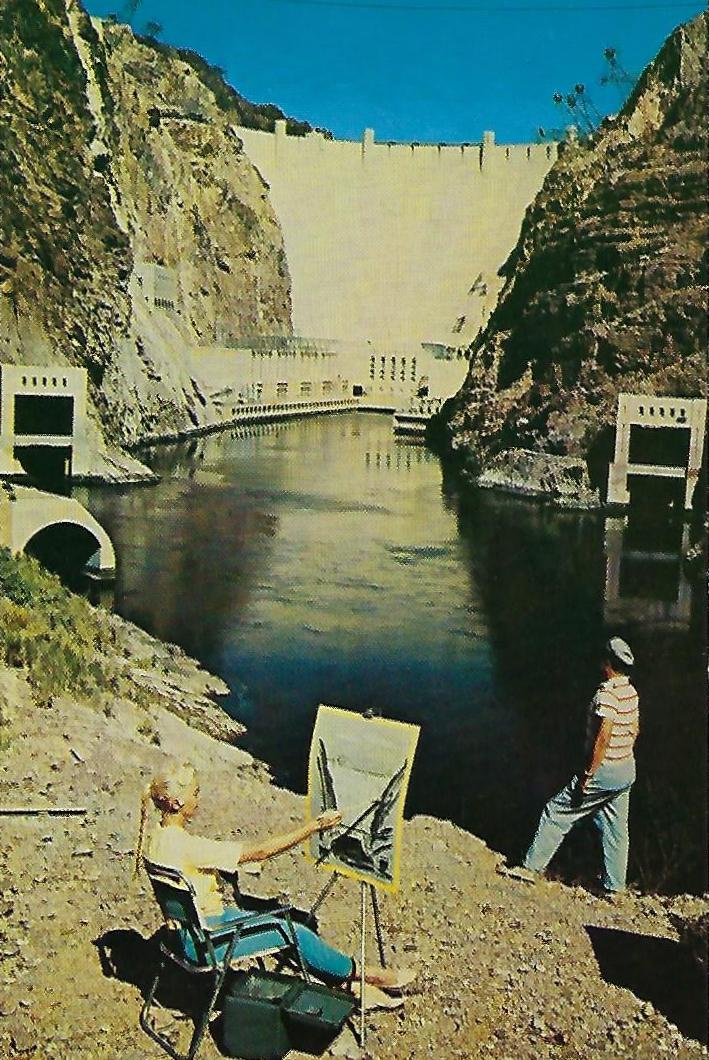
Hoover Dam. Photo credit: Las Vegas News Bureau, undated.

Text on the postcard: “Looking towards the outlet tunnels and huge powerhouse below the world’s highest Dam. This $125,000,000 project is one of man’s greatest engineering achievements. Height 727 feet above bedrock, crest 1,244 feet, and 650 feet thick at the base.”

When I was in high school our family went to California so my parents could attend a union convention. We made a family vacation of it, the last one before Father died. Mother’s two brothers lived in the Los Angeles area so we spent time with each of them. We stopped to see Hoover Dam on the way home.

Today, Lake Mead, the reservoir created by the Hoover Dam, is at its lowest level since it was built. The continuing drought in the West will have a significant impact on people who live there. It’s clear we must act to slow global warming.

Categories
Writing

Resting in Lake Alfred

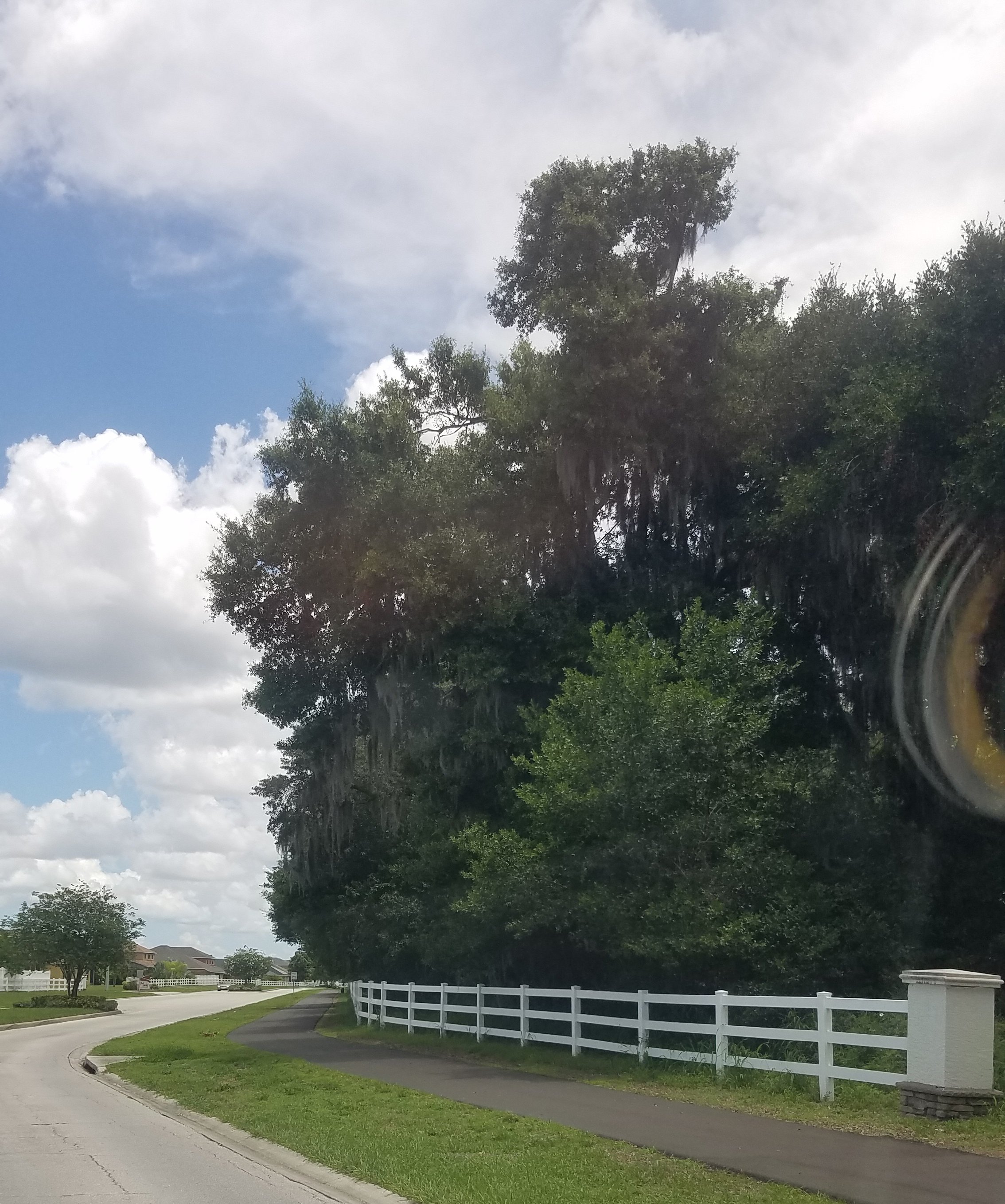
Trees with Spanish moss

It’s been a hectic 36 hours. We have the U-Haul truck loaded and ready for our 1,180-mile trip beginning tomorrow. We all took naps this afternoon now that this part of the work is finished.

There were a lot more swords (props and the kind used in LARPing) than I thought there would be.

I like visiting Florida. You can’t hardly see the Spanish moss in the picture, yet I remember it in live oak trees on a family auto trip to Tallahassee when I was eight or so. Father graduated from Leon High School there. Spanish moss is everywhere in Central Florida. It is a seminal memory.

Now that our child is leaving the Sunshine State, it’s hard to imagine returning.

We’ve been busy with logistics yet I had time to engage in dialogue with locals: the convenience store cashier and the U-Haul staff. I’ve been cooped up in the house during the pandemic for so long, I forget what it means to be among people. I could talk with locals for more time than we have.

We didn’t say much. There’s a lot I could say when I return to Big Grove. Right now were resting in Lake Alfred and looking forward to tomorrow.

One thing though about tomorrow. I left all my rainbow t-shirts for Pride month at home because I been through Georgia before.

Categories
Writing

Sense of Place

Sunrise on the first day of summer 2021.

I just finished reading Mary Karr’s The Art of Memoir and it inspired me to write this introduction to my autobiography. I don’t know if I’ll use it, but I think it works toward identifying my voice in the narrative, as she suggests we should. There will be revisions in the coming months and years as I continue to work on the book. Feedback welcome in the comments.

This memoir was written in the unfinished lower level of the split foyer home we built in 1993. We thought we would have finished our home by now. In a not-specific year I framed a couple of rooms with two by fours and installed drywall and book shelves in what would eventually be my writing place. The county assessor got wind of the improvement and sent someone out to inspect. They decided to wait until I finished before increasing the assessed value. Piles of building materials bought at the time remain stacked around the space. The current lumber shortage has me thinking about selling the two by fours.

I can’t say when finishing the house will be on the agenda. However, finishing this book is front and center.

We have a wireless router that connects everything. Who in my cohort doesn’t? What’s significant about the library table surrounded by book shelves is not the Dell desktop resting on it. This refuge is a chance to get away from the internet and be the person I am with my successes and failures. My non-internet traffic is more valuable than what I write online.

Our arrival in Big Grove Township coincides with broad adoption of internet service providers. Before mobile telephones, I used a pager and stopped at a phone booth to answer a page. It felt a bit risky, especially when I stopped near the Robert Taylor Homes on the South Side of Chicago at a well-lit bank of payphones. It’s what we had and truck drivers who paged me couldn’t wait.

I used a typewriter until we lived in Indiana, when we got a word processor with a dot matrix printer. In Iowa, we got our first home computer in 1996. The accelerated pace of improved personal communications since then was unlike anything we knew. This impacted this memoir.

In the chronological first part of my life I’m dealing with experiences, memories and outside sources to create a narrative. My memory is faulty. The majority of my experience is embedded in me or in boxes of photographs and papers. Growing up during the time of Polaroid and Eastman Kodak, the photographic record is significant. Likewise, the boxes of documents going back to kindergarten have a lot of information in them. Old documents, like my parents’ wedding announcement, may exist online but most of my remembrance of those days is a physical presence not far from me. The act of selection for inclusion in this book had a significant influence on the narrative.

My memory and experiences are subject to interpretation and people’s remembrances of them differ. Like any memoir author, I had to address that before presenting the finished work. This book is an effort to tell the truth and say what I know about my life as best I can.

The story relies less on memory after graduation from university when I started a hand-written journal. The continuous written record since then was enhanced by the adoption of email, social media, and personal blogs. Digital photography was an important aspect of the record beginning in 2007. There is plenty to draw upon and it can be quoted as-is, avoiding the interpretation of others.

My view of the world is flawed. What I see isn’t always what others see, and that’s what could be a reason to read further. Perhaps the most clarifying part was writing the story of my Polish ancestors in Minnesota. Drawing on memory, artifacts, my personal journal, and interviews with local informants, it became clearer than ever the kind of people from whom I rose. It revealed a type of life that could provide meaning in an rapidly changing social environment.

This is my story. I hope you find value in it.

Categories
Writing

Autobiography in Real Time

The ditch in front of the house finally dried on June 7, 2021.

Sunday was literally a day of rest. After planting the next rounds of lettuce and spinach, and mulching tomatillos and the second round of radicchio, I drove the Lincoln Highway to Boone to pick up my spouse. When we arrived home, I took a long nap, then stayed up later than normal so I could sleep through the night until morning. The tactic seems to have worked. I feel well-rested this morning.

Last Monday I noticed the ditch in front of the house finally dried. Saturday I mowed it, raked up the clippings, and piled them near the garlic patch. Some years the ditch stays wet until July, yet this year I believe we are entering a drought, and will soon pass the “abnormally dry” stage and get right into it. Moisture management in the garden remains important during drought conditions, and mulch plays a role.

In March I slowed the pace of writing my autobiography. Partly, it was due to increased gardening activity. It was also due to a quandary about approaches. Over the last two months I worked through ideas and am going to shift what I’m doing.

The breaking point was the piece I wrote about my ancestors settling in Minnesota. You can read it here. I’m pretty happy with how this introduction turned out, and the research behind it. Because there is well documented writing about this specific community in Lincoln County, Minnesota, it was possible. The challenge is not all periods of my family history are like that.

My maternal grandmother was the third generation to live in Minnesota. When she moved to a Polish community in Illinois, without her first husband, and with her first two children, the man she married had more obscure origins. The U.S. Census record shows him living at home and working as a coal miner before they met. We know that history and later in life he worked as a coal mining demonstrator at the Chicago Museum of Science and Industry. He also suffered from coal workers’ pneumoconiosis. One of my main childhood memories was of him spending an inordinate amount of time in our bathroom coughing up phlegm from his diseased lungs. Black lung disease eventually contributed to his death and during the Carter administration Grandmother was awarded black lung disease benefits based on his case. I will tell this story, without other written records, yet it seems to miss the mark.

There is no avoiding writing the early parts of my autobiography from scratch, blending memories, photographs, and what documentation exists. Because I have written so much, beginning with my personal journal in 1974, the question, and sticking point, was how to handle that writing, which has been more or less continuous since then. An answer is emerging.

My stylistic lack of discipline over 50 years of writing drives 2021 me crazy. If I could go back in time and talk to the younger me I’d say, “Just tell the story.” It’s too late for that. The written record is what it is, with its changing bad writing habits.

At the same time, I always planned to use this writing in my autobiography. The epiphany while out in the garden this spring was I can tell parts of the story by using text written in real time. In other words, instead of re-writing my history the way I wrote the Minnesota piece, and using journals, newspaper articles, and blogs like a source document, I can assemble existing work in piecework fashion, the way a person makes a quilt. The form would be an autobiography written in real time, beginning after college graduation.

This morning I reached catharsis on approach. There will be four stylistic parts of the autobiography. The historical part like the Minnesota piece, recounting of first memories, a blended recounting of schooling beginning with Kindergarten until college graduation, and then everything after beginning with my written journal in 1974. I like the piecework approach this implies.

It’s only Monday, and something good has come from this week.

Categories
Writing

Learning in the 21st Century

Box of Redbor kale picked June 7, 2021 for donation to the local food bank.

Most people believe learning is important. Yet “learning” is such an all-encompassing word its meaning get muddied. I’m not sure how much actual learning goes on in said people’s lives.

I hope to be a life-long learner and assume I will be. As a gardener, learning comes with the avocation so there is a process of getting better in producing vegetables, caring for the soil, and controlling harmful to humans inputs. As a writer, most of my time is spent editing words to determine what captures intended meaning, what sounds best, and figuring better ways to say more with less words. In December I reach another decennial milestone and enter septuagenarian status. In response, I’ve been considering what it means to be a learner in 21st Century society.

This post frames up a longer discussion of what learning means in the years ahead.

As young children we learn by nature and gain an understanding of how life works. Things like where food comes from, rules of behavior, when to expect a spanking, and from whom receiving a spanking is appropriate. As we age, we learn there are other options from what we learned as a toddler. It is possible to eat a healthy diet different from the culture in which we came up. Children can be raised without spanking. I find this kind of learning pretty dull because it is ubiquitous and necessary.

While there is significant learning once formal schooling begins, that too seems less interesting. I chose not to become a teacher early on, and that decision made the mechanics of pedagogy of fleeting interest. I had a long formal education, which includes Kindergarten through high school (1957-1970), college (1970-1974), a formal tour of Europe (1974) military service (1976-1979) and graduate school (1980-1981). While I had several paying jobs during these years, I considered everything part of my education. Learning is assumed during a formal education, it’s not the reference I am making in this post.

Learning occurs as a result of conscious intent. When I approached my friend Susan about working on her farm, in addition to financial compensation, I hoped to become a better gardener. As I planted the garden this year, I reflected on how much specific knowledge and technique I acquired since that initial engagement. My relationship with a community supported agriculture project made learning possible.

Over the summer I plan to set a new course for learning. Now that I retired from paying work, much of my time has been spent learning how to cope with my new status. Napping has been involved. That adjustment aside, I plan to review how I spend my time, what I have been working on, and what I should be working on. After doing that, I expect to embark on a new journey with learning at its core, one to carry me into my eighties.

I ran into one of my octogenarian friends at the food bank yesterday. She was the key organizer who started the food bank, found a permanent home for it, and continues to manage it. She is a living example of what it means to stay active in the community. My hope is I’ve learned enough to emulate her approach to living and learning. There are additional role models in life. Seeking them out will be part of the rest of my 2021.

Categories
Home Life

Summer of 1996

Summer wildflowers.

During Wednesday’s walkabout there was frost on the ground. It was clearly the last frost of spring. It’s time to plant warm crops in the ground and get ready for summer. Here we go!

Some parts of our lives stand out more than others. For me, the summer of 1996 was one of them.

At the transportation and logistics company, after taking every assignment offered — some I liked and others I did not — I was transferred back to operations as weekend manager. My schedule was Friday through Monday with three days off. I supervised everything that went on for a growing firm operating across North America.

Our daughter was coming into her own, finishing fifth grade that year. The new job enabled me to spend more time with her and I did.

We didn’t go far from home. Mostly we went to the nearby state park. Sometimes we bicycled to town and had breakfast or lunch at a restaurant. Other times we drove to the beach and went swimming. We picked wild black raspberries along the trail. It was a great summer at the core of my memories from when she lived at home. We get only so many times like that.

As I prepare for a long day in the garden I’m heartened by memories of life with family. I think often about the summer of 1996. The present is much different. The state park trail is ravaged today compared to then. Derecho damage remains, and development continues to encroach on the natural beauty that once was here. Our patch of wild black raspberries is gone in favor of a junction for the natural gas company. Sad, yet changing times, I guess.

There was a time I enjoyed being in the country with its neat, rectangular farm fields, sunshine, and long vistas. No more. Farm operations result in contaminated water, which in turn closed the beach when we swam that summer. The beach has been closed the last few years. Likewise, the scent of livestock wafts over our house from time to time. Not often, but enough to remind us there are 24.8 million hogs in Iowa, or about eight per human. The popular phrase to describe what Iowa has become is “a low education, low wage, extraction economy state.” There is no longer anything bucolic about being in the country.

There is no going back to the summer of 1996, except in memory. Just as the Mill Creek sawmill cut up the original stands of forest to create today’s rural landscape, life has irrevocably changed. We have a choice: linger in memory or continue forward. Both have a role to play. As annual seedlings wait in the greenhouse for sunrise, human nature doesn’t give us much choice. We are compelled to start anew.

May we do so cognizant of what was lost, what we have, and what we may lose through neglect. My wish for today is to make new memories as good as those of the summer of 1996. It may be difficult, yet the possibilities are endless, at least that’s what we are told.