I merged two versions of my autobiography this week and that puts the word count over 60,000. I printed the 155 draft pages of the book on Friday and this weekend is time to get a grip on the narrative.
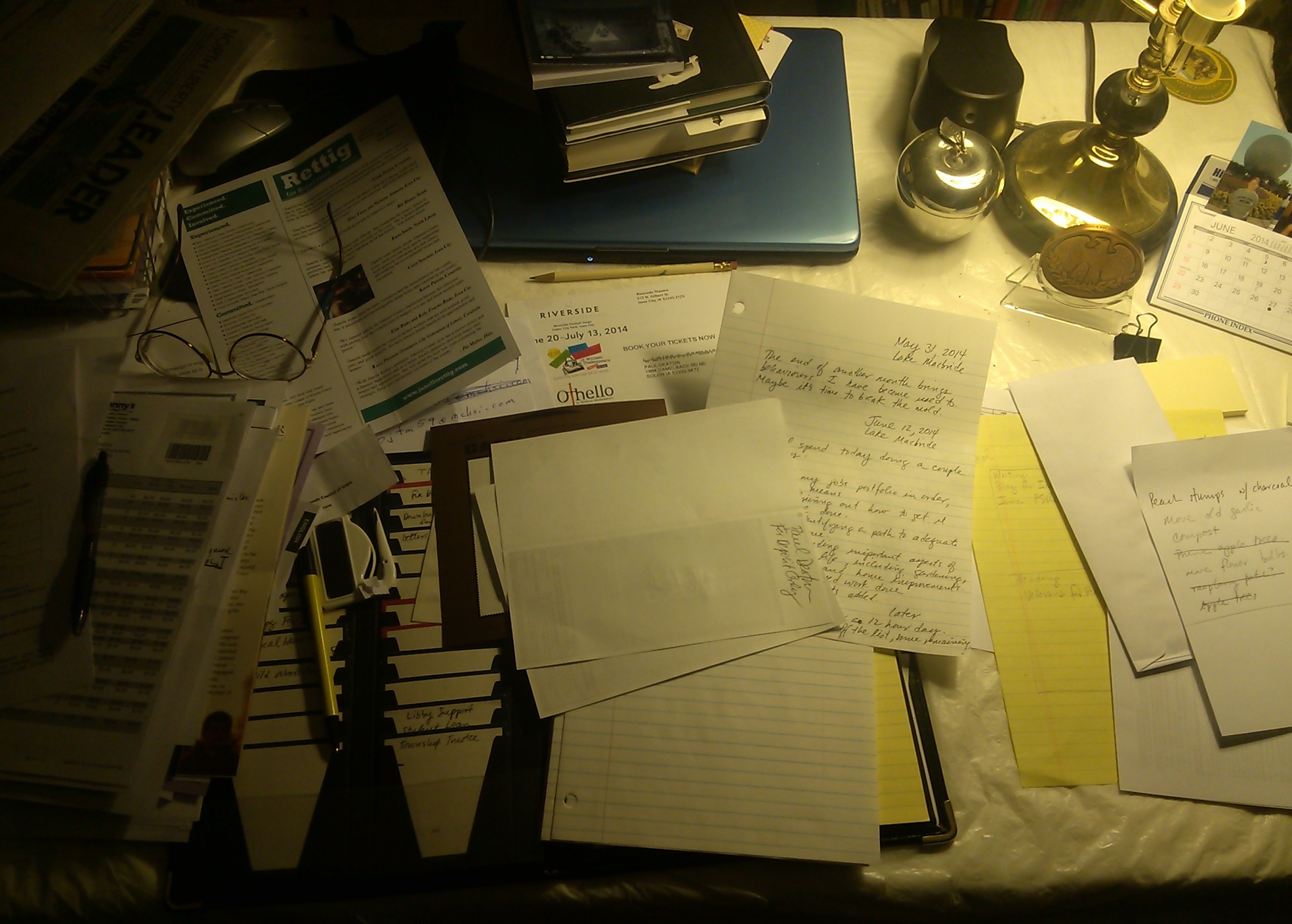
My hope is by reviewing everything page-by-page, I can identify structural deficiencies, make a list of sections that need to be written or improved, and generally grok the person I am and have been. A revision of the outline is in order and I’m getting out my 25-year old ScanCard organizer to keep track of what requires attention. I keep wanting to deny there is a lot of simple editing to do in the form of typos, sentence structure, word choice and the like.
I now have four main tools: 3 x 5 note cards, a draft, an outline, and the ScanCard system to keep track of where I am and what needs doing.
Between this blog, rushes, and additions to the draft book, I produced 106,254 words since Jan. 1. It’s definitely time to get a grip.
Readers may have noticed my posts about 19th Century Minnesota, which were related to that section of the book. To do adequate research took time, more time than expected. I happened on the work of John Radzilowski who studied the exact community where my family settled beginning in 1883. I bought two of his books about Poles in the Midwest. It was a balancing act to stick with my memory of what happened, and oral tradition, yet provide a broader historical context. I’m not done with that section.
What’s best about writing is forgetting about life outside my writing space and immersing myself in whatever topic is the day’s subject. Those hours are among the best. Crossing the 60,000 word count was also good.
These days of contagion seem like a blank slate. By leaving the workforce after the coronavirus pandemic was declared, I found a form of freedom in each day’s beginning.
I hadn’t planned it, yet the pandemic forced my retirement. With our pensions and health care, mostly from Social Security and Medicare, we have adequate financial means to survive without paid work.
Each day begins with a chance to do what I want. I have a daily outline, though, so I know what tasks I told myself would be next.
Once the pandemic recedes, I may return to part time work for the socialization it provides. That is, if I can find people with whom I would enjoy working. Any additional income will find a place to be spent, yet income would not be the main objective.
For now the focus is on writing. I should get more disciplined and stick to my outlines. That seems too much like work. In January, my average daily output was 2,179 words. With editing, that number will be reduced in the final product. During the last draft before starting another section, editing takes more time. Partly it is figuring out what to say and how to draw on resources. Mostly it is reaching for a form of satisfaction in the written words.
There is a good month of winter remaining before I set up the greenhouse and plant cruciferous vegetable seedlings. There’s no time to dally on a blank page. I’m young enough to believe I can do what I want today and tomorrow. At the same time the work ahead is clear and will occupy my days.
For a moment I’ll bask in this moment, when the day seems like an endless expanse ready to be traveled. That alone can make life worth living.
It was a full moon in a clear sky on Thursday. White snow showed the shadows of everything on its surface. We looked on in wonder as the moon rose.
When my maternal ancestors emigrated from Poland to Minnesota, Poland did not exist. It had been partitioned three times beginning in the late 18th Century and completely dissolved for more than a century before 1918. Serfdom had been abolished on May 3, 1791, yet the partition mostly nullified abolition. Serfdom’s vestiges persisted into the mid-Nineteenth Century. My ancestors came from the cohort of former Polish serfs. Our stock was peasant subsistence farmers for whom life in Europe, especially after the end of serfdom, made them want something better.
Maciej Nadolski emigrated from Poland through Philadelphia and took wage work as a coal miner in Allegheny, Pennsylvania. He was recruited from there to be part of a new colony near Wilno, Minnesota. Beginning in February 1882, 40 Polish settlers bought land from the railroad in Royal Township, Lincoln County, Minnesota. Great, great grandfather bought his parcel on Sept. 22, 1883.
Most of the Polish settlers in the new Wilno colony didn’t know each other before moving there. The organizing principle of the colony was for the Winona and St. Peter Railroad Company to deed land in Wilno for a Roman Catholic Church and cemetery to support a new, Polish-speaking community to whom they hoped to sell land. St. John Cantius Roman Catholic Church was built in 1883 and served to bring the community together. In this these Polish immigrants began a new, American life.
Lincoln County was one step out of the frontier in 1883. The first white child was born there in 1869. The first newspaper was published in 1879. In 1874 there was a grasshopper infestation that continued for a couple of years. The presence and perceived threat of Indians was real. If the Poles were coming to Royal Township to become subsistence farmers, the county had not previously seen a lot of success in it.
As I study this period and culture, a couple of things have been on my mind.
The historical accounts make scant mention of women. While writing about Nadolski land ownership and the Wilno colony for my book, I had an epiphany that Maciej was married to Franciszka Nadolski and her name appears on some of the deeds. It would be a mistake to leave women out of the story. After considering what artifacts survive from that time, the historical narrative makes more sense: there was a rich cultural life in addition to the hard work of subsisting on the Minnesota prairie.
Until this year, I did not understand that there was a Wilno colony and what it was. When I visited Wilno in 1991, the place did not seem like much. That’s partly because automobile culture had been dominant for a long time since settlement. Early settlers just made do with what they had. The rise of mass marketing and consolidation of business and wealth was yet to come.
The colony developed indigenous solutions to common problems of commerce and agricultural cooperation. While the railroad said they might run the line through Wilno when the original plots were sold, they ended up platting a new town of Ivanhoe (a.k.a. New Wilno) to the south because there would be more land sales to benefit the railroad. As an inland community it is remarkable the hamlet of Wilno survived at all.
The Polish immigrants’ connection to the Catholic Church was a main part of the settlement. If the railroad had not given land to the church, there would have been no colony. While there were established settlers in the county in 1882, they were not Polish. As the Poles arrived, their common language and culture created an insularity as they farmed, congregated, and socialized among themselves. Over time that changed, yet it was a cultural trait that persisted through my grandmother who was born there, and in some form was passed down to me.
In the shade of the spruce tree on Thursday I was thinking about how few cultural connections we have today. Anyway, we don’t have them the way the original Polish settlers of the Wilno colony did. We have many friends and some family. During the coronavirus pandemic we email, text, telephone, and video conference with them a lot. It’s not the same. Broader community connections especially like the church, although other cooperative ventures as well, have been broken by mass communication, consolidation of business, and concentration of wealth. While my ancestors may have escaped post-serfdom life as wage earners in partitioned Poland, in the United States today, with wages stagnant, unemployment high, and jobs that create a sense of community scarce, we may be returning to our serfdom roots.
It seems a long way for them to have come for life in society to end up this way.
A few onion sprouts poke toward the grow light from channel trays resting on a heating pad. Planted Jan. 20, more of them should germinate soon and rise up. I check them multiple times each day. Successfully growing them is not a given.
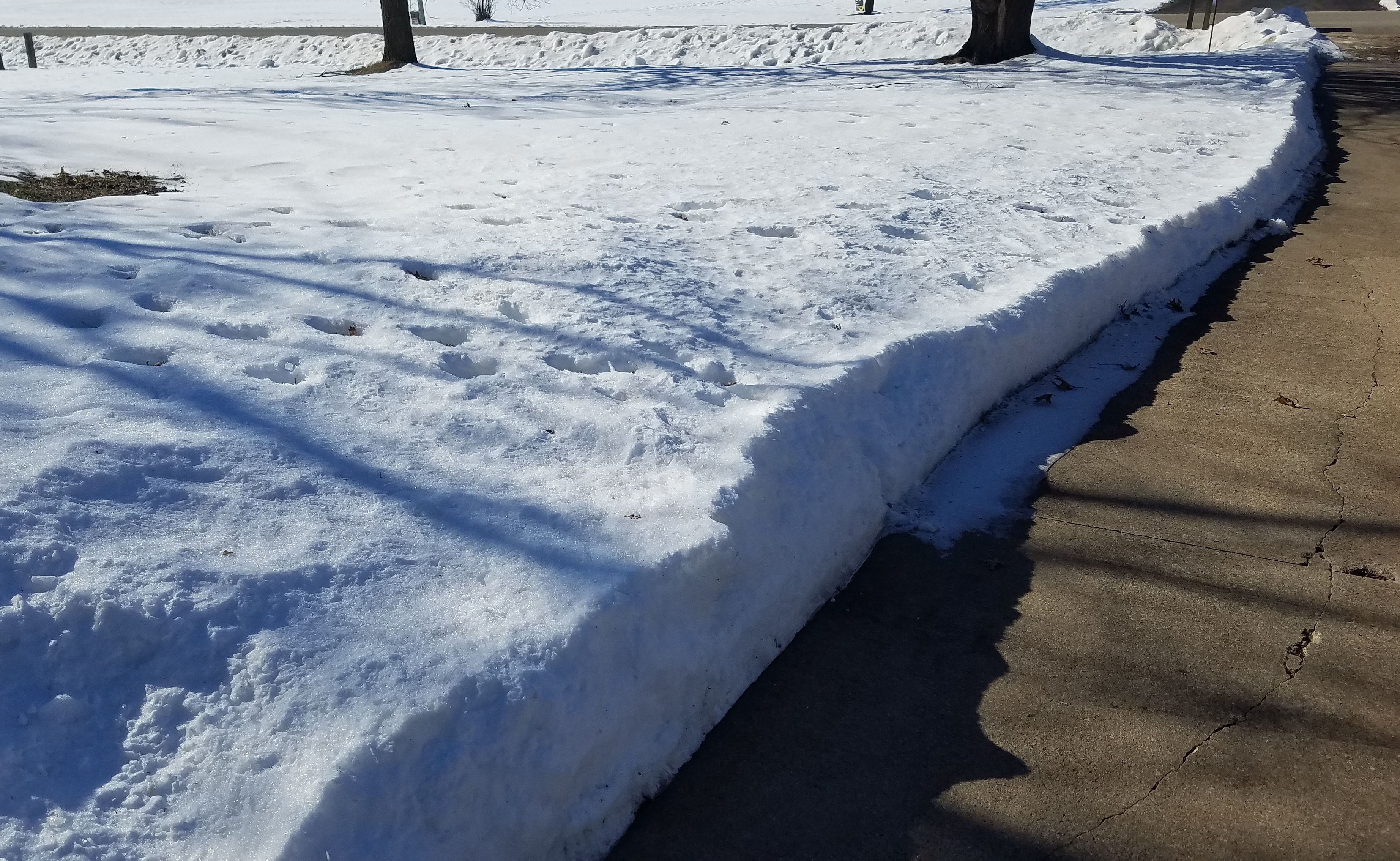
We are a distance from working in the garden. Tuesday I cleared a deep snowfall from the driveway in case we have to get out. A neighbor plowed a two-foot berm left by the snowplow at the end of the driveway. We are well-provisioned and can stay home for a while, that is, unless something happens. I would enjoy visiting friends over coffee in town. But for the coronavirus pandemic I would.
Joe Biden has been president for a week. Already he ramped up COVID-19 vaccine distribution to bring an end to the pandemic. News reports say if his actions are effective, we could see the end of major risks of the virus by the end of summer. Partly, it’s why we elected Biden.
Tuesday was a good day for research on my book. I found a historian who used information and artifacts about my Minnesota ancestors to write about Polish immigration. While I printed copies of historical documents when I visited Lincoln County, his work pieces together a story I couldn’t see on my own. He tied together the locations where my Polish ancestors lived in Pennsylvania, Chicago, LaSalle County, Illinois, and Lincoln County, Minnesota with a specificity I hadn’t found previously. His work gave context to their lives in a way I couldn’t see when I visited the home place and surrounding farm community. His short article presented a believable picture of life at the end of the 19th Century that informs understanding of my family history.
For the last few years I’ve had trouble reading. When I visited an ophthalmologist at the University of Iowa clinics, years ago in the before the mobile device era, he identified a condition where my eyes don’t always focus together, resulting in a kind of double vision. Over the years I’ve gotten used to seeing double. Before he identified the condition I wasn’t aware of seeing double. I improved my reading ability by sitting at my writing table with eyeglasses on, instead of reading without glasses in bed or in a recliner. There was more at work than slight nearsightedness. Reading earlier in the day at my table has been more productive. While I wear bifocals and have specially made eyeglasses for desktop computer use and reading, my sight is pretty good. For that, I’m thankful as I read a lot, Now maybe I can read more.
It is another day in the time of contagion. I look forward to the gardening season, yet while there is snow cover, indoor work continues.
My decision to enter the military created a personal challenge. I had protested the Vietnam War in high school and college, and favored non-violent approaches to resolving conflict. At the same time, Father had served in the Allied occupation of Japan after World War II. While he did not talk much about his military service, it was an important part of how his life evolved after graduating from Leon High School in Tallahassee, Florida.
Mother took me to register for the draft when I became eligible at age 18. I still have my Selective Service card. People in my birth year were eligible for the draft lottery on July 1, 1970 for calendar year 1971. I took a student deferment to attend the University of Iowa in fall 1970. Because of it, my number would be drawn in 1973 for the following year, after graduation. Rather than take a chance in the 1973 lottery, when the Selective Service drew 125, I canceled my deferment, and accepted eligibility, because my draft number was 128. One could be eligible for the draft lottery only once, so I was off the hook on conscription.
After graduating from university in May 1974, I stayed in Iowa City contemplating next steps. When Richard Nixon resigned the presidency on Aug. 8, 1974, a weight was lifted from me and almost everyone I knew. This freed me to take a long tour of Europe, a modern-day equivalent of the 17th and 18th Century Grand Tours. I returned to Davenport as winter set in. I worked a couple of jobs in 1975, yet living in my home town wasn’t for me. I remained restless about what would be next.
When the Vietnam War ended on April 30, 1975, I revisited joining the military. Without the danger of the Vietnam War, my father’s service came to mind again. I discovered a program to enlist for Officer Candidate School to become a commissioned officer. I took all the tests, went through various hearings, and despite frowns from the panel at my shoulder-length hair, was accepted. I enlisted in the program and left for Fort Jackson, S.C. in January 1976, the Bicentennial Year.
Why did I enlist? I felt the U.S. Army at the end of the Vietnam War was a despicable mess. The March 16, 1968 My Lai massacre of more than 500 people, including young girls and women who were raped and mutilated before being killed, was particularly on my mind. I believed the only way to address problems like My Lai was for people like me, who valued non-violent means of conflict resolution and common decency, to enter the military and do a better job of leading it. Father’s military service played a role in my decision, as did the opportunity of youth and being single. I have no regrets in following my father’s footsteps and joining the Army.
DAVENPORT, Ia. (Dec. 28, 1975) During the last three days I have heard two significant quotes and several metaphors well worth remembering here.
Christmas Day as I escorted my Grandmother down the front stairs (of the American Foursquare) and as the sun was sinking in the west, she said, “The day we have prepared for so long is gone.”
Also Joe, on the eve of his 24th birthday said, “The ink has dried on the last year, and already it begins to fade.”
Both of these touch home for me at this time of my life.
Spanish Moss on a Tree in Thomasville, Georgia Photo Credit – Wikimedia Commons
THOMASVILLE, Ga. (Dec. 7, 1997) For the past three weeks I have been wrapped up in the transition between CRST and Oil-Dri. The time has gone quickly and with the 12-16-hour days, I have had little time for reflection. It was only Friday night I did something for myself — I went to Walmart and bought some shaving cream and underwear.
Yesterday, after five hours at work, I drove toward Tallahassee and went to a Goodwill store, a large bookstore, and got groceries — to last me until I fly home on Friday.
What I observed is difficult to put into words. Mostly it is difficult because I am not accustomed to writing observations. But I will attempt something now.
On Georgia Highway 3, near Ochlocknee, is a huge clay mine. Across the street is the Oil-Dri plant which processes the clay into absorbents and cat litter. The reason I am here is to train these people to provide the transportation services needed to move products to market. This is something Oil-Dri was doing on their own, but in a changing economic environment they now chose to outsource the function.
People are very nice, and determined to preserve their way of life. What that means, I am not sure, but I detect that many in the area do not have a lot of money, and things like a person taking home a bag of rolls from the farewell luncheon, and statements about living in Cairo or Moultrie because a person cannot afford to live in Thomasville, are revealing.
Yesterday I took my clothes to a coin-operated laundromat where there is a wash, dry and fold service. The proprietress is a woman who will, for 75 cents a pound, wash, dry and fold clothes. There are two very young children who stay with her — they are young enough to be grandchildren. When I returned to pick up my clothes, there was a gathering of older females who were of an age to be daughters/mothers of the others. The proprietress indicated that Iowa was a long way from that coin-operated laundromat.
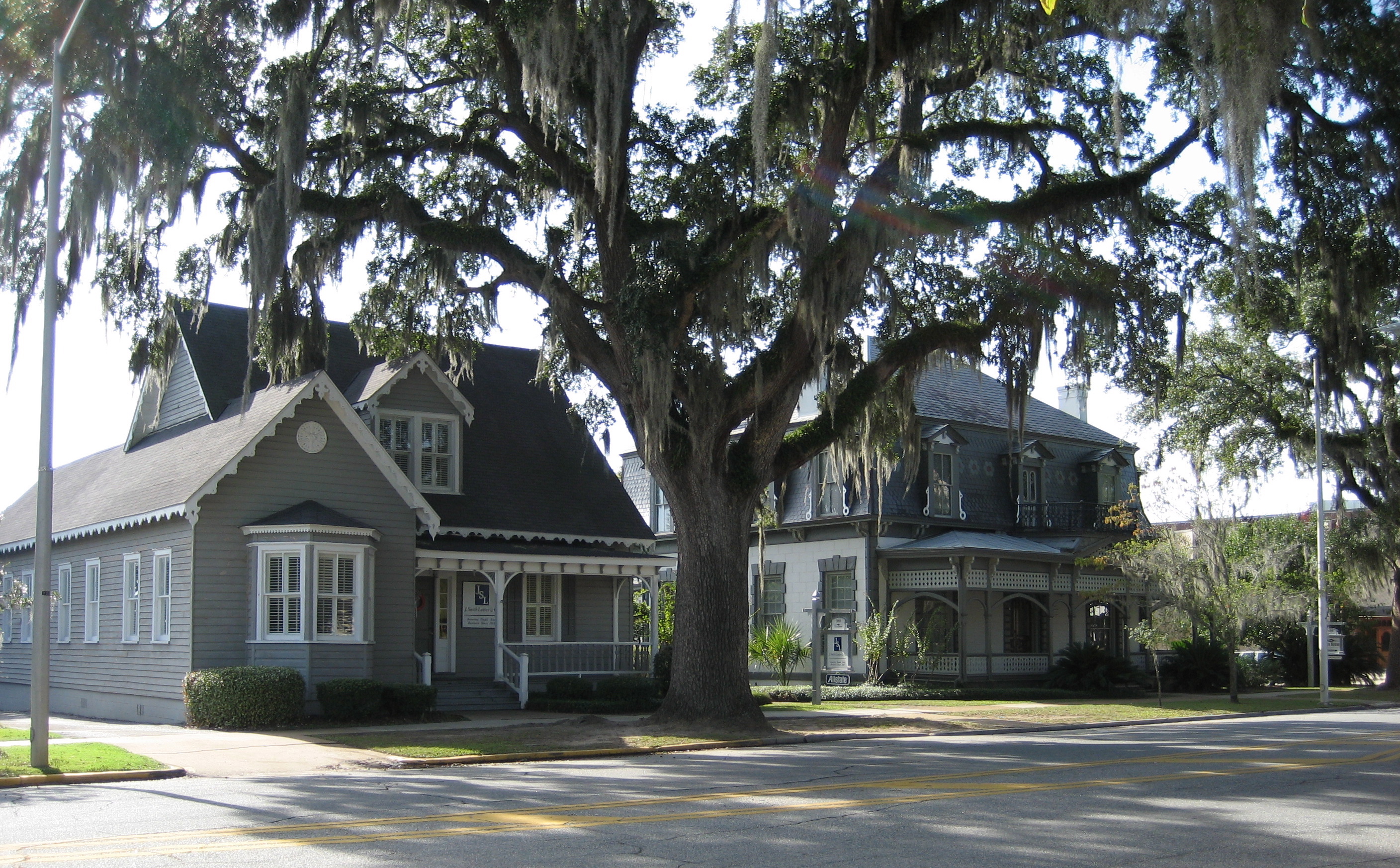
Saturday afternoon I drove south on 319 toward Tallahassee. As I entered Leon County, I remembered entering that county with my parents when I was seven or eight years old. I am not far from where my father spent time as a teenager. I liked the road with the trees reaching over the road surface — Spanish moss hanging from them — a cozy drive on a busy road leading to shops, and eventually, the airport from which I will fly home.
It was inside Walmart yesterday afternoon I was inspired to buy this paper and continue my journal from Georgia. The idea of writing in it as an escape and as creative endeavor seems inviting after 23 straight days of endless activity. I never know if I will write volumes or if this will be my solitary entry as Monday comes and I move back into a work mode — engaged in what must be done.
It is a place of solitary enjoyment — as usual, I know not when, if ever, I will return to read these writings… or if, like the writings I had stolen in France, they will just be gone forever — to be composted into some other matter. Now, it is rewarding to put the words to paper, and so, on what is turning into a retreat weekend, I am at this table writing.
It is in writing down thoughts I am able to move on to the next activity. It is like putting money into a repository where it is unseen and as such out of my attention — letting me be free to engage in new thoughts. I have left the curtain closed in my room. I can see it is light outside, and when I emerge, I will have a fresh view of what potential there is in my environment.
Now it is time to end this journal entry. I have come to this place in my day and the promise of my future calls me. I have used this morning — the three hours since I woke up — to bring focus to what I am doing. Now mental activity pulls me toward work. Indeed, that is the reason I am here in Georgia.
So now, I will close this page, this entry — go to the exercise room for an hour, then begin writing in other actions, the next phase of my career as an Americanist.
“Battle map has been drawn,” wrote our enthusiastic meteorologist who hails from Florida. We’re expecting heavy snowfall by mid day and continuing until morning.
I plowed the driveway yesterday, so the concrete absorbed heat from the sun and will melt the first flakes. After that, as always in Big Grove Township, we’ll see what happens. We are in the middle of the red zone she mapped out for us.
Staying inside was the plan all along. People are talking about the end of the coronavirus pandemic with hope in their voices. Now that people we know are getting vaccinated, there may be an end in sight. A University of Iowa epidemiologist wrote yesterday it won’t be over until cases of COVID-19 are minimal in our community. One hopes public health professionals will instruct us in what that means.
Thus far in January, I wrote 54,175 words, more or less. That includes three categories of writing, blog posts, rushes (first drafts), and a final draft of the book that follows the outline. I’m rapidly learning the quantity of words is less important than their quality. With so much output, I need a week to catch up on editing. It does appear this autobiography from the contagion will proceed to a finish. With seven more days in January and a snowstorm in the works, I should be able to focus on the work.
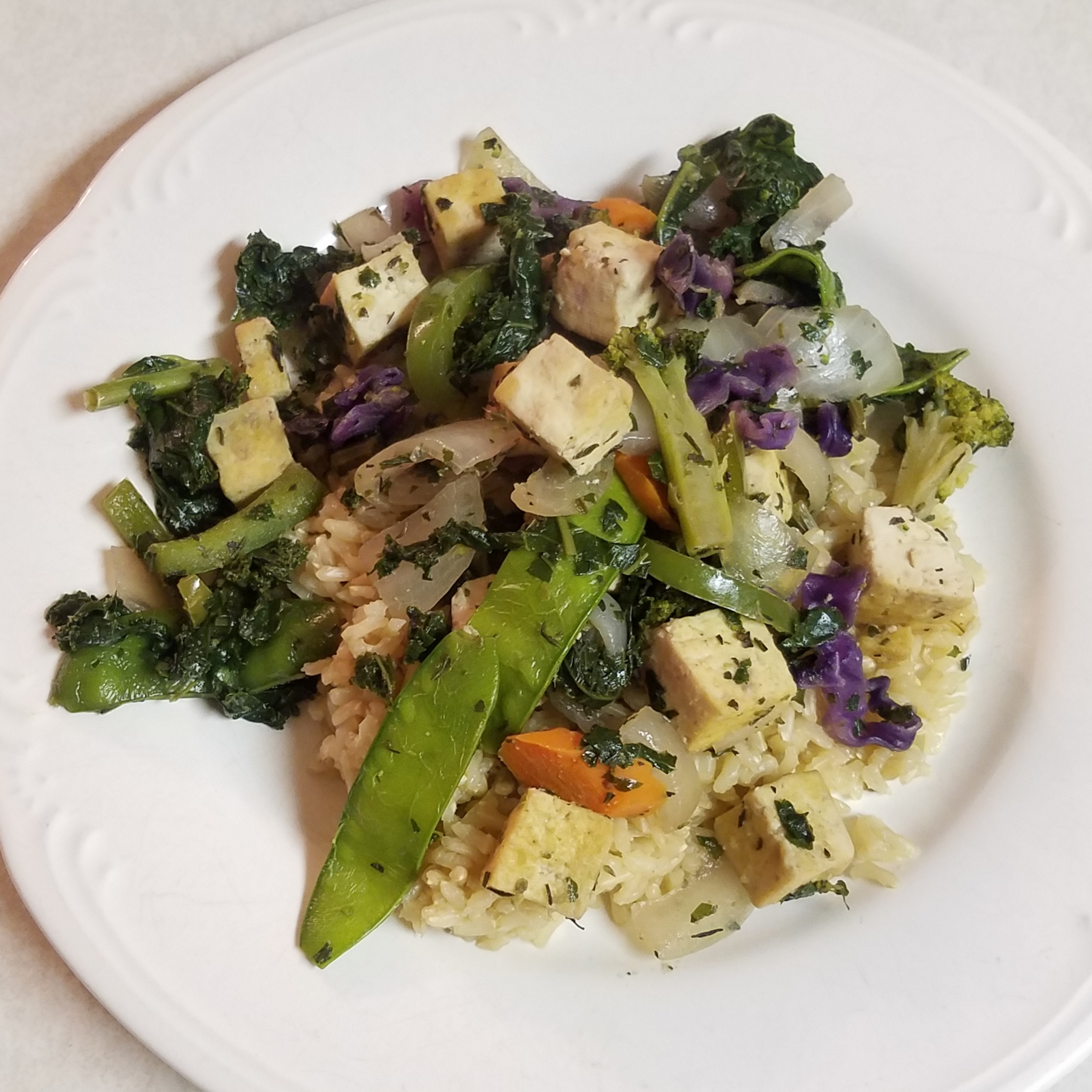
We cook all of our meals and have been since the pandemic began. Saturday I made a batch of chick pea salad, one of my favorite dishes. Our meal rotation includes spaghetti with tomato sauce, pizza, chili, stir fry, soup, sandwiches, oatmeal, tacos, quesadillas, and various small plates intended to break down and disperse our daily eating over a longer period. In a nod to southern cuisine, we make a “meat with two sides,” although our meat is typically a veggie burger with two different vegetables. With both of us retired until after the pandemic, home cooking will continue.
Seven more days of living this January. I’ll take mine one at a time.
I spend plenty of time alone in nature. Mostly it is during walks, or jogs, or bicycle rides. There is no desire to spend an extended time there. “Nature” borders on the sad these days because of its degradation by humans.
When on my grand tour in 1974, I spent time alone. Unless I clicked with someone, it made little difference if I ever saw them a second time. Landing at Heathrow, taking buses, trains, private cars, and in one case, a hovercraft across the English Channel, most of my travels were with someone I met at a youth hostel or hotel, and then for only the time until our next destination. I enjoyed spending the end of each day with others at a hostel. By morning I was ready to venture on my own to interact with the places I’d come so far to see.
Things clicked when I met Gerhard on the green at the Royal Shakespeare Theatre in Stratford-upon-Avon. We met before a performance of Twelfth Night and hung out together afterward. He invited me to visit in Vienna when I made it there in six to eight weeks, and I did. I even tried to get a job in Vienna to extend my stay with him and his room mate from a small village in the Carinthia Alps. When I returned to Europe for military service, while living in Mainz, I took a train to Vienna to visit them again. We corresponded for a long time afterward.
Sometimes I met people I wanted to shake. I met Jorge from Argentina at a hostel in Munich. He was a decade or more older than me and literally falling apart as his partial plate broke twice while I was with him. He brought too much gear, as if he planned to live in some European city permanently, lingering for hours at a local cafe. “He carries with him such a large portion of Argentina that it will break his back someday,” I wrote.
My traveling companion is quite a mess. He smokes very much and eats chocolate and drinks coffee and doesn’t exercise much, all of which combined lead to his poor physical health. Today too, he broke his partial and as a result is walking with his front tooth missing. Also, his temperament makes him very slow and lethargic in moving, and more important, in his thinking. He cannot perceive the world as I do, but acts like a selfish mouse searching only within the egocentric world of self. I often wish to abandon him, but just as many times I see him as needing help. At any rate, I’ll travel with him for as far as Amsterdam.
Personal Journal, Oct. 22, 1974
While I was with Jorge I was encouraged to write more, take photos, travel, and etc. All things seemed better at first. We made it together as far as Heidelberg. He was missing his native Buenos Aires, and my patience with his encumbered companionship was wearing thin. I left him to travel to Cologne alone.
I’m reading a book called Notes from an Apocalypse by Irish author Mark O’Connell. In it he describes going off by himself to the remote Scottish Highlands in a form of pseudo right of passage or retreat. What he found was he couldn’t really get away from other people. A Royal Air Force airplane flew over his campsite, close enough to see and be seen by the pilot, who was on a training mission, or perhaps making a bombing run to Syria, he wasn’t sure which. So it is anywhere on the globe. The mark of we humans is everywhere. In Iowa that is particularly so.
When Big Grove Township was first settled, it was known for the saw mill on Mill Creek. The native oak, walnut, hickory, ash, elm and cottonwood that once thrived among numerous pure springs were long gone by the time we got here. Soon after the big grove was removed, so was the sawmill. Such is living in Iowa, a place with very few natural areas. Even the farmland across the state relies on artificial inputs to produce crops. Every place is subdivided and deeded to someone.
In modern life we can get time alone yet there is always something pulling us back into the maw of humanity. Lately, during the coronavirus pandemic, time alone means a flight into the imagination, into memory. I’m okay with that. If I yearn to do things in person with people, I also accept the restrictions designed to prevent spread of COVID-19. In a time of contagion we get plenty of time alone.
The snow has been on the ground for three weeks without a significant addition. In Iowa, drought conditions are setting in. It hasn’t been cold either. Ambient temperatures today were in the single digits and we’ve yet to have a deep freeze. More weirdness related to changes in global weather systems.
My day seems half wrecked as I worked all morning on a project related to the community wastewater treatment plant. It’s a shitty job (sorry), but someone has to do it.
After a quick shower, I’m ready for a couple of hours writing before making our go-to Friday night pizza dinner. I bought a fresh bell pepper at the market for an additional topping and to mix it up.
There are so many stories I want to tell and the rush of memories is a bit much. It seems a mad competition between writing stories down and the end of days. The engagement in writing takes me to a timeless place where I forget about sewer sludge and the limits of my humanity. I want to camp there for a long while. I forget about passing time and opportunity.
Yesterday I found an 1883 history of Johnson County on Google Books. It has a detailed account of the history of Big Grove Township. More than I’ve seen. I wanted to start writing about it immediately, adopting it to my narrative, adding sentences from other research. Instead, I bookmarked it to return once I’m ready to write that section. I felt proud of my discipline and a little sad because I didn’t just follow the vein. It’s like that with a lot of things.
I delayed my return to the farm until I get the COVID-19 vaccine. Because so much is in flux between the state and federal government, it’s hard to say when I might get it. My group, as defined by the Iowa Public Health Department, becomes eligible in the next phase, which begins Feb. 1. The question is whether there will be enough vaccine to meet demand. We have a large number of health professionals in our area and they are also a priority.
In the meanwhile, I reviewed last year’s garden planting schedule and copied it into my calendar so I’m ready to go when the greenhouse is up. That will be when this old snow melts, and hope of spring is in the air. Well, I’m hoping already.
The wind was fierce Tuesday afternoon, blowing down branches in the neighborhood. After the Aug. 10 derecho one would have thought all the weak ones had fallen. Our property survived yesterday’s minor wind storm without damage.
I spend time on process. In reading my journals, I was reminded I always have. Early on it was a response to the quality movement as Iowan W. Edwards Deming practiced it. He was all the rage among manufacturers who spent untold millions of dollars developing ways to “improve quality.” Properly done, quality improvement programs reduced costs and improved gross margins. While on an extended business trip to West Texas, I found an autographed copy of Deming’s main work, Out of the Crisis at a thrift store for a dollar. Deming’s ideas were well disseminated, even reaching the city with the annual rattlesnake roundup. Deming’s quality process applies to writing.
My writing process evolved to the next iteration this week. I liken it to a funnel. The store of memories, artifacts and previous writing go in and slowly drain out in the form of daily thousand words rushes. Rushes are created however they occur. When I’m ready to edit, I print them out triple spaced and edit on the pages.
This week’s development was to use edited rushes to create a draft of the book in a single document n the cloud. I typed the headers of the working outline on the document, and as I write, lay parts of the rushes on the framework, re-write, and edit them again. Experienced writers may find this obvious, but y’all didn’t tell me so I had to figure it out myself. I’m satisfied the process was improved. I back up the book document after each writing session on my desktop and a flash drive.
The main benefit of studying the physical record, writing it into rushes, first edits, then incorporating the writing into the draft book makes me read what has been written multiple times. It becomes a better product. I drop segments, ones I thought were good when writing rushes, in favor of a tighter narrative. I elaborate as needed or make a note to do more research and follow the narrative down the rabbit hole of existence to make it better.
I read a journal from 1996 this week. While I don’t much think about them, the experiences remain in living memory. I tasted wild blackberries we found along the state park trail again. We swam in the lake under a blue moon again. We sat on a picnic bench watching a sailboat regatta breeze by again. The memories are visceral and real. With all the sensory stimulus, the capacity of humans to remember is remarkable.
For the first time this winter, ambient temperature dropped below freezing on Wednesday morning. It’s been a warm winter thus far. As it plays out, I’ll be watching for an opportunity to prune fruit trees. In the meanwhile I’ll be at my writing table coronavirus writing.




 Journey Home
You must be logged in to post a comment.