Categories
Environment

Countdown to Labor Day

Trish Nelson has been enjoying her break from Blog for Iowa and reported that in addition to following coverage of the Kent Sorenson – Michelle Bachmann – Ron Paul affair, she has been checking out the technology of Iowa,

Iowa Leading Edge Technology

looking for and finding Elvis,

Elvis Sighting
Elvis Sighting

and watching sunsets.

Thornberry Park
Thornberry Park

We miss Trish, and hope she enjoys some rest during her break from Blog for Iowa. Expect to see her back on Sept. 2

That leaves me with sixteen posting days to fulfill my commitment to post about the challenges of temporary workers in Iowa; implications of immigration reform; Iowa’s role in mitigating and adapting to climate change; and occasional posts on energy policy, local food, and peace and justice activities in the state. I have already touched each of those points and want to focus more on the climate crisis.

Since I began posting on July 15, I have written and posted here about climate change exactly five times. Check them out here, here, here, here, and here.

I affiliate with the Climate Reality Project, and our team put together a starting point for the conversation I hope to have about the science of climate change before I fade into the background again on Sept. 1. To understand that climate change is real, and caused by us, it is important to understand the science. This four minute, 34 second video with Bill Nye the Science Guy helps set a scientific framework for the discussion. More follows, but that will be another post.

~ Written for Blog for Iowa

Categories
Environment Social Commentary

The Founders and Climate Change

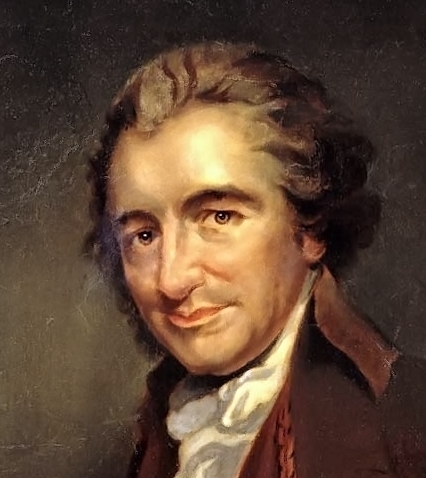
Thomas Paine
Thomas Paine

It must get a Republican’s hackles up when a Democrat talks about the founding fathers. After all, it was Republican Warren G. Harding who coined the term, first using it in his keynote address at the 1916 Republican National Convention. The term is less than one hundred years old, much younger that our family roots in Virginia where ancestors named their male children after well known revolutionaries from the state. Leave it to a Republican to omit women as founders, but women’s suffrage and the 19th amendment to the U.S. Constitution wouldn’t come until four years later. Harding, while elected as president in a landslide in 1920, was never a visionary, unable to see the scandals in his own administration.

What we know about the founders was they were part of a natural aristocracy, or gentry, as Stow Persons described it in his book “The Decline of American Gentility,” based more on talent and taste than birth or financial status. 13 were merchants, seven were major land speculators, 11 were large scale securities speculators, 14 owned or managed plantations or large farms operated by slaves, eight received a substantial percentage of their income from holding public office and the rest were occupied as small farmers, scientists, physicians, retirees and other occupations. There is no evidence my forbears were included in this group, although they were in Virginia by 1680.

I never thought much about the founders while growing up, focusing on those revolutionary figures who were from Virginia, where my father’s family settled: George Washington, Thomas Jefferson, Patrick Henry and  James Madison. I also liked Thomas Paine, who while not a Virginian, wrote the practical sounding and popular pamphlet “Common Sense.” He also wrote “The Age of Reason,” his book that advocates deism, promotes reason and freethinking, and argues against institutionalized religion in general and Christian doctrine in particular. We’re getting to the point of this post.

Thomas Jefferson, James Madison, Thomas Paine, Benjamin Franklin, Ethan Allen and George Washington were deists, or influenced by them. Deists insisted that religious truth should be subject to the authority of human reason rather than divine revelation. Consequently, they denied that the Bible was the revealed word of God and rejected scripture as a source of religious doctrine.

They were also products of the Age or Enlightenment which was a cultural movement intending “to reform society using reason, challenge ideas grounded in tradition and faith, and advance knowledge through the scientific method.” These views proved to be unpopular, and emblematic of this was the fact that only six people attended Thomas Paine’s funeral as he had been ostracized for his ridicule of Christianity.

Anyone who knows this history must see the irony of modern day citizens who constantly refer to the founders, yet eschew the scientific method, especially as it pertains to climate change. We know why that is.

In mass society, media plays an important role in educating the public, just as Paine’s “Common Sense” informed the American Revolution. The public’s attention has been bought and sold by the hydrocarbon industry through prolific and continuous advertising. The executives of the oil, coal and gas industry must know the science of climate change, and that they are mortgaging their children’s future to make a buck near term. Yet they continue their work as slaves in the fields of corporatism.

There was an age of enlightenment, but its promotion of scientific inquiry has today been replaced by something else. A combination of misinformation, partisan politics and fundamentalist faith. Arguments about the science of climate change fall on many deaf ears, and opposing voices create a voluminous din that echoes in valleys carved over millennia that predate Europeans on this soil.

As I write this post, I am reminded of William Faulkner’s Nobel Prize acceptance speech.

I decline to accept the end of man. It is easy enough to say that man is immortal simply because he will endure: that when the last dingdong of doom has clanged and faded from the last worthless rock hanging tideless in the last red and dying evening, that even then there will still be one more sound: that of his puny inexhaustible voice, still talking.

My response is simple, climate change is real, it’s caused by us, the effects on humans are getting worse, and we can do something about it without changing our way of life or hurting our economy. We should do something about it before it’s too late. The founders resolved the issue of their time, now is the time for us to return the favor by solving the climate crisis.

Categories
Sustainability

Iowa’s Campaign to Stop New Nuclear Power

Nuclear NeighborhoodsPrepared remarks delivered by Paul Deaton at the Iowa City Public Library on the 68th Anniversary of Hiroshima, Aug. 6, 2013.

Thank you Maureen McCue for the kind introduction. I want to recognize some of our colleagues in this work who are in the audience tonight.

Well we held back new nuclear power in Iowa. Isn’t that great?

In February 2010, I wrote the first of a long series of posts on Blog for Iowa about what I believed to be the legislature’s infatuation with nuclear power during the last four sessions of the Iowa General Assembly. I wrote, “I heard the words ‘zero sum gain’ applied to MidAmerican Energy’s process toward change for the first time. It seems to fit. A zero sum gain is a situation in which a participant’s gain or loss is exactly balanced by the losses or gains of the other participant(s). If the state wants to move forward with nuclear power, it’s okay with MidAmerican Energy, but they are a business, so the customers will have to pay.”

The customers will have to pay. That pretty much sums it up. What’s missing is no one knew how much a new nuclear power plant would cost, then, or now. For this and other reasons, the people of Iowa decided there were better ways to generate electricity.

During this presentation I want to talk about what the nuclear power discussion was, and what it meant.

At the beginning, the legislation seemed on a stealth track toward passage without opposition. Physicians for Social Responsibility joined with an extensive and diverse coalition who found common ground in opposing nuclear power in Iowa. By the end of our work, according to public polling, a vast majority of Iowans opposed new nuclear power and some legislators who had supported House File 2399, the nuclear power study bill, and House File 561, the nuclear power financial bill, had changed their minds.

What I want to cover in my remaining time is three things: the campaign to stop the nuclear power study, the campaign to stop the nuclear power finance bill, and then some general remarks.

Before beginning, I want to set the framework in which the nuclear power discussions occurred.

The electric utilities in Iowa are looking at a 50-year horizon that compares where we are now with regard to electricity generation, to where we will be. Electricity generation is currently a mix of nuclear, coal, natural gas, wind and hydroelectric. The nuclear and coal plants are making their exit at the end of their life cycle, so the question is what is next?

After defeating two of three proposed coal fired power plants in the state, combined with our recent success in holding back nuclear, we seem bound to keep hydro the same, generate more wind and solar electricity, use no new nuclear or coal plants if we can manage it, with natural gas as the flexibility in the system to meet so-called baseload electricity needs.

Demand growth for electricity is slowing to less than one percent per year, so the primary issue is capital investment to replace depreciated generating capacity. Pretty tedious stuff for the environmentalists among us, but where Warren Buffett and others like him invest their billions is a real issue for us, with real world impacts on the environment.

When we talk about these big picture solutions, however, the missing piece of the puzzle is distributed generation. That is, how individual homes and businesses might produce their own electricity on-site, and sell excess capacity back into the electrical grid.

As prices come down for wind and solar, distributed generation becomes more viable, and could tilt what the regulated utilities do. The thing is, how long can we wait to take CO2 emissions out of the mix? The inconvenient truth is that we can’t wait.

Another thing to note is that while burning natural gas produces about half the CO2 emissions compared to burning coal, the gain for the environment is mitigated by methane leakage along the pathway from extracting the gas to delivery at the power plant where it is burned. Like with any energy source, burning natural gas should be considered in the context of its entire lifecycle. In that context, its greenhouse gas emissions are not much better than coal, if not worse, depending upon the amount of methane leakage.

From the preamble of House File 2399:

“It is the intent of the general assembly to require certain rate regulated public utilities to undertake analyses of and preparations for the possible construction of nuclear generating facilities in this state that would be beneficial in a carbon constrained environment.” There is a lot to unpack there, and the bill had additional aspects I have eliminated to save time. Suffice it to say House File 2399 passed both chambers of the legislature, and on April 28, 2010, Governor Chet Culver held a signing ceremony for what he called the “Nuclear Energy Jobs Creation Bill.” In a letter that is available on Blog for Iowa, Culver wrote, “this bill gives Iowa utilities and consumers more tools to make decisions on our energy future. The study will give us a clear idea of what the future for nuclear and alternative energies may hold in Iowa.” On June 4, 2013, MidAmerican Energy announced the study was complete, and they would be refunding a portion of the $14.2 million dollars collected for the study from rate payers, beginning this month. There was no mention of the words wind, solar or alternative energy in the 50 page final report from MidAmerican Energy to the Iowa Utilities Board. Governor Culver was wrong about the study’s purpose, as he was about many things.

Now let me talk about House File 561, the nuclear power finance bill.

On Monday, March 28, 2011, Wally Taylor, counsel to the Iowa Chapter of the Sierra Club presented an analysis of the Contruction Work in Progress or CWIP bill that eventually became House File 561. Iowa’s version of CWIP was much worse than those passed in other states in that its main purpose was to codify specific costs that rate payers would pay, up front, should the electric utility decide to apply for and construct a nuclear power plant. It included every cost the industry could envision. Among them, it defined “prudent costs” for the Iowa Utilities Board (IUB), when what would have actually been prudent was leaving costs to the board members discretion, rather than being directed by the legislature. It instructed the IUB on calculation of allowed debt and return on equity, something that should also have been left to the discretion of the IUB after performing due diligence on a proposed project. The bill also exempted nuclear power from the requirement, applicable to all other electric generation plants, that the utility has considered other sources for long-term electric supply and that the proposed plant is reasonable when compared to other feasible alternative sources of supply. There were other considerations, and in the end the legislation, if passed, would be biased to favor nuclear power over other methods of electricity generation.

By the close of session, House File 561 failed to gain traction in the Iowa Senate, as most familiar with our campaign are aware.

In closing, let me say something about new nuclear power. In its current state, no privately held company in the United States would take on the risks of nuclear power without significant government and rate payer subsidies. Period. If they would, the Nuclear Regulatory Commission is open for business, and accepting applications.

When we talk about subsidies, first, there is the risk of disasters as happened in Chernobyl and Fukushima. To encourage nuclear power, the U.S. Government created the Price Anderson Act which puts a ceiling on the losses that would be paid by a nuclear power plant owner in the case of a similar disaster. You and I would pick up the excess costs through our taxes.

Second, the Department of Energy owns and is responsible for nuclear fuel throughout its life cycle. While nuclear power utilities charge a small fee per kilowatt hour to help pay for disposal of their nuclear waste, every power plant’s disposal costs are underfunded. This underfunding is complicated by storage that could last for multiple millennia.

Any executive of a public utility, as a matter of personal competence, would want to know how much building a new power plant would cost. In the case of nuclear power, no engineer has a sharp enough pencil today to accurately predict the costs. When MidAmerican Energy CEO Bill Fehrman was asked how much a new nuclear power plant would cost during the last three and a half years, he constantly dodged the question, perhaps because he simply did not know. House File 561 got people like Mr. Fehrman off the hook, by transferring those financial unknowns to rate payers.

When nuclear power came into being in the wake of the Atomic age, whose birth we commemorate today on Hiroshima Day, it was scaled big. In retrospect, if used, nuclear power should have been modeled on the technology of nuclear submarines.

It seems likely the engineering challenges of small modular reactors (SMR) could be met and resolved, as could the issue of nuclear waste disposal. We are not even close to resolving either of those issues.

As MidAmerican Energy wrote in their report, “SMR licensing and SMR pricing could influence the decision to deploy nuclear generation in Iowa,” confirming my point― the technology is not ready for a proposal to the NRC.

We haven’t heard the last about nuclear power. But unlike the time prior to the fight to stop these bills, to stop nuclear power in Iowa, advocates are now ready to take up the fight anew if called upon.

Thank you for your time and attention. We’ll have a question and answer period at the end.

I’ll turn the discussion over to Dr. John Rachow who will speak to the issue of radioactive nuclear fuel. Thanks again.

Categories
Environment

Climate March Staff Trained by Al Gore

Great Climate March Staff

CHICAGO, Ill.– The staff of The Great March for Climate Action was spotted by Blog for Iowa at the Climate Reality Leadership Corps training held in Chicago from July 30 through Aug. 1. (L to R: Shari Hrdina, Zach Heffernen and Courtney Kain). The event was the 23rd training of climate leaders conducted by former vice president Al Gore since exiting politics. As Gore said about himself, “I am a recovering politician.” The Climate Reality Project has become an important part of his life’s work.

On July 31, Gore began a twelve hour day by presenting the latest version of the slide show he developed that became the book and film An Inconvenient Truth. He then explained the slide show, one slide at a time, so attendees could present it themselves. He closed the day with group photos with training attendees. The Great March for Climate Action staff was part of a cadre of 1,200 people from all 50 states and 40 countries who participated in the training.

While the Great March for Climate Action has not been endorsed by the Climate Reality Project, organizers permitted staff to distribute brochures about the march to attendees. During the final day of the training, Mario Molina, Climate Leadership Corps Director, made an announcement about the march to the group, calling attention to the staff, encouraging attendees to seek more information.

Courtney Kain is the Great March for Climate Action operations director, and importantly, in charge of logistics. Her background includes time with Iowa Army National Guard at Camp Dodge, where she worked in supply and logistics. Kain was instrumental in developing the march route, and is developing sustainable methods to move, feed and take care of 1,000 people over the course of their 3,000 mile journey.

According to Zach Heffernen, marcher director, about 20 applications to join the march had been approved. Speaking of the marcher recruitment effort, he said, “sending out the application is very exciting for me. The diversity of individuals who requested an application is impressive. They range in age from nine to 74, originate from all along the West Coast to the Midwest to all along the East Coast, and have backgrounds ranging from college students, to self employed business professionals, to medical doctors, to retirees and everything in between.” Attendees of the Climate Reality Leadership Corps training expressed interest, and some of them had already been approved for the march.

While Courtney and Zach will be joining Ed Fallon and the rest of the marchers, Shari Hrdina will remain in Des Moines providing financial support for the endeavor.

According to the Great March for Climate Action Facebook page, “marchers can look forward to seeing the official updated version of the “Inconvenient Truth” slideshow on the march next year.”

For more information about the Great March for Climate Action, check out their web site by clicking here. To learn more about the Climate Reality Project, click here.

~ Written for Blog for Iowa

Categories
Environment

Letter to Dave Loebsack

Open Letter to Congressman Dave Loebsack of Iowa’s Second District

Put a Price on Carbon

When I helped elect you to be our congressman, I didn’t know what that would mean. What I did know was that I wouldn’t agree with every vote you took. I haven’t.

Over the longer term of the last six and a half years, your votes with which I agreed outnumbered those with which I didn’t, and you have done the right thing when it has been important.

The next right thing is supporting President Obama’s second term initiative on climate change.

I ask you to seek ways to support the president’s agenda, importantly, by assigning a price to carbon. I encourage you to follow the lead of your former house colleague Senator Ed Markey on this.

I understand you may be reluctant to speak out on this important issue because of the negative political feedback you might receive. At the same time, you should land on the right side of history.

During your many trips to the district, I heard you speak repeatedly about how the Republican house leadership controls the agenda, so you don’t need to drag out that old sawhorse. Just know that CO2 emissions are directly related to the crazy weather Iowa has been experiencing, and we can do something to reverse the causes of CO2 emissions which contribute to global warming and climate change. Placing a price on carbon is an essential step.

As your constituent, I expect you to do your part.

Thanks for your work, and I’ll see you in the district this summer.

Regards, Paul

(UPDATE: Congressman Loebsack replied on Aug. 15, 2013)

Dear Mr. Deaton,

Thank you for contacting me about environmental issues. I’m honored to represent you. Your opinion is very important to me and my priority is to provide Iowa’s Second District with the best representation possible.

I am pleased to see the President speaking out on climate change issues recently. As the conversation on climate change continues in our national dialogue, I believe that people need to accept the science on this issue. We continue to face an increase of severe weather events across the country and globe that are threatening the safety of many and deeply costing our families, businesses, and communities.

I also agree that we need to reduce the amount of pollutants produced and concentrated in our atmosphere. It is critical that we work to address environmental issues occurring right now so that we pass on to our children and grandchildren a livable environment in the future. The current drought gripping Iowa demonstrates the difficulties that Iowa farmers, businesses, and families may face if negative climate uncertainties continue.

You may be interested to know I previously supported legislation to limit the amount of pollutants emitted, like carbon dioxide, and transform our outdated energy policy into one that reinvigorates American industrial and manufacturing sectors and allows Iowa’s thriving renewable energy sector to grow and become a global leader in clean energy production.

As a member of the Sustainable Energy and Environment Caucus, I will continue to look at ways to reduce pollution and promote the use of homegrown renewable energy alternatives. Thank you again for contacting me about this important issue.

My office is here to assist you with any and all concerns you have, so please do not hesitate to contact me whenever you feel that I can be of assistance. I encourage you to visit my website at http://www.loebsack.house.gov and sign up for my e-newsletters to stay informed of the work I’m doing for you. I am proud to serve the Second District, and I am committed to working hard for Iowans.
Sincerely,

Dave Loebsack
Iowa’s Second District

Categories
Environment

Reflections on Chicago

Chicago Skyline
Chicago Skyline

LAKE MACBRIDE— After cleaning out my email inbox, catching up on LinkedIn, twitter and Facebook, and skimming the scum from a batch of dill pickles, I walked outside evaluate the garden. Weeds are taking over again. It is disheartening how quickly nature attempts to return gardens to the wild. I pulled a few weeds, realizing tomorrow will be more of the same to preserve the yield. No worries, it’s part of being a gardener.

There were half a dozen zucchini; a yellow squash; peppers ready to pick— two green bell peppers, Anaheim and jalapeno; and stems of broccoli, enough for a meal. Hard to believe I was gone only three days. The cucumber seedlings planted Monday had an 80 percent survival rate, and the remainders will fill in empty spaces. Already a work queue is forming. Before continuing August’s work, for a few brief moments in the garden and orchard, I considered my experience in Chicago with the Climate Reality Project.

Gate 26
Gate 26

I know cults and utopian movements, and the recent gathering was neither. After spending an evening with disciples of the Rev. Sun Myung Moon in Munich, with charismatic renewal congregations of the Catholic Church in Ann Arbor, Mich. and in Belgium, and with the Rev. Tommy Barnett and his Westside Assembly of God in my home town, there aren’t many religious similarities. People gathered around a key speaker, and that’s about it.

These were not Rappites, Icarians, Shakers, members of the Amana Society, or of the Blythedale Farm community. Nor was it like what one finds in science fiction— the technology laden tales of Doc Smith, Walter Miller Jr. or Robert Heinlein. Comparisons drawn from these genres of society fall flat.

10 Percent Ethanol
10 Percent Ethanol

A few so-called moles participated in the training, representatives of the oil and gas industry, deniers, and skeptics about global warming. Their reports about the conference have already begun to emerge. What these folks don’t seem to realize is they validate the fact that the Climate Reality Project poses a serious threat to the status quo of the hydrocarbon business. Their presence and criticisms make our group stronger, even if the hydrocarbon industry outspends the Climate Reality Project in its advocacy.

To resist arguments to act on climate change, the hydrocarbon industry has to understand them. Part of our participation includes an understanding that advocating for action about climate change does not occur in a vacuum. As is written in the Art of War, “it is said that if you know your enemies and know yourself, you will not be imperiled in a hundred battles.” What better way to know our opponents than to have them with us at the conference?

59th Street Station
59th Street Station

That said, the Climate Reality Project is for the most part about Al Gore and his unique role in 21st century society. A number of attendees with whom I spoke pointed to Gore’s loss of the 2000 election as a reason for becoming involved with his movement. The slide show Gore produced, and is perpetually revising, is not a new story, but it is his story. His closing speech on day two of the conference was a compelling call to help prevent the Earth we know from slipping away from us. It was compelling because of who he is and who we might be.

Organizing for Action

Attendees agreed to perform ten acts of leadership related to the project during the coming year. Like many who were there, I’ll perform my share and more.

In the end, this movement is not about Al Gore. It is about living in a post-enlightenment society. It is a time when rational arguments have flown the coop, leaving the din of pundits and poobahs,  and a dirty environment as a result of not understanding the global consequences of CO2 pollution. We can do something about that, and should. An answer lies in placing a value on carbon, which was my takeaway from the conference. Now the work begins anew.

Categories
Environment Kitchen Garden

Paying Tolls on the Ronald Reagan Road

10 Percent Ethanol
10 Percent Ethanol

CHICAGO, Ill.— Yesterday I was surprised to notice the irrigation of corn fields along the Ronald Reagan Toll Road, or Interstate 88 in Illinois. What defines the Midwest and its row crops is the generous rainfall that enables crops without irrigation. This isn’t Nebraska after all.

Maybe the rigs have been there for a while, but they were not a good sign of how the Midwest is contending with dry conditions. It was irritating to see the nozzles aimed poorly, watering large sections of roads. Not irritating enough to stop the car, find the farmer and ask him or her about it. I didn’t want to be late.

In preventing the effects of climate change, depleting our aquifers for crop irrigation is not the right path.

There was plenty to think about as I made my way into the loop and McCormick Place for the conference. Water management in the climate changed Midwest is a thought that persisted until morning.

Categories
Sustainability

On Nuclear Defense

In Germany during the Cold War, we had nuclear weapons on our mind. It was expected that should the Soviet Army awaken from the vodka-induced hangover our intelligence reported among soldiers in their border units, they would use nuclear weapons to engage NATO forces at the Fulda Gap, in what we more specifically called the Hofbieber bowl. Those of us in a mechanized infantry unit in the Eighth Infantry Division hoped the balloon wouldn’t go up, and we’d arrive home safe and radiation-free.

Nuclear weapons were part of the tactics of infantry, armor and artillery units stationed in post World War II West Germany. Officers knew where nukes were stored, how they would be deployed, and pulled security missions to protect them. This wouldn’t have been the big bang as when the air force dropped atomic bombs on Hiroshima and Nagasaki. They were smaller, so-called tactical nuclear weapons. None of us had actually seen one go off.

We received training in what to do if we spotted a mushroom cloud on the battlefield of people’s farms, towns and businesses. The short version was to avert our eyes, find a low spot on the ground and cover ourselves as best we could with our poncho to prevent the radioactive fallout from touching our skin and clothing. The idea was to avoid the shock wave as best we could, shake off the radioactive fallout, and continue fighting.

In retrospect, the idea we would go through with it— position and detonate nuclear weapons— could only have existed within a culture of nihilism… and blind following of commanders’ orders. The officers I knew, who were selected for the nuclear mission, would have gone through with it. I’m not sure I would have, and maybe that’s why I wasn’t picked for detonation duty.

When we consider our recent wars in Iraq and Afghanistan, it becomes clear that conventional weapons wreak enough havoc, that nuclear weapons are no longer needed. To cling to them now is a form of nostalgia the world can’t afford, if it ever could.

~ Written for the Nuclear Neighborhoods Project.

Categories
Environment Kitchen Garden

Iowa’s Culture of Climate Change

Harvesting Soybeans
Harvesting Soybeans

LAKE MACBRIDE— David Biello of Slate wrote an opinion piece in Newsday titled, “Why Don’t Farmers Believe in Climate Change,” on July 16. Link to the article here or here, but here’s a spoiler alert: it’s the Farm Bureau. I commented on the article, but my comment was removed because it violated Newsday’s conditions of use. It’s their world. What’s a blogger to do? If you’re reading this, you know the answer.

In the article, Biello wrote, “take, as an example of skepticism, Iowa corn farmer Dave Miller, whose day job is as an economist for the Iowa Farm Bureau. As Miller is happy to explain, it’s not that farmers in Iowa don’t think climate change is happening; it’s that they think it’s always been happening and therefore is unlikely to have much to do with whatever us humans get up to down at ground level. Or, as the National Farm Bureau’s spokesman Mace Thornton puts it: ‘we’re not convinced that the climate change we’re seeing is anthropogenic in origin. We don’t think the science is there to show that in a convincing way.'”

If there is a record drought like last year, large farmers will capitalize the loss over a period of years, plow the crop under and start over next season. For them, it’s just another aspect of dealing with farming as a business. This attitude is consistent with what I experienced when listening to row crop farmers in Iowa.

The idea,  “they think it’s always been happening and therefore is unlikely to have much to do with whatever us humans get up to down at ground level,” is ridiculous. Climate change doesn’t just happen— it happens for a reason. And today, the main reason is carbon pollution from dirty energy like coal, oil and natural gas.

I encourage you to read the article if you are interested in the interface between Iowa farmers, the Farm Bureau and the environment. There is a lot to learn before Iowa makes progress in protecting our environment. Some say the Iowa Farm Bureau runs the state of Iowa. I say it could only do so in a vacuum of action from people whose views are closer to the reality of climate change.

~ Written for Blog for Iowa

Categories
Environment Home Life

Dealing with the Heat

Summer Day
Summer Day

LAKE MACBRIDE— During childhood, our home had no air conditioning. We had four mature trees, two pine and two maple, on the south and west sides of the house. There was an exhaust fan on the upper landing of the staircase that led to our bedrooms on the second floor. During the summer heat, we slept with windows open and the exhaust fan on. When temperatures cooled as night progressed to dawn, our parents turned the fan off. On good days, we woke to the sound of songbirds in the predawn hour. It wasn’t so bad.

During my military service I became a morning person, craving coffee and exercise when I woke. Some of the exercise was provided at 6 a.m. at our battalion commander’s direction. I would dress in my VOLAR (for volunteer army) sweatsuit, pile into my pickup truck and drive past the white asparagus fields and vineyards to the caserne for a several mile run. Ours was an infantry unit, so we worked in whatever weather presented itself— exercise being part of our work. The caserne had no air conditioner either.

We didn’t have central air conditioning in our home until we moved here from Indiana and sold the two window air conditioners we had accumulated. Central air was a luxury we have come to depend upon during the heat spells of Eastern Iowa.

Last summer’s drought was the worst. Continuing days of extreme heat had us penned up in the house, with the air conditioner hum drowning out the exterior world. I have learned to get outside more during the extreme heat, to tend our garden in the morning light, to work under shade trees grown mature from saplings, and to take a break when feeling overheated. Partly, this is adaptation to changing climate, and partly the behavior reflects a need to be useful in life. Both are important.

As the sky turns gray this morning, I’ll finish this post and have first breakfast. There are green beans to pick, garlic to check, and onions to dig, all while the temperature is in the 70s. After that, the perennial question of what to do with the remainder of my life, something wanting an answer despite best efforts to focus on this moment.

According to the weather forecast, there are about three hours before the temperature hits 80 degrees. It’s time to get on the gardening, after some locally prepared food for breakfast. The beginning of another day, presenting just as much opportunity as any day every did. A time for action to improve the sustainability of our life on the Iowa prairie. Part of that is dealing with the Iowa heat.