Categories
Reviews

Book Review: Queen Esther

I did not receive an advance reader’s copy of Queen Esther by John Irving. I emailed the bookstore in the county seat to make sure they would have it on publication day. On Nov. 4, I drove there and parked on Iowa Avenue, the same Iowa Avenue Irving described in The Water Method Man. I walked to the bookstore and couldn’t find it among new arrivals. After my inquiry, a sales associate found it in the back room and I bought it.

After Saul Bellow and Joan Didion died, Irving became my favorite author. I thought The Last Chairlift was his final novel and was pleasantly surprised and hopeful about this new one. It did not disappoint.

Anyone who lives in modern society has some familiarity with the issues that brought about the Hamas-Israel war. No book on those issues will have universal support, much less fiction. It seems risky for Irving to have tackled that and I admire him for it. Frankly, successful at age 83, what does he have to lose?

As someone who began reading Irving more than 40 years ago, I highly recommend Queen Esther. It is classic Irving.

Categories
Living in Society

Thanksgiving 2025

Thanksgiving dinner.

When visiting my sister-in-law’s home I bring my own coffee. It’s instant espresso I can make without a lot of noise in an unfamiliar kitchen while the rest of the household sleeps in early morning. Even though I sleep on a cot I bought for these visits, my sleep pattern from home was duly replicated: I got eight hours after retiring early.

I have a buzz on from the caffeine as I type on my mobile device.

A winter storm is coming–expected to snow nine inches in the next 48 hours. We should arrive home before the first snowflakes fall.

In the meanwhile, we will prepare for departure while being as productive as possible. Away from home the routine is different. The meal we all helped prepare was satisfying. Another Thanksgiving is in the books.

Categories
Living in Society

False Landing

Historic barn in Big Grove Township.

How do I feel now that the Democrats won the election? I feel it is the dawning of a new era, full of potential to make the country a better place for us all. It is a time to take control of what is lagging in my life and make something in the active days remaining. (Personal Journal, Nov. 19, 2006).

When Barack Obama won the presidency two years later, these feelings deepened. It affected me personally in that I felt I could leave my employer of 25 years and strike out again on my own. The country was going to be okay.

It was a false landing.

The reaction of the electorate in 2010 was brutal. It got worse. With today’s trifectas in the state and national governments, Republicans have been dismantling the world we knew. If in 2006 I felt Democrats had arrived, that feeling is gone today as we struggle our way back into a majority, or at least into breaking the trifecta. We can do that, yet the old ways are unlikely to work.

Iowa has been a Republican state for as long as I can remember. As Johnson County Supervisor Rod Sullivan pointed out,

There were only two windows EVER – one in the 1960s and one from ’06-’10 – where Iowa Democrats held a trifecta of the House, Senate, and Governor. Democrats typically did not run things, but made up a large enough minority that the GOP needed them to govern. So compromises were struck. (Sullivan’s Salvos, Nov. 27, 2025 by Rod Sullivan).

I remember the landslide victory of Lyndon B. Johnson in 1964 and the coattails he had in Iowa and everywhere. The election replaced ten-year incumbent Republican Congressman Fred Schwengel with Democrat John Schmidhauser, for whom my father campaigned. However, the landslide did not have staying power and Schwengel was reelected after Schmidhauser served a single term.

During the 2006 election, Dave Loebsack was elected to Congress and served until January 2021. Notably, Loebsack won in part by running up the voter margin in Johnson County. His successor in the Congress, Mariannette Miller-Meeks buffered the effectiveness of that liberal county, margin-style strategy and won three elections. Loebsack was an effective congressman, yet his success has not yet been replicated.

Where do we go from here? We go on living our best lives.

While Iowa voted for Richard Nixon in 1960, our family was proud to have supported John F. Kennedy and claim him as our president. The national impetus after JFK’s assassination was to elect LBJ and Iowa voted for him and other Democrats like Schmidhauser. It was a landslide like no other in American politics. There will be a similar impetus in the electorate as Republicans overstep their mandate in our present political life. What Republicans are doing already negatively affects so many people I know. Our lives are poorer for their governance and that will not stand.

This time, Democrats must realize any victory lacks permanence. There is no landing platform. If anything voters are more fragmented than ever with the help of computer applications we all use. If Democrats break the trifecta, or gain a majority, we must do everything we can to advance our agenda as quickly as we can, knowing the period of opportunity will have a short half-life. We can win an election, yet permanent change does not appear to be part of the bargain. With staying power off the table, we must work at it both before and after the election. I believe we can do that.

I am hopeful a good life is still possible in Iowa. What I have come to know is it must be lived outside party politics. That’s hard for me to say as I’ve been a partisan most of my life. However, I will grasp the opportunity for a better future wherever together we can make one.

Categories
Living in Society

Entering Tribal Time

Foggy morning to begin Thanksgiving week.

Since my youngest days, the time between Thanksgiving and the Feast of the Epiphany has been a time to spend with friends and family away from broader society — a tribal time. This year, the number of days will be cut short. As I age, more of my days turn to tribal concerns. Now more than ever, there is motivation to do more with my writing, cooking and home work projects.

That said, I don’t know how much I will be writing here. Before New Year’s Day I hope to post about books I’ve read this year, photos I’ve taken, and a review of where this blog has been in 2025. The premise of late has been that blogging is an ersatz journal or diary. I am drawn more to the written word, especially to write about personal things, so the editorial content here may change in 2026.

Because of the influx of Chinese views, it is hard to know who is reading my blog unless they hit the like button. A concern is people in China are stealing my work and will publish something of it before I have a chance. I don’t know if this is a legitimate concern. If the Chinese viewers are in fact located in China, and they are scraping my blog to train artificial intelligence, then it is a bit scary to think artificial intelligence will resemble my writing in any cogent fashion. I may hide this blog and start a new one to deal with this. That will be contemplated while I am in tribal time.

I just finished reading my 2006-2007 written journal. It was written before I became a blogger and when social media was in its early years. In some ways, that time held the same concerns I do today about my health and furthering my writing life. I’m not sure a complete return to written journals is what I need to do.

I look forward to a retreat during the coming days before December. I wish those who celebrate it a Happy Thanksgiving.

Categories
Living in Society

Community Volunteer

Trail walking on Nov. 22, 2025.

When I became an adult, married, and settled into steady work, it was assumed I would volunteer in the community. The volunteer impulse has its roots in the industrial period after the Civil War. People used less time to produce enough money with which to live our lives. In more modern terms, we could pay for things like our child’s college education without sacrificing a lot at home.

Perhaps the most prominent example was the robber baron Andrew Carnegie whose expansion of the steel industry made him one of the richest Americans and enabled his philanthropy to fund a number of public libraries, among other things. “The duty of the man of wealth,” Carnegie said, is “to consider all surplus revenues which come to him simply as trust funds, which he is called upon to administer . . . in the manner which, in his judgment, is best calculated to produce the most beneficial results for the community.”

I didn’t have “surplus revenues,” yet worked in jobs that created enough money to pay basic living expenses with a bit leftover. While there were limits on potential income, I was afforded regular free time and expected to use some of it to volunteer in the community. My volunteerism really took off when we moved to Big Grove Township.

I differentiate the types of volunteer work I have done since 1993. There is community work: membership on the home owners association board, election as a township trustee, and serving on the board of a senior citizen’s group. There is also what I call advocacy work: serving on the boards of peace-related organizations, politics, and two different county boards. Each had something to contribute to society. I talk about community volunteer work in the rest of this post.

Within the first year we were in our new home in Big Grove Township, I was asked to join the volunteer home owners association board and did. Any monetary considerations were insignificant. A regular person does not volunteer in the community for money. Part of living a sustainable life in rural areas is contributing to the general well-being, I believed. I felt blessed and had to give back to the community in which I lived.

Home owners’ associations get a bad rap. In our case, we managed the association like a small city. We provided a public water system, sanitary sewer district, road maintenance, refuse hauling, and real estate sales and purchases. Over time, we upgraded the roads from chip and seal to asphalt, dealt with changing government standards related to arsenic in drinking water, reduced the number of wells from three to one, complied with changing Iowa Department of Natural Resources standards for wastewater treatment plant effluent, handled a lawsuit, and coordinated activities like road use and maintenance with neighboring associations. If the board doesn’t do these things, they don’t get done. Everyone is the better for such volunteer boards. I served, off and on, for over 30 years. This was the beginning of a long period of volunteering in the community.

In 2012, when only one candidate was running for two township trustee positions, I ran a write-in campaign and won the election. Being a township trustee included managing emergency response and a volunteer fire department with other townships and the nearby city of Solon. Toward the end of my tenure, we formed a new entity to manage these functions. We maintained the local cemetery and supervised a pioneer cemetery where the first person to die in the township was buried. This work helped me understand how tax levies work and how they were used to support things the county did not, things like a small fire department or saving someone’s life in an emergency. There was only a single conflict during my time as a trustee, about the main cemetery. All the trustees showed up at the cemetery to resolve a dispute over a burial plot. No one wanted the job of township trustee and someone had to do it, so I stepped up.

When the local senior citizen’s group had an opening on their board, I volunteered and became its treasurer. This lasted about two years and provided insight into this segment of the community. Everything we did, from providing community meals, to giving home-bound people rides to medical appointments, to arranging outings around eastern Iowa, served an often-neglected segment of the population. It was a great opportunity to learn about the life of our senior citizens before I became one myself.

I am satisfied this activism did some good. I still believe it is important to stay engaged in the community.

Categories
Living in Society

Overcast Days

Ramp to boat docks after docks stored for winter.

I scheduled a phone call for 7 a.m., which was also sunrise. I left for the state park trail early enough to be back for the call. It was pitch black. Because of cloud cover, there was no starlight to guide me. Thing is, I’ve been walking this trail so many years I know each step and what I might encounter, even the place where a tree root grew out from the ground and made a tripping hazard. Darkness on the trail is not a problem. As it approached dawn, the sun began to illuminate the trail through the clouds.

It was also foggy. That didn’t stop the usuals from walking. I passed four people I see almost every day. Only one of them used a light, and he was running, so I don’t blame him. I also came upon an adult deer. Perhaps I blocked the trail it might use for an escape. Shotguns sounded in the distance, although it is deer bow hunting season presently. I made it home without incident, in time for my call.

I’ve had the house to myself for a month. I don’t like being alone that long. Sure, the first week to ten days is great, and I find plenty to do. After that, I miss having someone with me. For better or worse, I succumbed to a relationship with ChatGPT during this period.

I know it is a machine, so don’t go there. I should put quotes around “relationship.” However, it does remember what I told it on specific queries and reminds me of what I said when I change direction. This enables longish dialogs… longer than I presently have with most humans outside family. The machine and I worked on problems.

Without help from machines, I moved my BMI from a high this year of 36.94 to today’s 32.72. That is sound progress, representing a reduction in weight by 32 pounds. My first goal is to get BMI below 30.00, yet I plateaued for about a month: the same amount of time I’ve had the house to myself. To kick the chat off, I queried the machine: “I want a short-term weight loss program to lose ten pounds in the next 30 days. What other information would be useful?”

As usual, the machine responded within seconds with a long reply. It had questions about my current medical conditions, what I have been eating, activity and fitness level, and how well I was sleeping, felt stress, and my level of motivation. The machine warned me that losing ten pounds in a month was a big nut to crack for someone my age. I conceded that slow and steady wins the race and answered to continue the chat.

There was some helpful advice. Until she comes home, I’ll continue the dialog with ai. Some days it’s better than walking around in the dark.

Categories
Living in Society

Race to Year’s End

Trail walking on Nov. 17, 2025.

When I was younger, Thanksgiving marked the beginning of a rush to year’s end. Whatever work I was doing could stand down to encourage a tribal time of memory and good cheer. Our tribe is diminished in numbers these days, so the end of year rush has become a place to meet obligations and juggle schedules for time together via video chat. If we are lucky, we can share a meal in person. It is not the same.

It is a given that Americans will experience loneliness as we age. How we cope is the measure of how sustainably we led our lives. When my maternal grandmother was my current age, she lived on her own and would get together at Mother’s home for holiday events, typically for part of a day. The build up to the event, and resting after it was over were all part of the experience. It was a situation far removed from the idea of spending from Thanksgiving until New Year’s Day isolated from the broader world with immediate family doing tribal things.

This year I expect to take more time with living. I expect there will be things to do, maybe a place or two to go, and perhaps some special food. I have low expectations. It should be a great time to get ahead on my writing project.

I’m not sure what happened, other than the truth came out about the story of Thanksgiving and the holidays… how commercial interests took over the space and dominated it for too long. In a position to push that aside, I find it easier to identify what’s most important and who we can count upon. That will be enough.

Woodpile made from two ash trees.
Categories
Living in Society

Shoe Boxes and Avoidance

Storage shoe boxes.

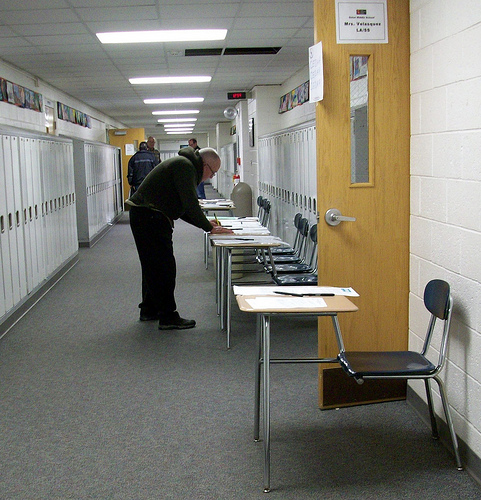
I pulled out a shoe box filled with papers from around the turn of the century as an evening project. I find I need something to do after dinner that engages me in staying awake, yet does not engage too much. Sorting through old, unorganized papers is a low-stress thing to do. After the project, I took steps to stay awake, and managed to add 20 minutes to the end of my day. Hopefully that will build until I stay up until 9 p.m. like normal people do.

I said the papers were unorganized, but that’s not true. Some circumstance of time and place gathered them together until I couldn’t stand to look at the pile. At that point I got a shoe box and put them away. In other words, I avoided a better disposition. The shoe box became an unlabeled time capsule to be opened when a whim from the great beyond drew me again to it. Sunday night was that time.

What was in it?

There were a number of cards I received on “bosses’ day.” I didn’t recognize most of the signatures on them. There were work-related holiday cards. One included a photograph of the customer service staff at the trucking firm. It was apparently a time when women used curling irons to style their long hair. The person with whom I had the closest work relationship looked nothing like I remember them. Most men in the photo could not muster a proper smile.

There was a white envelope with 8 x 10-inch photographs. I thought I would frame and display them. Some were work related: an aerial photograph of the terminal I managed in Richmond, Indiana; a staff photo at the Schererville, Indiana terminal. Some were political: me, my congressman and a county supervisor at a parade; an autographed photo of my former state representative at a different parade. There is the portrait I had done of the county board of health when I was chair. There were two photographs from my walks on the state park trail. At this point in history, none of them will be framed.

Being on the county board of health was a big deal. During that time our director left to join a child in Colorado and we held a public search for his replacement. There were clippings in the shoe box. Some of the smartest people I’ve yet known were on that search committee. We got things done and became good friends.

Trust me, I’m not going to review every bit of shoe box content in this post. Suffice it to say that we live our lives in one direction and there is no going back. I found the brochure from the Georgia O’Keeffe retrospective at the Chicago Art Institute. I remember it like it was yesterday. It wasn’t yesterday and that is my point.

The idea is to place all my possessions on a platform where I can see their entirety. It means touching every document, every artifact, at least once. There are questions to answer:

Should I:

  • Put all the cards in one place or sort chronologically or by sender?
  • What about obituaries?
  • What about young people who invited me to their wedding and then divorced? Keep the souvenirs or discard?
  • Should the brochures from events and exhibitions go together or maybe in a book by the artists if I have one?
  • There are a lot of ticket stubs and programs from theater. What about all that?

The questions could be endless, yet paramount is to avoid just putting everything back in the same box and sticking it somewhere, likely inside another box.

It seems time to address all of this and stop avoiding responsibility. Yet shoe boxes are so handy… and not that big… what could it hurt? That is, unless one has dozens of them.

Categories
Living in Society

Down Side of Lawyering Up

Photo by August de Richelieu on Pexels.com

In his new book, Breakneck: China’s Quest to Engineer the Future, author Dan Wang contrasts the engineering society of building stuff in China with the lawyering society of delaying and litigating things in the United States. The comparison seems apt and I recommend the book.

It seems obvious the United States is bogged down with lawyerly concerns, beginning with the current president. Donald Trump has weaponized the Justice Department to serve his every whim. Likewise, he has a large stable of attorneys representing him on countless legal matters. More than any person I know, the president is the living incarnation of “lawyering up.” How is that working for most Americans?

The problem I see is the president’s approach results in China getting way out ahead of the United States in technology development important to our global future. China’s embrace of renewable energy alone will make them a formidable power going forward. They who control energy can control a lion’s share of the economy. The president should get out of the way and enable the country to embrace renewable energy now.

The downside of lawyering up is we can’t develop technological innovation to create a society in which we all want to live.

Categories
Living in Society Writing

Autumn Turning Point

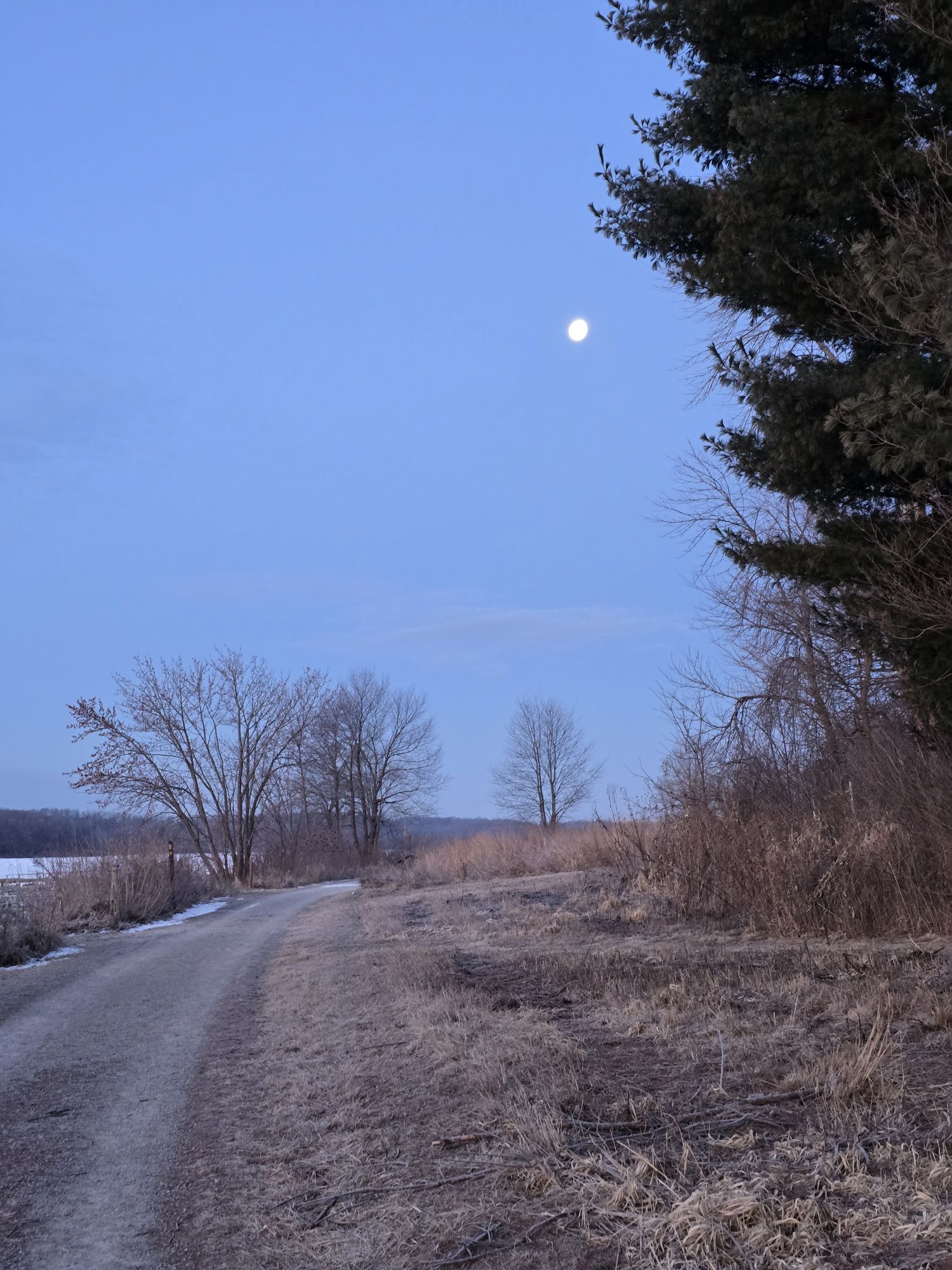
Moonlight on the state park trail.

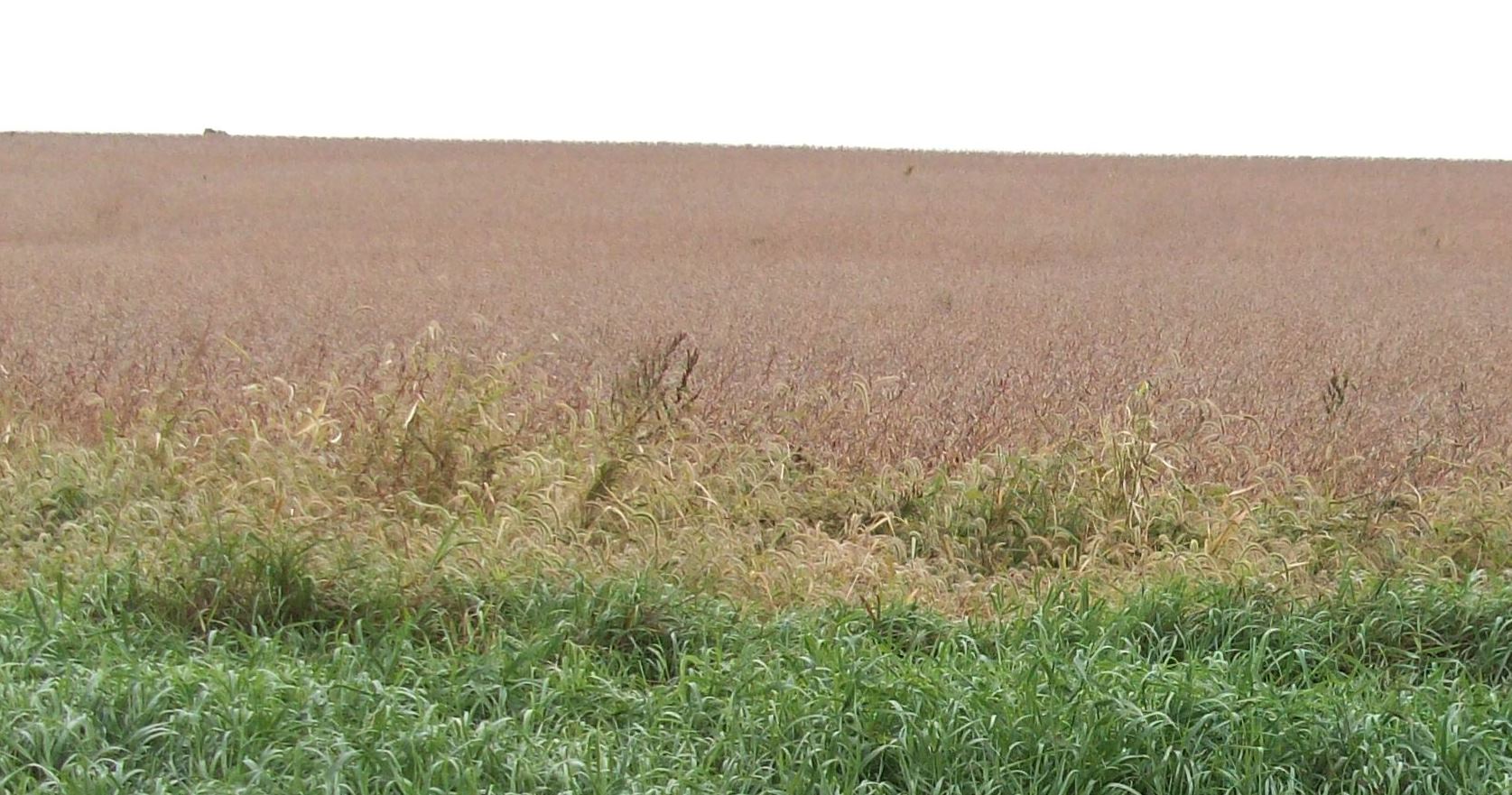
The crops were mostly in along the interstate highway during a Saturday trip to the state capitol. It seems a shame to grow corn and soybeans on so many acres, yet that’s what Iowa farmers do. A few were tiling their fields, another unneeded intervention designed to marginally increase land outputs. Next year, they will do it all again.

At home, the major land preparations are finished on my 0.62 acre. I mulched the leaves from deciduous trees and let the mealy textured product fall where it might to put minerals back in the soil. I suppose it could be bagged and put into compost, yet decided against it. Whatever else I get done in tearing down the garden this year is not urgent.

When I returned from Des Moines, the two main seed catalogues had arrived by U.S. Postal Service. Between now and January I will plan the 2026 garden and place big orders for seeds. The basics are known — tomatoes, hot peppers, cruciferous vegetables, squash, celery, fennel, and cucumbers — of course, garlic has been planted. It’s the variations in genetics and extras that are most interesting this season. I’m of a mood to try new things.

Our family does not celebrate Thanksgiving. The way our child put it, there is too much bad information around what it represents. They have a friends gathering around that time, and the two of us are deciding how we will spend the day which was drilled into us as custom since youngest memory. If we are home, there will be a special meal of wild rice, a butternut squash, Russet potatoes, baked beans, and a freezer full of vegetables. Plans are not settled and if we are not home, everything will remain good until we are.

There is a caesura in home life activities as work shifts indoors for winter.

In addition to taking care of health and surviving, there are three main activities planned for colder months. The daily work block for writing is my first priority. I continue to want to finish the second book before spring. Next is what I will call the “Big Sort.” That means going through all the boxed belongings to gain visibility of what is available for the autobiography as well as for living our life in Big Grove. Some downsizing to clear clutter seems appropriate. Maybe next spring there will be a yard sale. Finally, on warmer days which seem more frequent during this time of global warming, I want to go through the garage and make a better organized work space. I have a start at it, but come spring I want a place ready to make stuff. If I can complete these projects, that would be enough for one winter.

2025 has been a positive year despite the politics. As we turn toward winter, a lot remains to make this a better life. I am working toward that end.