Categories
Home Life

Summer’s End

Germination House in Late Summer

LAKE MACBRIDE— There is a sense that the season has turned. Clutching the harvest, preserving it as best we can for winter, its abundance slips through our hands to compost, and with time, back to the earth.

Bones and joints are weary from farm work, that work displacing time normally spent in the garden, yard and kitchen. Fallen apples line the ground and the branches of the late trees touch the grass, laden with the developing fruit. In nature’s abundance we cut a sliver and sustain ourselves on its freshness.

It’s labor day in the U.S., but that matters little in nature’s calendar. The work of a local food system goes on, and paid work calls me again today.

Soon I’ll finish preparing the onions drying in the germination house for storage. After that, I will be ready for autumn and the acceleration of changing seasons into winter.

Categories
Social Commentary

Blog Action Day 2013

On Our Own: Sustainability in a Turbulent World will be joining the global Blog Action Day on human rights on Oct. 16. If you would like to join in, register your blog at http://blogactionday.org

Categories
Home Life

Morning Break

TwitterLAKE MACBRIDE— First shift produced two quarts of tomato juice, four pints of tomato sauce and an experimental jar to see how my pickles take to water bath processing. There are still a lot of tomatoes to process.

I delivered frozen bell peppers to a farm where one of my work for food ventures is located, and stopped by the orchard to drop off a lead for some cheese curds. I bought a jar of sweet, dark cherry preserves on my employee discount.

Summer is waning, and I just took more harvest work to earn some money for the tax collector. Staying busy with the changing seasons is easy. There may be fewer posts for a while as the unofficial end of summer comes this weekend.

Thanks everyone for reading. It won’t be long until my next post. Meanwhile, I’ll be out in farm fields trying to earn a living.

Categories
Living in Society

Tobacco and the Trans Pacific Trade Partnership

Convenience Store
Convenience Store

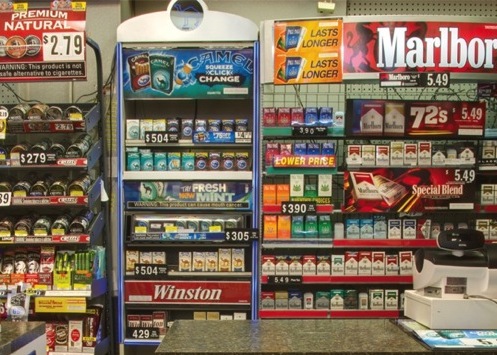
At hundreds of convenience stores and retail outlets in Iowa, the drug trade has been and continues to be legal and in full force. Lowly paid wage workers ply a trade in tobacco, a deadly product that continues to be widely used. Where the author lives, workers queue up at the counter before their shift begins, selecting their preferred brand of cigarettes, snuff, snus, cigars or chewing tobacco. The clerk asks, “will one pack be enough?” Tobacco is the only legal consumer product that kills when used as intended. Tobacco use is the leading preventable cause of death worldwide, accounting for 6 million preventable deaths annually, and is a major contributor to the global pandemic of non-communicable diseases.

This may seem like old news, but the tobacco industry is still at work, caught up in the secretive trade talks going on this week in Brunei. While many of us are finishing up summer work to take vacation, and students are returning to campus, U.S. corporations are attempting to gain unfettered access to markets in 12 countries as part of the Trans Pacific Trade Partnership (TPTP). Tobacco trade is just one of the issues. (Read the Sierra Club memo on environmental issues here).

The tobacco trade issue reduces to a key point, according to Dr. John Rachow of Iowa Physicians for Social Responsibility, “this is a critically threatening attempt to restore unlimited international trafficking of tobacco, the greatest completely preventable cause of human death on the planet.”

U.S. Trade Representative Michael Froman released a statement in which he wrote, “this proposal will, for the first time in a trade agreement, address specifically the public health issues surrounding tobacco– preserving the ability of the United States and other TPP countries to regulate tobacco and to apply appropriate public health measures, and bringing health and trade officials together if tobacco-related issues arise– while remaining consistent with our trade policy objectives of negotiating a comprehensive agreement that does not create a precedent for excluding agricultural products.” Including reference to tobacco products in a trade agreement is the opposite of what public health officials want.

The Center for Policy Analysis on Trade and Health wrote, “the medical, health care, and public health community has consistently supported removing tobacco, tobacco products, and tobacco control measures from trade agreements as the most effective solution (to enabling participating countries to exercise their sovereignty to reduce tobacco use and prevent the harm it causes to public health).”

The tobacco industry likes adding the language because by giving tobacco products special treatment, it creates loopholes that could easily be exploited to circumvent restrictions on tobacco products in participating countries. By offering language on tobacco in the TPTP, the Obama administration is capitulating on public health to get a deal done that favors the tobacco industry.

For more information on tobacco language in trade agreements, click here. To sign a petition to exclude tobacco from the Trans Pacific Trade Partnership agreement, click here.

~ Written for Blog for Iowa

Categories
Living in Society

Iowa’s Flight to No Preference

Solon VotingChad Brown of Ankeny, “the co-chairman of the Polk County Republican Party, has resigned and changed his party registration to independent, saying the GOP has become too conservative and is condoning “hateful” rhetoric,” reported Kathie Obradovich, political columnist for the Des Moines Register, on Tuesday. The flight of voters to no preference (a.k.a. independent) is not new in Iowa, although Brown may be the first GOP party chair to switch in a while, and it’s news.

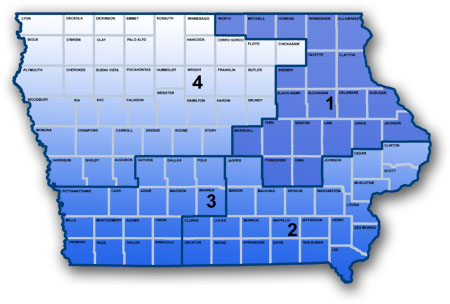
The flight to no preference is significant. Here are the Secretary of State’s August active voter registration numbers by congressional district.

First District: Democratic: 162,447; Republican: 136,290; No Preference: 192,715.

Second District: Democratic: 170,096; Republican: 138,517; No Preference: 182,097.

Third District: Democratic: 157,375; Republican: 164,176; No Preference: 157,076.

Fourth District: Democratic: 127,457; Republican: 178,158; No Preference: 174,307.

Iowa Total: Democratic: 617,375; Republican: 617,141; No Preference: 706,195.

During the 2012 general election campaign, the author spoke to thousands of voters in their communities and at their doorsteps, and the moniker of “no preference” is inaccurate. Voters do have a preference, although it is not based in a political party or the kind of politicized talking points that often characterize a campaign. Voters, in the majority of cases, want to do what they think is right, emphasis on thinking. Most who planned to vote gave careful consideration to the candidates in specific races. In the majority of cases, party affiliation was less important than whether the candidate would perform well in elected office.

Our campaign door knocked enough to meet voters and have multiple conversations with them over the course of the eight month campaign. It was an opportunity to see how the decision-making process went and how choices were made. Our campaign was in the second congressional district, and support for Rep. Dave Loebsack solidified first, as he is well liked in the district. Next was a reluctant choice for President Obama, and it was clear many voters did not like their choices for president. In the state house race in which I was working, people said they hadn’t decided, but I think they were just being polite at their door as the Republican candidate won 56.3 percent to 43.5 percent.

Perhaps most telling was conversations with poll workers during the June 5, 2012 primary election. I visited every polling place in our district on election day and to a person the poll workers said voter turnout was low and they expected it to be low. I asked why. The answers varied, but the consistent theme was that people did not want to be seen by friends and neighbors at the polls as a registered Democrat or Republican. This was particularly the case in mostly rural Cedar County, which is part of our house district and arguably a bellwether county.

The role of politics in daily life had been minimized by many voters I met. Politics mattered, but in a busy life, voters didn’t want to spend a lot of energy on it until the election was imminent, or a particular issue percolated to the surface of their lives.

There are exceptions to everything, but the upshot is that candidates will do better if they figure a way to gain favorable consideration among all registered voters, including members of the opposing party and so-called “no preference” voters. This is increasingly important the further down the ticket a race falls.

There are ideologues throughout the political spectrum, but in the wake of the 2006 and 2008 general elections, their time came in 2010, and is now hopefully receding. The resignation of the Polk County GOP co-chair is just one more example.

~ Written for Blog for Iowa

Categories
Home Life

Midweek Work

Early Girl Tomatoes
Early Girl Tomatoes

LAKE MACBRIDE— As my portfolio of local food system work builds, there is not enough time to do everything that is needed for optimum results. Apples fall faster than they can be processed, and tomatoes sit on the vine, ripe and ready. The work commitments fill in time at five locations, and that leaves less flexibility in a schedule that used to be pretty open.

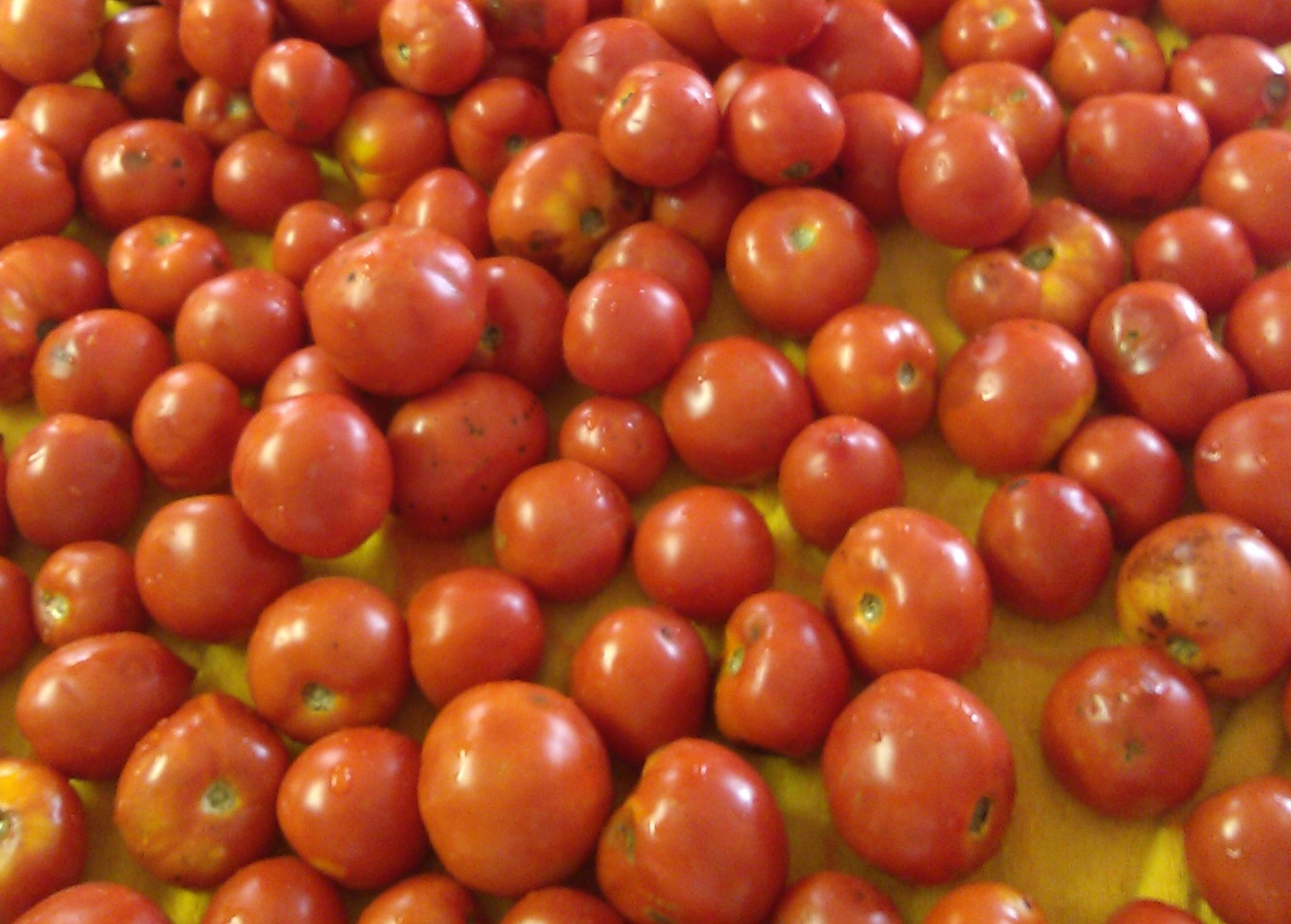
I just finished canning 36 quarts and 14 pints of tomatoes as juice, sauce and whole. The sauce is very expensive in that it takes a lot of tomato flesh to make a pint of the thick sauce. Hopefully it will enable me to make pasta and pizza sauce without reducing or adding tomato paste as a thickener. From last year’s first experiment it was a winner and worth it.

I was counting on a lot of slicers from the CSA, but there was blight and the production hasn’t been as good as in previous years. Luckily, I have plenty in our garden, at least for the moment.

When I come up for air, there will be other stuff to do. For now, swimming in all this work is invigorating and fulfilling.

Categories
Living in Society

Iowa’s First District Democratic Primary Race

Iowa Congressional Districts

(AUTHOR’S NOTE: Since I live in the second district, I won’t be writing a lot about this race, but felt it important to acknowledge what’s going on in the first district. My views do not represent those of our beloved publisher or our other writers).

Five Democrats are at various stages of jumping into the race to represent the first congressional district when Rep. Bruce Braley exits the house, hopefully for the U.S. senate, after the 2014 general election. Of the five, I met only one, Swati Dandekar. I encountered Dandekar in my former life in the transportation business where we were introduced by one of the state’s key Republicans. We also had a chat in Des Moines while I was advocating against House File 561, the nuclear power finance bill. I said my piece about her here, and have nothing further to add. Let’s take a look at the other four candidates.

The remaining four U.S. house candidates, in alphabetical order, are: Anesa Kajtazovic, Pat Murphy, Dave O’Brien and Monica Vernon.

Anesa Kajtazovic is the face of the future of the Democratic party. She has served in the Iowa house since January 2011, and the only question about her for Democrats is whether or not now is her time. Yesterday she announced on Facebook and twitter that she is making a special announcement at press conferences in Marshalltown, Waterloo, Cedar Rapids and Dubuque on Aug. 20. Candidates don’t make four-stop tours to announce they aren’t running, so she is expected to make it official. She seems to believe now is the time.

Pat Murphy is the face of the past of the Democratic party. He already has done fundraising the way experienced pols do, and my former legislators Ro Foege and Nate Willems recently held a fundraiser for him. The Democratic activists with whom Blog for Iowa has spoken, who have had contact with Murphy, are not enthused about his candidacy. There is something to be said for experience, but in a field that has three women and several fresh faces, a Pat Murphy primary win would represent more of the same for Iowa Democrats and that could be problematic in the general election.

Dave O’Brien’s brief biography is what I know about him. He is a Cedar Rapids attorney and according to his web site, “his law practice consists primarily of fighting for Iowans who have been injured by the negligent and wrongful acts of others.” Where I come from, that’s called being an ambulance chaser, and has a negative connotation. Perhaps that’s an unfair comment, and as the campaign progresses, Democratic activists who don’t know him will get a chance to do so. At the starting line, he presents nothing unique or exciting in his resume, but that could be fixed. Bruce Braley is a progressive Democrat. O’Brien says he is one too, but that remains to be discovered.

Finally, there is Monica Vernon, a two-term city councilwoman from Cedar Rapids. Vernon posted on her Facebook page, “the last thirty years of my life were devoted to raising a family, growing a business and working hard to make my community a better place. As a Cedar Rapids city councilwoman, I have tackled extremely difficult issues as we recovered and rebuilt our community after the flood. Since the devastating storm of 2008, I have continued to work with other local, regional and national leaders on forward thinking, short and long term strategies to spur economic development, improve neighborhood safety and more.” It’s a well crafted and earnest statement. Perhaps the pizzazz will be forthcoming. Best of luck Monica.

Besides bloggers and political activists, few people I know are engaged in politics at the end of one of the best summers we have had in recent years. As an outsider looking into the first district, the opinions of this author don’t matter much. I look forward to seeing how the race plays out and what first district Democrats decide in the June 3, 2014 primary.

~ Written for Blog for Iowa.

Categories
Work Life

Tea Time in Cedar Rapids

Hay Bales
Hay Bales

CEDAR RAPIDS— A friend is saying her long goodbyes to Iowa before moving to Florida, so I broke from the tomato canning extravaganza to have coffee with her at a shop in Cedar Rapids. We exchanged gifts. I brought summer squash, cabbage, tomatoes and other produce. She brought an arrangement of Hydrangea for my spouse. We had just an hour before I had to leave for the farm, so we were concise, something that can often be difficult among people of a certain age with much in common.

We covered a lot of ground, including her recent attendance at the Democracy Convention in Madison, Wis. However, the substance of our chat was the systemic dismantling of the union movement in our post Reagan world, coupled with the decreasing relevance of today’s union leaders. That’s a mouthful, but the upshot is that corporations have been working hard to reduce labor costs and shed union contracts. The result for our generation has been a large cohort of middle aged managers and specialists whose positions have been systematically eliminated through outsourcing, reorganization, or the work of human resources consultants like Towers Perrin and Hay Group. What’s a person to do?

For a long time, I chased the available labor from downsizing and off-shoring, hoping to find over the road truck drivers. The idea was that as long term factory workers, they would possess behavior that was stable and well suited to the boredom and long hours a truck driver’s job entailed. What I found was people who would do almost anything to preserve their way of life, get their children through high school and continue living in the community they worked so hard to create. During those years from 1987 until 1993, I had some of the toughest conversations of my life, with people who were desperate to go on living and had the rug pulled out from under them so workers in Mexico, and later China and South Korea, could manufacture the appliances, auto parts and other goods they made for so many years.

A return of unions in private companies seems unlikely, mostly because workers who will accept less than a living wage dominate the unskilled labor pool. There is no shortage of people who will work for an hourly wage around $9 per hour. In some communities, like Minneapolis-Saint Paul, Minn., service industry companies have included minimum wage labor availability assessments in their expansion plans, and it has not been a substantial constraint. There are plenty of people willing to work in the unskilled market, which is what most non-professional jobs are.

When a person takes a job, there are inherent compromises. For a while, I supervised fuel purchasing where our company spent more than $25 million per year. Knowing what we know about the impact of CO2 emissions in the atmosphere, burning fossil fuels in heavy trucks contributes to global warming. I also knew that if I didn’t want the job, someone else would. This created an institutional bent toward doing things we know are wrong despite our self-consciousness about the behavior.

Politicians say they want to help create jobs, but during our conversation, we were not so sure. What people want is to live with economic security and the promise of American life. Few, if any corporations have that in mind when they lay out a business plan. What’s most important is maximizing return on investment, and that includes laying off highly paid, long-term employees, then hiring two low-wage workers for the same money. I’m not complaining. I’m just sayin’ that’s the way it is. And how progress will continue in our turbulent world.

Categories
Home Life Kitchen Garden

Will Work for Food

Preserving Eggplant
Preserving Eggplant

LAKE MACBRIDE— Two batches of pickles are fermenting in crocks downstairs, the second started three days after the first. The rule is to place cucumbers in the brine and let things get started for three days before checking. There was scum to skim on the first this morning— evidence the pickling process is proceeding as expected. The reason for a second batch is a local grower had excess cucumber seconds which were offered and taken to serve my dill pickle addiction.

Eggplant is abundant. I peeled and cut three into half inch rounds. They were baked for 15 minutes at 425 degrees, cooled and then frozen and bagged for future use, most likely in eggplant Parmesan. By then, the freezer was reaching capacity, and eggplant is not an everyday preference.

Last processed yesterday was two tubs of broccoli. This is part of a work for food barter, and unexpectedly came about while discussing seconds and surplus with a grower. All told, it took me about four hours to process the two tubs with a total yield of 20+ pounds frozen. The first tub, which yielded 8-1/2 pounds, was returned to the grower as compensation for the produce. I kept the second, added two heads I already had in the refrigerator, and that was the balance.

It’s a shame we had to compost the stems, as they are some good eating. If better organized, I would have made a big batch of soup stock using carrot, onion, celery, bay leaves and the broccoli stems and canned it in quarts. Our household uses a lot of stock.

The squash beetles mentioned yesterday avoided the butternut squash seedlings and congregated on the withering acorn squash plants. I need to study natural pesticides before I pull those vines, as the bugs will likely next migrate to the new cucumber plants, and infringe on my plans for more dill pickles. It is remarkable that I had tremendous abundance of zucchini and yellow squash before the squash beetles showed up.

The grower with whom I’m working on the broccoli and tomatoes stopped by to drop off some canning jars. We toured my local food operation which is situated on 0.62 acres. It is revealing to see what other growers notice about a home garden: the apple trees, my compost bin made from four pallets, the healthy Brussels sprout plants, my deer-deterrent fencing, and my pile of cut brush waiting for a fall burn after the garden is finished. She asked if I turned the compost. I won’t until spring when it is spread on the garden plots.

A local food system centered around a single household is both simple and complex. Cooking and preserving food are practices that have been around since hunting and gathering gave way to agriculture and domestication. Fresh food is sourced from a garden and a mix of growers. Specialty items are purchased where they are available at local retail outlets. There is a constant balancing act that regulates types and quantities. The refrigerator contents reflects how things are going, hopefully with the majority of foodstuffs having no commercial label.

While endeavoring to earn money for the tax man, insurance companies and lenders, we have to eat. The question becomes, what takes precedence? We can live without bankers, but sustaining a life requires a sophisticated, ever evolving local food system. The pay is not much, but the rewards are renewable.

Categories
Kitchen Garden Work Life

Suddenly it’s Busy

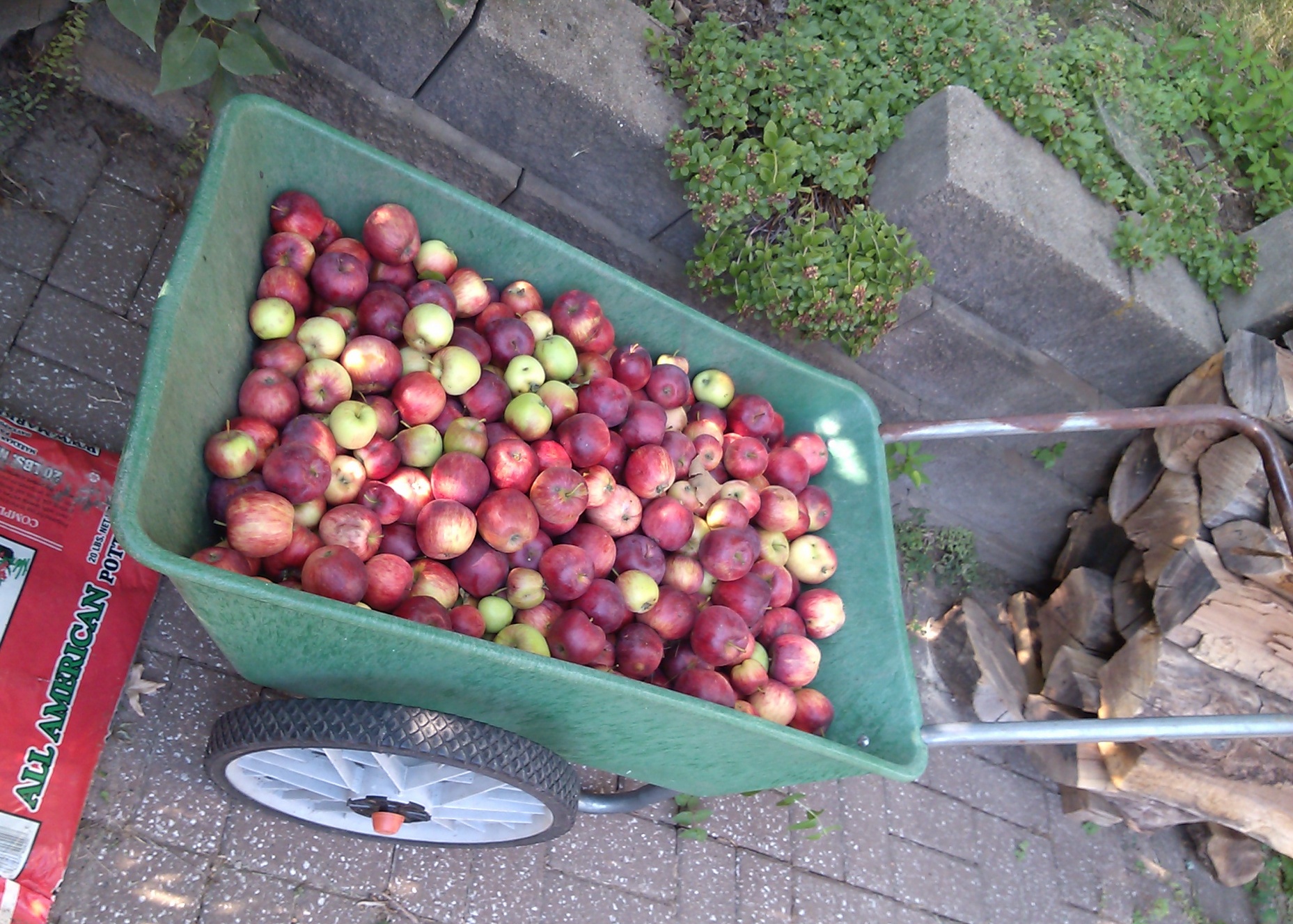
Apples for Livestock

LAKE MACBRIDE— Part of yesterday was clearing the dead and dying squash plants from the garden and planting turnips and transplanting butternut squash seedlings. It is dicey as to whether the squash will produce because of the timing of first frost compared to the 110 day growing cycle. Too, the abundance of squash beetles have nowhere to go without the zucchini and yellow squash plants, so even though they had not found the seedlings this morning, one suspects they will visit and if they like it, attempt to stay.

In that plot, the Brussels sprouts are thriving, as are the three kinds of peppers, Swiss chard and collards. This is the most bountiful year of gardening we’ve had.

In the cool downstairs await six bins of tomatoes and two of broccoli for processing. This is part of a work for food arrangement with a local organic grower. Combine it with the approaching and massive apple harvest and there will be plenty of work to do.

Yesterday I planted three trays of seedlings: lettuce, kale, broccoli, kohlrabi and squash. There is plenty of time left during the growing season for these crops to mature, and I am particularly hopeful about new cucumbers for pickling.

As summer races toward Labor Day and October frost, there is much to be done in the garden and in life. We have to eat to live, and because of this summer of local food, there will be no shortage there. It’s enough to sustain a life on the Iowa prairie, at least for a while.