
Mustard greens 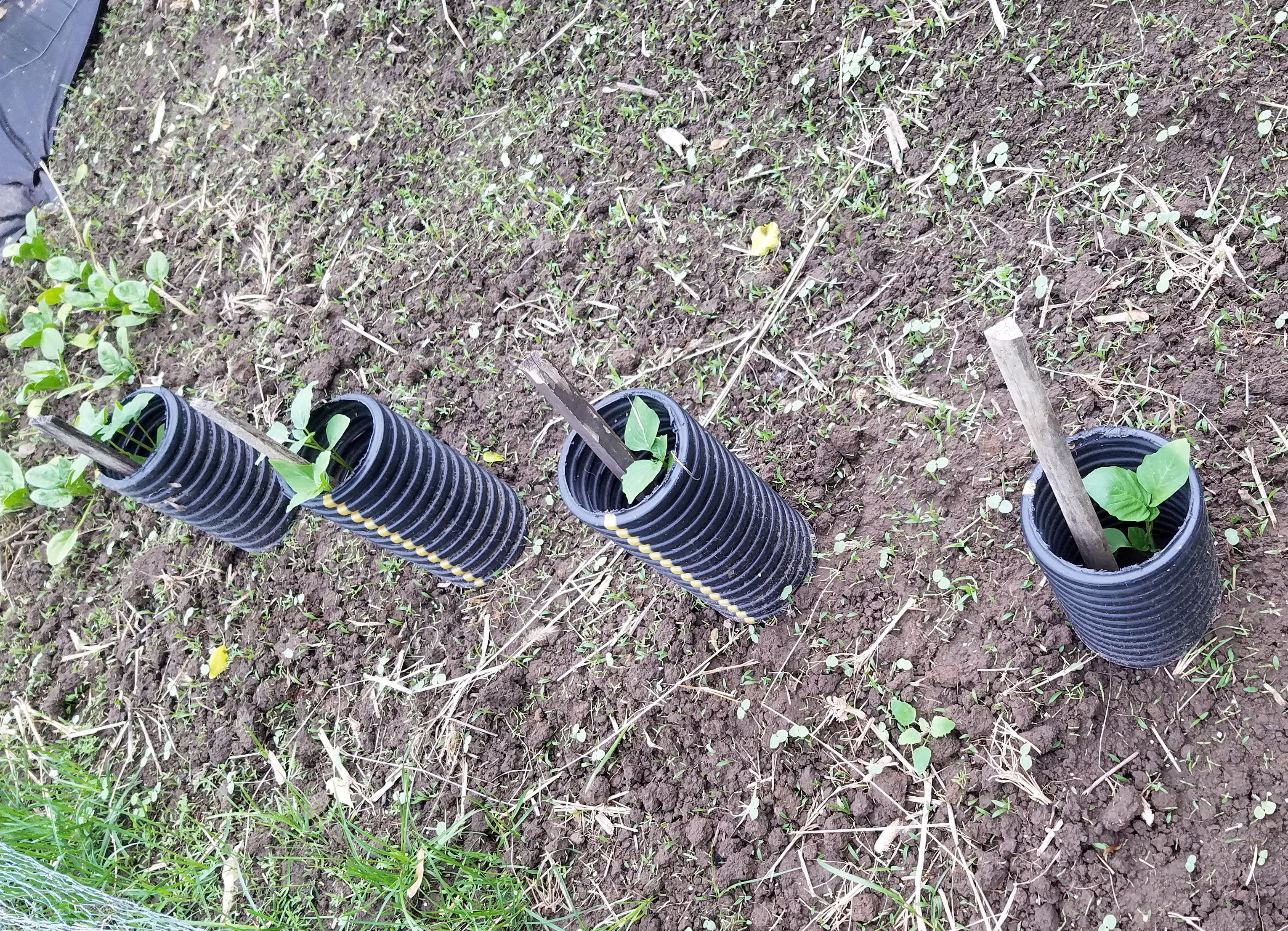
Tomatillos 
Winterbor kale 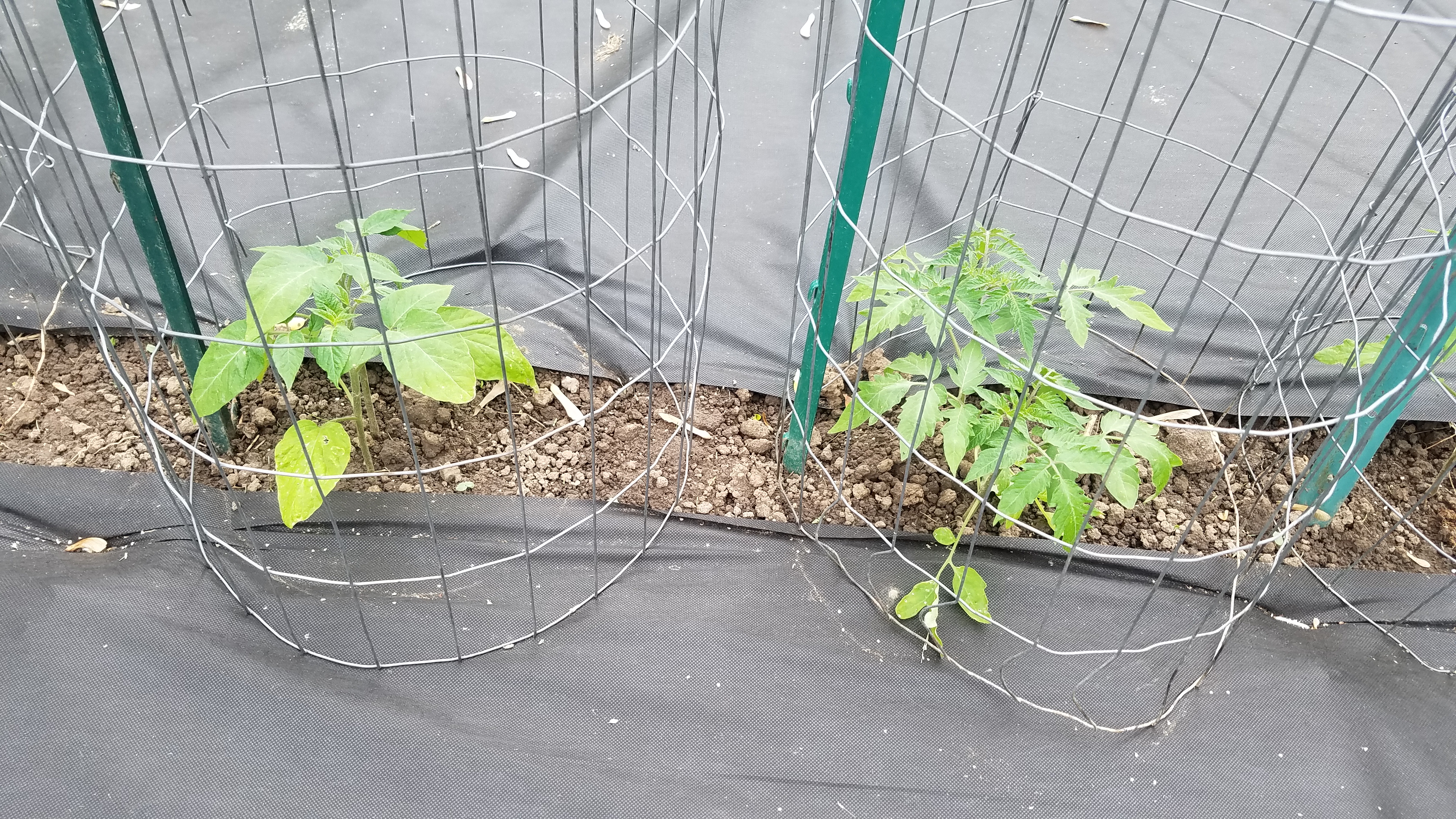
Tomatoes 
Radicchio 
Chard 
Daikon Radishes 
Green beans 
Okra 
Redbor kale
Gardening, Farming, Cooking, Recipes, Local Food, Everything that goes into meal production.

We use a lot of vegetable broth in our household. Making and canning it ourselves is inexpensive and we control what goes into it.
It began years ago, when I planted a big patch of turnips. There were literal bushels of turnip greens too good to compost. I made a simple broth which proved to be tasty. Making and canning vegetable broth has become a spring tradition. We used everything I made last season, so I’m at it again.
Simple is better when making broth for the pantry. A mirepoix, bay leaves, and water form the base of it. I use frozen celery and onions when I have them.
Next I search for leafy green vegetables, usually in the ice box. Today’s batch has turnip greens picked while weeding, collards from trimming seedlings in the greenhouse, Swiss chard that was getting old, and a bag of greens from last week’s share from the farm (Koji and bok choy). I washed, trimmed, and roughly chopped them and soon there were enough to fill the Dutch oven.
That’s it. Put everything in the pot, fill with water, bring to a boil, and then turn it down to simmer all day. After a few hours it will be broth.
I don’t add salt. Broth can be used as an ingredient in many dishes and I do not want an established salinity. It creates flexibility and works out well.
After straining the broth, I fill quart Mason jars in the ice box to be used, or to wait until I have seven jars for water bath canning.
So easy and delicious.
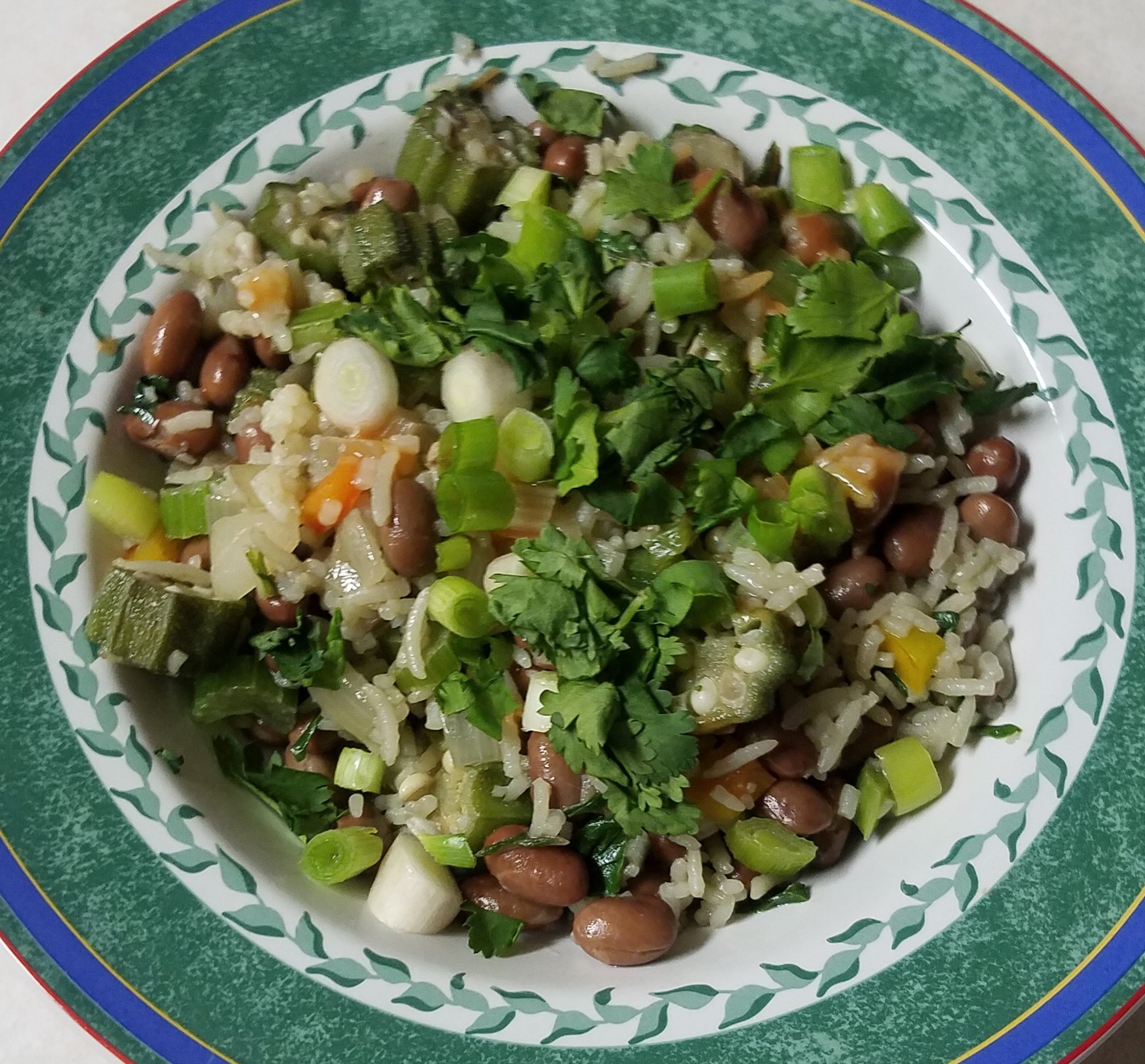
When there is leftover rice I seek a quick meal to use it up. Add some canned red beans and a sofrito and off we go: Quick red beans and rice.
The sofrito begins with the trinity: sautee bell pepper, onion and celery in extra virgin olive oil. Salt to taste and put a pinch of red pepper flakes in the mix. Purists say sautee the red pepper flakes in the oil before adding vegetables to bring out the flavor.
Next add diced spring garlic and the diced stems of whatever leafy green vegetable you have from the garden. Add a medium-sized tomato (canned or fresh) and a cup of frozen okra. If there’s not enough liquid, add a tablespoon or two of water.
Once the vegetables are soft, slice and add the leafy greens from which you took the stems. Mix and sautee until everything is cooked.
Add a can of drained and washed red beans and a cup of leftover rice. Stir constantly until everything is thoroughly heated. Garnish with coarsely chopped cilantro, sliced spring onions, and a dash of Louisiana-style hot sauce.
Makes two servings for diners that enjoy spicy food. If the other diner doesn’t, save the second portion for yourself to reheat later.

A retro post from April 21, 2012.
We can’t force language to mean what we want. There is a social aspect of words and meaning that is undeniable and inflexible in the day to day parlance of natives. While over time, meanings change, and old words gain new meanings, when we talk about our salad days, it has a certain meaning here in Big Grove.
Shakespeare said it in 1606 in “Anthony and Cleopatra,” “My salad days, / When I was green in judgment, cold in blood…” The idiom came to mean a period of youthful inexperience or indiscretion. Around our house, it means the lettuce planted in early March is mature and over the next six weeks, we will have a lot of days of eating salad, our salad days.
If I were to commercialize our garden, lettuce would be important. At $3 per bag at the farmers market, the price is right to sell a lot of it. Too, there is a local restaurant market for fresh greens. What is not figured into the equation is the labor involved in picking and cleaning the greens, but with proper planting and marketing, a person could take in $60 to $100 per sales day from greens.
For now, we enjoy our salad days, knowing they won’t last long in the span of life. Last night the greens were topped with thinly sliced carrot and golden raisins. I found a bottle of store bought dressing in the refrigerator and used that. There are chives, sage, garlic and oregano in the garden, ready to be picked, chopped and added to the greens. There is almost always cheese to be crumbled on top. There are cans of kidney and garbanzo beans in the pantry. A host of variations on a theme as the salad days commence. My meaning, not Shakespeare’s.

Weather is shifting enough to start planting warm weather crops. This passage from the farm’s weekly newsletter explains:
We were full steam ahead last week trying to get all of our cooler season crops like broccoli, cabbage, kohlrabi, fennel, and herbs planted before the long-awaited rain we got over the weekend. We always wait until at least May 15th to plant warm season crops that can’t handle colder temperatures or frosts, so it’s important to us to stay on top of planting all the cool season crops and field preparation ahead of that date. That way when May 15th rolls around we can really focus on planting the huge number of plants that suddenly need to go in the ground to give them the longest season possible as well as getting them established before it gets too hot.
Carmen Black, Local Harvest CSA, May 10, 2021.
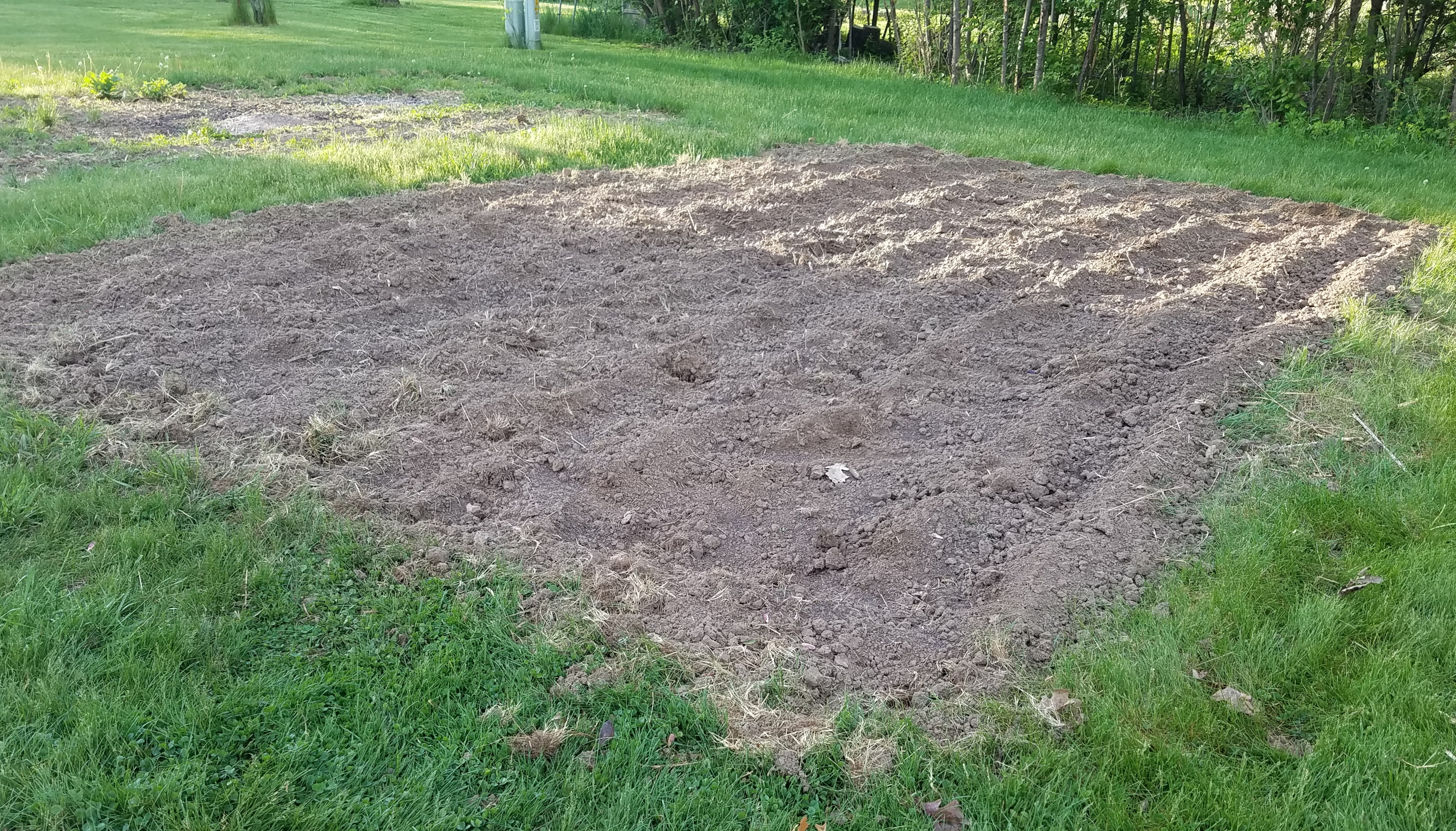
My small greenhouse is packed with plants and the weather forecast looks like Wednesday is the last reasonable chance of frost. I ordered some weed suppression fabric from my Maine-based supplier, spaded plot #6 for tomatoes, and made sure everything in the greenhouse was watered and ready to go into the ground. There is a lot to do and the next three weeks will be pretty intense.
The challenge will be determining where to put everything. I have a general idea, and the plots with single crops (onions, garlic, tomatoes) are easy. Fitting all the squash, cucumbers and zucchini into spots where they can spread is a tough decision. I sat on my stump considering this more than a few time over the last month.
One of three Bur Oak trees I planted as acorns blew askew during the Aug. 10, 2020 derecho. It had to be taken out and I did. Rather than cut the stump to ground level I left it tall so I could sit on it when I need a rest. I use it more than anticipated, although more as a thinking place. It has been a nice addition to the garden.
The garden tasks ahead are clear. In between a debrief from the recent Climate Reality Project virtual training this morning, and the special convention in the county seat to nominate a candidate for supervisor tonight, I hope to accomplish a lot. I wish the rest of my life were that clear.
Now that the weather shifted it’s go time.
Ambient temperature reached 38 degrees overnight, indicating we are not out of the frost zone yet. In Marion, just north of us, it hit 33 degrees. Despite this reality, the following appeared in the Saturday newspaper:
Mother’s Day has a twofold purpose in this part of Iowa. It’s a time to honor moms and it is time to plant your annuals as the fear of a late frost is over. I think.
At least it looks like this May is going to be sunny and warm without any dips to freezing.
So if you haven’t already, it is time to scope out the garden centers, find what you want, and a few more you couldn’t resist, and enjoy planting.
Judy Terry, Iowa City Press Citizen, May 8, 2021.
Gardening as consumerism? Blech!
I buy plenty of supplies for the garden. However, I haven’t been in a garden center since I worked at the home, farm and auto supply store. My work was to receive merchandise and set up display areas, not to shop. Things I need from a garden center makes a very short list.
People have to get their seedlings somewhere, so I don’t begrudge folks who frequent garden centers. I encourage people to plant something, even if in a container on a patio. I also understand newspapers appeal to a certain type of resident. The paper dipped below 10,000 subscribers and had to begin once a week free distribution to meet advertising contracts. They may need articles like Ms. Terry’s to prop up sagging circulation. I’m okay with that, too. Doesn’t mean I have to like it.
My little greenhouse remains full despite planting yesterday. Into the garden went Brussels sprouts, cauliflower, cabbage, leeks, spinach, tomatillos and okra. I planted the okra and tomatillos in drainage tile so they will be protected or easily covered if it does freeze. Everything else should withstand the cold.
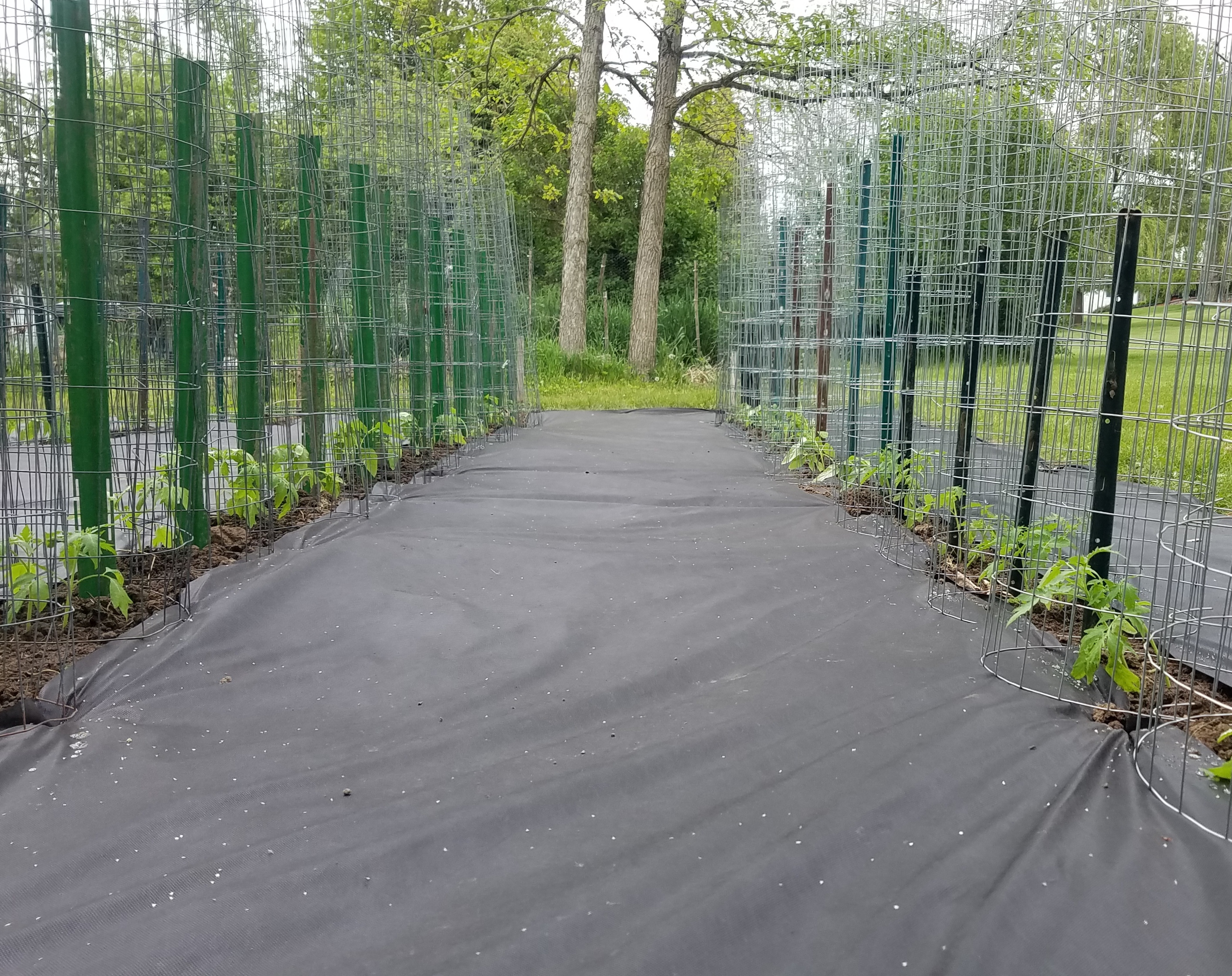
My garden fencing is a mess driven by trying to recycle previous years’ mesh. I’m committed to reorganizing it because I need two rolls of the welded wire fencing for the tomatoes and a third, which is heavy duty, to make more tomato cages. That is a big project by itself.
For now, though, we wait for danger of last frost to pass.

The rain wasn’t much on Monday. Barely enough to wet the ground. Afterward, I did not water the garden even if it could have used a thorough soaking. The next rain is forecast on Saturday.
The greenhouse is full of seedlings ready to go in the ground.
Now I wait. Unlike when consulting the Toledan Tables, we’re not sure when everything will align.

Ambient temperatures soared to the high eighties on Saturday with wind gusts over 25 mile per hour. It was an unseasonably hot and windy day. Pollinators continued to work the fruit trees and the backyard is covered with fallen apple blossom petals.
I worked outdoors, digging the next garden plot and washing garden tubs. The next plot will hold a large number of vegetable varieties, more than a dozen. As I spaded the earth and considered layout options, time passed quickly. How seedlings are arranged will impact production.
It was a day of anticipation, for soaking up sunlight, and being buffeted by the wind.

Friday outdoors work included mowing grass and running the trimmer in the ditch. I worked up a sweat.
Near the curb box for the cable connection were two morel mushrooms. I didn’t harvest them. Hopefully they will propagate and next year there will be more. It’s the first time I found morels on our property.
I planted Rouge vif D’Etampes pumpkins and Sarah’s Cantaloupe in soil blocks. It’s my first time growing both of them. Once they germinate, I’ll put them in larger pots, then into the ground. They are the last of the new seeds to be started indoors. From here it is succession crops of lettuce, broccoli, cabbage, and others.
The goal is to get initial planting done by Friday, May 28, which is the beginning of the Memorial Day weekend. After that, I can celebrate the holiday and turn to other projects.
April was a dry month with dry conditions persisting across parts of the state. “We’ve had a significant expansion of that D-O or abnormally dry category,” state climatologist Justin Glisan said. “As a reminder, that’s not drought but it is a sentinel for us to recognize that we are seeing drier-than-normal conditions, given precipitation deficits through late spring.”
May is to be a wetter month, he said.
Because ours is a home garden, the produce of which is used mainly in our kitchen, I don’t get carried away with watering. I make sure to apply some daily moisture, but feel it is not my job to make up for the lack of rainfall.
Even though I mowed, it didn’t produce a lot of clippings for mulch. Likely because I set the deck at four inches. This year, a larger part of the garden will have black landscaping fabric serving as mulch. It worked particularly well with peppers and tomatoes last year, and I saved the fabric to re-use.
Fruit is setting on apple and pear trees. Yesterday was peak bloom and fallen petals blanket the ground. Soon the bloom, with its sweet fragrances will be finished, followed by a long season to harvest. If good conditions persist, the harvest will be a great one. It is what a gardener works toward.

During this year’s fifth shift of soil blocking at the farm I got my groove back. That means I maintained a production rate of ten trays per hour. I’ve done better than that, although this year the supplier changed the composition of the soil mix and it’s taking some adjustment. It’s my ninth year at the farm under two different owners.
The farm crew is getting vaccinated against COVID-19 and we’re working through the unmasking process. When I work alone in the greenhouse I’m unmasked, when with others, masked. When the crew makes deliveries, the usual social distancing and masking protocols are followed. There is a fear that contact with so many people carries risk of transmission of the coronavirus. We don’t want the virus brought back to the farm. The good news is we are working through it.
At home, pollination is proceeding. Apple blossoms are open and petals have begun to fall after fruit set. The weather forecast is good for finishing fruit set before a frost. This is a key time in apple production.
The pear tree has fewer blossoms than in previous years yet there looks to be a harvest. Now that the sun is up, I’ll head out to the garden to take in the fragrances of the flowers before they disappear.

 Journey Home
You must be logged in to post a comment.