Categories
Kitchen Garden

Garlic Planting 2022

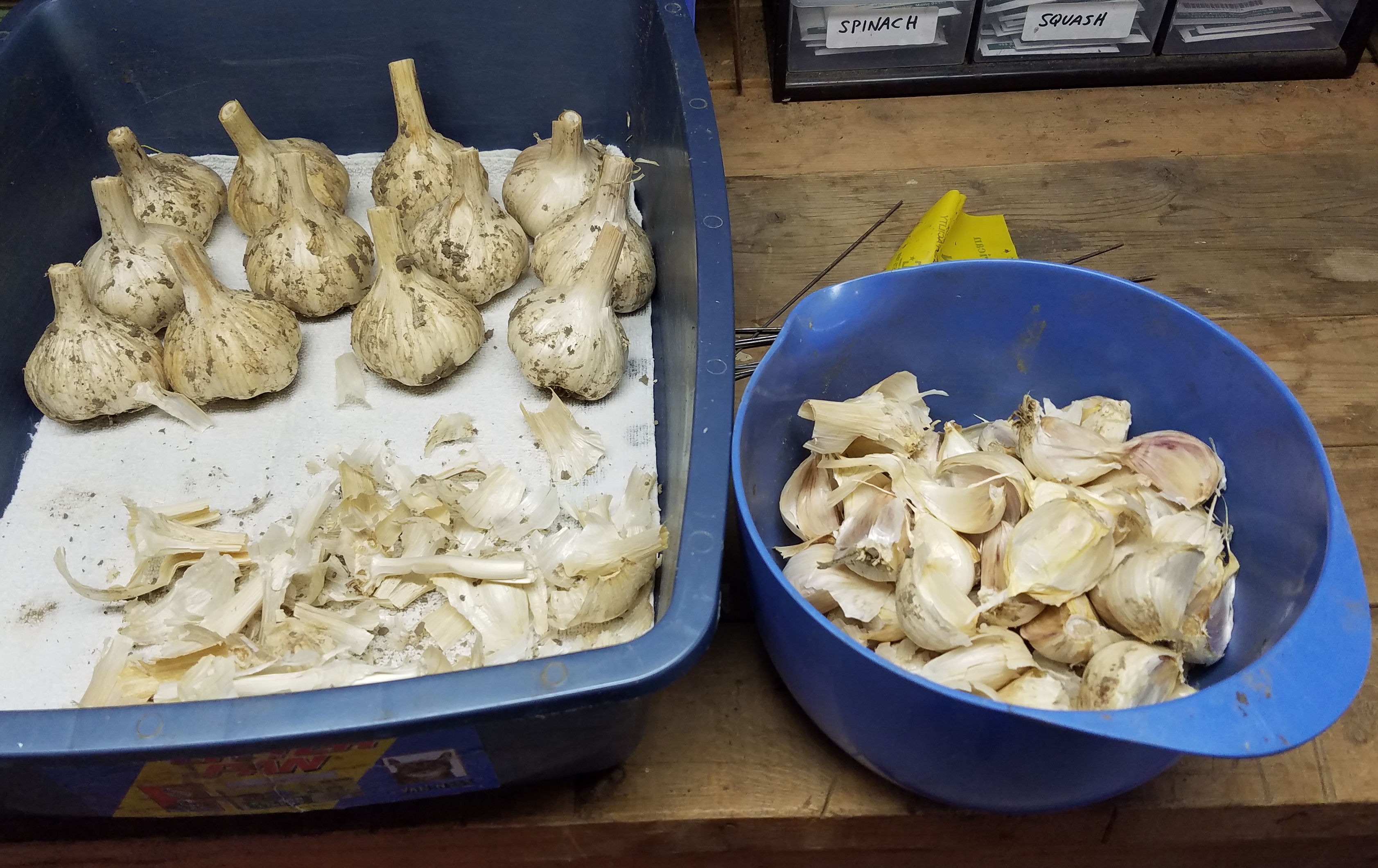
Breaking down the best heads of garlic for seed.

With ambient temperatures remaining warm there is plenty of time to get in a garlic crop. According to my long-time mentor, if a gardener misses autumn planting, it can be planted in the spring. Since I began planting my own garlic each October, I’ve had excellent crops. I watch the weather closely for a planting window beginning in mid-September.

I am taking my time this year, working three or four hours daily to strike the tomato patch, clear the ground cover, and dig up the soil. I have six shifts on six days thus far. Partly the extra time is because I’m aging. Mostly it’s because I enjoy gardening in the brilliant fall weather and don’t want it to end. It will be the last garden planting before winter.

I haven’t studied the history of garlic yet it is an amazing vegetable. The genetics of what I use came from a farm that developed it over more than 20 years. I watch for fungus and cull the best cloves for planting just as she did. 100 garlic plants will get me through the year and the seeds are ready to go into the ground.

Last night I made Guajillo chili sauce using the rest of the gleaned Guajillo chilies and smaller cloves of garlic culled from the seed selection process. I cut the chilies in three pieces, added a dozen cloves of garlic, a few tomatoes gleaned from the garden as I was clearing the tomato patch, salt, and enough tomato juice to cover the bottom of the pan. The mixture cooked down and I added home made apple cider vinegar to cover. Once the chilies were soft, I set them aside to cool on the counter while I made dinner. I blended them in my 40-year old Osterizer and used a funnel to remove the tough skin and seed. It made three pints, which, along with all the other chili sauce in the refrigerator, will last until next year.

Once garlic is planted and mulched, the rest of garden work is getting ready for winter. After that, it’s back to writing my autobiography.

Garden plot planned for garlic.
Categories
Kitchen Garden

Cook’s Journey

Soup Ingredients

After dinner I put a two-pound bag of Great Northern beans in a pot to soak. The next morning, I drained and rinsed them, and covered with water to soak some more. At noon there was one more rinse, then I covered the beans with canned vegetable broth and turned on the heat.

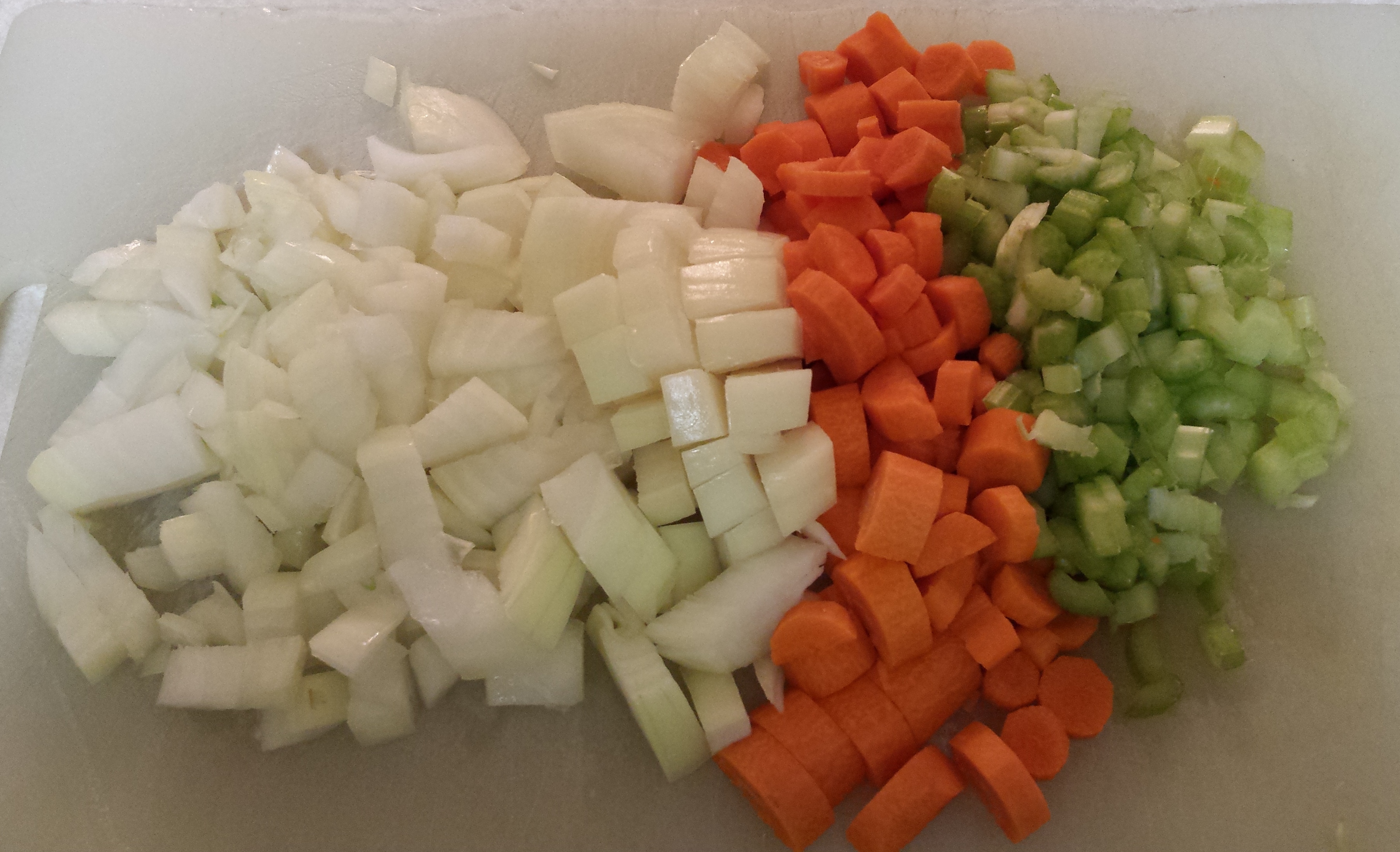
In a separate pan I placed one large, chopped onion, the rest of the fresh celery from the garden plus three stalks from the store, and five thinly sliced medium carrots. Adding six bay leaves and some salt, I covered the mixture with more vegetable broth and turned on the heat.

Once both pots were boiling, I turned the temperature down to simmer. When the beans were cooked through, I strained the mirepoix mixture, reserved the liquid, and added the cooked vegetables to the beans. The soup simmered until dinner time. It was delicious.

There is no recipe for this bean soup. The ingredients are timeless. The process harks back to the oldest times. Times when how to cook was embedded in oral tradition and mass-produced cook books and the internet did not exist.

I made this soup many times. This time it was an epiphany representing the direction ahead for my kitchen garden.

Categories
Kitchen Garden

2022 Garden Summary

Garden on May 31, 2021

The gardening season flashed by. The main issue this year was weeding: I didn’t keep up. Nonetheless the garden produced an abundance of vegetables and the integration of garden with kitchen and our local food bank yielded less wasted produce. Despite the failures, things are heading in a positive direction.

Suppression of weeds is done mostly by landscape fabric and grass clippings. I tried reusing landscape fabric from last year, yet it allowed too many weeds to penetrate the porous membrane. Likewise, my yard doesn’t produce enough grass clippings to mulch all the plants. This fall I plan to harvest enough grass clippings to over winter the garlic and then figure out what to do about next year.

Among the most successful crops were garlic, tomatoes, peppers, cucumbers, zucchini, broccoli, herbs, eggplant, leafy green vegetables, and potatoes. Almost everything I grew under row cover did well. Marginal crops were celery (which didn’t get as big as I like it), peas (not enough yield), and tomatillos (did not grow large enough). Failures were onions, cauliflower, and beets, which produced no crop at all.

This was an off year for apples, although I harvest some of each of four kinds. I need to do something different to grow pears that are shaped the way they should be. The pears are one of the sweetest things we eat all year. Even with their deformities they are satisfying.

There was a lot of learning, although my experiences get incorporated with others I’ve had and are hard to attribute to a single season. More than anything this year, I noticed the abundance of insect life. I saw many more species than in previous years. I don’t know if they have been there all along or are expanding into the environment provided by my overgrown weeds. In any case, there seemed to be more beneficial insects and less enemies and that’s a good thing.

The weeds attracted significant small bird life. They perch on the tomato supports and fencing to feed on weed seeds and insects. The birds are particularly welcome.

The garden is big enough to offer a varying landscape for wildlife. Deer no longer jump the fence to eat plants. Rabbits are staying away as there is plenty of clover and other food in the yard for them. The presence of rodents is minimal (planting potatoes in containers helped). Squirrels are busy harvesting acorns from the oak trees. In many respects, this is what I have been working toward.

It is time to begin deconstruction of the garden and store the stakes and fencing. Soon it will be time to order seeds for next year. I need a solid few days to consider what happened this year and improve on next. It is a cycle, one in which we enjoy being a part. The 2022 garden was a success.

Categories
Kitchen Garden

TikTok Cooking

Pasta with cherry tomatoes, feta cheese, garlic, basil, extra virgin olive oil, red chili flakes, salt and pepper inspired by social media posts on TikTok.

Between order by mail book clubs, online retailers, book stores, yard sales, and thrift stores, I acquired hundreds of cookbooks. With the rise of the internet I don’t need any of them.

The attraction of browsing hundreds of cookbooks may serve some writing project, but it is not how we live now. It’s not how we cook. What matters more is producing local food, with fresh and local ingredients as an expression of character and personality, rather than that of the scion of a family kitchen disconnected from here and now.

Cookbooks Galore by Paul Deaton, Aug. 5, 2013.

The brilliance of the TikTok cooking method is it reduces common dishes to a couple of minutes of video, freeing creative energy as we work in the kitchen. The recipe that produced the dish in the photo was not really a recipe but a technique of using available ingredients in the height of gardening season. The proof is TikTok pasta met expectations as a dish: in its flavors, as a way to use excess produce, and in its ease of preparation.

When my end of days arrives, I can’t take any cookbooks with me. With TikTok cooking, no worries. I can recycle my cookbooks now to others who might use them.

God’s in his heaven— All’s right with the world!

Categories
Kitchen Garden

First Year for San Marzano Tomatoes

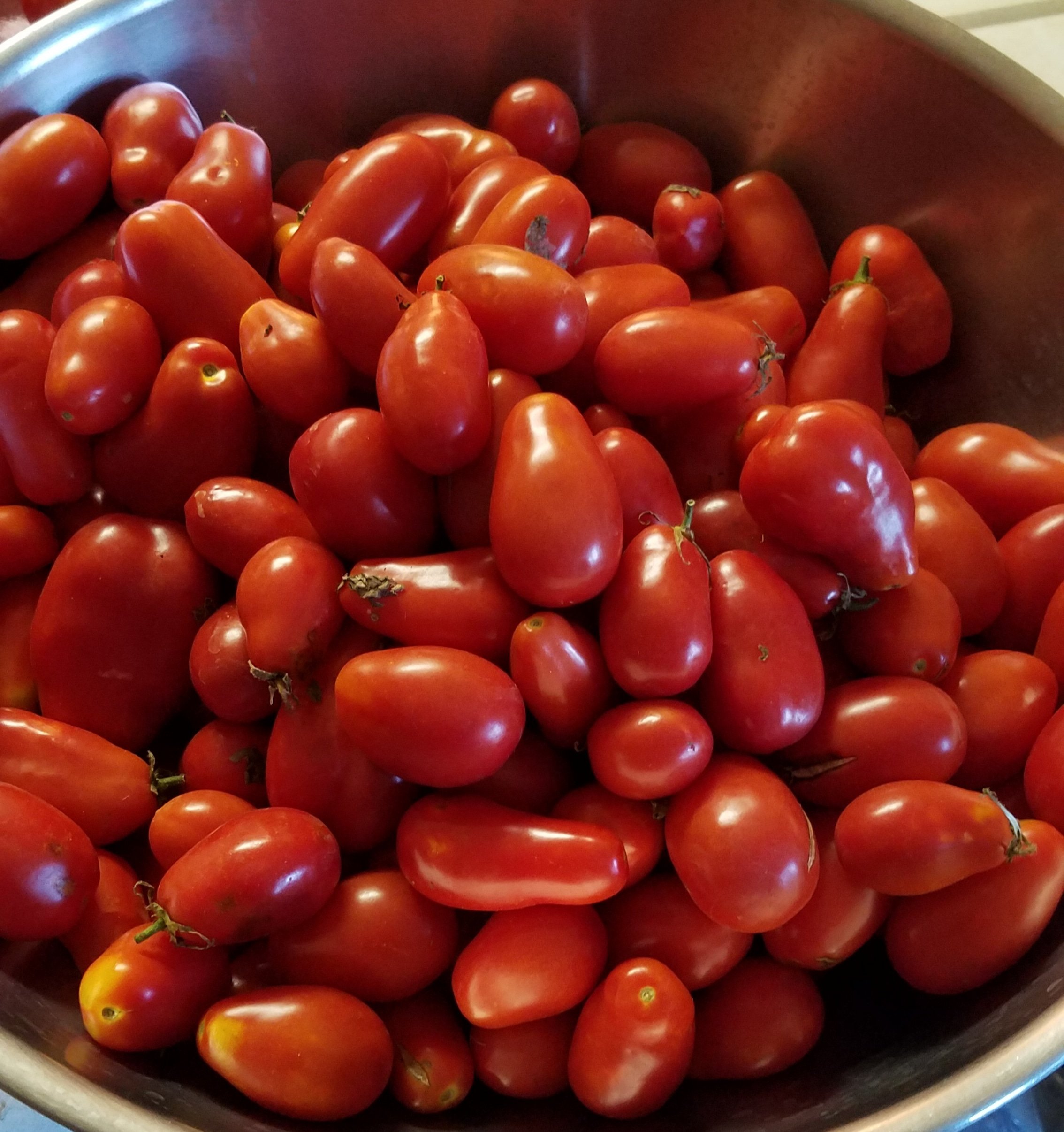
Bowl of San Marzano tomatoes.

Now that I’ve grown San Marzano tomatoes, the challenge is what to do with them. I peeled and water bath canned the first couple of batches. That’s something: a lot of work for the yield. There have been fresh pasta sauces, salsa, and plain San Marzano tomato sauce. There is a lot to like about this variety of tomato and the exceptional flavor is just the beginning.

I didn’t know if my Iowa garden would grow Sam Marzanos as good as what is available from Italy in tin cans at local grocery stores. Canned tomatoes from the store are convenient. Mine are fresh and good enough to grow again next year. In our household, flavor wins over convenience almost every time.

I planted a row of twenty plants in ten cages on the west side of the tomato patch. It ensured there would be a substantial quantity and they would get adequate sunlight. That plan worked and there is lots of good-looking fruit through the season.

Where I landed for those not used fresh is straight forward: tomato sauce for canning or freezing.

My process to produce the sauce is one I developed over years. After washing and sorting the tomatoes, I core them, cut off bad spots and place them in a big stainless steel pan with a half cup of tomato juice or water. I bring them to a boil and then let them cook for two or three minutes until the skins are loosened. I turn off the burner and let them cool on the stove top for an hour or two.

Next, I scoop the parboiled tomatoes into my funnel and let them drain the tomato water. This takes an hour or so for most of it to seep out. Finally, I spoon the mixture into a blender and blend until as smooth as possible. Now we’re ready for use, canning or freezing.

A couple of notes:

No seasoning at this stage.

I no longer remove the skins in order to keep their nutritional value in the sauce. Blending chops the skins so they are hardly noticeable.

Well-ripened tomatoes produce the best flavor. If they come in from the garden and need ripening, it serves the goal of peak flavor to let them finish ripening on the counter.

The sauce is not really cooked. It is an ingredient for future dishes like pasta sauce and chili. San Marzanos benefit from a long, slow cooking process. That will come when I use the tomatoes in a dish.

Finally, I water bath can some jars of tomato sauce. In late summer an active kitchen garden is lacking refrigerator and freezer space. Having the tomato sauce in shelf-stable jars helps alleviate the space problem.

I will continue to process San Marzanos as a separate variety until they are gone. With the mix of canned wholes and sauce of this and other varieties we will be well on the way to year-round tomatoes in the kitchen.

It’s where we like to be.

Categories
Kitchen Garden

Apple Season 2022

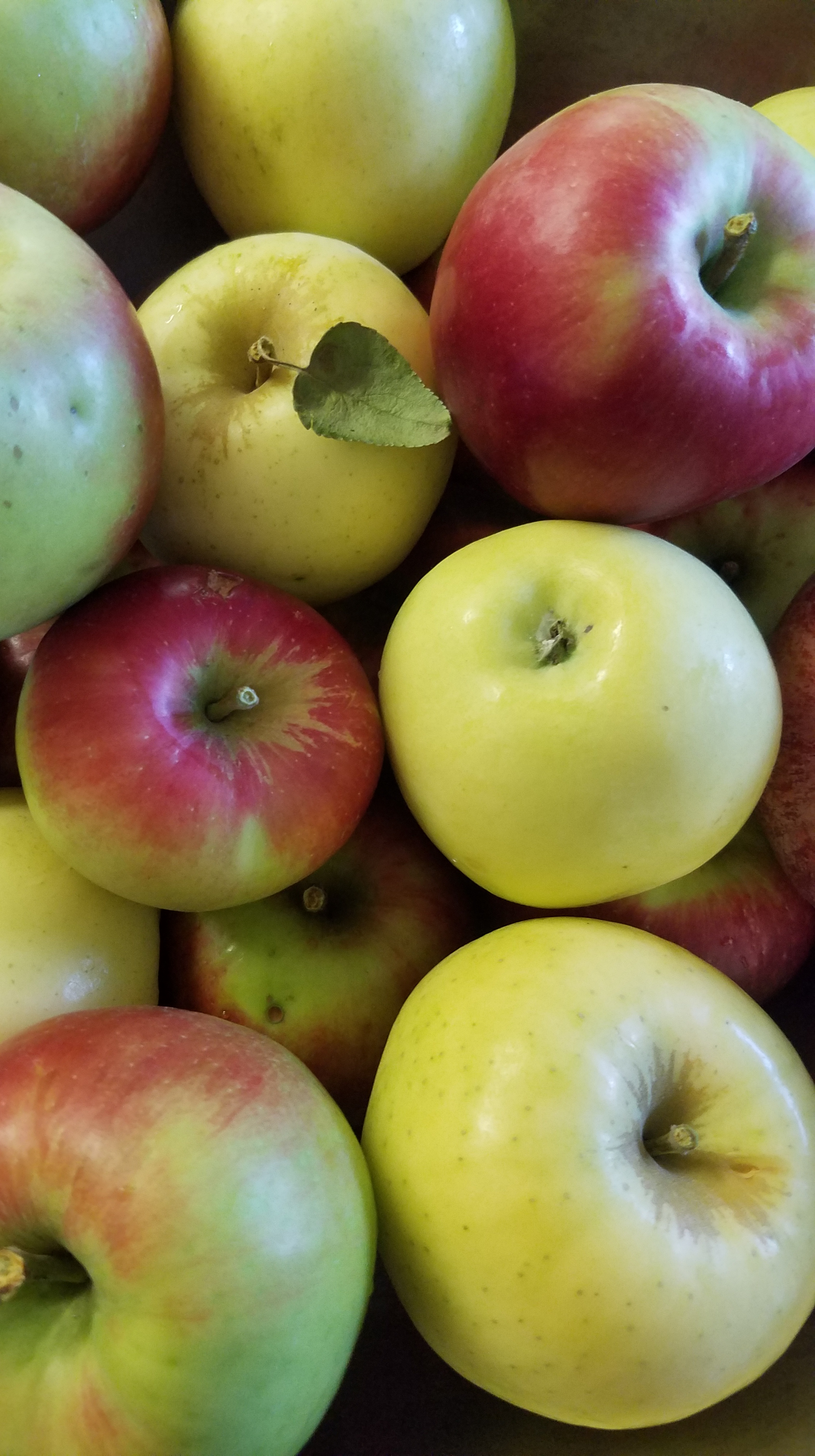
Apples from the garden and from Wilson’s Orchard on Aug. 26, 2022.

We spotted an apple in our trees from the kitchen window. I investigated and four Earliblaze apples were ready to pick. A handful of Red Delicious need ripening. The scent of autumn is in the air.

I drove to Wilson’s Orchard and picked Ginger Gold, Burgundy, Sansa, and Red Gravenstein apples. Trees were loaded with fruit and no one else was picking. It was like paradise without the serpent.

Our apple buying is pretty regimented. In the eight years I worked at the orchard I learned where the apples live and the order in which they ripen. I usually skip most of the early season apples, although I planted a Zestar! tree at home for future early use. When Ginger Gold is ripe, It’s time to start traveling to the orchard and get my exercise walking up and down those hills. I mostly know where all the varieties grow.

My favorites are Burgundy, Crimson Crisp, Honeycrisp, Gold Rush, and the various Jonathan varieties. I also like Red and Golden delicious picked from a tree. Who can stomach the ones sold at the grocer? Although the orchard reduced the amount of trees in the u-pick section, plenty of varieties continue to grow there. It looks to be an excellent harvest this year.

There is no mistaking the rapid approach of autumn. The beginning of the apple harvest, along with the appearance of squash bugs, withering cucumber vines, and weeds getting overgrown are telling a story if we would but listen.

Despite this year’s challenges, the cycle of renewal and growth continued for another year.

Categories
Kitchen Garden

Celery Time – 2022

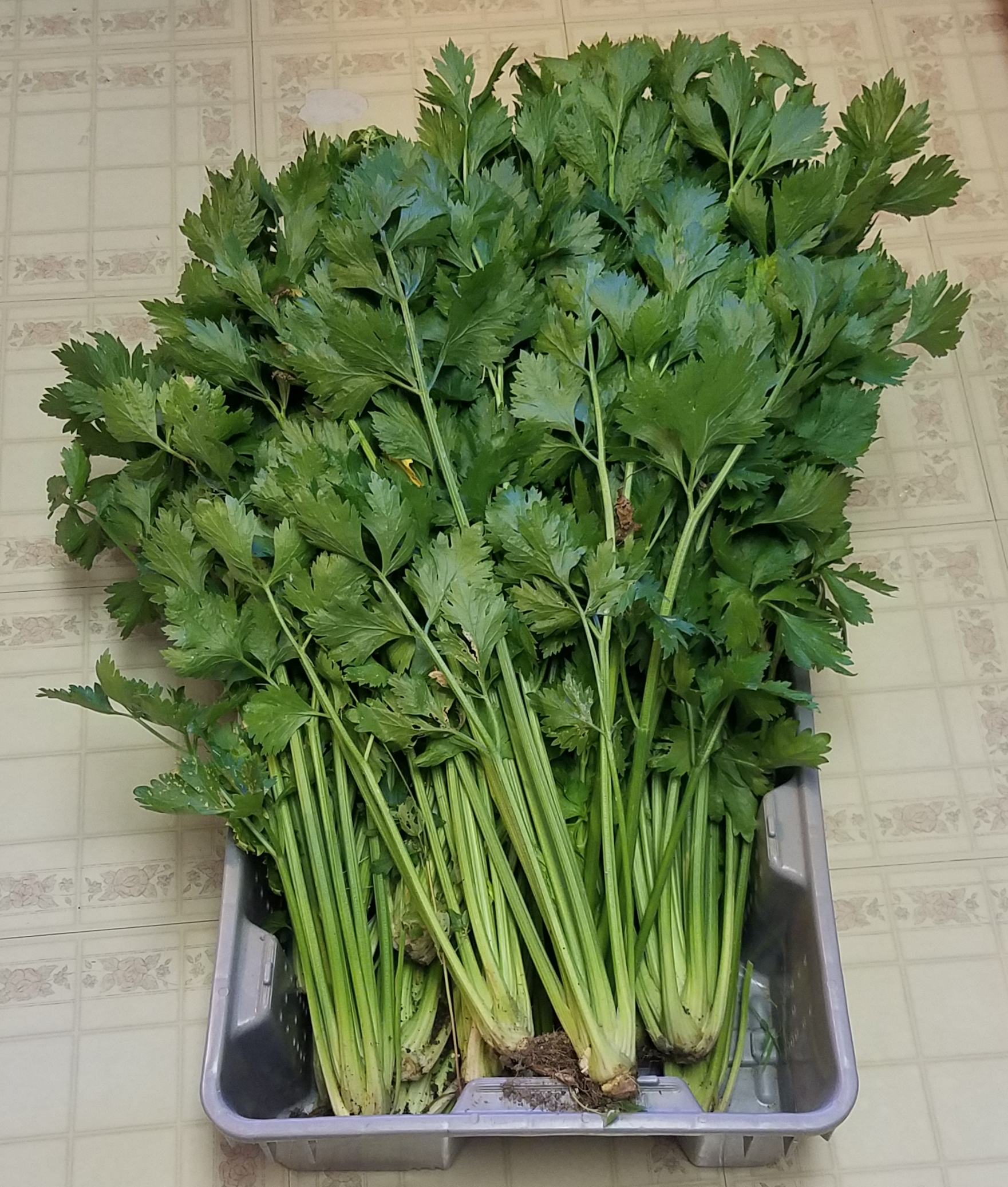
The rest of the celery harvest ready for cleaning and processing, Aug. 25, 2022.

The celery I grow is unlike anything available in local grocery stores. Planted March 13, it took the entire five months to get this far. I could have left some of it in the ground to grow larger. There is something to be said for getting the seasonal celery harvest and storage done all at once.

I forget when I first grew celery, yet it must have been during my eight years working on the vegetable and sheep farms. It is now a basic garden staple. How will I use it?

The best stalks will be eaten fresh. Some of the leaves have been frozen in plain water using a flexible cupcake tray. I’ll add one or two of these pellets of celery to each pot of soup I make. A plastic tub of stalks is in the refrigerator for cooking fresh. The rest will be sliced thinly and frozen in one-and-a-half cup portions in zip top bags. Looking at the yield, fresh should last until November, frozen until the next harvest in 2023.

Growing celery in the home garden is all about flavor. There is no comparison to commercially available organic celery grown in California. Mine is better in so many ways. The bold celery flavor adds to every dish I make with it. When operating a kitchen garden, adding distinct flavors to our cuisine is basic.

This variety is called Kelvin from Johnny’s Selected Seeds in Winslow, Maine. Recently someone asked if I save seeds. Usually, I do not. Kelvin celery is an improvement Johnny’s made over the previously offered iteration of the variety. They have a large research operation, and rather than save seeds from plants I like, I seek to leverage what they (and other seed companies) do to improve the genetics. Even though I spend most of my time in the garden alone, it is a collaborative activity connected to scores of people.

I know how to save most seeds. If we get to doomsday prepping, I may start saving them. For now, I’d rather be part of the community.

Categories
Kitchen Garden

Acorn Season in Iowa

Bur Oak acorns forming.

The remaining two Bur Oak trees in the garden made an abundance of acorns this year. They are weighing down the branches so they almost touch the ground. Acorns are welcome nutrition for squirrels who took up residence in trees I planted after moving to Big Grove in 1993. These particular oak trees were planted from acorns harvested the year our daughter graduated high school and left home. There were three trees, one for each family member, but the August 2020 derecho took one of them out.

The plan is to remove one of the remaining two after the garden finishes this year. It will allow the final one to grow to maturity. By the time it does, I’ll likely be too old for much gardening yet I hope to be able to appreciate its native glory.

It took an hour to harvest tomatoes yesterday. There were two and a half gallons of San Marzanos, a milk jug full of mixed cherry tomatoes, and a bushel of slicers. Today’s plan is to clean them all, remove the imperfect ones to make tomato sauce, and organize what’s left for optimum storage and use in the next couple of days. Tomatoes planted under the oak trees are looking better, so there will be a harvest of plums and Amish paste for canning. This season is running late across the garden.

While I reached into tomato cages to take fruit from the vines I thought about next year. I plan to continue the trellis system for cherry tomatoes and plant two additional long rows, one of mixed slicers and one of San Marzanos, Granaderos, and Amish Paste. The trellis will be longer, as we are using more cherries in the kitchen. It needs to be more sturdy so I may invest in t-posts for the upright supports and place them closer together. They will be flanked by the other two rows, which in turn will be flanked by bell peppers on one side and a mix of eggplant and hot peppers on the other. That would allow focus on that particular garden patch at the same time of year. One can tell fall is not far away by this contemplation of next year.

Where the garlic will go this fall is not decided. This year’s crop continues to cure in the garage and the heads used have been healthy and tasty. I planted 100 head last fall and it produced plenty for the kitchen. Almost every seed planted yielded a head. When the curing process is finished, I’ll save the best heads for seed. This garlic originated on Susan Jutz’ farm and has been planted year after year for a very long time. It has good characteristics and stores well.

Soon I will mow the harvested garlic patch and use the plot to store grass clippings. With the recent rain, the yard grass is long and will make plenty for storage. I also need to tear down the failed onion patch and prepare it to store fencing. I need a sunny afternoon for this work.

We move through the gardening season so quickly any more. In late August, the work continues to be about tomatoes, peppers, greens, celery, and eggplant. Cucumbers and zucchini are about done. I hope to plant lettuce before the week is done. Acorns forming on oak trees are the sign I had better get going.

Categories
Kitchen Garden

Tomato Season 2022

Small part of the tomato crop.

Tomato-growing has become a way of life in Big Grove. I planted tomatoes at the rented duplex in which my spouse and I lived in 1983, the first year of our marriage. With one or two brief exceptions, some tomatoes found their way from garden to kitchen every year since.

The best part of the tomato harvest is using fresh in the kitchen. Cherries are a great snack, slices go well on so many things, and making sauce daily provides a type of freshness one can’t find in the best canned tomato sauce. Sometimes I take a whole tomato with a salt shaker and eat it like an apple.

This year I planted two seedlings in each cage, over 150 plants in total. The results were mixed, with lessons to be learned. There were plenty of tomatoes for kitchen use, to give away, and to donate to the food pantry.

The daily harvest is a generous bushel right now. The season won’t last long, so we make the most of it.

When it is tomato time, daily inspection of fruit waiting to be processed is essential. Blemished tomatoes produce useful bi-products. I wrote and posted this process to my Instagram and Facebook accounts:

  • Cut off the bad spots, quarter and put them in a soup pan to cook. Bring to a boil, cook until the skins are loosened.Turn off the heat.
  • Ladle the tomatoes into a funnel, the kind that comes with a wooden tool to press the tomatoes against the screen. Let them sit until the liquid stops dripping out.
  • Remove the liquid and store for other use.
  • Using the wooden tool, press the tomato pulp against the screen until all that’s left is seeds and skin. In the catch-basin will be tomato puree.
  • Pour the tomato puree into a flexible muffin sheet and put it in the freezer.
  • Once frozen, remove from the muffin sheet and put in zip top freezer bags for storage in the freezer.

The plan for plum tomatoes was foiled by placing the two main varieties under the oak trees. Not enough sunlight affected production. The season is not over yet I know there won’t be as many jars of canned tomatoes for winter. The San Marzano variety was planted in the main tomato patch and did well. There won’t be enough of them to make up for the under-production of Amish Paste, Granadero and Speckled Roman.

Someone asked if I save seeds. I do not. Most of what I plant is F1, or not a pure genetic strain. I don’t like the idea of being constrained in the garden by choices made about which seeds were saved. There are a lot of available tomato varieties I haven’t tried. I also want seed companies to continue in business. I’d feel a bit like I was stealing the genetics and jobs from people who need them by saving seeds.

There is a never ending life with tomatoes. It can be a great life if one gets a grip on it. I feel I am almost there.

Categories
Kitchen Garden

Donating Potatoes

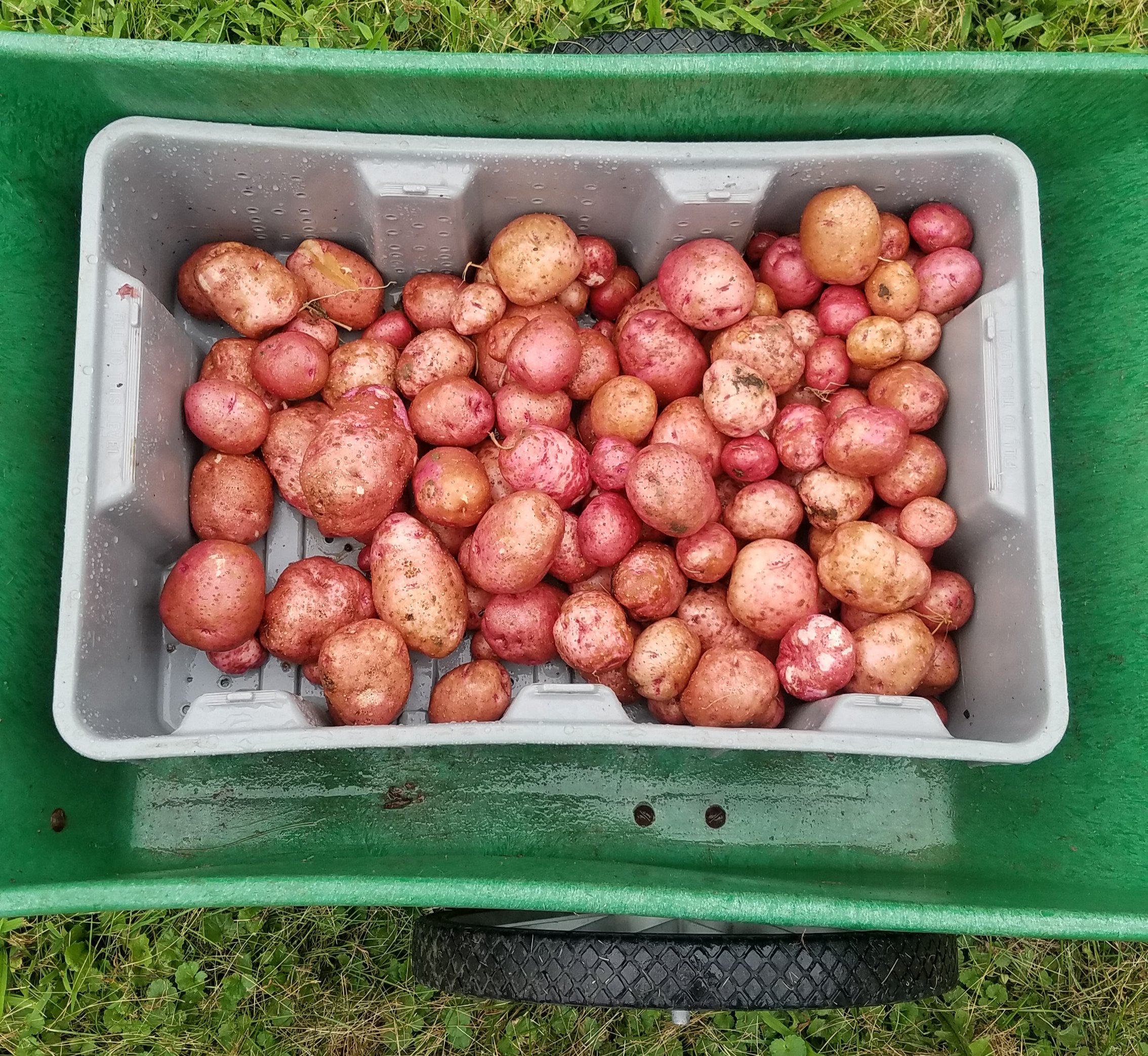
The rest of the potato harvest. It was a good crop.

In August there is plenty of extra garden produce for donations to the local food pantry. Potatoes are popular and I could easily have donated this whole bin. They all would have been taken. Potatoes are elemental.

After a period of rodents eating potatoes while they were still in the ground, I decided to plant in containers. That solved the problem. When I think of the future, I should plant six instead of four containers so I have more to donate. What we have will serve us until they are gone before the end of the year.

We cook potatoes in four primary ways: roasting; grated to make hash browns; as an ingredient in soup; and boiling. All of the smallest ones are used for soup. Every once in a while I use boiled potatoes to make potato salad. Whatever I make with potatoes gets eaten up because they are especially good.

I used to leave the containers buried and replant in the same location each season, using a little composted chicken or turkey manure as fertilizer. This year, I moved them and used soil from the two composters. The production was robust. Given the small amount of time and care it takes to grow potatoes, it is well worth it to have a fresh, great-tasting vegetable. Digging up the containers and harvesting potatoes has become a milestone in the garden season.

The food bank is a nice option to get what I produce into the hands of people who need it. The garden is at the point there are too many cucumbers, tomatoes, zucchini, and bell peppers. There will never be too many potatoes. It’s hard to believe a few years ago we didn’t have a food bank. It has become a vital part of the community in which we live.