Categories
Living in Society

IDP Hall of Fame Celebration – Overnight Reactions

Pre-Hall of Fame Rally

CEDAR RAPIDS–It was a great night for Iowa Democrats as the state party hosted five announced presidential candidates during its annual Hall of Fame celebration at the Cedar Rapids Convention Complex yesterday.

Former Cedar Rapids mayor Kay Halloran, one of seven inductees, received the outstanding supporter award. Congressman Dave Loebsack reminded the audience of her work dealing with the record 2008 flood that had much of downtown Cedar Rapids under water, including significant damage to the venue where first in the nation Iowa held the event.

Lincoln Chafee, Hillary Clinton, Martin O’Malley, Bernie Sanders and Jim Webb spoke in alphabetical order by last name.

This post captures fleeting reactions before they disappear into the ether of a busy life. No analysis of policy here. C-SPAN live streamed the event and has the video up here.

Because this is Iowa, I have heard all of the candidates, except Chafee, in person before. This was Chafee’s first trip to Iowa since announcing.

Both the audience and candidates were reasonably “Iowa Nice.” The candidates gave speeches reflecting Democratic values, serving them up like a rarified buffet in the desert of corn and soybeans that is Iowa. The majority of the audience stayed until party chair Dr. Andy McGuire wrapped things up. While Hillary Clinton left immediately after her speech according to reports from the national media, the four other candidates stayed to hear the last words, and some mingled with the audience afterward.

The playing field is not level, despite the use of the alphabet to set the speaker order. It is reflected in how candidates approached their speeches.

Lincoln Chafee and Hillary Clinton were the only two to acknowledge the inductees to the Hall of Fame–the nominal reason we gathered.

Bernie Sanders briefly acknowledged he was in Iowa, and could have given the same speech anywhere and probably has. The audience did not mind, supporters responding as if in church to his every jeremiad. Chafee had a wrestling connection, he was a wrestler and knew of Iowa’s program, Clinton talked about current Iowa issues, particularly the recent closure of two state-run mental health facilities, O’Malley talked about the Newton Maytag closure in the context of NAFTA and his opposition to the TPP, and Webb also briefly acknowledged he was in Iowa. Points to Clinton for weaving important current Iowa issues into her speech.

Clinton and Sanders said very little about their resume to be president. Chafee, O’Malley and Webb spoke about their credentials as if they were applying for a job. Name recognition is always an issue in campaigns, and at this event, Clinton and Sanders had it and could focus their speech in other areas. The others did not and made their case via qualifications.

Chafee, Clinton and O’Malley gave props to President Obama. Sanders and Webb did not. Webb has concerns about the recently negotiated agreement between the P5 + 1 nations and Iran to shut down Iran’s growing nuclear program. He carefully articulated his position without criticizing the president.

The surprise was none of the five mentioned two important words: Tom Harkin. The group of moneyed Democrats who could afford the minimum donation is well familiar with Harkin and how he speaks. Clinton, Sanders and Webb served in the U.S. Senate with him. It was brilliant that Clinton wove some classic Tom Harkin into her speech, talking about how the Republicans want to take the country backwards, and Democrats want to move forward. Clinton didn’t mention Harkin, but her speech reflected Harkin-like phrasing with which audience members are very familiar. From an oratory perspective, Clinton gave the best speech.

There were no “yikes moments” for the five, and only a naysayer couldn’t find something positive in each of the candidates. Next comes the organizing where Clinton, O’Malley and Sanders are ahead of Chafee and Webb. As Loebsack said during his remarks, the caucus season has officially begun.

~ Written for Blog for Iowa

Categories
Living in Society

Austerity Comes To Iowa

Signage Near Front and Cherry Streets, North Liberty

Elections matter. They have mattered for a long time. A more pertinent maxim for political life in 2015 Iowa, however, is:

“Those who cannot remember the past are condemned to repeat it.” ~ George Santayana.

If elections matter, understanding the intellectual context for them, from a conservative perspective is equally important.

In the 20th Century we rose from the Great War and the agricultural experiment that led to the Dust Bowl and the Great Depression. We created the military industrial complex and its prosperity for many. We bought into an illusion of unending opportunity.

This has always been more story than truth. Because so many like the story, it persists. Senator Bernie Sanders (I-Vermont) taps into it.

“At a time when millions of American workers have seen declines in their incomes and are working longer hours for lower wages, the wealth of the billionaire class is soaring in a way that few can imagine,” Sanders said on his website. “If you can believe it, between 2013 and 2015, the 14 wealthiest individuals in the country saw their net worth increase by over $157 billion dollars. We live in one of the wealthiest countries on earth, yet children go hungry, veterans sleep out on the streets and senior citizens cannot afford their prescription drugs. This is what a rigged economic system looks like.”

Our lives have been coarsened by the unending work of the wealthy and their politicians. It has been no accident.

“36 men created the economic mental model that has delivered the mess we’re in,” wrote L. Hunter Lovins, president, Natural Capitalism Solutions. “Meeting in 1947 at the Mont Pelerin hotel outside Montreux, Switzerland they built the intellectual architecture of an economy of small government and individual decision-making in an unfettered free market.”

If austerity, and that’s what we’ve come to call it, began after World War II, it found its home in the Reagan administration.

“Let us remember that the basic purpose of any tax cut program in today’s environment is to reduce the momentum of expenditure growth by restraining the amount of revenue available and trust that there is a political limit to deficit spending,” said economist Alan Greenspan, Federal Reserve chair from 1987 to 2006, in testimony to the U.S. Finance Committee July 14, 1978.

“Starving the beast” is a political strategy employed by American conservatives in order to limit government spending by cutting taxes in order to deprive the government of revenue in a deliberate effort to force the federal government to reduce spending.” (Source: Wikipedia)

“My goal is to cut government in half in twenty-five years,” Republican Grover Norquist said. “To get it down to the size where we can drown it in the bathtub.”

These statements are not abstractions. They find their way to Iowa, where Governor Branstad and the Republicans take an approach of cut the budget, cut taxes, then repeat the cycle. The segregation of funding for K-12, community college and higher education this legislative session, and Branstad’s subsequent veto, are out of a playbook with roots in 20th Century conservative thought.

Government is often inefficient and programs outlive their usefulness. An example is the recent closure of two of Iowa’s four mental health facilities. The idea that those who need in-patient mental health treatment should not be warehoused in a few central locations has merit. What better than to re-integrate people into local communities and settings? The fact that this devolved into a dispute between the governor, certain legislators and an Iowa union does a disservice to people who need the treatment. It’s no way to make sensible or reasonable changes in our governance.

Each of the five Democratic candidates for president said unlimited money in politics is a problem for our Democracy. This is a core problem with elections post-Citizens United. The unstoppable advancement of the ideas of shrinking government, looting the commons and war profiteering are the context in which Citizens United is possible. The culture is so pervasive that even small business owners have bought in, displaying signs like the one in the picture all around Iowa.

Elections matter and the moneyed interests know it. Their ability to indoctrinate an electorate that often votes against its own interests has been stunning. Using mass media they own, literally, or with unlimited monetary resources to buy programming, the depth of their penetration into an American psyche has given us Ronald Reagan, and a legion of Reagan wannabes.

Our hope is more of us recognize elections matter. One has to have faith the American electorate will wake up, the scales will fall from their eyes, and people will focus on what’s right, and not what the wealthy tell us must be.

If we care about our country and the people in it, we can’t afford to sit on the sidelines. I’m grateful most people I know agree and are willing to work for the change we need. What about you?

~ Written for Blog for Iowa

Categories
Living in Society

First Press Pass

HOF DinnerThe Iowa Democratic Party approved my press credentials to attend the Hall of Fame Celebration Friday night for Blog for Iowa.

This is the first time the five declared candidates for president will speak from the same stage. It is a key milestone on the road to the Feb. 2 Iowa Democratic caucuses. Going forward, if candidates don’t get organized, they won’t win delegates—it’s as simple as that.

Hillary Clinton and Martin O’Malley are working the caucus process diligently. Bernie Sanders is attracting interest—good sized crowds—but I haven’t been to one of his events since 2014, before he announced for president. I’m less certain of what organizing Sanders is doing, but the staff he hired knows the Iowa caucus process.

Lincoln Chafee and Jim Webb appear to be decent people, but have furnished no evidence they are signing people up for anything except donations and email contact lists. Chafee made his first trip to Iowa this week and Webb held about 25 events in Iowa according to the Des Moines Register. Clinton, O’Malley and Sanders are far ahead of them in terms of traditional organizing. Catching up in Iowa will be hard for the other two to do.

I plan to provide a unique perspective on the events tonight. My first post on Blog for Iowa was about the 2009 Hall of Fame Celebration and I’ve learned a lot about Democratic politics since then. Here’s what to look for in my coverage:

The candidate speeches will be streamed on C-SPAN and posted on their website for later viewing. I won’t be covering what is said, or trying to assert points about this or that, creating spin. If people want to know what candidates said, they can invest the time and hear for themselves.

If I can keep my phone charged, I will send a few tweets about the event. Since hoards of news media will be there, I’ll let others generate the Twitter traffic. I want to spend my time observing, not tweeting.

I’m most interested in the framing of this event. There is an inherent deception of a level playing field in the graphic above and the event. Both Clinton and Sanders have solid name recognition because of their prominence in public life. Hillary Clinton is so well known, her most significant problem may be we know her too well. Enough so she is taken for granted as people look at other options. Martin O’Malley has been doing a lot of work in Iowa, going all in here in an effort to get a ticket out. By its framing, the event takes Clinton and Sanders down a peg, allowing the other three to to see some sunlight. Will the five candidates share the stage or sit in the crowd? What will be the order of speakers? How will the IDP frame the night’s events? If there’s a story in answering these questions, I’ll write it.

By having a press pass I hope to understand how other journalists frame the events. I don’t know which national political correspondents will be present, but they bring with them an external style that seems self-perpetuating regardless of what may actually happen. By hanging with them to some extent I hope to learn and report about it.

It would be more convenient to view the speeches from the comfort of home wearing casual clothing and drinking fizzy lemon water. In 2009 my photo on the Hall of Fame event post shows me wearing a suit. I plan to be more casual tonight with my trademark blue jeans, blue twill shirt and comfortable shoes. Getting out among the moneyed Democrats of Iowa once in a while is important, and on this one pivotal night, I can invest the time.

I hope readers will stay tuned.

Categories
Environment

Iowa’s Algae Blooms

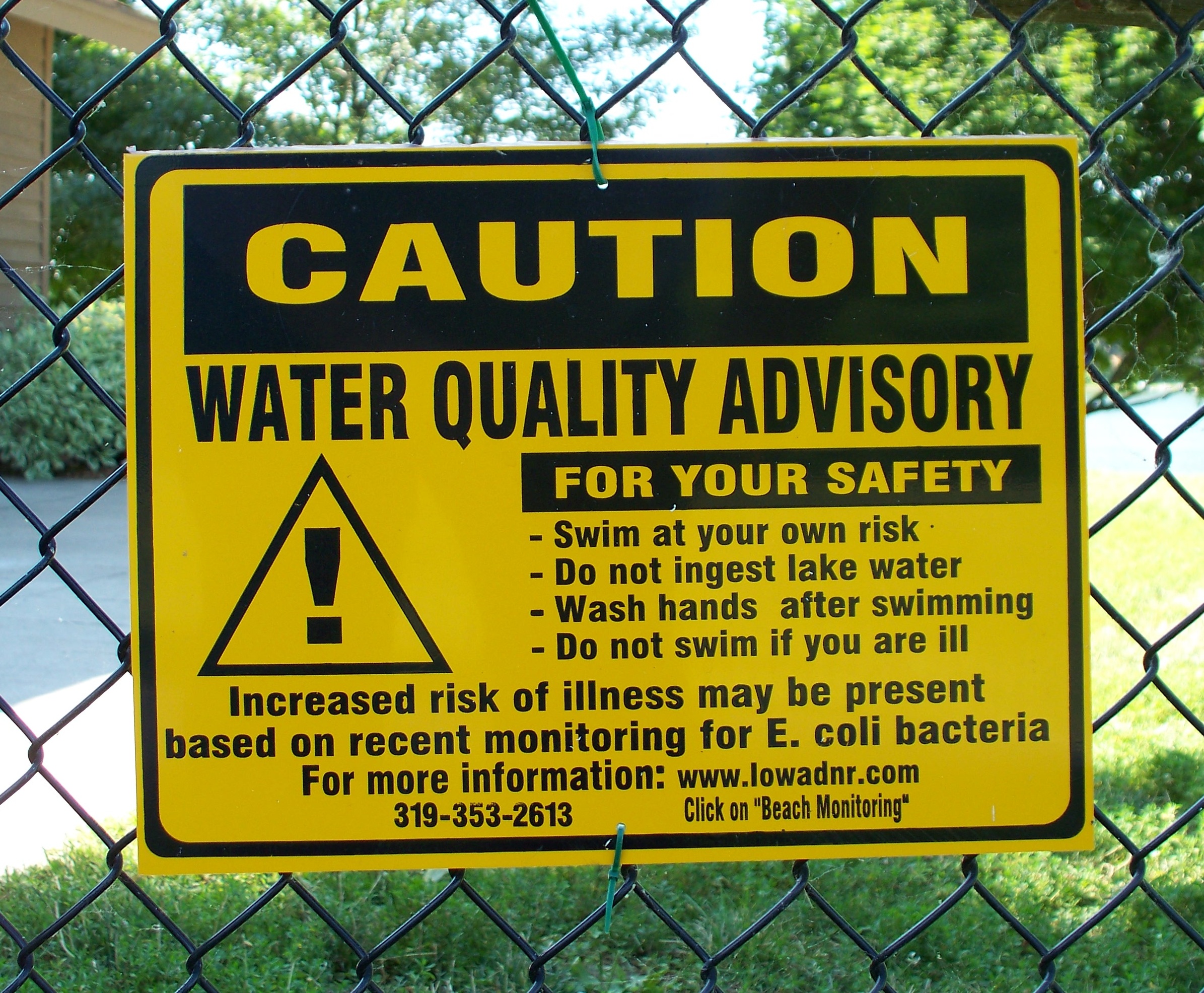
Bacteria Notice on Lake Macbride

Iowa recreational lakes have become a nutrient-rich soup in which blue-green algae thrives. The Iowa Environmental Council won’t say what I will: nutrient runoff from agriculture, and to a much lesser extent from home lawn applications, is a key ingredient in this toxic soup.

Algae can produce microcystin bacteria, which is toxic to humans and animals, and is only intermittently monitored outside Iowa DNR beaches. That means people who participate in low-impact water sports, like canoeing and kayaking may not get sufficient warning of the presence of microcystin bacteria.

While adventurers develop protective safety protocols for dealing with the unknown, the end result of recent warnings of elevated levels of bacteria was a scene where the homes of affluent locals looked on an abandoned beach on a brilliant summer day.

Cottage Reserve from Lake Macbride Beach July 14

 The Iowa Environmental Council made this press release on Friday:

Toxic algae blooms pose threat to human, animal health

DES MOINES– Summer is in full swing, and many Iowans are heading to the state’s lakes to swim, paddle, relax and cool off with family and friends. However, many Iowans are being greeted by an unwelcome sight at their favorite swimming spots: toxic blue-green algae blooms.

This type of algae, caused by a combination of high levels of phosphorus pollution and increased temperatures can produce harmful microcystin toxins that can make people sick and be deadly for dogs, livestock and other animals.

The Iowa Department of Natural Resources (DNR) has posted 14 swimming advisories cautioning Iowans to stay out of the water at 11 different State Park beaches so far this summer due to high microcystin levels. Independence Day weekend, one of the busiest outdoor recreation weekends of the year, the DNR posted microcystin warnings at five Iowa beaches – the worst week yet. Included on this summer’s list are Lake Darling, Pine Lake, Red Haw Lake and Twin Lake West beaches – all first-time toxic blue-green algae offenders.

“The threats posed by toxic blue-green algae blooms are serious,” said Water Program Director Susan Heathcote. “Iowans need to be aware of this problem, the health risks, and know how to recognize and respond to toxic blue-green algae blooms.”

Toxic blue-green algae blooms create green, murky water, visible surface scum and a foul odor. The blooms can spread across the water but tend to accumulate in shoreline areas. Beach warnings are posted by the DNR when microcystin levels exceed 20 ug/liter, a guideline established by the World Health Organization. Contact with water at or above this level can result in breathing problems, upset stomach, skin reactions, and even liver damage. Inhaling water droplets containing toxic blue-green algae can cause runny eyes and nose, cough, sore throat, chest pain, asthma-like symptoms, or allergic reactions.

After tracking microcystin poisoning cases in Iowa as part of a national pilot project, Iowa’s public health leaders recently announced plans to add “microcystin-toxin poisoning” to the list of conditions doctors must report to the Iowa Department of Public Health.

“To rid Iowa of toxic blue-green algae blooms and ensure our lakes are safe and healthy for our families and pets, we must improve our water quality and reduce phosphorus pollution caused by agricultural and urban runoff and wastewater treatment systems,” Heathcote said. “This pollution not only puts our health at risk, but also has negative economic impacts on communities that depend on lake tourism, as well as our environment.”

The DNR monitors 39 State Park beaches for microcystin on a weekly basis between Memorial Day and Labor Day, issues advisories and posts warning signs when conditions are unsafe for swimming. The weekly beach advisories can be found on their website. Last summer, the DNR posted 22 beach warnings for high levels of microcystin during the recreational season.

At this time, DNR only monitors State Park Beaches, so if you swim at other public or private beaches you need to be aware of the potential for toxic blue-green algae this time of year. Not all blue-green algae is toxic, but when in doubt, stay out of the water and call the DNR Beach Monitoring Hotline at 515-725-3434. If you think you or your pets may have been exposed to toxic blue-green algae, thoroughly wash it off with fresh water. If you or your pet are experiencing symptoms associated with high microcystin levels after suspected exposure, seek medical or veterinary care immediately.

Records showing State Park beaches with documented Microcystin levels exceeding 20 ug/L dating back to 2006 are available on the Iowa Environmental Council’s website.

~ The Iowa Environmental Council actively works in public policy to provide a safe, healthy environment for all Iowans. The Council focuses on public education and coalition building to give Iowans a voice on issues that affect their quality of life and to protect Iowa’s natural resources for current and future generations. For more information, visit iaenvironment.org.

~ Written for Blog for Iowa

Categories
Home Life

The Meaning of Crickets

Lake Macbride
Lake Macbride

Is the sound of a cricket in the house good luck or bad?

Early morning found me interrupted by chirping—loud and pronounced. I turned on the light of my mobile phone and shined it behind a bookcase, trying to locate the insect. He’s here for the second day.

It’s a long cricket walk from any point of entry to the lower level of the house and my writing desk. It seems doubtful the distinct rhythmic sound will attract a mate. It is distracting to me, but the range is very short.

“It is a sign of extreme good luck,” according to the Internet. “All the things that you have been working toward and dreaming about are now possible. Stay open to guidance and cosmic messages and you will know exactly what you have to do.”

Whatever Internet. If I catch the bug, he’ll be transported outside—unharmed if possible.

Yesterday my editor wrote that my last filing would finish the week. There has been a lot of news lately, so my features get pushed back. New assignments won’t happen until next week, and that’s okay with me.

At the warehouse the other shift supervisor turned in her notice, so it means more work for me in coming weeks until the corporate staff figures out what to do about leadership. Our regional manager seems in no hurry.

After an analysis of the retained value of our net worth during the six years since my “retirement,” it turns out we reached a floor in 2013 and have begun to grow net worth again. I don’t know how that happened since we seldom have extra money. It reinforces a couple of things about low income families. We make do with what we have. We have more than enough to occupy our time. Every income source, no matter how small, is important.

For the moment, I’m going to try to locate the cricket and move him outside. I hope it’s not bad luck.

Categories
Environment

Road to Paris – What is COP21?

Paris COP 21In 2015, France will be hosting and presiding over the 21st Session of the Conference of the Parties to the United Nations Framework Convention on Climate Change (COP21/CMP11), otherwise known as “Paris 2015.”

COP21 will be held from Nov. 30 to Dec. 11 on the Paris-Le Bourget site, bringing together around 40,000 participants in total – delegates representing each country, observers, and civil society members. It is the largest diplomatic event ever hosted by France and one of the largest climate conferences ever organized.

COP21 will be a crucial conference, as it needs to achieve a new international agreement on the climate, applicable to all countries, with the aim of keeping global warming below 2°C.

The stakes are high: the aim is to reach, for the first time, a universal, legally binding agreement that will enable us to combat climate change effectively and boost the transition towards resilient, low-carbon societies and economies.

To achieve this, the future agreement must focus equally on mitigation – that is, efforts to reduce greenhouse gas emissions in order to limit global warming to below 2°C – and societies’ adaptation to existing climate changes. These efforts must take into account the needs and capacities of each country. The agreement will enter into force in 2020 and will need to be sustainable to enable long-term change.

France will therefore be playing a leading international role to ensure points of view converge and to facilitate the search for consensus by the United Nations, as well as within the European Union, which has a major role in climate negotiations.

To learn more about COP21, go to http://www.cop21.gouv.fr/en

~ Written for Blog for Iowa

Categories
Kitchen Garden

Make Real Food

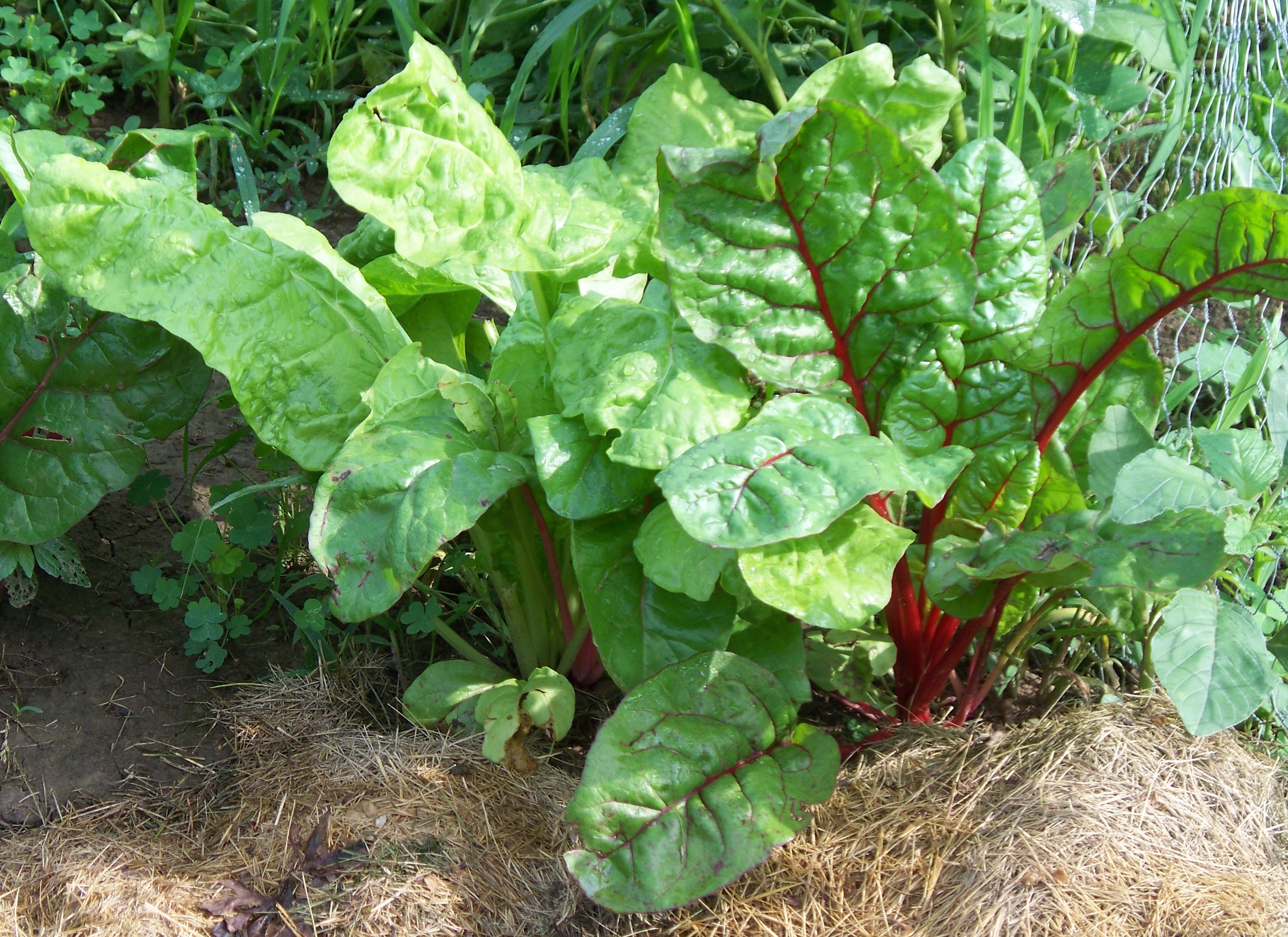
Swiss Chard Plants
Swiss Chard Plants

If a task or event is on the white board, it is likely to get some attention. Yesterday I wrote “make real food” on it.

I knew I would draw from the garden, ice box and pantry for the meal, but what I would make—had no clue.

It became is a sort of enchilada, but not really Mexican. The intent was to use Swiss chard and other summer vegetables. Here’s what I did:

  1. Cook 6 raw tortillas in a dry pan. Set aside.
  2. Make tomato sauce by draining a quart of diced tomatoes and processing them in the blender. (In retrospect, I should have seasoned the sauce, but left it just tomato puree).
  3. Prepare 6-8 Swiss chard leaves by removing the veins. Chop the veins and stems into bits and the leaves into one inch ribbons.
  4. Using olive oil, sautee one third onion, chard stalks and veins, quarter cup chopped celery seedlings, one third of a zucchini cut into quarter inch cubes, and season with sea salt.
  5. When the veg is softened, add one 15 ounce can prepared black beans.
  6. Add the Swiss chard leaves, a generous tablespoon of lemon juice, and stir gently until the leaves start to wilt. Remove from the heat and set aside.
  7. Into a rectangular baking dish pour enough tomato sauce to cover the bottom.
  8. Take a cooked tortilla and spoon the vegetable mixture on the middle. Sprinkle on a tablespoon of feta cheese, tightly roll the tortilla and place it in the baking dish on top of the sauce. Repeat until the dish is full.
  9. Pour the remainder of the tomato sauce on top, cover with aluminum foil and bake for about an hour in a 360 degree oven.
  10. Remove the casserole and place on a rack. Remove the foil and sprinkle more feta cheese on top. Let sit on the counter for 10-15 minutes to cool.
  11. Serve with a favorite accompaniment, such as hot sauce, sour cream or chutney.

The result made four generous servings.

Categories
Living in Society Social Commentary

Coping with Iowa’s Coarsening

Convenience Store
Convenience Store

At a convenience store in North Liberty yesterday, a young guy was fueling his large black pickup truck. A companion was riding shotgun, both clad in blue jeans and dark T-shirts. The brief moment would have passed unnoticed except for the full-sized Confederate flag flying on the passenger side of the cab.

Another flag, the stars and stripes, flew from the driver’s side of the cab, both set to ripple in the breeze as the truck drove away on the highway.

Should I have said something? Maybe. My military training came into play and two things stopped me. Others hanging at the convenience store seemed to know the driver, and while they were not necessarily sympathetic, it was not my turf. The other thing was the unknown as to whether the gent had a gun. Perhaps the association was unjust, but one assumes he was armed, and of course, I was not. I kept my powder dry for another day.

The Confederate flag can be found in abundance in the counties where I live. People fly them at home instead of the stars and stripes. There are big ones, little ones, and stickered-to-windshield ones. I am less concerned about one person’s expression of whatever it is the confederate flag means to them, than I am when it is displayed in public as part of an official function, like it was in the Marion County Republicans Independence Day parade float.

Marion County Republicans

Reality bleeds over into the construct of politics. Johnny on the spot, the Republican Party of Iowa chairman condemned this use of the Confederate battle flag by his associates, although he made no mention of the improperly displayed U.S. flag on the back of the  trailing pachyderm. Like it or not, the attitudes behind flag usage—stars and bars or stars and stripes—are deeply ingrained in some Iowans and ever present.

My issue with the flag culture is why should I feel like I’m entering a war zone when picking up a beverage at the convenience store? Maybe its just me. Maybe it’s the coarsening of our community.

~ Written for Blog for Iowa

Categories
Living in Society

Rob Hogg Forms Exploratory Committee For US Senate

Rob Hogg
Rob Hogg

When I spoke to Rob Hogg about his July 8 announcement, he emphasized it was an exploratory committee to consider a run for U.S. Senate against incumbent Chuck Grassley. If Hogg was precise about framing the discussion, it matches his personality, and represents a desire to be clear when it comes to elections and the laws surrounding them.

Hogg has little to lose and everything to gain by running for U.S. Senate. He was re-elected to a four year term to the state senate in 2014, so his seat is secure. Already well known in Iowa as chairman of the senate judiciary committee, Hogg has a track record that goes beyond his signature issue of acting on climate change. Even if Hogg loses to Grassley, a challenge has the potential to burnish his credentials as a state-wide politician, and puts Grassley in a position where he has to organize and spend some of his campaign war chest locally. Hogg may win if he runs.

Before the 2015 legislative session, Hogg traveled around the country to promote his book America’s Climate Century: What Climate Change Means for America in the 21st Century and What Americans Can Do About It. Connections made on the book tour may translate into financial contributions to his exploratory campaign. He also toured much of Iowa speaking on climate change.

Mitigating the causes of climate change and dealing with its real world effects is Hogg’s signature issue. In a letter to colleagues in the environmental movement he wrote, “I am considering this candidacy, in part, because I believe it is long past time for Congress to act on climate change. By running, I would give voters a chance to vote for climate action. As I said in my release announcing the formation of the exploratory committee, ‘If we had a Congress that worked better, we could confront the challenge of our century–climate change–through solutions that work for our economy, our health, and our environment.’”

There is expected to be a Democratic primary for U.S. Senate next year. Hogg hasn’t formally announced, and plans to use the time raising money and discussing issues with party activists, two necessary prerequisites to making a decision to run.

Here is the text of Hogg’s announcement:

Hogg forms Exploratory Committee for possible U.S. Senate run

CEDAR RAPIDS–Today, I am announcing that I have formed an exploratory committee to consider becoming a candidate for the United States Senate in 2016. Like many Iowans, I believe we need Congress to work better for all of our citizens and our country’s future. If we had a Congress that worked better, we could:

> Build a vibrant, full-employment economy that works for all Americans.
> Improve public health and public safety through prevention, prevention, and more prevention.
> Strengthen Social Security and Medicare and fulfill our commitments to seniors, veterans, and people living with disabilities.
> Confront the challenge of our century – climate change – through solutions that work for our economy, our health, and our environment.

In order to get Congress to work better, Iowans know it will require new leadership. Iowans also know it will require significant reform in the way we conduct our political campaigns.

Over the coming weeks, I look forward to visiting with Iowans across our state, to have a conversation about our Congress, our country, and our future, as I make a decision about running for the United States Senate.

For more information, please visit http://www.robhogg.org, email Senator Hogg at rob@mail.robhogg.org, write the Rob Hogg Exploratory Committee at P.O. Box 1361, Cedar Rapids, IA 52406-1361, or call the exploratory committee at 319-360-3401.

~ Written for Blog for Iowa

Categories
Living in Society

Governing The Undocumented

Community IDIOWA CITY–Johnson County announced acceptance of applications for a new Community ID program on Wednesday. The county seeks to become more welcoming, and to resolve a practical public safety issue problem—undocumented residents prefer to stay in the shadows.

“Johnson County will be the first community in the Midwest, and the first outside a major metropolitan area, to offer community-issued identification,” according to a press release. “The Community ID program is designed to help people who may have difficulty getting a state-issued ID, such as seniors who no longer drive, the homeless, people in poverty or transition, and new immigrants. A Community ID can help these people interact with law enforcement, local government, pharmacies and banks.”

Rod Sullivan, Johnson County supervisor, explained the public safety aspect of the program in an April 9 email.

Why do we need a Community ID? I have a very personal story. After years of doing nothing, a few years ago, the board of supervisors finally began taking action against the criminals that own Regency Mobile Home Park. State law severely limits the ability of the board to intervene, but there were dozens of credible reports of fraud coming from Regency.

Johnson County detectives swooped in, gathered all the info they could, and began following up on leads. Then they ran into a stone wall. Most of the people they needed to speak with refused to talk to them. These folks saw law enforcement coming, and they went the other way–even when they were innocent victims!

I spoke at length with the lead detective on the case, and he said that this avoidance of law enforcement was common. When I asked why, he said it all came back to a lack of ID.

This illustrates the number one reason for instituting a Community ID – public safety. We need victims and witnesses to come forward in order to solve crimes and see to it that justice is served. The Community ID will help with this.

There have already been hundreds of applications for Community IDs. The program requires both documentary proof of identity and proof of residency. It is an open question whether the victims and witnesses Sullivan referred to will actually come forward to secure a Community ID, or change their behavior.

In an unrelated incident undocumented immigrants made news Wednesday when Rep. Steve King (R-Kiron) condemned the concept of “Sanctuary City” for the umpteenth time in the wake of the murder of Kate Steinle in San Francisco. The accused is a seven-time felon who has been deported to Mexico five times, according to the story.

“Sanctuary cities exist because of the left, because of the open border policy,” King told Newsmax. “Yes, there is blood on their hands and San Francisco is at fault. All of California is a sanctuary state today, and many states have these jurisdictions like this.”

Having a Community ID is not the same as being a Sanctuary City, but it may represent what is possible in governing the undocumented.