Around 1 p.m. I finished in the garden and took a walk on the state park trail. The wind had picked up. While there was plenty of remaining work in the garden, onions were in and other plots tended, I was ready to break the tension from wondering how I would fit everything in the ground this year.
The trail held little traffic: a couple of joggers and a group of young adults out sight-seeing. Spring has arrived with greys and brown of winter yielding to green, yellow and purple. There has been human activity in the park, due mostly to cleanup of the 2020 derecho and the recent prairie burn. The margins between the trail and housing developments get thinner each year. The breeze helped me forget.
Mostly I felt the rush of air on my face as I walked my prescribed route. Strong wind is a blessing and a curse. Yesterday it was a stress-reliever.
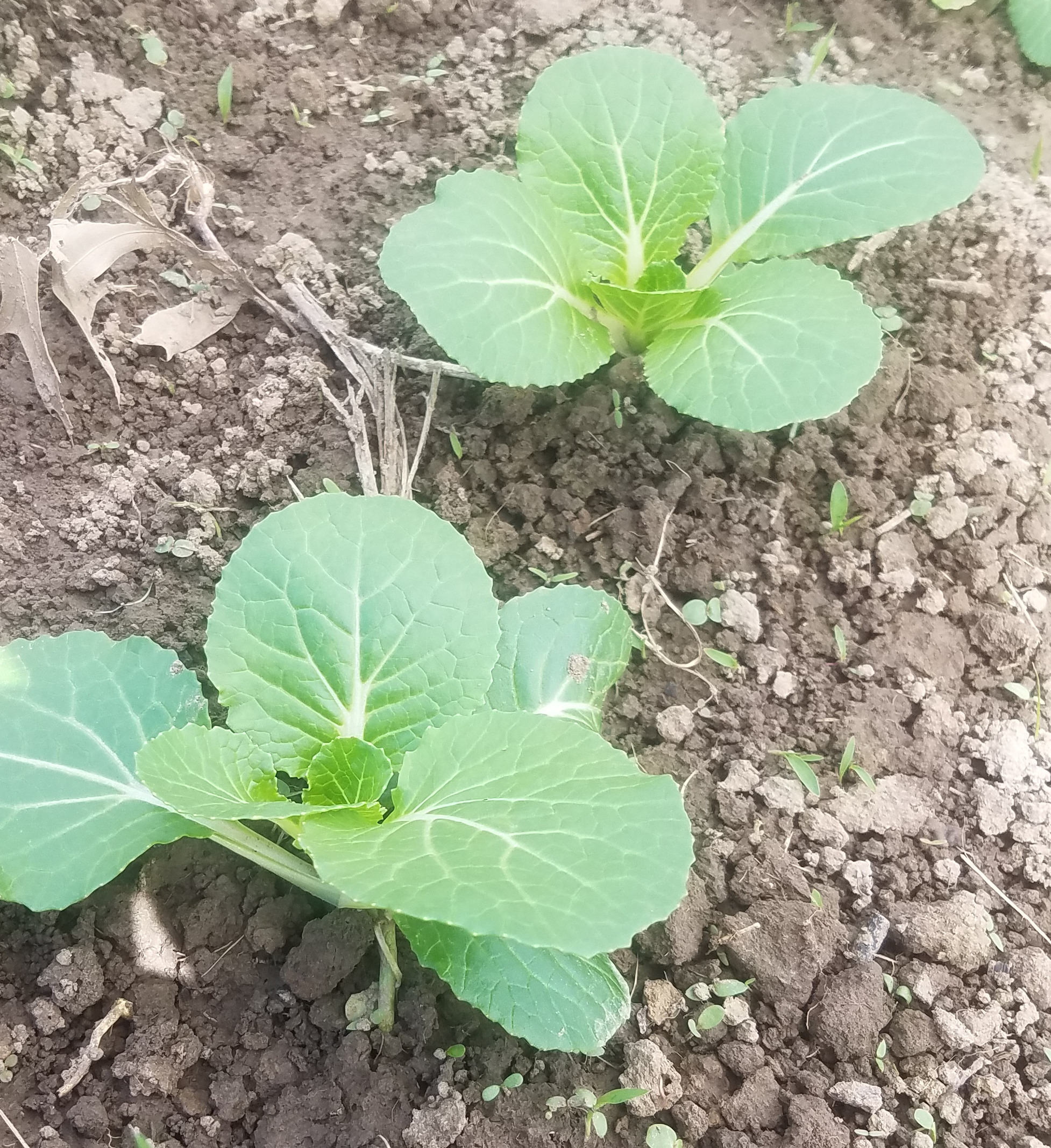
Under the row cover everything looked good. I inspected and weeded, then picked some Pac Choi for a stir fry this week, and enough lettuce and spinach to make a small salad. Dinner was the salad with organic rotini and sauce leftover from Friday’s pizza-making. I’m ready for my spouse to return home.
As I read the news after dinner, a longing for better times arrived. When I graduated high school it felt like the strictures of society were loosening. There was hope for better days for our country and our lives in it. No more. Republicans never liked the changes of the 1960s and ’70s. Since Ronald Reagan was elected president they have been rolling back the liberties we gained. The repression pushes down on everything.
They say longing and loss brings people together yet I don’t know about that today. Yesterday I wrote a friend, “I think things changed dramatically during the pandemic. Not only did we break all our good habits, I don’t see enthusiasm for just about anything in real life. People simply want to get by in their own world and leave the politics and pandemic out of it.” What good is it to bring together yet another isolated small group when the tide of conservatism threatens everything we have come to know?
I used the garden hose for the first time this season. It is old. I need to get a new one. The mended joints came loose while it was in storage. They leaked as it filled with water pressure. The nozzle is kaput as well. This morning I’ll take wrenches and a screwdriver to repair the joints again. There are a couple of old nozzles in the garage to use if needed. I don’t like them as well yet one of them will serve. Despite the leaks, the garden got watered and will until I replace the hose. That is, if I do.
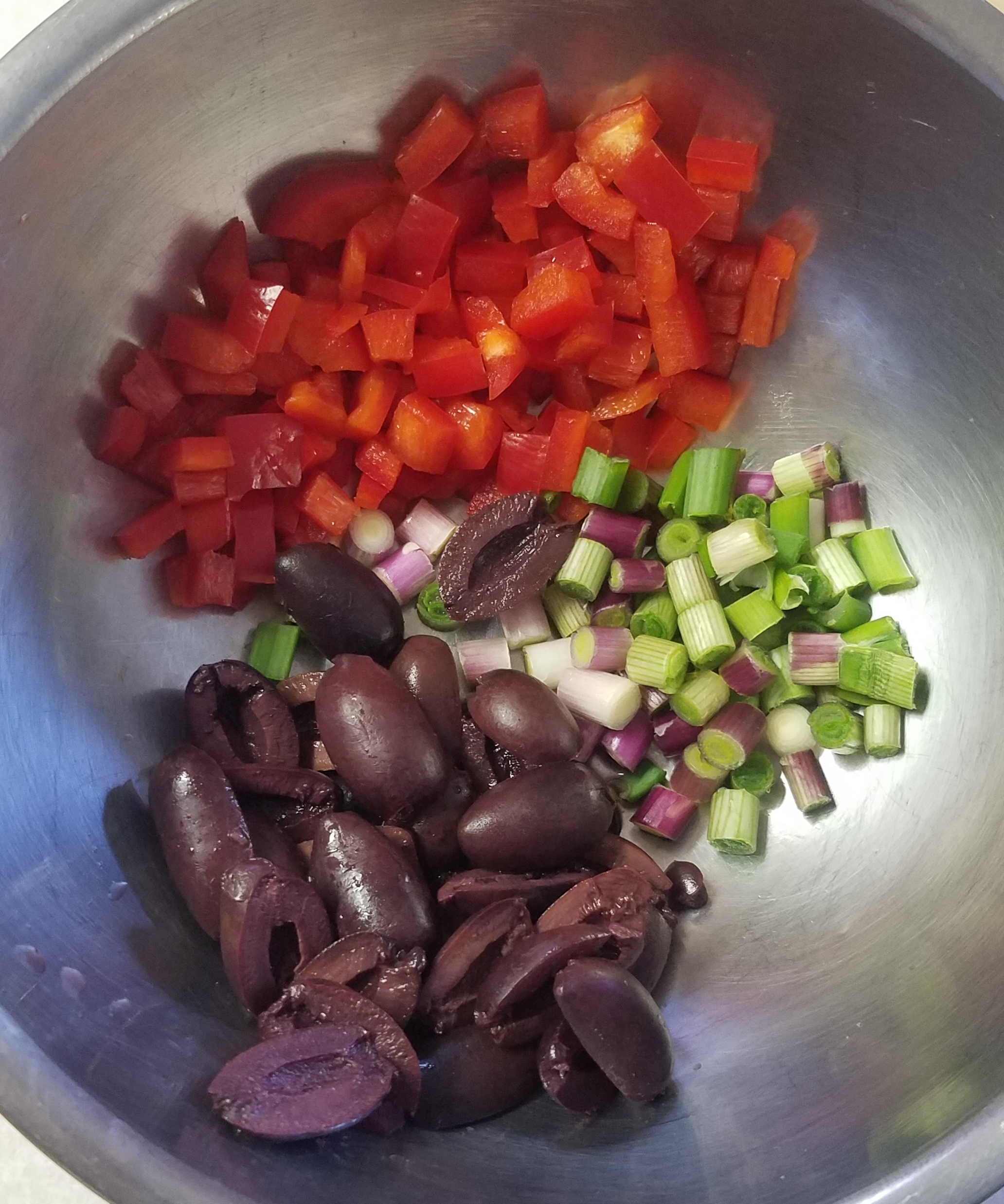
Pizza toppings: Kalamata olives, spring onions and red bell pepper.
On Saturday I spent seven hours planting onions. The names of onion varieties are delightful: Walla Walla, Red Carpet, Ailsa Craig and Rossa di Milano were started from seed.
I emptied the wagon and hooked it to the lawn tractor to haul heavy things. I used to carry the 100-foot water hose, tiller and everything else out there, yet I don’t want to risk being injured. This is a concession to age. The new system reduced the number of trips back to the house.
I filled the small cooler we received as a wedding gift with iced water and a couple of canned beverages. When I got thirsty, a drink was nearby. Hydration is important when working in the sun, as are frequent rest breaks.
This may be the last year for seeding my own onions. Onion starts from the seed supplier have done better than home-seeded ones. It is the final results that matter. I planted three long rows of Patterson onion starts, figuring this would be the mainstay for long-term storage. The variety did well last year so we’ll see how they do.
When I finished for the day, I showered and made a grilled cheese sandwich for dinner. I didn’t feel like cooking. I sliced some store-bought radishes in half and had them as a side dish. Garden radishes should be ready soon. I fell asleep in the reading chair shortly after sitting down. Knowing my condition, I set the alarm to wake me in time to view the Democratic U.S. Senate candidate debate. The primary election is June 7.
My spouse has been at her sister’s home since Earth Day and I’m ready for her to return. Today’s forecast is clear with more wind than yesterday. I should finish the onions and till at least one more plot. Gardening season seemed like it would never arrive, yet it has.
I heard this morning security officials have begun to install non-scalable fencing around the U.S. Supreme Court. Lines are being drawn as the future of Supreme Court decisions with three Trump appointees on the bench clarifies. I agree with my Blog for Iowa colleague, Trish Nelson, who wrote today, We Are Going Back.
In this tumultuous time I’m reading C. Bradley Thompson’s America’s Revolutionary Mind: A Moral History of the American Revolution and the Declaration that Defined It. The founders were concerned with a tyranny of the majority. These days it is the tyranny of a minority of voters that gives us pause.
Nothing about the coming changes is new. On Aug. 17, 2016 I wrote:
What makes August part of the summer of weird normal is the lack of political talk about almost anything but the Republican nominee for president. It is normal that a lot of voters activate during presidential election years. What is weird is a combination of things including regular people cozying up to Donald Trump; people who would bleed Democratic if cut saying they won’t vote for Hillary Clinton no matter what; and controversial issues, including climate change, abortion, school funding, incarceration rates, water quality and government spending, being sidelined to watch the national political show.
With Neil Gorsuch, Brett Kavanaugh and Amy Coney Barrett on the high court, there seems no limit to what fundamental parts of our lives in common can be rolled back. Key issues that matter in millions of American lives are no longer being sidelined. The whole thing seems likely to be dismantled. It is unsettling.
The undoing of modern society began with Citizens United v. FEC and Shelby County v. Holder. The court is expected to be supercharged to toss aside decades of precedent and decisions to get us to a form of the society The Federalist Society, who recommended Trump’s justices, envisions for us. Instead of being governed by “We the people,” the few have taken over the joystick of power in society.
The question we have to ask ourselves is whether our grievances are sufficient cause to revolt against our government. We can either vote Republicans out of office or do something else. My sense is we are not at the “something else” phase yet.
Changes at the Supreme Court took place in front of our eyes. The rejection of Hillary Clinton by some Democrats marked the onset of what we are seeing today, even if the roots of it lay further back. There are no quick or easy fixes. Posting such grievances I have on this blog or in social media does little to effect the change we need to stop the bleeding of our rights and privileges. We need to stop the bleeding.
We also need to rise up, although it’s not clear what that means in 2022. It is time to figure it out. Let’s hope the fence around the Supreme Court is temporary.
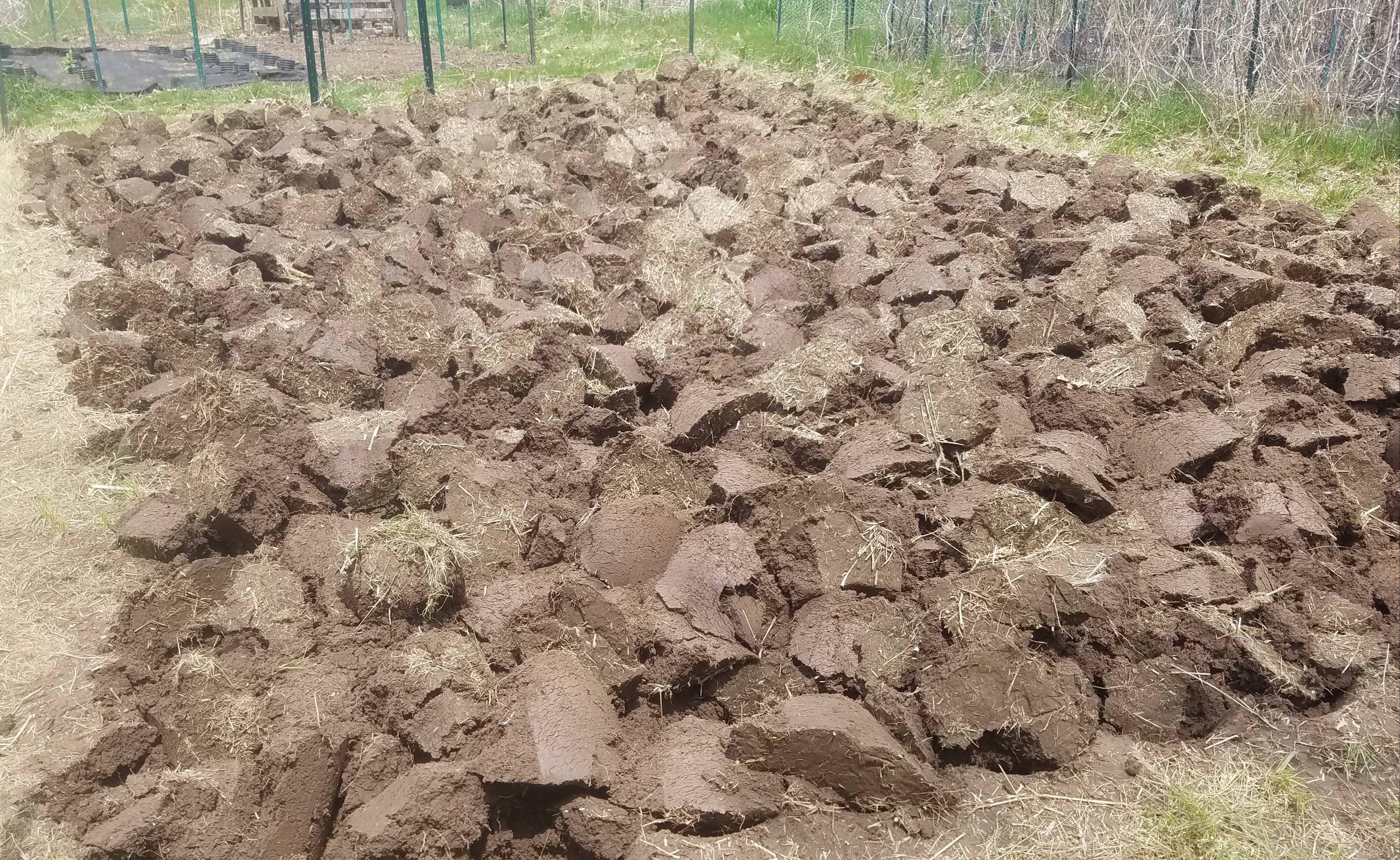
It is always upsetting to spade the garden in spring. When I do, it disturbs a world that became stable since the last growing season. One year I found a burrow of rabbits. This year it was a mouse maze under a section of ground cover. As a human gardener I have no choice but to remove the pests. That’s not to mention the microbial empire disrupted by the turn of a shovel. While the spaded garden may resemble a mass-murder scene from the perspective of earthworms and bacteria, in the long term, the garden is better for it. Better for humans, anyway.
I’ve been reading about the Declaration of Independence. Property and the ability to acquire, own, and do what one wants with it as long as it doesn’t infringe on the rights of others was an unspoken aspect of the founding document. Here is the declaration of rights from the second paragraph. Note there is no mention of property.
We hold these truths to be self-evident, that all men are created equal, that they are endowed by their Creator with certain unalienable Rights, that among these are Life, Liberty and the pursuit of Happiness.–That to secure these rights, Governments are instituted among Men, deriving their just powers from the consent of the governed.
There were slave holders among the founders. They realized including enslaved humans as part of “all men” who had self-evident rights would have dire consequences for the new republic. In chattel slavery’s peculiar institution, enslaved humans were property without rights. Slave-holding founders were mixed in their views toward slavery, yet the new country assumed slavery would continue to exist after 1776. What may be speculation today, yet seems equally self-evident, is the founders set in motion a process that would lead President Abraham Lincoln to free the slaves. This process of emancipation continues to today. Despite Chief Justice John Robert’s decision in Shelby County v. Holder, that racial disparity is not as bad as it was when the Voting Rights Act became law in 1965, and preclearance of changes to voting laws identified by geography no longer applied, the need for racial justice continues.
My plots of garden are more fertile than most of the farmland surrounding us. If I’ve taken to applying composted chicken and turkey manure as fertilizer, my gardening practices are nothing like the chemical-based, Borlaugian agriculture practiced by so many of my neighbors. Any life destroyed by planting the soil in a garden will be renewed and the soil made more healthy.
Despite delays, there will be a garden this year. Already the turnips, peas and beets are germinating in the ground. Inch by inch, row by row. I’m going to make this garden grow. Now if the rain will let up for a few days.
My spouse remains at her sister’s home, helping her move, unpack and settle in. Sunday in Big Grove the weather was sub-optimal for gardening. With temperatures in the 40s and 50s, intermittent rain, and ground too wet to work, I stayed busy indoors all morning. It was in the afternoon things changed.
The greenhouse is filled with seedlings and once the weather breaks there is a lot to get planted. For now I wait for better conditions. That’s where I found myself, as we find ourselves so often, longing for something that isn’t. It can get the best of us on wistful Sunday afternoons alone.
I moped for a while, then reheated a container of leftover creamed vegetables and chick peas for lunch. At some point I sat in the living room and picked up my mobile device to watch videos. I started with President Biden’s speech at the White House Correspondents dinner Saturday night. Next, I watched Trevor Noah’s remarks there. There was some humor tinged with remorse at what our politics have become.
Around 2 p.m. I went to my writing place and turned everything off, including my desktop. In a roundabout way, I got back to videos.
I watched Iowa Press where the guest was State Auditor Rob Sand. Being auditor isn’t a flashy job, yet Sand has made something of his position. What he didn’t do was let O. Kay Henderson trap him into the conventional news narrative about the Iowa Democratic caucuses. Here’s the transcript:
Henderson: Your party, the Iowa Democratic Party, is going to have to make a case to the Democratic National Committee that Iowa’s Caucuses should remain first. What case would you make?
Sand: That experience matters in doing this. I talked to a reporter who has been a national reporter for a long time during the caucuses last time and I remember he has traveled all over the country. And he’s like, you know what, you guys actually are, you’re really good at this. I mean, I go to New Hampshire a lot and they’ve got experience with it too, but the quality of the questions that are asked of the person who wants to be the next leader of the free world in the state of Iowa are just head and shoulders above any other state.
Henderson: But that’s not the issue. The issue is participation. The caucuses prevent people from participating because of the mode of the voting and also it has got this weird caucus math.
Sand: Yeah. We can continue to make reforms. I think that’s fine. We can make the changes. But Iowa culturally has that attentive population that is good I think at asking those questions and filling that role and I think it would be a mistake for us to not be going first.
I appreciate Sand sticking to his talking point on the caucuses, even If I disagree Iowa should be first.
The afternoon waned. The main work of the day finished, I picked up my mobile device again and watched a couple of Massimo Bottura’s homemade videos from the pandemic. “This is not Master Class cooking,” he said. “It is home cooking.”
Then I came upon the video linked above, in which Bottura talks about the relationship between art and food. “My kitchen is not a book of recipes, a list of ingredients, or a demonstration of techniques,” he said. “But a way of understanding my terrain.” That gets to the heart of what I am trying to accomplish in my kitchen garden. It was unsettling.
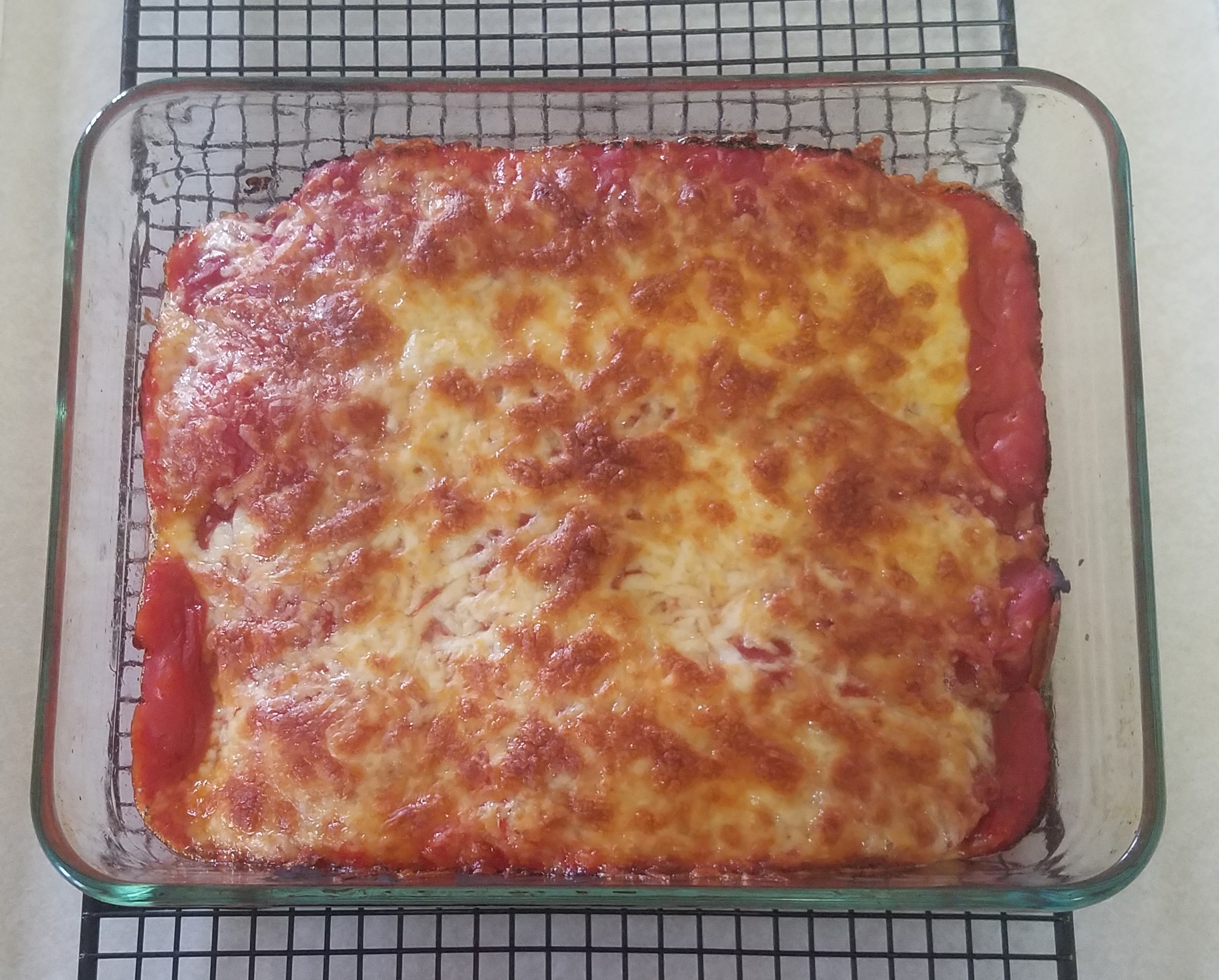
I’d been planning to make pizza for a few days and after 3 p.m. I began making the dough. It begins with a scant cup of hot water taken from the tap. I put my finger in it to make sure it is not hot enough to kill the active dry yeast. I pour it in a bowl and add a teaspoon of yeast, a teaspoon of sugar, a dash of salt and a tablespoon of all purpose flour and mix it together. I add flour, knead it into a ball and put it in an oiled, covered bowl to rise in an oven at the lowest possible setting. It takes about an hour.
Pizza sauce is different each time I make it. My current go-to is a 15 ounce can of Kirkland organic tomato sauce. It is seasoned, yet I add. Sunday the mixture was a teaspoon each of granulated garlic, onion powder, home-grown oregano, and basil. It was a rich, dark red color. About half was reserved for pasta later in the week.
When the dough had risen, I punched it down and kneaded again. I put the ball on a piece of parchment paper laid across the wooden paddle and formed the dough. I learned if the edges remain mostly untouched they will bake to be thick. I’ve been enjoying that the last several pies.
Toppings are a “what’s in the refrigerator moment.” It was capers, spring onions and part of a fresh red bell pepper. Toppings are almost never the same and depend on what’s available. Pizzas are the best once basil comes in from the garden.
I topped it with mozzarella cheese and slid it into the 500 degree oven on the ceramic floor tiles I placed on the bottom shelf. Eight minutes later, dinner was ready.
I don’t know if what I wrote is a recipe. It wasn’t intended to be. Engagement in food preparation was a way of dealing with one solitary afternoon. It’s the same way writing about it from our quiet house this morning is. There are days when we yearn to be with people and others we crave solitude. While we are never truly separate from society, gaining introspection for a while helps us function better in the broader world. Naming what this is is not necessary. It’s expressing a dominion over something that doesn’t need it. Call it what you will, but I’ll use the phrase “cooking in place.” It made the best of what could have been a lonesome afternoon.
Actor Slim Pickens as Major T.J. “King” Kong in Dr. Strangelove or: How I Learned to Stop Worrying and Love the Bomb. Photo Credit – Getty Images
Iowans are legitimately worried about the risk of detonation of nuclear armaments as a result of increased tensions in the world. The war in Ukraine is perceived by some as a proxy war between the United States and Russia. While it’s true our two countries have the majority of nuclear weapons that exist in the world, both Putin and Biden have said they seek to avoid a nuclear exchange. The assertions about a proxy war do not seem accurate.
Dr. Robert Dodge, posted the following article at Common Dreams on Friday. It explains how I feel: We need to take a step back from the brink.
Ukraine, Existential Threats, and Moving Back From the Brink We can no longer continue to wage war over finite resources and survive in a nuclear-armed world.
First published on Common Dreams by Dr. Robert Dodge.
This spring, as those before, beckons a season of renewal and opportunity for the future. We have just witnessed the major religions of the world celebrate Easter, Passover, and Ramadan and in the words of Ambassador El Yazidi of the Coordinating Council of Muslims in Germany, “We are all siblings in humanity and must work together for good.”
This is also a time when the world celebrates Earth Day with a heightened awareness of the fragility of our world and the intersectionality of mankind’s actions on the survival of our planet. Yet our world is in peril with many intersecting crises from the continued global pandemic, now in its third year, to climate crises that continue to inflict progressive epic storms and devastation. Add to that the two-month-old Russian war on Ukraine with threats and nuclear posturing by the superpowers bringing us closer to nuclear war by intent, miscalculation or cyber-attack portending the greatest threat of a global near-death event since the end of the last Cold War.
Against this backdrop, it is also tax season in the United States when the nation funds its priorities as we look to the future. In the words of Rev. Jim Wallis, founder of Sojourners magazine, “Budgets are moral documents.” And so what are those priorities and how do nuclear weapons factor in?
The 2022 fiscal year budget, the first by President Joe Biden, will see the U.S. rob our communities of precious resources spending nearly $77 billion on all nuclear weapons programs, exceeding the expenditures of the last budget from the Trump administration. In total, the U.S. will have spent approximately $219 billion on all nuclear weapons programs in the last 3 fiscal years while fighting a global pandemic. To see the costs to your community, see the annual Nuclear Weapons Community Costs Project just released by Physicians for Social Responsibility Los Angeles.
Current global nuclear arsenals contain about 12,700 nuclear warheads, with the United States and Russia having near 90% of those. The use of even a tiny fraction of these weapons threatens life as we know it. A regional nuclear war using 100 Hiroshima size weapons (less than half of one percent of the global nuclear arsenals) over cities in India and Pakistan—South Asia’s nuclear powers who have had a tumultuous relationship for decades—could cause a global famine threatening 2 billion people due to the devastating nuclear winter and climate change that would follow. A larger nuclear war between the U.S. and Russia targeting the major cities in each nation could possibly lead to the extinction of the human race.
This is not a situation that has to be. The existence of nuclear weapons and the continued dependence on fossil fuels with the destruction of our environment result from our way of thinking and behavior. We cannot continue to wage war over finite resources and survive in a nuclear-armed world. We must end our dependence on fossil fuels that threaten destruction of our life sustaining ecosystems. Instead, we must recognize our interdependence as one human family. Nuclear weapons have been made by man and can only be eliminated by man. Ending the subsidy and our dependence on fossil fuels while transitioning to sustainable renewable resources is also in reach given the political will.
The United States can and must lead on these issues. There is a rapidly growing national intersectional movement in the U.S. called Back from the Brink. It is a coalition of individuals, organizations, and elected officials working together toward a world free of nuclear weapons and advocating for common sense nuclear weapons policies to secure a safer, more just future. Endorsed by over 400 organizations, 326 U.S. elected officials, 58 municipalities and 6 state legislative bodies, it calls on the United States to lead a global effort to prevent nuclear war by:
Actively pursuing a verifiable agreement among nuclear-armed states to eliminate their nuclear arsenals.
Renouncing the option of using nuclear weapons first.
Ending the sole, unchecked authority of any U.S. President to launch a nuclear attack.
Taking U.S. nuclear weapons off hair-trigger alert.
Cancelling the plan to replace the entire U.S. nuclear arsenal with enhanced weapons.
All are invited to endorse and join this movement. We have a way out. There is hope for the future and that of our children’s children. At this moment in history we must understand the threat and opportunity before us. Let this be a time when we choose hope for all of humanity.
Our work is licensed under Creative Commons (CC BY-NC-ND 3.0). Feel free to republish and share widely. Robert Dodge
Robert Dodge, a frequent Common Dreams contributor, writes as a family physician practicing in Ventura, California. He is the Co-Chair of the Security Committee of National Physicians for Social Responsibility and also serves as the President of Physicians for Social Responsibility Los Angeles.
It is difficult to know when winter’s last frost will occur. I believe it passed, and especially after Mother’s Day, risk of frost will be minimal. The garden is as far behind as it has been since we moved to Big Grove Township in 1993 and dug the first plot the following year.
Under row cover almost everything looked good. Radishes and spinach are up. The transplanted lettuce and Pac Choi are doing well. One type of radish seed did not germinate so I planted lettuce seedlings in its place. One can never have enough lettuce. I weeded and rearranged the row cover supports to make enough for a second row for herbs and vegetables needing protection from flea beetles like Tatsoi and arugula. Radicchio is new to me and last year it grew well under row cover, so I’m planning a couple of heads there. Row two will be in the same plot as the first with celery planned in between covered rows.
It rained most of Friday and the forecast is for more today. There are plenty of political events to attend if I can’t get in the garden. If there is one close, I’ll attend, but otherwise focus on garden tear down (removing fences and cleaning them), seeding in trays for the greenhouse, and laying out the garage floor with garden stuff. It’s time to park the vehicle in the driveway where it will stay for a few weeks until the garden is mostly planted.
The next major planting is onions. I removed last year’s ground cover from the planned plot and am waiting for rain to end long enough for the ground to dry, burn brush, and turn, till and plant. The onion and shallot seeds are getting a bit long in the trays and need to go in the ground. Onion starts from my supplier need planting as well. Onions are an important crop and if I can get in the ground, I’ll plant more this year than last.
Tomato, pepper, celery and eggplant seedlings need some growing time in the greenhouse before they are large enough to plant. A week of sunny days would help. The fruit trees are late producing leaves. I was worried the Red Delicious tree was a goner after being damaged multiple times in wind storms. It is not expected to fruit this year, yet it survived winter and that’s a positive sign.
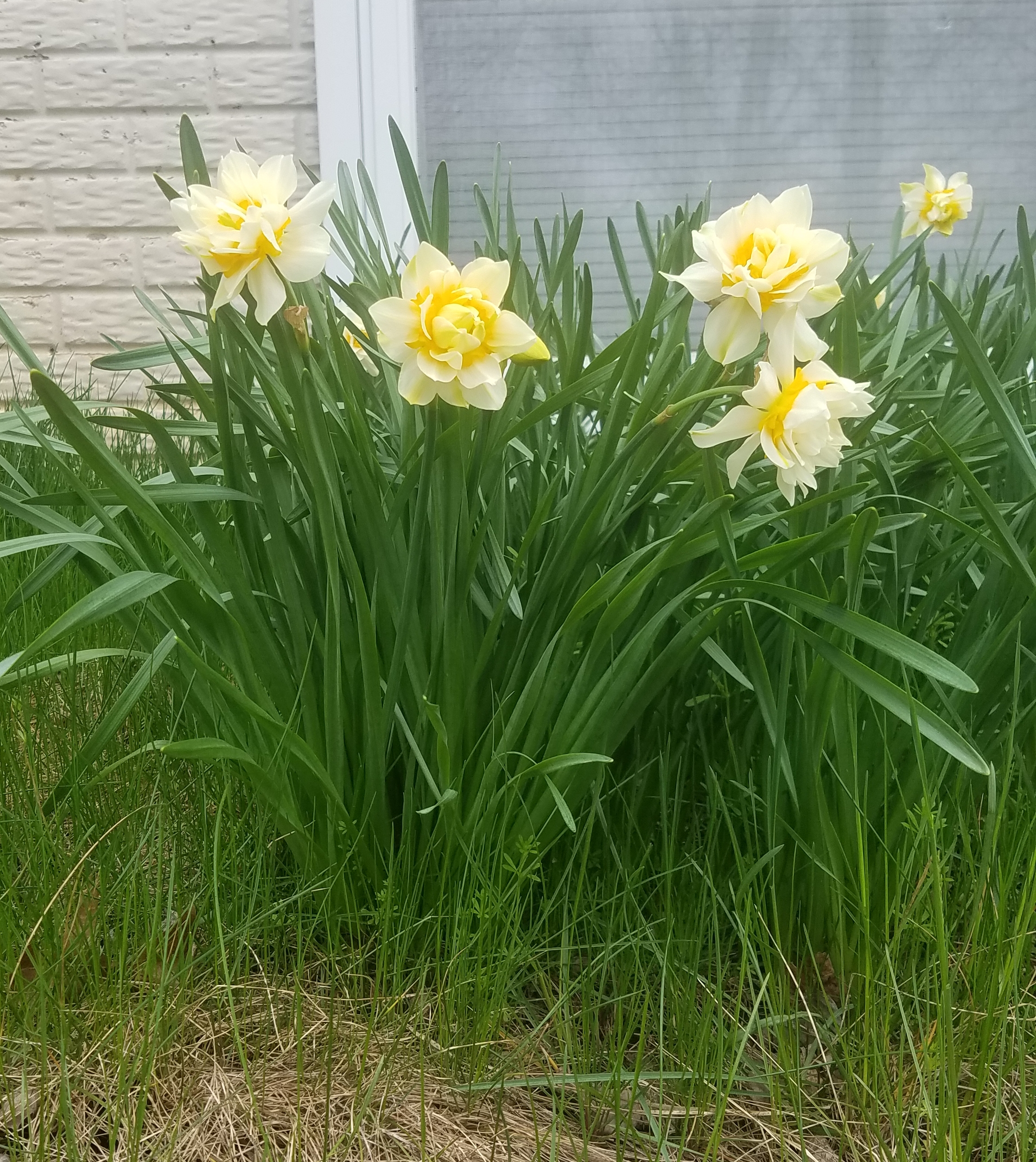
The yellow flowers I brought from Indiana are beginning to bloom. They are also late, yet there are some beautiful blooms coming out after a lackluster season in 2021. My spouse is with her sister in the state capitol. I sent a bouquet via email to celebrate the end of April. The blooms don’t last long.
A highlight of the new electoral districts is State Senator Kevin Kinney is in Senate District 46 which includes where I live in Big Grove Township.
Senator Kinney is a quiet, competent member of the state legislature who farms in Johnson and Iowa Counties. If he is reelected in November, he would be one of the only full-time farmers in the legislature. This is Iowa. We can use an experienced farmer with a commonsense approach to lawmaking.
With Kinney’s past experiences in the Johnson County Sheriff’s Office, he focuses on important issues that are not flashy or in the news.
For example, Kinney recently told me the Civil Statute of Limitations for sex crimes should be extended to match the Criminal Statute of Limitations. This may be a bit in the weeds for most, yet if his idea becomes law, a teenage victim of sex crimes might be able to seek justice where today they can’t. Kinney will work with anyone to change the law.
I have known him since he was first elected and can say he’s an honest person, not afraid to do legislative work Iowa needs. I will vote for him in November. You should consider him too.
~ Submitted as a letter to the editor of the Solon Economist and other newspapers.
I had the second discussion of what to do about missing tooth #14 at a recent, routine dental appointment. The same dentist who extracted it answered my questions. I don’t plan to get an implant or a bridge to cover the gap. I’ll be gap-toothed, I guess.
I recounted my experience working as an admissions clerk at the University of Iowa College of Dentistry where what seemed like a lot of patients complained of dental implants gone wrong. Doc said cultural aspects of getting and living with an implant were as important as proper use of the technology. In other words, many implant patients are part of their own problem.
This conversation is basic to being an American. There is the idea of something and the actuality of that same thing. The idea of a dental implant and the loading and living with one are culturally separate. Increasingly, Americans seem more focused on ideas, to the extent the social context in which ideas are found is one of neglect, misinformation and bad habits. Hence failed dental implants and other things.
On several occasions people said to me of their decaying teeth, “I’m going to yank them all and get plates.” One hoped such yanking was done by an oral surgeon rather than in the tool shed or kitchen with common household pliers. There were a share of folks who took the tool shed approach to relieving tooth pain. It created more business for our clinic to remove broken roots their pliers couldn’t reach.
The distinction between ideas and their social context is applicable to things besides dentistry. For example, we know we should moderate simple carbohydrates in our diet to prevent onset of weight gain and Type 2 diabetes. There is a science to this. At the same time it is easy to prepare a simple spaghetti aglio e olio (garlic and olive oil) at home when pinched for dinner. It’s cheap and tastes good if properly prepared. It can seem convenient to order take-out pasta or pizza from a restaurant via GrubHub or Uber Eats without regard for portion size. Moderation is in remission in American society.
What makes American society frustrating is we live in the actuality of ideas developed and promulgated by others. Some of the ideas coming out of media figureheads and politicians are outrageous. What people do based on such ideas affects us all.
We feel little ownership of ideas prominent in our lives. Our country is based on ideas in a certain world view. When the founders wrote the Declaration of Independence, the first seven words of the second paragraph spoke to their world view, “We hold these truths to be self-evident.” There were truths and it was possible to know them and verify them: they were self-evident. If most founders believed there was a God, the new nation was not founded in religion. Quite the opposite. Following the philosophy of John Locke, human understanding considered the natural world, rendering any relationship with God unknowable and unverified. What was true was evident in the natural world and could be observed if one had the will and mental acuity. We’ve entered a realm where any idea can be viewed with suspicion regardless of its inherent, observable truth.
As I told my dentist, the missing tooth is not depriving me of nutrition. Its position is far enough back so I don’t appear to be a gap-toothed fool when I smile. A missing tooth is not what I wanted. The truth is I can go on living in the American experiment.
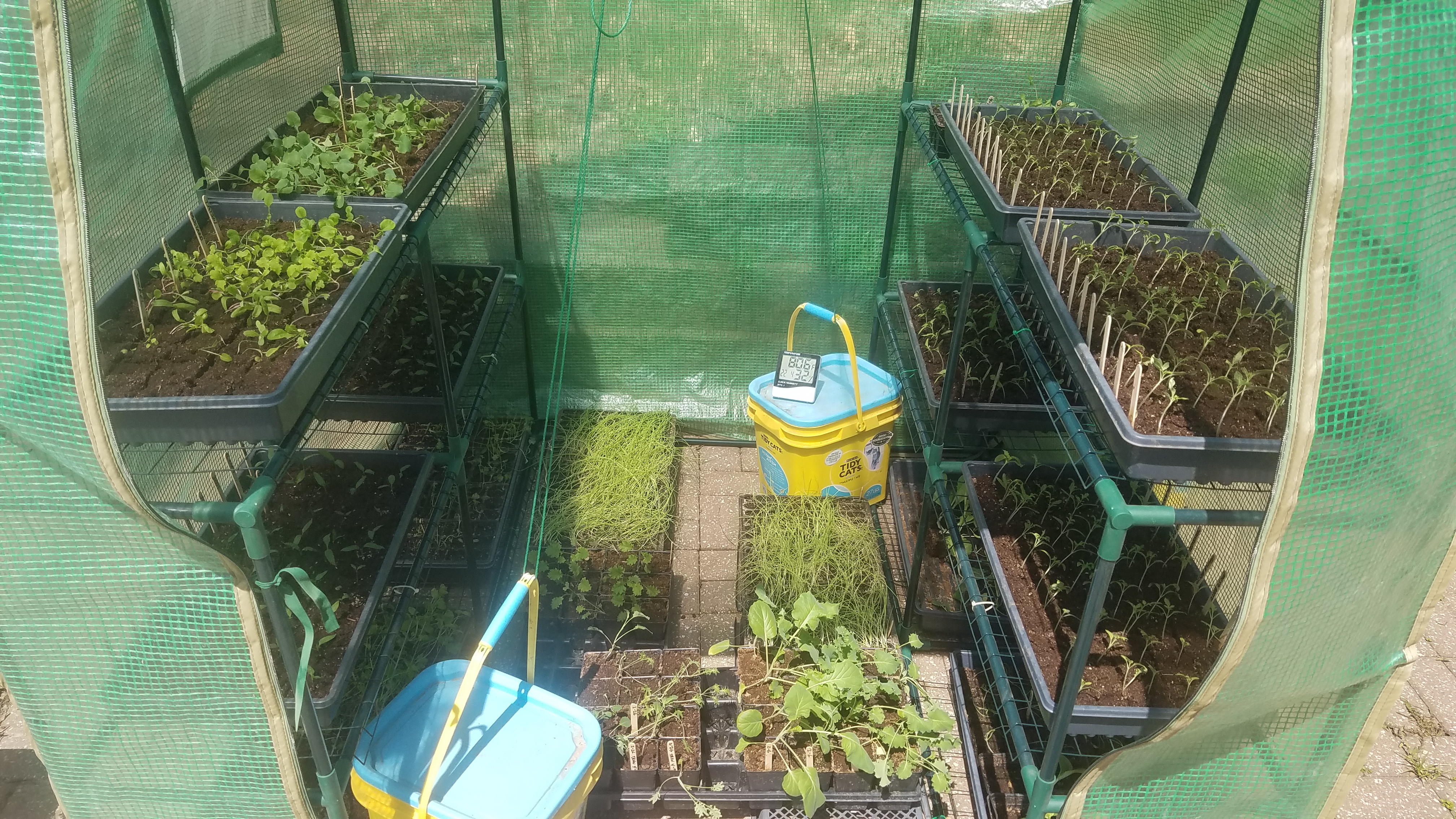
After being damaged in a windstorm the greenhouse is back up… and full.
Everything takes longer than expected. It took about two hours to assemble the replacement frame for the greenhouse and transfer the seedlings from the dining room floor where they landed after a wind storm ruined the last one.
Overnight temperatures were forecast to drop to freezing. At 3 a.m. I checked the weather’s progress then ran an extension cord for a space heater to keep tender plants from freezing. It was warm enough inside the greenhouse they would have survived, yet better safe than sorry.
Yesterday I transferred kohlrabi and arugula seedlings to their rows, pounded fence posts into the ground, and installed a temporary fence to deter deer. I had planned to do more yet ran out of hours on my shift.
Republicans keep yammering about food and gasoline prices yet that’s not what is killing my budget. Big percentage increases in insurance, natural gas, broadband, electricity, and telephone service are. Each increase is the result of a large company’s accounting department. Go figure.
Weather looks good for more time in the garden today. I’d better get organized.



 Journey Home
You must be logged in to post a comment.