
I wake in the middle of the night with the sun well positioned below the horizon. What light exists comes from stars, the moon, airglow, or the indirect light of nearby never-sleeping cities. I am awake, but don’t want to be.
Sometimes I get up and walk to the kitchen for a drink of water, then stand at the French door, looking at the sky. By now Earth is turning toward light as the sky begins to lose its blackness. Below the horizon, shapes blend into a singular darkness. Above, stars and planets are still visible. Light has begun to penetrate, thinning the darkness.
Our child called it “blue thirty:” the point where sunlight begins to dominate the sky. The sky is briefly a dark shade of blue. They noticed this while camping and taught me to look for it. The silhouettes of grounded objects emerge from darkness, becoming recognizable forms.
Now I want to turn on lights and wake. The horizon has become readable, and the urge to create something is present at nautical twilight. I make coffee and go to my writing place.
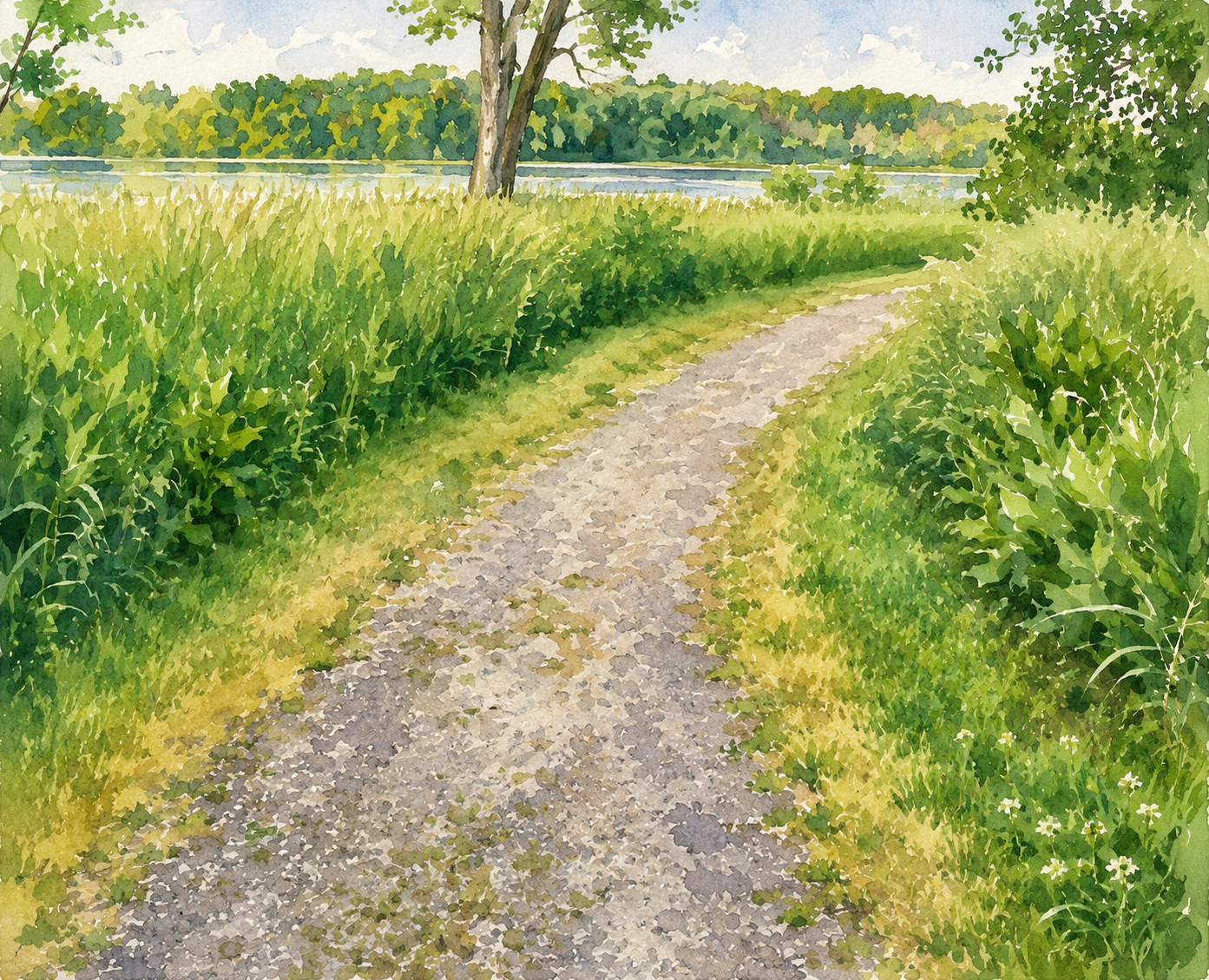
After donning hiking shoes, I walk toward the state park trail at first light. From obscuring darkness, the day takes shape in colors—greens, browns, and blues. It begins in semi-darkness with loud migrating birds—geese in late winter and songbirds in spring. Bird sounds surround me as I pick up the pace to increase my heart rate. I can see the trail changing from dark to light at my feet.
The sky puts on a show as dawn breaks. In pinks, reds, and golds, refracting sunlight makes the sky dance as an artist paints a canvas. Dawn arrives in colorful glory.
By the time I round the turn toward home, the sun rises. Direct light illuminates the trail, with long shadows of trees, bushes and other vegetation. The day has become clear—with things to do.
As I finish the turn, I feel my pulse and walk toward the rising sun.
One response to “A Day Begins”
What a vivid description of the sunrise. Thank you for sharing.