The jump I made in 1989, from working for a top truckload common carrier to working for the ninth largest corporation in the world, freed me to be more creative. I read my journals from that time in the Calumet region near Lake Michigan and find in them the kernel of all that I would become as a creative person.
I am thankful my creative self came up through a grueling career as a transportation and logistics manager. It grounded me in the unpleasant reality that is society in the post-Reagan era. In particular, the more than 10,000 interviews I had with job applicants in transition changed me in a way that would not have been possible without them. For creativity to have been forged in this kind of life gives it an edge.
This passage came from my life experiences in the Calumet.
The book written by Jack Kerouac has the same validity as his presence here. What do the creators of these texts have to say to me? What shall I say from this outpost of civilization?
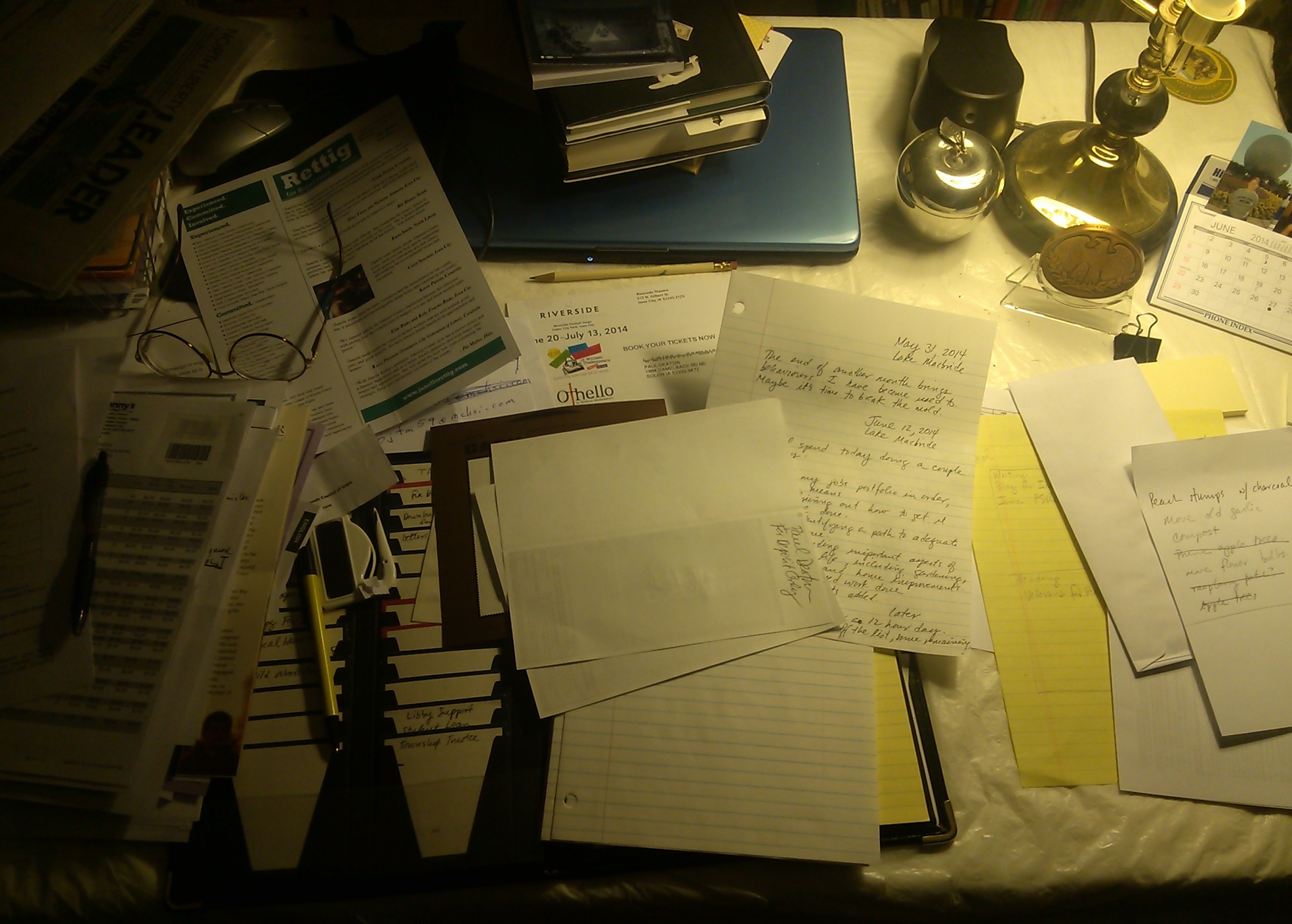
What becomes significant in this studio is not the clutter in it, but the words and texts produced here and sent into the rest of society. Things take on significance to me, but it is more important that I begin sending things out. Messages in a bottle if you will. (Personal Journal, Merrillville, Indiana, Sept. 15, 1990).
Because of my high level of engagement at work, it was exceedingly difficult to “send things out.” Likewise, there were not many platforms for doing so. I survived on letters to a few friends, trips to visit them, and time in my writing space contemplating life in society. When I could, I spent time in the garage or at the word processor in the dining area being creative. I never gave up being creative and that led me to today.
When I read a book, I image the author as if they were sitting across the room. Sometimes that works and indeed what Jack Kerouac wrote in any of his books is not far removed from his life. When I read one of Robert Caro’s books I imagine him in his workspace in New York, turning every page. When I read John Irving’s writing about Iowa City, I remember the occasional times I saw him near the English-Philosophy Building or visited one of the places mentioned in his books. When I read William Carlos Williams today, I can’t help but be influenced by the time I spent in Iowa City with his publisher James Laughlin. Laughlin got teary-eyed when he spoke of his last meeting with Flossie Williams. I want my writing to be like that: one step or less removed from the reader.
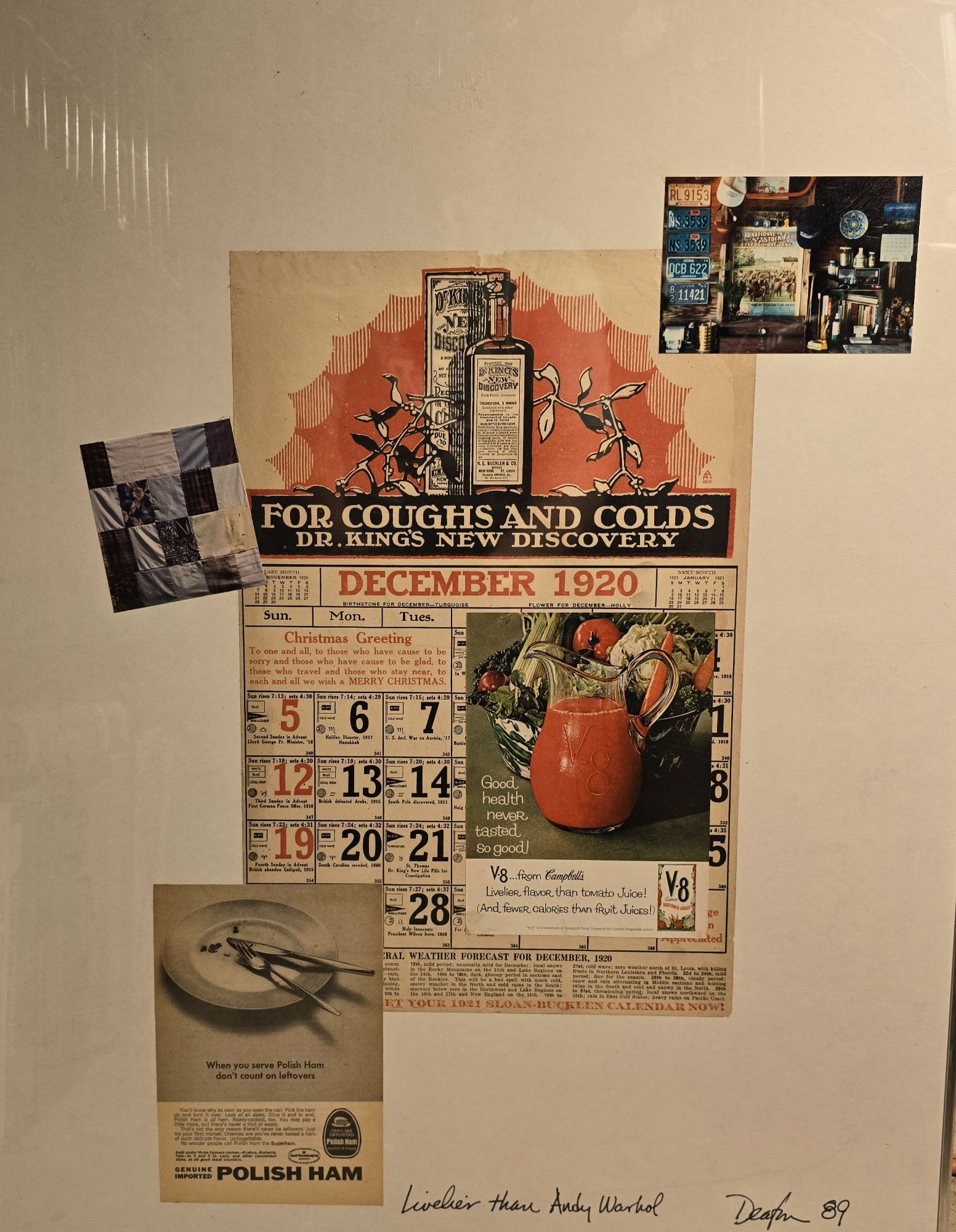
I mentioned clutter and sometimes such clutter gathered from projects of mine, auctions, and the detritus of living a life found its way into what I produced. I’m not sure it was particularly good, yet it reflects my urge to create something new and original. A collage of photographs, old calendar pages, and magazine advertising was something I found visually appealing at the time. That I still have this piece is remarkable.
Leaving the trucking firm freed me from my Iowa connections and enabled new ones in the Calumet. I became more of a creative being. When things didn’t work out at my new job I returned to the trucking firm. Yet I did something after leaving that stays with me. I was able to better balance work, creative endeavor and family after the experience. There is a straight line from that realization to today.
 Journey Home
You must be logged in to post a comment.