Categories
Living in Society Sustainability

A World Without Nuclear Weapons

B-61 Nuclear Bombs

While it got scant notice in the U.S. press, the joint statement after the Geneva, Switzerland meeting between President Joe Biden and Russian President Vladimir Putin was significant:

We, President of the United States of America Joseph R. Biden and President of the Russian Federation Vladimir Putin, note the United States and Russia have demonstrated that, even in periods of tension, they are able to make progress on our shared goals of ensuring predictability in the strategic sphere, reducing the risk of armed conflicts and the threat of nuclear war.

The recent extension of the New START Treaty exemplifies our commitment to nuclear arms control. Today, we reaffirm the principle that a nuclear war cannot be won and must never be fought.

Consistent with these goals, the United States and Russia will embark together on an integrated bilateral Strategic Stability Dialogue in the near future that will be deliberate and robust. Through this Dialogue, we seek to lay the groundwork for future arms control and risk reduction measures.

The White House, June 16, 2021.

The joint statement echoed what President Ronald Reagan and Secretary General of the Communist Party of the Soviet Union Mikhail Gorbachev said 36 years earlier in Geneva, “A nuclear war cannot be won and must never be fought.”

“The complete abolition of nuclear weapons is the only way to be safe from their threat,” president of Physicians for Social Responsibility of Los Angeles Robert Dodge, M.D. wrote in Common Dreams.

The United States and Russia possess far more nuclear weapons than the rest of the nuclear states combined, enough to destroy life as we know it on Earth many times over. The two states working toward strategic stability is essential to compliance with Article VI of the nuclear nonproliferation treaty. During the previous U.S. administration, future compliance with the NPT came into doubt. President Biden is getting the U.S. back on the right track.

That’s not to say it will be easy. As Dodge points out, the Treaty on the Prohibition of Nuclear Weapons went into force January 22 this year. Currently it has been signed by 86 nations and been ratified by 54. Neither Russia nor the U.S. have joined the treaty and the prospects of them doing so near term are dim.

All nine nuclear states must take a step back from the brink of nuclear annihilation. The Geneva statement on strategic stability suggests it is possible to do so.

To learn more about the U.S. grassroots organizing effort to produce the safer, healthier and more just world that is possible without nuclear weapons, visit the Back from the Brink website.

~ First Published on Blog for Iowa

Categories
Sustainability

Safe Food for a Healthy Tomorrow

Belgian Lettuce Harvest

The United Nations General Assembly declared June 7 World Food Safety Day. There is not much recognition of the event in the United States where there are programs to ensure safe food in the national production and distribution system.

Food safety is a shared responsibility between governments, producers and consumers. Everyone has a role to play from farm to table to ensure the food we consume is safe and healthy. Through the World Food Safety Day, WHO works to mainstream food safety in the public agenda and reduce the burden of foodborne diseases globally. Food safety is everyone’s business.

World Health Organization website.

In the United States, food safety is less of a problem until we get to large-scale agricultural operations. Even then, when there is an issue, such as the e.coli outbreak in lettuce from Arizona and California farms in 2018, news media and government are quick to take action to prevent spread of foodborne disease. Potentially bad lettuce was pulled from store shelves within hours of recognition of the outbreak.

I have little worry about the safety of food harvested from our garden or sourced locally. I learned enough about food safety to make sure meals cooked at home are safe. We have control of everything from garden to plate, making the risk of infection exceedingly small.

As vegetarians we have few worries about chicken, turkey, beef and pork. The world would be a better place if consumption of those proteins were reduced. As far as seafood is concerned, with imminent depletion of fisheries I don’t understand why anyone would eat any type of seafood. It would be good to give ocean life a rest so it can restore itself, if that’s still possible. The dairy industry is highly regulated in the United States. I use some dairy in our household and have had no issue with contamination or spoilage. I understand a large percentage of the population relies on fishing for subsistence, livestock as a main protein, and dairy products.

In an affluent country government has standards to ensure a safe food supply chain. Consumers are informed about the risks of foodborne disease. This may be why World Food Safety Day gets little attention here. Food safety should be the background hum in modern society, something we take for granted. For the most part, in the United States it is. That’s part of our American privilege.

Categories
Kitchen Garden Living in Society

Supporting the Food Bank

Garden signage is new this season.

I reached out to a long-time friend who manages the community food bank to ask if they would like some of my excess garden produce.

“We would be most grateful for your fresh produce!” they emailed.

I put a recurring event on my calendar to deliver something every Monday morning beginning June 7 through the end of season. I look forward to seeing her in person on Monday, for the first time since an event during the Elizabeth Warren campaign before the Iowa Caucus.

The goal of a kitchen garden is to match garden production with what a cook can use in the kitchen. Gardeners put a lot of promise in the ground and not all of it comes to fruition. When it does, though, it is time to share the bounty. What better way to do it than donate food to people who need the help of a community food bank?

I participated in a call this week where a group of white Iowans, most with grey hair like mine, were working on a political advocacy project regarding the climate crisis. Halfway through the call, I realized there was no discussion of economic justice, that the people most impacted by the climate crisis are low income, black, indigenous, and people of color. I raised the issue and was surprised by the response. The suggestion was the impact of the climate crisis on low income individuals was mostly in countries other than the United States. OMG! We have a long way to go. The moral is if we don’t raise the issue of economic justice, and its companion, climate justice, it won’t be addressed, even among climate activists.

Thursday was almost perfect, maybe a little hot with low humidity. It was the kind of day I remember from childhood, one without need of air conditioning, where the outdoors was a great place to spend purposeful time. As an aging gardener, I get most of my work done in the morning before it gets hot and humid. Even so, during peak temperatures in the high 80s, it wasn’t so bad.

In driving us to stay home more, the coronavirus pandemic provided a new perspective on daily life. We notice things that our busy lives hid from view. Things like the food bank, climate justice, and the condition of garden plants. That is a good thing.

Categories
Environment

Climate Change Response

Bridge over calm, polluted water, April 6, 2021.

In March I wrote Congresswoman Mariannette Miller-Meeks about the climate crisis as follows:

I hope you will support the efforts of the Biden administration to act to mitigate the effects of our changing climate. Naturally I’m curious about your views on how you might address the effects of climate change while in the U.S. Congress. The approach of the Biden administration regarding mitigation of climate change is such there should be many areas in which to work with them without supporting an overarching environmental bill. I look forward to hearing your policy stances and how you can help address climate change while you are in the Congress. Thank you for your public service.

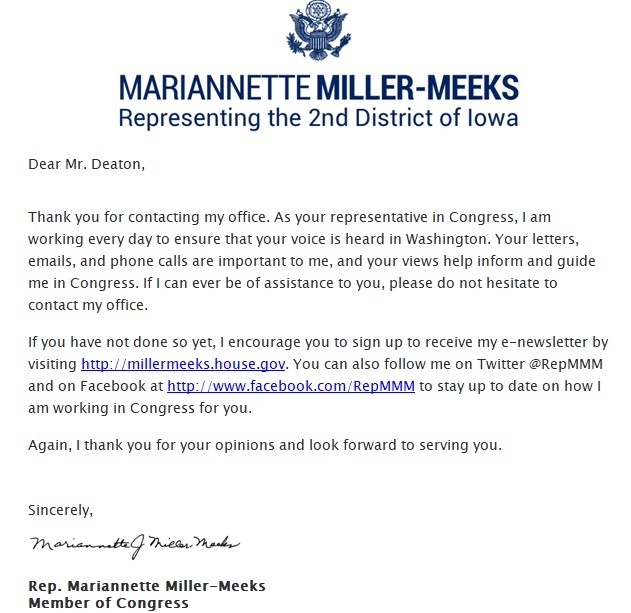
Here is her unedited response. It is not what I expected.

Received April 19, 2021 via email.
Categories
Environment

Introducing Myself, Again

Leftover seedlings

This is the text of an email sent this morning to the small group of Climate Reality Leadership Corps participants I am mentoring this spring. Every time I introduce myself, it seems like I am re-inventing who I am. Eventually all the stories will add up.

Welcome to the spring 2021 Climate Reality Leadership Corps training. I am Paul Deaton and will be your mentor. We’re looking forward to your participation!

Before I get too far, if you received this email and no longer plan to participate in the training just hit reply and let me know. As of last night’s mentor training, more than 4,700 people had RSVP’d for the training. There are 300 mentors.

I will be your mentor for both the training and as you begin to perform acts of leadership after the training. I use the pronouns he/him. I was born in Iowa and now live in a rural, Eastern part of the state.

I participated in the first Earth Day on April 22, 1970 and have been working on environmental issues, in addition to a career, ever since. I completed a career in transportation and logistics in 2009 and fully retired during the coronavirus pandemic. I attended the 2013 Climate Reality Leadership Corps training in Chicago and was a mentor at the 2015 Cedar Rapids, Iowa training. For me, Climate Reality has been a portal to diverse climate action all over the planet. I learned a lot and am here to help you do the same.

In retirement I spend more time writing. I started a blog in 2007 and am currently working on a book-length project. I am an avid gardener and last night I had to put a space heater in my small, portable greenhouse because of a frost warning. I start most of my own seedlings and spend a lot of time in my kitchen garden.

During my career I spent time in Texas, which is where everyone in our small group lives. One consulting project was near Sweetwater where I stayed on a 5,000 acre cotton farm during the rattlesnake roundup. (All the motel space was booked). I learned Texas is a large, diverse state. I look forward to getting to know you and other group members.

I plan to follow the lead of the Climate Reality staff as a mentor. I’m here to help as much or as little as you want. The Climate Reality staff continues to release information about the training and will up until the first day. As they do, I’m reading it and asking questions to prepare for our experience. One of the main things I will do is host the small group sessions via Zoom after each of four streamed general sessions. I want to assure you everyone’s voice is welcome to be heard during our small group meeting.

If you have questions, email is the best way to reach me. As the training takes shape, I may send an additional group email with any update. Staff will be emailing a lot, so I will keep mine to a minimum.

I hope you are as excited as I am for the training. Let me know how I can help.

Categories
Environment

Solar Arrays and Politicians

Sunset in Colorado Springs on July 11, 2011

Earth Day is coming and politicians have been reviewing Iowa’s solar electricity generation capacity. State Rep. Ras Smith posted about his trip to a solar array in Decorah. Iowa Lieutenant Governor Adam Gregg, Senator Joni Ernst, and Rep. Mariannette Miller-Meeks attended the dedication of a solar array in Wapello last week. The support for solar was bipartisan.

It’s no surprise. Solar arrays require no fuel except free sunlight. It is becoming the lowest cost option to generate electricity. Solar importantly avoids most liabilities of burning fossil fuels like coal and natural gas.

The message I hope these politicians take away from such appearances is government action is required to reduce carbon emissions in Iowa and elsewhere. Replacing coal and natural gas generating capacity with solar arrays is a way to do that.

We can install solar arrays on our homes, contributing to reduction of air pollution. Government regulation of our air and water quality is more important than individual action when it comes to reducing use of fossil fuels.

Focus on individual actions diverts our attention from what’s most important: what only government can address. Let’s remind our politicians we need government action this Earth Day.

~ Published in Little Village on April 13, 2021

Categories
Environment

Earth Day 2021

Woman Writing Letter

Earth Day is upon us. We should do something to note the occasion. Things like plant a tree or garden, or get together with neighbors to volunteer in our community come immediately to mind. I want to do those and more.

An individual can do a lot to improve the environment. We are past the point of relying solely on individual actions to address environmental problems.

The non-profit Conservation Coalition recently posted video of Congresswoman Mariannette Miller-Meeks. She said, “We don’t talk about very simple things that we can do that will allow us to both clean our environment, have a better environment, let people enjoy nature, but then also will be very productive and low cost going into the future.”

Individuals can do more. However, reducing acid rain, to which she referred in the video, was accomplished neither by an individual, nor was it low cost. Acid rain was addressed by George H.W. Bush signing the 1990 Clean Air Act.

We need more environmental accountability driven by the Congress, specifically by Chuck Grassley, Joni Ernst and Miller-Meeks. Focus on individual actions diverts our attention from what’s most important: the issues only government can address. We need focus on government action this Earth Day.

~ Published by the Cedar Rapids Gazette on April 13, 2021

Categories
Environment

Environment

1970 Earth Day Button

Where does society stand as Earth Day approaches? On shaky ground.

The Iowa legislature was unable to pass a revised bottle bill this year. Grocers and other retailers have wanted out of the responsibility to accept recycled cans and bottles since the beginning in 1978. If the legislature passes anything, it would be to relieve them of this duty once and for all. That’s how we roll in Iowa under Republican rule.

The problem with any of the states that has a bottle bill is not the amount of deposit, recycler handling fees, or the decision which containers are covered. It is that even with the best programs too much plastic, glass and metal finds its way into the waste stream. For Pete’s sake, it’s raining microplastics and the ocean is inundated with the stuff. Bottle bills create a diversion from the problem of regulating manufacturers, they assert that consumers are responsible for this form of pollution. Blaming consumers is an old sawhorse originating in the industry-backed Crying Indian campaign of 1971. If you are of a certain age, you’ll recognize this commercial.

Iowa is a state that does not care about the quality of our water except to comply with public drinking water standards. We have more livestock than people here and between manure runoff, field drainage tile, and surface runoff, our list of impaired waters is very high. Just this month, Iowa Department of Natural Resources approved a cattle feedlot in the watershed of a pristine trout stream.

“IDNR’s refusal to disapprove the plan submitted by Supreme Beef shows the sad state of affairs in Iowa when it comes to animal feeding operations. State laws and the DNR both prioritize new concentrated animal feeding operations (CAFOs) over protecting our streams, rivers, and lakes,” Iowa Environmental Council attorney Michael Schmidt said in a statement.

Perry Beeman, Iowa Capitol Dispatch, April 5, 2021.

There are two main components to environmental protection. Personal actions and government regulation of polluters. The largest corporations would like to see a focus on individual action because they seek to divert our attention from their corporate behaviors and what it would cost for them to improve. Elected officials? They mostly would like to avoid controversy with the electorate that put them in office. I eat a vegetarian diet, so I avoid most hog, cattle and chicken products. It’s not doing the job of environmental protection from livestock pollution.

Earth Day has become a celebration of Spring where individuals do things: clean up litter, plant a garden, or go on a bicycle ride. While personal action to improve the environment remains important, what matters more is corporate accountability, something a small group of industrialists is working hard to get us to avoid. Like the Crying Indian advertisement, they seek to distract us.

On Earth Day 2021, we must focus on holding corporate polluters accountable. That means working with elected officials to get something done to protect the environment. We’ll have to be persistent, though. In Iowa our federal elected officials don’t want to hear about holding their financial backers accountable. Even with our Republican office holders, one hopes repetition can lead to belief. Not contacting them about the environment is exactly what corporate interests want us to do.

Categories
Sustainability

In the Mississippi Basin

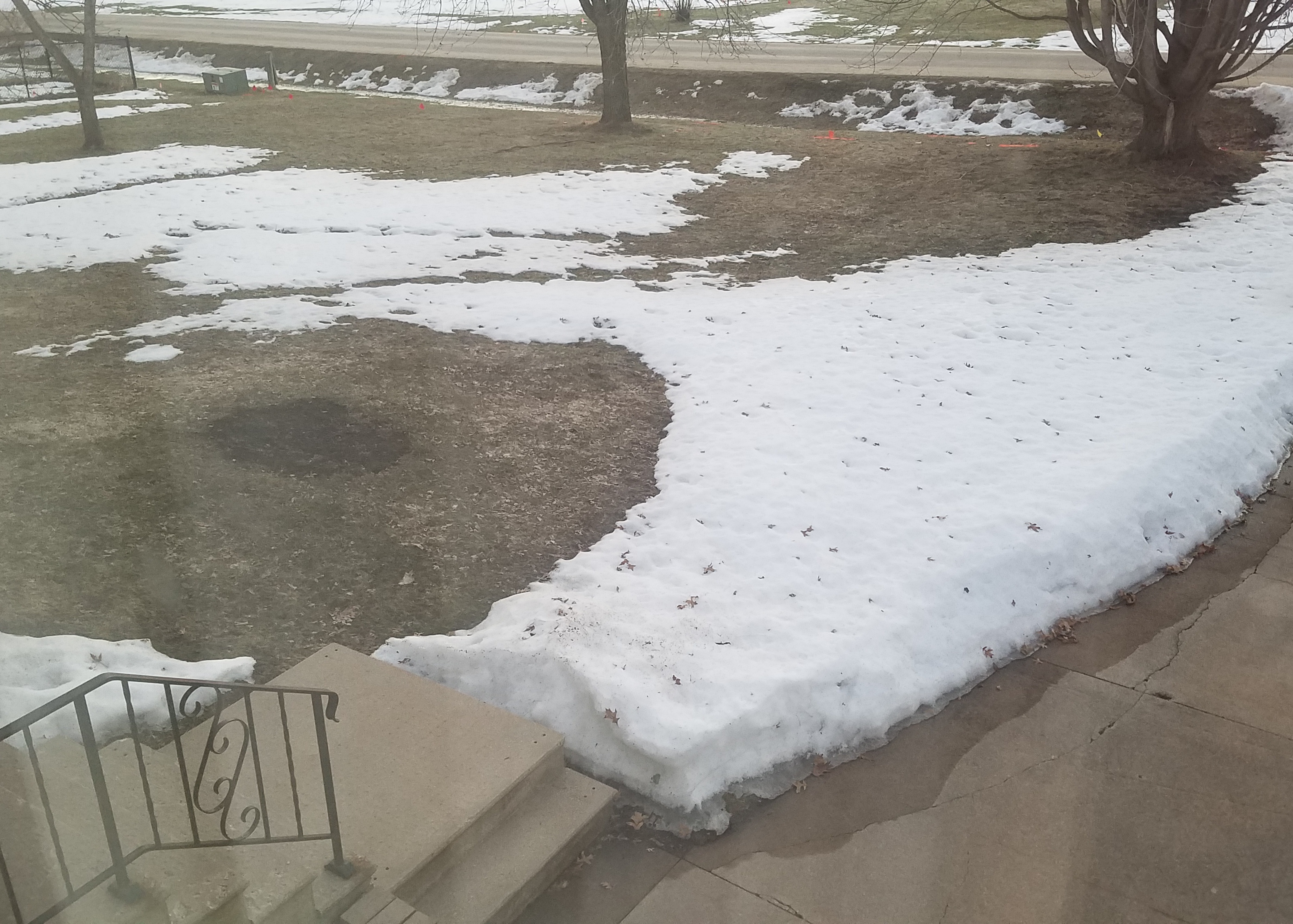
Snow melting March 2, 2021.

Snow melt began running in the ditch yesterday as late winter progresses in Big Grove. I doubt we will get more snow. It’s been pretty dry for the last nine days. The dry, cold weather combined with a substantial snow melt is a cause for concern.

What fraction of the snow melt leaves our property is bound for the state park lake a little more than a hundred yards away, then to the Iowa River which is a tributary to the Mississippi River.

The Mississippi River’s drainage basin is the third largest in the world, exceeded in area only by the Amazon’s and the Congo’s. It stretches over 1.2 million square miles and encompasses 31 states and slices of two Canadian provinces.

Under a White Sky: The Nature of the Future by Elizabeth Kolbert.

In 1966 I kept a scrapbook of newspaper clippings as an eighth grade project. Late winter, beginning in February that year, an ice jam hit the Quad-Cities area, resulting in flooding.

Unprecedented in size and steadily growing larger, a seven-mile-long “glacier” of ice is, like a giant cork, plugging the main channel of the Mississippi River from Credit Island to Buffalo.

Quad-City Times, Feb. 20, 1966.

My comparison of the ice jam was with the 1965 Mississippi River flood, one of the worst in Iowa history.

The great flood of 1965 on the Mississippi River, along the eastern border of the State, exceeded any flood known in 139 years. It caused damages probably in excess of ten millions of dollars in the State of Iowa. … The underlying cause of the flood was an abnormally cold winter which prevented the melting of an excessive snow cover in the upper reaches of the basin. Heavy rains late in March followed by rapid melting triggered the runoff which caused the floods.

The 1965 Mississippi River Flood in Iowa by Harlan H. Schwob and Richard E. Myers, United States Geological Survey, October 1965,

We are in that scenario — a cold winter which prevented snow melt the first two months of the year — at least until now. If the weather remains dry, the Mississippi may not flood downstream. If we get rain, there could be record flooding. Here’s hoping rain holds off until the snow melts. I say this despite the drought parts of Iowa have experienced this winter.

The 1965 and 1966 flooding formed my outlook about floods and how they happen. It is important to note the City of Davenport chose to do nothing to prevent the levee from flooding after these floods. City officials said it was to preserve the look of the levee, which later became the home of a jazz festival celebrating native son Bix Beiderbecke. Annual flooding and the damage it caused was acceptable in favor of aesthetics. At the time of the decision, the Quad-Cities was under economic pressure because businesses were curtailing manufacturing there. The economic boost of Bix made a difference, they said.

I visited the confluence of the Missouri and Mississippi Rivers near Saint Louis with an eighth grade classmate some years ago. It’s a lot of water, as far as one can see. The idea there is an engineering solution to tame the Mississippi basin seemed preposterous when standing at water level and seeing the vast mixing of the two differently colored rivers. I doubt it can be done, especially with the unpredictable nature of climate change and how it is changing the hydrology of the Mississippi basin. The massive engineering projects to control the river in the Mississippi delta have made it a kind of hybrid human-nature phenomenon as Kolbert describes in her book.

A lot has happened (since 1989) to complicate the meaning of “control,” not to mention “nature.” The Louisiana delta is now referred to by hydrologists as a “coupled human and natural system,” or for short, CHANS. It’s an ugly term — another nomenclature hairball — but there’s no simple way to talk about the tangle we’ve created.

Under a White Sky: The Nature of the Future by Elizabeth Kolbert

The river will eventual prevail in the Mississippi delta, despite humans’ best efforts, it’s easy to predict.

Each spring I think of our connection to the river and our place in the Mississippi basin. Ours may be a small role, yet it serves as another way we are connected to the rest of the world. As I contemplate working outdoors today, it is difficult to forget how powerless humans are against what’s left of the natural world.

Categories
Sustainability

Record Cold, They Say

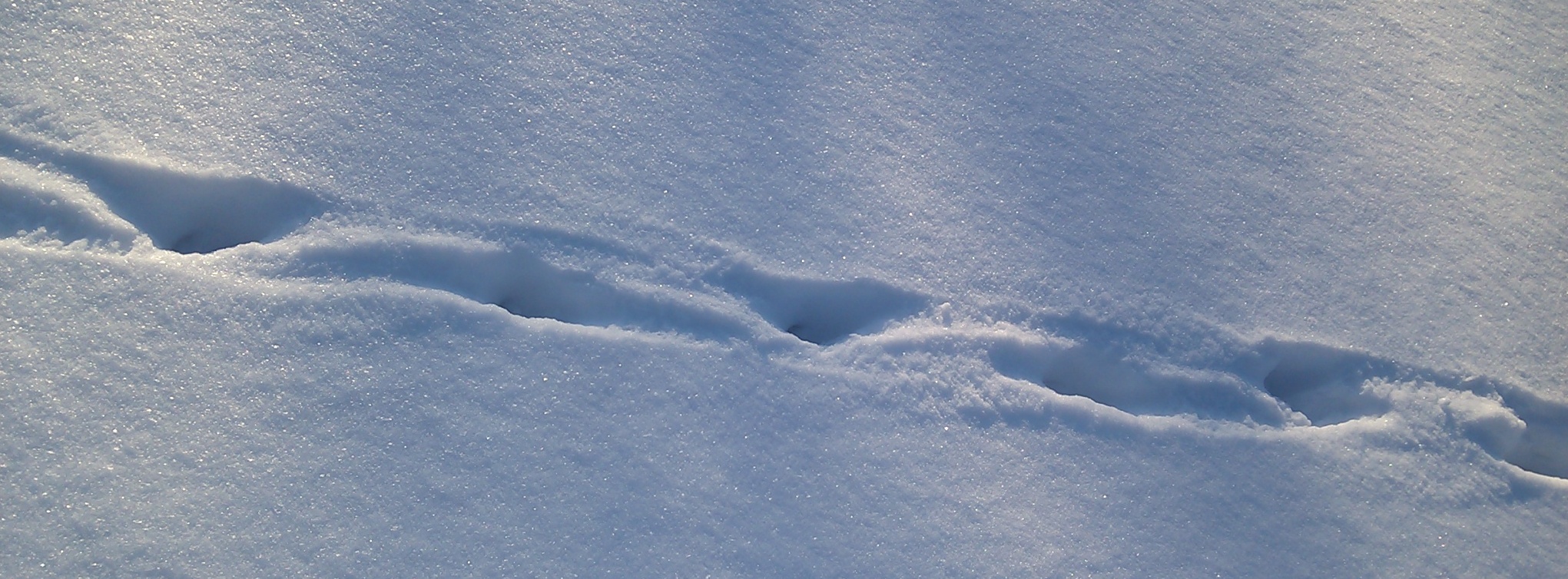
Animal Tracks

The ambient temperature is six degrees below zero. The February streak of subzero days is a record according to meteorologists. The headline on the Weather Channel website is “If you think it’s cold now, just wait until Valentine’s Day and next week.”

It’s cold, but not that cold. Overall this winter seems warmer than usual. Why?

We are not in the 35 below zero range we hit a couple of years ago. That was the cold spell that caused 70-degree temperature swings, began killing our Locust tree, and caused long-stable sewer and water pipes to break around the neighborhood. It’s not that cold yet.

We are also missing a strong cold spell at or below minus 20 degrees. I follow these cold snaps to identify when I should prune the apple and pear trees. We didn’t hit one last year and thus far haven’t this year. Combine it with the fact 2020 tied for the warmest year on record and perhaps one can see why I’m skeptical regarding the hubbub about how cold it is. I just walked on the driveway and it is a quiet, refreshing, albeit cold night. The kind that sets the stage for hope and human activity.

I will attempt to get the buckets of compost from the garage to the bin in the garden. However, there is no hurry because even if I do dump them, the compost will not decay much until the temperature warms. There is also an eight inch pile of snow on top of the composter to clear.

The coronavirus pandemic was a killer as it closes its first year. Thus far 2.4 million people globally died of the coronavirus. In the United States, 485,000. In Iowa, 5,236. Every one of the deceased had a name known by others. The coronavirus is a pestilence the likes of which there is no living memory, except maybe among a decreasing number of centenarians.

One can lose track of hours and days in the pandemic. Each human interaction takes on special meaning. It’s precious because there are so few of them, and those we have are mostly through electronic media. When a human calls, it’s a big deal. We are tempted to pick up the telephone when it rings, even though it is reasonable to predict the caller is a machine wanting to ID me as a potential customer to buy an extended warranty on my 1997 Subaru.

Hopefully we’ll get enough COVID-19 vaccine in the community so everyone who wants it can get it. The vaccine is proving effective overseas where the population of anti-vaccine folks is lower than in the U.S. If the vaccines are working, and it appears they are, there is hope of ending the pandemic. In the meanwhile, we’ll stay home, keep warm, and if we have to go out we’ll do so only when it is necessary, and wear a face mask and stay socially distant. Because we have pensions, we can afford to do this. Others are not so lucky.

There is pruning to do, although not as much as last time. The Aug. 10 derecho felled a large branch on the Red Delicious apple tree, so I don’t want to stress it much more than it is. No living creature want more stress right now. One day this week I’ll put on my overshoes, a warm coat, hat and scarf, and go on walkabout to check the yard and neighborhood. I’ll take my mobile device with me in case some human calls.