Categories
Living in Society

Politics and Public Health

Photo by Jimmy Chan on Pexels.com

I recently met a friend for lunch. They read the chapter of my autobiography about time we shared on the county board of health, ending in 2010. Rather than continue a discussion on email, we decided to meet in person. Ambient temperatures were above freezing and that made for a sloppy day. The restaurant parking lot was full of puddles.

One of our joint projects was working to reduce toxins in the environment across the state of Iowa by advocating with other boards of health. As chair, I wrote a letter to every board of health in the state about reducing reliance on coal as a source of energy. Likewise the two of us made our case to several boards of health in person. It is difficult to know the impact we had, yet projects to build new coal-fired power plants in Waterloo and Marshalltown were killed by the public utilities after we began our campaign.

One board of health said they wanted to keep politics out of it. Is public health political? If you have any familiarity with a health department, you know it is. My friend emailed me the following after our meeting:

When we were talking about the folks in the other Health Departments I was about to say something then forgot. It was about “politics” er. the fact that public health is political — it is a social science and reflects competing interests of those who would choose to pollute with impunity in the name of their god-given right to pursue profit in their business, and the interests of the public that require clean air, water, and a livable climate.  

If we don’t these days believe public health is political we never will.  But, at the time, I thought it important to remind people of that simple fact because so often (not unlike now) people want to say things like, I understand you want to control or study or advise about…. but don’t make it political.  Yikes.  And that’s the whole story.

I think the word “political” was a precursor to “woke.”

There is nothing political about mobilizing a public health work force to deal with an infectious disease outbreak. Likewise, there is nothing political about providing clean water by using drinking water standards to regulate what is and isn’t in public water supplies. These procedures and regulations don’t come out of the blue. A political process is behind them.

Part of the board’s work was to lobby the Iowa legislature on multiple issues. I spent most of my lobbying time working to make Iowa a tobacco-free state with clean air. We also wrote letters to the editor on timely topics. When the Smoke-Free Iowa Act was signed into law, banning tobacco smoke in most public places, through effective political lobbying, the gambling industry got an exemption for casinos. We had to compromise to get the bill passed. Oh, yeah! It’s political.

Our local boards of health have been charged with leading the effort to prevent disease and improve physical, mental, and environmental health in the community. Few members of the public attended our public meetings or offered comments. Citizens should be first in line to attend these meetings and offer solutions on how Iowa can improve its public health system. Until they do, volunteer members of boards of health do the best they can to promote health and prevent harm. We even had that printed on coffee mugs.

I don’t know if it’s political but there is one area that could improve: More licensed medical practitioner volunteers are needed to supplement the work of the public health system. In an era when government spending on public health can be expected to decrease, volunteers enable us to get more work done within the existing public health infrastructure. For the number of per capita medical practitioners in Johnson and Linn counties, our performance in this area has been disappointing.

So yes, of course, public health is political. It’s the nature of the beast, even if it is rooted in a time when there was a broad consensus about what government can do to further the public good. You know, back when we were Iowa nice. Sadly the sun set on that a long time ago.

Categories
Living in Society

Public Health Time

Photo by cottonbro studio on Pexels.com

I served on the county board of health for six years from 2005 until 2010. Of all the volunteer work I have done, this was the most engaging. When I applied for the position, Johnson County had, and still has, a strong medical community. There were those who felt members of the board should be physicians. I secured my position because I was in fact different from others with my experience in managing rural water and wastewater systems for my home owners association.

Volunteer governmental boards and commissions are what a person makes of them. For example, when I was in my first term on the board in 2006, more than a hundred students from Longfellow Elementary School in Iowa City called off sick with stomach flu symptoms. The department activated its process for disease containment. One way for a board member to handle this is to educate themselves about the situation, study data, and discuss whether any change in process was warranted. My approach was to drive down to the department of health and field phone calls from concerned parents and try to handle their concerns in real time. This hands-on approach characterized my time on the board.

Department members weren’t always used to my approach. After my first year, I requested to get involved with operations, including shadowing the food inspectors at the county fair. After hearing about it, one employee responded, “Would someone please fill me in as to who this person is, what is the goal of the request to shadow…” Being different has consequences. Once I got to know this employee, we developed a good relationship. I found food inspections to be something. Let’s just say, I’m glad the health department does them. This kind of hands-on experience seemed essential to my understanding public health in the community.

I was surprised by the attitudes of some of our staff. For example, one person was opposed to the new casino being proposed in Riverside. They felt it would encourage alcohol and tobacco use, and associated health problems. We don’t hear any of that talk with the new casino today in Cedar Rapids.

The most impactful thing I did during my tenure was to recruit a replacement for the department head. The board supervises this position and writes performance reviews. When a replacement is needed, that job fell to me as board chair. I formed a committee of ten people from different walks of life: elected officials, attorneys, physicians, and people from health-related non-governmental organizations. The committee we recruited included some of the smartest people I have known. The lesson I learned is that if you have talented people doing this work, the job gets done well. The replacement we hired was a keeper who lasted long after my tenure on the board ended.

In my home town, board of health members tend to stay on the board for a long period of time, in some cases, for decades. I didn’t feel that way. My plan was to stay on the board for a single term. Once I dove in and found how important and engaging the work was, I agreed to a second term.

My advice is simple. Find a way to help on governmental boards and commissions. The work is rewarding and needed. Having citizen input to governmental departments is as important now as it was 20 years ago when I began my time on the board of health.

Categories
Living in Society

Community Volunteer

Trail walking on Nov. 22, 2025.

When I became an adult, married, and settled into steady work, it was assumed I would volunteer in the community. The volunteer impulse has its roots in the industrial period after the Civil War. People used less time to produce enough money with which to live our lives. In more modern terms, we could pay for things like our child’s college education without sacrificing a lot at home.

Perhaps the most prominent example was the robber baron Andrew Carnegie whose expansion of the steel industry made him one of the richest Americans and enabled his philanthropy to fund a number of public libraries, among other things. “The duty of the man of wealth,” Carnegie said, is “to consider all surplus revenues which come to him simply as trust funds, which he is called upon to administer . . . in the manner which, in his judgment, is best calculated to produce the most beneficial results for the community.”

I didn’t have “surplus revenues,” yet worked in jobs that created enough money to pay basic living expenses with a bit leftover. While there were limits on potential income, I was afforded regular free time and expected to use some of it to volunteer in the community. My volunteerism really took off when we moved to Big Grove Township.

I differentiate the types of volunteer work I have done since 1993. There is community work: membership on the home owners association board, election as a township trustee, and serving on the board of a senior citizen’s group. There is also what I call advocacy work: serving on the boards of peace-related organizations, politics, and two different county boards. Each had something to contribute to society. I talk about community volunteer work in the rest of this post.

Within the first year we were in our new home in Big Grove Township, I was asked to join the volunteer home owners association board and did. Any monetary considerations were insignificant. A regular person does not volunteer in the community for money. Part of living a sustainable life in rural areas is contributing to the general well-being, I believed. I felt blessed and had to give back to the community in which I lived.

Home owners’ associations get a bad rap. In our case, we managed the association like a small city. We provided a public water system, sanitary sewer district, road maintenance, refuse hauling, and real estate sales and purchases. Over time, we upgraded the roads from chip and seal to asphalt, dealt with changing government standards related to arsenic in drinking water, reduced the number of wells from three to one, complied with changing Iowa Department of Natural Resources standards for wastewater treatment plant effluent, handled a lawsuit, and coordinated activities like road use and maintenance with neighboring associations. If the board doesn’t do these things, they don’t get done. Everyone is the better for such volunteer boards. I served, off and on, for over 30 years. This was the beginning of a long period of volunteering in the community.

In 2012, when only one candidate was running for two township trustee positions, I ran a write-in campaign and won the election. Being a township trustee included managing emergency response and a volunteer fire department with other townships and the nearby city of Solon. Toward the end of my tenure, we formed a new entity to manage these functions. We maintained the local cemetery and supervised a pioneer cemetery where the first person to die in the township was buried. This work helped me understand how tax levies work and how they were used to support things the county did not, things like a small fire department or saving someone’s life in an emergency. There was only a single conflict during my time as a trustee, about the main cemetery. All the trustees showed up at the cemetery to resolve a dispute over a burial plot. No one wanted the job of township trustee and someone had to do it, so I stepped up.

When the local senior citizen’s group had an opening on their board, I volunteered and became its treasurer. This lasted about two years and provided insight into this segment of the community. Everything we did, from providing community meals, to giving home-bound people rides to medical appointments, to arranging outings around eastern Iowa, served an often-neglected segment of the population. It was a great opportunity to learn about the life of our senior citizens before I became one myself.

I am satisfied this activism did some good. I still believe it is important to stay engaged in the community.

Categories
Living in Society

On Migrant Workers

Cornfield

Editor’s Note: This was posted on May 22, 2008 while the author served on the county board of health. Working with migrant communities was part of our public health outreach.

Each year 2,500 or more migrant workers come to Iowa to detassel seed corn, walk the beans, prune plants and trees and pick melons, apples and strawberries. This has been going on for as long as I can remember. Today, I saw the public health aspect of this cultural phenomenon.

In places like Conesville, Williamsburg, and Laurel, migrant families come to work in the fields, living in dormitories, motels and converted buildings. The hourly wages are about $9.00, often paid in cash. If anyone is impoverished, these people are. It turns out about 60% of them also seek medical treatment while they are here.

The list of health issues sounds like those of many Americans. 50 percent of patients are treated for obesity. In descending order of frequency, hypertension, diabetes, acute upper respiratory ailments and foot fungus are also treated. Women have a higher frequency of dehydration than men. The medical treatment is part of the culture as there are many patients who seek treatment year after year.

It is clear that many of these workers are not documented, and from a public health perspective, that doesn’t matter much. Would the Immigration and Naturalization Service come in and raid the quarters of these folks? Probably not.

Yet, who should be responsible for the health care of these 2,500 workers? On $9.00 per hour, they could not afford it. The employers would say they could not afford it either. Some would argue that the small budget of the agency should not go to undocumented migrant workers at all. It is a key issue in public health.

The life of migrant workers seems much like the life of birds living in the wetlands. Following the receding water line, they eke out a living that comes naturally, but is in delicate balance between shore and water…it hardly seems permanent. Social change around the immigration issue, a slight change in law enforcement or a change in funding for the agency could change migrant workers’ lives dramatically. At the same time, my sense is that they can adapt to change and do what it takes to create a society that lives along the recurring procession of the agricultural season.

In this way, migrant workers are like us: living each day in its delicate balance.¨

Categories
Living in Society

Neglecting Public Health

Tobacco smoke. Photo by Jill Burrow on Pexels.com

I spent six years on my county’s board of health. It was the most substantial volunteer work I have done. We touched upon almost every aspect of the community and it felt like we were making a difference. Under Republican leadership the state’s public health system is getting worse.

Let’s talk about cancer. According to the Iowa Cancer Registry, an estimated 21,000 Iowans will be diagnosed with cancer in 2024. Iowa has the fastest-growing rate of new cancers and the second-highest rate of new cancers in the country, according to the report. Breast cancer, lung cancer, and prostate cancer make up 40.5 percent of new cancer diagnoses. Iowa deaths from cancer are trending down, yet at what point will increases in diagnosed cancers take the death rate another direction?

Is alcohol use about personal freedom or regulation? Iowa has the fourth highest rate of binge drinking in the country, which the Centers for Disease Control defines as five or more drinks on one occasion for men and four or more for women. When that is the case, public health should be stepping in. In part, that is why we study data. Alcohol is a leading cause of cancer, among other maladies.

Are decisions to use tobacco also personal? I suppose so, yet there are more than 345,000 Iowans who smoke cigarettes and our smoking rate remains above the national average of 12.9%. Tobacco use is also a leading cause of cancer.

What is the Republican-led state government doing about tobacco use? On April 18, the Iowa House passed HF2673 to eliminate the state’s longstanding Tobacco Use Prevention and Control Program. The law would place tobacco prevention under a larger agency along with programs related to gambling, substance abuse, and addiction disorders. After previously passing the Senate, Governor Reynolds is expected to sign the bill. The FY25 Health and Human Services state budget bill currently being considered also eliminates dedicated funding for the state’s tobacco prevention program.

Don’t get me started on pesticide use, air quality, and water pollution.

As a former member of the county board of health, I know a lot of activity is based upon how the state and federal governments set regulations and requirements. What is now happening is an unseen erosion of public health that will eventually take a noticeable toll. A good public health program is about prevention. Under Republican governance, prevention is not as important as it once was.

Here is a link to the Iowa Democratic Party to get involved today.

Categories
Living in Society Social Commentary

Public Health Approach to Gun Violence

Polish Carpentry Crew in Chicago

On page A5 of Tuesday’s Cedar Rapids Gazette was the headline “75 shot in Chicago last weekend.”

From 3 p.m. Friday until 6 a.m. Monday 12 people were killed and 63 wounded, mostly on the south and west sides of the city.

It seems like a lot, even for a large city. Shootings in Cedar Rapids are frequent, but not like this. Is the headline a call to do something about gun violence?

Chicago law enforcement attributed the shootings to gangs who shoot into summer crowds at night, according to the news story. The shootings appear to be random, and ongoing. At least 1,700 people have been shot in Chicago this year. It is one tough city.

In the early 1990s I attended a session of arraignment court near the Washington Park neighborhood on the south side. It was an eye opener. Case after case came before the judge: shootings, domestic violence, assault, petty theft, sexual assault — plaintiffs were bandaged and bruised by incidents that provoked the court appearance. The public defender would lose track of his clients and which case was being heard. It was a chaotic meat grinder.

Experiences like these lead me somewhere besides lack of gun control as the core problem regarding social violence. The lightning rod has been the National Rifle Association.

Progressives found a certain amount of glee in the recent story in Rolling Stone titled “The NRA Says It’s in Deep Financial Trouble, May Be ‘Unable to Exist.’” The NRA is the poster child for what’s wrong about gun culture in the United States.

“The National Rifle Association uses its enormous lobbying power to stymie legislative debate and block most constructive gun legislation,” Ralph Scharnau recently wrote. “Thus even very moderate provisions fail to pass or even get out of committee.”

As a society Americans are not good at controlling violence. That includes our elected officials.

Chicago stands as an example the solution to gun violence is not only gun control. I’m not alone in believing that. The World Health Organization proposes violence be treated as a public health problem, outlining four basic approaches:

  1. Uncovering as much basic knowledge as possible about all the aspects of violence through systematically collecting data on the magnitude, scope, characteristics and consequences of violence at local, national and international levels.
  2. Investigating why violence occurs – that is, conducting research to determine the causes and correlates of violence; the factors that increase or decrease the risk for violence; and the factors that might be modifiable through interventions.
  3. Exploring ways to prevent violence, using the information from the above, by designing, implementing, monitoring and evaluating interventions.
  4. Implementing interventions that appear promising, widely disseminating information and determining the cost-effectiveness of programs.

Hasn’t this work been done? Yes it has. WHO produced a list of ten evidence-based strategies for preventing violence.

  1. Increase safe, stable, and nurturing relationships between children and their parents and caretakers;
  2. Reduce availability and misuse of alcohol;
  3. Reduce access to lethal means, such as guns, knives,and pesticides (often used to commit suicide, especially in low-and middle-income countries);
  4. Improve life skills and enhance opportunities for children and youth;
  5. Promote gender equality and empower women;
  6. Change cultural norms that support violence;
  7. Improve criminal justice systems;
  8. Improve social welfare systems;
  9. Reduce social distance between conflicting groups;
  10. Reduce economic inequality and concentrated poverty.

Will a public health approach to preventing gun violence work? I don’t know, but what we are doing now — hammering the NRA and elected officials — isn’t. It’s time to try something else.

~ First posted at Blog for Iowa

Categories
Living in Society

Tobacco Control in 2014

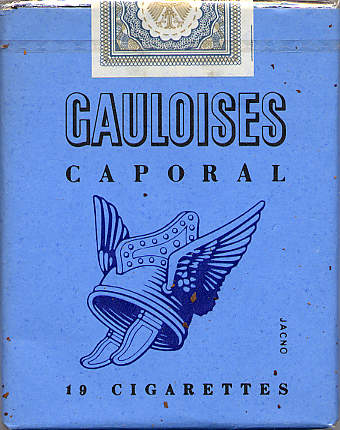
Gauloises CaporalLAKE MACBRIDE— When I was in the military, I bought my first and only packs of cigarettes. I tried a few puffs, and never had another. Tobacco control is a complicated issue that affects much of society, and has little to do with one person’s choices about tobacco use. It is one where tobacco control advocates need to stick together.

Tobacco products are readily available to anyone who wants them today, despite restrictions on sales to minors. Tobacco is a legal, addictive substance, the use of which is widely accepted. The disease treatment costs of tobacco use have been quantified, and tobacco use presents a tangible, persistent and preventable threat to public health.

Both of my parents smoked tobacco when I was a child, and until the Iowa Smoke Free Air Act was passed in 2008, the air in many public places contained tobacco smoke. We don’t hear as much about tobacco issues these days, despite the ubiquitous presence of tobacco products in retail stores. The legal struggle between tobacco companies and tobacco control advocacy groups has continued, but has largely gone silent.

In Iowa, the coalition of tobacco control advocates includes the American Cancer Society, American Heart Association, American Stroke Association, American Lung Association, the Iowa Tobacco Prevention Alliance (ITPA) and Clean Air For Everyone Iowa Citizen’s Action Network (CAFE Iowa CAN). I was previously a board member for the latter organization. The work of this coalition is focused on securing government funds for a comprehensive tobacco control program.

In a December 2013 letter to legislators, the group wrote,

Smoking cessation efforts are essential public health initiatives that both directly and indirectly impact our entire state.  Statewide programs that are funded through the Division of Tobacco Use Prevention and Control can help reduce the enormous financial toll attributed to tobacco related use, not to mention the 4,400 Iowans who die each year from usage. Annually, tobacco related disease costs Iowans nearly $3 billion, of which $301 million is billed to Medicaid. To substantially reduce this expenditure, the CDC recommends Iowa appropriate $36.7 million annually to properly implement a comprehensive tobacco control policy.  However, last year the division only received $5.3 million.

Governor Branstad’s budget proposal would reduce expenditures in the tobacco control program by $75,000, with reductions targeted to printed educational materials and social media funding. It is a small percentage of the total, and depending upon who the governor appoints to fill the vacant director of the Iowa Department of Public Health position, the proposed budget should have support. It is a modest budget compared to the CDC recommendation.

What is at issue during the remainder of the 85th Iowa General Assembly is regulation of e-cigarettes, which are currently unregulated. Tobacco control advocates want e-cigarettes regulated as a tobacco product, something the U.S. Food and Drug Administration (FDA) would like as well. The tobacco industry is working toward creating an environment where e-cigarettes are socially acceptable, are widely available, and can be used everywhere.  At the beginning of the legislative session, the issue was largely off the radar of legislators who were focused on the youth prevention aspect of this issue. Tobacco control advocates are expected to change that, and are trying to pass legislation they can support.

There are at least three bills pertaining to e-cigarettes written by the tobacco industry (companies like Altria and RJ Reynolds). In parentheses are the tobacco control advocates’ concerns with the legislation as written. The bills were all introduced by Democratic legislators:

HF 2034, which will define e-cigarettes as other tobacco products, regulating them like most other tobacco products. (In this bill, e-cigarettes are not rolled into the Iowa Smoke Free Air Act).
SF 2038, prohibits the sale of e-cigarettes to minors. (The bill doesn’t define e-cigarettes as other tobacco products).
SSB 3101, prohibits the sale of e-cigarettes to minors. (The bill doesn’t define e-cigarettes as other tobacco products).

Like with any legislation, the pro- and anti-tobacco control lobbyists will advocate with legislators to get favorable wording in any potential law. I have lived in Iowa long enough to know that the probable outcome of the legislative initiative may be for Iowa to wait until the FDA rules on e-cigarettes, then deal with the regulatory issues. I’m not hopeful the legislature will pass any of these three bills this session. Preventing the tobacco industry wording in them would be a victory of sorts for tobacco control advocates.

Categories
Living in Society

Tobacco and the Trans Pacific Trade Partnership

Convenience Store
Convenience Store

At hundreds of convenience stores and retail outlets in Iowa, the drug trade has been and continues to be legal and in full force. Lowly paid wage workers ply a trade in tobacco, a deadly product that continues to be widely used. Where the author lives, workers queue up at the counter before their shift begins, selecting their preferred brand of cigarettes, snuff, snus, cigars or chewing tobacco. The clerk asks, “will one pack be enough?” Tobacco is the only legal consumer product that kills when used as intended. Tobacco use is the leading preventable cause of death worldwide, accounting for 6 million preventable deaths annually, and is a major contributor to the global pandemic of non-communicable diseases.

This may seem like old news, but the tobacco industry is still at work, caught up in the secretive trade talks going on this week in Brunei. While many of us are finishing up summer work to take vacation, and students are returning to campus, U.S. corporations are attempting to gain unfettered access to markets in 12 countries as part of the Trans Pacific Trade Partnership (TPTP). Tobacco trade is just one of the issues. (Read the Sierra Club memo on environmental issues here).

The tobacco trade issue reduces to a key point, according to Dr. John Rachow of Iowa Physicians for Social Responsibility, “this is a critically threatening attempt to restore unlimited international trafficking of tobacco, the greatest completely preventable cause of human death on the planet.”

U.S. Trade Representative Michael Froman released a statement in which he wrote, “this proposal will, for the first time in a trade agreement, address specifically the public health issues surrounding tobacco– preserving the ability of the United States and other TPP countries to regulate tobacco and to apply appropriate public health measures, and bringing health and trade officials together if tobacco-related issues arise– while remaining consistent with our trade policy objectives of negotiating a comprehensive agreement that does not create a precedent for excluding agricultural products.” Including reference to tobacco products in a trade agreement is the opposite of what public health officials want.

The Center for Policy Analysis on Trade and Health wrote, “the medical, health care, and public health community has consistently supported removing tobacco, tobacco products, and tobacco control measures from trade agreements as the most effective solution (to enabling participating countries to exercise their sovereignty to reduce tobacco use and prevent the harm it causes to public health).”

The tobacco industry likes adding the language because by giving tobacco products special treatment, it creates loopholes that could easily be exploited to circumvent restrictions on tobacco products in participating countries. By offering language on tobacco in the TPTP, the Obama administration is capitulating on public health to get a deal done that favors the tobacco industry.

For more information on tobacco language in trade agreements, click here. To sign a petition to exclude tobacco from the Trans Pacific Trade Partnership agreement, click here.

~ Written for Blog for Iowa