Categories
Living in Society Work Life

Raising the Wage in Solon – Or Not

Corner of Main at Market

RURAL JOHNSON COUNTY — The nearby City of Solon is concerned about the impact of the recently passed county ordinance to raise the minimum wage. The city council doesn’t buy in, local businesses don’t buy in.

On Sept. 10, the Johnson County Board of Supervisors held the last of three readings of a new ordinance to raise the county minimum wage in $0.95 increments to $10.10 per hour by Jan. 1, 2017. The board passed the ordinance unanimously.

The Cedar Rapids Gazette reported the Solon city council is considering opting out of the new county minimum wage structure.

According to the Solon city administrator, the city council is considering just such an action.

An agenda of the council’s Sept. 2 meeting lists “discussion on minimum wage ordinance by Johnson County.” Draft minutes from the last council meeting, which have not been posted online, show council members unanimously voiced opposition to the county’s minimum wage ordinance. Local business owners also spoke out against it, saying they couldn’t afford raises for all of their employees while maintaining the same staff levels.

Doug Lindner of the Solon Economist recounted Mayor Steve Stange’s Sept. 2 survey of council members here. The council unanimously opposed raising the wage in Solon as laid out in the new ordinance.

City Attorney Jim Martinek was directed by Stange to review the proposed county law and research the city’s options and responsibilities, according to Lindner. Council is expected to take up the issue at its Sept. 16 meeting.

KCRG – TV9 interviewed local business owners Leo Eastwood and Sam Lensing in a news segment that aired Sept. 11.

Eastwood owns Eastwood’s Sports Bar and Grill. He is well known in the community and has placed political advertisements for favored Republican candidates at his place of business. His business recently moved from a strip mall at the edge of town to Main Street, where he joined a growing group of bars and restaurants in the city of 2,300 people.

“You’ve got to pass that along or you’re not going to be in business long,” Eastwood said to KCRG of a potential mandatory wage increase.

Lensing owns the most visible business on Main Street, Sam’s Main Street Market, a full service grocery store. Another of Lensing’s businesses, D & D Pizza, recently vacated its space across the street from the grocery store and Eastwood moved in.

Sam’s Main Street Market is and has been an important part of the community, sponsoring local events, collecting funds for the local food bank, and preventing the city from becoming a food desert for people with limited transportation.

“If this wage hike does increase that much where people have to raise their prices what’s it going to do for their business?” Lensing asked in the interview.

Sam’s Main Street Market competes with Fareway, Aldi, HyVee, Walmart and Costco. Because Solon is a bedroom community, people who commute to work have an easy option to buy groceries and sundries elsewhere. The convenience of his location brings customers willing to pay more rather than make a special trip to another town. KCRG didn’t report how many employees Lensing has at near minimum wage to validate his concern.

All of this seems like a tempest in a teapot, and here’s why.

The council’s concern, as reported by the news media, seems like a knee-jerk reaction to the minimum wage increase by a small number of business owners. The retail price increase a minimum wage increase may or may not require would have little impact in a community where the median household income is more than $62,000 per year — substantially higher than either the county-wide or state-wide figures. The argument about raising prices is a red herring.

How many low wage workers has the council heard from? I wasn’t at the meeting, but probably zero. In my experience covering council meetings for the Solon Economist I found councilors exercised a reasonable amount of diligence in matters like this. While the composition of the council has changed since I covered them, one hopes they will get feedback from Solon residents who work at or near the minimum wage in the city before opting out of the county ordinance. It is a voice not heard in this discussion to date.

There has been no public discussion of the impact on the Solon workforce of opting out. There are a lot of questions to be answered, including, how many near minimum wage jobs (earning below $10.10 per hour) would be affected? Where do Solon workers in near minimum wage jobs live? Would near minimum wage employees at Solon businesses seek employment at higher wages elsewhere as a result of the city opting out? How do near minimum wage workers in Solon get health insurance mandated by the Patient Protection and Affordable Care Act, and at what cost to taxpayers? Has the city council read the ordinance to understand which businesses are required to comply and which are not? At present, there are no public answers.

As I wrote on Friday, the new county ordinance does little to address the underlying causes of poverty here. It turns out getting cities like Solon to buy in will be yet another delay in pursuit of social and economic justice.

This post was updated on Sept. 15 at 4:21 a.m.

Categories
Living in Society

Coming Around (To A Presidential Pick)

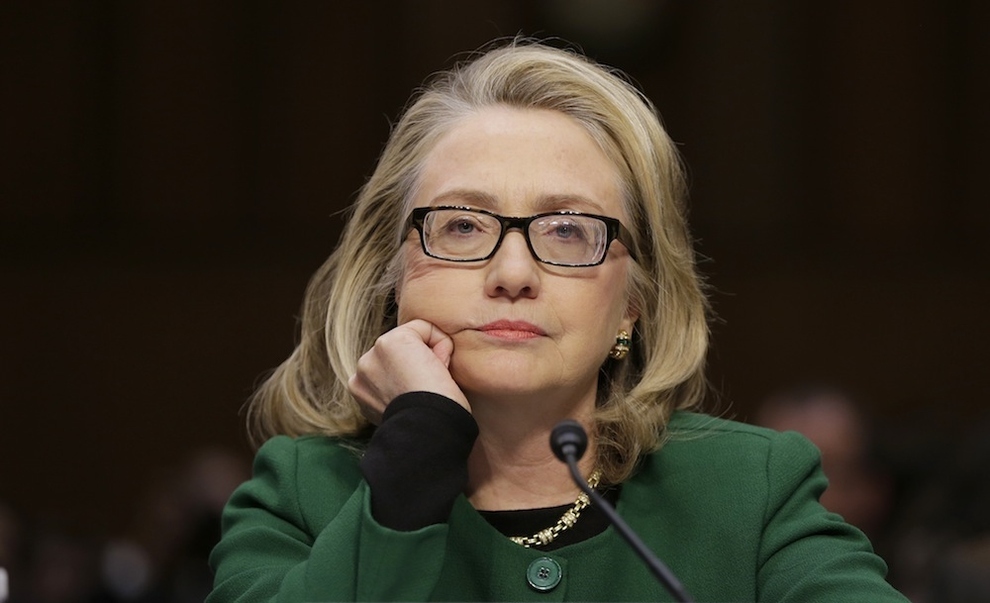
Hillary at Benghazi Hearings
Hillary Clinton at the Benghazi Hearings

From my earliest awareness I believed in free will and in joining together with others to accomplish common good.

Self-reliance, natural freedom, and Jean-Jacques Rousseau’s idea that “the fruits of the earth belong to us all, and the earth itself to nobody,” have been a part of me for as long as I can remember.

A poor disciple of these ideas, I stumbled through college, wandered into military service, became distracted in a 25-year career, and have been working to sustain a life in a turbulent world after cutting the cord on financial security. Between youth’s vigor and the infirmities of age there is a lot to accomplish before the final curtain.

I had better choose wisely.

This summer I wrote about the Democratic presidential primary and the Iowa caucuses. My purpose was to say something meaningful in public, and to pick a candidate to support.

Even though Vice President Joe Biden may enter the race, and there are literally scores of lesser candidates, the choice reduces itself to one of three people: Hillary Clinton, Martin O’Malley or Bernie Sanders.

I support Hillary Clinton for these reasons:

As a society there is little value in aging white men asserting leadership. It is time for this woman to be president.

Of the entire field of Democrats and Republicans, Clinton is most qualified to faithfully execute the office of president. Her resume is well known and stands above what any other candidate offers. In terms of her experience, her engagement in international conflict, in weathering controversy, she has been in the arena for a very long time… she’s still there and thriving.

Her advocacy for women and children, around the globe over three decades, not only made a difference, it was the right thing to do and still is.

Lastly, I trust Hillary Clinton to appoint Supreme Court justices who reflect the values of common men and women like me. The four oldest justices are or will turn 80 before the end of the next presidential term. We need a president who’s watching out for us when it comes time to appoint a replacement.

This cycle is not about issues or about whatever paid punditry raises in clamor. It’s about picking a president who can stand above the noise and stake a claim to help the American people realize their potential. For me, that person is Hillary Clinton.

Categories
Living in Society Sustainability Work Life

Thursday Trifecta

Photo Credit - Misty Rebik
Photo Credit – Misty Rebik

Yesterday brought a truckload of news on three important issues: nuclear non-proliferation, the Iowa caucuses and local worklife.

Democrats in the U.S. Senate blocked a vote on legislation intended to derail the process of bringing the Islamic Republic of Iran into compliance with its obligations under the Nuclear Non-proliferation Treaty. By signing and ratifying the NPT Iran is entitled to a peaceful nuclear program in the areas of medicine and electricity generation as long as they comply with treaty terms. They weren’t in compliance.

How did Iran get to the point where developing a nuclear weapon became imminent? Thank the George W. Bush administration and its laissez-faire attitude toward Iran’s uranium enrichment program. Bush wouldn’t talk to Iran, or do much to enforce its obligations under the NPT. The Obama administration changed all of that, talked to Iran, and together with the P5 +1 nations forged an agreement to bring Iran into compliance.

Republicans howled that the deal was struck. Now that the political process has run its course, they shouldn’t have much to complain about. However, they do despite the administration’s cooperation with the Congress. Or as Laura Rozen, reporter for Al-Monitor posted on twitter,

In a survey of 832 likely Iowa Democratic caucus participants, Bernie Sanders closed the gap with Hillary Clinton to within the margin of error in the new Quinnipiac University poll released yesterday. People feeling “the bern” were quick to state Sanders now leads Clinton, but it’s early and one poll doesn’t mean as much as they may hope on Sept. 10.

Nonetheless, it is good news for Sanders to poll leading Clinton, even if it is within the margin of error. Already his campaign is raising money from the poll although the long odds continue to favor Clinton as the Democratic nominee. Steve Rattner of the New York Times posted the following analysis:

In a unanimous vote, the Johnson County Board of Supervisors approved an ordinance to raise the county-wide minimum wage to $10.10 by 2017. It was cause for celebration for the Center for Worker Justice of Eastern Iowa which helped organize a demonstration supporting the ordinance prior to the vote. The first $0.95 per hour increase is effective Nov. 1, although cities within the county can nullify terms of the ordinance, which they have been waiting for the county to finalize.

In the end this ordinance does little to alleviate the issues driving poverty in our county. According to Pew Research Institute, increasing the minimum wage benefits what Pew calls “near minimum wage earners,” or people who earn less than $10.10 per hour. “The near-minimum-wage workers are young (just under half are 30 or younger), mostly white (76%), and more likely to be female (54%) than male (46%). A majority (56%) have no more than a high-school education,” according to Pew.

The Iowa Policy Project uses the Economic Policy Institute data on minimum wage. Pew says 20.6 million people nationwide would be impacted by an increase in minimum wage to $10.10 per hour. EPI puts the number at 27.8 million. It is prudent to look at both numbers, but as low wage workers understand, the primary impact of public policy is on individual lives, more than broad statistics.

I favor the analysis of local author Paul Street who used the EPI family budget calculator to break down the impact of a minimum wage increase in Johnson County. He said, “considering all this, I can be forgiven, perhaps, for not showering praise on the Johnson County Supervisors for moving forward on a proposal that would raise the county’s minimum wage from $7.25 to $10.10 an hour by 2017.”

Read Street’s guest opinion in the Sept. 7 Iowa City Press Citizen here.

Thursday was not a bad day for those paying attention. I drove to the county seat to pay my property taxes. Coming straight from the garden, I wore rolled up blue jeans, sandals and a T-shirt, funding the government for another six months.

Categories
Living in Society

Back to a Non-partisan School Board

Southwest Corner of Main at Market

Voter turnout in yesterday’s Solon school board election dropped from 834 votes in 2013 (18.4 percent of registered voters) to 281 votes (8.18 percent).

What happened? The district is moving on after a 10-year cycle of electing politicized and mostly conservative board members to finding a less political, middle ground focused on doing what’s right for district school children.

2013 was arguably the high water mark for this change when the community rallied around former Solon mayor Rick Jedlicka to ensure his place on the school board.

It is telling that there were virtually no political yard signs for school board candidates on display this year. The change from previous years indicates an emerging lack of interest in political aspects of the school board.

Adam Haluska, a former University of Iowa basketball player, and Jim Hauer, a small business owner, got the most votes, with Hauer edging incumbent Dan Coons by three votes for the second seat on the board. From a talent perspective, the race between the two winners was a tossup. The community voted for the future by electing them both.

There are issues with the school board. They spend money like they have it, but that is a complaint I have about most governmental entities. The bigger problem is how to deal with growth in the district.

Will population continue to move to communities like Solon? For the time being, new families are attracted by the perceived quality of district schools and the proximity to amenities found in nearby Cedar Rapids and Iowa City. A significant amount of new, single family home construction has taken place over the last 25 years. The housing is a bit pricey, but comfortable for a family, and not over priced in the market.

The community is centrally located to enable working in Cedar Rapids or Iowa City. A significant number of people commute to work in the Quad-Cities. It is fair to say there will be incremental growth. Accurate projections—the kind needed to plan infrastructure—are harder to come by.

With the build-out of the new middle school and the performing arts center, the district should reach caesura as the community finds its way. The task of the new school board is to finish the current construction plan and work with the newly hired school superintendent, Davis Eidahl, to set a plan for the future.

Based on yesterday’s voter turnout, most people take the idea there will be progress for granted.

Categories
Living in Society

School Board Election

Vote June 3Figuring out for whom to vote in today’s school board election has been a puzzle. I’ve voted against two of the individuals running—Dan Coons and Amber Marty—in previous elections.

At 4:39 a.m. it looks like I’ll vote for Coons and Adam Haluska.

After reading the limited information available about this race, I changed my mind about Coons. He lists among his reasons for running the idea of providing continuity while the district completes current construction projects and the newly hired superintendent becomes acclimatized to his job. There is something to be said for that.

The other pick is where the puzzle comes in.

It’s between Adam Haluska, who’s lived in the district the last five years, and Jim Hauer who has lived here eight years. Both have children in district schools.

Haluska is a financial adviser for Edward Jones, originally from Carroll. In college he played basketball for the University of Iowa and continued professionally for a couple of years. He believes the district is hiring the right people to educate its children and said he doesn’t want to make waves with drastic changes. His father worked as a high school principal.

Hauer is from West Union where he started a commercial roofing business. He has 37 years experience owning and operating the business and has attended school board meetings and workshops over the last six months. He said he believes Solon schools are on the right track.

I would like to have read Haluska had been attending school board meetings. He hasn’t, although I’m not sure there is as much benefit in that as others suggest. There is plenty of continuity on the board even if Coons doesn’t win the election. What I’m looking for is level headedness and the energy and optimism of youth. Haluska appears to have that.

I reached out to some friends about the election and barring any shockers I’ll head to town and do my civic duty after the polls open.

School board elections are important and few people are talking about it this cycle. Turnout in our community trends higher as a percentage of registered voters than the gigantic Iowa City Community School District, so I’ll look forward to reading the returns on the county auditor web site after the polls close.

Categories
Environment

Denial and Denali

Denali Photo Credit - Wikimedia Commons
Denali Photo Credit – Wikimedia Commons

Environmentalists are having trouble wrapping their head around a president who visited Alaska above the Arctic Circle on Wednesday to speak on the need to mitigate the causes of climate change, while at the same time on Aug. 17 approved Royal Dutch Shell’s exploration and development of oil there.

It’s not that hard because the challenge of our time is the lack of political will to take action to reduce CO2 emissions in a culture dependent upon fossil fuels. The problem is politics, not physics.

Bill McKibben expressed the sentiment concisely:

It’s no use crying Bill McKibben’s tears.

In 2014, the U.S. used 6.95 billion barrels of crude oil with 27 percent being imported, according to the U.S. Energy Information Agency. That’s 19.05 million barrels per day, including biofuels. Most of it is for gasoline, diesel, jet fuel, heating oil and liquefied petroleum gas. (The EIA explains how the oil was used here).

During President Obama’s administration the U.S. took substantial action to reduce dependence on imported oil. During the eight years of President George W. Bush, the country imported 28.6 billion barrels of oil or 3.574 billion barrels per year on average. In 2014, the U.S. imported 2.68 billion barrels or 25 percent less than the Bush average.

The rub is that in order to reduce imports, the Obama administration encouraged domestic production through an all of the above strategy that included hydraulic fracturing and increased exploration and discovery like Royal Dutch Shell had been doing in the Arctic in 2012. The strategy worked, and has been revitalized, but at what cost?

Doing nothing about global warming is not an option. The Obama administration has been and is doing something significant. As much as some would like to shut down the coal trains, end hydraulic fracturing and stop drilling for oil – leaving fossil fuels in the ground – it is only beginning to happen under Obama. Whoever is president in 2017, an “all of the above” strategy would mean quite different things with a Democrat or Republican in office.

Scientists understand the basic physics of global warming, and mostly have since the mid-1800s. As long as there is demand for fossil fuels, there is no reason to think exploration and discovery by oil companies will end any time soon. The problem with denial is not so much with political climate deniers. The physics will out, hopefully not too late.

A bigger problem is denial of our addiction to fossil fuels. Most continue to use them like there is no tomorrow. A reckoning is coming and it will take more than renaming that mountain to climb it.

~ Written for Blog for Iowa

Categories
Living in Society

Hillary At Summer’s End

Hillary PrideHillary Clinton continues to lead the Democratic field in recent Iowa polling. Simply put, the remaining contenders seem unlikely to close the gap between summer’s end and the Feb. 1 caucus.

It’s possible, but unlikely, even if something new about Hillary comes up.

She has a proven ability to shed Republican faux scandals. The form they take once debunked is of distorted sound in the mostly right wing echo chamber. Rank and file Democrats aren’t listening, even if Democratic elites are. To the extent Clinton’s Democratic rivals bring them up, their campaigns are the less. Read Greg Sargent’s take on the elites here.

Media reports this week revealed “there was no policy prohibiting the use of a private email account at the State Department.” Like it or not, her State Department emails are expected to persist in the Republican lexicon, and real people will spend substantial resources working to gin up some trouble for Clinton, even though the State Department said she did nothing wrong.

Hillary’s polling in other states is not as favorable as it is in Iowa. Bernie Sanders edges her out in his backyard state of New Hampshire. If Sanders is viable in any respect, he should win New Hampshire. If he does not, it’s game over and Hillary Clinton will become the Democratic nominee

Gabriel Debenedette pointed out on Politico Hillary has the resources and more importantly boots on the ground in the Super Tuesday, March 1 states. One expects she will have the nomination wrapped up by then. According to Debenedette, she’s building a firewall there.

I hang out with an informal group of low-wage workers from time to time. One could call it a focus group, but that would be giving it more structure than probably exists.

There is pent up demand to talk about Donald Trump.

The other day someone mentioned his name and the mere mention unleashed comments from almost everyone. It was evidence of Trump’s mastery of popular culture — something that should be no surprise to anyone familiar with his long-running television program.

“Donald Trump is building his Republican presidential campaign staff in Iowa similar to his defunct NBC-TV series ‘The Apprentice’ — and his celebrity is making it easier on some fronts,” Todd Beamon pointed out on Newsmax.

What do members of the group say about Hillary?

“I don’t know if we can trust Hillary,” said one, confirming what the polls say. If Hillary is the nominee, the ones whose politics I know best will still vote for her.

Most only wanted to talk about Trump.

Labor Day will signal the end of summer and the beginning of the next political canvass for candidates working the process. The textbook method is to finish the second canvass in October when the end of year holidays are imminent.

Based on what I’m seeing in rural Iowa, the only Democrats working the process are Hillary Clinton, Bernie Sanders and Martin O’Malley. Will Iowa Democrats caucus for a party outsider like Sanders? Will Joe Biden make it three?

I don’t know, but as summer turns to fall, Iowa has been all about Hillary Clinton.

~ Written for Blog for Iowa

Categories
Living in Society

5 Take-Aways From The Wing Ding

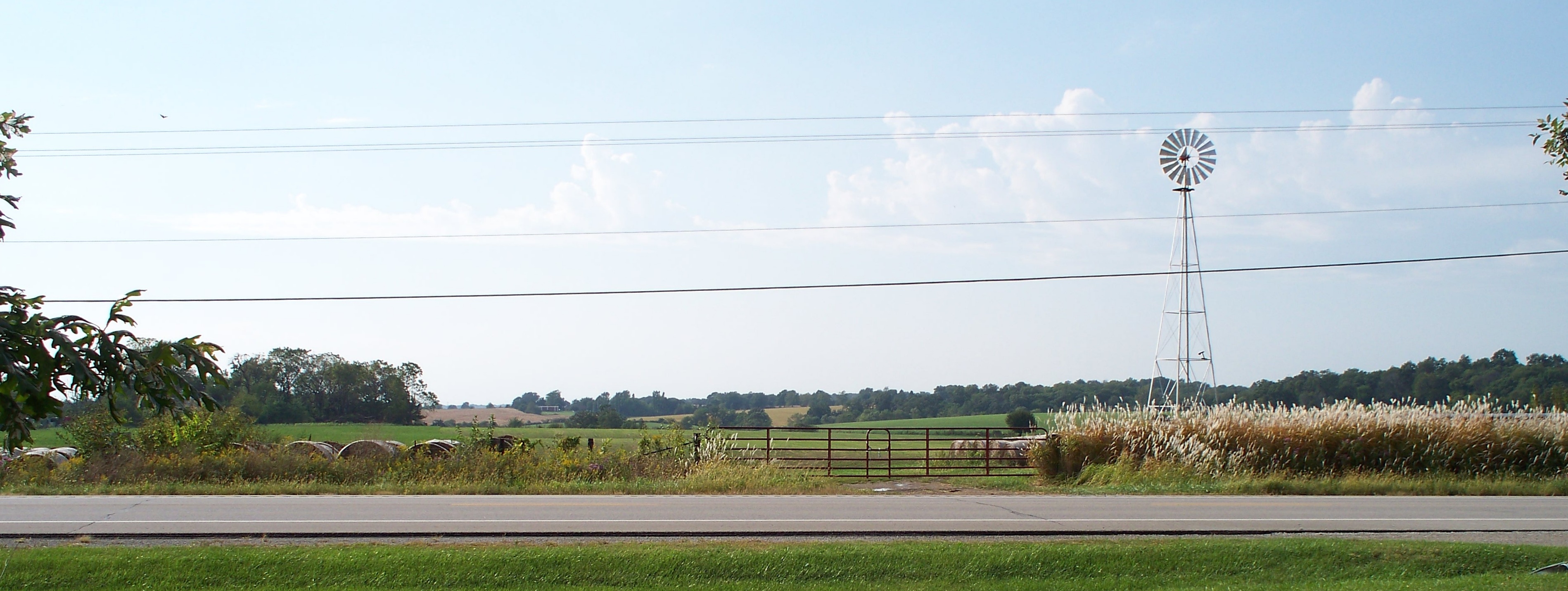
Rural Polling Place
Rural Polling Place

Clear Lake, where the Iowa Democratic Wing Ding was held Friday, was an impossible venue for most Iowa working people.

Over 160 miles away in my case, driving there after work was not an option. To make up for the distance, I viewed the Des Moines Register webcast on my desktop. It wasn’t the same as being there, but it felt close in the twitterverse.

A key question for the Feb. 1 caucuses is who will show up, and this year one expects a significant number—not as many as in 2008—will not be activists. The campaigns will be judged by how well they organize and turn out their supporters that night. A failure to bring new people to the caucus process could be fatal for a candidate’s hopes. One of two tickets out of Iowa will go to Hillary Clinton.

Here are five take-aways from the Iowa Democratic Wing Ding.

What not to like about Martin O’Malley? Whether O’Malley can challenge Sanders for the second ticket out of Iowa is uncertain, but he is campaigning in a personal, energetic and personable way. He has had multiple bites at the policy-setting apple, and long time political activists, as well as quadrennial Democrats, can find a lot to like about O’Malley’s ideas and campaign tactics.

The Democratic political establishment is overly reliant on resources the eventual nominee will bring to the table. While Trump and Carson stage circus-like extravaganzas that bring new people into the political process, Democrats place stock in large, formal events like the Wing Ding which target existing political activists. Such events have a role. The better question is what are Democrats doing to bring new people into the process? Prove me wrong, but they aren’t doing much except dusting off the same old sawhorses for the post-caucus campaign. Is anyone else tired of hearing the name Jerry Crawford?

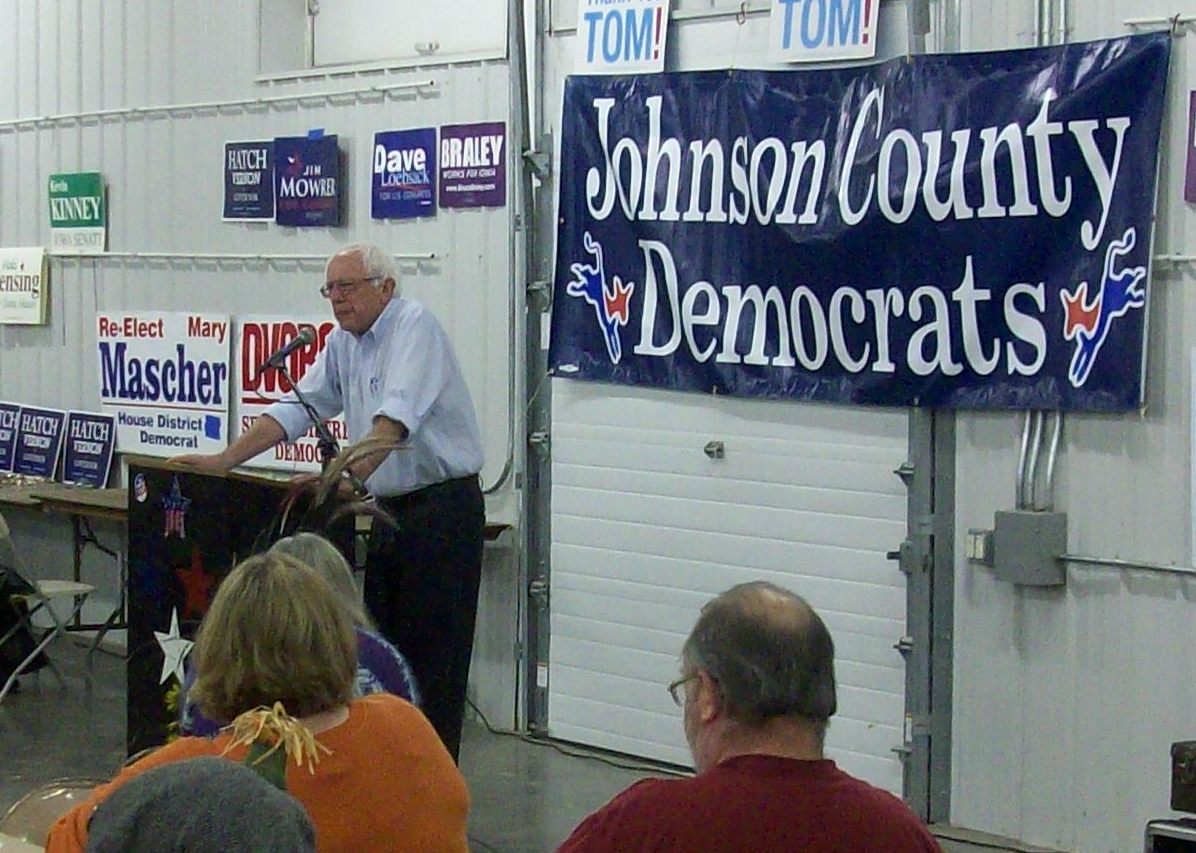
Bernie Sanders’ stump speech is getting old. Progressives are supportive of Sanders’ ideas, but the message is little changed since he appeared in Johnson County to support Bruce Braley before the midterm election. Maybe the idea of political revolution doesn’t need to change. His speech at the Wing Ding wasn’t helped by the fact he was losing his voice. The ideas remained strong, but delivery suffered. The novelty of Sanders is wearing off.

Chafee is actually a Democrat. If there is any question about Chafee’s allegiance to mainstream Democratic ideas, he inoculated the political bloodstream with his better than expected Wing Ding speech.

Hillary Clinton gets a ticket out of Iowa but her challenges lie ahead. In case you missed it, Hillary Clinton is a woman. Set aside all the policy ideas you agree or disagree with—your niggling objections—and it is much less than a sure thing the electorate will support a woman for president in the general election.

We live in a culture where women are considered to be second class citizens and worse. No one knows this better or has done more about it in public life than Hillary Clinton. She has done a lot globally to support women and girls, but the battle is not won. Far from it. Despite her impressive credentials, for reasons that include her gender, Hillary gets short shrift. Like many women, she will have to work smarter and twice as hard as the others to achieve her goals. The glass ceiling isn’t broken yet.

By Labor Day, most Democratic activists—people who invest time and resources into political campaigns—will have decided for whom they will caucus. Many already know or have signed up for a campaign. Some wear their preference on a T-shirt or car bumper. Others keep close counsel. The veil—already wearing thin—will be shed in a few weeks.

There is a desultory feel to this year’s caucus season, which began April 10 in Des Moines with speeches by Jim Webb and Martin O’Malley. Some show enthusiasm for their chosen candidate, yet most people I encounter are tuned out of politics. With each election the life cycle of interest in voting seems shorter.

As Iowans seek relief from summer’s heat and humidity we have had a chance to get to know the five Democratic contenders. Deciding which one to support will be easier because of Iowa’s first in the nation status. What everyday Iowans do about it is an open question.

~ Written for Blog for Iowa

Categories
Living in Society

In Andrew Jackson’s Name

Andrew Jackson 1844 Photo Credit - Wikimedia Commons
Andrew Jackson 1844 Photo Credit – Wikimedia Commons

It is fitting the Iowa Democratic Party plunge into navel gazing in the wake of the June 17 shootings at the Emmanuel African Methodist Episcopal Church in Charleston, S.C. by renaming, or considering whether to rename, its annual Jefferson-Jackson dinner.

Knowing more than a little about both presidents, I never understood why it was named the Jefferson-Jackson dinner in the first place. I couldn’t afford to attend unless someone else was paying my ticket. Democrats are a party of the elites and moneyed interests these days, not of the common man. By a distance.

“I’ve had it with white males,” said a friend last night.

Let’s dump Jackson, and Jefferson, Jackson particularly, another said.

I would have suggested a prominent female office holder, but no Democratic female governors or congresswomen have yet been elected, and the prospect for closing the era of Iowa white males in 2016 is slim unless Hillary Clinton or Monica Vernon is elected.

The idea that Jacksonian Democracy is relevant in 21st Century America is absurd. “Jacksonian democracy promoted the strength of the presidency and executive branch at the expense of Congress, while also seeking to broaden the public’s participation in government,” according to Wikipedia. Just look at the reins Congress placed on President Obama, blocking much of his agenda, even when he had a majority of the House and 60 members of the Democratic caucus in the Senate.

The only political party I see encouraging new people to participate in politics is the Republican Party, with their extravagant affairs like Ben Carson’s in Des Moines last weekend, and Donald Trump’s a couple weeks back. We can say they border the wacky side as much as we want, but the truth is they are expanding their base. Witness Senator Joni Ernst, the first product of their base expansion. Unless Democrats get to work, there will be more.

It doesn’t matter who a political event is named after. A better option would be to annually sell the naming rights to the highest bidder. These big political wing dings are more about raising money in politics than inclusion, just be what you be Democrats.

Perhaps a little harsh, but if Andrew Jackson were still alive, the 247-year old ex-president, former slave holder, and veteran of the Battle of New Orleans and the Seminole wars would likely be enraged by what’s going on. That’s who he was, but outrage is has gone out of style unless one expresses it in social media.

I’m still registered as a Democrat and expect to continue to be. However, as a party we need to get beyond naval gazing and work to have a reason for new voters to sign up.

The naval gazing announcement in its entirety:

On Aug. 8, Josh Levitt, press secretary, released the following:

DES MOINES — Today the Iowa Democratic Party’s State Central Committee voted in favor of a resolution to begin the process to change the name of the Jefferson-Jackson Dinner. The change will take place following the 2015 dinner. IDP Chair Dr. Andy McGuire issued the following statement on the resolution:

“Today the Iowa Democratic Party’s State Central Committee voted to begin the process to change the name of the annual Jefferson-Jackson Dinner following the 2015 Dinner.

“The vote to change the name of the Jefferson-Jackson Dinner comes after much debate and discussion among our activists and grassroots leaders around the state. This was not a decision that was made lightly. The vote today confirms that our party believes it is important to change the name of the dinner to align with the values of our modern day Democratic Party: inclusiveness, diversity and equality.

“Moving forward, we will continue the conversation with Iowa Democrats about what the new name should be. The process for changing the name will be as inclusive as possible. We will ensure that all Iowa Democrats have the opportunity to have their voices heard, and offer suggestions for a new name.

“Iowa Democrats are proud that we are never afraid to move forward and modernize, and we continue to work hard everyday to elect Democrats all across Iowa.”

The SCC today also elected Kimberley Boggus as the party’s new Affirmative Action Chair.

“The Iowa Democratic Party is wholly committed to making our Party as inclusive and welcoming as possible. Today the State Central Committee took a major step in advancing these goals by electing Kimberley Boggus as our new Affirmative Action Chair. Kimberley is a strong leader who has proven to be a fierce advocate for Democratic values. With Kimberley at the helm, I am confident that the Iowa Democratic Party will continue to grow more diverse and inclusive as we bring our Democratic message all across the state,” added McGuire.

Categories
Living in Society

Revisiting Webb 2016 in Iowa

Photo Credit: jimwebb.com

After re-reading my post “5 Reasons Jim Webb’s Stock is Up” I stand by what I wrote.

For a blog post it holds up reasonably well.

At the same time, tick-tock for #WebbNation in Iowa.

Two weeks later and three weeks until Labor Day, I don’t see the Webb ground game in action, except occasional emails, list-serve messages, and social media posts. Joe Stanley is working, and posts about activities occasionally in social media. Webb has a small number of Iowa events planned. If there is more, it’s invisible.

“There is a lot of work for him to do before Labor Day to catch up with Clinton and Sanders,” I wrote, believing the campaign would make progress. “It’s going to take more than Joe Stanley’s happy face to develop and execute a Webb ground game.”

I’m not the only one who noticed Stanley. On Tuesday Rachel Weiner of the Washington Post tracked me down for a discussion and quoted me in a blog post she wrote.

Stanley was quick to respond on Twitter and proceeded to protect his tweets, as Weiner reported. What gives?

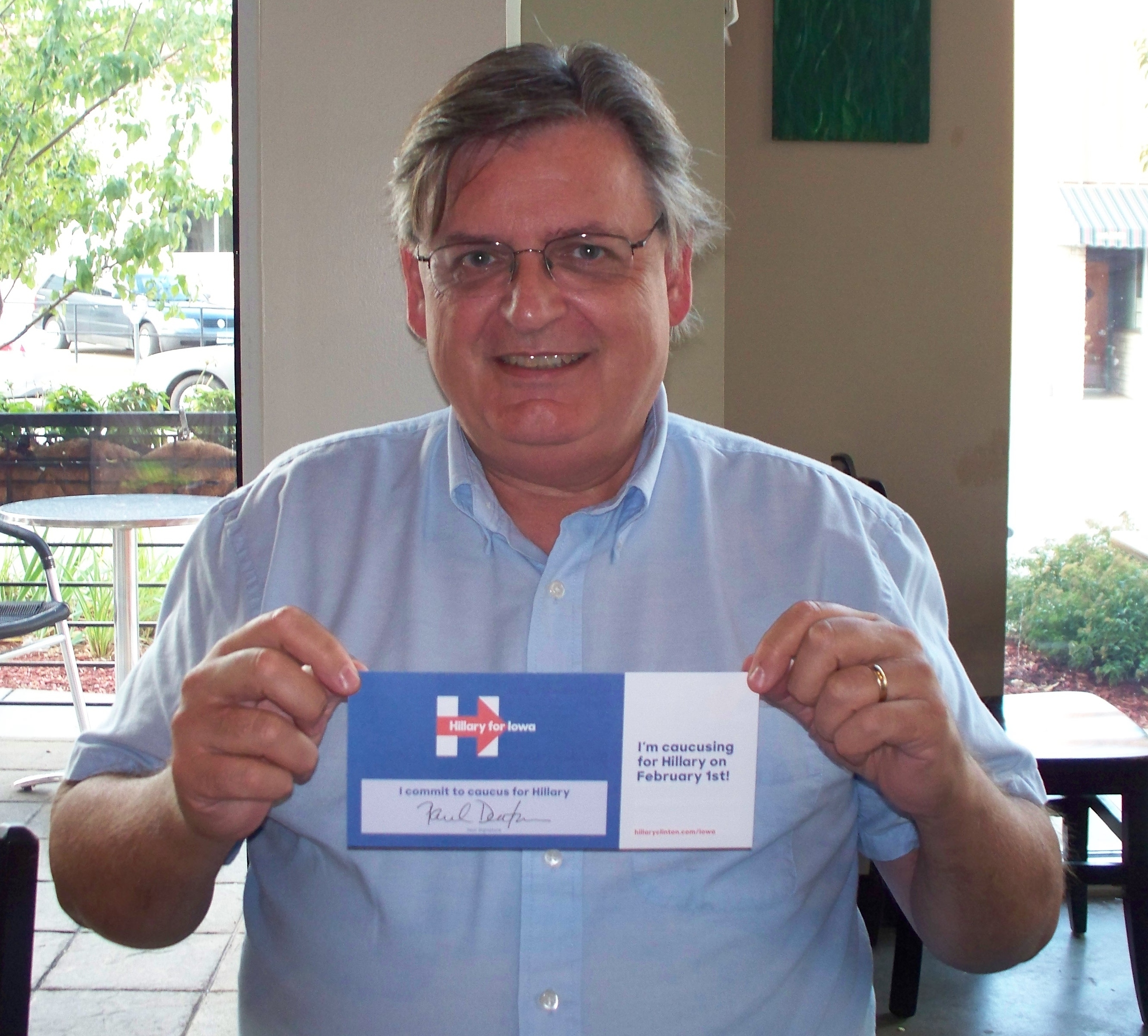
Hillary and her staff know the game, having been through it before. Bernie Sanders’ campaign experienced rapid growth pains, but now also knows the drill. Martin O’Malley seems disciplined and personable, and the first time I attended one of his events, he had caucus commitment cards available and ready to sign. This is what Iowa Democrats expect of presidential candidates. Identification of and turning out your people caucus night is what provides a ticket out of Iowa.

If Webb is playing strategy close to the vest, what could it be if it doesn’t include the block and tackling typical of winning Iowa’s Democratic caucuses? One expects a canvasser from #WebbNation would have called or reached out by now, something the Clinton, Sanders and O’Malley campaigns have already done, multiple times.

There aren’t many other paths for #WebbNation.

There are a lot of veterans in Iowa—enough to win the caucus outright if a candidate can unite enough of them behind him or her. Veterans represent a natural Webb constituency, and a list of Iowa Democratic veterans exists. Webb should be working it. But is he?

Jim Webb ≠Joe Stanley, as Stanley tweeted yesterday. They have known each other and campaigned together for a long time. Stanley is one of the faces of #WebbNation and his antics on social media serve as a distraction from what else Webb may be doing to ID caucus supporters.

Whatever that may or may not be, there is very little evidence of a Webb ground game in Iowa. High profile events like the Des Moines Register Soap Box at the state fair, and the stock and trade of county fair and central committee meetings, yes. But not the political grunt work needed to organize for a candidate in Iowa.

“How different has this time been with the Internet?” emailed a friend from a past campaign yesterday. “I feel like everyone is mini-stalking people in Iowa through Twitter.”

The Internet serves a weird function this cycle, making for laziness among reporters anxious to generate clicks. Yes, some stalking is going on, but to win the caucuses actual people need to show up at a specific time and place. Making that happen takes work that lies outside the Internet.

The clock is ticking until Labor Day when the next phase of the canvass begins: a mad rush to end of year holidays, the new year and closing the deal with Democratic caucus goers.

I like Jim Webb and would like to see him win delegates to the state convention. The question is whether the campaign will emerge from the special ops mode it is in and organize. Today it is an open question and there is time, but not much time, to make it happen.

~ Written for Blog for Iowa