The election is three weeks away and it will be anti-climactic in Big Grove Township. There are two candidates for two open school board seats and that’s it. The incumbents are competent people and they earned my support this election. We haven’t decided when and where we will vote, yet in all likelihood it will be at our regular polling place on election day.
Our household is following the news and we’re looking for some positive light. It has been in short supply. It seems the Middle East War will expand beyond Hamas and Israel despite President Joe Biden’s competent management of American support for Israel and the Palestinian people. Expansion of the conflict is not certain, yet there are so many players and so many years of hostilities and conflict, dodging a broader war seems impossible. It is not a good, short-term sign that Israelis are turning against Prime Minister Benjamin Netanyahu’s right wing divisiveness at this moment.
In the U.S. House of Representatives, Republicans have yet to elect a speaker after removing Kevin McCarthy on Oct. 5. We have until Nov. 17 to pass a budget or the government will face another cliff and need to pass a second continuing resolution. I’m okay with the Republican plan to pass individual spending bills instead of an omnibus or minibus bill. The clock is running out on their ability to do so and gain U.S. Senate agreement.
Iowa is literally turning into a sick place to live. Our leading causes of death (2021 data) are heart disease and cancer. Iowa is ranked 16th among the states in deaths from heart disease and 24th from cancer. Since 2021, data from the Iowa Cancer Registry indicates Iowa has the second highest incidence rate of cancer in the country. With harvest in full swing, particulate matter in the air is at high levels, afflicting people with respiratory diseases. A report released yesterday indicated Iowans’ incidence of COPD is higher than the national average. Rates of chronic lower respiratory diseases in Iowa are the fifth leading cause of death.
It is important to keep hope alive, despite the challenges of doing so.
After turning soil in the new garlic plot the next steps are breaking up the heads of seed garlic to pick the best 100 cloves, spreading composted chicken manure over the plot, and running the rototiller until the soil is thoroughly mixed. This year the soil is a bit diverse with composted wood chips, compost from the large garden waste composter, and a variety of soil types from planting a diverse mix of vegetables here. Gardening is always an experiment. We’ll see how garlic in this mixed plot goes.
Garlic marks the last planting of the year. From here, garden work consists of taking down all the fencing and caging and stacking it for next year. I don’t always finish that work, leaving some of it for spring.
My posts about garlic are among the most popular on this blog.
Seed garlic 2023.
Last night, two of my political friends Laura Bergus and Pauline Taylor won their primary to advance to the City Council ballot in November. Here in Big Grove, the November election is not significant. As I covered previously, there are two incumbents running for two school board seats and that’s it. Our household plans to vote.
U.S. Senator Joni Ernst and U.S. Representative Mariannette Miller-Meeks were both on a trip to the Middle East when Hamas attacked Israel. Miller-Meeks returned early for the House Speaker election today, and Senator Ernst met with Prime Minister Netanyahu on Tuesday. Ernst is co-chair of the Abraham Accords Caucus and a member of the Senate Armed Services Committee. While she was there, Israel had begun bombing Gaza. The situation in the Middle East is complicated. The Hamas attack on Israel is not and the United States stepped up to help.
I am working my way off Twitter. I uninstalled the application from my mobile device and read it only on my desktop. There continue to be too many newsworthy accounts and too many valued friends and acquaintances there to give it up completely. Eventually, though, I will. Not having the application on my mobile lets me know how much I relied on it. That needs changing.
Rain is forecast around noon today. I hope to have garlic planted before it comes. It has been unseasonably warm, so if I miss the window, there will be another.
Barack Obama at the 2006 Harkin Steak Fry. Photo by the author.
Editor’s note: This post is from Nov. 10, 2008, written after helping close down the county Democratic party campaign offices. It captures the hope of that time. Hope remains, but is a mere ember these days. Electing Barack Obama president changed my life and those of many others.We must keep hope alive.
Even I got teary eyed after the election this year, only it did not hit me until I was southbound on Highway One heading to help the county party clean out the offices. And there I was, passing the recently harvested bean and corn fields, large round bales of corn stalks resting in the fields and tears started.
A political life that had been stolen from us and was regained on Nov. 4. The theft began in 1968 with the assassinations of Robert F. Kennedy and Dr. Martin Luther King Jr. Then Nixon took the 1972 election from George McGovern using underhanded tricks that ultimately led to his resignation from office. Carter, he was better than the alternative, but his one term presidency was more a staging ground for the rest of his life as something else. The Reagan years were darkness with a veneer of pleasantry on it: good for Republicans, but not for the country as well being never trickled down to where we lived. When Clinton was elected, a new kind of politics came into being led by James Carville, Karl Rove, Mary Matalin and their ilk. It purloined our best hopes for unity as a nation and pitted red states against blue states, Republicans against Democrats, liberals against conservatives. It is difficult to forgive Clinton and Bush as their presidencies were cast in this same mold that led us to our current life in society. If we thought life was better under Bill Clinton, it was because we had become used to settling for less than what was possible. On election night something changed.
I went to bed shortly after the speeches. Obama already appeared weighted down by the impending responsibilities. At work the next day, I heard the backlash and denial of co-workers with nothing good to say about the outcome of the election. But now, with some rest and clarity, I am beginning to believe that we can change the course of our society and its place in the world.
What brought me here was the trip to Colorado where the support for Senator Obama was evident everywhere. It was reading the nightly posts from political friends on Twitter and Facebook, the messages indicating that we were registering a record number of voters and winning in Ohio, Florida, Virginia and Nevada. It was the web site FiveThirtyEight.com which told the story that I was hearing, that we would have a big win in the electoral college. Above all, what caused me to believe in the possibility of change again, was the abundant evidence that I had become part of something bigger than myself that sought to serve the greater good. As Abraham Lincoln put it, “We are not enemies, but friends. We must not be enemies. Though passion may have strained it must not break our bonds of affection. The mystic chords of memory, stretching from every battlefield and patriot grave to every living heart and hearthstone all over this broad land, will yet swell the chorus of the Union, when again touched, as surely they will be, by the better angels of our nature.” This realization caused the tears to come.
And as we began the work of putting the artifacts of the election away, some to storage, some back to the candidates, some to recycling and to charity and some to the landfill, Ed and I shared the remainder of a bottle of whiskey we found in the office. We drank from the same cup. Ed pointed out that veterans get a free breakfast at HyVee on Tuesday as recognition for their service on veterans day. And so the campaign is put up, and the volunteers and staff continue with their lives and the real work of changing the world begins. We can all be a part of this.
There is political action in the county this weekend. The university homecoming parade was Friday and the county Democratic party had an entry. Today is the prep day to set up tables and chairs at the fairgrounds for the annual fundraiser. Sunday is a day for canvassing, followed by the annual fund raising barbecue. The planning committee is bringing in a popular podcast creator from Missouri as the keynote speaker. While there will be mostly political positives this weekend, my participation is limited: I bought a ticket to the fundraiser yet won’t attend except to drop off 32 servings of dessert. That will be that.
I’m losing interest in local politics. Beginning in 2016 my precinct turned Republican. In addition, interest in Democratic politics is not what it was in 2004 when the electorate was fed up with President George W. Bush. The elections of 2006 and 2008 were glory days for local Democratic politics. We won our congressional seat and the presidency. Republicans began clawing back majorities in 2010 and today dominate the area. A constant barrage of conservative media has many voters tuning out of politics. I’m not, yet am at a loss of what I can do differently to turn the tide given the general lack of interest.
My plan is to finish my term as a central committee member, then relinquish the position to whomever shows up at the January 15 precinct caucus. We already carry one empty seat on the committee. Mine will make two as I have low expectations anyone will step up to the position. It is a thankless job.
It’s not that I’m uninterested in politics more generally. The disconnect is in the diminished role politics plays in daily conversations with friends and neighbors. There is plenty of work to be done just to live as a retiree. A person has to set priorities. Voting and staying informed about issues will remain a high priority. Canvassing for the party and attending central committee meetings and other party functions will not.
Our local weekly newspaper published its annual report this week. The Solon Economist presently distributes 640 copies per week. For a city of 3,000 with a surrounding population of another 10,000, that’s not a lot. It reflects the general loss of interest in civic affairs and the economics of competing with online information sources. The publisher wrote an article in which he suggested we contact our member of congress regarding HR4756 The Community News and Small Business Support Act which was introduced in Congress in July. I dutifully wrote a message to my congressperson raising awareness of the bill. As long as there is a local newspaper, I’ll continue to subscribe and try to help. It is an important part of our local community.
My turn from politics has been a long time coming. It is the last external commitment from which I turned since retiring. Instead, I’m focused on preparing the garden for winter. I hope to plant garlic next week and organize the hardware of cages, stakes and fencing for winter storage. We wrote a task list for the house and there is more to do than resources currently permit. That’s not unusual when we’ve lived here 30 years. I know what happened to the rest of my interests outside our home: life changed and politics changed along with it. I plan to accept the change and live life as best I can.
Banned Books Week, sponsored by the American Library Association, is ongoing. At the same time, states like Montana, Missouri and Texas severed ties with the 150-year old institution as part of a public debate over what and how to teach about race, sex and gender. Like with public attitudes about vaccines and climate change, the ALA is caught up in larger social movements driven by ignorance and stated religious and racial preferences. Banned Books Week took on a different meaning this year.
Books about LGBTQ people are becoming the main target for book banning. Citizens don’t want their children exposed to that in any form. A large percentage of complaints about books come from a small number of highly active adults. Their impact has been nationwide.
The larger question is whether public libraries will survive. If the content of K-12 school libraries has some basis in how sex education, race and gender roles are taught, public libraries are designed to serve the broad needs and interests of the citizenry. To understand whether public libraries will survive, we must look at how they originated. The following 2015 article by Ben Young from the Solon Public Library website describes our local library’s history originating with a young women’s club and voluntary funding through donations.
In the mid 1960’s, to serve all members of the community all year round, the Solon Young Women’s Club established a library in Solon. In its earliest days, the library was beneath the downtown bandstand. It had no windows, and whenever it rained, water would run from one side of the library to the other. The library was funded from cookbook sales, local businesses, rummage sales, the City Council, food sales, and a stage show. Most of the books were purchased or donated by individuals around the Solon area.
The library was staffed with volunteers from the Solon Young Women’s Club and the Solon Study Club. At first, the library was only open on Wednesdays and Saturdays, usually in the afternoon. To promote the use of the library, it would also open its doors whenever the Solon High School had band concerts on Wednesday evenings.
In 1967, the City Council voted that the library would come under the sponsorship of the City of Solon and thus, the Library Board was created. A year later, the library moved across Main Street into the old print shop that is now Solon Swirl. A few years later when that building was sold, the library relocated to its third location which was the former Solon jail and firehouse on Iowa Street.
Space soon became limited with the growth of the community and the Library Board initiated plans for a new building. After several years of fundraising and planning, the Solon Library moved to its current location at 320 West Main Street. The building had its grand opening ceremony on June 24, 2001.
The conversion from volunteer staffed and publicly donated funding to government supported was significant. In addition to providing a stable financial platform and human resources management system, a direct connection to elected officials that didn’t previously exist was formed. Support for our local library continues to remain strong, but the new political element could mean loss of funding and other restrictions as political winds change. They are changing in many parts of the state and country.
In my interview with School Board Member Jami Wolf, we discussed the fact that book banning has not been elevated to the board. Hopefully teachers, librarians and parents will work through any questions about library resources without such escalation. That’s as it should be.
Cutting off the ALA is a mistake for states that choose to do so. The ALA provides a modest amount of funding for programs, and does good in underfunded libraries, especially in rural areas that have trouble affording books, computers and other library resources.
Iowa and other states should resist severing ties with the ALA for political, cultural or policy reasons. By establishing a dialogue with the ALA, states could resolve issues for which the organization has resources to help. In a time when every community is concerned about costs, severing ties with the ALA would be akin to cutting off one’s nose to spit one’s face. That is this years message during banned books week.
Mariannette Miller-Meeks at the Iowa State Fair, Aug. 13, 2010. Photo credit – Wikimedia Commons.
It is a basic function of government to fund operations. With the Federal Government, it’s complicated, yet is a primary reason we send U.S. Senators and Representatives to Washington.
Both Iowa Senators, Joni Ernst and Chuck Grassley recognize the need to fund the government without shutting it down first. This is evidenced by their vote for a 45-day continuing resolution this week. However, U.S. Representative Mariannette Miller-Meeks has come up short in the recognition category, voting on a meaningless impeachment inquiry, and planning her annual tailgate fund raising event, instead of persuading Republican colleagues to avoid a shutdown and work on passing a budget.
It is unfortunate, yet Miller-Meeks has turned into a non-entity since she entered Congress. She is a hollow shell, a place holder, towing the line of her Republican superiors and the moneyed interests like the fossil fuel companies that fund her campaigns.
Why hasn’t Miller-Meeks pushed to get the Farm Bill passed?
Why hasn’t she dismissed the impeachment of the president for the waste of time it is?
If the government shuts down because the House Republican caucus can’t agree among themselves, Miller-Meeks bears some of the responsibility.
We must remove her from office in November 2024 and replace her with a Democrat like Christina Bohannan that knows why they are sent to Washington.
~ Prepared and submitted as a letter to the editor of local newspapers.
The Solon Economist reported about the Nov. 7 city and school board elections in its Aug. 31 edition. The article didn’t say much. In particular, the author did not say whether the incumbents were running for re-election.
Local newspapers are under financial stress, yet we rely upon them for coverage of local elections. At the end of the article, the unnamed author informed readers, “Once ballots are finalized with the County Auditor’s office, the Solon Economist will reach out to all of the candidates.” There is a certain economy in covering elections this way. After reading that sentence I immediately felt I wanted to know more.
I reached out to Adam Haluska and Jami Wolf on the school board and both confirmed they were running for re-election. Wolf told me both had filed their paperwork. I covered the six-way race in 2019. That was a defining election that set a direction for the school board. Haluska and Wolf won by a distance and it would take an extraordinary candidate to beat them this year.
The filing period for school board candidates closes at 5 p.m. on Sept. 21. In my reading of the local electorate, if someone else were filing, I’d have heard of it by now. I don’t expect anyone else to file. If that expectation holds, the election will become a low-turnout rubber stamp on continuing with Haluska and Wolf. That would not be bad.
Given the propensity of the Iowa Legislature to overreach and attempt to control school boards with half-baked schemes, the experience gained by these school board members will hopefully make the coming four years less turbulent. There were good alternatives to them in 2019, and the voters made their intent clear.
Friday I spent an hour with Jami Wolf at a coffee shop in Solon. Two things are of note.
She doesn’t see much budgetary impact of Governor Reynolds new voucher program. Solon has closed enrollment and people who want to move their kids have already done so. She said there are not many, if any, private schools in the Solon area where vouchers would do some good. We didn’t discuss home schoolers, but as with people who move kids to other districts, people who want to home school already were before vouchers. She believes the impact of vouchers will be more dominant in larger school districts in urban areas.
No book banning issue has come before the school board. Wolf agreed with me that processes were in place to keep inappropriate material out of some student hands before the legislature got involved. She said there was a lack of specific guidance about how the state law pertaining to reading and curriculum restrictions should be implemented. She emphasized that how those restrictions are interpreted will likely be the key dynamic. Right now, there is no dominant interpretation, that is, everyone has an opinion. We talked about litigating the book ban law and she would prefer to let other districts litigate flaws in the new state law than the Solon District. If the issue has not come to the board, it is likely not an issue here, at least until someone makes it one, or more specific guidance comes from the state.
Since I covered Haluska and Wolf in 2019, I don’t plan to write much about the 2023 election unless someone else files by the deadline. We should know the field by the beginning of autumn on Sept. 23.
UPDATE (Sept. 23, 2023): The filing period closed on Sept. 21 and Adam Haluska and Jami Wolf were the only two candidates who filed. Other than voting, that’s it for me for this election cycle.
Rain fell against my windshield for the entirety of the 2-hour drive from Des Moines Sunday night. We need rain.
The next day, on my walk along the lake shore trail, it was clear the Lake Macbride Watershed absorbed all of the rain without any extra. The culvert that empties from the watershed into the lake continued to be bone dry.
On Tuesday there was a brief thunderstorm with powerful winds. The optimist in me believes the drought has broken. The ten-day forecast shows the potential for some additional rain on Saturday. Fingers crossed!
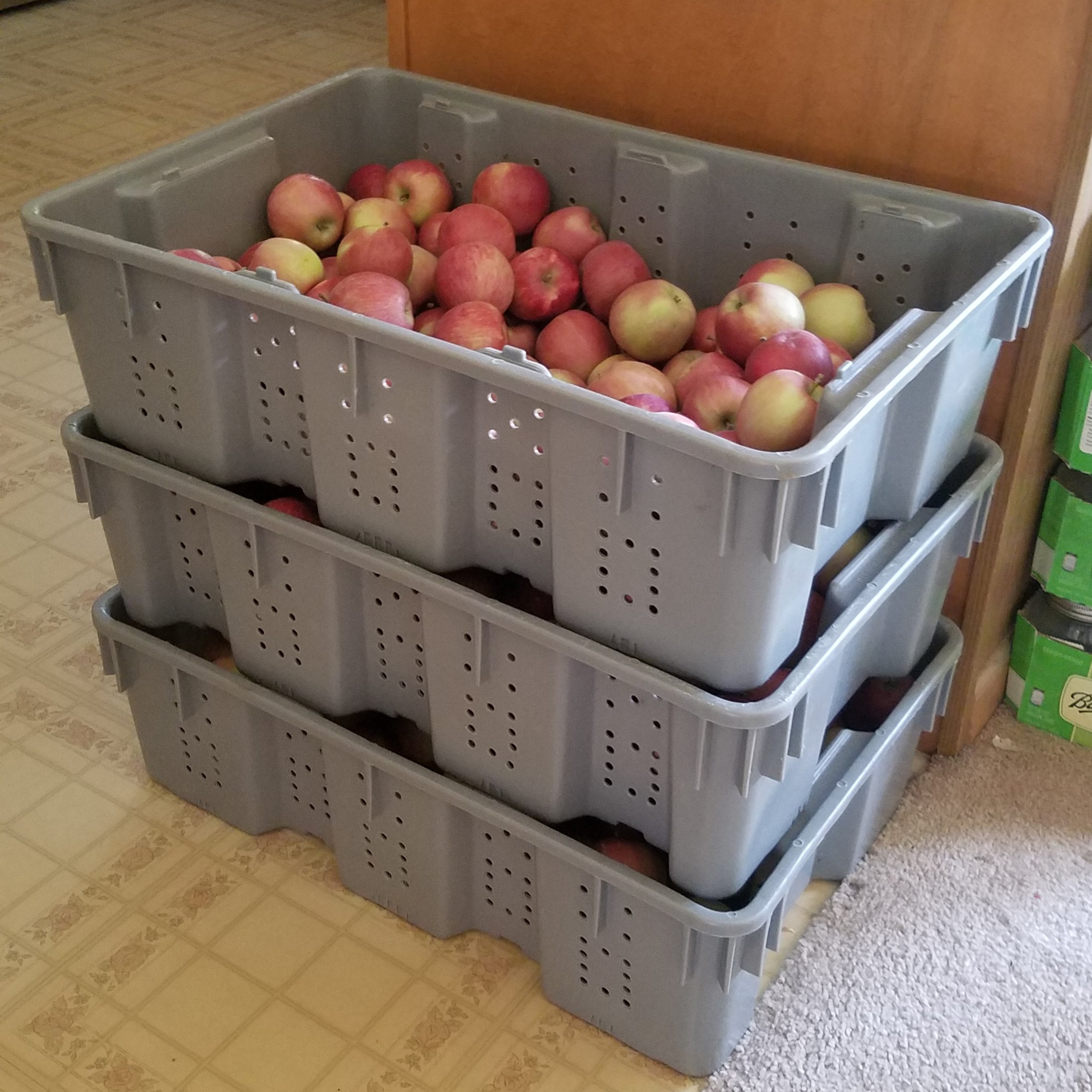
Today I picked enough apples to get started on the final rounds of processing. The three crates will be sorted into juicers, fresh eaters, and saucers. There are enough here to finish the number of quart jars of sauce we wanted and get started on the rest of the apple cider vinegar. I plan to make an apple crisp for dessert from some of them. There are worse retirement lives to live than mine.
The big news from Washington D.C. was that House Speaker Kevin McCarthy, not having enough votes to pursue formal impeachment of President Biden, created an ad hoc “impeachment inquiry” anyway. McCarthy said the probe will be led by House Oversight and Accountability Committee Chairman James Comer (R-KY) in coordination with House Judiciary Committee Chairman Jim Jordan (R-OHIO) and House Ways and Means Committee Chairman Jason Smith (R-MO), who have been leading the investigations into Hunter Biden and his father. The reason there are not enough votes to create a formal impeachment inquiry is that Republicans can’t get the goods on the president. They have already been investigating and found no evidence of any wrong-doing.
My congresswoman, Mariannette Miller-Meeks, was quick to jump on the impeachment inquiry band wagon, ignoring what she should be working on — the end of month deadline to fund the government — to give a one-minute speech with a chart titled, “The Bidens’ Influence Peddling Timeline.” Her opponent, Christina Bohannan, was quick to fund raise off the speech, saying in part,
In a few weeks, these extreme Republicans are planning to shut down the government, meaning seniors may not get their Social Security checks, veterans may lose healthcare, our troops may not get paid, and on and on. Iowans’ everyday lives will be severely affected by her political gamesmanship. We must inform our voters of what Miller-Meeks is really up to in Washington.
Email from Christina Bohannan for Congress, Sept. 12, 2023.
What is Miller-Meeks really up to in Washington? Providing cover for the 45th president. For the first 234 years of the nation’s history, no American president or former president had ever been indicted. That changed with Donald J. Trump.
In 2022 I wrote how I felt about Labor Day: “Even though I retired during the pandemic, and its been many years since I carried a union card, I believe I’ll take the day off, work at home, and thank a union.” At 11.3 percent of the workforce, there are not that many American workers represented by a union. The number is down by 0.3 percent over last year, according to the Bureau of Labor Statistics.
The Iowa City Federation of Labor is hosting a Labor Day picnic at City Park this afternoon. When I was more involved with politics, I attended the annual event. What I found was it was difficult to relate to young union families with children. It is their event. Rather than feel alienated as a “friend of labor” once a year, I no longer attend. I’m okay with that. The union members in attendance likely won’t miss me.
It is hard to avoid talking about class on Labor Day. George Carlin famously said there are three classes in the United States, the rich who have all the money and don’t pay taxes, the middle class who do all the work and pay all the taxes, and the poor who exist to keep the middle class in line as a warning of what they might become. Carlin was funnier when he said this. The division between the rich and everyone else is no laughing matter.
My member of Congress sent her weekly update Sunday afternoon and it serves as an example of how Republicans attempt to co-opt the middle-class. There was no mention of the Labor Day Federal Holiday in it.
Miller-Meeks believes H.R. 1, The Lower Energy Costs Act is the answer to what’s troubling the middle class. The bill passed the House with four Democratic votes and is stalled in the Senate. I described the bill previously here. The bill represents a rejection of the Biden administration energy policy and establishes a view of the middle class that may sound good yet is off base. Here is the second paragraph from the email.
The consequences of high energy costs are far-reaching, particularly for working-class families who find themselves grappling with the rising cost of living. As gas prices linger almost $2 higher than they were when President Biden took office, many families are left to make difficult choices between essentials like groceries and rent. The relationship between energy policy and the price of goods is undeniable as American companies rely heavily on having affordable energy for both manufacturing and transportation. In fact, a major component of food costs is energy, which affects average Americans every day with much higher food prices. With gas prices nearly doubling in recent years, American companies of all sizes are left with no choice but to raise the prices of the goods they produce to survive financially. With an abundance of energy resources on American soil, hardworking Americans should never be forced to make tough financial decisions on their most basic needs.
Miller-Meeks Weekly Script, Sept. 3, 2023.
Was there ever a time when people did not grapple with the rising cost of living? No. Since I can remember, our family never had enough money to do everything we wanted. Each bill we got was prioritized in the order of payment. There were good times when we felt we could splurge on a vacation, but mostly, we held our nose to the grindstone to pay for our child’s education, pay off the mortgage, and keep functioning in society. Grappling to meet household financial needs is neither Republican nor Democratic. What is significant is the usage brings “working-class families” under the Republican tent. This is not a minor point.
While middle-class families may be familiar with gas prices when they fuel up, things get complicated when discussing why the local prices increased.
We can see the price at the convenience mart or gas station is higher than in recent memory. Two dollars higher than when Biden took office? No. She rounded up to simplify for the masses. According to the U.S. Energy Information Agency, the U.S. All Grades All Formulations Retail Gasoline Price per gallon was $2.420 in January 2021 when Biden was inaugurated. It was $3.954 per gallon last month. Gas prices doubled in recent years? No. Half of $3.954 is $1.98. Gas prices have not been consistently below that number since April 2004, although they did hit it for a single month after Trump took office. The congresswoman is selling us subtle woof tickets here.
By sanding the specifics off her message, Miller-Meeks seeks to gain buy-in to a conservative view of how we live. “Grappling the rising cost of living,” “gas prices,” “difficult choices between essentials like groceries and rent,” and “hardworking Americans,” are all political tropes. As gossip columnist Louella Parsons might have said, they are nothing burgers. The evenly-worded message lures the unsuspecting in, and I believe gains the congresswoman votes.
To make lives of middle-class working Americans better, Republicans should support universal healthcare, lifting the cap on Social Security taxes, raising the minimum wage, taxing the rich, smart regulation of business, and our K-12 public school system. I don’t hear any of that from the Republican who represents me in the Congress. If she did want to support the middle class, she might turn her attention to some of these instead of to energy policy which masks the large corporate entities who are pulling the strings on what gets done in Washington.
Best wishes for a happy Labor Day to all my card-carrying union buddies. You earned this holiday.
Ribbon cutting ceremony at the almost finished interchange on I-80/I-380 near Coralville on Aug. 25, 2023. Photo Credit – Mariannette Miller-Meeks congressional newsletter Aug. 27, 2023.
It has been no secret the interchange between Interstates 80 and 380 near Coralville needed improvement. It has long been one of the most crash-prone places in the state of Iowa. Commenced in 2018, the infrastructure project to reconstruct it is approaching completion, maybe in time for the Labor Day weekend.
On Friday, Aug. 25, the Iowa DOT held a ribbon-cutting ceremony to “open” the Highway 218 part of the exchange. This is a bit of an artificial marker because the place is so large, the part of the exchange I use to travel to Des Moines has been finished and open most of the summer.
The exchange sprawls a lot of land, so that is a negative. A potential decrease in number of accidents and ease of use are in the asset column. Once a driver learns how to use the exchange, it can be a stress-reliever. The rebuilt exchange should improve traffic flows which will be noticeable for University of Iowa sporting event patrons.
Naturally, area politicians attended the ribbon cutting ceremony. Coralville Mayor Meghann Foster got the lead quote in the Cedar Rapids Gazette. Iowa City Mayor Bruce Teague was also quoted. My member of congress Mariannette Miller-Meeks was the highest-ranking elected official present and she was not quoted. All the elected officials present were supportive of the project.
Cedar Rapids Gazette photo of the ribbon cutting ceremony for the I-80/I-380 interchange on Aug. 25, 2023.
Events like the opening of an important Interstate Highway exchange could be a kumbaya moment for the community. This one wasn’t. After the ceremonial scissors sliced the ribbon, the politicians broke down into groups by party for selfies. By the weekend, they were posting photos with their friends, said photos, with the exception of the one above, included no members of the opposing party. It was a subtle vibe, but increasingly present as time went on and the partisan pics came across my feeds.
What was I expecting?
The term kumbaya originates in an African-American spiritual song from the American South. The earliest record in the Library of Congress’s American Folklife Center (AFC) comes from lyrics collected in North Carolina in 1926 for a song called “Oh Lord, Won’t You Come By Here.” The spiritual pleads for divine intervention—for God to come by here and help a people in great need, referencing an area historically connected to the enslavement and oppression of African Americans. The word kumbaya is taken from the song’s refrain.
Maybe we need divine intervention to relieve us of partisanship. What the politicians did that Friday isn’t getting us to the promised land. Society is divided, even at a ribbon-cutting for infrastructure that helps everyone.
At least we have a new, safer Interstate interchange upon which to drive. I’m not sure it helps us get anywhere better with regard to our politics. We need something that will bridge the political gap between us. Sadly, this event wasn’t it.







 Journey Home
You must be logged in to post a comment.