Categories
Kitchen Garden

Toward a Kitchen Garden

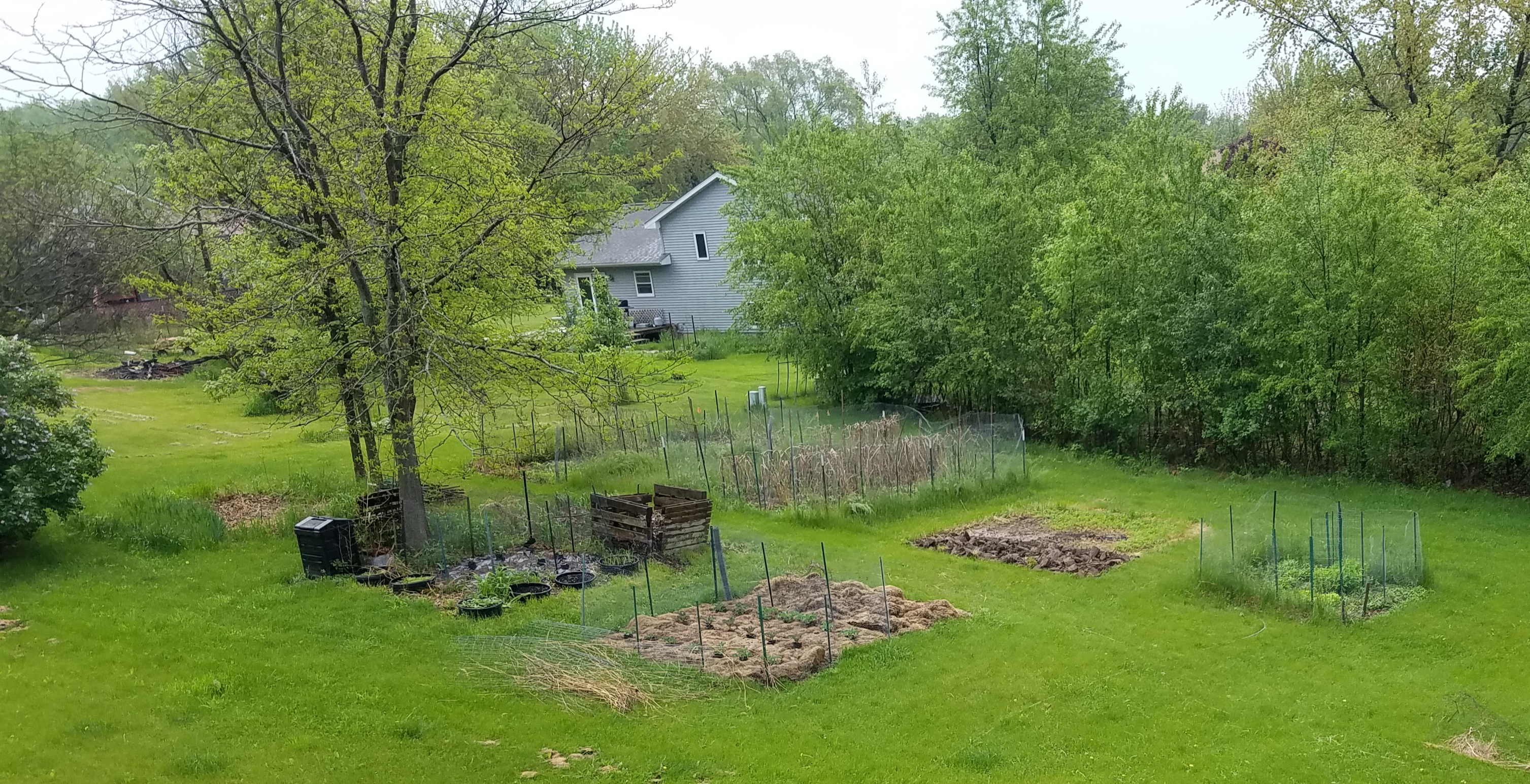
Garden viewed from the roof, May 18, 2019.

Forgetting to turn off the grow light before retiring to bed is a new bad habit. Seedlings need a daily rest from light, at least for 4-5 hours. I end up turning the light off around 3:30 a.m. when I return to my writing space for the day.

Learning to garden is a never ending process if one is any good at it.

This year the garden is in for big changes. The Aug. 10, 2020 derecho blew over the Locust tree and tilted one of the three Bur Oaks enough it should be taken down. I plan to cut two of the Bur Oaks to provide space for the remaining one to grow normally.

The derecho damaged a lot of fencing I use to discourage deer from jumping into the plots. There will be new stakes and new chicken wire fencing. If we had the resources, I’d install an eight-foot fence all around the garden with a locking gate. There are other projects begging for the money, so that plan is deferred.

The garlic patch is in, but the other plots are an open book. I will rotate cruciferous vegetables and beans. I need a whole plot for tomatoes and a small one for leafy greens. I ran out of garden onions this month, so I want to grow more this year and that will require a bigger space. No final decisions to be made until I plant Belgian lettuce on March 2, two weeks from now, if the snow melts.

The goal of having a kitchen garden is to produce food aligned with our culinary habits that helps meet a basic human need. We have to eat, no matter where, no matter how. It may as well be enjoyable. We’ve all eaten our share of food that doesn’t please our palate. A kitchen garden should address that.

There are inputs to address, other than the garden part of a kitchen garden. Perhaps the most significant is intellectual. Most people don’t frame such a construct although they should.

A kitchen garden is a reaction to the culture of consumerism. An important distinction is reaction, not rejection. I will continue to buy black peppercorns, nutmeg, vanilla bean extract, refined sugar, and all-purpose flour milled elsewhere. How else will we get such necessary ingredients?

For the time being, I’m ovo-lacto-vegetarian (most of the time), which means consumption of dairy products and the good and bad that goes with them. I’m not of one mind on this. For example, I’ll buy a gallon of skim milk from the local dairy 6.2 miles from my house, yet I’ll also stock up at the wholesale club for half the price. I take local eggs from the farm when offered, yet I also buy them at the club. Maybe it’s best to become vegan and eschew dairy altogether. I’m not there yet.

While I am a local foods enthusiast, and my diet centers around being that, I am not doctrinaire. Other people have to consume the results of my kitchen work, although during the pandemic that’s only one other person who I’ve known for going on 40 years. Despite several issues with his behavior and written output — including bigotry, racism and patriarchy — I like the Joel Salatin idea of a food shed. That is, secure everything one can that is produced within a four hour drive of home. I am also not doctrinaire about “food miles.” I’ve written often on the topic and if we work at it, we can secure most of our food produced within less than an hour drive from home.

During the pandemic we haven’t eaten restaurant food even once. If we get out of this thing alive, I see a return to restaurants as a social endeavor. I like our cooking better than any restaurant fare I’ve had the past many years. I expect the habit of cooking and eating at home will persist. How would restaurant dining fit into a kitchen garden? It would be an infrequent adventure in expanding our menu and spending time with good friends.

Another part of a kitchen garden is providing proper nutrition. That means research to understand nutrition enough to combat common diseases — diabetes and cardiovascular disease particularly. Portion control is also part of nutrition, related to maintaining a healthy weight. My research into nutrition was mostly a reaction to medical clinic visits. I sought to change the results of my blood tests regarding cholesterol and glucose through dietary adjustment. The approach has been to discover techniques and processes, then adopt them by habit to weekly meal preparation. Every so often I will consider nutrition in my diet. Mostly, once a new pattern is set, I follow it.

The influence of television and so-called celebrity chefs is part of the intellectual development I bring to the kitchen garden. Before I left my home town for university I spent almost no time in the kitchen learning how to cook. The first meals I prepared for guests were tuna and noodle casseroles made with condensed cream of mushroom soup from a can, once for Mother before leaving for military service, and once for friends at my apartment in Mainz, Germany. My early cooking years — in the 1970s — were trial and error and a lot of marginal, home-prepared meals. I recall at least one loaf of “bread” I used as a doorstop. It was baked while I was an undergraduate, interested in macrobiotic cooking, and didn’t understand how yeast worked.

I learned cooking mostly from television. In 2014 I wrote this about my experience on a work assignment in Georgia during the 1990s:

TV Food Network, as it was known, occupied my non-working time, and I developed an insatiable curiosity about food and its preparation. Emeril Lagasse, Mario Batali, Susan Feniger, Mary Sue Milliken, Julia Child and others prepared food on screen, and I was captivated, watching episode after episode on Georgia weekends. Food is a common denominator for humanity, and I couldn’t get enough. My involvement in the local food movement today has its origins in the contrast between that uninviting place in South Georgia and my food escape.

There is a broader point to be made than one person’s transient addiction to a television network while away from home. It is that American food pursuits, and the economy around them, continue to be based partly upon curiosity.

Curiosity About Food, Blog Post, April 17, 2014.

Over time, Food Network became more formulaic and less interesting. It also moved to a form of cookery competition that diverged from recipe preparation. I don’t tune in today. It opened my mind to the possibilities of food preparation and for that I am grateful.

The last part of intellectual development affecting the kitchen garden has to do with studying recipes. In my ongoing document mining I expect to purge my collection of hundreds of cookbooks. Partly because there are too many for reasonable use, and partly because I have learned the lessons from many of them. Which cookbooks have mattered most?

Like it is for many people, The Joy of Cooking by Irma S. Rombauer and Marion Rombauer Becker is a go-to book when I’m learning to cook a specific dish or vegetable. I continue to use it a lot. I frequently use Mastering the Art of French Cooking by Julia Child, Louisette Bertholle and Simone Beck. I keep copies of other reference books, but those are my main two.

For variety, I have cookbooks by Mario Batali, Giada De Lautentiis, Rick Bayless, Jeff Smith, and Anthony Bourdain, all of whom appeared on television during the period I watched cooking shows. These recipes produce food we like. I also use a few baking cook books, Bo Friberg’s The Professional Pastry Chef, and The King Arthur Flour Baker’s Companion. I’m currently working my way through some cook books used by local chef, the late Kurt Michael Friese.

I studied church and organizational cook books extensively. I adopted very few recipes from them so most are going to go. I’ll keep those that have some sentimental value, ones in which recipes by friends appear, and a set of a dozen or so from my old neighborhood in Northwest Davenport. The purpose of acquiring these cookbooks has been to understand the development of kitchen cookery beginning in the 1950s and ’60s. People used a lot of gelatin and lard back in the day, that’s for sure.

Whatever I learned from studying cookery reduces itself into repeatable main dishes made using understandable preparation techniques. A family only needs so many recipes. As I progress, the kitchen garden becomes more related to cuisine, one recognizable and uniquely our own. It is a cuisine tied to soil I made, the flavors that emerge from it, and the methods used to make it into dishes. The garden has already changed to better match what is going on in the nearby kitchen. That relationship will continue to evolve.

The journey home begins with an understanding of where we’ve been and ends, if we are lucky, with a pleasant reunion with family and friends. A kitchen garden works toward that end.

Categories
Kitchen Garden

Tofu Stir Fry

Tofu stir fry.

A version of tofu stir fry is basic to a vegetarian cuisine. I checked my archives and haven’t previously posted about this classic dish.

First, put on a pot of organic brown rice, or your favorite variety. I use home made, canned vegetable broth for this recipe. The ratio is two liquid to one rice. Always rinse the rice under cold water before cooking. Cook it low and slow.

I’ve taken to short-form videos and there is a teenager who posts about vegan cooking. I noticed how she cooks tofu. After cubing firm tofu, she coats it with corn starch, then seasons and bakes it. We avoid corn starch, so used arrowroot powder instead. It’s not the same, but it worked. When we made the dish in our early married life, we seasoned the tofu with Vegesal, which is no longer readily available. Today, I use onion powder, garlic powder and celery salt. The technique is to place the cubed tofu in a stainless steel bowl and gently toss it, first with the arrowroot powder and then with the seasonings. Do so until it is well coated. Spread it on a parchment paper-lined baking sheet and bake for 30 minutes in a 400 degree oven until the outside is browned.

We’ve been cutting the amount of added fat in our diet, and have taken to frying vegetables in some liquid, either water, broth, or tomato juice. Using extra virgin olive oil works too.

I’ve learned to limit the number of varieties of vegetables used in stir fry. Which ones is a new choice each time the dish is made. In the classic preparation I used the combination of onion, carrot and celery, along with bell peppers, snow peas, garlic, and a quarter cup of pine nuts. This is basic and what I was going for last night. For seasoning, I used salt and pepper to taste and a scant tablespoon of marjoram.

Almost any fresh or frozen vegetable would work in this preparation. I especially like broccoli and a leafy green vegetable. If fresh garden tomatoes are available, they are an excellent addition. If I were making it for myself, I’d begin with red pepper flakes in the cooking liquid. The main thing is to resist the temptation to put the whole ice box in the dish. Let the individual vegetables stand on their own. Let them be recognized. Do what makes sense. Be simple and elegant.

When the vegetables are done, toss in the baked tofu and mix gently. Serve on the brown rice and store the rest in the refrigerator for leftovers. We make extra brown rice to use in other dishes during the week.

Another variation would be to make some type of sauce to mix with the tofu and vegetables. The possibilities are endless, yet we usually keep it plain.

In Big Grove Township we have access to a local tofu maker and theirs is among the firmest I’ve found. For this dish one wants firm tofu. We tried the type sold by Trader Joe’s, which also works in this preparation.

So there you have it. A classic American vegetarian stir fry.

Categories
Kitchen Garden

38 Days Until Spring

Basil starts under the grow light.

Kale, broccoli and collards germinated within three days. This is the first year using a heating pad and grow light indoors. My reaction is positive.

Already onions, shallots, leeks, basil and the cruciferous vegetables are in process. Despite more than a foot of snow on the ground the garden starts bring promise.

March 2 is the traditional day to sow lettuce seeds in the garden. If the ground can be worked, I will. Grandmother called this planting “Belgian lettuce,” regardless of the variety of seeds planted. With my new indoor setup I’ll be starting lettuce indoors as well, as soon as snow melts and the greenhouse can be assembled. Annual cycles of gardening have begun.

What’s different this year is the coronavirus pandemic. Iowa has had a slow start up in vaccine distribution with not much relief in sight for the near term. I know some of the places where vaccines will be available and as of yesterday, no appointments were available. The main impact is my decision to avoid working on the farm this year until being vaccinated. That means I’ll have to be more self-sufficient in my gardening. I believe I’ll be fine.

The outdoors temperature is forecast to remain cold for a while. Yet indoors, there is hope of a great garden.

Categories
Kitchen Garden

Pandemic Baker

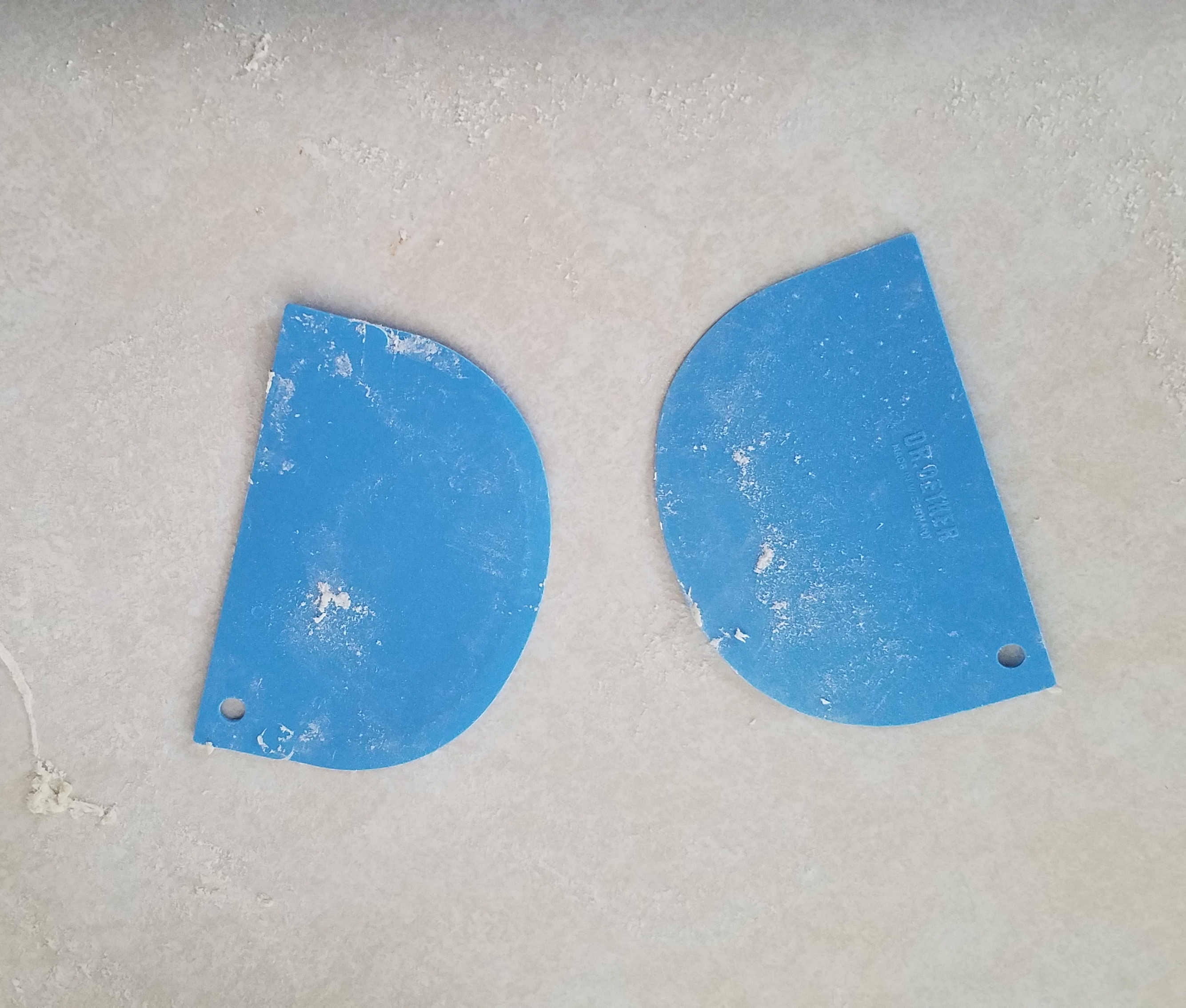
Dr. Oetker baking aids.

The coronavirus pandemic has us cooking meals each night and nothing goes better with a bowl of soup made with pantry ingredients than warm from the oven flatbread.

The two people in our household consumed more all purpose flour during the last year than we have in a long time. I made a pizza each week, and am using up some gifted specialty flours — rice, almond, coconut, garbanzo bean — by blending them with all purpose to make flatbread.

There is no dough recipe, just technique. To get started for a two-person loaf, a cup of warm water from the tap goes into a stainless steel bowl. Mix in a teaspoon of yeast, a scant teaspoon of sugar to feed the yeast, a dash of salt, and two tablespoons of flour. Let that rest for a few minutes, then apply cooking spray to a mixing bowl for the first rise in the oven. Turn the oven on to the lowest setting. I get out my two Dr. Oetker spatulas, bought in West Germany in the 1970s, and get to work, but they are more habit than need.

If I’m making a pizza dough, I start with a cup of all purpose flour. For flatbread I put a half cup of specialty flour in the bowl with the yeast mix and a half cup of all purpose flour. Using the spatulas, I mix and add flour until the stickiness of the dough subsides enough for it to come together. I flour the counter and knead, sprinkling more flour to relieve stickiness. I form a ball and put it in the rising bowl. Put a plate on the bowl and let it rise in the oven for an hour.

Take the dough out of the oven, set the rack in the middle, and preheat to 425 degrees. Punch the dough down and knead a second time on the counter. It will take more flour. Form the flatbread on a baking sheet and dock it. I use parchment paper to make clean up easier but an oiled pan will work, too. Cover the formed flatbread and let rise for 30-45 minutes until the change in shape is noticeable. Place it in the oven and bake for 12-15 minutes until the top begins to brown.

Serve plain or with butter, apple butter or another topping. To serve more people, adjust the water amounts by half a cup for each person. It is a quick, reliable accompaniment for any meal.

Categories
Kitchen Garden

Garden Supplies

Winter 2021

This Sunday is a good day to take stock and prepare work space for the garden. It’s time to plant seeds indoors.

I placed the fifth order from my garden suppliers and despite the snow covered ground feel ready. The investment in seeds and equipment was $600 so far. Because of the derecho I will be investing in some new fence posts and fencing. It would be very American to post copies of my order forms, although I’ll save readers the trouble. Details left unsaid are often more interesting.

It’s been a month since I had exercised outdoors. I miss the daily gardening, walks, jogging, and bicycle trips. Today’s garden planning session should provide hope for spring. If we have a cold spell I’ll prune fruit trees, although that’s not enough to call it exercise.

I’m undecided whether to return to the farm this year. Mainly because of the coronavirus pandemic, but also because each year our household needs less of the vegetables for which I bartered my labor. Need to re-read the discussion thread and make a decision soon.

For breakfast I made oatmeal: a cup of water, tablespoon of dried cranberries, teaspoon of sugar, dash of salt, and a third cup of steel cut oats. Portion-wise this sates my early morning appetite. The combination of flavors is just right. If I got fancy I would add a dash of cinnamon, allspice and cloves. Not feeling that fancy today.

Categories
Kitchen Garden

Farm Journal #1

Chicken at Sundog Farm

Happy New Year to my friends at Sundog Farm!

Hope everyone is well surviving the coronavirus pandemic. It made 2020 difficult, to say the least. Jacque and I remained virus free, although neighbors on two sides of us caught it and former Solon Mayor Steve Wright died from COVID-19 complications, as you may have heard. The virus is all around us and I’m reluctant to leave the house much.

I’m wrapping up old business and I saw the check from the sweet corn come through on my account this morning. Your sister still hasn’t cashed the $30 check from April for a t-shirt, so if you can give her a nudge on that, I’m not sure how long the bank will continue to cash it. If it doesn’t clear soon, I’ll presume she won’t cash it. Insert snarky comment for her about running a business here:

I’m not sure what I’m doing this coming season. Well, I know some things. When the derecho destroyed my small greenhouse I bought another. I plan to start onions in January using the channel trays I bought from you last year. I also got a heating pad from Johnny’s and may get a grow light. I don’t like having the trays inside for fear mold will form in the room where I put them. I also don’t want to run my space heater in the greenhouse continuously. I think you started onions in the basement. Is that true? If so, when did you start them and at what point did you give them light?

As far as soil blocking, I think the pandemic will remain with us for most of the season so we have to address that. As I may have mentioned, I don’t really like working by myself all the time. It did protect us from each other last year and one hopes the situation is not permanent. Last year I didn’t wear a mask, although I am now the proud owner of five homemade ones and can bring one along and wear it when I’m with people. Since it’s your farm, it is really up to you to tell me what to do. So what I’m saying is I’m open to the idea of a barter exchange in 2021. It’s time to start talking about that, although no particular hurry.

To better use the home time I started a writing project. Hoping to have a first draft done by next year at this time.

Hope you are bunkered in for the snow storm. Supposed to get 5-8 inches, I hear.

Regards, Paul

Categories
Kitchen Garden

Onion Patch

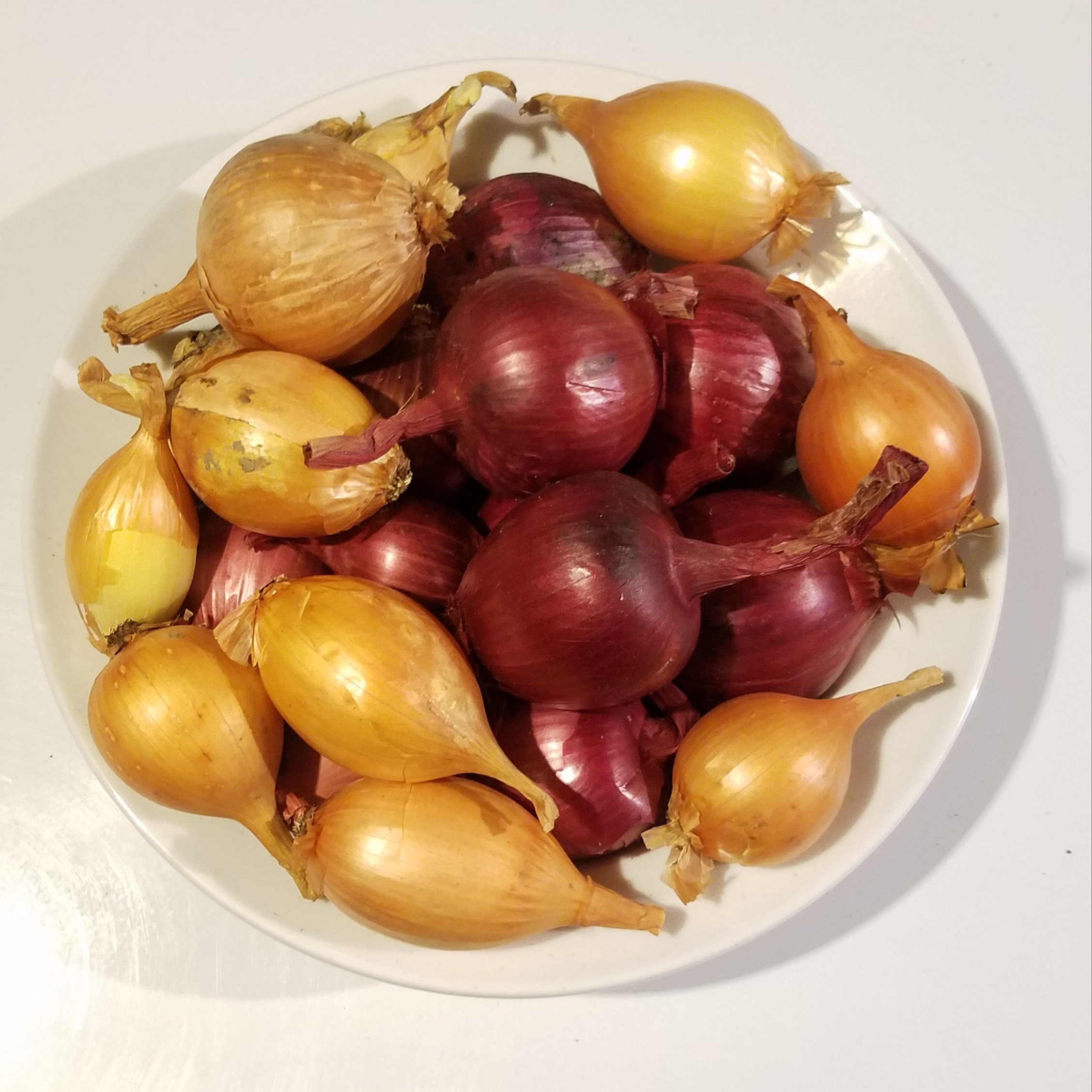
Last bowl of 2020 onions from our garden.

I wrote a week’s worth of posts ahead of the holidays to avoid thinking about daily writing for a while. It’s time to get going again.

As the calendar turns to 2021, it’s also time to get serious about the garden. First up is onion seeds.

In September I wrote about the 2020 onion experience. Here’s what’s in the works for 2021.

Channel trays: I bought five channel trays and matching container trays. I got a bag of #13 soil mix, designed for use in channel trays, from the local land products company. I also ordered a special heating pad for germination. The upshot is to grow my own onion starts from seed. I’m better prepared for it this year than last.

Onion plants: Just in case, I am ordering the same varieties of onion plants as last year to be shipped in April from Johnny’s Selected Seeds. I hope to give up the live starts, but not until I’ve started my own onions successfully at home for a couple of seasons.

Greenhouse: I don’t know if I’m returning to the farm because of the persisting coronavirus pandemic. If I do, I may give some seeds to my friends to start as an additional layer of backup. That worked well with shallots last year.

Quantities: This winter I used onions sliced and frozen for cooking and the results were good. By planting more than last year I can freeze more, extending the locally grown onion season.

Shallots: Last year’s Matador shallots had a long shelf life so I’m planning on them again. I was surprised at how useful they are in the kitchen.

Onions: Ordered Rossa di Milano red onion and Calibra yellow onion seeds. I will also plant all of the seeds left from the last couple of years to see how they germinate: White Lisbon, Red Burgundy, Talon, Sweet Spanish Utah Strain, Walla Walla and Valencia. For onion plants, my online shopping cart has Patterson, Ailsa Craig, Redwing and Sierra Blanca in it. There may be some tweaking before I hit the order button in a few days.

We use onions almost every day. Last year was the first to produce more of my own. In 2021 I’ll dedicate more space to them and work toward producing a better crop. It would be great to produce enough storage onions to last until the end of March 2022.

In any case, gardening season has begun and that’s hopeful news as a winter storm bears down on Eastern Iowa.

Categories
Kitchen Garden

Vegetable Soup

Sunrise, Dec. 5, 2020.

Using a combination of vegetables from the freezer, ice box, pantry, and storage bins I made vegetable soup for dinner last night. There were three quarts leftover for the rest of the week.

I don’t know the food cost. Purchased ingredients included a half cup of lentils, a quarter cup of pearled barley, three bay leaves, salt, and a 15 ounce can of prepared USDA organic kidney beans. Everything else was either from my garden or the farm.

More important than the meal, I captured something about Saturday afternoons in the kitchen. That feeling of a break from weekday work and action. That feeling we can live in the moment. A feeling that our lives have potential, that we are creative. Even if the result was a dependable, pretty good meal, there is more than that to living.

It turns out constraints in the supply chain for the coronavirus vaccine will result in less people becoming vaccinated than expected by the end of the year — about ten percent of projections. A group of hospital workers said yesterday they wouldn’t feel comfortable in returning to “normal behavior” until 70 percent of the U.S. population was vaccinated. My own projection is our family will be restricted until at the end of 2021. There is a lot of uncertainty about social change resulting from this virus, making accurate projections difficult.

Once again, I was the only trail walker wearing a face mask yesterday. I’m not complaining, just saying. I must get out of the house at least once a day and the trail is a useful way to do so. It was unseasonably warm in what may be the warmest year for the globe since we began keeping records. I was reminded of my personal responsibility to address the climate crisis. One more thing to be worked into my 12-month plan.

Categories
Sustainability

Late Autumn

Sunlight on Lake Macbride, Dec. 4, 2020.

The period after the general election and before the next U.S. Congress is proving to be desultory. About the only positive thing coming out of these weeks is the president is fading from view as each day brings us closer to a Biden-Harris administration. I don’t want time to pass quickly yet I seek outlets besides national politics for my human energy. I also take a daily afternoon nap.

Garden planning has begun and the first shipment from a seed supplier arrived yesterday. I hope to expand the garden, more closely correlate the garden and the kitchen/pantry, and grow more vegetables for the food rescue operation. In the meanwhile we’re still cooking food put up last summer and fall.

I read the first 400 pages of Obama’s presidential memoir. His first book, Dreams from my Father remains his best written with A Promised Land ahead of The Audacity of Hope. He’s a young man so I expect there will be more writing after he finishes the second volume of memoirs. I also doubt he will be as prolific a writer as Jimmy Carter became in his post-presidency period. A Trump memoir? Stand on your head if you think he will personally write one. No doubt he will cash in on the opportunity by hiring a ghost writer to tell his story, his way, and put his name on it.

I read my journal from late 1974 and 1975. In it I recorded reading many books, two or three a week and sometimes more. Today reading a book is a bigger deal. I will finish 50 or so this year, which is more than most people read, yet much less than I once did. According to the Social Security Administration life expectancy calculator I can expect to live 16 more years. At an average of two books per month that’s 384 more to read, which doesn’t seem like many given everything that is available.

Part of next year’s plan will be incorporating more intent in the reading plan. Click here to view my recent reading.

I’m nowhere near assembling the planning threads for next year. There’s the garden, reading and writing. There is also our family’s wellness and home maintenance to consider. By the first of January I hope to weave something that is meaningful and fits well as we enter another year of the pandemic in 2021.

Time to get back to work.

Categories
Kitchen Garden

Butternut Squash and Pasta

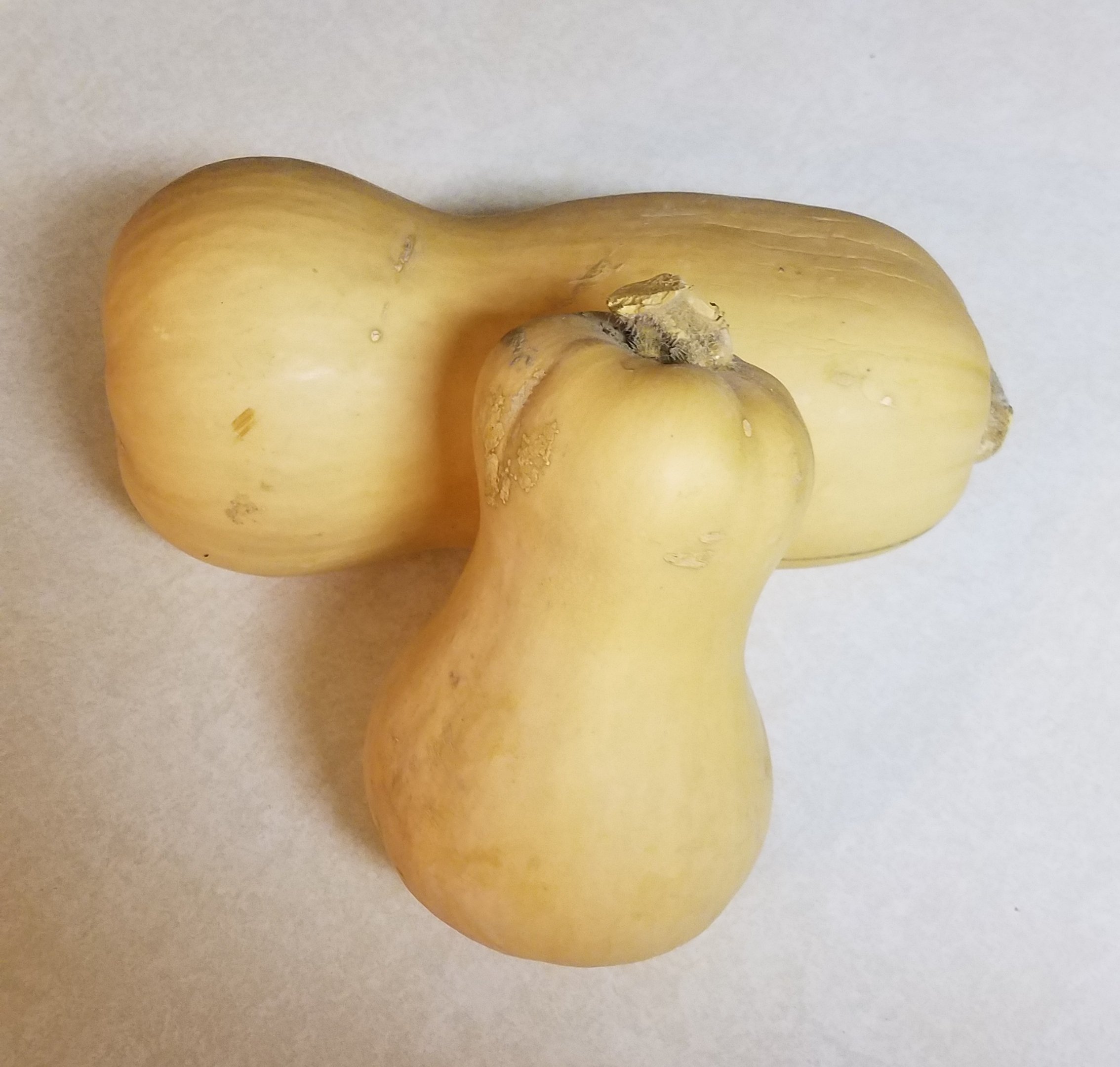
Butternut squash.

It is easy to grow butternut squash. By the end of the gardening season, our kitchen counter accumulates half dozen or more. They keep for a long time at room temperature, so no need to be in a hurry to eat them all.

Mostly we halve them, remove the seeds, and roast them to use the flesh as a side dish. We’ve been exploring new recipes that reduce the amount of dairy products and oils in our meals. Roasted squash fits right into the menu.

We found a way to make a main dish out of butternut squash and tried a new recipe last night. It is called “butternut squash mac and cheese with broccoli.” It tastes nothing like macaroni and cheese and there is no cheese in it. The name is pretty lame. However, we normally stock the ingredients in our kitchen, and I commonly use the required cooking techniques already. I believe we will try this again. Below is how I would prepare it next time.

Butternut Squash with Pasta and Broccoli

  • medium butternut squash (~1 to 1-1/4 pounds)
  • 1 cup diced onion
  • 4 cloves garlic, peeled and minced
  • 1 teaspoon dried thyme
  • 1 teaspoon dried basil
  • 1 cup unsweetened almond milk
  • 2 tablespoons nutritional yeast
  • 1 tablespoon apple cider vinegar
  • sea salt to taste
  • black pepper to taste
  • 8 ounces dried penne pasta
  • 3 cups small broccoli florets

Peel, seed, cube and steam the butternut squash until the flesh yields easily with a knife.

Cook the onion, garlic and seasonings in a saucepan with a quarter cup of broth or water. Keep adding broth to prevent the vegetables from sticking to the pan.

Start eight ounces of pasta in a large pan with plenty of water. Set the timer for five minutes before reaching al dente stage. May have to SWAG this.

Put the almond milk, vinegar, onion-garlic mixture, nutritional yeast, in a blender and stir briefly to incorporate. Add the squash and run at the puree setting until the big pieces are smoothed out. Because there was so much liquid and squash, I did this in two batches. Place the mixture in a large wok or saucepan.

When the timer goes off, add the broccoli to the pasta and cook together for the remaining five minutes. Drain the pasta-broccoli mixture and add it to the sauce pan with the squash mixture. Stir everything together over medium heat until it comes to temperature.

Makes four generous servings.

Tips: I cut the almond milk in half from the original recipe. The amount will require some tweaking. Use pasta made with chick peas or lentils to increase the amount of protein in the dish. I used frozen broccoli which had been parboiled before freezing. I’d try fresh if we had it. I’d also try Brussels sprouts instead of broccoli but cook them completely before adding to the final dish.