Categories
Kitchen Garden

Waiting for Pollination

View of tomatoes from the oak tree stump, June 15, 2021.

Three separate times I sat on the oak tree stump in the garden to watch insect life. I walked around each of the plots observing activity. I spent a decent amount of time doing this. It is not natural to see insects, one has to train to look for them, bring them into focus. The biome of my garden is more diverse that the row crops I saw driving the Lincoln Highway last week, although it’s something to which I had paid little attention.

Tomato plants look healthy, many of them are in bloom, and a few fruit have formed. There wasn’t an abundance of pollinators, maybe enough to get the job done. I spotted one regular honeybee, although maybe that one will bring their buddies today. This is planned to be a big tomato year to get caught up on canned tomatoes. So far, so good.

The humidity was lower making outdoors pleasant even with ambient temperatures in the mid-80s. What we need is rain. According to the state climatology website, our part of the state received about four inches of accumulated precipitation less than average this spring. I don’t believe rain will come in quantities to get us back to average. I irrigate the garden and two new apple trees daily.

Otherwise, Tuesday was a day of preparing for and being in meetings. I was part of a group of Iowans in a conference call with our U.S. Senator Joni Ernst about addressing climate change, and I conducted the annual meeting of our home owners association.

I finished reading Turning Pointe: How a New Generation of Dancers is Saving Ballet from Itself by Chloe Angyal. I met the author at an event in Iowa City while she was writing it. Dance was not available when I was a grader, and I’ve attended a ballet performance only once or twice, notably the Alvin Ailey company when they were in residence in Iowa City. Like many, I watched Gelsey Kirkland and Mikhail Baryshnikov dance The Nutcracker on television. I also read Kirkland’s memoir Dancing on My Grave.

After reading Angyal’s book, I wouldn’t encourage preteens participate in ballet, and if they did, to avoid going on pointe until their bodies finish growing. To understand the physical stress, I tried doing turnout in the kitchen. My left hip was sore the rest of the day.

While we wait for pollination, we also wait for rain. There is none in the forecast.

Categories
Kitchen Garden

Late Spring in a Kitchen Garden

Radicchio Leaves, June 11, 2021.

These late spring days of gardening are among the best of the year. Produce is coming in with variety and quantity, the ice box is filling faster than we can eat and preserve everything. It’s why we garden.

There was a time when I didn’t consider leafy green vegetables important in a garden-based meal. I hoped to grow spinach and lettuce, and maybe that’s it. That changed and now I have an entire plot devoted to different kinds of greens. Greens I used to compost now go into vegetable broth or main courses.

This year I successfully grew mustard, chard, kale, collards, turnips, kohlrabi, beets, arugula, lettuce and spinach for leafy greens. I am also experimenting with radicchio.

Radicchio is a bitter green. Based on my research it can be eaten at any stage of the plant. Ideally one gets good sized heads, and I may yet do so. I didn’t understand how big the plant grows, and thinned some to make room for a couple with heads. That produced an opportunity to try some things.

The first leaves I picked went into a fresh salad. Next, I separated and sorted the culled leaves and pickled the larger ones in a brine made with malt vinegar mixed with my own apple cider vinegar. The pickled leaves will be ready in seven days. Like with any pickle in this household, a little goes a long way. What else?

We have not eaten much arborio rice yet have a couple of bags on hand. I thought to use some of it in a radicchio risotto. I searched my main cookbook library and found radicchio recipes in Molto Italiano by Mario Batali, Fields of Greens: New Vegetarian Recipes from the Celebrated Greens Restaurant by Annie Somerville, Lidia’s Italian-American Kitchen by Lidia Matticchio Bastianich, Classic Italian Cooking for the Vegetarian Gourmet by Beverly Cox with Dale Whitesell, and Local Flavors: Cooking and Eating from America’s Farmer’s Markets by Deborah Madison. There were a couple of recipes for risotto and other interesting options. What surprised me was how many cookbooks did not mention radicchio.

Next step is to read all these recipes, pick a risotto plus one other dish to try with the leaves depicted above. The next couple of days are already busy, yet I hope to work this in. Radicchio was comparatively easy to grow, although some refinement is needed in my future cultivation of the plant. I can likely start another crop for fall harvest.

With the garden in and weeded, I can work on other projects in the yard and house. Broccoli heads are beginning to form and cauliflower won’t be far behind. I monitor for predatory pests, as insect life in the garden is vibrant and hopeful. There are likely some cabbage eaters coming, maybe some squash beetles, Colorado potato beetles, and others. I’ll pick them off as I’ve always done without insecticides. My post-pandemic schedule enables me to keep watch over the garden.

I’m planning two main garden harvests per week. One Monday morning for the food bank, and another toward the end of the week for preservation and cooking. This year’s garden has been satisfying on many levels. So much so, I hung a sign on it.

Garden 2021
Categories
Sustainability

Safe Food for a Healthy Tomorrow

Belgian Lettuce Harvest

The United Nations General Assembly declared June 7 World Food Safety Day. There is not much recognition of the event in the United States where there are programs to ensure safe food in the national production and distribution system.

Food safety is a shared responsibility between governments, producers and consumers. Everyone has a role to play from farm to table to ensure the food we consume is safe and healthy. Through the World Food Safety Day, WHO works to mainstream food safety in the public agenda and reduce the burden of foodborne diseases globally. Food safety is everyone’s business.

World Health Organization website.

In the United States, food safety is less of a problem until we get to large-scale agricultural operations. Even then, when there is an issue, such as the e.coli outbreak in lettuce from Arizona and California farms in 2018, news media and government are quick to take action to prevent spread of foodborne disease. Potentially bad lettuce was pulled from store shelves within hours of recognition of the outbreak.

I have little worry about the safety of food harvested from our garden or sourced locally. I learned enough about food safety to make sure meals cooked at home are safe. We have control of everything from garden to plate, making the risk of infection exceedingly small.

As vegetarians we have few worries about chicken, turkey, beef and pork. The world would be a better place if consumption of those proteins were reduced. As far as seafood is concerned, with imminent depletion of fisheries I don’t understand why anyone would eat any type of seafood. It would be good to give ocean life a rest so it can restore itself, if that’s still possible. The dairy industry is highly regulated in the United States. I use some dairy in our household and have had no issue with contamination or spoilage. I understand a large percentage of the population relies on fishing for subsistence, livestock as a main protein, and dairy products.

In an affluent country government has standards to ensure a safe food supply chain. Consumers are informed about the risks of foodborne disease. This may be why World Food Safety Day gets little attention here. Food safety should be the background hum in modern society, something we take for granted. For the most part, in the United States it is. That’s part of our American privilege.

Categories
Kitchen Garden

A Spring Harvest

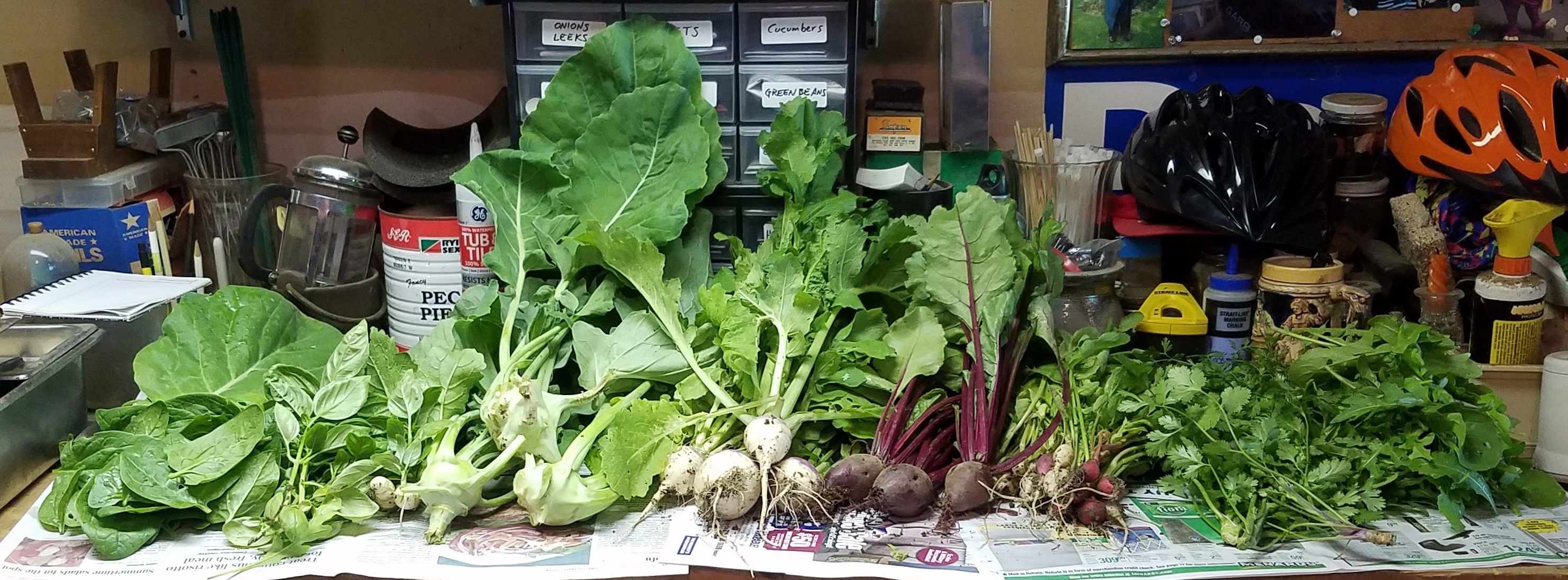
Garden produce displayed on my work bench on June 4, 2021.

The Dutch oven on the stove top is bubbling with today’s vegetable broth. This batch is different because I used kohlrabi greens, which I usually compost, along with turnip and beet greens. The color is rich. Air in the whole house is imbued with the aroma of mirepoix combined with fresh greens. It is elemental.

By tomorrow night, part of the broth will be used to make dinner.

On trash/recycling day I walk the receptacles to the road when I wake so I don’t forget them after sunrise. There was a cool breeze with low humidity as I did it this morning. It felt good after yesterday’s high temperature close to 90 degrees. According to a local meteorologist, the weekend will be exceedingly warm, without precipitation. It’s a time for humans to stay hydrated and to water the garden enough to keep plants growing in the heat. During yesterday afternoon’s walkabout it appeared pumpkins, cucumbers and squash planted have become established despite the heat. It was touch and go for a while.

When I write about the kitchen garden it blocks other topics. For the time being it’s okay. In 2022 I’m planning a course of renewal as a septuagenarian, there’s more I want to accomplish during my days. For now, the scent of vegetable broth and small successes in the garden will sustain me.

Categories
Kitchen Garden Living in Society

Supporting the Food Bank

Garden signage is new this season.

I reached out to a long-time friend who manages the community food bank to ask if they would like some of my excess garden produce.

“We would be most grateful for your fresh produce!” they emailed.

I put a recurring event on my calendar to deliver something every Monday morning beginning June 7 through the end of season. I look forward to seeing her in person on Monday, for the first time since an event during the Elizabeth Warren campaign before the Iowa Caucus.

The goal of a kitchen garden is to match garden production with what a cook can use in the kitchen. Gardeners put a lot of promise in the ground and not all of it comes to fruition. When it does, though, it is time to share the bounty. What better way to do it than donate food to people who need the help of a community food bank?

I participated in a call this week where a group of white Iowans, most with grey hair like mine, were working on a political advocacy project regarding the climate crisis. Halfway through the call, I realized there was no discussion of economic justice, that the people most impacted by the climate crisis are low income, black, indigenous, and people of color. I raised the issue and was surprised by the response. The suggestion was the impact of the climate crisis on low income individuals was mostly in countries other than the United States. OMG! We have a long way to go. The moral is if we don’t raise the issue of economic justice, and its companion, climate justice, it won’t be addressed, even among climate activists.

Thursday was almost perfect, maybe a little hot with low humidity. It was the kind of day I remember from childhood, one without need of air conditioning, where the outdoors was a great place to spend purposeful time. As an aging gardener, I get most of my work done in the morning before it gets hot and humid. Even so, during peak temperatures in the high 80s, it wasn’t so bad.

In driving us to stay home more, the coronavirus pandemic provided a new perspective on daily life. We notice things that our busy lives hid from view. Things like the food bank, climate justice, and the condition of garden plants. That is a good thing.

Categories
Kitchen Garden

Celery Day

Celery patch, June 2, 2021.

This celery patch was revealed from among the weeds yesterday afternoon. In the background of the photograph is a pile of grass clippings with which to mulch the plants until mature.

I tasted a stalk right there in the garden. The flavor of home grown celery is unlike any of your store-bought, shipped from California celery. Much of this will grow to maturity and be processed frozen. The culinary use is mostly for winter soups. Integration of the growing patches with the kitchen is what a kitchen garden is.

I harvested the largest kohlrabi and cleaned it in the kitchen. The flesh of the bulb tasted almost like butter: soft, mild, and delicious. Gardeners keep saying the leaves can be eaten. That’s a true statement, yet there are so many greens available kohlrabi leaves get neglected… and composted. There are six more plants in the first succession. When I harvest them, I might use the leaves as the base for more vegetable broth. I might not.

The forecast is for rain beginning at noon. Once the sun rises I’ll head back out to continue weeding and mulching. It’s much of what gardeners do in June.

Categories
Kitchen Garden

Garden is In – 2021

Garden on May 31, 2021

On Memorial Day I fenced in plot #7 and planted Guajillo chili peppers, eggplant, cucumbers, and a variety of yellow squash and zucchini. There is always something more to plant, yet with the fences up, I’m saying the garden is done. A gardener needs closure.

The next step is to go through the greenhouse and see what I might have missed and find a space for it. There are also extra seedlings which can now be composted. The pumpkins, cantaloupes, and winter squash are not ready to go into the ground yet. From here it is a clean-up operation… and weeding.

There will be less weeding because of the landscaping cloth used in some of the plots. Our yard doesn’t produce enough grass clippings to mulch everything, so I had to do something. Last time I brought a load of mulch from the Iowa City landfill a whole new and different crop of weeds sprouted from it. It was free, but a bad option. I re-used the landscaping cloth from last year and with care it will make it through multiple seasons. It is a better choice than single-use plastic or contaminated mulch from the landfill.

The kitchen is transformed by spring produce. There have been a variety of salads, kale and other greens in everything, spring onions, spring garlic, and radishes. Most notable is the abundance of lettuce. Using row cover on lettuce made a big difference in the size and quality of heads. There is more than we will be able to eat fresh. That’s not to mention arugula and spinach, which together make a nice green salad dressed with a mixture of olive oil, balsamic vinegar, Dijon mustard, salt and pepper. The first batch of spring soup should be stellar.

Garlic scapes have begun to emerge, signaling summer and its long season of food preservation. I’m ready for the busy days ahead as the garden comes into its own and we enjoy the harvest.

It’s nice to call planting done even though a gardener’s work is never finished.

Categories
Kitchen Garden

A Beautiful Spring Day

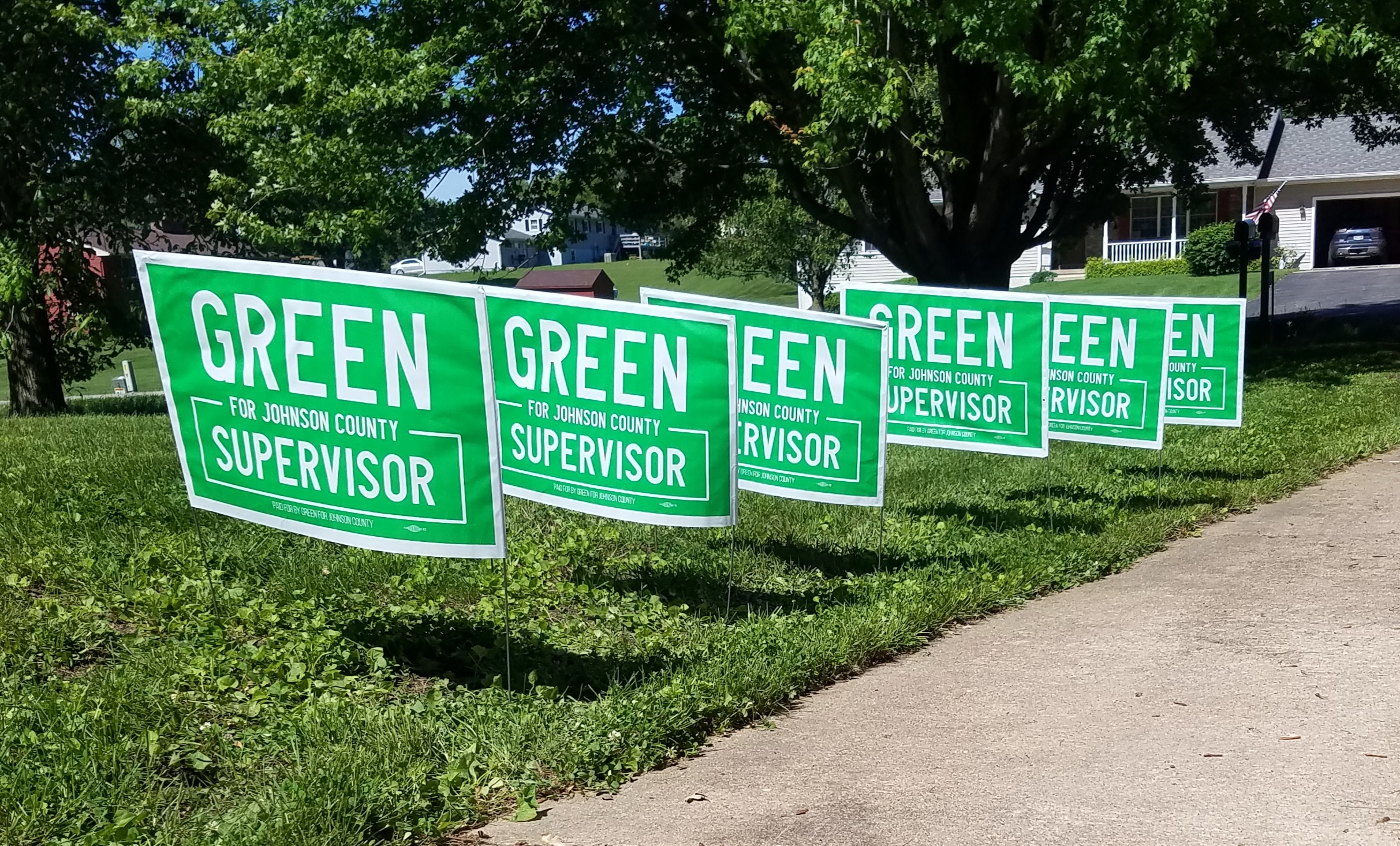
Yard sign pick up display, May 29, 2021.

After an early morning frost scare, Saturday turned into a perfect spring day. Ambient temperatures in the mid sixties, and clear and partly cloudy skies, it was perfect.

We have a special election for county supervisor June 8 and I volunteered to help with sign distribution this weekend. In a county race, yard signs are more important than in a presidential race. There is availability across the county this weekend. I placed a couple, but few outside the campaign were thinking about yard signs: it was a beautiful spring day. There’s more of the same today.

I used the event to make political contacts, mow the front lawn, and collect grass clippings to mulch the garden. I finally mulched the tomatoes which are becoming well-established. It was a long busy day outdoors — the first in a couple of weeks.

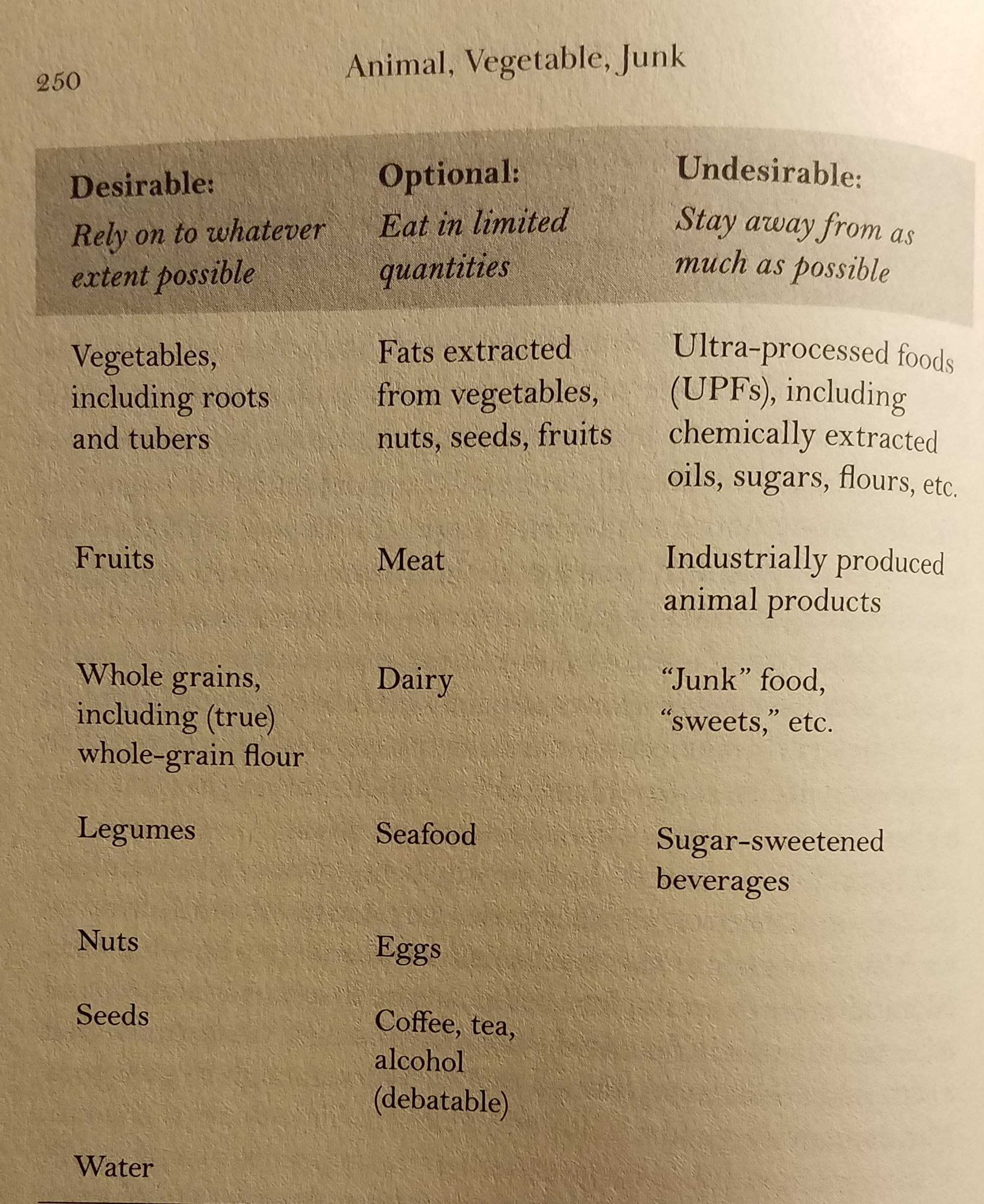
I read Mark Bittman’s new book Animal, Vegetable, Junk: A History of Food, from Sustainable to Suicidal this week. In it was this chart about personal diets:

Page scan from Animal, Vegetable, Junk: A History of Food, from Sustainable to Suicidal by Mark Bittman.

If you can’t agree this is a key method of organizing an individual diet, you’re part of the problem with our food system.

Individual behavior regarding the food system is one thing, yet collective action is what will matter more in the long run. We Americans continue to be pretty individualistic and most people would claim to eschew collective action, even if they participate in it.

I like the idea of meatless Monday and so does Bittman. He describes it as part of a program among some school districts to mandate local sourcing and responsibly produced food. That is, eliminating trans-fat, high-fructose corn syrup, hormones and antibiotics, artificial preservatives, artificial colors and flavors, bleached flour and artificial sweeteners. Those of us who eat a vegetarian diet know a meatless Monday is not only possible, it can be a way of life.

Meatless Monday, and other, similar broad initiatives, are important because they break down individual action and require us to participate in a broader culture of food. The U.S. food production system is recalcitrant about changing anything so while one school district doesn’t make a big difference, it is a chink to set a piton in our climb up the face of a disastrous food system. We should encourage meatless Mondays from the broader potential they represent: even if, like with us, every day is meatless.

By the end of today I’d like to get plot #7 planted and there is a real possibility I will. After that, weeding and more weeding: the life of a gardener.

Categories
Living in Society

Wildflowers

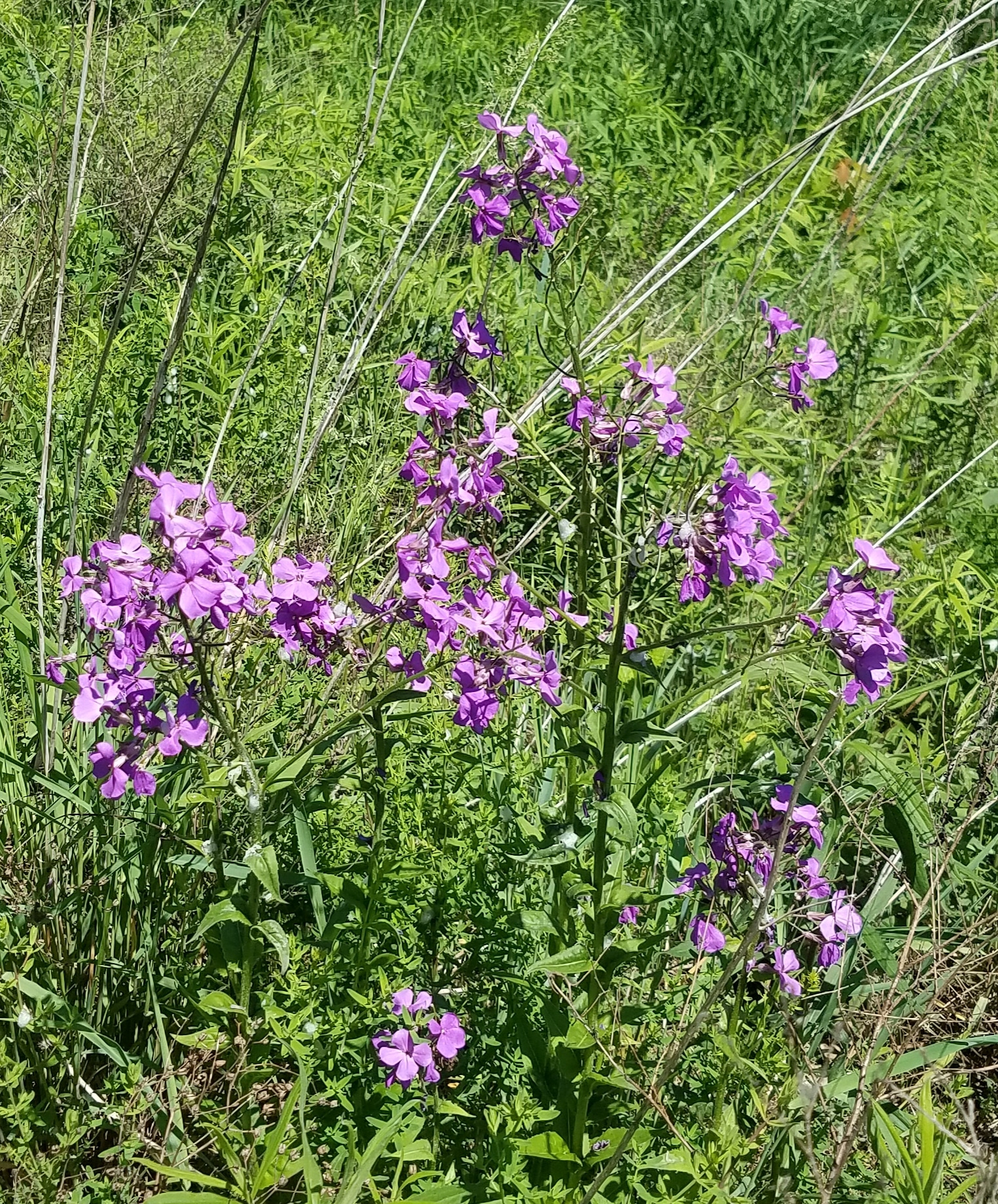
Wildflowers on the Lake Macbride State Park trail, May 26, 2021.

Fourteen months after the World Health Organization declared COVID-19 a global pandemic, it was time to get the newer car serviced. For the most part, the 2002 Subaru sat in the garage or driveway during the pandemic. Wednesday I drove it to town, dropped it at the shop, and walked home along the Lake Macbride State Park trail. It was a near perfect day for a long walk, with clear skies and ambient temperatures in the mid 70s.

Rain is today’s forecast, as it has been for the last two weeks. We haven’t gotten much rain, only enough to retard gardening progress. It looks like drought will be more Iowa’s problem this growing season, although there has been enough moisture here.

In an effort to stop taking a post-operative opioid pain killer, I skipped a dose yesterday afternoon. I’ll likely skip another dose at 11 a.m. today and if the pain is subsiding, switch back to Ibuprofen (or nothing) before bedtime. It was useful to have access to a strong pain killer.

I’ve been mostly out of the garden since I put the tomatoes in and need to finish up initial planting with Guajillo chilies, eggplant, cucumbers, squash, pumpkins, cantaloupes, and acorn squash in plot seven. I also need to weed… a lot.

I’ve been reading Mark Bittman’s new book Animal, Vegetable, Junk: A History of Food from Sustainable to Suicidal. It presents a broad history of food in society, focusing on the detrimental aspects of agriculture. I’m reading the chapter on branding — the rise of Chiquita, Campbell’s, Heinz, Kraft and others. In my autobiography there is a section about the rise of grocery stores and branded prepared foods, so Bittman provides a great background for that work just when I need it. The current average rating on Goodreads is 3.88 which seems about right. I can’t say there is much new to me in the book yet he does part of my research for me.

At 9 a.m. this morning there is a 100% chance of rain, according to my weather application. As soon as the sun rises at 5:36 a.m., I plan to grab my spade and turn over as much of plot seven as I can before it starts. After being waylaid for a week, I’m ready to get back to the garden.

Categories
Kitchen Garden

Lettuce Progress

Magenta and Bibb lettuce, May 25, 2021.

This year’s spring lettuce crop beat expectations. I harvested a lot and the heads are healthy-looking. I set a wheel barrow with lettuce at the end of the driveway to share the abundance with neighbors. Only a couple found homes but I’m happy to place any of it. I’m not really marketing either.

I seem to have cracked the code for growing lettuce. Here’s what I am seeing.

It began with selecting variety. Magenta from Johnny’s Selected Seeds is a good summer crop lettuce and that’s most of what’s in the photo. I also procured five other varieties, which I’m trying in succession.

The germination heating pad made a big difference. Seeds germinated more quickly and that resulted in more viable starts. I recycled some nine-cell seed starter trays and that’s the right size per succession crop for our household. Before last frost I transplanted to larger containers and now I’m planting from the nine-cell trays directly into the soil.

Lettuce under row cover.

What appears to have made the biggest difference is planting lettuce under row cover. The heads grew quickly to maturity and the soil remains fertile with addition of composted chicken manure crumbles. The row cover also protects lettuce from excessive sunlight and from insects. I’ve grown lettuce from seedlings before, but never like this, with big heads and a high seedling success rate.

I did a financial analysis of gardening as a potential source of income and lettuce would be a key component. People will pay more for organically grown lettuce fresh from the garden. I haven’t thought much about taking it to the farmers’ market before, but after this spring, I can see a path to selling some of it next year.

A gardener is always observing the results of their work, trying new things, and staying up to date on tools and techniques available to improve cropping. When one hits on a success, like this lettuce crop, the work seems worth it.

Think I’ll have a celebratory salad for breakfast.