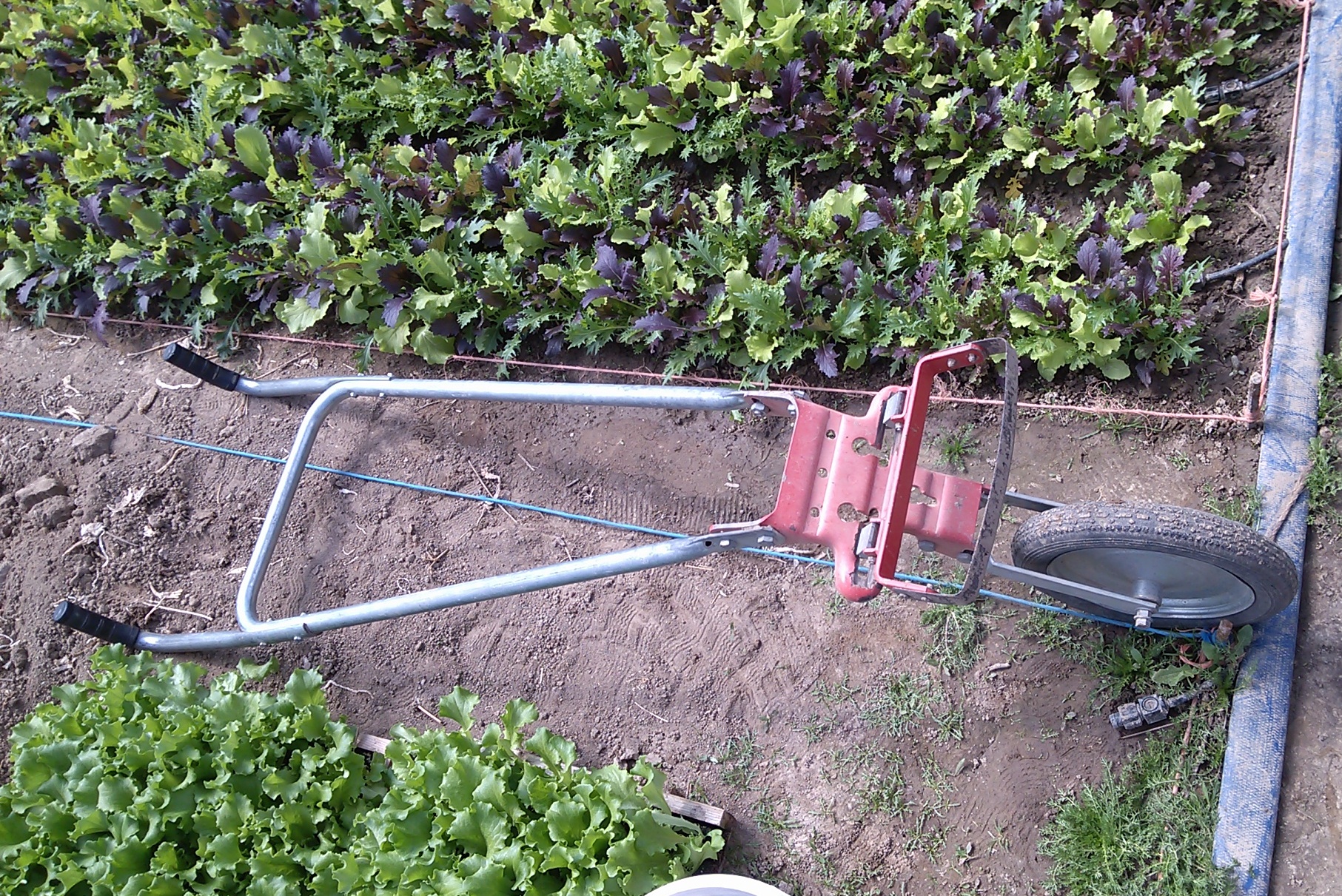
RURAL CEDAR TOWNSHIP— There was a palpable air of activity at the farm this week as planting the fields began in earnest. Rows were cultivated, marked with string in straight lines, and one-by-one, seedlings were lined up in measured intervals and put in the ground. The rows were straight and long, a display of spring’s hope and promise.
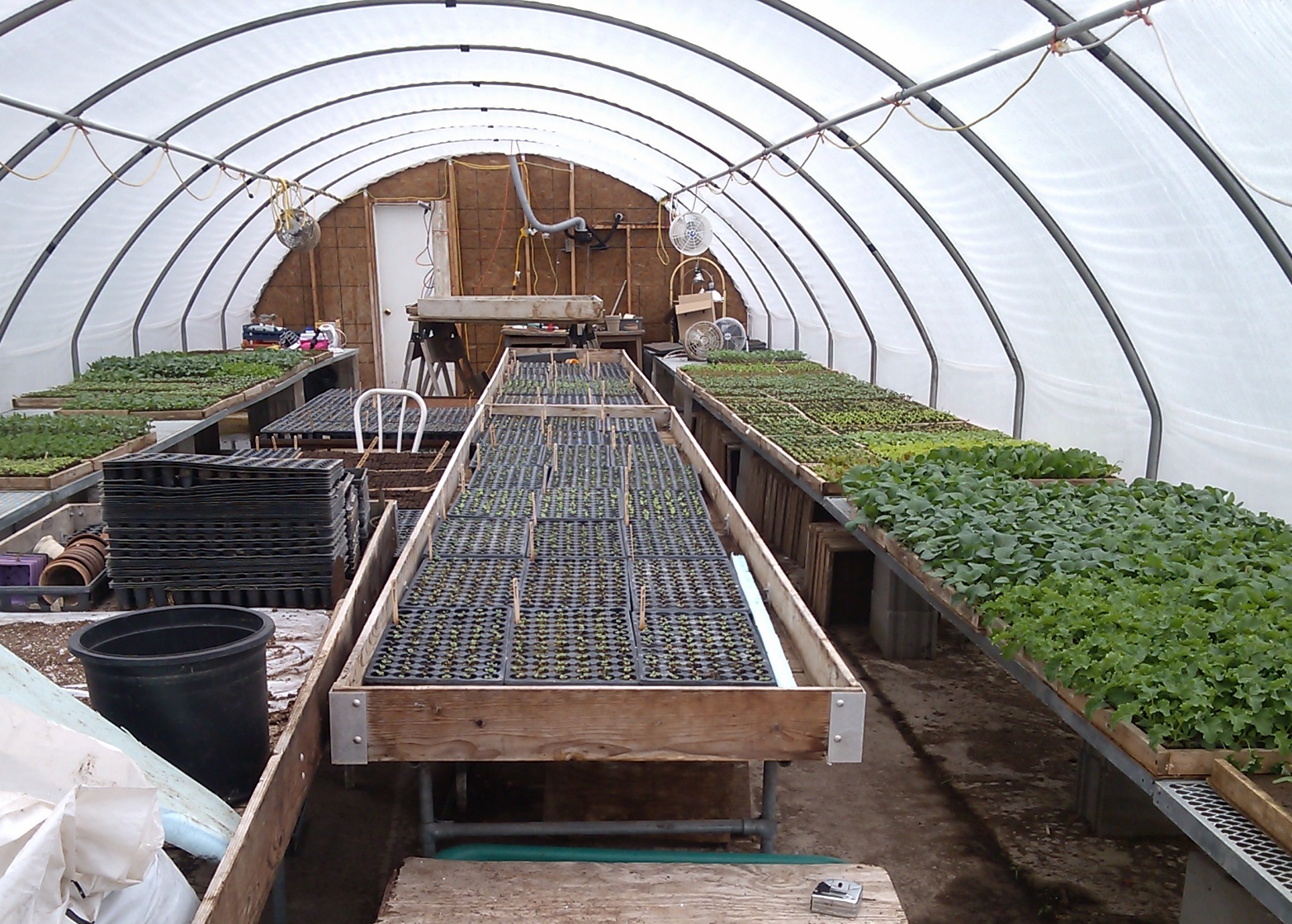
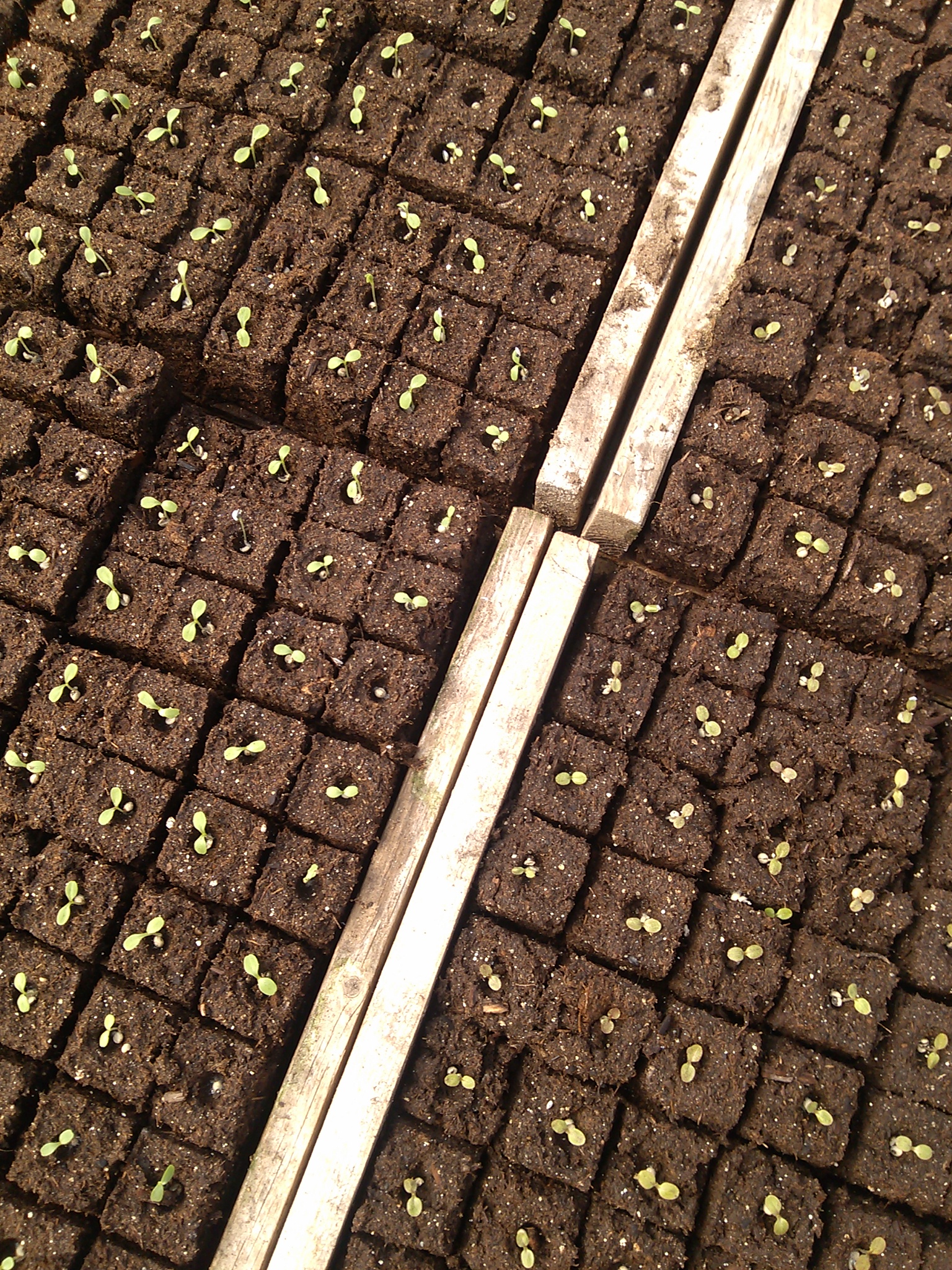
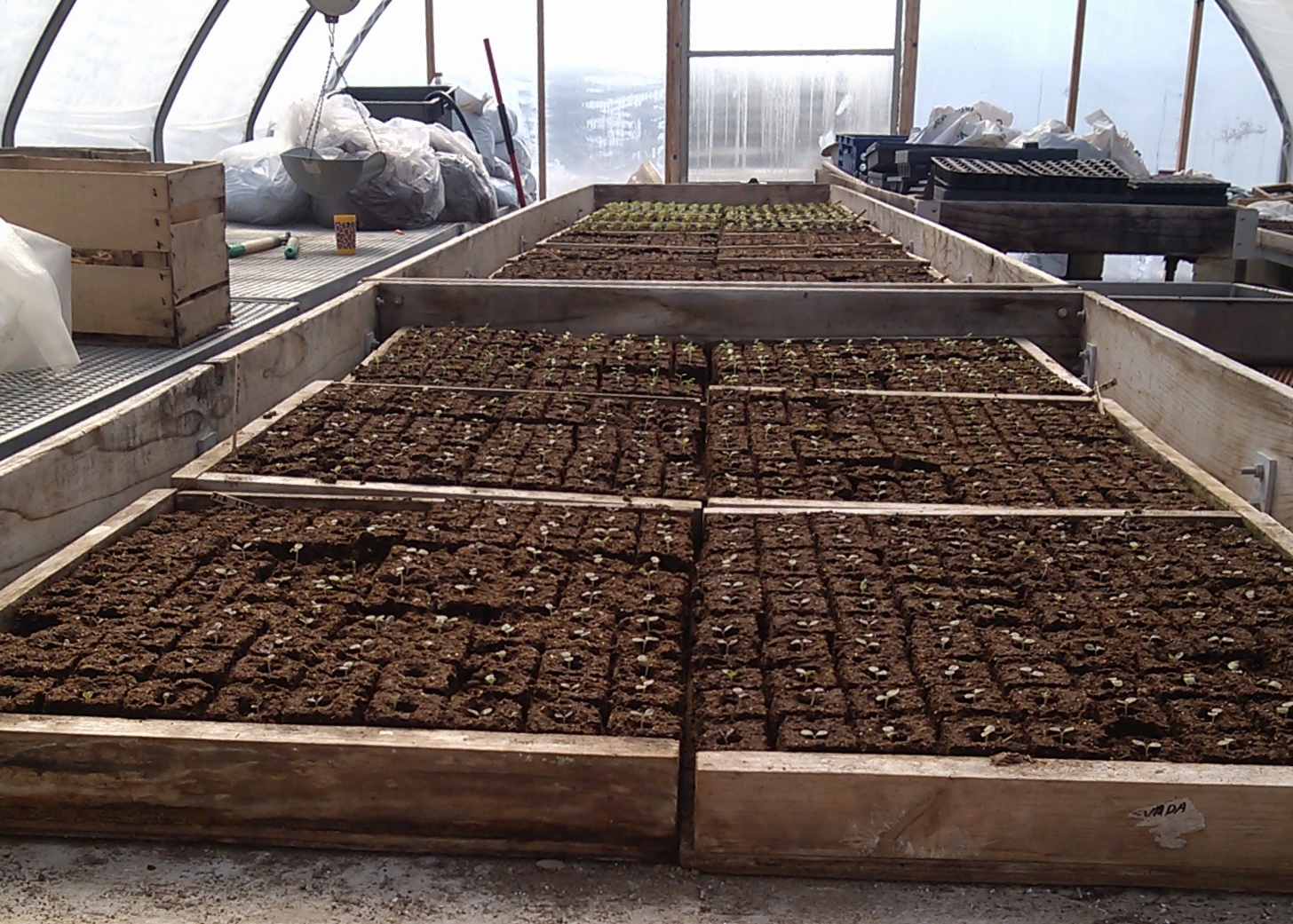
My role was to make more soil blocks and plant cabbage and broccoli seeds. The trays in the greenhouse were all used up, so as soon as the planting crew finished one, I secured the empty and replanted it. The greenhouse has become a brief way station in the life of the farm.
Seedlings Ready for Transport
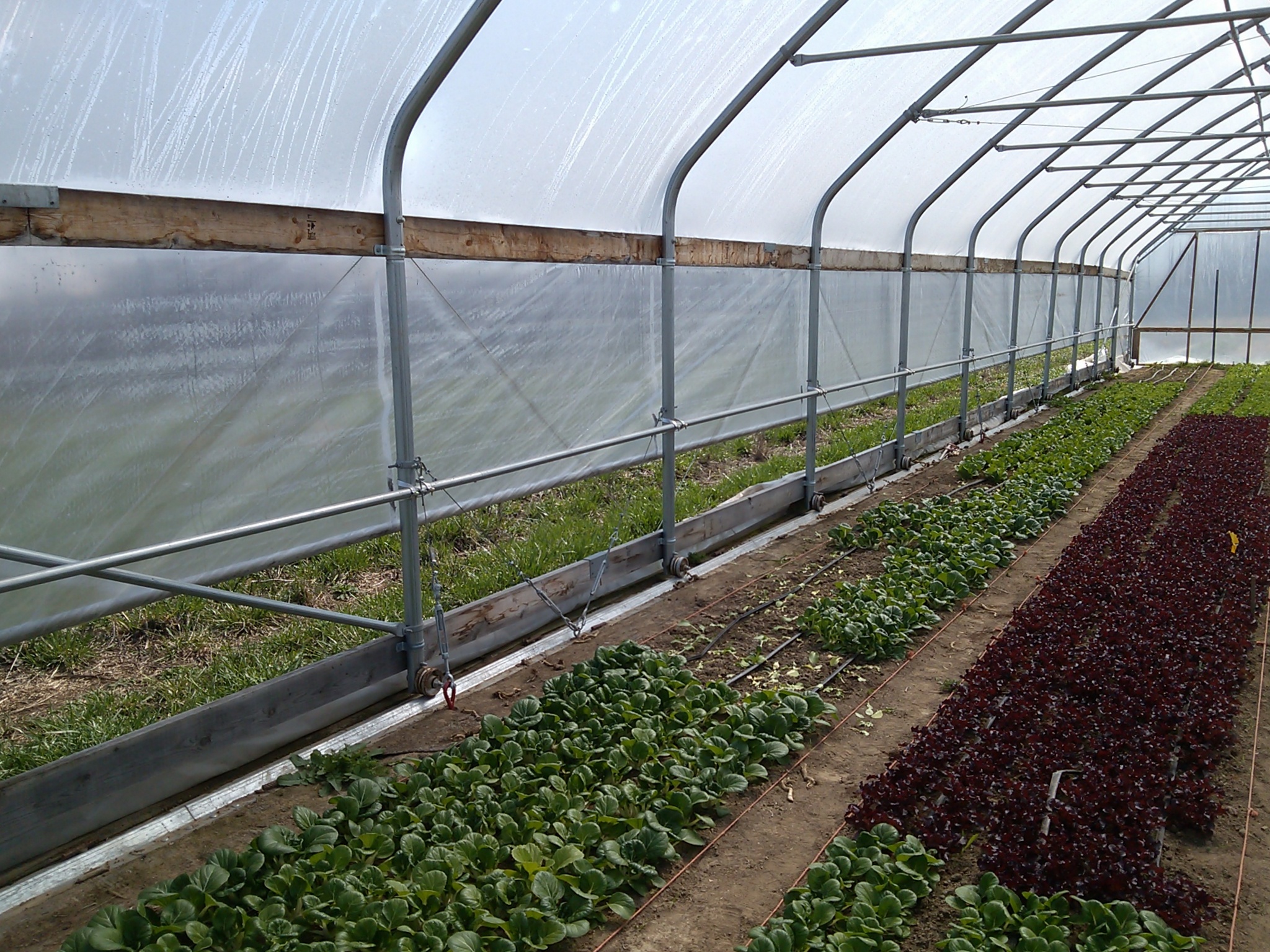
The CSA has begun distributing shares and this week included lettuce, Bok Choy and “grazing greens.” Because of the high tunnel, these varieties were available so soon after a wet, cold spring.
11 weeks into the work, I am beginning to feel a valued part of the farm operation. People work their whole careers in an office, or as a professional, and never feel that way. Caught up in tedious acts of drudgery— driving, shopping, waiting, social drama— feeling disconnected from the most important things in life. It is nearly impossible to feel that way when working on a farm. It give the phrase “will work for food” a new meaning. Finding meaning may be what life in society is about.
RURAL CEDAR TOWNSHIP— Time at the farm represents mid-week for me. I have come to appreciate the weekend more, and finishing my farm work means only two more days until the weekend. The feeling is enjoyable.
My take-away from the farm was a feeling of contributing to something bigger than myself, and large bags of Bok Choy and lettuce for our home kitchen.
Things are moving in and out of the greenhouse at a rapid clip. Developed lettuce is planted in the hoop house, and a number of sturdy seedlings are already in the field. Each week we plant more in order to provide a steady flow of vegetables to CSA share holders. I have planted more types of lettuce than I knew existed.
The walk-in cooler is running, and filled with baskets and coolers with vegetables for this week’s share. Combine all this and a sense of purpose, with a clear, beautiful day, and how much better could life get?
RURAL CEDAR TOWNSHIP— We soil-blocked the rest of the seed trays in the greenhouse yesterday, and planting is well underway at the CSA. My weekly work sessions give me a snapshot of what is a much broader amount of activity in local food production. The experience is paying dividends in understanding the cycle of growth to support the market.
Cultivator
For the first time, I worked in the high tunnel, preparing a bed for planting. High tunnels extend the growing season, producing vegetables for an early or late crop. They also serve to mitigate risk of cool temperatures, and of disease and pests. On a farm, margins mean everything, and high tunnels create an opportunity to increase them. They also create the ability for new customer offerings in the form of a spring or fall share.
My life is richer for working in a limited way on a CSA farm. It is a way of life that survives on the cusp of an agricultural landscape dominated by row crop agriculture. Like the high tunnel, the work is around the margins, and there are plenty of those for local food to be a vital force.
LAKE MACBRIDE— After the gully-washer yesterday, one noticed the buds of trees and bushes coming out. Lilacs, maple, oak, apple, pear— all of them. Spring has been here by the calendar, but these buds are a better sign of the season’s actuality.
At the same time, gardeners and vegetable farmers are itching to get into the ground, but debating whether it is warm enough to transfer from the greenhouse to the hoop house. It’s still too cold and wet to put much in the ground.
A few earlies are in, spinach, and broadcast lettuce and arugula, and there are considerations. Should we skip spring turnips and peas, and get into the soil with transplants from the greenhouse trays instead. That is, when the danger of frost is past.
Someone received a shipment of chicks and is working to keep them warm in the garage. Hundreds of pounds of seed potatoes await planting, something that is traditionally done much earlier in the spring. It’s warm in the greenhouse, but seeds planted six weeks ago are past time for planting in the ground. There is a backlog of field work that will burst upon us, just as the buds on the trees and bushes are doing now.
There is a pent up energy soon to be unleashed in gardens and fields everywhere. If only we could get going. The time is not yet right.
RURAL CEDAR TOWNSHIP— It was raining on me while I was unloading large bags of soil mix near the greenhouse when the phone in my back pocket rang. They were calling from the house to tell me that with all of the thunder and lightning, it wasn’t safe for me to be working outside. I should come to the house.
The severe weather warning on the country music radio station reported hail and rain to be worst in Kalona, Frytown, Washington and the southwest corner of Johnson County. It was heading our way. I figured we would be safe in the greenhouse, but unloaded the rest of the bags, parked my car and headed inside with to wait out the storm with the rest of the crew.
In the country, a thunderstorm can be perceived as a massive formation of clouds stretching from horizon to horizon, covering us like a large bowl. It is a perspective one can’t get within in a large cluster of homes, or in town. A sense that the storm has its own integrity, producing rain, lightning and thunder— a dominant force of nature— a commanding presence that covers us. One shouldn’t argue with that, however much confidence we have in our own endurance. There was fresh coffee and apple pie inside— and conversation. We re-scheduled the crew for tomorrow.
It was a gully washer. When we built our home, the construction project leader, who was a retired farmer, cut a number of swales in the slope around our house with a 1949 Ford tractor. When it really rains, we can see Lyle’s handiwork all around us, as the swales fill with water and our basement stays dry. The rain flows around us to the ditch and lake below us.
The rain continued into the early afternoon. The ground needs the moisture, and we need protection from the lightning. It would be better if the planting was done, but that is not how this growing season is unfolding.
RURAL CEDAR TOWNSHIP— Three of us were working in the greenhouse this week, and the weather forecast was for more cold weather. The season is running late, late enough that when compared to recent years, it is difficult to distinguish it as a season rather than another series of random freaky weather days. Said one grower, “we can deal with drought with irrigation, but cold weather is something else.” There is always a different worry for a farmer.
A few early items, spinach and lettuce, are in the ground, but most of the action continues to be growth in the greenhouse, and hoop house. It is early in the season, getting on later.
The ground thawed in our garden, but because of the rain, it is too wet to plant. When conditions ease, there will be a lot of work to get the soil prepared and planted. For now, we work inside and wait.
One can’t help but be excited about the abundance of new growth, even if we had a hand in planting the seeds and nurturing them in the artificial world of the greenhouse.
RURAL CEDAR TOWNSHIP— It’s the fifth week of making soil blocks for the farm, and flats of seedlings are filling the tables. It is warm inside the greenhouse, and most days I work in jeans and a T-shirt. There is a sense of accomplishment, even though nothing has been planted in the ground except a few items in the hoop house.
There is a small community of growers and talk centers around plants and ultra-local events. Soil quality, weather, temperatures— all leading to a bigger question— when to get into the ground during this cold spring? On a farm there will be a practical answer to this question. Here’s hoping to get out of the greenhouse soon, and into the fields.
GARDEN NOTES: On the home front, I dug, raked and planted the first seeds in the garden. A two foot by ten foot patch where I broadcast Arugula (Rocquette) on the eastern end, and the remainder in a mix of three 45 days to maturity lettuce seeds (Black Seeded Simpson, Gourmet Blend, and Simpson Elite). The watering cans went missing, so I dumped dishpans full of water into a colander to diffuse the initial flow. It worked well.
Inside, I set up a table near the only south-facing window, where I consolidated all of the indoor seedlings. Things are coming along nicely— for the most part. After consulting with the CSA, I abandoned the project of starting onions from seed and replanted those cells with Cayenne pepper seeds. The Rosemary mostly did not take, so I marked the ones that did and planted broccoli in the rest of those cells. I made what I am calling “bombs,” planting all of one kind of seeds in each of several old flower pots. A basil bomb, a mint bomb, and an arugula bomb will hopefully be available for the kitchen. Some have already sprouted.
LAKE MACBRIDE— Eggs play a role in a local food system, however, it is difficult to say anything new because the topic has been well covered. In 2012, Iowa led the country in number of eggs produced, with 14.5 billion, or 16 percent of the total U.S. egg production. The vast majority of these eggs were grown in mechanized, highly efficient, large scale poultry operations. Americans generally purchase eggs, along with most of their food, at a grocery store. It is hard to tell where an egg was produced from looking at it, but odds are that in Iowa it did not travel far from producer to consumer.
I picked three stories from personal experience to highlight my views about the relationship between eggs and sustainability, one each from rural Appalachia, Des Moines, and rural Cedar County, Iowa. I will present each story in a separate post.
In 1983, while visiting my father’s home place in rural Appalachia, my great aunt and uncle, my father’s brother, and my wife and I, decided to make a trip to my uncle’s four acres near Jefferson, North Carolina. Aunt Ruby loaded a basket of sandwiches and a cooler full of drinks, we piled into a car, and headed south on what seemed like a moment’s notice to see the property.
Situated above the New River, geologically one of the oldest rivers in the world, my uncle grew an acre of tobacco, and kept four cows. He had established a temporary residence by moving a mobile home to the summit of the property. He planned to build a permanent structure that could draw down into the earth via a system of hydraulic lifts so he could survive a nuclear holocaust, should that be necessary. He lived in Florida and had a local farmer tend his property most of the year. We paid a visit to the caretaker while we were there.
The caretaker was indigent, and by that I mean native to the area and living on a subsistence basis at the lowest end of any economic measurement. He invited us for a chicken dinner, and we could see the subjects of the proposed meal walking around his property. The offer of dinner was generous by any standard, but we declined. My uncle said it would have been a hardship for him to share some of his family’s chickens with us.
When people talk about indigents, the tone is often pejorative, meaning needy, or lacking some necessity. The indigent caretaker appeared to have most of what he needed to make a life.
His property was in a hollow with a spring at the top. The spring water provided much of what was needed to grow food and live a life. There appeared to be plenty to eat, including eggs and the aforementioned chickens, milk from my uncle’s cows and food from a garden. He had a government draw of less than $50 per month, which was apparently the only source of regular income. He was saving the money to buy a tractor, indicating government money can be used by indigents for capital expenses when their labor was providing everything else a family needed for basic living.
Reflecting on this thirty year old experience, all the talk about urban chickens, concentrated animal feeding operations and the impact of types of feed on egg quality seems a bourgeois concern. When people live at the edge of subsistence, and an extra person or two at dinner makes a real difference in how much food a family has to eat, an egg is an egg. The fortunate ones, like my uncle’s caretaker, have space to produce their own.
The bourgeoisification of egg production in contemporary urban society seems trivial by comparison to indigent living. If a person is hungry, an egg is an egg, and those who live close to the means of production have no choice but to produce their own.
LAKE MACBRIDE— During the Rattlesnake Roundup in Sweetwater, Texas, lodging books up well in advance. The annual March event started as a way of controlling the snake population and has evolved into a festival that attracts more than 40,000 visitors annually. I haven’t tried rattlesnake meat, which is popular at the festival, but it reportedly tastes like chicken.
During a business trip the weekend of the event, I stayed at the home of an area cotton farmer because there were no motel rooms available. The octogenarian owner provided a pickup truck tour of the local cotton operation before dinner one night, driving most sections of his 5,000 acres. There were other large cotton growers in the area, and our conversation covered a range of topics from government subsidies, soil quality, tumbleweed, boll weevil control, growing conditions and harvest. We drove by the large cotton gin built by a cooperative of growers. Cotton hulls were stacked in gigantic piles near the equipment. There was a use for cotton hulls, but not enough of one. He was cottoning up to me because of the financial investment our company made in his sons’ troubled trucking operation.
We wouldn’t call his cotton growing practices sustainable, quite the opposite. It was as good an example of industrial agriculture as there is. If there was a boll weevil outbreak, the crop dusters came out in force to spray the section and eradicate the pest. He did what he needed to manage the risk of growing cotton, and cooperate with his neighbors to get the annual crop planted, grown and harvested.
I met his two sons, and they leveraged the farm to try to make ends meet in their trucking company. The reason I was in Texas was the troubled trucking operation. The experience helped shape my view of the importance of capital in a farming.
It is one thing to locate a plot of ground and grow vegetables to sell at the farmers market. It is another thing to sustain operations over decades. The lack of adequate capitalization seems to be a primary tension point for beginning, local producers, with start-up, scalability and processing mentioned frequently as challenges. Like any farmer, local food producers make deals with people who have capital in the form of land, equipment and money: banks, government, parents and neighboring farmers.
For a local food grower to sustain operations, managing capital is equally important with managing growing practices. In my experience, not enough attention is paid to capital management by sustainable agriculture practitioners. Financial sustainability goes with everything else in sustainable agriculture, and can take decades to achieve in the best of conditions.
My experience in West Texas was a bit disturbing. The way the land was treated, the use of chemicals, the attitudes of the farmers, all of it had a sense of desperation about it. It was especially evident in the way the sons used the farm as leverage for their failing trucking business.
If sustainable agriculture has a chance in the 21st century, practitioners must learn more about the relationship of capital to farming. As a successful practitioner of sustainable agriculture recently told me, “the ‘kids’ who were not depression era people never got the hang of the financial end of things and overspent even though much was handed to them on a silver platter.” Last time I checked, very few people continue to hand out silver platters.
RURAL CEDAR TOWNSHIP— The seeds I planted last week had sprouted when I returned to the farm for shift number two. The work was easier this time and I finished quickly. I used a water bottle to stay hydrated, and it helped a lot. The greenhouse is starting to fill with the flats of seedlings for three growers who use the space.
Even though it was only my second day of making soil blocks, the skill had been learned, and I trained another worker.
The CSA where I work is not organic. “We can’t afford that,” said the producer. This attitude is common among vegetable growers, and while some equivocate, saying they use “organic practices,” the truth is the discussion about organic is based on penetrating markets. While it is not mentioned much anymore, the purpose of Community Supported Agriculture is to know your grower, and how they raise vegetables. It requires the buyer to have a depth of knowledge beyond fungible commodities. Being part of a CSA is about more than just the weekly share of vegetables, even if our consumer culture focuses on that aspect of the arrangement.
Most consumers don’t have time to know the farmer, and buy food at the grocery store. Maybe there is an alternative, and while labor intensive, it starts on farms like this one.
 RURAL CEDAR TOWNSHIP— There was a palpable air of activity at the farm this week as planting the fields began in earnest. Rows were cultivated, marked with string in straight lines, and one-by-one, seedlings were lined up in measured intervals and put in the ground. The rows were straight and long, a display of spring’s hope and promise.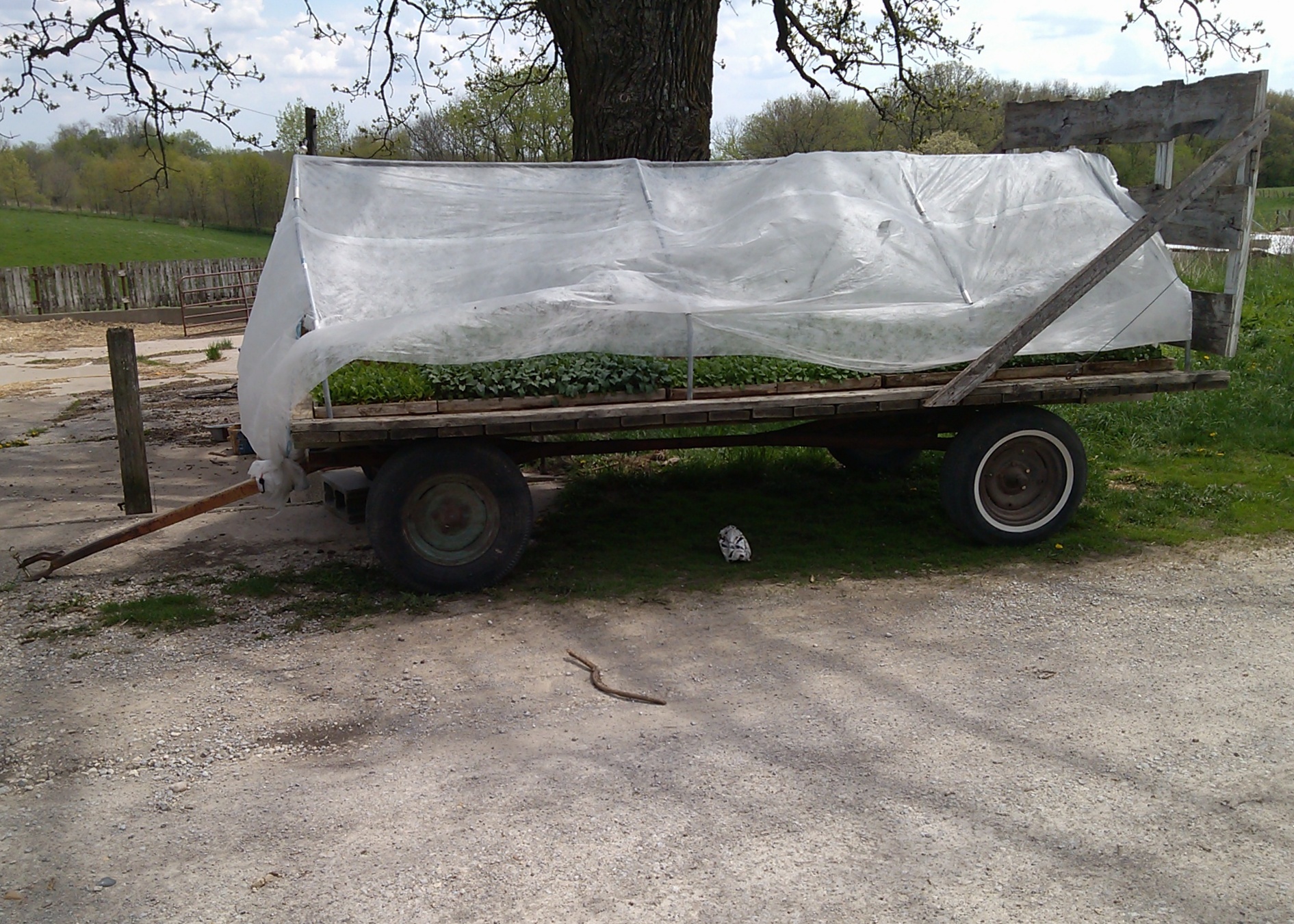




 Journey Home
You must be logged in to post a comment.