Categories
Living in Society

Dooley or Jones for Secretary of Agriculture?

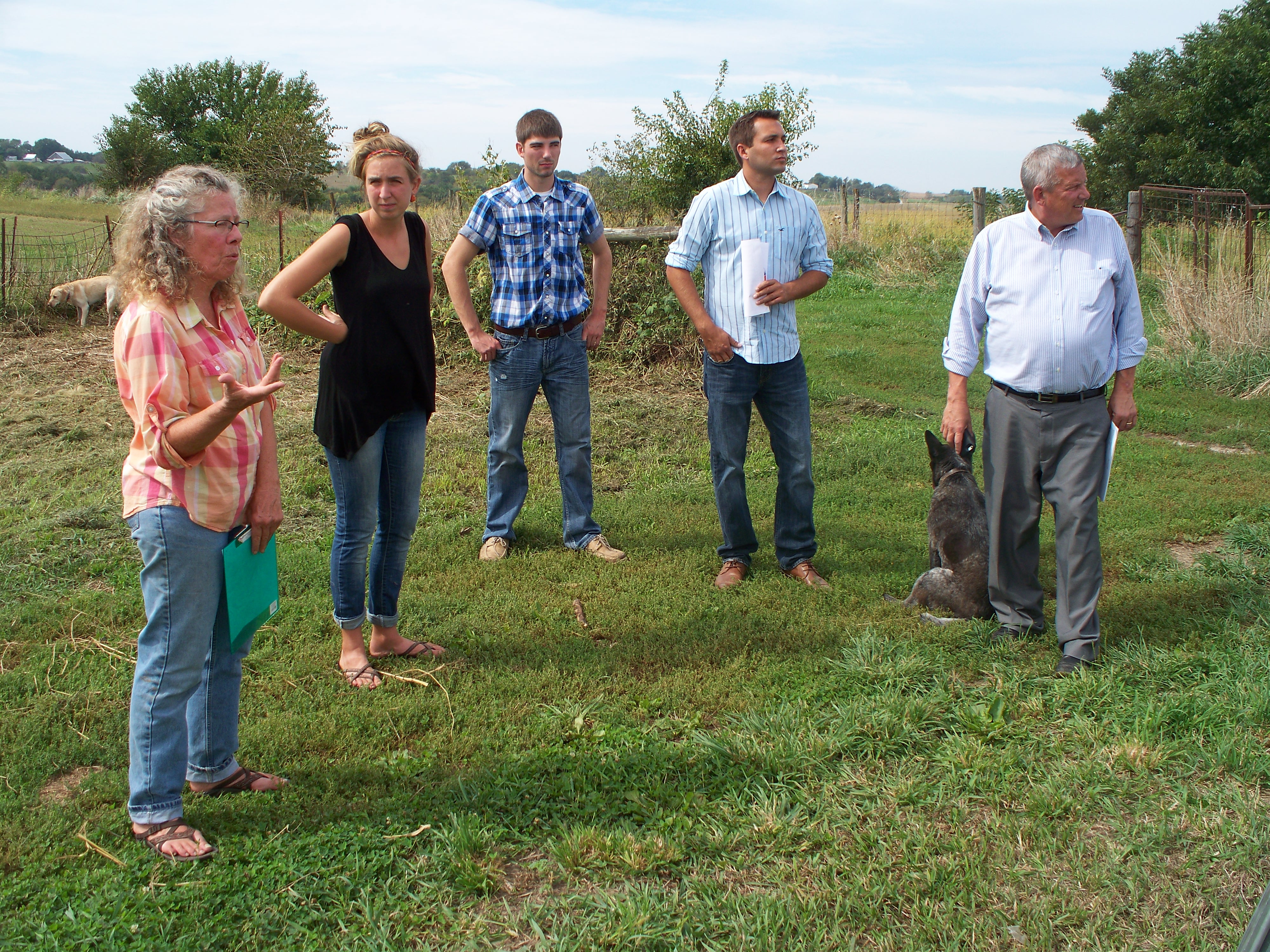
Susan Jutz, Carmen Black, Paul Pisarik, Bobby Kaufmann, and Bill Northey at Local Harvest CSA Sept. 24, 2015.

It may be futile to pick a candidate for Iowa Secretary of Agriculture in the June 2, Democratic primary. Running are Wade Dooley a sixth-generation farmer and Practical Farmers of Iowa member, and Chris Jones a scientist, former University of Iowa research engineer, and veteran of the Des Moines Water Works. The problem for Democrats is Republican incumbent Mike Naig is expected to win the general election.

To the extent Big Ag controls this race, Naig — a former Monsanto lobbyist — has the inside track. Whether any Democrat can overcome that advantage is an open question.

Either Dooley or Jones would be outstanding secretaries, with a focus on things that matter to all Iowans, not only farmers. There is no reason for me to pick a horse in this race in February, so I won’t. I will post the about page of the two Democrats to use as a reference and return to this topic if something newsworthy happens. In alphabetical order:

Wade Dooley

Wade Dooley is a sixth-generation Iowa farmer who has spent his life working the land along the Iowa River northwest of Marshalltown. He’s been farming since he was 14 years old, and after graduating from Iowa State University and working in the seed industry, he returned home to farm with his father on their family’s Century Farm in 2008. Over the past 18 years, Wade has focused on building a more profitable and sustainable operation, implementing conservation practices including diverse prairie restoration along the Iowa River and using no-till farming and cover crops across all his acres.

Wade believes that strong communities are built when people work together toward common goals, and he’s put that belief into action throughout his life. He currently serves on six local boards and committees, and was recently a board member of Practical Farmers of Iowa, a non-partisan organization focused on farmers helping farmers. Whether it’s speaking to local leaders about conservation practices or working with neighbors to solve problems, Wade has always believed in the power of listening to each other and finding solutions that work for everyone.

Wade is running for Secretary of Agriculture because he believes Iowa’s farmers and communities deserve leadership that puts their needs first. He’s seen firsthand how the right support can help family farms succeed and small towns thrive, and he knows the Department of Agriculture has the resources and expertise to scale solutions for communities across Iowa. As Secretary, Wade will bring a practical, results-focused approach—willing to try new ideas, measure what works, and change course when something isn’t working—while working across differences to get things done for Iowa.

Wade lives in Albion, Iowa with his wife, and they are preparing to welcome their first child.

Chris Jones

A leading advocate for environmental justice in Iowa, Chris Jones has studied the state’s water quality for decades. At the University of Iowa, he worked as a research engineer, studying contaminant hydrology in agricultural landscapes. Prior to that he worked for the Des Moines Water Works and the Iowa Soybean Association. He has a PhD in analytical chemistry from Montana State University and a BA in Chemistry and Biology from Simpson College in Indianola.

In 2023, Chris published The Swine Republic: Struggles With the Truth About Agriculture and Water Quality, which was selected by the Library of Congress as Iowa’s representative in the 2024 National Book Festival. He continues to write about water quality and related issues on Substack.

Chris was born in Monmouth, Illinois, where his father worked as a clerk for the Chicago, Burlington and Quincy Railroad. The family returned to Iowa in 1967, where his father continued his railroad career. He spent his childhood in what was then the sleepy town of Ankeny. His mother worked as a secretary for the U.S. Postal Service, which included a stint as the secretary for the Des Moines Postmaster.

Chris has three adult daughters: a physical therapist, a statistical biologist working for the CDC, and an atmospheric chemist working in Colorado. He enjoys fishing, hunting, and tending his garden and orchard. He lives in Iowa City.

Postscript: If one blows the other out of the water on fund raising, that may influence my vote.
Categories
Reviews

Book Review: Dear Marty, We Crapped in Our Nest

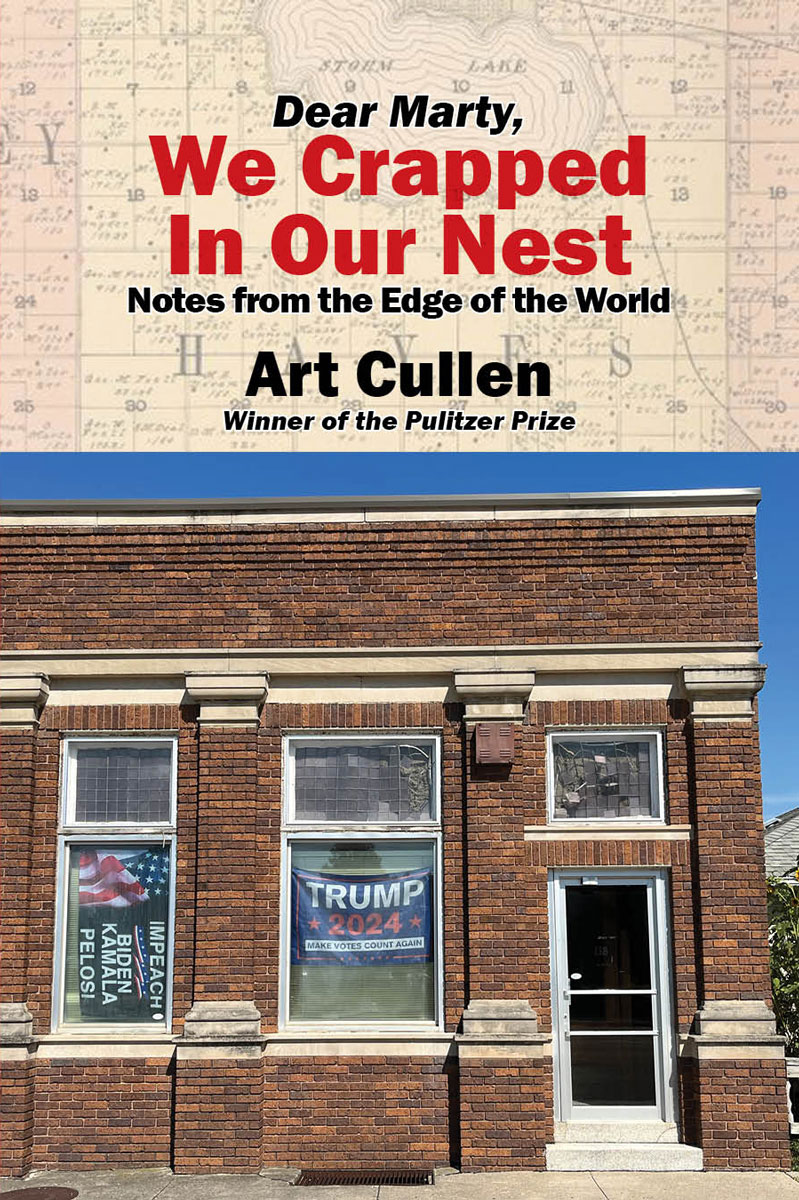
Art Cullen is the kind of writer I have to watch what I write about him in public. Chances are, unless the Good Lord takes him from us, I’ll run into him in some unforeseen context to experience consequences for writing anything too negative. Not that I would, Dear Marty, We Crapped in Our Nest: Notes from the Edge of the World is a well written narrative with a compelling story. Readers should buy a copy and read it.

I recognize many of the players, like Henry Wallace, Norman Borlaug, Fritz Haber, Carl Bosch, Frank Zybach, Aldo Leopold, Ricardo Salvador, and others. These men orbit the sun in an array of stories with which I was already familiar. Thanks to Cullen they were pulled together in a way that has me nodding in agreement. Even the politicians he mentions, Terry Branstad and Tom Vilsack particularly, make their planetary circle around the main theme of Iowa’s extractive agriculture. It’s not a particularly happy story, yet the confirmation bias I experienced created a positive afterglow that lasted the rest of the weekend as I finished the book.

What Dear Marty accomplished is an Iowa narrative, one of many out there, some of which are unknown. We need such narratives. They teach us how to live based on lessons learned or not learned from a tangible past and present. We need that as we live in a time when the U.S. Department of Agriculture set aside billions of dollars to pay for SNAP benefits in the event of a government shutdown. The government shut down, and Republicans refuse to use the money as intended. They instead politicized food insecure people to show they are in control. What are we, as a society, even doing here? I look forward to Cullen’s next column about things like this.

Cullen displays his skills as a newspaper writer in the book. That he could pull together this Iowa story can be attributed to research done to write weekly articles for his newspaper. He shared many of those articles in social media and I read them. This makes the story in the book familiar. It gave him a leg up on anyone else trying to write such an Iowa narrative.

The author makes a lot of sense in the chapter “Finding Center.” There are plenty of things we have in common with people in our neighborhoods, he said. We should just begin pursuing those common interests. This is such common sense, people are missing it. That or they are too busy working more hours, both paid and unpaid, and can’t take their noses up from the grindstone to catch a breath, much less engage in new things. I appreciate common sense. It’s value has diminished in the broader society.

This book reminded me of the late Donald Kaul’s How to Light a Water Heater and other War Stories. In it Kaul reprinted a bunch of his columns in a way that makes it look like they are in a newspaper. The difference between Washington D.C., where Kaul lived, and Spirit Lake is that Cullen actually used his columns to make something new and worth reading. Donald Kaul was no Art Cullen. Many of us are thankful the latter lives in Iowa.

Categories
Kitchen Garden

Fertilizer Day

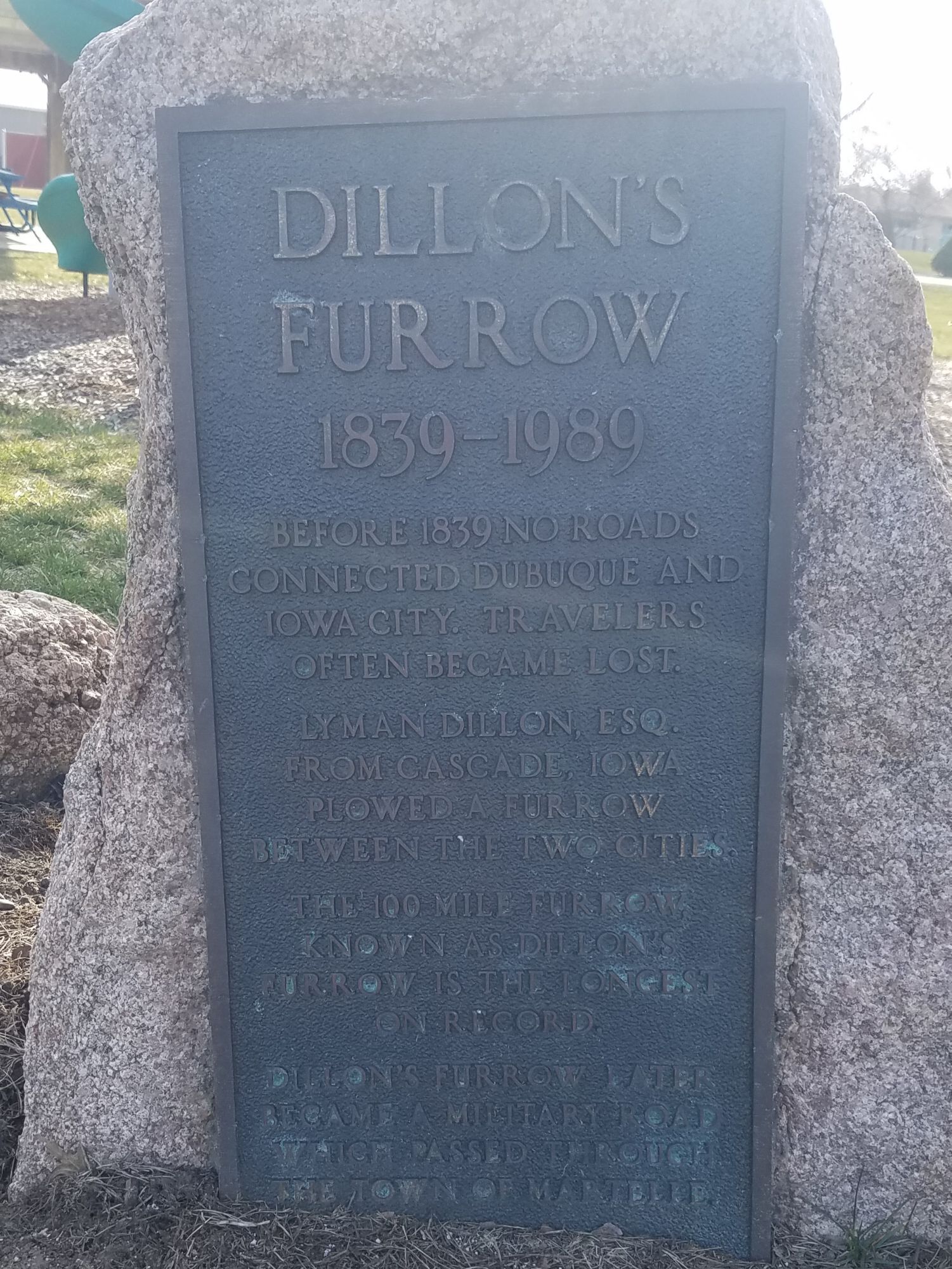
Marker for the now defunct Dillon’s Furrow.

Back when Iowa was a territory, a fellow named Lyman Dillon plowed a furrow from Iowa City to Dubuque so travelers could find their way from one city to the other. Iowa City was designated the territorial capitol in 1839, and Dubuque was a center of commerce, notably for fur trading, lumber, and lead mining. I stopped at the only marker I know and took this photo while enroute along the former Dillon’s Furrow. I went to Monticello to buy garden fertilizer.

Midwestern BioAg distributes bagged, composted chicken manure which many friends use in organic farming operations. I bought 150 pounds for $57.78. It should last through the growing season. I don’t know their process, but this stuff is the best in terms of ease of handling and results.

Farmers have been out in gigantic fields preparing the ground for row crops. Monticello is in Jones County where my spouse’s ancestors farmed after the Civil War. A family cemetery is within spitting distance of Highway 151 near Langworthy. It is a small farm community cemetery where cattle had gotten inside the fence and knocked down some of the grave markers.

If I plant potatoes on Good Friday (today), I’ll need the fertilizer. I’m ready to start digging soil. We’ll see if frost is out of the ground later today.

Categories
Living in Society

Corn Planting and a Haboob

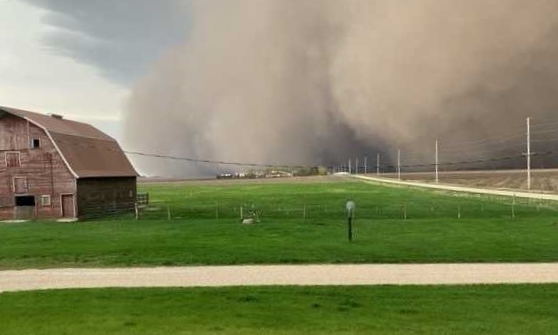
Iowa haboob on May 12, 2022. Photo Credit – KCCI – TV8

I tapped the brakes as we drove home from Des Moines on Monday, May 9. A farmer was discing a field and wind blew large clouds of dust from behind him across Interstate 80. It obscured the view, rendering driving unsafe.

Losing valuable topsoil might be cause for concern, except that corn and soybeans are grown mostly by application of commercial fertilizer and insecticides to ground with hybrid seeds. Tilling the ground where seeds, fertilizer, water and bugs meet, to create a suitable growing medium, matters more than actual topsoil in Iowa. High winds blowing topsoil away doesn’t seem to matter much to today’s Iowa farmers.

A network of farming hums in pre-dawn hours this time of year. Beginning well before sunrise, farmers call each other from kitchens and barns to discuss and decide what they will do that day. If they prize their individualism and freedom, they also speak and act more or less uniformly about crop decisions. There is a fixed ideology of modern agriculture involving corn, soybeans, hogs and cattle. Long delayed this year, this week’s decision was to get corn in the ground.

On Wednesday, May 11, Eleanor Hildebrandt posted an article, “Iowa’s prime corn yields likely gone.”

At the beginning of the second week of May, Iowa farmers were two weeks behind the average planting schedule to the past five years. It was the slowest planting pace in nearly a decade. Only 14 percent of seed corn was in the ground on Sunday, as April weather made it particularly difficult to plant potentially successful seedlings. Research on corn yield from Iowa State University shows the most successful corn crops are planted before middle May.

Iowa’s prime corn yields likely gone by Eleanor Hildebrandt, May 11, 2022

Experts don’t believe the 2022 corn crop will break any records.

It has been a windy week. While no news source is discussing the relationship between the 2022 corn planting season and a somewhat unique weather phenomenon called a haboob, it seems clear that hundreds of farmers plowing, discing, and planting corn loosened thousands of acres of topsoil. When combined with high winds, topsoil blew away in gigantic clouds like those in the image above.

When weather outlets began using the word “haboob,” I immediately thought of Desert One and the failed 1980 attempt during the Carter administration to rescue 52 American hostages from the Iranian embassy. The helicopters unexpectedly encountered haboobs in the desert, which disrupted their flight plans toward Desert One, a staging area. The Atlantic tells the story of the haboobs during the operation here.

Photo Credit – National Weather Service.

The other image that came to mind after reading “haboob,” was of Farm Security Agency photographs of Kansas dust storms in 1935. These storms were attributable to the sod busters who broke up the prairie and farmed the land to exhaustion after the Homestead Act of 1862. These iconic images are a part of our history.

The disconnect of yesterday’s haboob from the large scale farming that made it possible is a sad statement about the nature of our news media and its influence over how we view our lives. Television viewers and radio listeners marvel at the use of a “different” and “peculiar” word to describe the weather phenomenon rather than discuss the causes of this loss of topsoil. At some point the loss of topsoil will matter more than it seemingly does. Yet we have dumbed down the way we take in information, and seem prepared to swallow anything as long as it doesn’t upset the equilibrium of how we currently understand the world.

Don’t get me started on education, though. On Thursday, May 12, there was a League of Women Voters candidate forum in Tiffin where four of six Republican Iowa House District 91 primary candidates spoke about education. This is from the Iowa City Press Citizen.

Education and what is taught in schools to children quickly became one of the main topics of the night as candidates were asked by audience members about the teaching of critical race theory and gender and sexual orientation in schools. Most of the candidates argued against teaching both, often making transphobic remarks in addition to their answers.

GOP District 91 debate includes education, conspiracy theories by George Shillcock, Iowa City Press Citizen, May 14, 2022.

Maybe my expectations are too high for Iowa.

Categories
Kitchen Garden

Revolution From a CSA

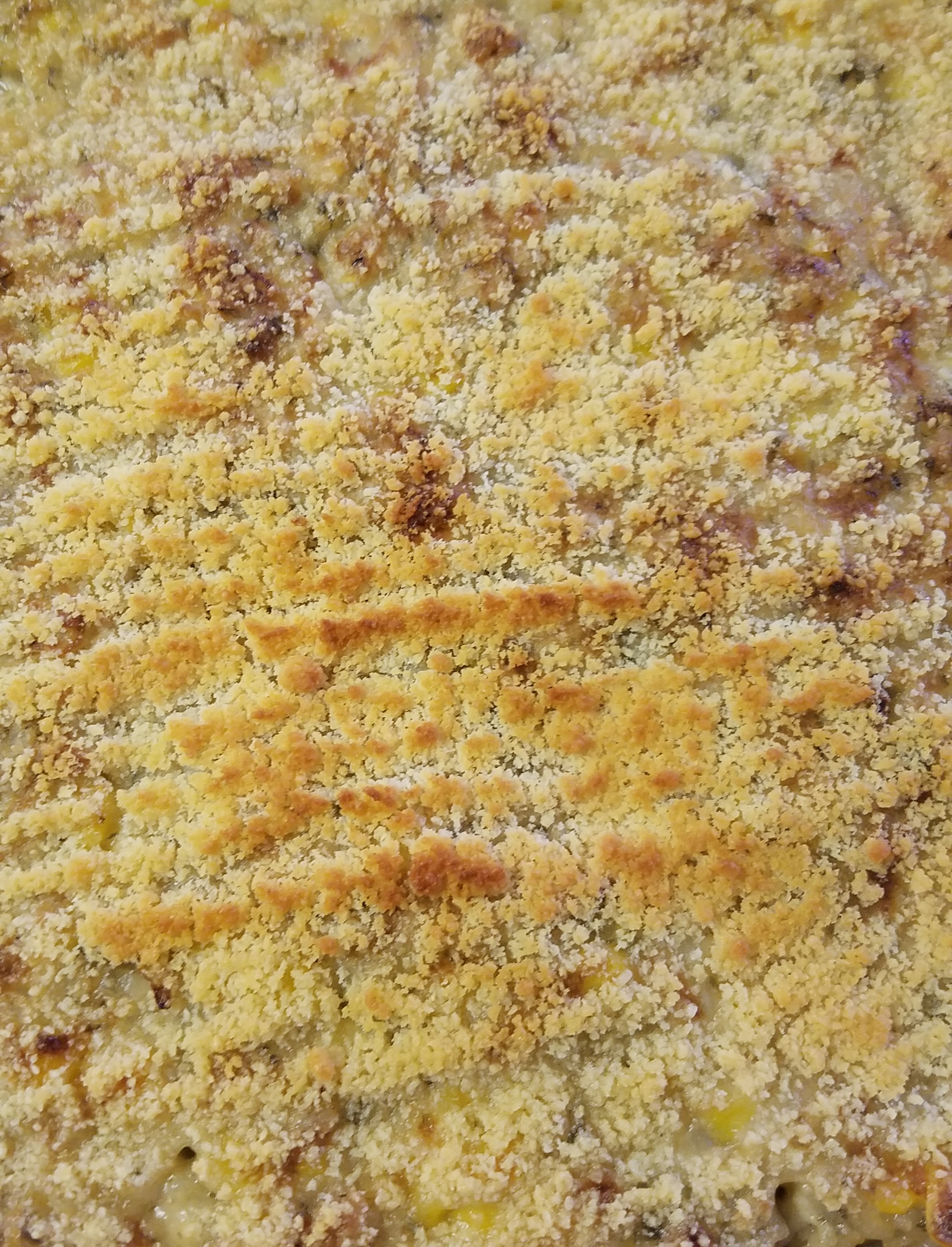
Corn-rice casserole.

Delicious food can be part of a normal life. It seems important to enjoy food we eat as it results in sustaining our lives in a turbulent world. There is little point in living a Dickensian food culture of gruel three times a day when so much food is abundantly available and recipes to prepare it are ubiquitous.

At the same time, as Raj Patel points out in his 2012 book Stuffed and Starved: The Hidden Battle for the World Food System, there are more than a billion people on Earth that don’t have enough to eat each day, and another group of even more that are overweight. Along the way, we became disconnected from the flavor of our food, and its purpose to nourish us. Patel argues that being food insecure and overweight are related conditions caused by the system which delivers our food. I recommend the book.

According to the U.S. Department of Agriculture, roughly 10.5 percent of U.S. households were food insecure for part of 2020, or about 13.8 million of them. This seems like a lot for one of the richest nations on the planet, given the relatively low cost of food calories. Our household has never been food insecure and we spent time and energy creating a food system that works for us. Part of it is growing some of our own food. It also includes shopping for the right things versus for everything. Food insecurity is a real problem, something to which most affected in the U.S. appear to adjust.

Joining a Community Supported Agriculture project was a way to know the face of the farmer and how food on our plate was grown. I joined for these reasons rather than any economic advantage, embrace of organics, or lifestyle change. Most CSA farms donate part of their share to local food banks, yet I never sought this form of generosity.

What is revolutionary about the CSA model is they cut out the middleman in agricultural sales, selling directly to consumers. Crops grown on a CSA farm are, for the most part, not fungible, thus avoiding issues related to the advent of middlemen and processors such as one finds in corn, soybean, dairy, cattle and hog farming. By selling direct to consumers, certain marketplace factors and dynamics can be avoided. CSA farmers secure a premium price for their products and their customers don’t mind that more of the cost of food goes directly to the farmer.

The CSA financial model avoids cyclical, seasonal debt for farm operations. Consumers finance farm operations by paying for a share of production at the beginning of the season. The farmer can avoid taking a loan for seeds, fertilizer and other inputs. Debt avoidance is significant and stands in sharp contrast to how a typical Iowa farmer funds operations.

CSA farmers have a working, if tenuous labor process. Wages are low for permanent workers and offset in some cases by providing food and lodging as part of the arrangement. There is a culture of volunteerism around CSA farms that further reduces labor costs. When I worked at a farm in 2013, my labor was shared with other CSA farms in a complicated process of barter and financial settlement. Most seasons I bartered my labor for a share in the farm, equipment, greenhouse space, or specific types of produce, reducing the farmer’s cash outlay. CSA farmers are creative in controlling and reducing labor costs. They have to be.

This returns me to the idea of delicious food. For the longest time I did not taste what I prepared in the kitchen while making it. I made dishes based on habit, recipes, and what was available in the ice box, pantry and garden. I didn’t give much thought to flavor and that was a mistake.

My outlook is changing. As I more closely integrate my garden with the kitchen flavor has become more important. Each small plate prepared is a multilayered work of creative expression. Some days the food is better than others and I’m beginning to appreciate the variation and what it means. Being part of a CSA brought me from being a consumer to something else, to being a person who relies less on the processing and distribution of food by middlemen. That is the true food system revolution.

Categories
Reviews

Book Review: Bet the Farm

The craftsmanship of Bet the Farm: The Dollars and Sense of Growing Food in America by Beth Hoffman is good, better than many books I read. For people unfamiliar with the challenges of Midwestern, sustainable agriculture, it is a good introduction, covering most issues.

Hoffman is a member of Practical Farmers of Iowa and so am I, so there are some connections. Even though we never met, I know people she mentions in the book and we would likely have friends and acquaintances in common. The PFI community is not that big.

For nine seasons, I worked with beginning and experienced farmers who operate community supported agriculture projects, large vegetable or fruit farms, and raise livestock, so I know some of the work and the challenges. In total, I worked on or did interviews for newspapers on a dozen or so of them.

As she mentions more than once in the narrative, she is from the coast and the land was owned outright by the Iowa family. The former is more typical of beginning farmers, the latter isn’t. It is a good book, yet I hoped there would be a connection to the author and her narrative. There wasn’t.

Bet the Farm was a quick read and if a person is interested in this topic, there are a number of other works by beginning farmers I’d read first.

I wish Beth and John good luck on their farm and would read another book about their progress after they have been farming five or ten more years.

Categories
Living in Society

Algae Growing on the Lake

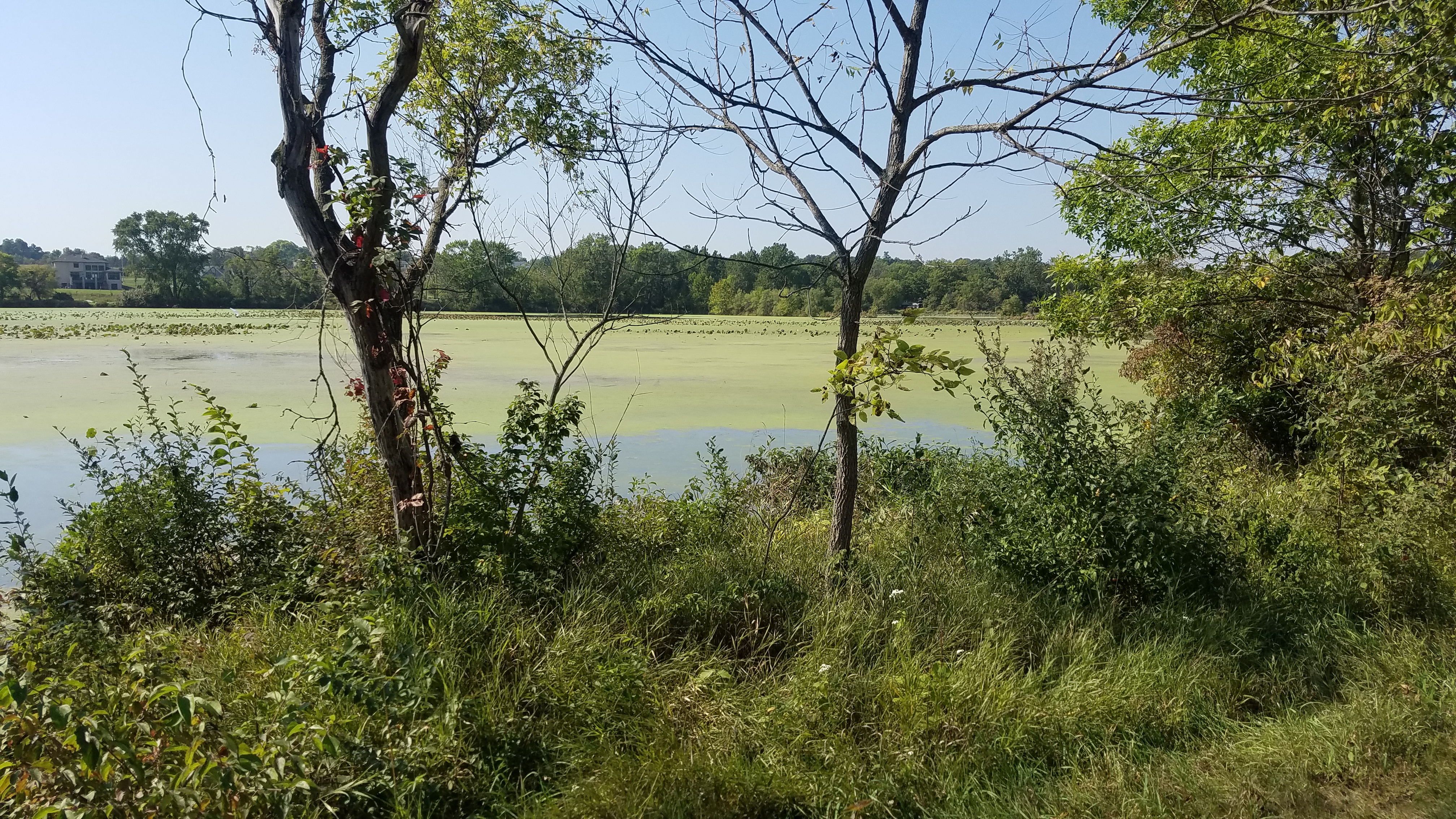
Algae cover on Lake Macbride, Sept. 19, 2021.

The algae cover is growing on Lake Macbride. Every so often I take a longer daily walk and pass this spot where the trail is close to the lake. I’m not sure anyone is working on algae as a problem here.

The Lake Macbride Watershed is behind the times. Iowa Department of Natural Resources did not have a value for phosphorous entering the watershed on file, so those of us operating wastewater treatment plants participated in a recent study. I don’t know how they evaluated nitrogen and phosphorous coming from farm fields. I can tell you, our community of about 200 people is not the problem with excess nutrients entering the watershed. Our wastewater effluent is cleaner than the lake when it enters it from an unnamed creek.

Something has changed since we moved near the lake in 1993. Algae wasn’t so dominant then. Partly it is due to population growth in unincorporated areas with private septic systems. Partly it is due to runoff from farm fields. I believe the increasing use of field tile on farm fields contributes significantly.

I posted this photo on Twitter and thanks to Mother Jones writer Tom Philpott’s retweet it received 7,230 impressions and 393 engagements so far. That’s a lot for my posts. People are quick to condemn large-scale agriculture for the pollution.

The issue is inadequate regulation of nitrogen and phosphorus application on farms. Both are required nutrients for plants to grow. Since the move from organic soil to chemical applications in crop growing modern farmers are left no short-term option but to apply them. It makes sense that regulation could help us get cleaner water and less algae cover.

The large agricultural lobby groups don’t want regulation. Farm Bureau, Iowa Corn Growers Association, Iowa Soybean Association, Iowa Cattlemen’s Association and Iowa Pork Producers Association are steadfast in buying legislators through campaign contributions to prevent needed regulation for cleaner water. That is how our politics operates, at least until legislators or the governor are willing to change it.

Instead of a calming walk through the state park, the algae-choked lake reminded me of the living hellscape of resource extraction that impacts everyone. It began with the removal of Big Grove Township’s namesake forests after settlement, and continues through development of a policy that has farmers planting fence row to fence row. There is more human settlement, but that’s not the problem as wastewater treatment is well regulated by the state. Much as I yearn for more state parks like the one in our township, Iowa has very little acreage set aside for conservation from development.

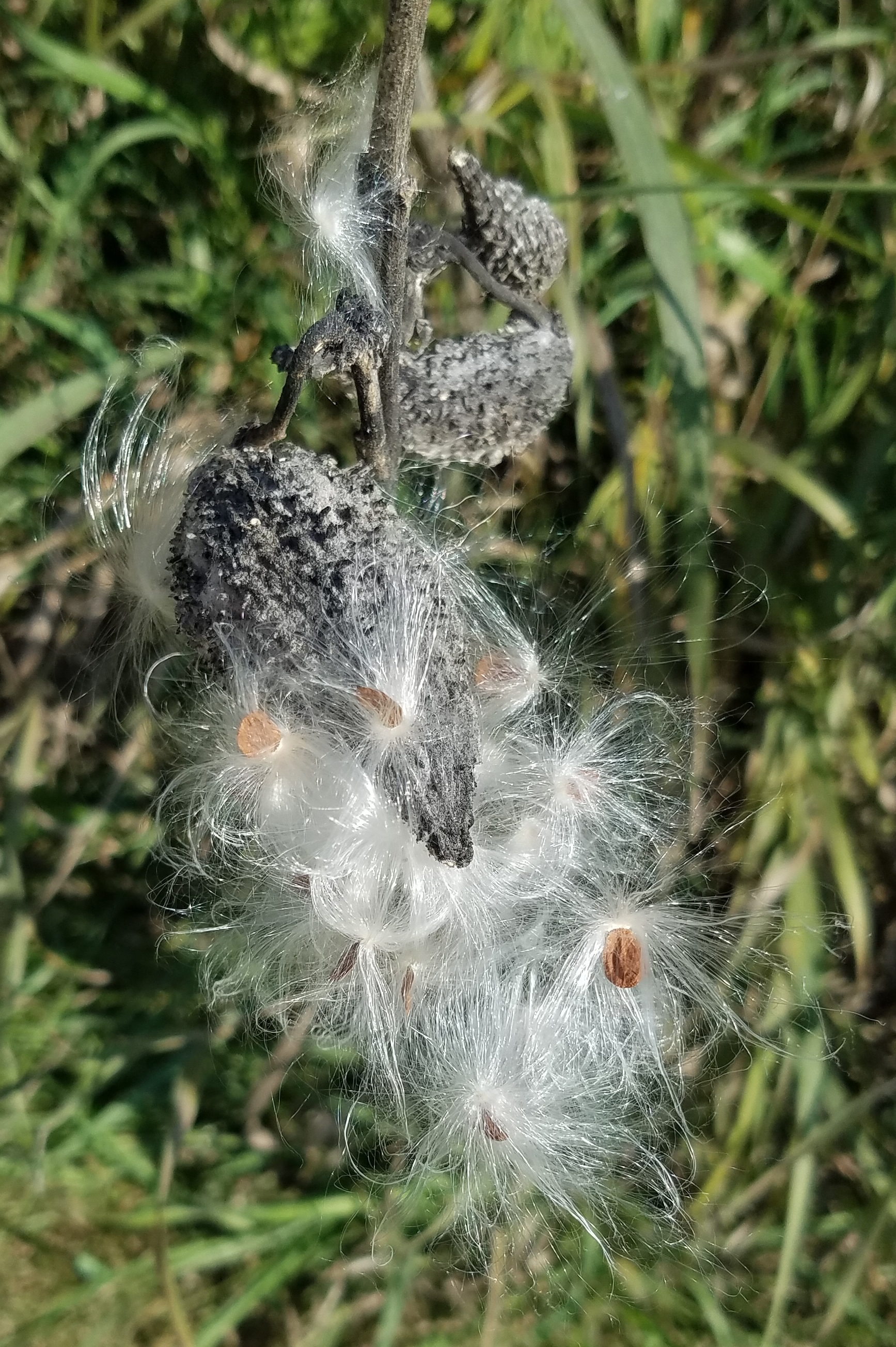
At least I got some exercise along with agitation from my walk… and this photo of milkweed going to seed.

Common milkweed along the state park trail, Sept. 19, 2021.

Categories
Living in Society

With People Again

Sundog Farm on March 28, 2021.

Sunday was my first shift of soil blocking at Sundog Farm this spring. Besides shopping, medical appointments, and trips to government offices, it was the first time out since being restricted by the coronavirus pandemic a year ago. There were people (wearing masks) and animals (who weren’t)… and four dogs!

To see a short video of farm life on Sunday, click here.

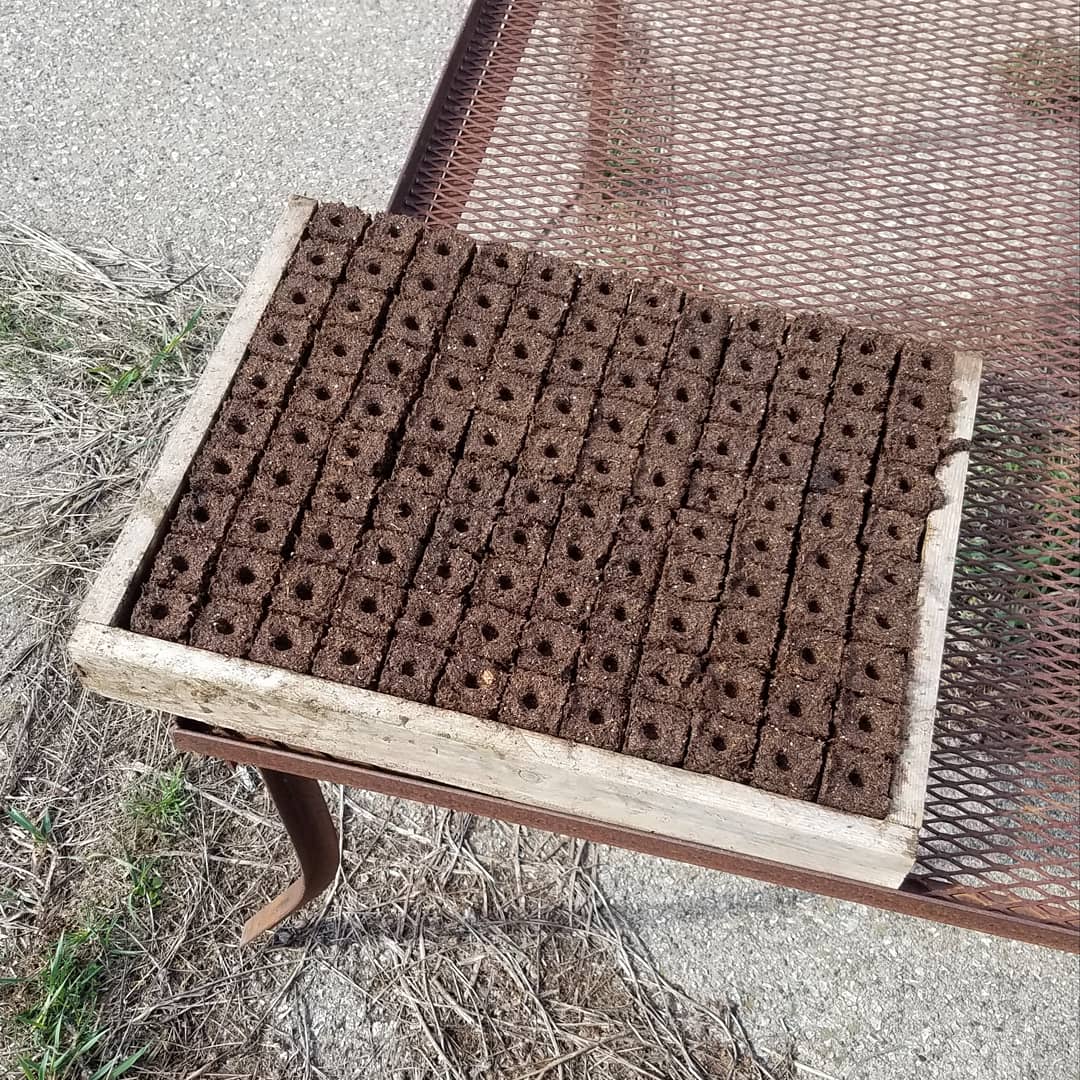
It was partly cloudy with intermittent snow flurries. We worked outside with me making 35 soil block trays (4,200 seedling blocks) and a varying seeding crew of four or five, socially distanced across the concrete pad, planting broccoli, kale, mustard greens and other early vegetables. Last year, at the beginning of the pandemic, I worked mostly alone in the greenhouse. Sunday felt a bit more normal. The farmer and I negotiated our barter agreement and will continue discussions next weekend.

While it was relatively easy for me to get the COVID-19 vaccine, it has been a struggle for the farm workers who are mostly 20-somethings. I’ve had two doses and they had one. Both the state and federal government could do more to get rural Iowa vaccinated.

It’s good to be back to work, though. Here is a photo of my first tray of soil blocks for the season.

Tray of 120 soil blocks. March 28, 2021.
Categories
Living in Society

Three Weeks Until Spring

Snow melts first over the septic tank.

The thaw began and there is no stopping it. The ground remained covered with snow for most of February, yet no more. Snow cover is slowly melting and will soon be gone. Above the septic tank was first to go.

36 hours after the COVID-19 vaccination I still feel normal. Even the soreness around the injection spot feels better. I emailed the farm to see if we can make arrangements for my return after the booster shot in a couple of weeks. The farmers are all twenty and thirty somethings so their priority group has not been approved for vaccination yet. There are protocols to negotiate before making my way back to farm work.

I applied to be a mentor in the Climate Reality Leadership Corps U.S. Virtual Training beginning on Earth Day. There are three virtual trainings this year, one in the U.S., one for Latin America, and one global training. To find out more, follow this link. If I’m accepted, this would be my third time attending, the second as a mentor. I’m feeling bullish about reengaging in society after getting the first dose of vaccine.

Democrats got solidly beaten in the 2020 Iowa general election. I’m not sure what I want to do to help rebuild the party. I’m also not sure the party can be rebuilt in a way to win elections anytime soon. In any case, it’s time for the next generation to take the reins. While I will remain supportive, I’m stepping back. Politics won’t be a priority as we slowly exit the coronavirus pandemic.

Getting out of the pandemic is a first priority. We are doing our part to follow the governor’s guidelines and hope others will too. What’s certain is I’m getting spring fever and can’t wait to get outside and do normal things again. It’s only three weeks until Spring!

Categories
Kitchen Garden

Farm Journal #1

Chicken at Sundog Farm

Happy New Year to my friends at Sundog Farm!

Hope everyone is well surviving the coronavirus pandemic. It made 2020 difficult, to say the least. Jacque and I remained virus free, although neighbors on two sides of us caught it and former Solon Mayor Steve Wright died from COVID-19 complications, as you may have heard. The virus is all around us and I’m reluctant to leave the house much.

I’m wrapping up old business and I saw the check from the sweet corn come through on my account this morning. Your sister still hasn’t cashed the $30 check from April for a t-shirt, so if you can give her a nudge on that, I’m not sure how long the bank will continue to cash it. If it doesn’t clear soon, I’ll presume she won’t cash it. Insert snarky comment for her about running a business here:

I’m not sure what I’m doing this coming season. Well, I know some things. When the derecho destroyed my small greenhouse I bought another. I plan to start onions in January using the channel trays I bought from you last year. I also got a heating pad from Johnny’s and may get a grow light. I don’t like having the trays inside for fear mold will form in the room where I put them. I also don’t want to run my space heater in the greenhouse continuously. I think you started onions in the basement. Is that true? If so, when did you start them and at what point did you give them light?

As far as soil blocking, I think the pandemic will remain with us for most of the season so we have to address that. As I may have mentioned, I don’t really like working by myself all the time. It did protect us from each other last year and one hopes the situation is not permanent. Last year I didn’t wear a mask, although I am now the proud owner of five homemade ones and can bring one along and wear it when I’m with people. Since it’s your farm, it is really up to you to tell me what to do. So what I’m saying is I’m open to the idea of a barter exchange in 2021. It’s time to start talking about that, although no particular hurry.

To better use the home time I started a writing project. Hoping to have a first draft done by next year at this time.

Hope you are bunkered in for the snow storm. Supposed to get 5-8 inches, I hear.

Regards, Paul