Categories
Environment

It Seems Very Warm

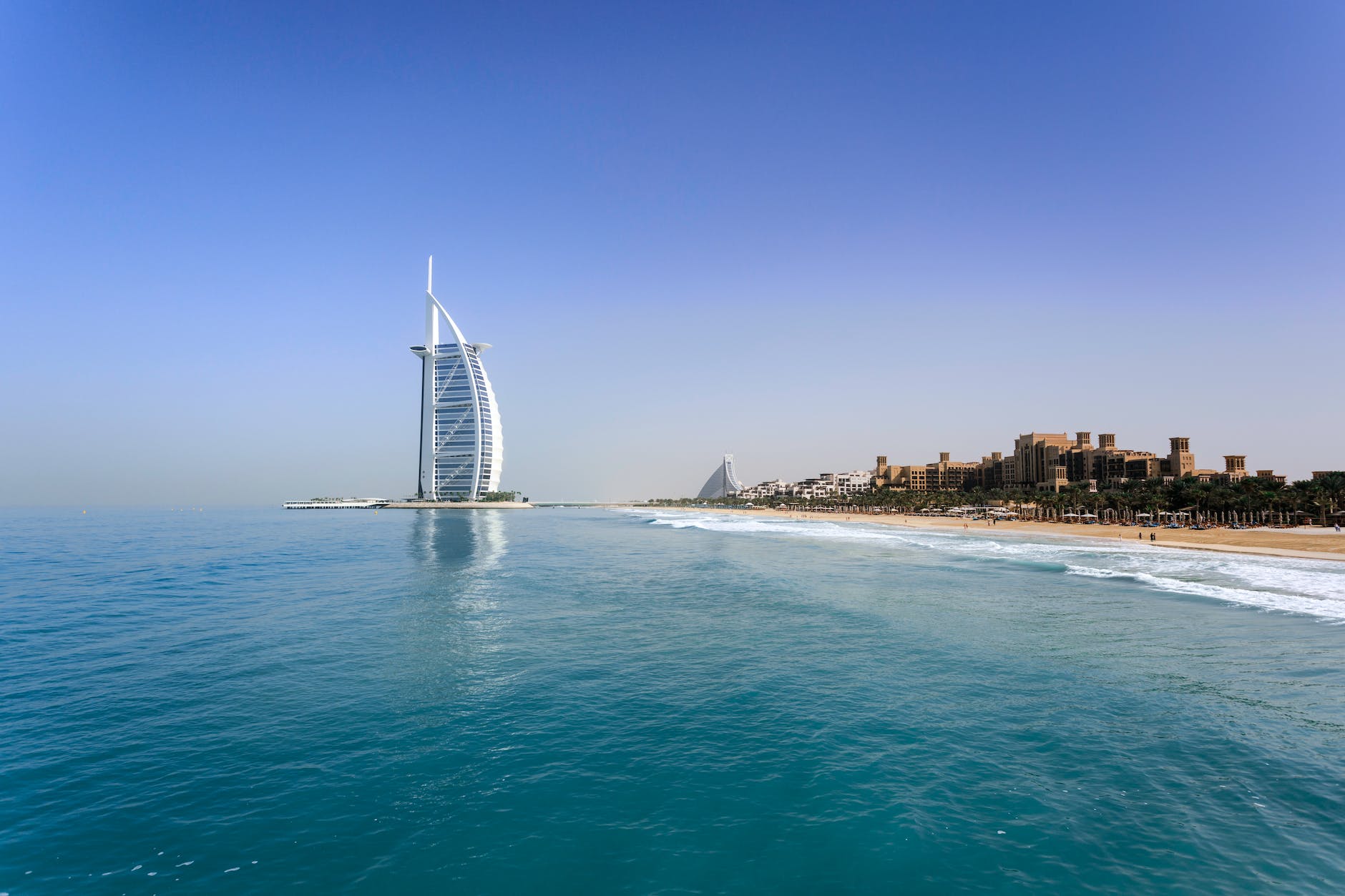
Photo by James Frid on Pexels.com

We’ve lived through the hottest 12 months since record-keeping began. It’s not just me saying this. It’s likely the hottest it’s been in 125,000 years according to scientists quoted by the Washington Post.

It is not a risky thing to say that our planet will pass the tipping point of climate change. With the increased average temperature of Earth passing 1.5 degrees Celsius (2.7 degrees Fahrenheit) above pre-industrial norms, entire ecosystems could be irreversibly damaged or destroyed by global warming. Things won’t be like we know them now. According to the Post article, “nearly 3 in 4 people experienced more than a month’s worth of heat so extreme, it would have been unusual in the past, but became at least three times more likely because of human-caused climate change.”

It seems very warm here in Big Grove. That’s because it is.

This year’s drought has been a humdinger. Crop reports indicate it hasn’t been as bad as 2012 based on corn and soybean yields, yet unless we get rain soon, farmers will be facing a dry spring again. On my daily walks along the lake shore, the culvert that drain the lake watershed still doesn’t have anything in it except cracking chunks of soil like those in the photo above.

The only thing I know is no one person will be the solution to preventing as much irreversible damage as we can. It is too late for that. We can’t get agreement that children should not be slaughtered in Israel or Gaza, for Pete’s sake. There is necessary work to be done here.

Categories
Environment

Deeper Into Autumn

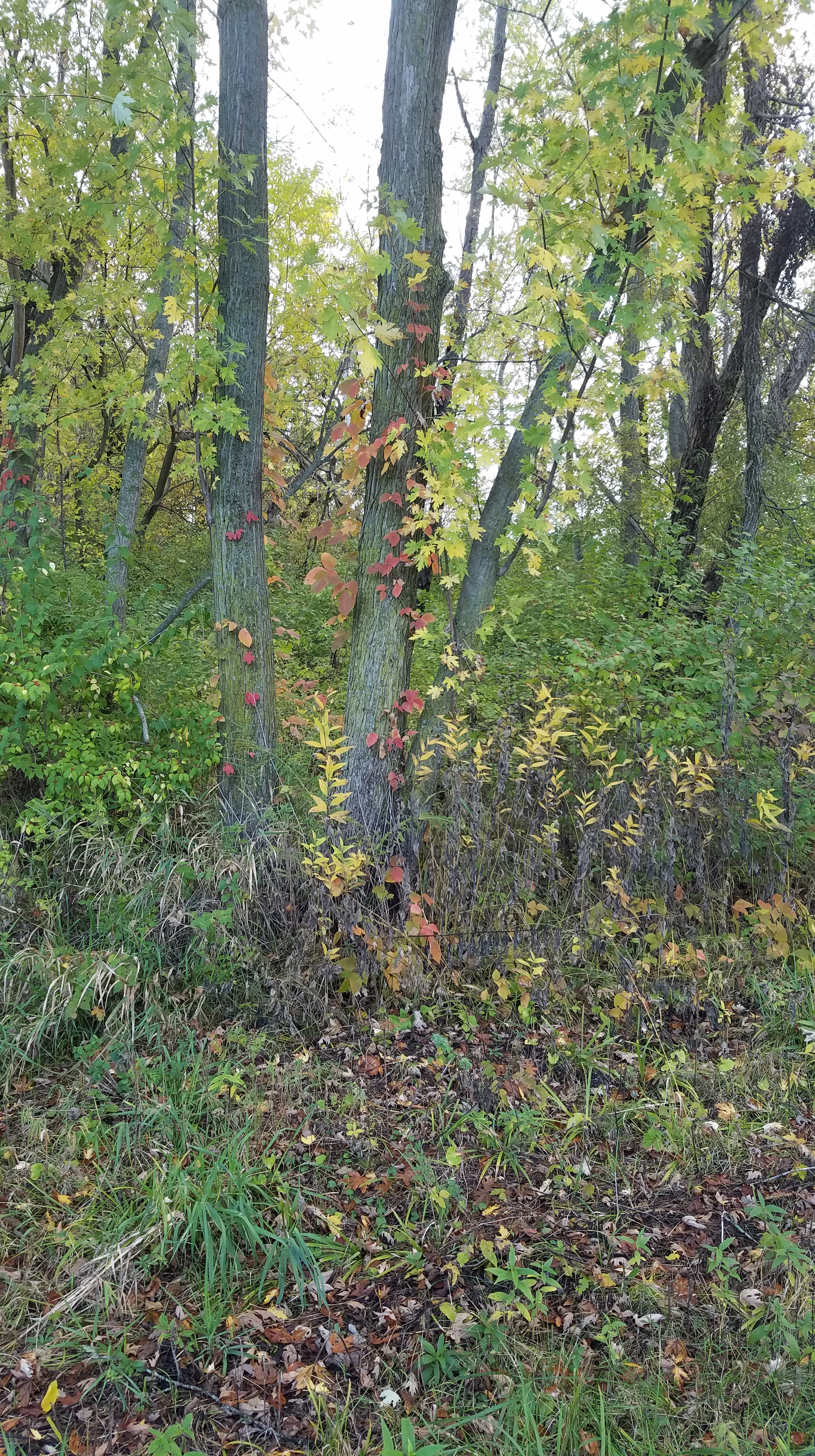
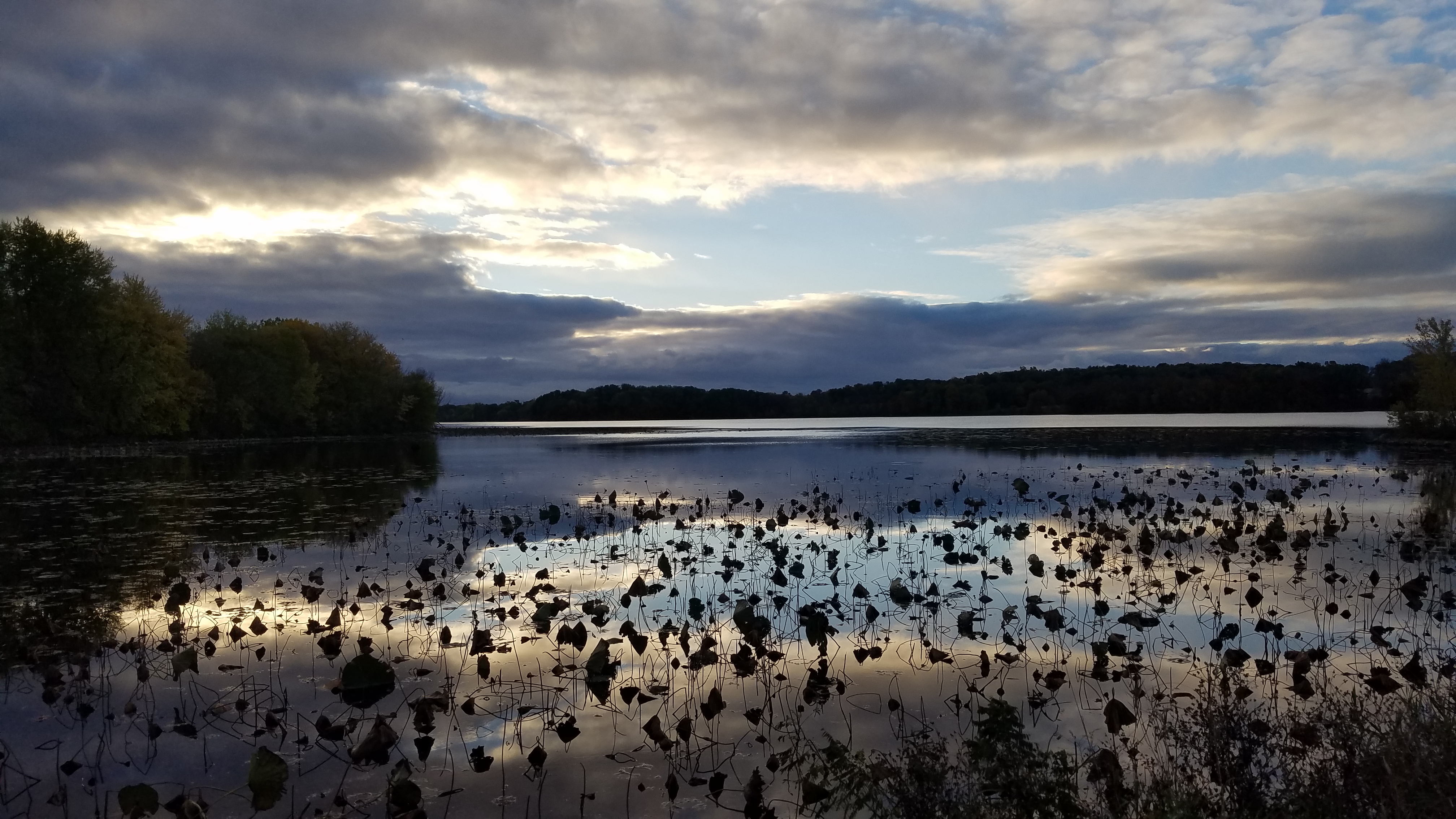
Some shots from my morning walk on Oct. 19, 2023.

Red leaves of autumn.
Categories
Environment

Season Turns

Some shots from my morning hike on the Lake Macbride State Park Trail.

Hiking along the lake trail on Oct. 14, 2023.
Categories
Environment

The Climate Crisis Remains

Lake Macbride drying around the edges on Sept. 17, 2023 due to an extended drought.

Contrary to what letters in this newspaper reported, the climate crisis remains. It is a crisis. It is peculiar to our time since the Industrial Revolution. Readers of the Gazette should know about it.

Media stories covering the impact of a changing climate continue to appear: Canadian wildfires, heated ocean temperatures off the Florida coast, abnormal melting sea ice, Hurricane Hilary in California, Maui wildfires, the Midwestern drought… you know the list. It is as if the Gazette was live blogging the end times with the Four Horsemen of the Apocalypse nearby.

Our community is at risk due to the changing climate. Our family conserves water from our public well on the Silurian Aquifer because it is faltering with increased usage. A deep and extended drought means surface waters have not been able to recharge the aquifer to meet demand. The water supply is not endless.

Society should do something to avoid the worst effects of climate change. Here’s the rub. People enjoy current life in society, and we don’t want to change, even when inconvenienced by extreme weather.

Environmental activism seems unlikely to solve the climate crisis. All the talk about climate change distracts us from the fundamental problem: the effect of unmitigated capitalist growth ravaging the resources and systems of the earth and its atmosphere.

Maybe we should forget about the climate crisis to focus on what matters more: conserving Earth’s resources for future generations. I’m on board.

Published on Sept. 21, 2023 in the Cedar Rapids Gazette.

Categories
Environment

Live Blogging The End Times

With Al Gore and company in Chicago, August 2013

The climate crisis remains with us. A series of news articles reported stresses on Earth to which climate change contributed or caused: Canadian wildfires, heated ocean temperatures off the coast of Florida, the failure of a generation of Emperor Penguin fledglings to survive because of melting sea ice, Hurricane Hilary in California, Maui wildfires, and others come across our news feeds like we are live blogging the end times. Climate change made each of these disasters worse. These stories are likely the tip of the iceberg.

I don’t need a news feed to know our community is at risk due to climate change. Our subdivision is conserving water on our public well because the Silurian Aquifer is faltering with increased usage. A deep and extended drought, combined with a lack of rainfall means surface waters have not been able to recharge the aquifer to keep up with water demand. I don’t mind conserving water. There is not an endless supply. It’s worse when generational expectations are not met.

Local environmental activists continue to remind us there is a climate crisis and the time for action to mitigate its worst effects is now. It will take all of us to address the climate crisis, especially our elected officials.

Here’s the rub. People enjoy our current life in society so much we don’t want to change it, even when inconvenienced by the impact of the climate crisis. Even when the inconvenience takes the form of the current extended drought and we don’t have access to the same amount of water coming from our faucet we did a few months ago.

In his 2017 book, Confessions of a Recovering Environmentalist and other Essays, Paul Kingsnorth captured this notion:

For most of my twenties, I had put a lot of my energy into environmental activism, because I thought that activism could save, or at least change the world. By 2008 I had stopped believing this. Now I felt that resistance was futile, at least on the grand, global scale on which I’d always assumed it would occur. I knew what was already up in the atmosphere and in the oceans, working its way through the mysterious connections of the living Earth, beginning to change everything. I saw that the momentum of the human machine — all its cogs and wheels, its production and consumption, the way it turned nature into money and called the process growth — was not going to be turned around now. Most people didn’t want it to be, they were enjoying it.

Confessions of a Recovering Environmentalist and other Essays, Paul Kingsnorth.

Kirkpatrick Sale lays bare the connection between climate and society in a recent issue of Counterpunch, “All the talk about ‘climate change’ directs the world’s attention away from what is the real central problem: the effect of unmitigated capitalist growth ravaging the resources and systems of the earth and its atmosphere.”

They both make a point.

I can’t recall how many times I heard Al Gore mention the pollution we dump into the atmosphere. “Every day we’re continuing to pump 162 million tons of global warming pollution, greenhouse gas emissions, into the atmosphere, as if the atmosphere was an open sewer,” Gore said everywhere during the last ten years. While some of this is caused naturally, most of it is a result of humans, that is, the unmitigated capitalist growth and exploitation of resources and systems Sale mentioned.

I joined the Climate Reality Project in August 2013 in Chicago. Gore’s training came at a time I needed it. I had just retired from my big job in 2009, and had seen the film, An Inconvenient Truth. I intended to work on climate change during my retirement years. Gore explained the impact of greenhouse gases on the atmosphere and oceans in clear, concise terms. The training was more than useful. There are now 50,000 trained climate activists like me. It may not be enough.

The issue mostly omitted during discussion of climate change is how it permeates everything in society. In Iowa there is no going back to the way the land and water was before the Black Hawk War in 1832. The environment has been completely re-worked to accommodate what is now conventional farming. We take what has become known as industrial agriculture for granted.

Are we living in the end times? I don’t know, and don’t believe we can know. What is known is there are solutions to the climate crisis if only we would apply them to the problem. This can be done without major disruption to our way of life.

If you are interested in a just and sustainable future that addresses the climate crisis, visit The Climate Reality Project at this website.

Categories
Living in Society

Biden Is Doing The Work

President Joe Biden at the signing ceremony for creation of Baaj Nwaavjo I’tah Kukveni national monument.

On Tuesday, Aug. 8, President Joe Biden created Baaj Nwaavjo I’tah Kukveni, a national monument encompassing almost a million acres surrounding the Grand Canyon. At the signing ceremony, Biden said,

America’s natural wonders are our nation’s heart and soul. That’s not hyperbole; that’s a fact. They unite us. They inspire us. A birthright we pass down from generation to generation.

The White House, Remarks by President Biden, Aug. 8, 2023.

In part, the three-state trip to Arizona, New Mexico and Utah was to promote the Inflation Reduction Act, a piece of necessary campaign work.

On August 16, 2022, President Biden signed the Inflation Reduction Act into law, marking the most significant action Congress has taken on clean energy and climate change in the nation’s history. With the stroke of his pen, the President redefined American leadership in confronting the existential threat of the climate crisis and set forth a new era of American innovation and ingenuity to lower consumer costs and drive the global clean energy economy forward.

The White House, Inflation Reduction Act Guidebook.

We, as a society, must act to address the human causes of the climate crisis, and Joe Biden is doing the work.

The risk we have in establishing this national monument is another president with differing views could undo this work as Donald J. Trump did with Bears Ears National Monument in Utah, created by President Obama a year prior to Trump assuming office. Fact is there is no consensus about creating national monuments which in turn, steers the rudder toward partisanship. Biden’s lofty remarks on Aug. 8 sound universal, yet are not commonly enough believed for Baaj Nwaavjo I’tah Kukveni to endure when political seas shift.

There are characteristics of the new national monument that make them ripe to be overturned, at least in part. The first is grazing rights on public lands. According to the White House, “(The) monument designation protects these sacred places for cultural and spiritual uses, while respecting existing livestock grazing permits and preserving access for hunting and fishing.” It seems clear that won’t be good enough for ranchers and herders who rely on public lands to feed their livestock at low or no cost.

More significantly, the new national monument is home to some of the most easily accessible deposits of uranium in the country.

The Grand Canyon is too important to not protect. And yet there are hundreds of mining claims, and several active uranium mines in the proposed monument area that threaten to poison the landscape and destroy this sacred land. We know from firsthand experience the damage that can be caused by yellow dirt contaminating our water and poisoning our animals and our children. We are thankful to President Biden and the Grand Canyon Tribal Coalition for their efforts in pushing this initiative to protect our people from the adverse effects of uranium mining.

Navajo Nation President Nygren, Grand Canyon Tribal Coalition Celebrates Baaj Nwaavjo I’tah Kukveni – Ancestral Footprints of the Grand Canyon National Monument Designation Aug. 8, 2023

The hope among tribal leaders is the national monument designation is permanent. It is hard to believe that mining interests won’t exploit their political power to gain access to uranium deposits there. They have already begun framing arguments that uranium will be needed to power the displacement of fossil fuels in our energy grid. As I’ve written on several occasions, nuclear power is not the answer to addressing climate change.

We should celebrate the moment of creating this national monument. Local groups have been working on its designation for decades and we should stop, take a breath, and appreciate what determined, long-range political action can accomplish. We must also be vigilant of those who would undo Biden’s work.

Categories
Environment

Getting To True Net-Zero

It has been ten years since I first attended former vice president Al Gore’s training on the climate crisis. Since then, the organization surpassed 50,000 trained climate leaders located in 190 countries. Every one of them will be needed because there is so much to be done to solve the climate crisis.

July 2023 was the hottest month on Earth since we began keeping records in the modern era. The year 2023 is also tracking to be the hottest. We, as a civilization, must do something to mitigate the human causes of this excess heat by achieving net-zero emissions. The words “achieving true net-zero” are important and there is misinformation about what they mean.True net-zero includes reducing the amount of greenhouse gas emissions produced on Earth. Climate Reality works toward achieving true net-zero because once it can be achieved, global temperatures will begin to decline within a few years. Society can avoid the worst effects of the climate crisis by achieving this goal.

Climate Reality has a strategy to achieve true net-zero emissions by 2030 in four primary campaigns with working groups. They are:

Reducing Emissions

This campaign focuses on building a clean energy future by cutting or avoiding emissions and opposing new fossil fuel infrastructure. 

Calling Out Greenwashing

This campaign works to expose the lies fossil fuel companies tell and counter with the truth about the energy transition we need.

Financing A Just Transition

This campaign focuses on mobilizing global finance to build thriving clean energy economies.

Strengthening International Cooperation on Climate

This campaign supports climate action through the Conference of the Parties (COP) which hosts international gatherings to agree to approaches to the climate crisis. The 2015 Paris Agreement is a work-product of the COP.

There is plenty of work for individuals to do to address the climate crisis and avoid the worse effects of increasing global atmospheric and oceanic temperatures. If you would like to learn more about The Climate Reality Project, click here. Not ready to get involved? Here is an inspiring poem by Amanda Gorman suggesting why you should consider it, if not with this organization, then one near you that is working on solving the climate crisis.

Categories
Environment

Trapped by Our Lack of Learning

Vegetable harvest on July 25, 2023.

Smoke was everywhere on Tuesday. The aroma was distinct, constant, and originated in Canadian wildfires. The haze was not bad, yet the smell filled the air. Smoke was a constant reminder of how little we progressed in our advocacy to do something about the climate crisis. Our lack of education, in the need to address the climate crisis, covers us like a shroud.

June was the hottest month on Earth since we began keeping records. July looks to be worse. I tried to function with outdoor ambient temperatures in the low nineties. Functioning meant using air conditioning to mitigate the heat most of the day.

The world just sweltered through its hottest June in the 174-year global climate record. 

Additionally, Earth’s ocean surface temperature anomaly — which indicates how much warmer or cooler temperatures are from the long-term average — were the highest ever recorded, according to scientists from NOAA’s National Centers for Environmental Information.

National Oceanic and Atmospheric Administration, July 13, 2023.

I don’t mean to slight the efforts of teachers, many of whom I know to be decent people. Yet, the fact is too many young people arriving to power in the 2020s don’t understand the reasoned need to act on our deteriorating climate. While we recognize a long procession of extreme weather events and conditions, we view them as a live blog of the end times over which we have no control. How did we get to this place?

In part, with electronic communications and social media, we are more aware of the pockets of culture that reject common sense to pursue tribal interests. They receive undue amplification. A reader of history knows this segment of the population has been present for multiple millennia. More than “pocket,” though, the amplification in social media presents an idea there is an organized movement. I’d call it the “know-nothing movement” yet that term has already been used. It’s not that people are dumb. It’s that they don’t know how uneducated they are. There is a name for this: the Dunning Kruger effect.

The Dunning–Kruger effect is a cognitive bias whereby people with low ability, expertise, or experience regarding a type of task or area of knowledge tend to overestimate their ability or knowledge.

Wikipedia

I am part of the Climate Reality Project whose mission includes:

We train and mobilize people worldwide with four global campaigns to unlock transformational change this decade and help us reach true net-zero by 2050 – the point where global warming can stop in as little as three-to-five years and the Earth begins to heal.

The Climate Reality Project website.

The Climate Reality plan is to reduce emissions, call out greenwashing, end financial support for using fossil fuels, and support international cooperation using the Conference of the Parties framework that brought us the Paris Agreement on climate. There is hope these things can be accomplished, according to former Vice President Al Gore last night. None of it will be easy. The fact that we need organizations like Climate Reality and others to educate, lobby and advocate for action to address the climate crisis is a sign of how far our education system has deteriorated. These topics should be front and center in our schools and in career development for students coming up. There are many obstacles to training the coming generation of Americans to take up the climate crisis as a main stage endeavor.

We do what we can. The trouble is we don’t always realize how much potential we possess to address the climate crisis. Its time to figure that out.

Categories
Environment

Hazy Summer Days

Lake Macbride State Park covered in a thin haze of smoke from Canadian wildland fires, June 28, 2023.

On Tuesday, June 27, there were 66 wildland fires being tracked across parts of Ontario Province in Canada. As a result, smoke and particulate matter is spreading over much of the United States, and across the Atlantic Ocean to multiple European countries. It has rendered the air quality “very unhealthy.” What is there to do at this point but monitor our local air quality and moderate our time and activities outdoors? The underlying science and human behavior which favor conditions for the fires have been ignored so long, we transitioned to a mode of acceptance and now focus on coping with the disaster.

At least the scenery on the state park trail is nice.

I got into something while working in the yard. I believe the ailment is contact dermatitis and the little spot where I got it itches constantly. I put some ointment on it a couple times a day and should be fine after two to four weeks, according to the Mayo Clinic. I don’t know what I contacted, although I found some nettles out by the composter. I harvested the nettles and hung them in the garage to dry. There is a cup of nettle tea in my future.

The garden is really coming in. The freezer and refrigerator are almost full. I am much closer to the garden this year than previously. I never fail to marvel at what it can produce. For now, life on Earth is pretty good, despite the contact dermatitis.

Categories
Environment

As Light Falls

Lake Macbride from the North Shore Trail, May 27, 2023

Morning light illuminated this peninsula on Lake Macbride during my walk. One never knows how a multi-function mobile device will capture a photograph. I’m pleased with the results of this one.

The hard part is breaking away from preoccupations on a trail walk, to be aware of our surroundings enough to notice how light falls on the landscape. The results can be liberating. If the image comes out well, it’s a bonus. Increasingly, I seek the light on excursions off property.

Five of seven garden plots are planted, meaning I am running behind. Reasons have to do with weather, and with the pace at which I work. A five or six-hour shift with breaks every hour is what I can muster. Progress is steady, yet slow. Gardening is a tolerant activity and whatever one can do is better than the alternative. I do what I can.

Already there is a harvest. Leafy green vegetables, lettuce, spring onions, radishes, and herbs. I mixed fresh greens with last year’s frozen ones to make spring vegetable broth for canning. It is time to use up the freezer to make room for the new harvest. Spring broth is always best so I noted the month on the lids.

I forgot potatoes at the wholesale store so I drove to town on Saturday. My neighbor, who owns the grocery store, was there and he thanked me for the San Marzano tomato seedlings I gave him. I had extra. The grocery store wasn’t busy. Organized locals got their Memorial Day weekend shopping done by Friday. We had a good chat about tomatoes, gardening, and people in the community. The value of the trip was no small potatoes, although I got some of those, too.

My spouse is at her sister’s home for the week, so I’m on my own. As I age, I dislike being alone. While freedom to cook how I like is a perquisite of her absence, meal preparation takes only a small part of each day.

Today is the annual firefighters breakfast in town and I plan to open it up then move on to garden and yard tasks before the ambient temperature gets too hot. If all goes well, I’ll mulch tomatoes (which means mowing the lawn), build a brush pile, and trim around the foundation of the home to prepare the spot for the new air conditioner.

The flags are up at Oakland Cemetery, signifying local veterans who died. The Memorial Day service moved to the new veterans memorial in town. I’ll stop by the cemetery on my way to breakfast and see how light falls on the graves and flags. I know many of the names. I was active with many of them when they were living. That, too is part of aging in America.

Flags at Oakland Cemetery