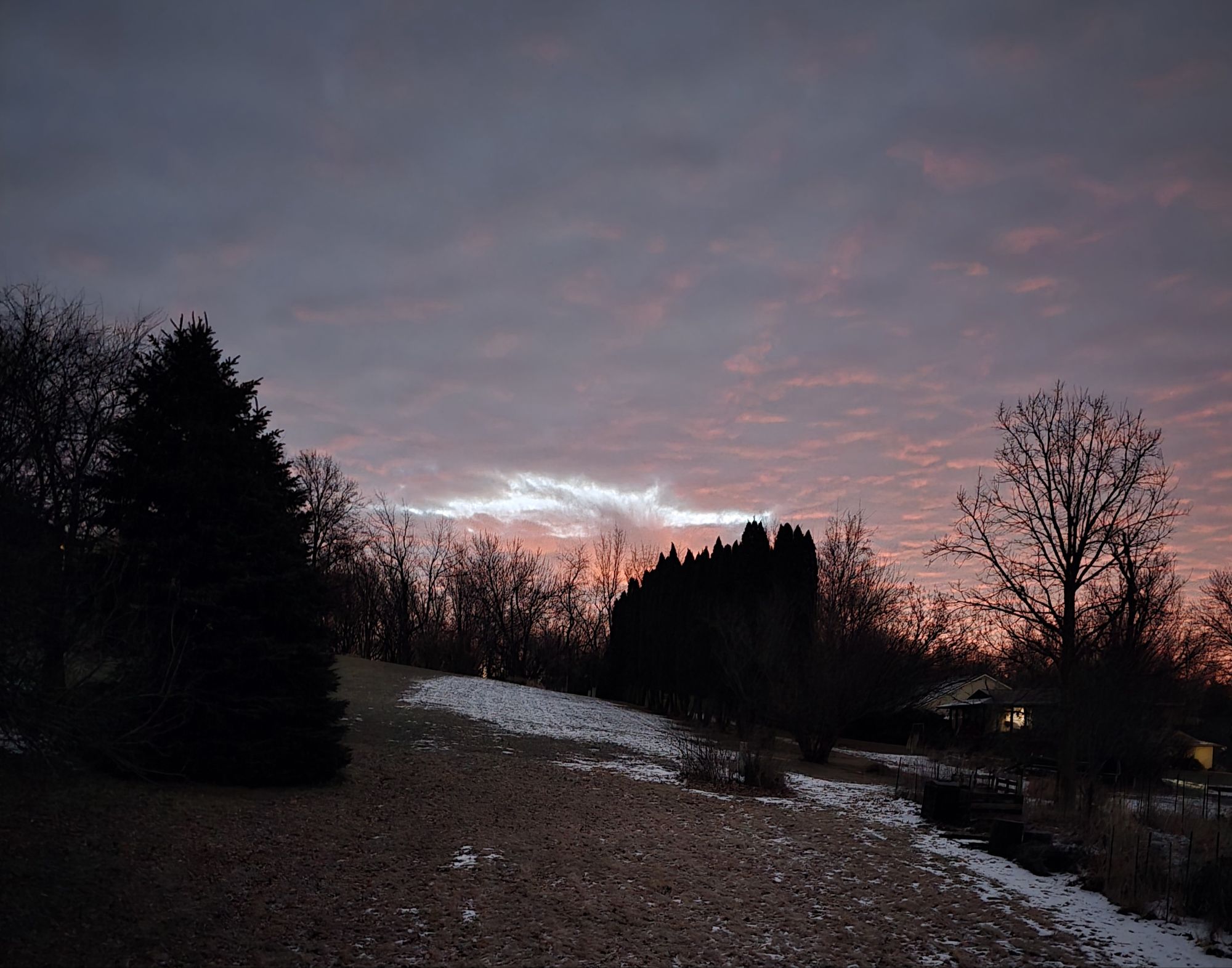
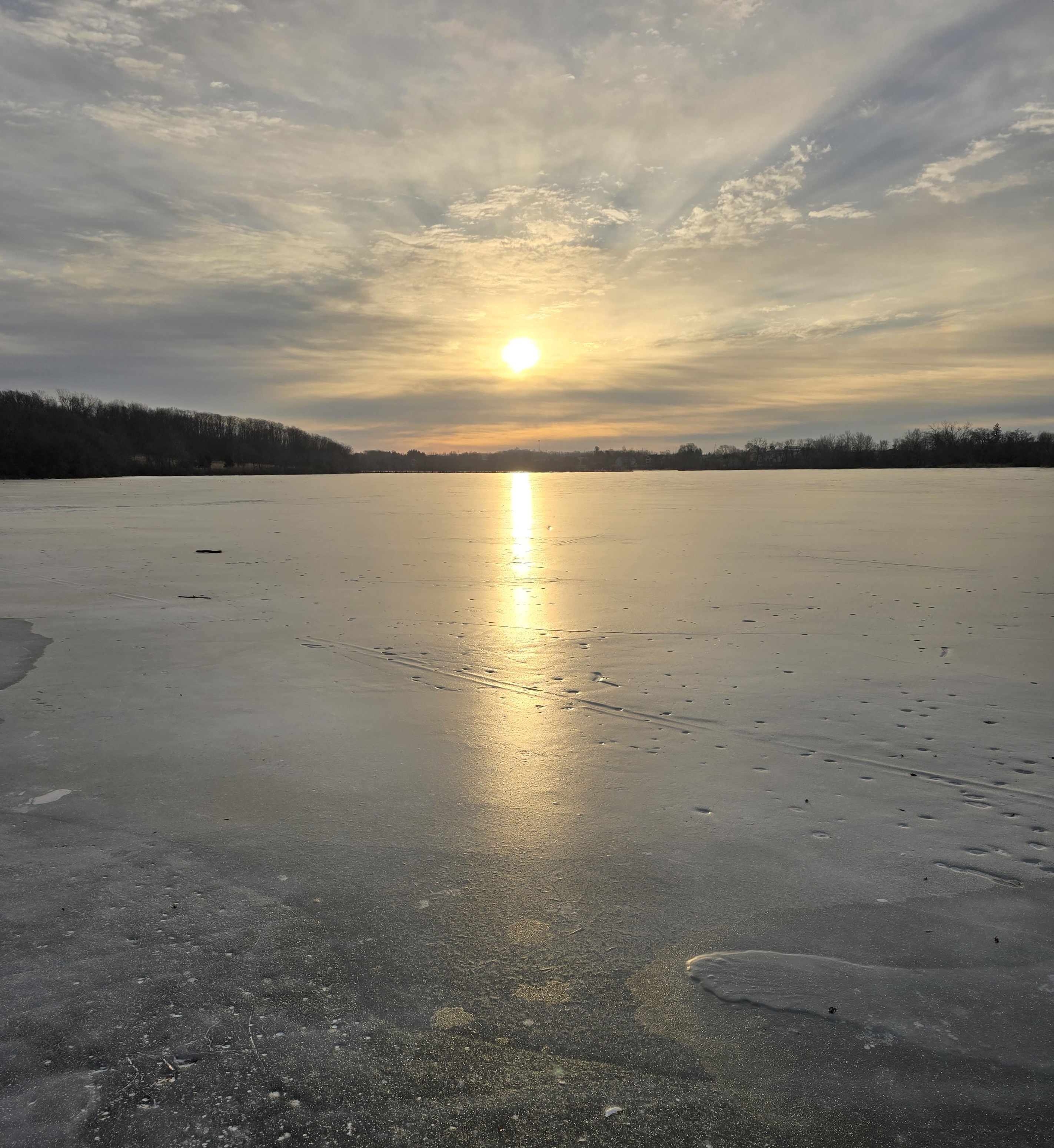
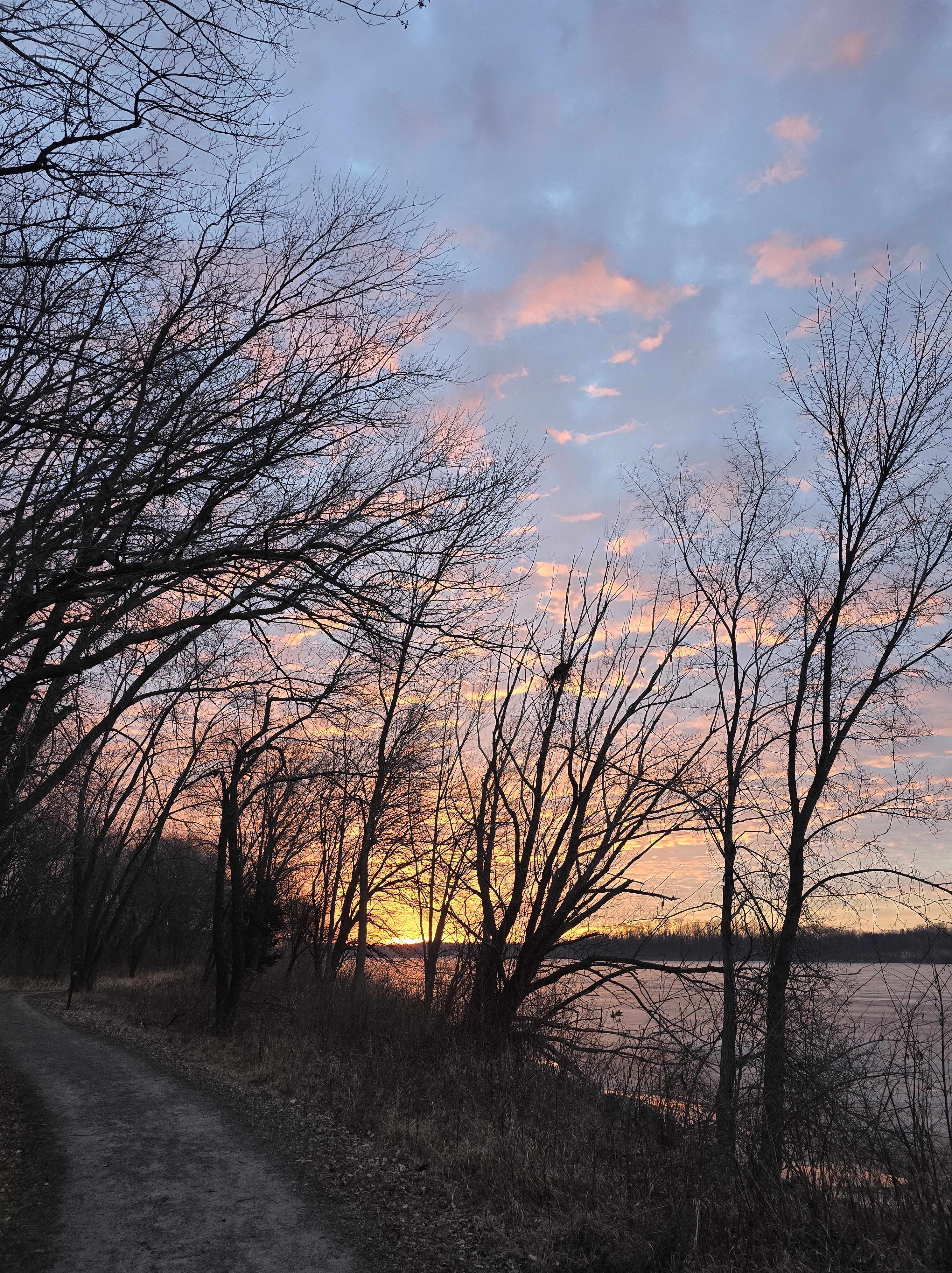
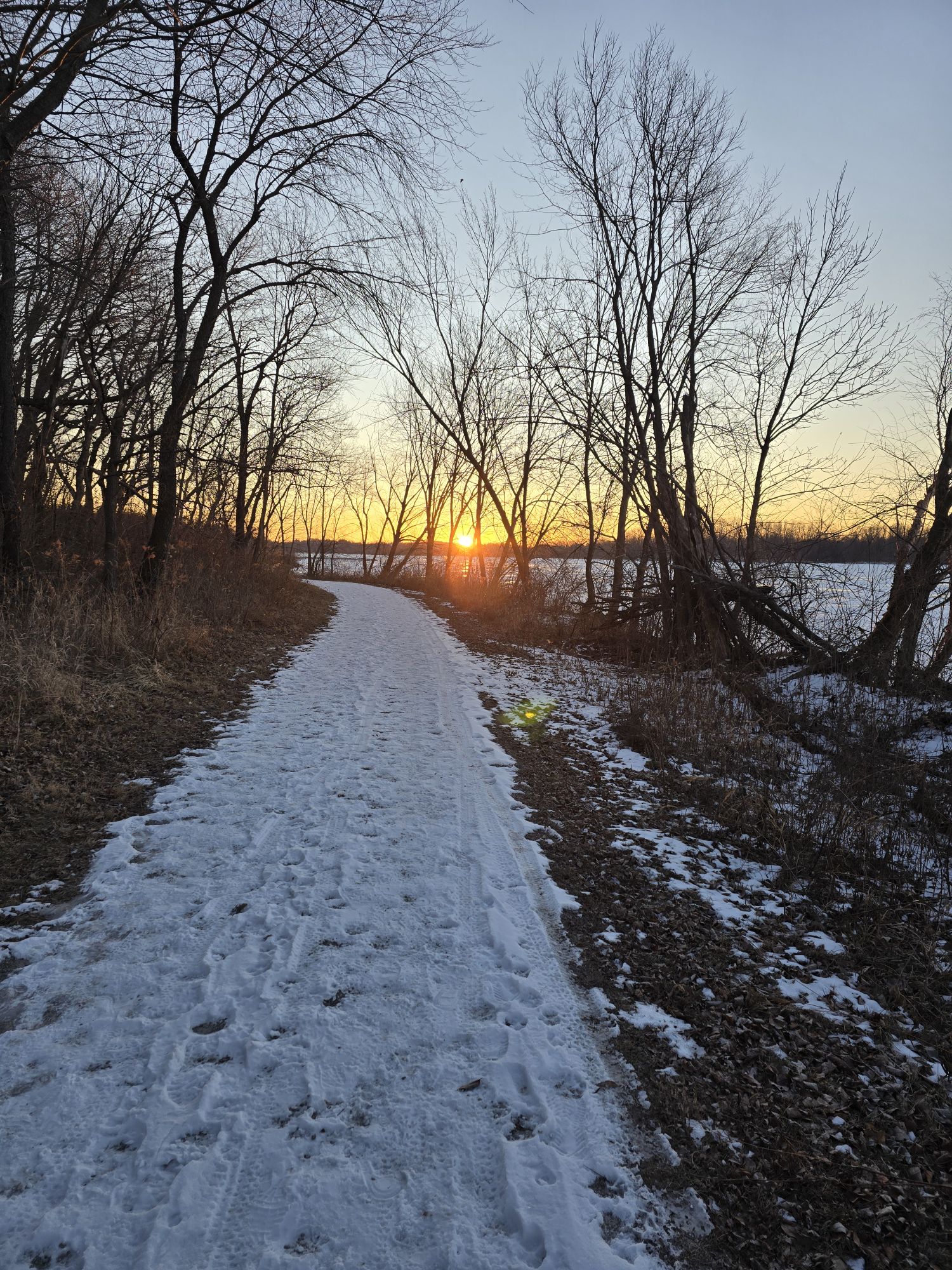
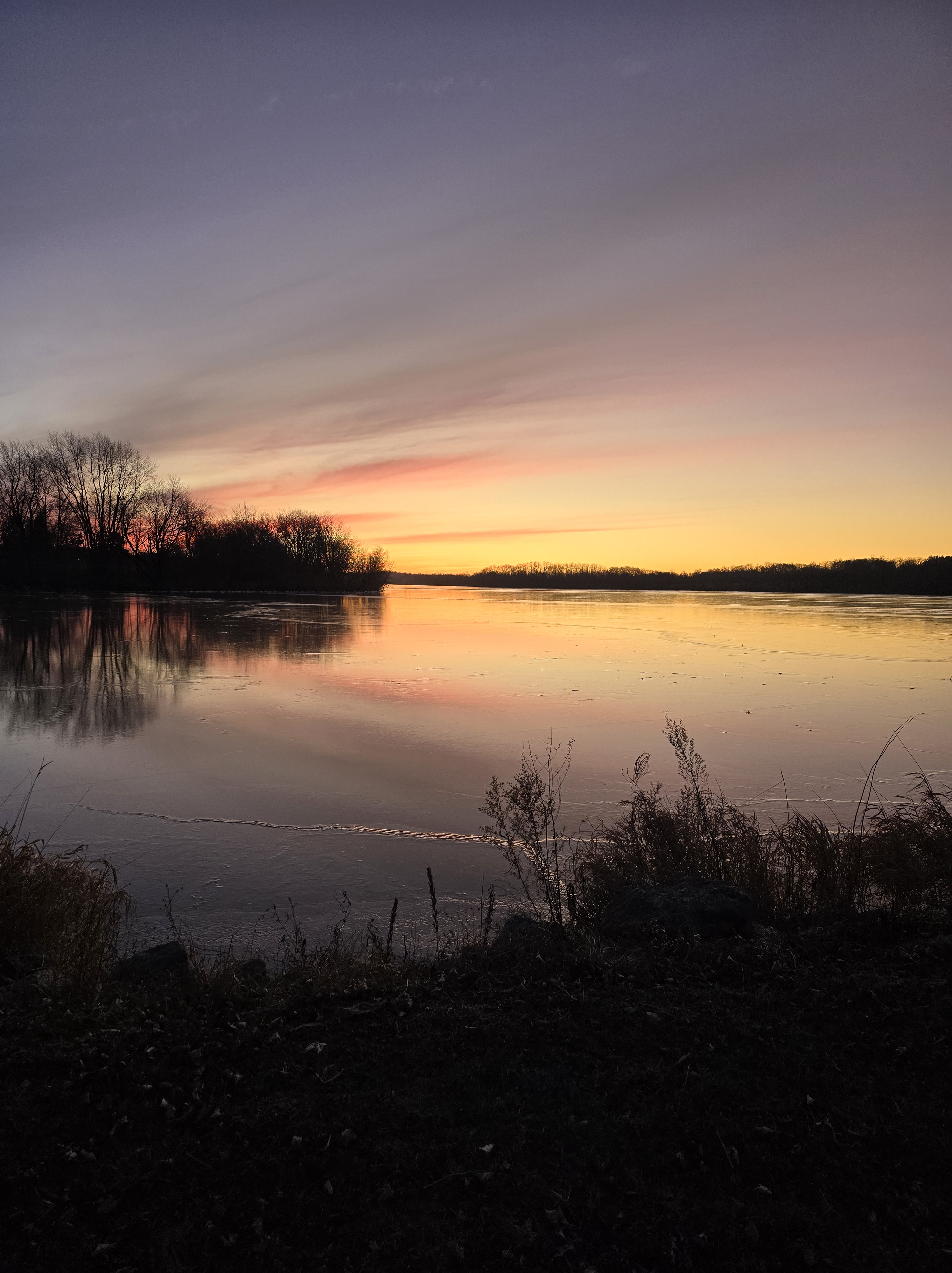
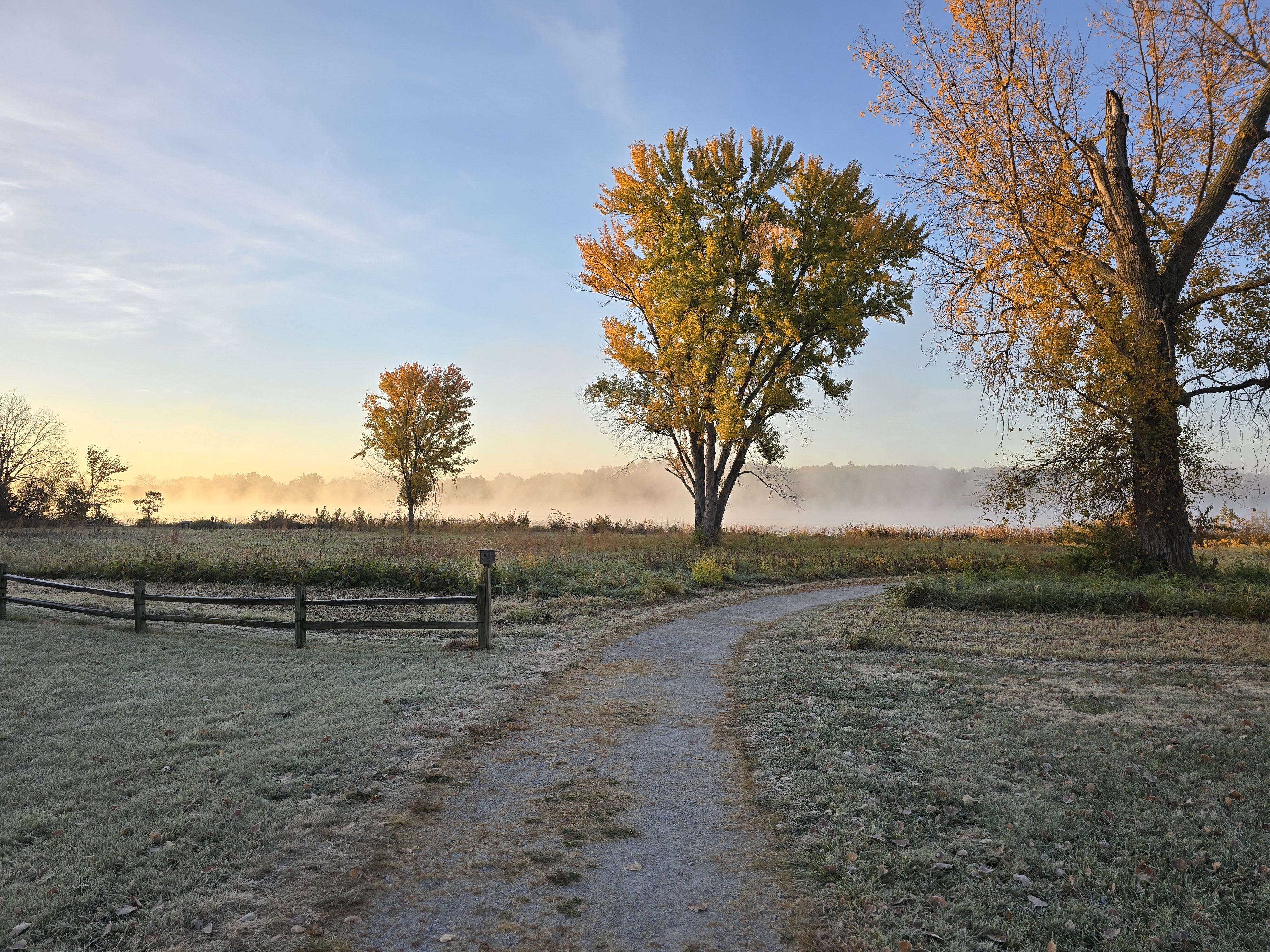
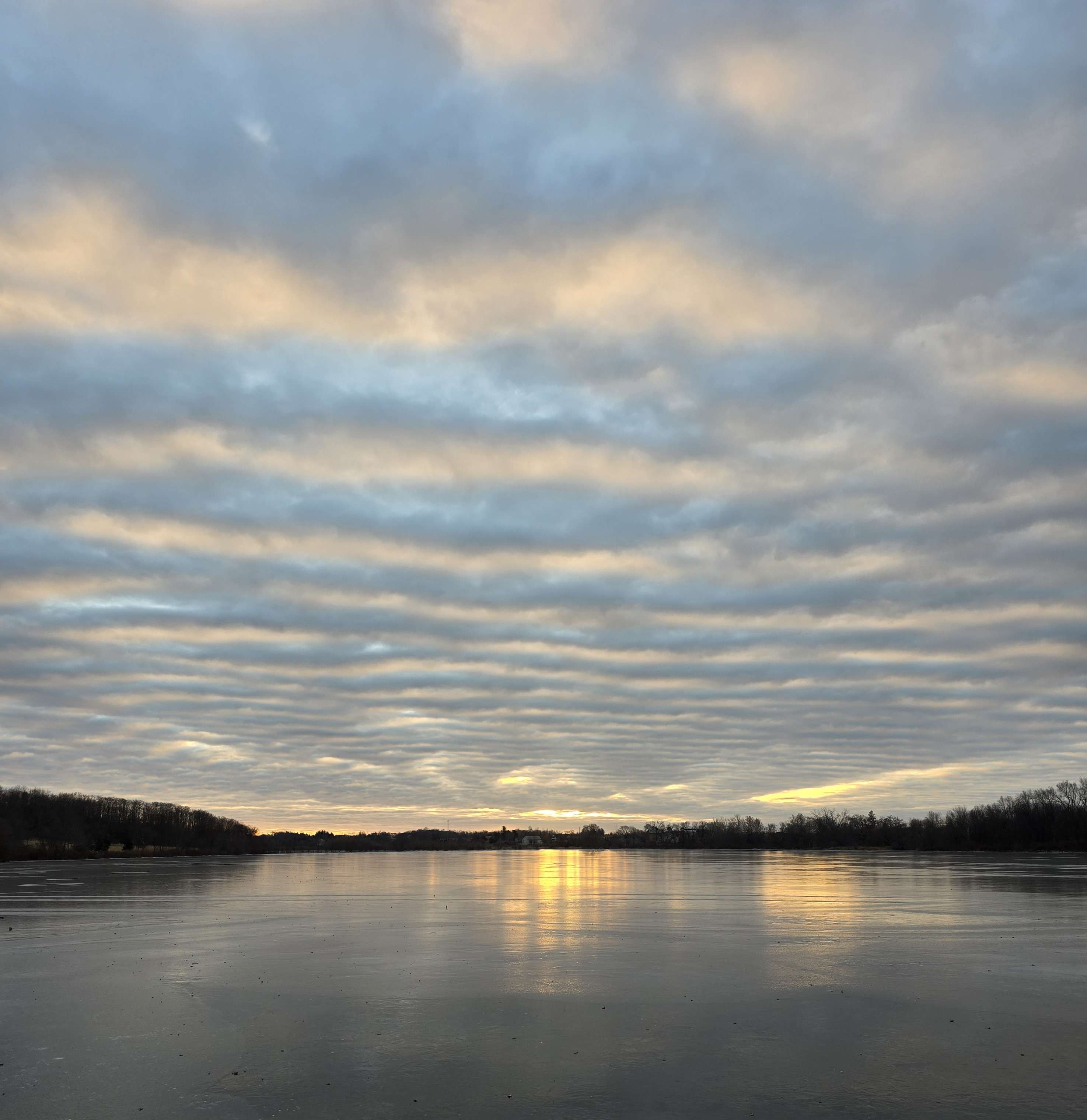
I went on walkabout to capture a bit of spring. Here are four photos from my journey.

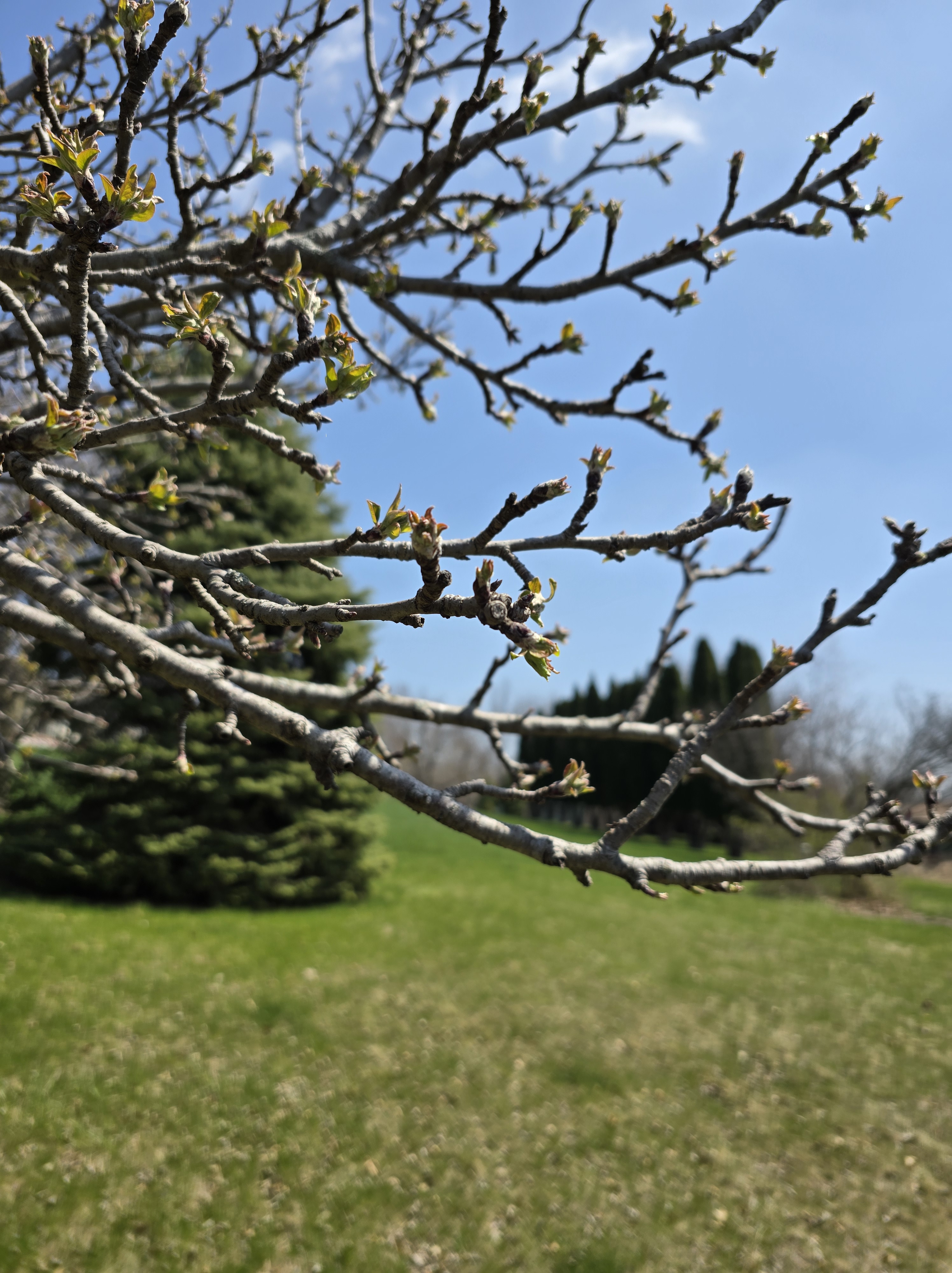

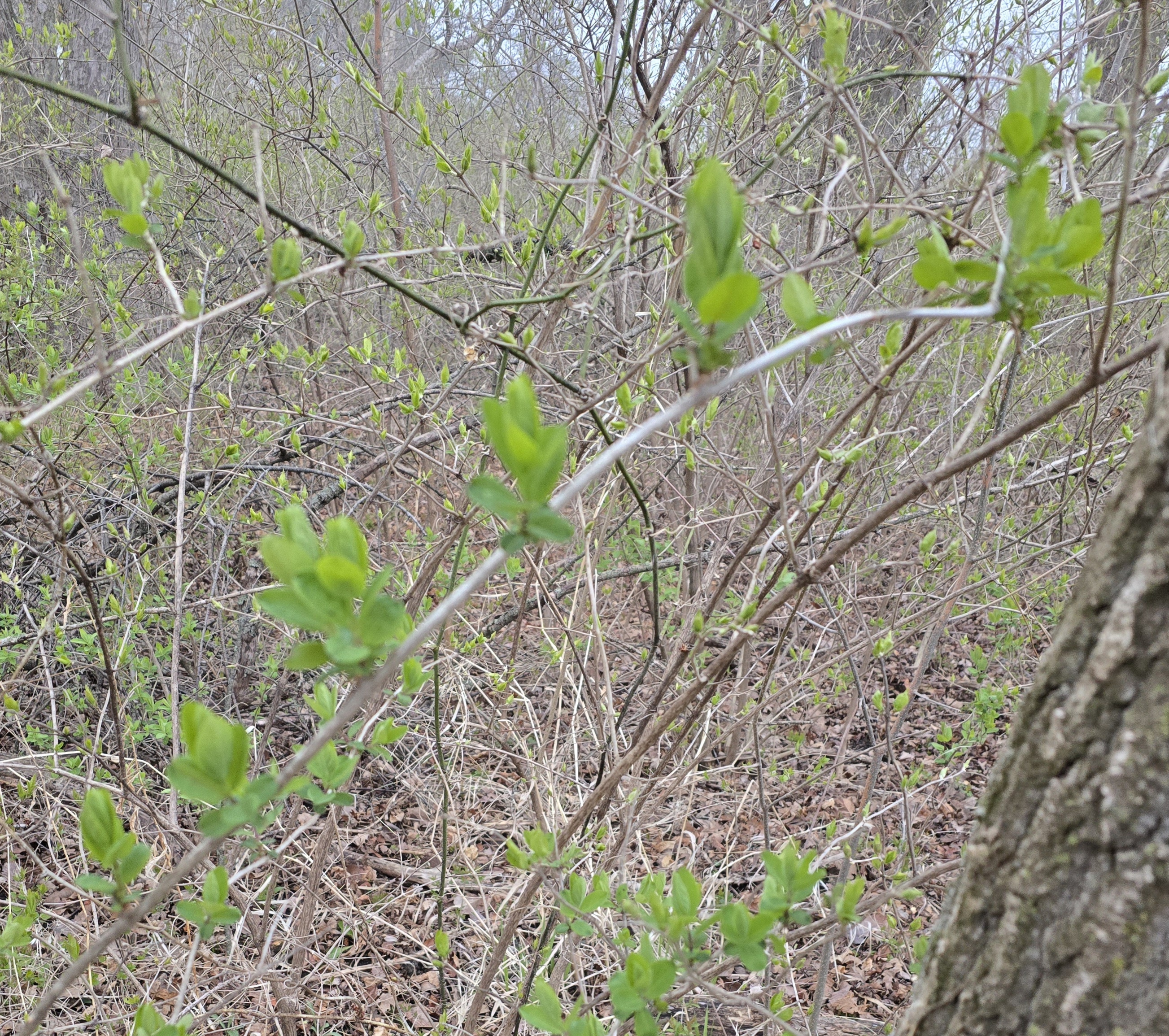
I went on walkabout to capture a bit of spring. Here are four photos from my journey.
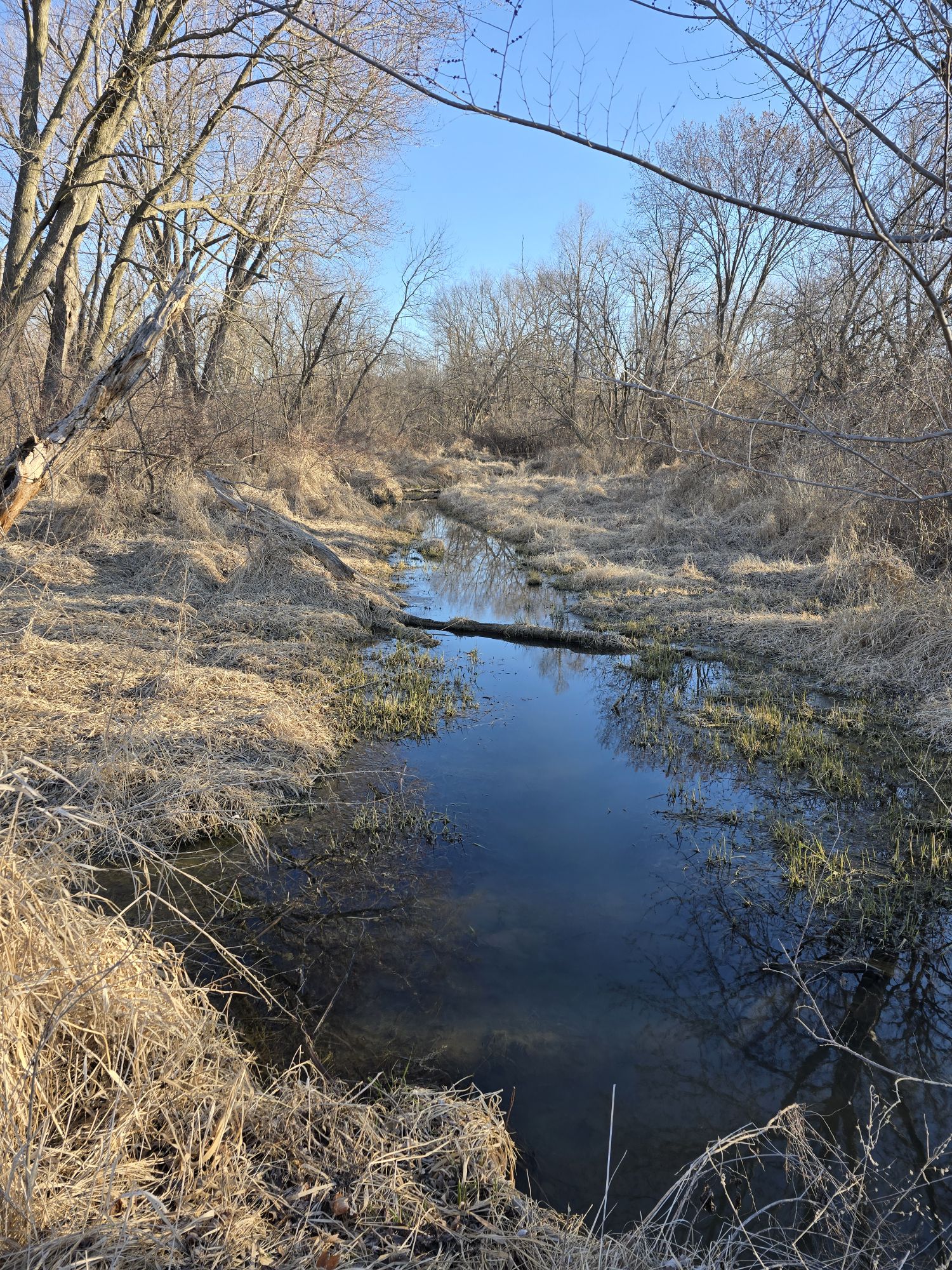
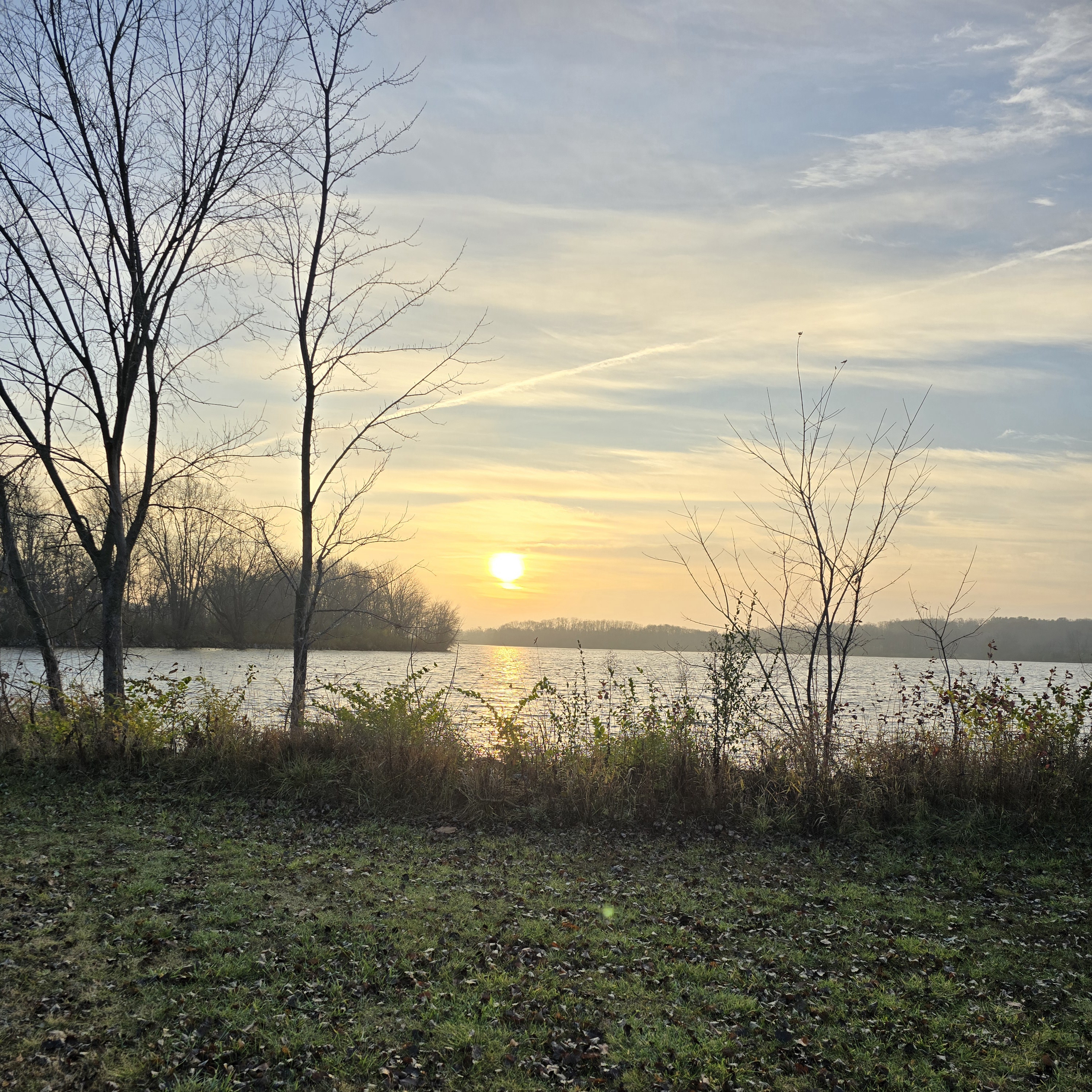
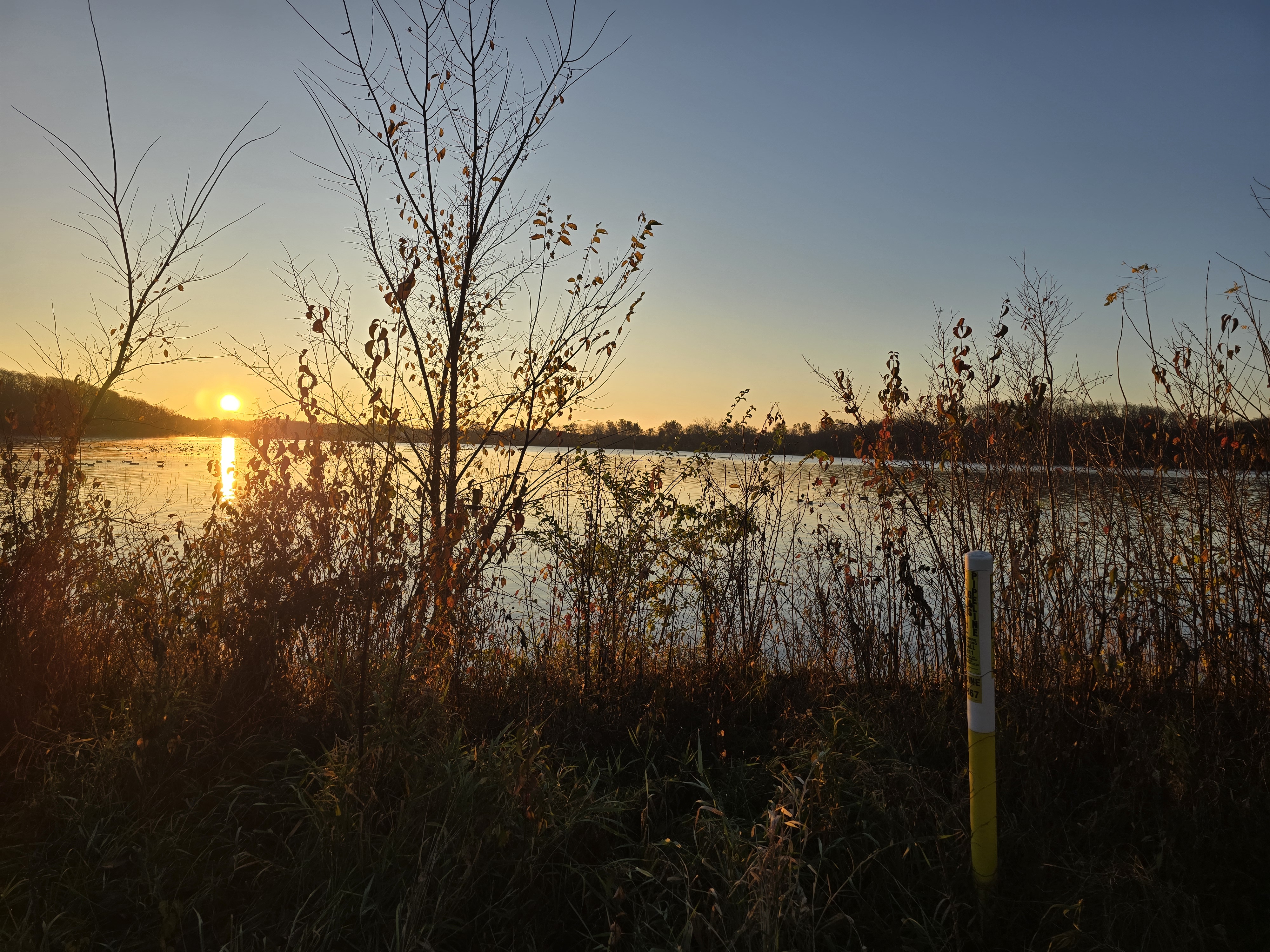
I plan to be out of office and away from writing computers for a couple of days. Here is a photo from a recent trail walk to keep you company.

The constant news cycle is not good for us. Sunday is as good a day as any to take a break and focus on the real world all around us. It is also a day to post my favorite photo of the week.

The year we moved to Indiana’s Calumet Region in 1988 marked the onset of the worst U.S. drought since the Dust Bowl. The 1988-1990 North American Drought covered a smaller amount of geography compared to the 1930s Dust Bowl yet it was the most expensive extreme weather event in terms of monetary damages in U.S. history until that time.
Nearby Milwaukee, Wisconsin, set a record 55 consecutive days without measurable precipitation. During summer heat waves, thousands of people and livestock died. The drought led to many wildfires in western North America, including record fires in Yellowstone National Park in 1988.
While living in the Calumet, I understood the region’s activities were adding carbon dioxide to the atmosphere, enhancing the greenhouse effect that causes planetary warming. This includes the enormous Amoco Oil Company refinery located 23 miles from our house.
In 1988, we were turned inward, living our family life. We also had air conditioning. I did not understand how prevalent the deleterious effects of climate change would become in our lifetimes. It was one of what became a series of extreme weather events leading through time to when I wrote this post. We understand now.
The United Nations suggests ten thing we can do to address climate change. They even have an app! It is not too late to begin addressing our contributions to global warming and environmental degradation. Click here to learn more about what you can do.
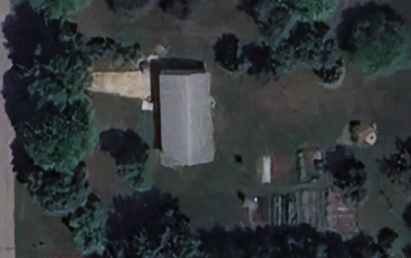
Editor’s Note: Our arrival in Big Grove Township was marked by the first in a series of extreme weather events: the 1993 flood. It was called a once in 500-years flood, yet we would soon find out flooding had become more common, including the next 500-year flood event in 2008. I plan to weave at least six extreme weather events into my memoir, beginning with this chapter on Big Grove Township.
Big Grove Township was established before Iowa Statehood. The first sawmill was built here in 1839 by Anthony Sells on Mill Creek. Put the big groves of trees together with the sawmill and you have us. The oak, walnut, hickory, ash, elm and cottonwood that once thrived among numerous pure springs were gone when we bought our lot here. What dominates is the culture we and others brought with us to an area where all trees indigenous to the Northwest once existed in abundance yet no longer do. There is something essentially American in that.
There is a subdivision named Mill Creek today, suggesting this history. Throughout the area, people refer to early settlers and builders of homes instead of the people who now own and live in those structures. The names Cerny, Beuter, Andrews and Brown persist, as does the more recent name of Don Kasparek upon whose former farm our home is situated.
On the vacant lot we purchased, there were scrub grasses and a lone mulberry tree. The tree appeared to have been planted by a bird’s droppings while it perched on a surveyor’s re-bar marker. The ground had a high clay content which suggested Kasparek had removed the topsoil before subdividing the plats. When he died in 2003, I recognized him in our association newsletter. We speak of him from time to time in the neighborhood, although not always in a positive way.
I looked at an old picture of a building on Main Street in Solon, the nearest city. In sepia tones, seven teams of horses and wagons are lined up in front of a building on the dirt street. We can make out the lettering on the shop windows: Cerny Bros Grocery, Cerny Bros Hardware, and Cerny Bros Feed. While the roads have been paved for many years, much of downtown and the surrounding area resonates with the area’s origins in history before automobiles.
We built our home during the record-breaking floods of 1993. Governor Terry Branstad described the extreme weather event as “the worst natural disaster in our state’s history.” The Des Moines Register published a commemorative book titled Iowa’s Lost Summer: The Flood of 1993. Extreme weather delayed construction of our home that summer, causing us to stay with relatives and in motels for about a month after we moved from our house in Indiana. We moved in during August 1993. I was used to severe flooding from growing up in Davenport where the 1965 Mississippi River flood broke records. I was not used to flooding, 1993-style.
I couldn’t help but believe who I was represented itself in any of local history. My culture was what I brought with me, rooted in coal mining, factory workers, farming, home making, and the rural cultures of Virginia, Minnesota and LaSalle County, Illinois. Our history as a family goes back on both sides to the Revolutionary War. My line in Virginia goes a hundred years prior to the revolution.
That my ancestor Thomas Jefferson Addington is a common ancestor to the Salyer girls of the Salyer-Lee Chapter 1417 of the United Daughters of the Confederacy stands in contrast to the story of Maciej Nadolski working in coal mines in Allegheny, Pennsylvania after the Civil War and then buying land from the railroad in Minnesota. What of my father’s birth in Glamorgan, Virginia? What of the suppression of Polish culture by the Russians after 1865 that led to a massive migration of Poles to North America? If I weren’t here, we wouldn’t speak much of these things in Big Grove Township. Perhaps with time we will.
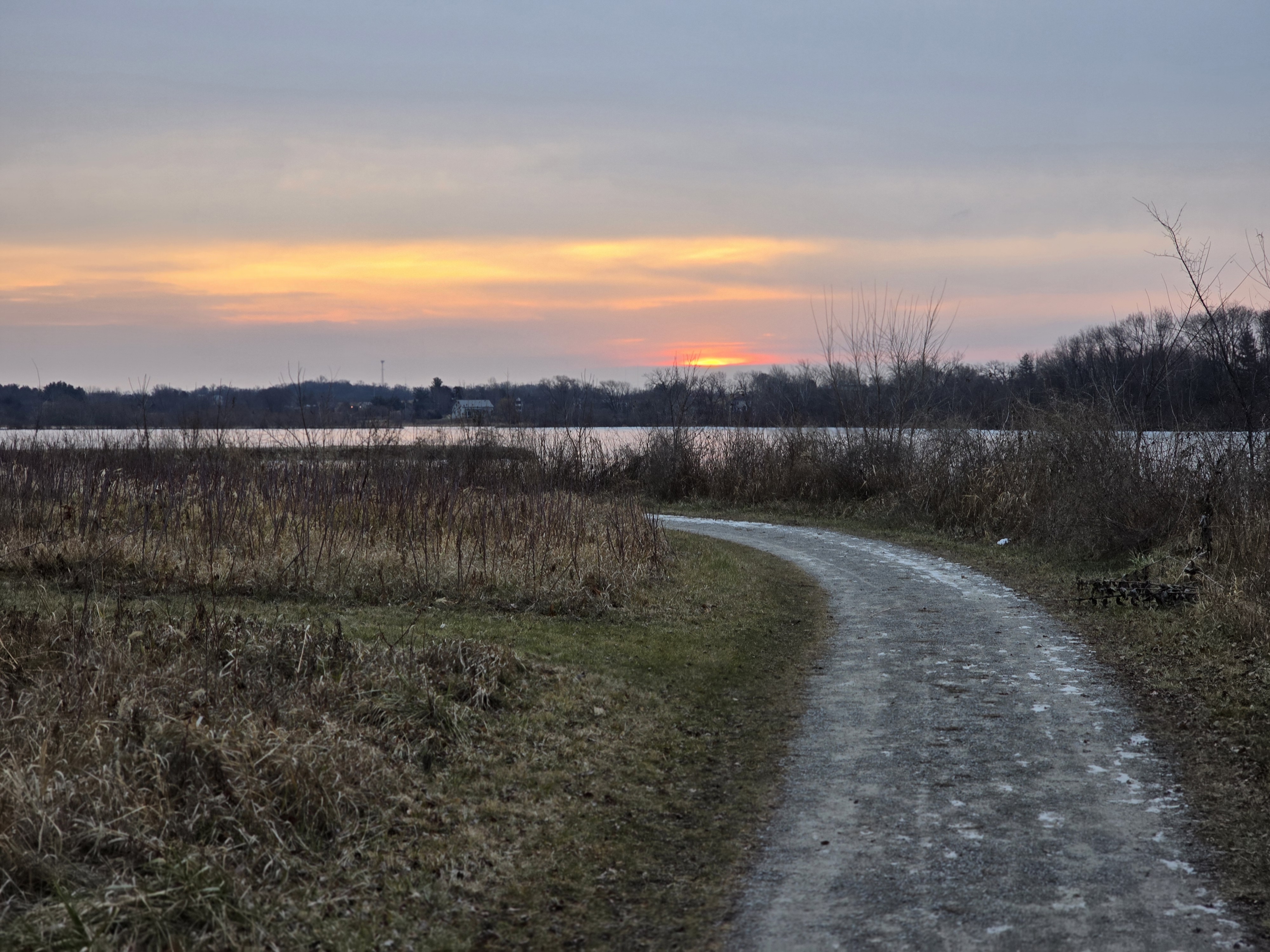
According to the sensor installed on the north side of the house, the ambient temperature was 13 degrees below zero Fahrenheit when I began writing this post. The sun is rising and it warmed up. We’re not at zero yet, although the high is forecast at 25 degrees. Today the weather is weird again.
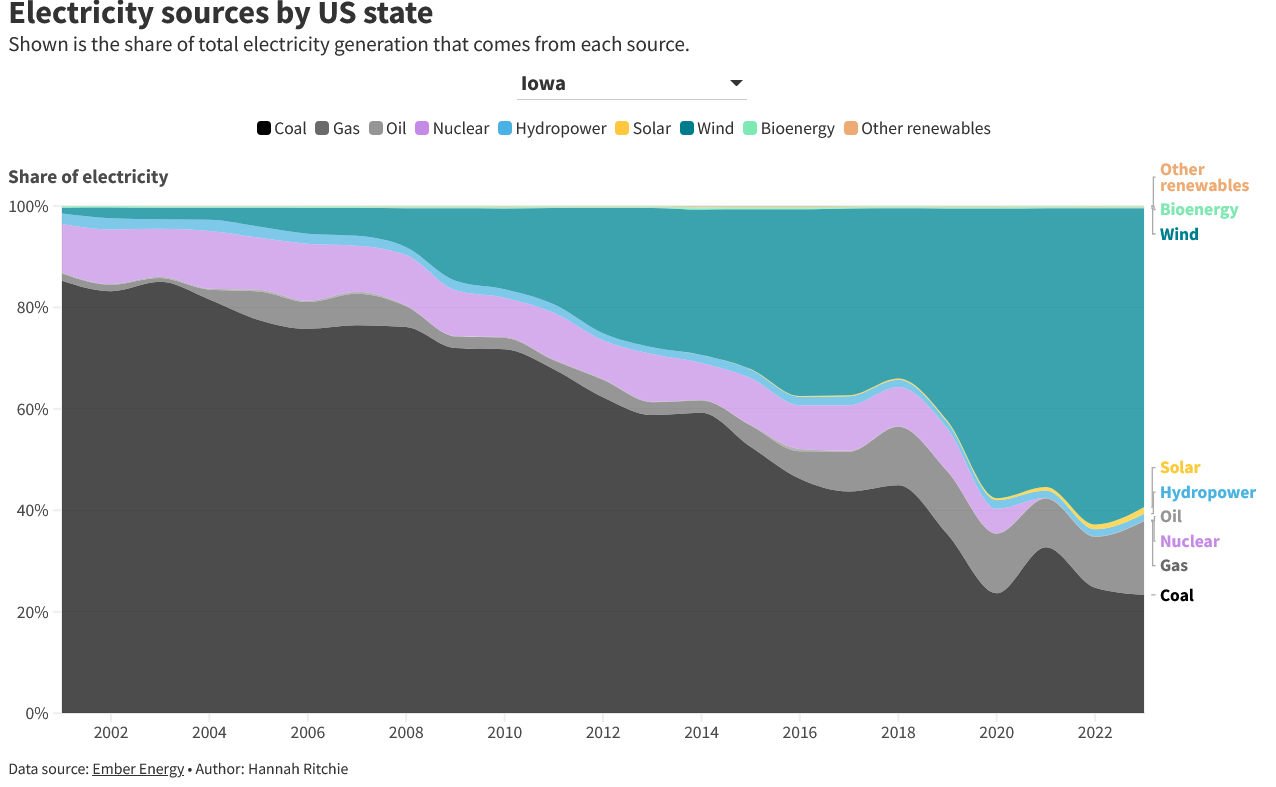
Hannah Ritchie, author of Not the End of the World: How We Can Be the First Generation to Build a Sustainable Planet, posted a widget on the internet with a state-by-state analysis of electricity generation sources. Find it here. Here is where Iowa lands:
Here is another chart:
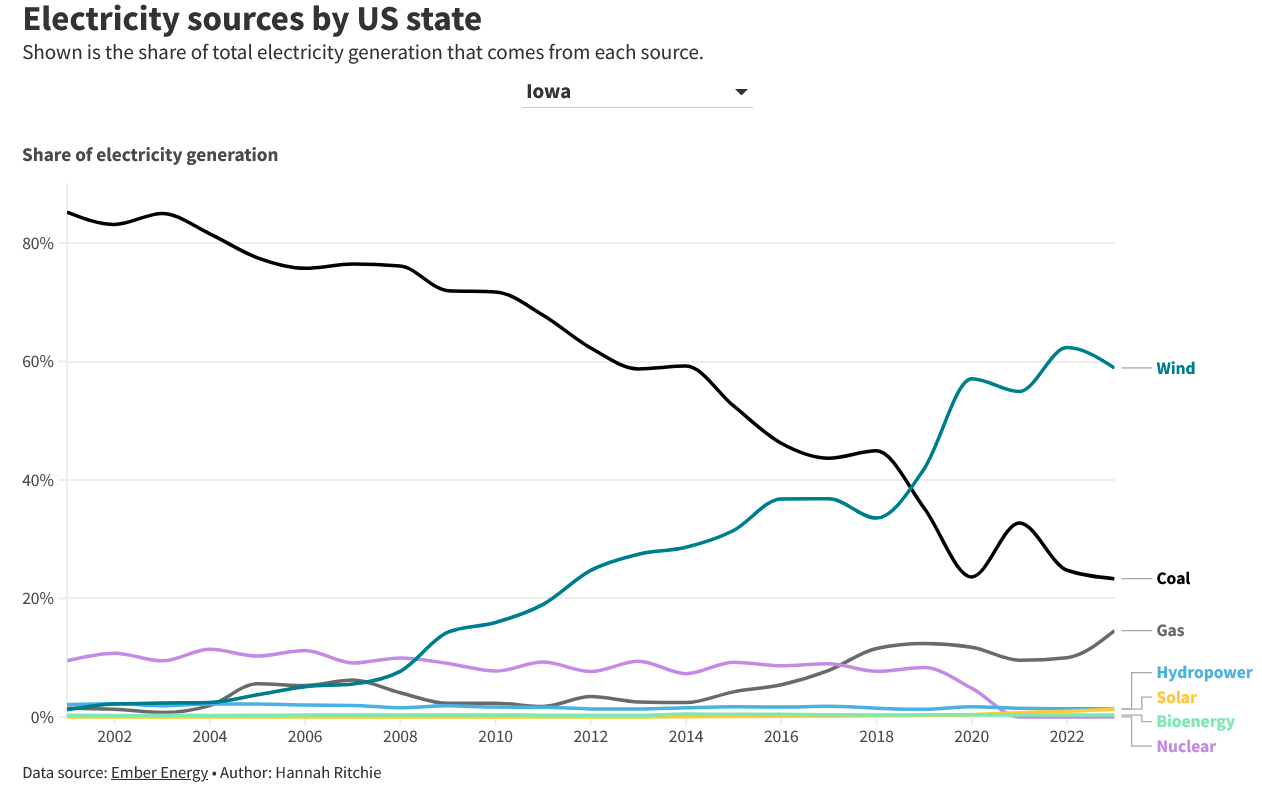
Iowa is a leader in wind energy and has plenty of room to improve our solar capacity. There are environmental issues with every form of electricity production, yet burning fossil fuels is our most immediate danger because of the role of carbon dioxide in enhancing the greenhouse effect. Despite today’s low temperatures, Iowa is simply too darn hot.
The trend on the following chart is the right one. As a state, we need to move more quickly.
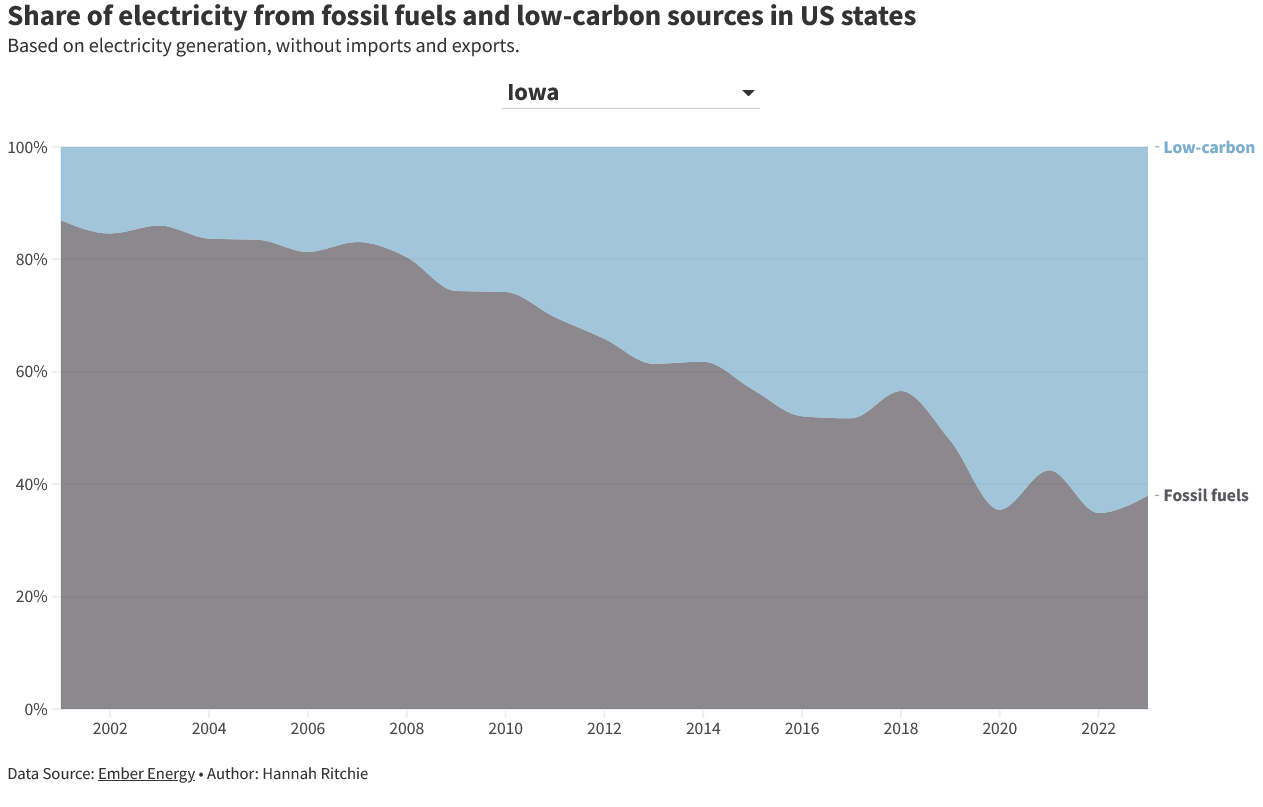
It seems obvious to me that to get to zero fossil fuels used to generate electricity Iowa needs to install many more solar panels. There are issues with both wind and solar generated electricity.
The wind doesn’t always blow and the sun doesn’t always shine. They can be addressed. One of the key strategies to deal with intermittency, which is what this is called, is to improve the forecasting and planning of renewable power generation and demand. Another strategy is to invest in storage and integration solutions that can balance the supply and demand. A third strategy is to foster innovation and adaptation. This involves developing and deploying new technologies, designs, and practices that can enhance the performance, efficiency, and resilience of renewables. We need the will to solve these problems.
So the news about electricity generation in Iowa is positive. We just need more renewables and technological solutions to deal with intermittency so we can replace fossil fuels altogether. To a reasonable mind, this can be accomplished. Now we just need our regulatory and governmental authorities to get on board.
Just posting this photo today while I use windshield time to wonder.

The 29th Conference of the Parties was a disappointment. Fossil fuel interests hindered the ability to accomplish constructive things since the beginning of the process. Now, they stopped anything except the most minimal action at COP29. Former Vice President Al Gore summarized the situation in this statement:
November 23, 2024
While the agreement reached at COP29 avoids immediate failure, it is far from a success. On the key issues like climate finance and the transition away from fossil fuels, this is — yet again — the bare minimum.
We cannot continue to rely on last-minute half measures. Leaders today shirk their responsibility by focusing on long-term, aspirational goals that extend far beyond their own terms in office. To meet the challenge of our time, we need real action at the scale of months and years, not decades and quarter-centuries.
This experience in Baku illuminates deeper flaws in the COP process, including the outsized influence of fossil fuel interests that has hobbled this process since its inception. The Kingdom of Saudi Arabia has been particularly obstructive. Putting the future of humanity at severe risk in order to make more money is truly disgraceful behavior. Reforming this process so that the polluters are not in effective control must be a priority.
On climate finance, our primary task in the coming years must be to not only fulfill and build upon the financial commitments agreed to at COP29, but to unleash even larger flows of affordable and fair private capital for developing countries.
Ultimately, coming out of COP29, we must transform disappointment into determination. We can solve the climate crisis. Whether we do so in time to meet the goals of the Paris Agreement will depend on what comes next.
The climate is changing. Do humans have the capacity to protect all we hold dear from the ravages of the climate crisis? Time will tell. The Conference of the Parties is our last, best hope to stave off the worst impacts of human-caused climate change.
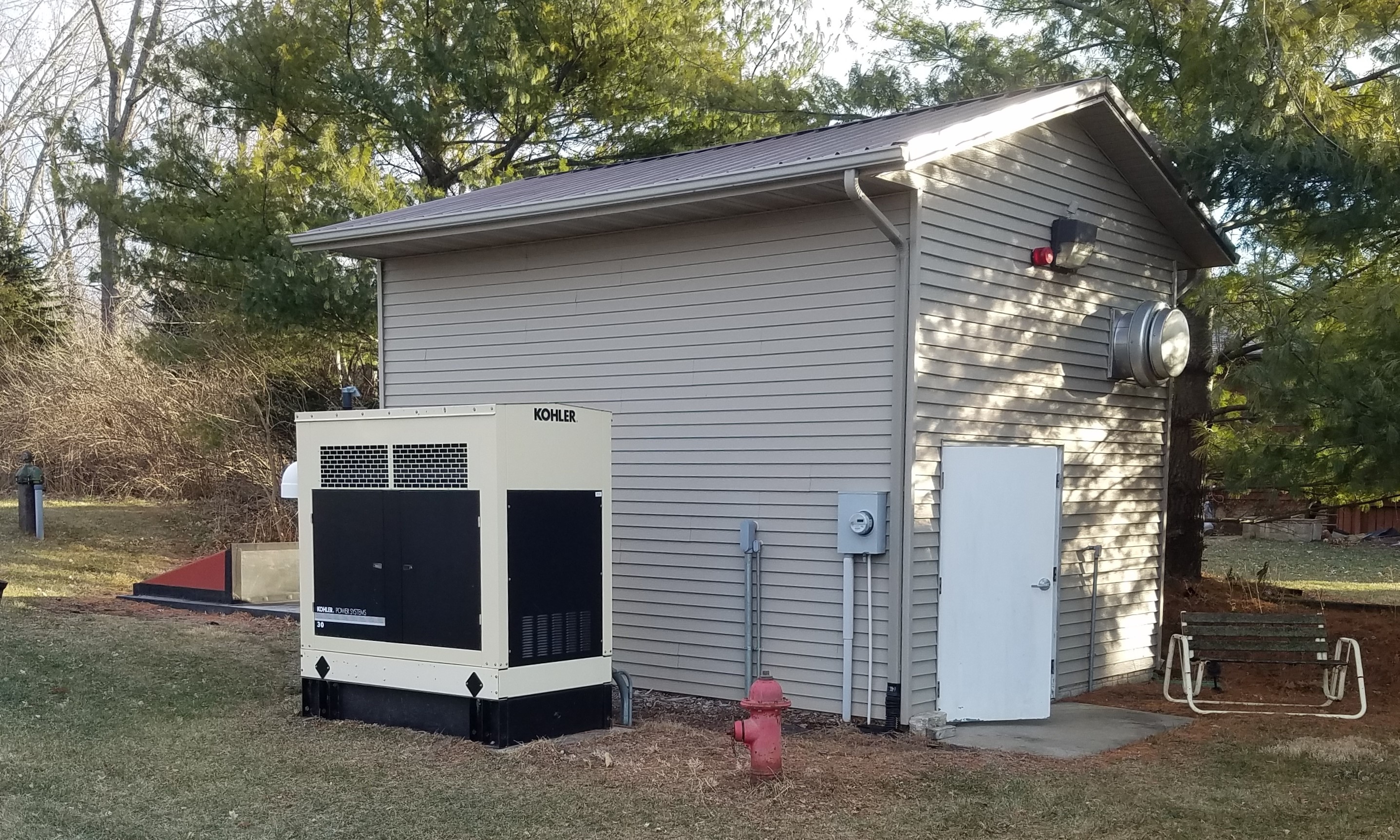
The annual meeting of my home owners association last summer was good. Thanks to all of our board members for their volunteer work. It was a pleasant evening in Randall Park. As is usual, very few members showed up for the picnic-style meal and conversation.
We discussed the association water system and the need to meet new compliance standards. The most recent compliance issue is inventorying the type of pipes bringing public water from the well to and inside our homes. I began following our public water system shortly after we moved here in 1993. We comply with new numbers as they come along. When we cannot get into compliance, we make an investment in extraordinary measures. For example, we spent $400,000+ to comply with revised arsenic standards.
I said this at the meeting and it bears repeating:
The water coming out of the well house into the community water pipes is fit to drink and use. It meets state and federal standards for a public water system. The board sent our annual water quality report in the last mailing. Read it!
We talked about water softeners. When Bob was president, he announced that water softeners were no longer necessary after installation of the new arsenic treatment facility. I’m not sure that information was adequately distributed at the time. However, the quality of water in a home is a matter of personal preference and expense.
Is the water delivered to our homes potable without treatment? Yes, it is. We have data to back that up. Do you want to wash your white clothes in untreated water? Maybe, maybe not. Since the new water treatment system was installed, there have been surges with heavy concentration of iron in it. A whole house filter combined with a water softener buffers users against such anomalies.
One set of data that assists in decisions about whether to treat water in our homes is a water hardness test. Those are locally available, usually for no cost, plus a volunteer in the association is willing to test your water without charge. If you have questions about using a softener, that is a beginning place.
The wastewater treatment facility was built in 1994. While it was maintained as things broke, there is a significant project in the near term future of refurbishing the physical plant. Chloride compliance is a different question. The reason for all the attention to chlorine and salt usage is in pursuit of a reduction in the amount of chloride entering the wastewater stream. Hopefully we can get chloride numbers into compliance and avoid doing something to divert effluent flow from Lake Macbride to somewhere else more acceptable to Iowa Department of Natural Resources.
Here is some additional information:
Iowa’s recent inventory of public water supply systems was 1,838. The percentage of systems in compliance with all health-based standards in 2022 was 96.2%, while the percentage of population served by systems compliant with all health-based standards was 98.9%. Not perfect, but good.
The other segment of well water, which is significant in Iowa, is the use of private wells for household water needs. Private wells fall under the jurisdiction of the Iowa Department of Natural Resources. There is a recommended testing and treatment program for private well owners that includes free annual testing, and money for shock chlorination, well plugging, well reconstruction, and the like. There is also a fully developed program on their website. I couldn’t find information about the level of compliance with the voluntary standards.
They say water is life, and it really is. It seems important to know what the standards are and whether what comes from the tap is safe to drink. In our community we invested a lot to make sure it is.





 Journey Home
You must be logged in to post a comment.