Categories
Living in Society

After A Storm

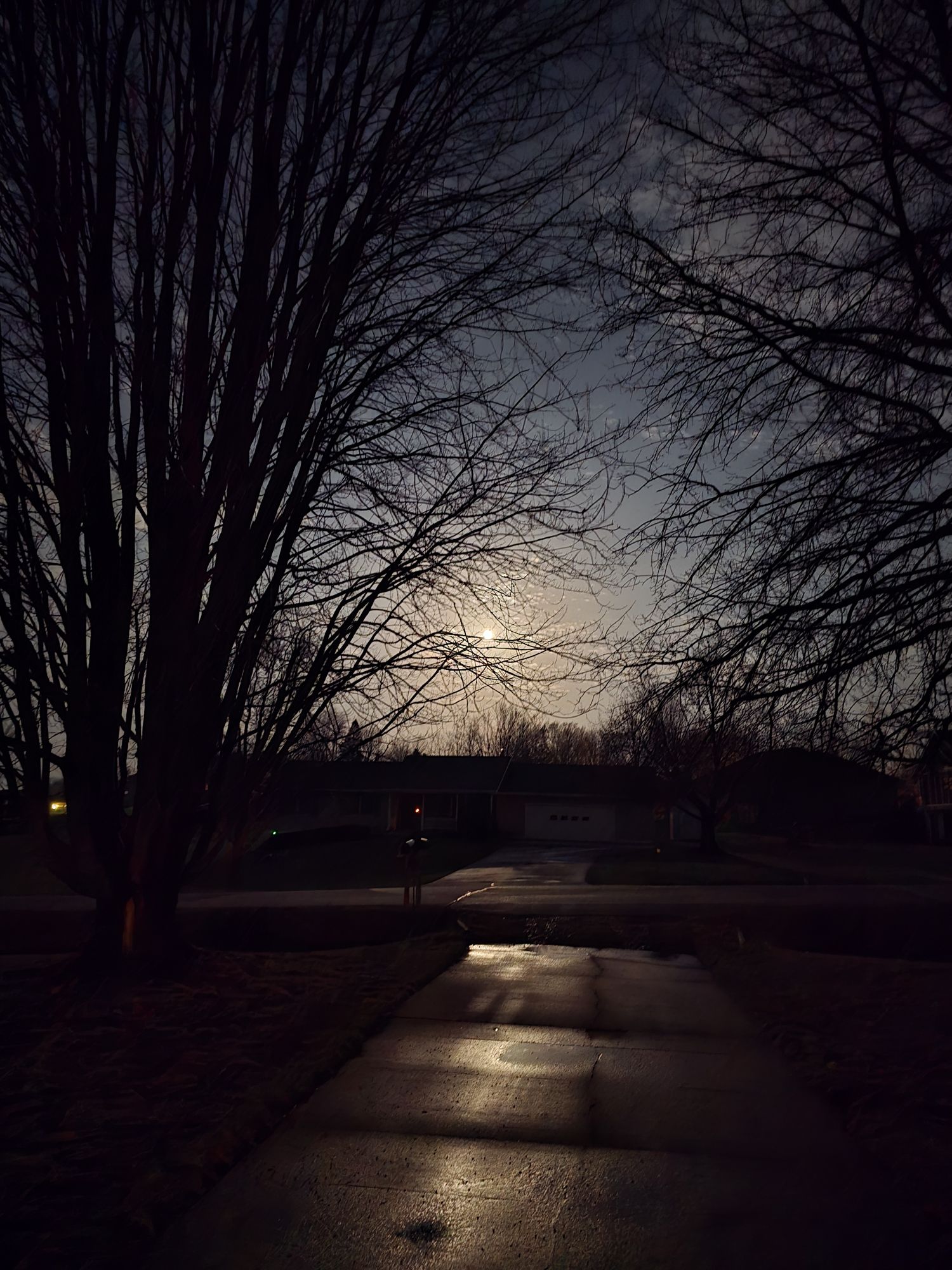
Moon setting after a thunderstorm.

Thunder and lightning woke me early Tuesday morning. We needed the rain and could use more. When I went for my daily walk a few hours later, the driveway was almost dry. The ground just soaked the water up, wanting more.

The next county over is experiencing drought conditions, noting one of the drier starts of a year. 51.8% of the state is experiencing moderate drought or abnormally dry conditions. I’m not a climatologist yet I would say this is the new normal.

Fields and pastures where I travel in Eastern Iowa show the strain of limited moisture. Some corn is planted and just emerging. Subsoil moisture, built during wetter seasons, can carry the plants only so far before they begin to show stress. What matters most in the growing cycle is not just whether it rains, but when. If heat and dry conditions settle in during July pollination, the crop has little margin for error. Today, we notice how quickly ponds and ditches recede after a decent rain. In many years, a single well-timed rain can bolster a crop. In others, storms miss us, and that absence becomes the story.

Lawns are beginning to green up after losing color over the winter. Garden soil remains pliable, yet hardens between rains and watering. We simply hope the next storm will stay longer than the last.

That I see such patterns, repeated over multiple seasons, is part of a broader conversation about climate change. While our current dry conditions can be attributed to natural variability, the increasing frequency of such conditions aligns with projections of more erratic precipitation and warmer temperatures. Drought cycles persist, making recovery more uncertain.

I remember the 2012 drought and how it negatively impacted corn yields. Luckily, soybeans had time to recover. In July, I attended a meeting with the governor and farm groups and came away with this conclusion:

Whether it was acknowledged or not, today’s meeting of farmers, citizens, elected officials, bureaucrats, media and advocates is what climate change looks like. Grown men and women who have invested a lifetime in doing what they think is right, facing the existential reality of a changing climate.

It is unclear whether an extended drought will take place this year. It depends upon soil moisture going in, weather timing, and heat. What I can say with some certainty is I’m glad it rained Tuesday morning and hope we have more. So much depends upon it.

Categories
Living in Society

Heat Wave

If you do not like the song Heat Wave by Lamont Dozier and brothers Brian and Eddie Holland something may be wrong with you. Few things characterized my youth like listening to the Martha and the Vandellas recording on my hand-held, red transistor radio. It would not seem like summer in 1963 and ’64 without that song. Perhaps things changed.

We have no new songs of summer today. The heat dome that lived over the upper Midwest the last few days was oppressive and steamy: so uncomfortable my 70-year-old frame couldn’t take the heat after a few hours in it. It has been good for the tomatoes, squash, cucumbers and tomatillos in the garden, so there’s that.

At least we are not in a drought the way we have been during the past few years. In 2012, a time when Iowa field crops were substantially impacted by dryness and crushing heat, I couldn’t wait to get indoors to escape. This heat dome is less severe than that, yet summer heat has a wicked resonance after that fateful year.

What can be done about this heat wave? Hunker down and stick it out.

We will make our home here, and in doing so, make the current heat wave the stuff of legends. We’ll develop grand stories, legends, to be told on blogs, on telephone calls, and video conferences. We’ll tell it in Twitch chats, on Discord, and on text-based social media. We’ll make something out of it like the salsa the heat wave is helping produce.

We’ll make our own musical stories, even if it may not be as good as what Martha and the Vandellas sang. It will be our experience. We will own it. That will be enough to survive the heat wave.

Categories
Environment

The Climate Crisis Remains

Lake Macbride drying around the edges on Sept. 17, 2023 due to an extended drought.

Contrary to what letters in this newspaper reported, the climate crisis remains. It is a crisis. It is peculiar to our time since the Industrial Revolution. Readers of the Gazette should know about it.

Media stories covering the impact of a changing climate continue to appear: Canadian wildfires, heated ocean temperatures off the Florida coast, abnormal melting sea ice, Hurricane Hilary in California, Maui wildfires, the Midwestern drought… you know the list. It is as if the Gazette was live blogging the end times with the Four Horsemen of the Apocalypse nearby.

Our community is at risk due to the changing climate. Our family conserves water from our public well on the Silurian Aquifer because it is faltering with increased usage. A deep and extended drought means surface waters have not been able to recharge the aquifer to meet demand. The water supply is not endless.

Society should do something to avoid the worst effects of climate change. Here’s the rub. People enjoy current life in society, and we don’t want to change, even when inconvenienced by extreme weather.

Environmental activism seems unlikely to solve the climate crisis. All the talk about climate change distracts us from the fundamental problem: the effect of unmitigated capitalist growth ravaging the resources and systems of the earth and its atmosphere.

Maybe we should forget about the climate crisis to focus on what matters more: conserving Earth’s resources for future generations. I’m on board.

Published on Sept. 21, 2023 in the Cedar Rapids Gazette.