LAKE MACBRIDE—Some mornings pancakes seem the right breakfast. Mornings like today.
One cup flour (mixture of unbleached plus whole wheat)
One large egg
One cup fat free milk
One tsp baking powder
One pat salted sweet cream butter
150 grams fresh blueberries
Favorite topping
Put the liquids plus baking powder in a mixing bowl and stir with a whisk until incorporated. Add flour a tablespoon at a time. Stir, but not too much. Put half the butter on a hot pan and pour enough batter to make a pancake. Scatter blueberries in the batter. Flip, cook and serve with favorite topping.
LAKE MACBRIDE— A dusting of snow lay on the driveway as I walked to the road to get the newspaper. I breathed the cool night air for a few moments. The carrier had not arrived.
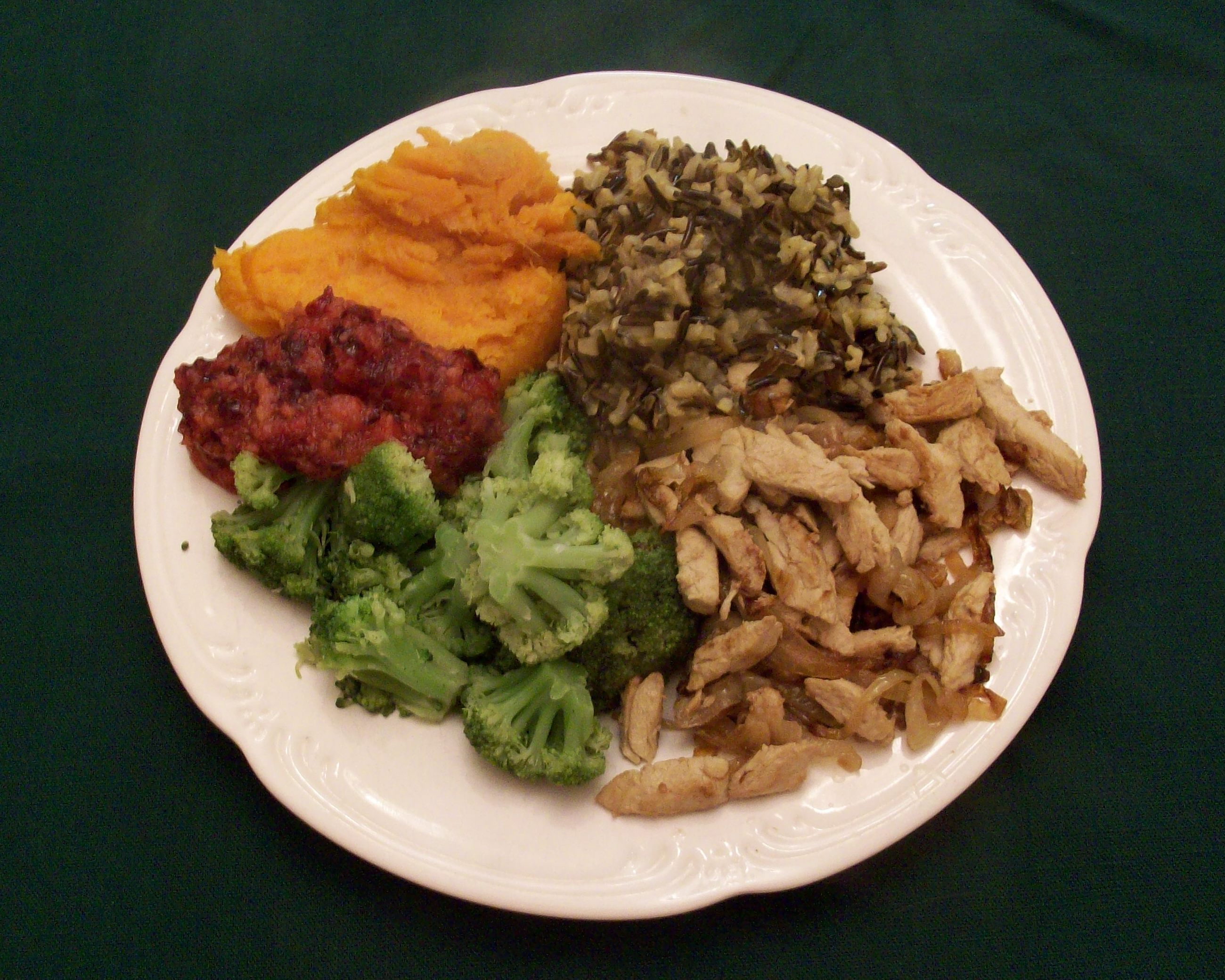
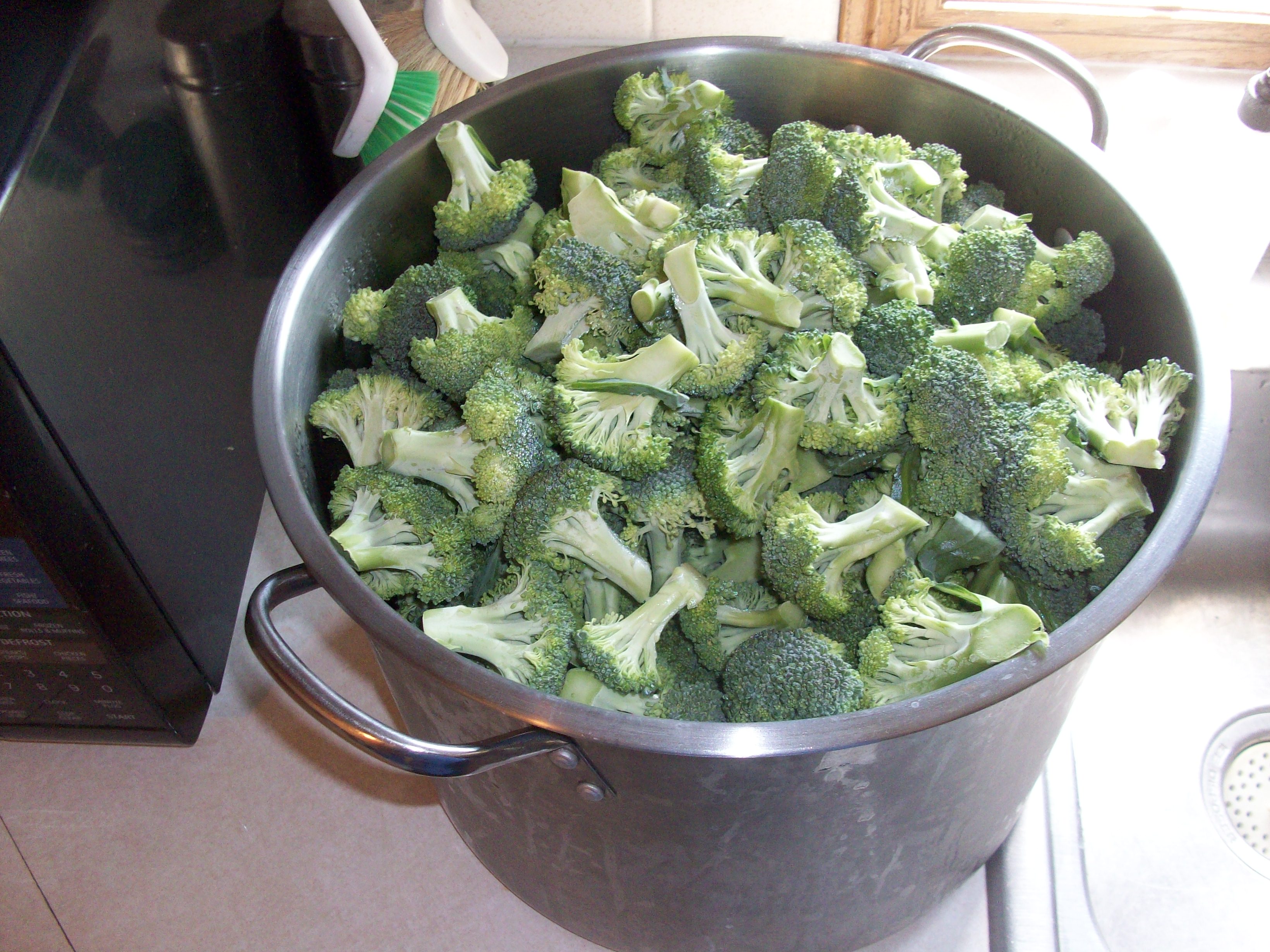
Returning to the kitchen, I turned off the boiling pan of eggs—protein for our ovo-lacto vegetarian holiday feast planned to include wild rice, sweet potatoes, lettuce salad, steamed broccoli, homemade baked beans, a relish tray and an apple crisp. There will be leftovers for days.
Except for the lettuce, the meal will be made from pantry ingredients, the result of shopping, but also of canning, growing, bartering and pickling. It’s a sign of the times.
We spent our thirties through fifties traveling for Thanksgiving, but no more. It’s just the two of us. We won’t even travel the three miles to town where one of the churches offers a free Thanksgiving meal for all comers.
In the quiet of each hour we will plan and cook the meal, serve it, and then clean the living room to put up the holiday decorations. Fit retreat from a bustling life among people.
A day to be thankful for what peace there is and the quiet fallen snow beneath predawn air.
LAKE MACBRIDE— Leeks at the grocery store looked particularly good so I bought one to make leek and potato soup. Leeks make incredible soup stock, so I always look forward to this once or twice a year meal.
The ingredients for leek and potato soup are simple:
Stock
One large onion
Half cup diced celery (garden grown if you have it)
Three carrots peeled and cut into large chunks
Top of one leek rough chopped. Cut it just below where the leaves start to fan out. Be sure to get the dirt out from between the leaves.
Two bay leaves
Salt to taste
Eight cups of water
Soup
Aforementioned stock
One lunch bag full of potatoes, peeled and cut into bite-sized pieces
Remaining leek halved lengthwise and cut into thin ribbons and cleaned
Two celery stalks, medium dice
Two cups frozen cut corn
Partly this list is a lie. Some would skip the stock, boil the potatoes separately, reserving a cup of the cooking liquid. Saute the celery and leeks in a Dutch oven and add the cooked potatoes, corn, potato water and milk (evaporated, cream, or whatever) to cover. Heat slowly until fully warmed, but don’t scald the milk. Serve with freshly baked biscuits.
There is another way. Place the soup stock ingredients in a Dutch oven and bring to a boil. Turn the heat down and simmer until it’s soup. Strain the vegetables out, and put the stock back into the Dutch oven. Add the potatoes and leeks and enough water to cover. Bring to a boil, then turn the heat down to a simmer. Cook until the potatoes are fork tender and add the corn. Re-season. Bring the pot to temperature and serve with oyster crackers or freshly baked biscuits.
There are other ways to make this soup. The point of the story and recipe is that the leeks at the store looked good. I did something about that.
We have gotten too far from the natural instinct of creating from our found environment. Yes, the leeks may not have been grown in Iowa. The soup I made from them was, and that makes it local food.
A meal that was filling and tasty by any definition, cooked once or twice a year when the leeks look good in the store is culture that escapes us too often. Life is too short to let that happen.
LAKE MACBRIDE— After nine hours, the yard work came to a halt. There was a lot more that could have been done—picking up grass clippings for mulch, trimming trees and bushes, taking down the second tomato patch—but nine was all I could do.
I left the hot and sweet peppers to grow, and the kale, but that was it. It is time to call it a year for the garden. Between the CSA and our garden, there is no shortage of food in our house. Now comes the processing before it goes to compost.
The pears were starting to go bad, so I salvaged what was good and added an equal weight of apples—McIntosh, Song of September, Blondie, Cortland, Haralson and Jonamac. I was a little short, so I picked enough Red Delicious from the tree in the yard to fill out the weight and made a sauce with the whole lot. The pears sweetened it so no sweetener was needed. It made three quarts and tasted great.
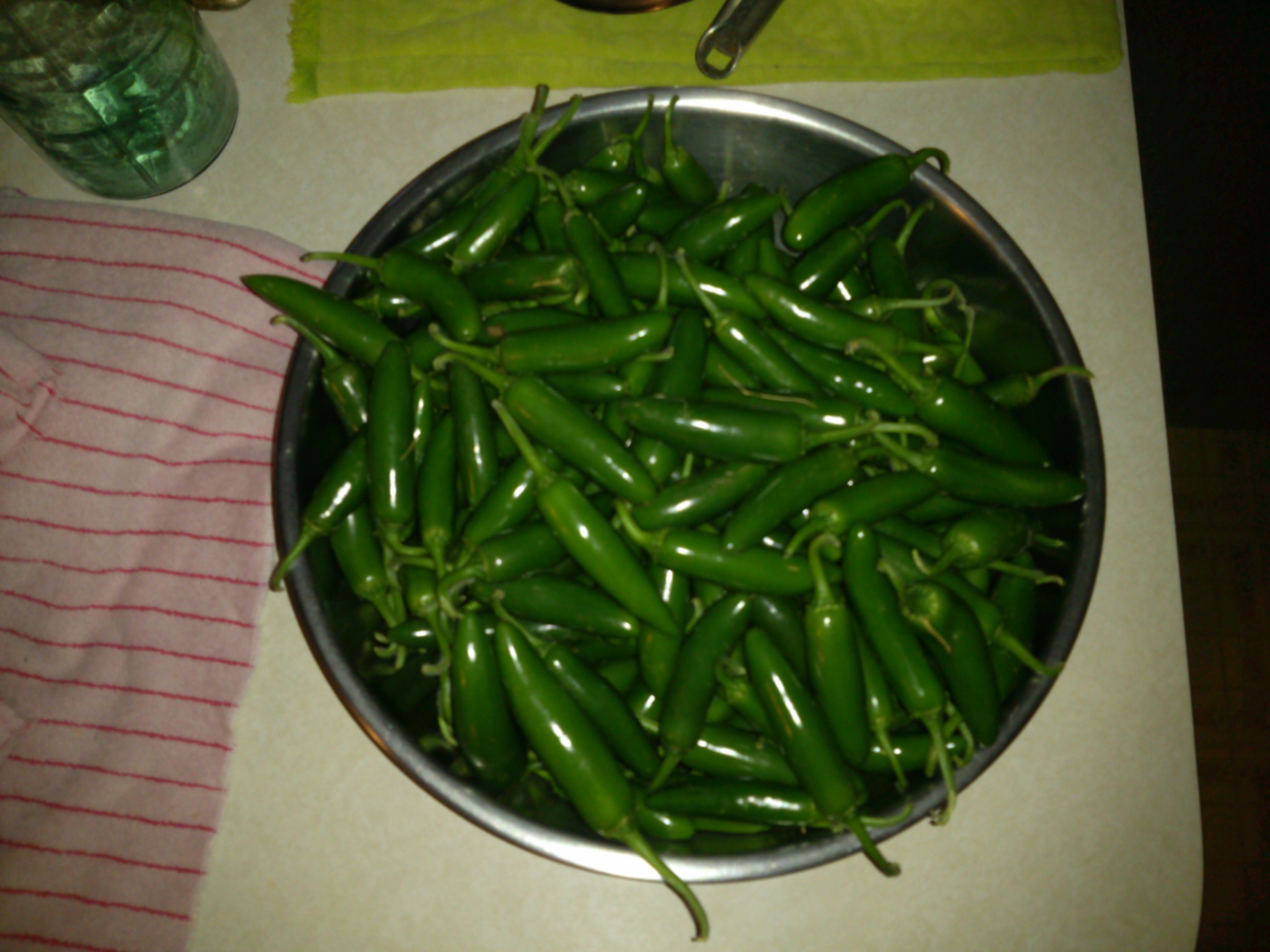
Serrano Peppers
Hot peppers are in abundance this year. Dehydrated halves of jalapenos were ready to bag and eventually be turned into a powder. I replaced them with whole Serranos to see if they would dehydrate to make pepper flakes. The rest of the abundance is in zip top bags in the refrigerator awaiting disposition.
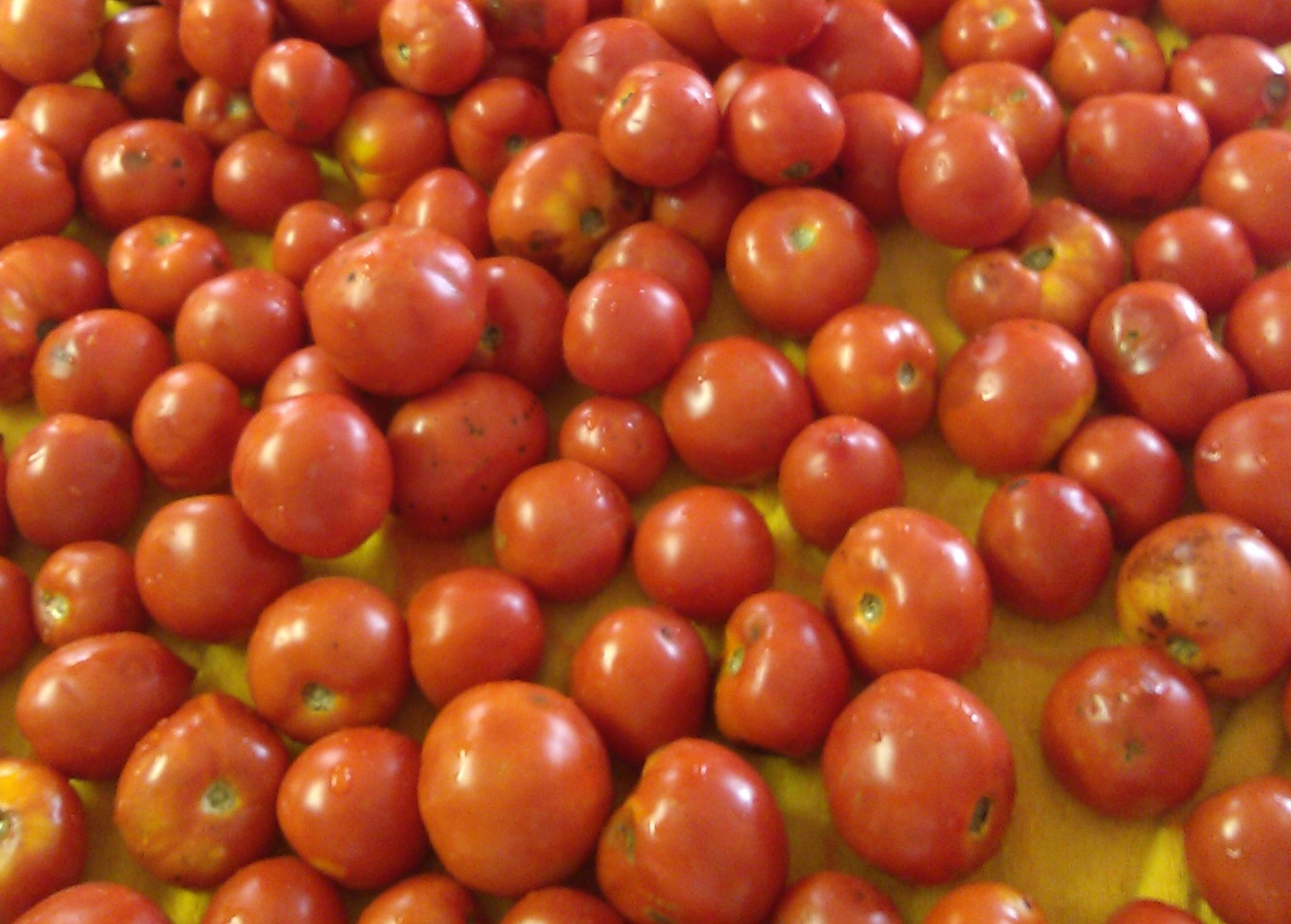
I picked what was good in the tomato patches yielding two full trays. They all produced well, more than we need. With the fresh and canned tomatoes, we will last until next August.
This morning I made soup using kale, celery, carrots, onion, canned diced tomatoes, soup stock, bay leaves and dried chervil. I added a quarter cup of pearled barley. The home grown celery tastes like no store bought celery does, and next year I expect to grow more.
There is so much kale a lot will be composted. Some went to the library friends, and the rest is in large garbage bags in the refrigerator taking up space. Eventually it will all find a home.
This afternoon I put the garage back together and returned the automobiles inside. I need another day in the yard, but am not sure when next that will be possible. It’s back to all of my part time jobs for now, hoping ends will meet at the end of the month. One thing is sure, we’ll have plenty to eat.
LAKE MACBRIDE— What to do with all of the eggplant?
The image in this post is a bit of a protest because despite their colorful variation, eggplant is a vegetable that could be absent from life and few would notice. The fact is they are abundant, easy to grow and cheap at the market. Despite their limited nutritional value, they provide interest when they are in season. A saving grace in the deluge of summer abundance.
My repertory of eggplant dishes includes a recipe for eggplant Parmesan, ratatouille, a layered casserole using tomato sauce, zucchini, onions and other seasonal fare, and now braised eggplant with potatoes. Here’s the recipe that produced savory results.
Braised Eggplant with Potatoes
Ingredients
One pound of eggplant, cut into one inch chunks with the skin on
Two pounds small potatoes, halved
3-4 medium onions, medium dice
Quarter cup dried parsley (fresh if you have it)
One cup fresh basil, chiffonade
1-1/2 pounds seeded and chopped tomatoes (slicers or plum)
1/2 cup extra virgin olive oil
1-1/4 cups water plus 1/4 cup water
Salt to taste
4 tablespoons olive oil
4 tablespoons flour
Preparation
Soak the eggplant in water for 30 minutes
In a Dutch oven, combine the onion, tomatoes, parsley, 1/2 cup of extra virgin olive oil, 1-14 cups water and salt. Bring to a boil and cook over medium heat for 15-20 minutes. Add the potatoes and the rest of the water, and cook until the potatoes are fork tender, or about 20 minutes.
While the sauce is cooking, drain the eggplant and season it with salt to taste. Heat the 4 tablespoons of olive oil in a frying pan over high heat. Dredge the eggplant cubes in flour and fry until golden brown on all sides. When finished, place the cubes in a strainer so excess oil will run off.
Add the eggplant to the potatoes and sauce, stir, cover and cook another ten minutes or so. Turn off the heat and leave the pot on the stove until ready to serve or store.
The dish serves well hot, warm or at room temperature.
LAKE MACBRIDE— Yesterday began with two and a half hours of volunteer work at the CSA. The labor in our barter arrangement has already been provided so I’m free to volunteer for general farm chores like working onions.
Onion Cleaning and Sorting
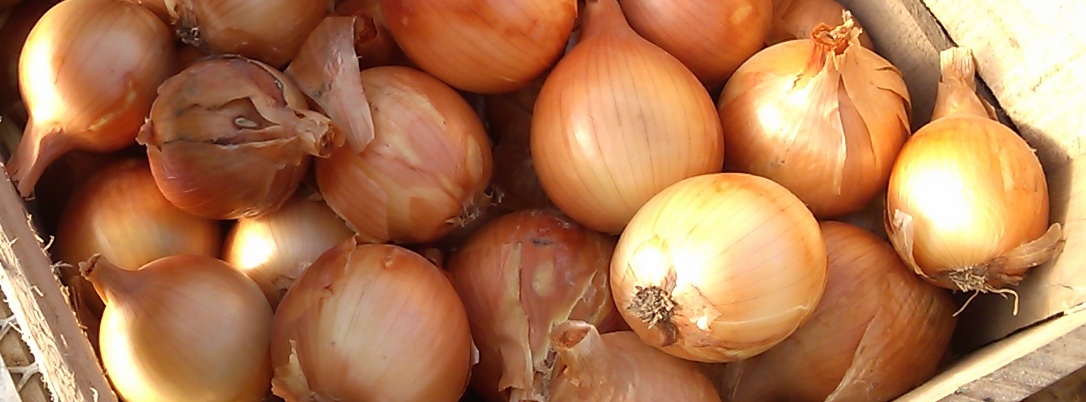
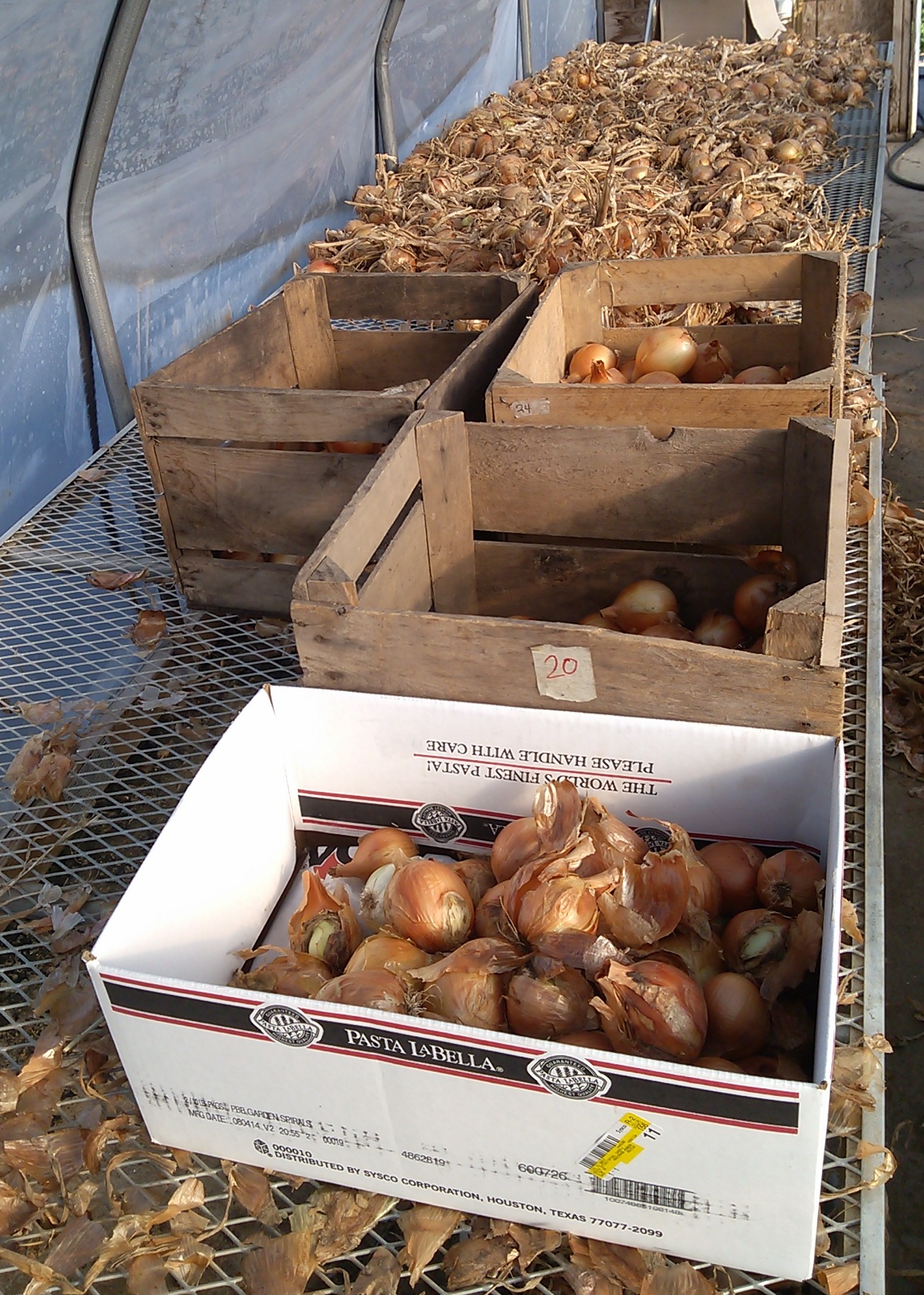
Once the seedling operation moved outside, the germination house was used to cure onions on the long wire racks. They are ready for the next step, which is cleaning and sorting.
There are five sorting types: big and small storage, ready for distribution, seconds, and those to be composted. I trimmed the tops and roots and sorted. The onion worker got to keep the seconds, so last night was salvaging usable sections of onion. By bedtime, a couple of big bags of peeled onions were in the ice box ready to use.
Basic pasta sauce is of onions, garlic, basil and tomatoes, so as I write, a big batch simmers on the stove. All of the produce is from our garden, or the CSA. Except for the salt, it is 100 percent local. There is always an exception in local food. The tomato sauce will be frozen in quart zip top bags.
Making tomato sauce is elemental. This batch is from the edge between fresh garden produce and compost, where we often live our lives. In cutting away the bad parts of the onions and tomatoes—picking through basil leaves—there was more compost than usable produce.
Between our concept of ourselves and our inevitable transformation to dust is a sliver of life. If we don’t grow food and make tomato sauce, what else would we do? There really is nothing else, except to go on living.
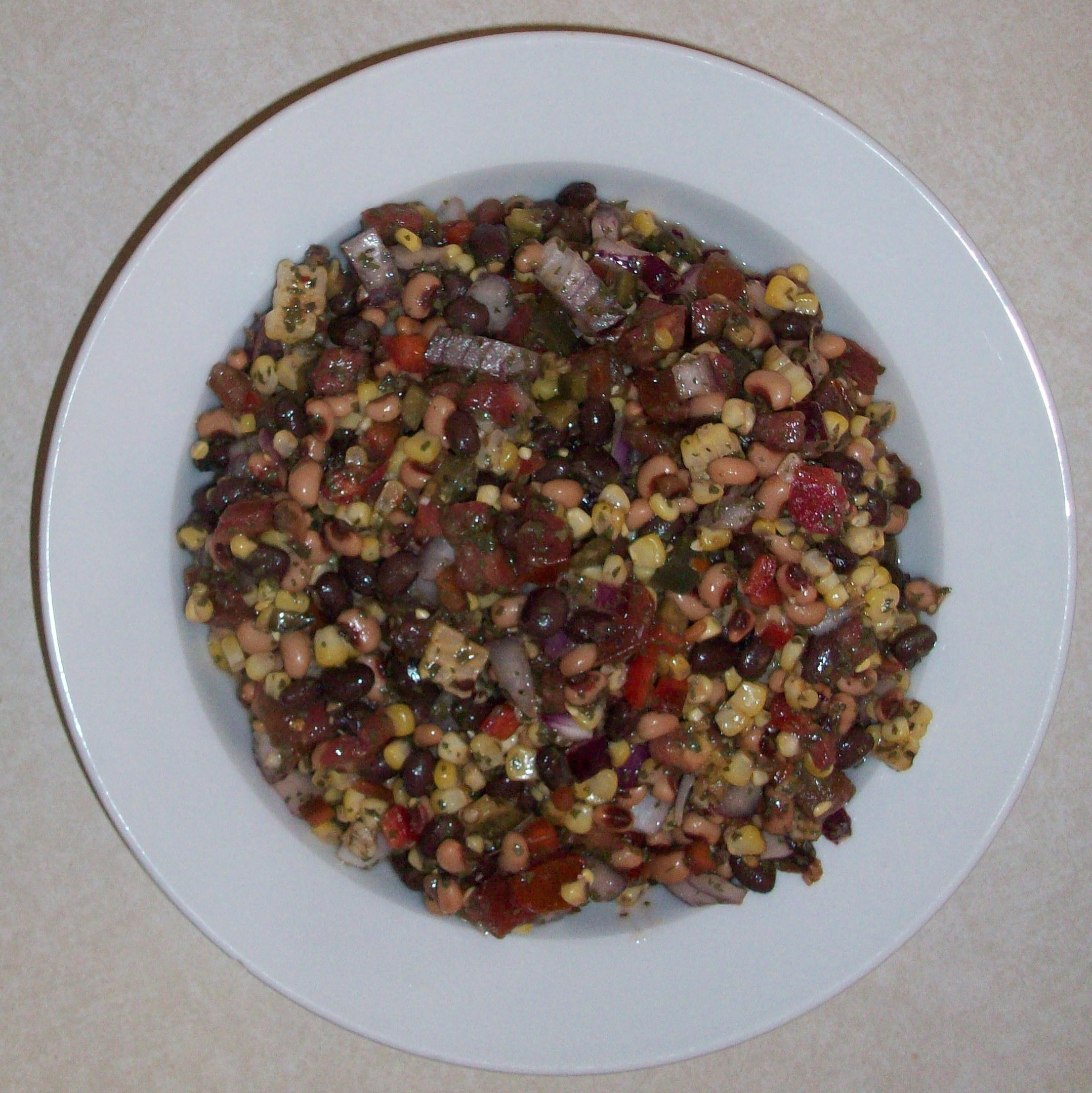
Cowboy caviar is a fancy name for a simple mixed salad of beans, peppers, tomatoes, corn and other summer goodness. There is no good reason to purchase this salad ready-made from a store, as it is easy to make at home.
Ingredients
1 – 15.5 ounce can black beans, drained 1 – 15.5 ounce can black-eyed peas, drained 1 – 15.5 ounce can of diced fresh tomatoes 2 cups cooked sweet corn 1 small red onion, finely diced 1/2 cup pickled jalapeno peppers, finely diced 1 cup home made oil and vinegar dressing (or what you like) 3/8 cup dried cilantro leaves Garlic salt to taste
Add the ingredients to a bowl, toss gently and season with the garlic salt. Refrigerate an hour or more before serving to let the flavors combine.
LAKE MACBRIDE— The season turned— to sweet corn, celery, pepper and aronia berries— before we knew it. Now it’s a game of keeping up with the fall harvest, making some delicious meals with the fruits of labor, industry, genetics and climate.
Sweet corn is a favorite, and my spouse spent the better part of Sunday putting up 180 ears with her sister. We don’t have room in the freezer, so it is stored in theirs. We also have two dozen ears fresh from other local sources and ready to cook in the kitchen. Over the years I’ve gotten away from growing our own sweet corn as the yield has been small for the amount of space it takes. Leveraging the work of others makes more sense.
Peppers are coming in and this year’s crop looks great and is abundant. A little goes a long way with hot peppers, but the three types are doing exceptionally well. There will be plenty of them to preserve and eat fresh.
The experiment in celery produced a couple of bunches. The quality is very good, so it is worth expanding upon again next year.
We bought two pounds of aronia berries from a local grower. Here’s what he wrote in the promotional literature:
What we do have for sale right now are aronia berries. They were unfazed by the winter. Aronia berries are native to North America; they are very astringent, like a wine grape, and have twice the anti-oxidants of cranberries, four times that of blueberries.We have used aronia berries for jam (alone and with blackberries), in bread, in muffins, and in salsa. There are many recipes available on the Internet. We can send recipes if you are interested.
They are frozen, waiting for suitable use.
Lastly, there is everything else from gifts, the CSA and from our garden. The kitchen is a processing way station, counters clean and at the ready for another day of putting up.
Side note: one of the neighbor’s trees has begun to drop leaves. A precursor, perhaps, to an early frost.
LAKE MACBRIDE— Wisps of mist hover about the landscape as a day begins. It recurs over the farmland just off the highway leading to town. It reminds me of trips into the Rhön Mountains in the late 1970s.
It has been a solid four days of work at the warehouse, and a first chance to come up for air. A lot has happened and there remains a lot to do, but a couple of things stand out.
The death of Robin Williams hits home for a couple of reasons. He was born the same year I was, and our similar age and his death reminds me of the dance of mortality that hangs over each of us.
He had a public presence, and left many impressions, even for someone who eschews television and movies for radio and the Internet. His struggles were well known because of his celebrity. We don’t know what happened to cause his death, and may never. However, when someone, a celebrity like anyone, may have taken their own life intentionally or accidentally, there is sadness.
We may feel loss, even if there is no personal connection. Robin Williams death was a mournful end for someone who made us laugh a lot. He was of our generation, and like my cohort of grade school friends, I don’t like seeing another name stricken from the roster.
The garden and farm are producing vegetables. What to do with them has become an issue. I took my farm share of kale to a meeting last night, and we sat around a table eating the raw leaves. Some cabbage will go to town. Today or tomorrow I’ll make a ratatouille to use some eggplant, tomatoes and zucchini. We resist composting until we must.
Some friends loaned me a Cannondale bicycle to get started cycling again. The bike has been on 14 RAGBRAI trips, and perhaps I will make one as well. We’ll see how this goes, but because of my age and condition of my feet, running and taking long walks requires what I hope will be a brief hiatus.
To encourage me, they gave me a bicycle gift bag with powder, socks, a water bottle, trail maps and other items. It will be difficult to come up with valid excuses for not cycling.
I’ll look forward to my first misty morning ride in the lake country.
The harvest is strong at the CSA and the abundance has been reason to engage in cooking again. It’s not that we haven’t cooked meals. It’s that there is so much to do in this brief time on the planet that like simmering pasta sauce from last year’s tomatoes, the activity was moved to the back burner.
Our own garden looks to produce a lot of tomatoes, peppers, a few cucumbers, and some celery. There is also a lot of fruit on the apple and pear trees.
There may be an eggplant or two from our garden, kale enough to feed the entire subdivision, and whatever I manage to get in the ground for second crop. At the grocery store on Tuesday, zero is the number of fresh vegetables purchased because we have more than we can possibly use— local food luxury.
The garden got away from me this year, and yesterday I mowed down the garlic patch. The bulbs were too small for kitchen use, and there is a supply of garlic scapes in the fridge for daily use until the bulbs from the CSA have cured. If I get to it, I plan to spade the ground and cover it with grass clippings.
Eggplant is a blessing and a curse. I made a casserole of tomato sauce, chunks of sliced eggplant, fresh mozzarella, and a cooked mixture of onion, diced eggplant, zucchini, fresh cherry tomatoes and kale for dinner last night. It was very tasty, but a person can enjoy eggplant only for so long during the season. Eggplant produces abundantly in this climate, and the rounds I baked and froze last year went into this year’s compost. Will eat it at the beginning of the season, but for how long afterward is an open question.
There is also cabbage from the CSA. Coleslaw is a typical dish. During my recent pantry review, I found plenty of canned sauerkraut— enough to last another year. There is also soup aplenty, so we’ll be sharing the extra cabbage.
Someone at the CSA made pickles with kohlrabi and freshly grated ginger. I’m seeking that recipe for refrigerator pickles as a way of dealing with an abundance of kohlrabi.
One of the several challenges for a local food system is to prepare the harvest into a portioned, nutritious meal, then to sustain that activity for the entire year. Ingredients are always a combination of garden, pantry, farms and merchants, but it is the knowledge and action of cooking that makes local food viable. Cooking is physical labor and practice more than head knowledge. In a local food system we get plenty of both.



 Journey Home
You must be logged in to post a comment.