Categories
Environment

Earth Day 2023

Trail walking at Lake Macbride State Park on April 21, 2023.

There is an official Earth Day website which indicates how far the observance has come since 1970. In addition, there are proclamations by governing bodies, festivals supporting “Mother Earth,” and oil and gas companies touting their actions to capture CO2 emissions and recycle plastics. I’m not sure any of this helps reduce the impact of humans on our shared environment, yet it may be better than a stick in the eye.

Exploitation of the environment has been basic to civilization, especially in the settling of North America. In the early days, North America was about land speculation and extraction of wealth from the so-called “newly discovered” place. It began with production of sugar, rice, cotton, tobacco and indigo, which required cheap land and abundant labor in the form of slaves or indigent white folks forced to migrate from Britain. We had and continue to operate an extractive economy supporting exports and consumers. Few want to give up their handheld mobile device or other modern conveniences to help save the planet, so the extraction part of the economy may grow along with the burgeoning population. By 2100 there are projected to be 10.4 billion people on our blue-green sphere, according to the United Nations.

People should do more to improve the environment than what each of us can do individually. It seems obvious that everyone: every business, organization, government, and individual must pull together to solve the climate crisis. Importantly, our political system must take the lead in climate action, regardless of the political outlook of individual elected officials. This holds true in authoritarian regimes where there are no elected representatives. When I wrote “everyone,” that’s what I meant.

What should we do? That’s an easy answer: support large scale, organized actions that will make a difference. If regulators say we should reduce CO2 emissions in new automotive products, then support it. If the Gulf of Mexico dead zones are a problem, then regulate the chemicals and processes that dump into the Mississippi River watershed. If our air is polluted by emissions from coal and natural gas-powered electricity generation, then convert to wind and solar. Solutions exist to clean up our air, water and land pollution. There are processes to develop new and better solutions to the climate crisis.

Every day I do something small to help mitigate the worst effects of the climate crisis. I reduce water usage, adjust the thermostat a few degrees, turn off lights when not in a room, and minimize the amount of driving I do in our personal vehicle. Every day is Earth Day in our home, so the annual remembrance is not that important to me. What matters more is finding common ground to enable more solutions, reduce pollution, and clean up our land, air and water.

Spend a few minutes reading the Earth Day website, located here. Then talk to someone you know about how important it is we take action today to rescue our much abused planet and make a livable home for our civilization going forward. It could make our lives better in the process.

Categories
Sustainability

Onion Planting 2023

Onion plot 2023.

It was 64 degrees at 3 a.m. Saturday morning. That’s weird.

A gardener contends with weather, so temperature anomalies come with the work. The vegetables I plant in my Midwestern garden have a wide range of tolerance to climate, moisture and light. They have been bred and propagated because of those qualities.

Potatoes and onions should be safe to plant now, and I did. I direct seeded spinach when putting in the onion sets. Garlic is doing fine after being uncovered from winter. There are many apple and pear blossoms in the early formation stage. Pollinators are already abundant, seeking the early purple flowers and dandelions in the lawn. The greenhouse is packed with seedlings. What could be wrong?

Regardless of weird weather, Spring has arrived and it would be difficult not to feel a part of it. I can see leaves on deciduous trees bud and burst into foliage in front of me. All is well in the garden, or at least as good as it gets.

What will weird weather mean this growing season? I don’t know. I am, however, both concerned, and getting used to it. The overall trend does not look good.

If you aren’t following Bill McKibben on the climate crisis, you likely should be. In yesterday’s edition of his substack, The Crucial Years, he wrote,

This week’s Fort Lauderdale rainstorm was, on the one hand, an utter freak of nature (storms ‘trained’ on the same small geography for hours on end, dropping 25 inches of rain in seven hours; the previous record for all of April was 19 inches) and on the other hand utterly predictable. Every degree Celsius that we warm the planet means the atmosphere holds more water vapor; as native Floridian and ace environmental reporter Dinah Voyles Pulver pointed out, “with temperatures in the Gulf running 3 to 4 degrees above normal recently, that’s at least 15% more rainfall piled up on top of a ‘normal’ storm.”

Get ready for far more of it; there are myriad scattered signs that we’re about to go into a phase of particularly steep climbs in global temperature. They’re likely to reach impressive new global records—and that’s certain to produce havoc we’ve not seen before.

The Crucial Years, We’re in for a stretch of heavy climate by Bill McKibben, April 15, 2023.

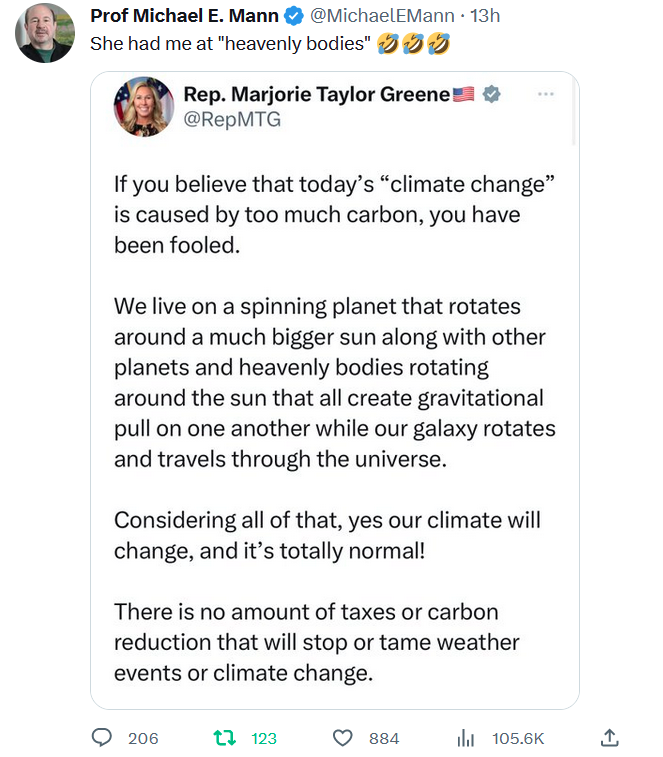
McKibben is not one to use hyperbole. He must realize the downside of doing so. In social media, instead of seeing McKibben’s work promoted, the right-wing spokesmodel for all things cultural was getting attention. Even climatologist and geophysicist Michael Mann snarked about the Georgia congresswoman’s comments.

It is getting difficult to follow the scientific discussion of the climate crisis. Partly, major news media find it too dull a subject for headlines. Partly, the right-wing media noise machine drowns out serious topics in public discourse. Yet we notice temperature anomalies when they happen, and wonder for how long we can go on the way we are.

While we wonder, we’ll need onions, apples and spinach.

Categories
Living in Society

Stormy Weather

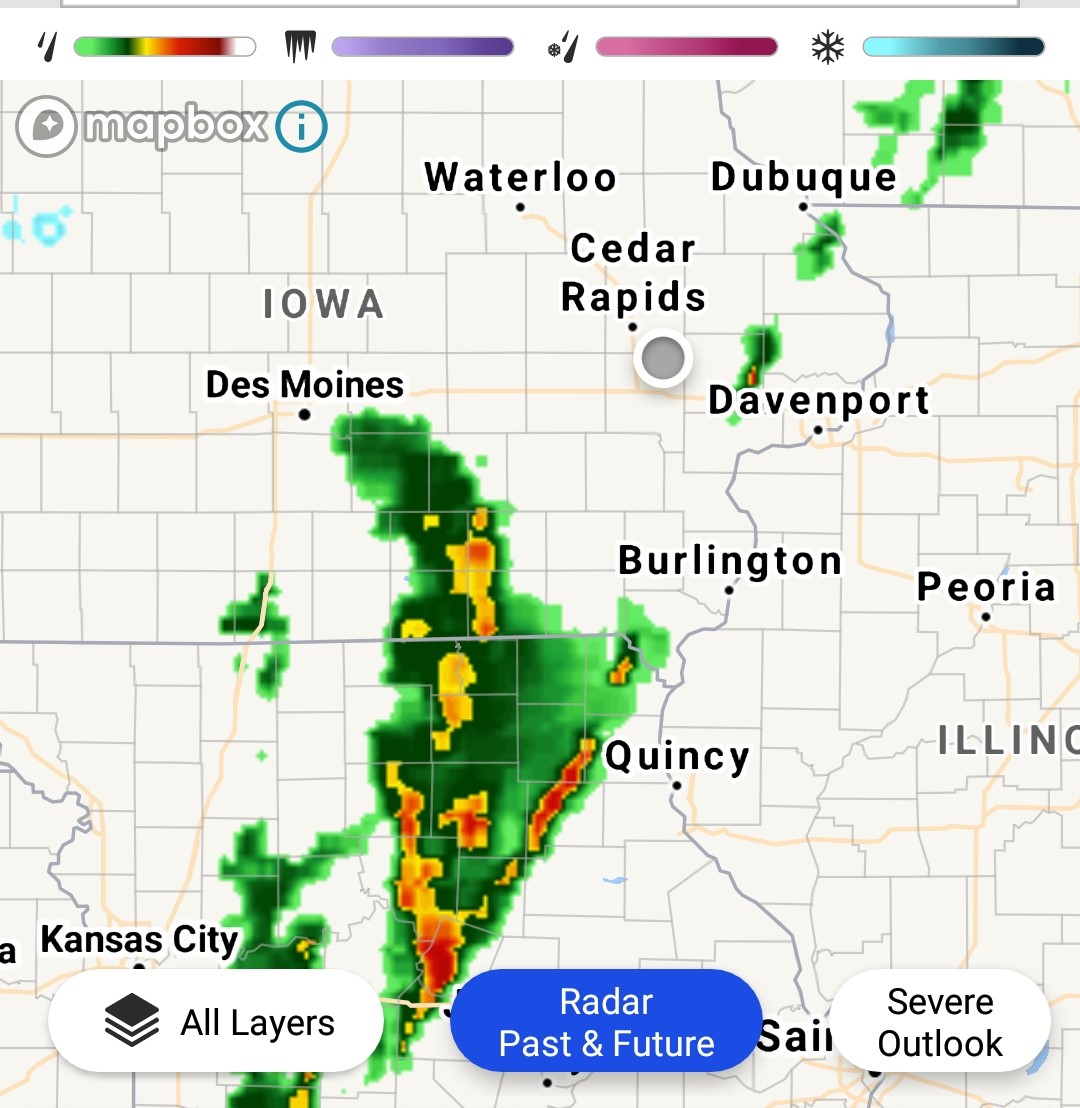
Screenshot of weather forecast on April 4, 2023.

Iowa Valley Habitat for Humanity reported their warehouse in Iowa City was destroyed by a tornado. They sent this email yesterday:

As a result of the March 31 storms that brought tornadoes through towns across Eastern Iowa, our 5,760 square foot warehouse used as the main storage space for our construction tools, supplies, materials, safety equipment, vehicles, trailers – everything necessary to build and repair homes – is a total loss. At this time, we have no plans to stop building and improving homes, especially now that our neighbors impacted by the storms are in need of home repairs. To continue this critical work without interruption in our services, IVHFH is looking to the support of the Iowa Valley community to raise funds and rebuild the Habitat warehouse.

Habitat for Humanity is an organization full of good people and volunteers doing good work. I volunteered on a couple of projects and the spirit of teamwork is infectious. If you can help them, they made a website to donate or volunteer here.

Even though the main lines of storms blew through here during the last five days, we were unscathed.

My first weather learning experience was in the military. When traveling around West Germany in formations of armored, tracked vehicles, both current and forecast weather mattered a lot to operations. Weather reports came down from on high, although from how far up the chain of command, I’m not sure. I remember being near Baumholder, in a tent on a hill, with 20 degree below zero ambient temperatures. The S-2 intelligence officer cradled a telephone receiver in a machine that wrote a facsimile of weather maps on a roll of thermal paper. Mostly, we were interested in precipitation forecasts before maneuvers.

Ever since, I tried to learn about weather forecasting in a basic human way.

The amount and types of free weather information available today is remarkable. It is also easy to use. Once one understands prevailing wind direction and how to read a radar map, it is relatively easy to plan around storms. The more I look at actual weather and compare it to radar, I gain a sense of how the large bodies of water around us impact storms. This is particularly useful when a storm is coming and the lawn needs mowing. A few clicks of a mouse on the computer screen and a person will have a good idea whether an hour’s outdoors work can be finished before rain falls. It’s a great feeling to see the first raindrops just as mowing is finished and I’m heading for the garage.

We have a safe place on the lower level of our home where multiple load-bearing walls intersect. When a big storm is coming, we move a chair there and bring a laptop to follow the storm. We don’t have a permanent space, like a storm cellar and don’t need one.

If you can spare some change, I hope you will help Habitat for Humanity rebuild their warehouse. Here’s the link.

Categories
Environment

Getting Beyond Coal

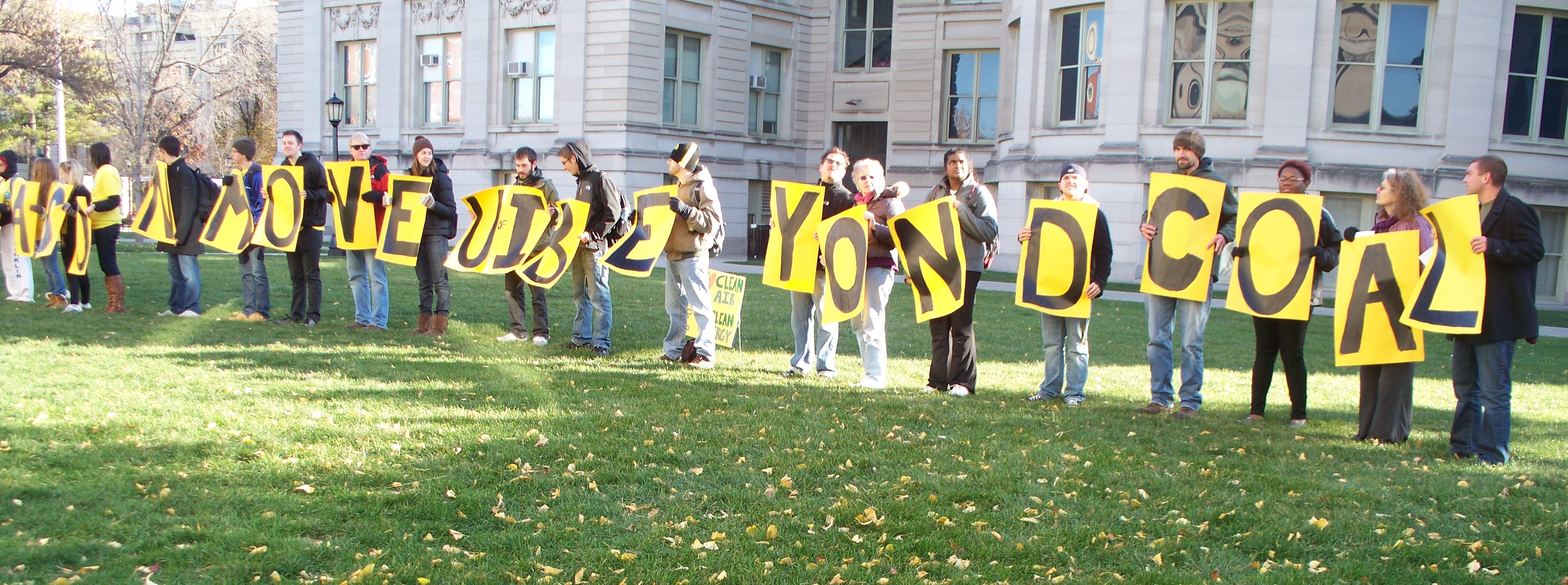
Move UI Beyond Coal, near Jessup Hall on the University of Iowa Pentacrest. Photo by the Author on Nov. 16, 2011.

In 2019, the University of Iowa signed a 50-year contract for a consortium of private companies to operate their coal-fired power plant and more. They should have phased out the coal plant and initiated a plan to transition to alternatives to provide the electricity and steam required. No one was listening to any of the advocates for shuttering the plant. They hadn’t been listening for years. It was an inside deal in an increasingly less than transparent state government.

In return for a $1.2 billion cash payment to fund an endowment, the university assumed different responsibilities regarding the facility. The consortium attorneys contend they didn’t understand their role and did not meet contractual obligations, according to the lawsuit. For Pete’s sake, not even three years in and there is a lawsuit? Shaking my head.

In November 2011, there was a demonstration at Jessup Hall on the University of Iowa Pentacrest urging then president Sally Mason to cease operation of the coal-fired power plant. We delivered a petition to her office. There were speeches on the steps of Jessup Hall. I gave a speech, among others.

Our deeds that day fell on deaf ears.

I remember when mass mobilizations and demonstrations could accomplish positive things in society. The best example was in 1974 when we drove Richard Nixon to resign from office as president. Those days are no more.

Instead of making social progress, big money politics of a wealthy consortium wielded their power to make more money. Filing a lawsuit is just part of the deal, even if the details over which they are suing should have been clarified well before a signature was inked.

Because the state, and the board of regents, is involved, taxpayers will ultimately pay for the suit. That’s not the future we had hoped for when we advocated for the University of Iowa to go beyond coal.

Categories
Environment

Climate Slog Begins

Sky during a January tornado warning. Two tornadoes touched down in Iowa County, the first winter tornadoes in 56 years.

There is a lot of climate-related stuff going on in Iowa. The presumption that made Iowa an agricultural center is there would be enough naturally occurring rain in the growing season to support our major crops of corn, soybeans, and hay. I’m not sure where winter tornadoes fit in. On Jan. 16, two tornadoes were sighted near Williamsburg, Iowa, the first winter tornadoes in 56 years.

There is an ongoing drought about which some local buddies and I talked on Tuesday. Our discussion centered around good yields with drought resistant seeds, pivot irrigation rigs found near Marengo, and the need to protect the Silurian aquifer where our village well draws its water. We shouldn’t want to become like western Nebraska where they are drawing down the Ogallala aquifer. Things appear to be akilter as far as atmospheric moisture and precipitation goes. Corn and beans won’t grow without rain.

It is important for our government get involved with mitigating the effects of climate change. Doing something significant is beyond the power of a single citizen or community. I wrote our U.S. House Representative this week to encourage what she’s doing already.

Congratulations on being assigned to the Committee on Energy and Commerce and for providing some history of the committee’s work in your last newsletter.

I’m writing today to encourage your work on the House Conservative Climate Caucus. I also note your participation at COP 26 and COP 27. Thank you for engaging in one of the most important issues facing our society.

While you and I may not always agree on how to approach climate solutions, I believe the science will out. If anything, you have repeated you believe in science-based solutions. I agree with that wholeheartedly.

Good luck in the 118th Congress. I’ll write again if I have any more specific requests.

Thank you for the opportunity to provide feedback.

Email to Congresswoman Mariannette Miller-Meeks on Jan. 16, 2023.

If I hear back, I’ll post the response here. I’m not hopeful she or her office will respond, as they did not respond to my last email in 2022.

With Republicans assuming the reins of government in Iowa, everything about addressing the climate crisis will be a slog. Because political work to gain more climate friendly representation during the last three cycles proved futile, we have to make do what what we have. That means staying in tune with what’s going on in the atmosphere and spreading the word as it is revealed. It will not be super-sexy work, yet it is what is needed and climate action takes a back seat to tax cuts for the wealthy.

I have confidence we’ll slog through it no matter how difficult.

Categories
Environment

Eschewing Avocados

Avocado from Mexico.

It is my minority opinion that avocados should be avoided in the United States. Don’t buy them, don’t eat them. The fruit has become popular, and because of it, Mexican growers can’t keep up with demand. This creates a problem.

To meet surging demand in the U.S., farmers in Mexico have cut down swaths of forest in the western state of Michoacán, one of the most important ecosystems in the country. By some estimates, as many as 20,000 acres of forest — the area of more than 15,000 American football fields — are cut down each year and replaced with avocado plantations. The rapid expansion of orchards will threaten forests in Mexico for years to come.

The bad news about your avocado habit by Benji Jones, Vox, Feb. 13, 2022.

Dishes like guacamole, avocado toast and smoothies taste delicious. Refined oil from the fruit is popular among foodies and nutritionists because of its unsaturated fats. By one estimate, sports fans eat through 105 million pounds of avocados on Super Bowl Sunday. The deforestation problem is directly related to such consumer demand.

The immediate catalyst for this post was a project to reduce my cookbook collection. I found many recipes for guacamole and felt we needed a reminder to moderate consumption and address the deforestation their popularity causes. I can hear long-time readers asking, “Didn’t you cover this before?” Yes, I did in the post titled, “Can Hipsters Stomach the Truth about Avocados from Mexico?” Not much has changed.

What can consumers do about deforestation which creates high-margin avocado plantations? Solutions are complicated. Ecosystem Marketplace outlines some of the challenges here. In the meanwhile, go light on the guacamole and avocado toast, and find another oil for cooking.

It is something we can do to contribute to efforts to solve the climate crisis.

Categories
Living in Society

Radio in the Hinterlands

Field corn.

When a person lives in Iowa it is hard to avoid noticing the harvest.

74 percent of Iowa soybeans and 38 percent of corn had been harvested as of Oct. 17. We are running a few days ahead of historical averages because it has been exceedingly dry. The entire state is experiencing drought conditions. I held off burning the brush pile because there is a Red Flag Warning, which means extreme fire conditions combined with high wind and low relative humidity. Everything is parched.

As I write this post on a Saturday afternoon, the ambient temperature is 78 degrees with a high of 82 expected in a couple of hours. The average high temperature here is 61 degrees in October. For Oct. 22, it is warm. One needn’t be a scientist to understand something is going on.

On Thursday I delivered my spouse to her sister’s place in Des Moines. We had a lot to talk about as we passed fields with farmers harvesting corn and beans. Between Williamsburg and Altoona, Interstate 80 is a hinterland of row crops, wind turbines and the detritus of retail establishments grown up to service a few locals, but mostly travelers. Towns and cities are hidden from sight.

On the way back, I turned on the car radio and began searching for channels. I avoided the religious stations and settled on a couple of country music and classic rock programs to help me make it back within range of my usual ones. From the ads, it became clear that Republicans dominate rural Iowa.

Governor Kim Reynolds has a substantial campaign war chest and attorney general candidate Brenna Bird just got a major donation from the Republican Attorneys General Association to defeat incumbent Tom Miller. These two Republicans have money to burn on their campaigns. The radio ads repeated during my trip. Whether any farmers were listening while running the combines and grain wagons, I don’t know. Republican messaging filled the vacuum left by Democrats.

To be effective, radio advertising must exist and be repetitive. In the Iowa hinterlands, it is the domain of statewide candidates and big money. Tom Miller was unlikely planning to spend millions on his campaign. Republicans are trying to buy an attorney general.

Our gubernatorial candidate, Deidre DeJear, simply doesn’t have the money for radio advertising even though it is cheap. My worry is her television advertising goes dark as we enter the last two weeks of the campaign, leaving Republicans the only voices heard there as well. During the primary, another Democratic candidate for governor dropped out of the race because he couldn’t get a meeting with major Democratic donors.

As the miles fell behind me the ads repeated. Running down President Biden and associating the Democratic candidates with him because of his unpopularity. Every sentence repeated was a pack of lies. When it is the only political voice rural people hear, it’s hard to stand up to it.

The election is in 17 days. Whatever the outcome, we have to do better to dig out of the hole we dug for ourselves. It’s possible, yet without the rural areas, I’m not sure how that happens.

Categories
Environment

Environmental Round Up – It’s Getting Hotter

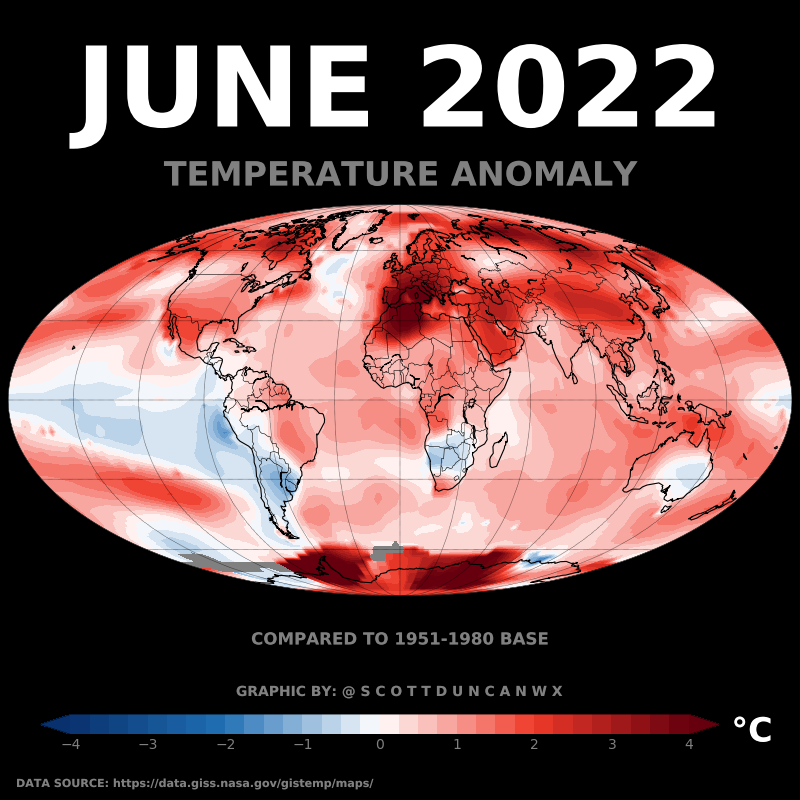
I’ve written about the environment on Blog for Iowa since my first post on Feb. 25, 2009. Never in the time since then has there been more happening regarding degradation of our environment. As Scott Duncan’s graphic above indicates, it is getting a lot hotter on most parts of Earth. Methane and carbon dioxide emissions are rising, the oceans are getting warmer, ice sheets at the poles are melting, and there is a general lack of political will in the United States and elsewhere to do enough reverse our course.

More than 40 percent of U.S. population lived in counties affected by climate disasters in 2021, according to Sarah Kaplan and Andrew Ba Tran of the Washington Post. In a report issued June 27, Kayrros, a firm that analyzes satellite data, said methane emissions have climbed despite the launch of the Global Methane Pledge at the U.N. climate conference in Glasgow, Scotland, last fall. The firm said that “global methane emissions so far appear to be going in the wrong direction.”

“Sadly, we have taken the ocean for granted, and today we face what I would call an ocean emergency,” U.N. Secretary General António Guterres told delegates at the June opening of the United Nations Ocean Conference in Lisbon, Portugal. “We must turn the tide. A healthy and productive ocean is vital to our shared future.”

Despite substantial evidence of environmental degradation that affects human life and society, President Biden’s plan to address the climate crisis fell flat in the Congress because there were not enough votes to pass it with a divided U.S. Senate.

“The reality we face implores us to act,” Al Gore said.

In Iowa we tinker around the edges of addressing the climate crisis. Decisions like the one I wrote about in 2009, which stopped Interstate Power and Light from building a coal-fired electricity generating station in Marshalltown, have been driven by economic factors rather than any concern about the environment. “You don’t like coal? Fine! We’ll use natural gas which is cheaper anyway,” they might have said. Neither the government nor industry in Iowa takes action on the climate crisis unless there is a positive, monetary effect on someone’s bottom line. Human health and well being has been a secondary consideration despite the warnings of public health officials like I was back in the day.

A lot of Iowa environmental activist bandwidth is being taken up by the fight to stop three different Carbon Capture and Storage proposals. Art Cullen cut to the chase in a July 15 editorial in the Storm Lake Times, saying, “The pipelines will get buried. The Iowa rainmakers will get theirs as we pretend that we are addressing the planet being on fire.” It is hard to give up on the fight against CO2 pipelines, even if it plays out like some of the other transportation proposals to take oil, electricity, liquefied CO2, or other commodities across county lines.

What is a climate activist to do? I would start by learning about big scale solutions and getting involved in electing candidates willing to take action on them. I reviewed The Decarbonization Imperative: Transforming the Global Economy by 2050 by Michael Lenox and Rebecca Duff here. It’s a good place to start. A couple of things seem clear. Individual action is unlikely to solve the climate crisis. Large scale solutions take technical skill to design and political will to implement.

I recommend readers become part of the solution to the climate crisis by getting involved in efforts to implement large scale environmental projects. In most cases, that begins at the ballot box with voting for candidates willing to do the work.

~ First published on Blog for Iowa

Categories
Environment

Crops in Northwest Iowa Suffer Due to Drought

Photo credit: Josie Taylor | July 6, 2022.

Ten years ago I posted about the impact of the 2012 drought on Iowa agriculture. Read the post here, yet the crux of the article was climate change was absent from public discussion of the drought. Nothing has changed since then.

Drought conditions continue to affect Iowa crops. Josie Taylor with Iowa Environmental Focus writes about how the current drought impacts crops in Northwest Iowa:

“Corn and soybean plants are continuing to suffer in some parts of Iowa from excessive heat and drought,” she wrote. “This has been seen especially in far northwest Iowa where drought conditions are worsening. Large areas of Plymouth and Woodbury counties are in extreme drought, according to the U.S. Drought Monitor.”

Read the entire article here.

Isn’t it time, ten years later, we acknowledged the 800-pound gorilla in the room? Climate change is real and Iowa agriculture won’t discuss solutions to it. We are running out of time to address the climate crisis before it is too late.

Learn more about The Climate Reality Project and how you can get involved in solving the climate crisis by clicking this link: https://www.climaterealityproject.org.

If Iowa agriculture won’t take action to mitigate the effects of climate change on their primary industry, the rest of us must.

~ First posted on Blog for Iowa

Categories
Environment

Earth Day Has Been a Bust

Earthrise by Bill Anders, Dec. 24, 1968

In retrospect, Earth Day has been a bust. It turned into an annual reminder among privileged Americans to do something about environmental degradation. It became a do-nothing tradition that had little material impact on the environment.

It would have been better to pursue social justice, elimination of poverty, or equal protection under the law, right from the beginning. All paths would lead to improving the environment regardless of the starting point.

Charles C. Mann wrote about the elitist nature of Earth Day in his book The Wizard and the Prophet: Two Remarkable Scientists and Their Dueling Visions to Shape Tomorrow’s World:

So ineradicable was the elitist mark on conservation that for decades afterward many on the left scoffed at ecological issues as right-wing distractions. As late as 1970, the radical Students for a Democratic Society protested the first Earth Day as Wall Street flimflam meant to divert public attention from class warfare and the Vietnam War; the left-wing journalist I.F. Stone called the nationwide marches a “snow job.”

The Wizard and the Prophet: Two Remarkable Scientists and Their Dueling Visions to Shape Tomorrow’s World by Charles C. Mann, page 81.

As data from the Mauna Loa Observatory in Hawaii indicates, carbon dioxide concentrations in the atmosphere continue to increase. The latest reading was yesterday at 420.25 ppm. We may not have understood the significance of such a small part of Earth’s atmosphere on the first Earth Day, but we do now and the numbers continue to roll upward at what can be described as a steady pace. It is as if the environmental movement accomplished nothing.

Screen capture from The Keeling Curve website.

A climate crisis is happening in plain view. The folks at The Dark Mountain Project described it like this in their April newsletter:

The climate disaster unfolding around us is itself a convergence between the breakdown of ancient organic matter and modern industrial ambition, technology, greed and carelessness, a calamitous meeting of worlds. 

Email from The Dark Mountain Project, April 15, 2022.

However one describes the climate crisis, part of our problem in taking action to remediate it is we don’t have the intellectual skills to understand environmental degradation or what actions would be effective in reversing it. Likewise, current society has limited functioning methods to take action without a calamitous incident precipitating a need big enough to gain political consensus.

When in 1985 the scientific journal Nature revealed that over Antarctica, a hole in the ozone layer had formed, exposing humans to the sun’s cancer-causing ultraviolet rays, reactions were mixed.

At the time, President Ronald Reagan was in the White House. Environmental policy hadn’t been a priority for him and his advisers, who were more focused on fighting the creep of Cold War communism or federal involvement in issues they believed the states should handle. Even the revelation of the ozone hole didn’t change things–or at least not right away. In fact… Reagan’s Secretary of the Interior Donald Hodel was ridiculed in the press for reportedly saying in a meeting that an international treaty wasn’t necessary to address the damage and that Americans should just put on sunscreen and wear hats.

Reagan Administration Officials at First Dismissed the Ozone Hole. Here’s What Changed by Olivia B. Waxman. Time Magazine, April 10, 2019.

As we know now, the Montreal Protocol, the first-ever global treaty to reduce pollution and phase out chlorofluorocarbons, gained Reagan’s support and was agreed in 1987. The U.S. Senate ratified the treaty unanimously the following year. Our current political environment has degraded to a point where such common-sense action is no longer possible.

Bill Anders’ Earthrise photograph reminds us of Earth’s suspension in the vast darkness of the universe. We are unique, and dependent on each other on this our only home. For complex reasons, we understand the risks of further environmental degradation and the warming of the atmosphere. We have been unwilling to take adequate action and Earth Day isn’t helping.