Categories
Environment

Dry Spring In Iowa

It is abnormally dry in our part of Iowa. Just as we are needing rain, we are not getting it. A home gardener can irrigate new trees, fruits and vegetables, but the massive scale required to hydrate Iowa’s main commodity crops and livestock is not available. Creating the infrastructure to pump water from ancient aquifers is doable, yet an unsustainable practice. It seems like we are heading into a drought. (The map is from the state climatology website which provides data about precipitation, temperature and other aspects of the climate).

Iowans are familiar with drought. In the 2012 drought corn yield per harvested acre was 123.1 bushels compared to the average of the seven following years at 170.4 bushels. The drought decreased corn production by 27.8 percent according to USDA numbers.

There is a relatively finite amount of water on Earth which cycles through the atmosphere, on land, and in the oceans. Some of it rests in deep underground aquifers where it has been since prehistoric times. An increasingly warm climate impacts how water cycles and it is getting hotter. “Earth’s global average surface temperature in 2020 tied with 2016 as the warmest year on record,” according to an analysis by NASA. The oceans are getting warmer too.

Rising air and water temperatures and changes in precipitation are intensifying droughts, increasing heavy downpours, reducing snowpack, and causing declines in surface water quality, with varying impacts across regions. Future warming will add to the stress on water supplies and adversely impact the availability of water in parts of the United States.

Fourth National Climate Assessment.

The problem goes beyond Iowa. The Hoover Dam, located on the Colorado River near the Nevada-Arizona border, is suffering the consequences of drought. Lake Mead, the artificial lake created by the dam, is at a lower water level than was when it was built. The water shortage will impact 25 million people including in the cities of Los Angeles, San Diego, Phoenix, Tucson and Las Vegas.

Farmers are abandoning crops, Nevada is banning the watering of about one-third of the lawn in the Las Vegas area, and the governor of Utah is literally asking people to pray for rain.

Firefighters are facing worsening conditions this summer — after nearly 10,000 fires in California alone during the last wildfire season burned 4.2 million acres (1.7 million hectares), an area nearly as large as Kuwait.

Reuters, June 10, 2021

Water in California’s Lake Oroville will fall so low this summer that its hydroelectric power plant may be forced to shut down for the first time.

We must do something more than pray for rain. It begins with recognition.

The Lakota phrase “Mní wičhóni” (“Water is life”) was the protest anthem from Standing Rock heard around the world, but it also has a spiritual meaning rooted in Indigenous world views. For Native Americans, water does not only sustain life, it is sacred.

Bioneers.org

Action to prevent drought must include acknowledging that climate change is real, something Senators Chuck Grassley and Joni Ernst have both done. The next step is addressing the climate crisis through policy and legislation and that’s been the rub. The climate crisis is more complicated than any single policy or law.

Peter Rolnick of Citizen’s Climate Lobby wrote a guest opinion in the Cedar Rapids Gazette on June 15, 2021. He commended the Iowa senators and Rep. Cindy Axne for supporting the bipartisan Growing Climate Solutions Act. If passed, the law would engage farmers in storing more carbon in our soil instead of emitting it into the air in the form of carbon dioxide or methane. The relationship to drought is clear. A molecule of CO2 or methane sequestered in the ground is one that does not get into the atmosphere and increase warming. Even the American Farm Bureau is in favor of this bill, which on its own raises red flags. One bill is not enough.

We need much more in the way of policy and legislation. The Biden administration’s approach of embedding work on climate change in each of the executive branch departments is important. It is up to each of us to encourage those in government to work toward viable climate solutions. There are personal actions we can take to reduce our carbon footprint, yet the most effective action is in the government arena. If constituents don’t remind members of our governing bodies to act on the climate crisis, they seem likely to forget.

We’ll know it when we hit the drought this year. News media has been forthright in reporting it because so many Iowa livelihoods depend upon the weather. When will we wake up to take action to address what is causing the drought? Not soon enough.

Categories
Kitchen Garden

Spring Burn Pile

Spring burn pile April 22, 2021.

Thermal energy came from the pile of white ashes on this year’s tomato patch. It warmed my hands. The embers will exhaust their fuel soon and I’ll spread them on the ground after they cool. Tomatoes will be the last to be planted in a few weeks.

The burn pile was mostly branches from the felled oak tree. Yesterday I cleared three garden plots for spading, tilling, and then planting: more steps on the path to a productive garden.

It looks like Tuesday night’s hard frost killed most of the beets and damaged broccoli, kale and collards. I have plenty of seeds and seedlings for replanting. First we’ll see if the bigger plants recover before yanking them out.

The Washington Post published an article about transportation and the shift to electric vehicles. It gave reasonable consideration to the operating costs of such vehicles, and the trade offs between operating a gasoline powered vehicle and going electric. I found if the car gets parked most of the time, very little gasoline is burned.

Thus far in 2021, I spent $36 on gasoline; in all of 2020, $492; and in 2019, $930. The coronavirus pandemic curtailed our driving and reduced how much gasoline we purchased. Unless one of us returns to working a job, the gasoline we burn for transportation should be minimal.

All the same, the news in the Post article about the inefficiency of internal combustion engines was eye-opening.

Most internal combustion engine cars are so inefficient that the vast majority of energy produced by burning gas gets lost as heat or wasted overcoming friction from the air and road. In other words, instead of filling my car’s 16.6-gallon tank, I might as well put 14 gallons of that gas in an oil drum, light it on fire and watch the smoke drift upward.

Washington Post, March 30, 2021.

When you put it that way, of course we’ll look at buying an electric car. We need to stop burning fossil fuels as quickly as we can.

When I burn brush on a garden plot I’m releasing carbon into the atmosphere, along with returning minerals to the soil. However, what I’m doing is already part of the carbon cycle and therefore a renewable process. University of Iowa chemistry professor Betsy Stone explained it to me:

“It’s considered to be a renewable fuel because we have that carbon cycle going on,” Stone said. “With fossil fuels, we’re releasing fossilized carbon. It goes into the atmosphere and takes millions of years to get back to fossilized form again.”

Paul Deaton, Iowa City Press Citizen, Oct. 7, 2015.

I cut the stump of the oak tree tall so I could sit on it while contemplating the garden or needing a rest. Yesterday, while figuring out where to plant things it occurred to me burning brush was a good thing. I also thought we should probably get an electric vehicle.

While the first burn is done, I’ll be sitting on that stump coming up with ideas more often. Some of them will make their way into doing things.

Categories
Environment

Climate Change Response

Bridge over calm, polluted water, April 6, 2021.

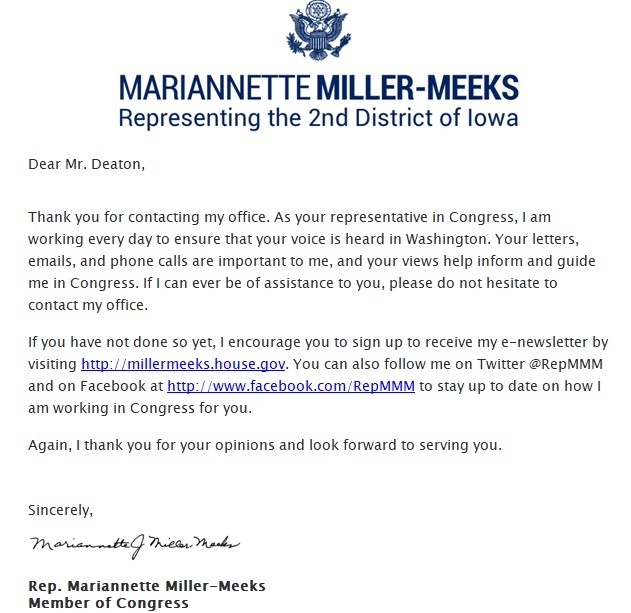
In March I wrote Congresswoman Mariannette Miller-Meeks about the climate crisis as follows:

I hope you will support the efforts of the Biden administration to act to mitigate the effects of our changing climate. Naturally I’m curious about your views on how you might address the effects of climate change while in the U.S. Congress. The approach of the Biden administration regarding mitigation of climate change is such there should be many areas in which to work with them without supporting an overarching environmental bill. I look forward to hearing your policy stances and how you can help address climate change while you are in the Congress. Thank you for your public service.

Here is her unedited response. It is not what I expected.

Received April 19, 2021 via email.
Categories
Sustainability

In the Mississippi Basin

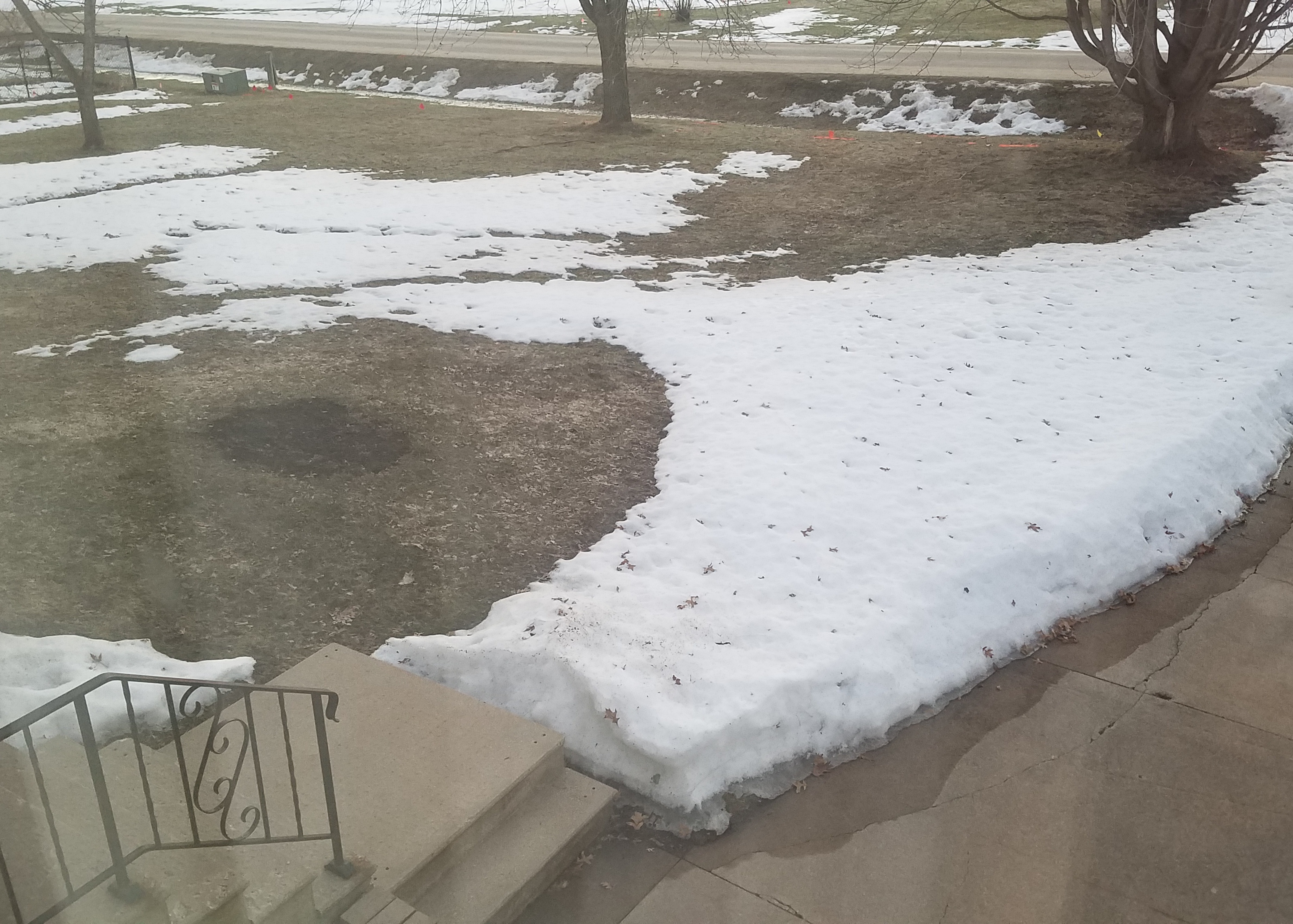
Snow melting March 2, 2021.

Snow melt began running in the ditch yesterday as late winter progresses in Big Grove. I doubt we will get more snow. It’s been pretty dry for the last nine days. The dry, cold weather combined with a substantial snow melt is a cause for concern.

What fraction of the snow melt leaves our property is bound for the state park lake a little more than a hundred yards away, then to the Iowa River which is a tributary to the Mississippi River.

The Mississippi River’s drainage basin is the third largest in the world, exceeded in area only by the Amazon’s and the Congo’s. It stretches over 1.2 million square miles and encompasses 31 states and slices of two Canadian provinces.

Under a White Sky: The Nature of the Future by Elizabeth Kolbert.

In 1966 I kept a scrapbook of newspaper clippings as an eighth grade project. Late winter, beginning in February that year, an ice jam hit the Quad-Cities area, resulting in flooding.

Unprecedented in size and steadily growing larger, a seven-mile-long “glacier” of ice is, like a giant cork, plugging the main channel of the Mississippi River from Credit Island to Buffalo.

Quad-City Times, Feb. 20, 1966.

My comparison of the ice jam was with the 1965 Mississippi River flood, one of the worst in Iowa history.

The great flood of 1965 on the Mississippi River, along the eastern border of the State, exceeded any flood known in 139 years. It caused damages probably in excess of ten millions of dollars in the State of Iowa. … The underlying cause of the flood was an abnormally cold winter which prevented the melting of an excessive snow cover in the upper reaches of the basin. Heavy rains late in March followed by rapid melting triggered the runoff which caused the floods.

The 1965 Mississippi River Flood in Iowa by Harlan H. Schwob and Richard E. Myers, United States Geological Survey, October 1965,

We are in that scenario — a cold winter which prevented snow melt the first two months of the year — at least until now. If the weather remains dry, the Mississippi may not flood downstream. If we get rain, there could be record flooding. Here’s hoping rain holds off until the snow melts. I say this despite the drought parts of Iowa have experienced this winter.

The 1965 and 1966 flooding formed my outlook about floods and how they happen. It is important to note the City of Davenport chose to do nothing to prevent the levee from flooding after these floods. City officials said it was to preserve the look of the levee, which later became the home of a jazz festival celebrating native son Bix Beiderbecke. Annual flooding and the damage it caused was acceptable in favor of aesthetics. At the time of the decision, the Quad-Cities was under economic pressure because businesses were curtailing manufacturing there. The economic boost of Bix made a difference, they said.

I visited the confluence of the Missouri and Mississippi Rivers near Saint Louis with an eighth grade classmate some years ago. It’s a lot of water, as far as one can see. The idea there is an engineering solution to tame the Mississippi basin seemed preposterous when standing at water level and seeing the vast mixing of the two differently colored rivers. I doubt it can be done, especially with the unpredictable nature of climate change and how it is changing the hydrology of the Mississippi basin. The massive engineering projects to control the river in the Mississippi delta have made it a kind of hybrid human-nature phenomenon as Kolbert describes in her book.

A lot has happened (since 1989) to complicate the meaning of “control,” not to mention “nature.” The Louisiana delta is now referred to by hydrologists as a “coupled human and natural system,” or for short, CHANS. It’s an ugly term — another nomenclature hairball — but there’s no simple way to talk about the tangle we’ve created.

Under a White Sky: The Nature of the Future by Elizabeth Kolbert

The river will eventual prevail in the Mississippi delta, despite humans’ best efforts, it’s easy to predict.

Each spring I think of our connection to the river and our place in the Mississippi basin. Ours may be a small role, yet it serves as another way we are connected to the rest of the world. As I contemplate working outdoors today, it is difficult to forget how powerless humans are against what’s left of the natural world.

Categories
Environment

Warm January

Open water on the driveway, Jan. 31, 2021.

This winter is shaping up to be a scary one. There has not been a substantial cold snap where the ambient temperature remains below zero for a week or more. We need that to suppress the insects living in the ground that feed on our plant life in the garden and yard when it gets warmer. Cold weather is also the best time to prune fruit trees.

It’s no surprise it’s getting warmer.

Atmospheric CO2 concentration hit 413.95 ppm at the Mauna Loa Observatory in Hawaii in December 2020. In my birth year of 1951 the global average was 311.80. There is a direct correlation between atmospheric CO2 and planetary warming. Our best hope is it’s not too late to mitigate rising CO2 levels.

According to NASA, 2020 tied 2016 as the warmest year on record in global average surface temperature. According to this chart, the rise in global surface temperature is in an accelerating upward trend since the baseline period of 1951-1980.

In the general election of 2020, Americans took a necessary step toward climate action by electing Joe Biden and Kamala Harris, the president and vice president willing to examine and understand the science of climate change and take action. Because Biden served as Barack Obama’s vice president, he knows what to do. It would have been better to elect a stronger majority in the legislative branch of the federal government, yet we didn’t. The majority we have will serve as we can’t wait two years to increase the majority of science believers in the midterms.

The United States rejoined the Paris Agreement within the United Nations Framework Convention on Climate Change. Like the election, it’s a beginning step. The Paris Agreement is flawed, yet it is difficult to see how the world makes progress toward reducing greenhouse gas emissions without the kind of cooperation it envisioned. Our country simply must be part of the discussion.

As a single citizen, or a small family, it is difficult to see how to help. We can and should reduce our personal carbon footprint, especially by doing things that don’t require a lot of capital: use less hot water, set the furnace thermostat lower, run the air conditioner at a higher temperature, use less gasoline and natural gas, eschew air travel and long automobile trips. The coronavirus pandemic kept many of us at home and that had a direct impact on greenhouse gas emissions. Eventually we will learn to live with the coronavirus and when we do, the need to control emissions will remain.

These are scary times. One view is there is nothing to be done about all this. The apocalypse is coming and the best we can do is mitigate its impact on us as individuals. It’s a vision of doomsday preppers, isolated and remote enclaves of the wealthy, and an attitude of preserving self as the catastrophe hits. I reject this view. We are stronger together and together we should remain in mitigating the impact of climate change.

It also seems important to focus on the big picture. Political leadership is required to make progress. For some of us, such leaders won’t be as bold as we want or feel is needed. We can’t relent on our politics.

Iowa has had its recent climate-related difficulties, floods in 1993 and 2008, tornadoes, straight line wind, a derecho, and drought. At the same time row crop yields were decreased due to climate change, as in the 2012 drought, a new, diverse agriculture remains possible because of our growing conditions. Gardeners like me contribute to resolving climate change by growing more of our own food. The process would be scalable if the importance of growing more local food were more generally accepted. We do what we can with local resources and conditions. We could do more.

Scary as it is, we can’t get depressed. It is human nature to be hopeful and hope is one of our most powerful attributes. It is important to be realistic about where we stand on mitigating the effects of greenhouse gases. For the next years, the picture isn’t going to be pretty. We can’t give up. We must persist in the effort to make our communal lives better. That’s what I plan to do.

Categories
Sustainability

This is Our Moment

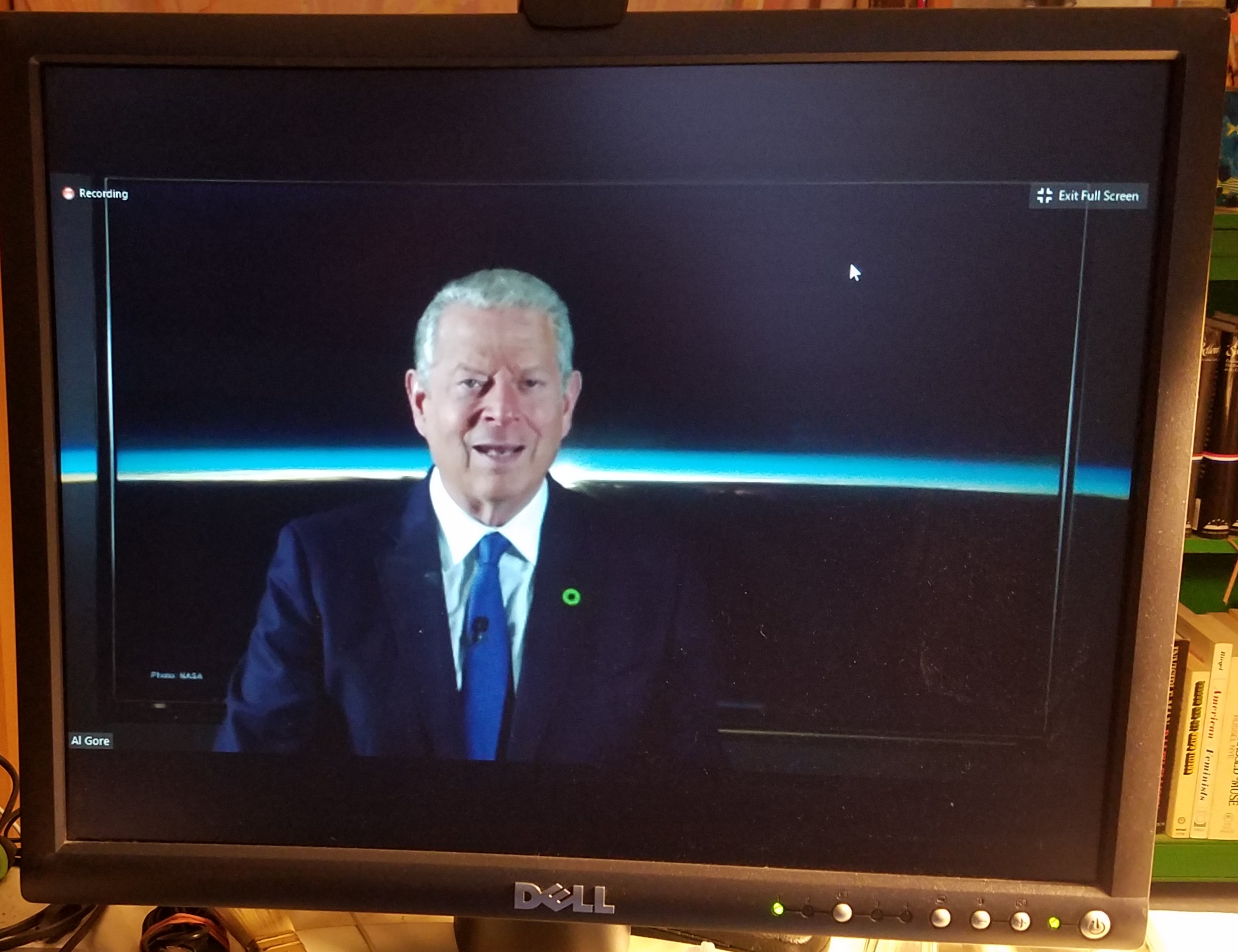
Al Gore via Zoom, Dec. 15, 2020

After the Electoral College vote for president and vice president on Dec. 14, Senate Majority Leader Mitch McConnell publicly congratulated president-elect Joe Biden and vice president-elect Kamala Harris on their win. He noted Harris is the first female vice president-elect, a historic achievement.

In the kabuki dance that is our nation’s capitol, “(McConnell) urged Senate Republicans not to join a long-shot effort led by conservatives in the House to challenge the electoral college results when Congress formally tabulates the vote Jan. 6,” according to the Washington Post. Such an action is doomed to failure as on a straight line party vote it will fail in the U.S. House. Media outlets indicated McConnell wants to avoid such a vote in the Senate.

Former Vice President Al Gore was one of the first world renown environmental leaders to meet with president-elect Donald Trump at Trump Tower in New York after the November 2016 election. The conversation was kept private.

Yesterday, during a 45-minute webinar with members of the Climate Reality Leadership Corps, Gore said, “This is our moment.” The next four years represent an opportunity to address the climate crisis, beginning with the Biden administration’s intent to rejoin the United Nations Framework Convention on Climate Change, better known as the Paris Agreement. Gore had a long to-do list and there truly is a lot to get done to reduce global greenhouse gas emissions. We all must do our part.

McConnell’s announcement and Gore’s speech are the beginning points for a long, difficult journey. Not only does Washington need to recognize scientific truths, we must return to the Obama era practice of embedding climate action in every aspect of the U.S. government. Biden is willing to do so. With the appointment of John Kerry and Gina McCarthy to new roles devoted to addressing the climate crisis, the structural framework is being built.

The Climate Reality Leadership Corps has a number of members across Iowa. The May 2015 training event in Cedar Rapids helped increase our numbers. There are two Iowa chapters of Climate Reality leaders, one in Des Moines, and another in Ames. I joined the Des Moines chapter this morning. Having organized the state for other projects, I’m not sure of the efficacy of developing this chapter, or another in Eastern Iowa, when so many other environmental groups exist in the state. Efforts to pull them together have proven difficult because there is a lack of consensus on priorities. There is also plenty of diverse work to be done. In a society where internet connectivity plays an increasing role, efforts to organize people willing to take action on the climate crisis is energy that should be used to address the climate crisis directly. It is important to be a part of this and other groups. It is more important to focus on the work.

The Sierra Club has a strong presence in Iowa and I support and will work on some of their priorities, such as regulation of companies that seek to pump water from the Jordan Aquifer and ship it out of state. There are other groups as well. In Iowa there are issues that merit our attention. I described them to some long-time friends in an email:

I don’t know what people feel about carbon sequestration as a way to impact greenhouse gas emissions, but it’s all the rage in Iowa. Because it’s all the rage, it is possible, although unlikely, something can be done on it. The danger is it supplants other, more important action that could be taken to reduce GHG emissions.

Another concern is ethanol production. We need a resilient form of agriculture that relies less on making combustible fuel from corn and other biomass. We’ve been at loggerheads for a long time over ethanol yet if we could drive a wedge into this issue in 2021 it would be a positive development.

I don’t know where the University of Iowa is on their blending of biomass with coal, but after numerous attempts, I don’t see any headway in influencing what they do. They should retire the coal plant, and if we could figure out a method or argument to persuade them, that would be a balance between barking up the same tree and a major breakthrough.

Email to Iowa Physicians for Social Responsibility, Dec. 14, 2020.

The elephant in the room is the 2023 Farm Bill. Biden indicated addressing the climate crisis in it is an important priority. While Department of Agriculture secretary-designate Tom Vilsack is known for his alignment with large agricultural interests, and has been no friend to the environment, he is also a good Democratic soldier who will do what Biden asks and who deserves our support as the Farm Bill works its way through the process. Advocates for addressing the climate crisis in Iowa should monitor and devote some bandwidth to the emerging Farm Bill.

Gore waited to make his speech until after the Electoral College vote. We knew what was coming and are ready. There remains a lot to do to address the climate crisis and it will take all hands on deck. This is our moment.

Categories
Sustainability

Going Alone on Climate

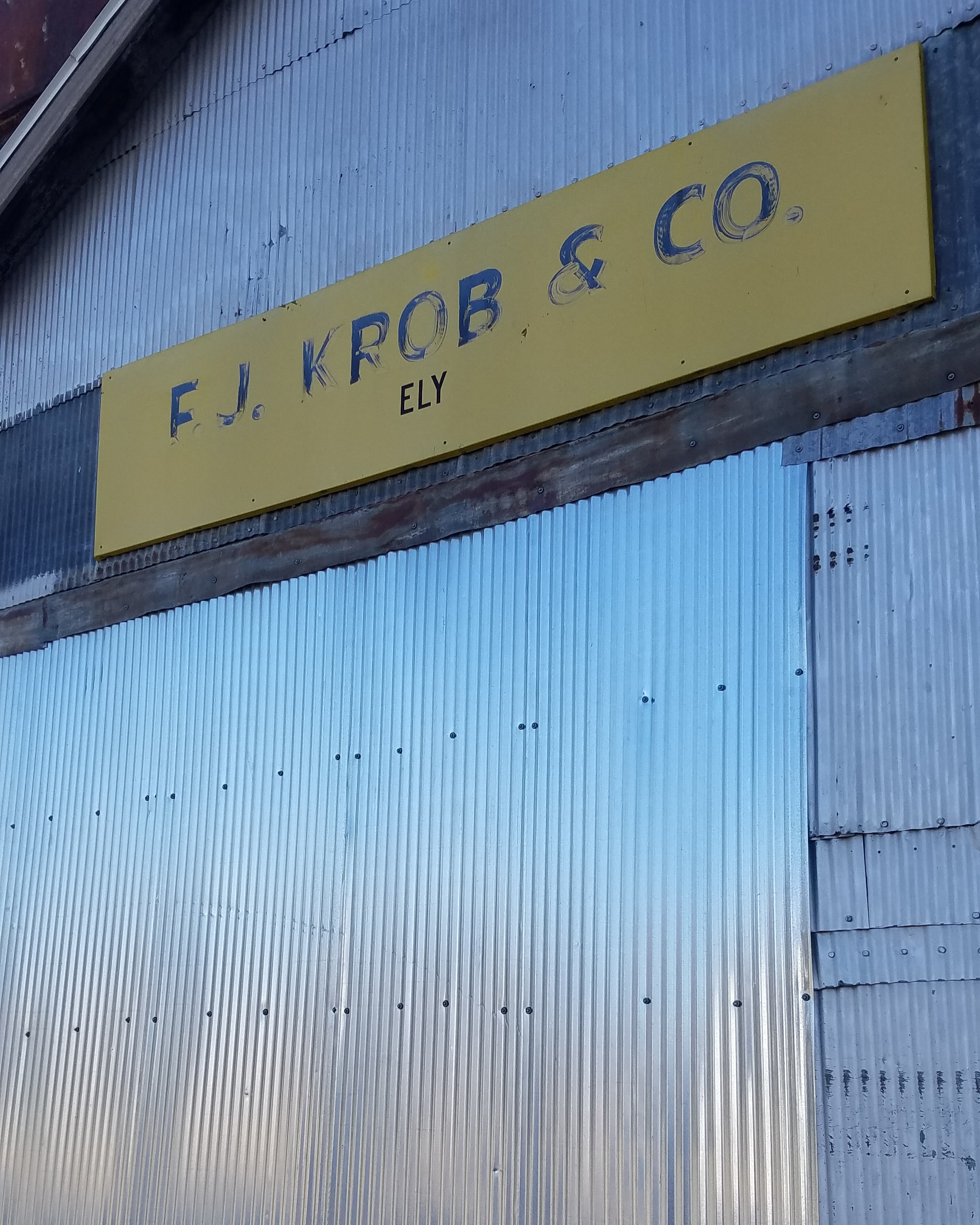
F.J. Krob and Company grain elevator. Ely, Iowa.

The 2020 general election produced a poor result for battling our biggest problems: income inequality, the climate crisis, environmental degradation, racial justice, nuclear weapons proliferation, and the coronavirus pandemic — even with election of a Democratic president. All of these issues are important yet the most significant is acting on the climate crisis.

Yesterday the United States formally exited the United Nations Framework Convention on Climate Change. While waiting for votes to be counted, Candidate Joe Biden said, “Today, the Trump Administration officially left the Paris Climate Agreement. And in exactly 77 days, a Biden Administration will rejoin it.”

German Budestag member Karl Lauterbach noted the results of the American election this morning, saying they set up gridlock in which “Biden hardly gets a law through, least of all in climate protection. Europe has to go alone.”

It’s not possible for any state to successfully go alone.

The failure of Democrats to secure a Senate majority makes the work more difficult. We know what Senate Majority Leader Mitch McConnell will do as we saw him obstruct the legislative goals of the last Democratic administration when Republicans were in both the minority and majority. While the work will be difficult, now that voting is finished, it must begin.

Wednesday morning, Jen O’Malley Dillon, Biden-Harris campaign manager, and Bob Bauer, campaign adviser for voter protection, laid out the path to 270 electoral college votes and Trump efforts to suppress vote counting. After waking up with not enough sleep and in a fog, the information was assuring. Biden won the election and once the votes are counted it should be revealed. Now what?

The clear message from this election is there is too little work being done to move toward consensus on important issues. Of my list above, there is denial that any of them are problems. As if people say, “I’ve got mine, and that’s enough.” While I can devote time to advocacy it means little if I don’t bring others along with me. By “others” I mean people who currently don’t agree with me.

The ambient temperature was 50 degrees so I donned my riding shorts, took the bicycle down from its ceiling hooks, and aired the tires to 90 psi. I rode 13.7-miles to Ely and back to get things going after missing daily exercise on Tuesday while at the polling place. The long, straight stretch of trail from the roundabout to Ely was a chance to get some thinking done. After descending the steep hill beginning at Highway 382, I entered the zone and miles passed quickly. Not sure how much thinking I did, yet the sun and wind felt good as I pedaled and rolled north. A new beginning.

While coalition building begins alone, that’s not how it will end. It’s hard to know who will join. I helped build diverse, successful coalitions before and believe we can do it again. That work begins today.

When Joe Biden said the 2020 election was about “the soul of the nation” he got it right. Who will we be as Americans? For too long our worst impulses have dominated our public life. As a nation, we are better than that.

Abraham Lincoln said in his first inaugural address, “I have no purpose, directly or indirectly, to interfere with the institution of slavery in the States where it exists. I believe I have no lawful right to do so, and I have no inclination to do so.” What we know now is Lincoln signed the Emancipation Proclamation a few years later. Was he being disingenuous? No, clearly not. He did what was needed to bring the Southern states, which had seceded, back into the imperfect union the United States represented since its founding. So it may be with addressing our most significant current challenges going forward.

We don’t want to upset the apple cart of public opinion as represented by the 2020 election results, but we must. It will be complicated and challenging, beginning with the idea going it alone solving society’s problems is no longer an option.

Categories
Kitchen Garden

Temperate

Light and clouds. Oct. 13, 2020

2020 has been a good growing season in Iowa.

Temperatures seemed normal, rain adequate. When there were exceptions, dealing with them was easy and intuitive. Gardeners produced a great crop.

Meanwhile, the arctic is melting, the antarctic too. NOAA reported the third warmest September in the history of record-keeping. Drought and desertification plague many parts of the globe. Hurricanes and typhoons wreck havoc on lives. If the derecho effectively ended our garden production, damaged hundreds of thousands of acres of corn and bean fields, and destroyed half the tree canopy in nearby Cedar Rapids, well that’s a once in a lifetime kind of event… we hope.

A reckoning is coming for how we get our food. California’s Central Valley, which produced one fourth of the nation’s food suffers from drought with limited alternatives for securing water to grow crops. The Central Valley supplies 20 percent of the nation’s groundwater demand and is the second most pumped aquifer system in the U.S. These conditions for farming and food supply are not sustainable.

In March, soon after the governor signed the proclamation of disaster emergency, grocery stores began running out of food. Many people reacted by planting a garden or expanding the one they had. They joined community supported agriculture projects. Since then food supply chains worked to fill most of the shelves. Whether grocery retail sales will return to what they were is an open question. As the coronavirus pandemic continues, it is getting worse in Iowa, causing many to stay home when they can and develop alternatives to how and what they eat.

In Iowa we are blessed with a temperate climate. Converting from row crops to diversified agriculture should be done yet is not as easy as it sounds. Smaller farms require cheap labor to produce vegetables and livestock for niche markets. Mid-sized farms are constantly on the razor’s edge working to maintain profitable and diverse operations while avoiding the burden of large capital investments. Big farmers are stuck in a web of government subsidies, commodity markets, long term capital investments, and changing demand for food.

On March 13 I had lunch at a restaurant and a beer at a bar with my best friend. That was the last time I ate restaurant food or went to a bar. Cooking at home has become the norm, not just for me, but for many. That has an impact on food service companies that supply restaurants, and food processing companies that prepare food for distribution. We lost one of the anchor restaurants on our Main Street in town. There will be more business casualties unless people return to restaurant dining soon. With winter coming and the pandemic getting worse in Iowa, diners seem unlikely to return to restaurants until next spring or summer.

It comes back to Iowa’s temperate climate. It seems clear climate change is changing the way we live. As long as we have a temperate climate here we’ll survive.

In graduate school I interviewed people who survived the great depression. What they did then is what we have to do now: create a home industry that meets more of our needs and relies less on global supply chains that developed since World War II. Self-reliance should come easy for Americans as it was defined early in the history of the republic. What’s needed today is broad adaptation of a self-reliance approach to living.

The Centers for Disease Control and Prevention recommended everyone celebrate Thanksgiving virtually this year to prevent spread of the coronavirus. I suspect many Iowans will meet in person and contribute to spread of a disease that is out of control here. A temperate climate can’t help with that. What we can do is plant a garden, something our environment currently supports.

Categories
Sustainability

Trees Take a Hit

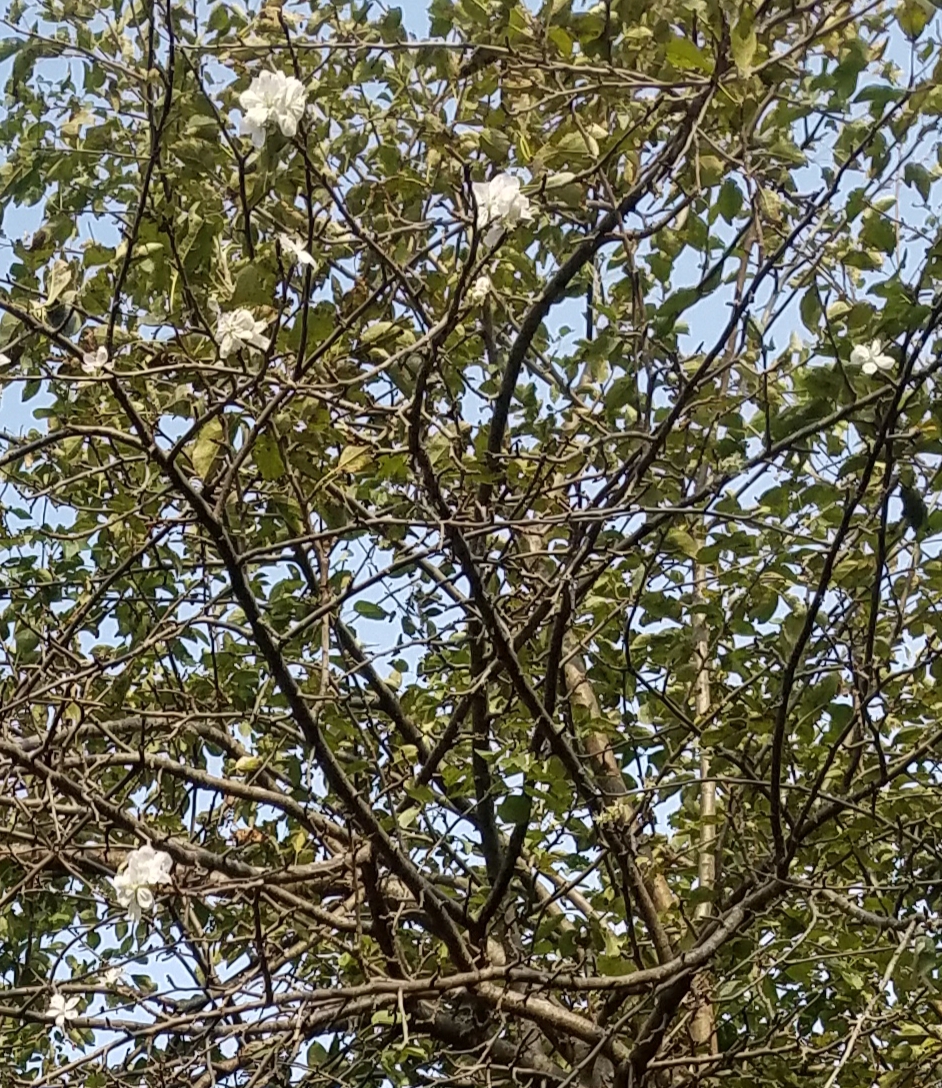
Apple blossoms on Sept. 17, 2020.

2020 is the year trees and shrubs planted in the mid-1990s took a hit.

While mowing for the first time after the Aug. 10 derecho I noticed an Earliblaze apple tree was in bloom. The branches with blooms had otherwise died.

The Red Delicious apple tree lost a major branch during the storm. It seems unlikely to survive, although I might be able to get a crop next year. The scar where the branch was is big. Sealing it from insect predators seems a temporary solution. I had the same experience with a Golden Delicious tree a few years ago. It’s already gone.

One of the lilac bushes suddenly lost all of its leaves. While mowing I noticed new leaves had begun to form. I presume it is next year’s leaves. It’s time to cut that bush out.

Our neighborhood continues to recover from the derecho. Chain saws run almost every day. Burn piles amass, piles of firewood lay everywhere. Although I cleaned up the fallen branches and trees this week, there is more work to be done and sadly it involves a chain saw rather than pruning shears.

Planting a tree is a long-term commitment. When we have a year like 2020 one questions the merit of decades of work when the derecho, combined with disease, mitigates that work so quickly and unexpectedly. I don’t measure my remaining time on this blue-green, turning brown sphere in decades any more. There is enough time to eat apples from new trees I planted this year.

The haze through which the sun shines originated in record-setting fires on the West Coast. The arctic also has a record number of fires. The arctic and antarctic glaciers are melting and don’t get enough snowfall to offset the loss. It is an increasingly hot planet. We are all impacted as the pollution spreads through the atmosphere.

Phase two of my tree work is taking care of many dead branches that cropped up since spring. There is time to work on it. The firewood pile is getting taller though, and isn’t finished growing yet.

Firewood pile Sept. 17, 2020
Categories
Environment

Year of Climate Disaster

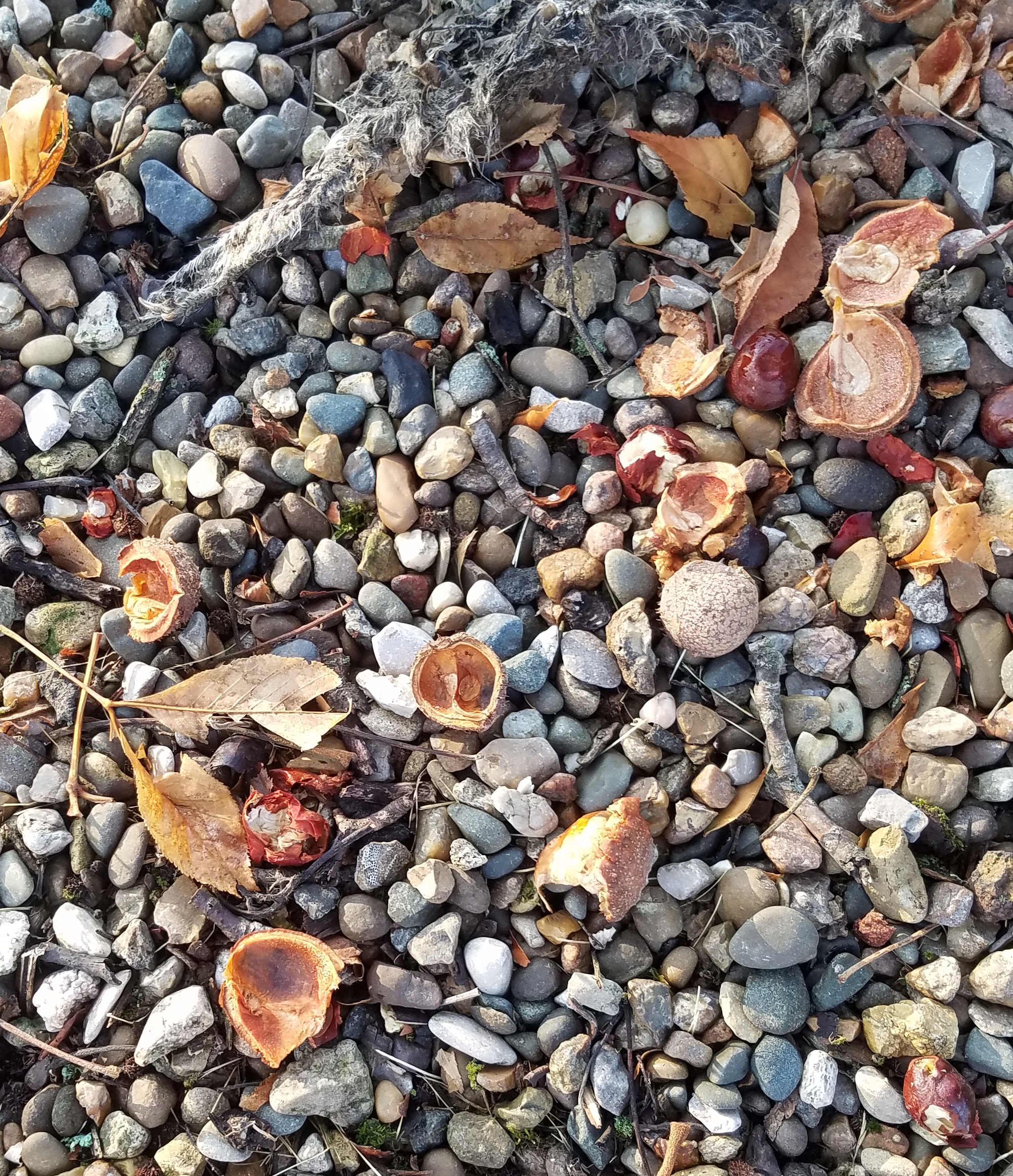
Chestnuts on the ground.

If my posts about the climate crisis have been scarce this year it is because of a decision to focus time on political outcomes.

Under Republican governance needed action to protect the environment and take bold action to reduce the constant stream of inputs that warm the atmosphere and oceans seems unlikely. If anything, Republicans are taking us the wrong direction. I spend time each day working to elect Democrats in hope of a government that will take the climate crisis seriously and address the existential problem.

Weather in Iowa continues to be crazy. There was drought, a derecho, and now a few days of almost continuous rain expected to produce flash flooding. This is what the climate crisis looks like. It is not located in a misty future, it is now.

California fires have already burned 2.2 million acres, more than any year on record according to CBS News. It is only September. Half a million people are evacuating parts of Oregon due to fires there. Hurricane Laura brought devastation to the Louisiana and Texas oil patch. Record high temperatures are being set from Florida to California. If you think this is a new normal, you would be wrong. This is the beginning of a very turbulent period of extreme weather. From here it is expected to get worse.

Our current government makes no pretense about addressing the climate crisis. They are simply not going to do it, consequences be damned. That’s why it is important to change our governance and through the ballot box has been a dependable first effort. If we do elect Joe Biden president with a Democratic House and Senate, our work is only beginning. He and his potential administration must be held accountable to make needed change that positively impacts the environment.

Absentee ballots are to be mailed from county auditors in Iowa beginning Oct. 5. The period from then until Nov. 3 will be one of tracking down ballots. In addition we’ll spend time getting people to register to vote and cast their ballot. That will take most of our time and energy.

The climate crisis is urgently important. Just as a lifeguard sometimes must subdue a drowning victim to save them, so we must focus on the election. There will be time to set priorities after we win at the ballot box. If we don’t win, the priorities become much different and the climate crisis more dire.

We are stronger together and it will take all of us to turn the government around in 2020 and beyond. It is past time to act on the climate crisis.