Categories
Environment

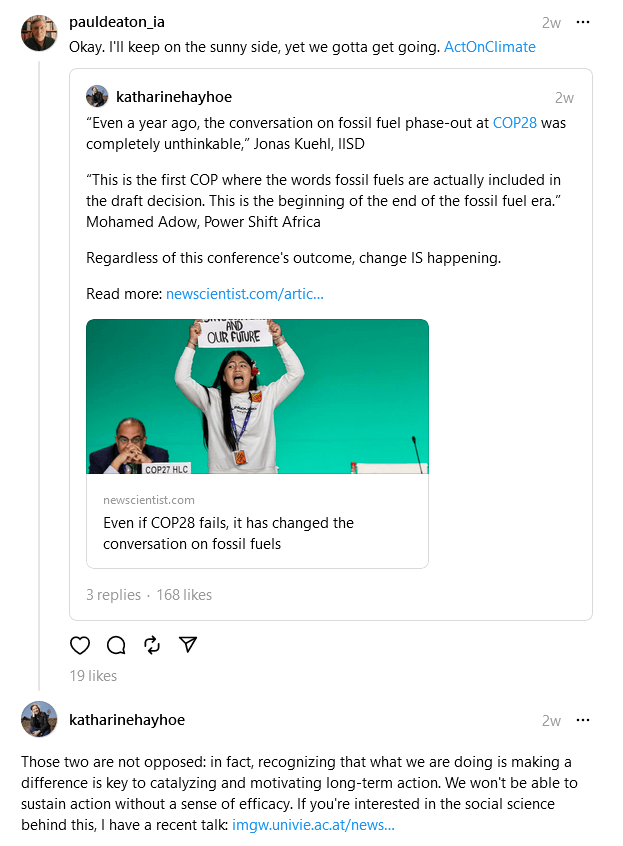
COP 28 and Beyond

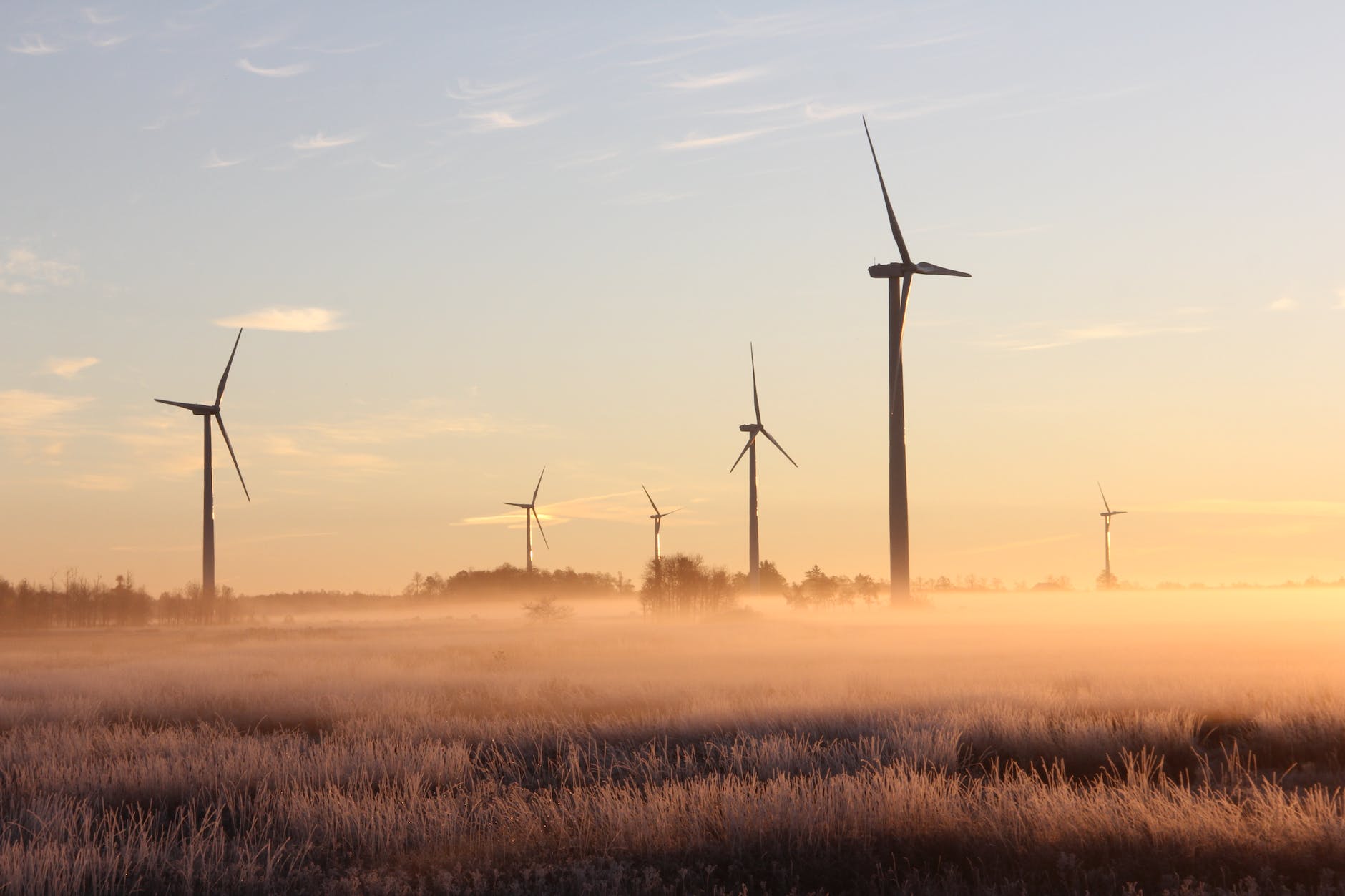
Photo by Laura Penwell on Pexels.com

Ahead of Joe Biden and Xi Jinping’s Nov. 15 meeting at the Asia-Pacific Economic Cooperation conference in San Francisco, the parties pledged to strengthen their cooperation on climate change. The U.S. State Department released a statement detailing areas of agreement. Both presidents pointed to the importance of the upcoming Conference of the Parties (COP 28) that begins Nov. 30, in Dubai, United Arab Emirates.

The luster has gone off the Conference of the Parties, as hundreds of fossil fuel lobbyists participate as delegates to impede progress toward conference goals of eliminating use of fossil fuels. Biden and Jinping’s mentioning COP was important to regenerate interest. Their agreement on climate change was significant, yet hardly noticed in major media.

Members of the Climate Reality Leadership Corps, part of The Climate Reality Project founded by former Vice President Al Gore to address the climate crisis, seeks three outcomes of COP 28.

During a year of record-breaking temperatures and climate disasters, we cannot afford to stay silent. We must ensure that global leaders convening in Dubai hear our demands for an agreement at COP 28 to: 

  1. Phase out fossil fuel emissions and stop funding fossil fuel projects.
  2. Increase funding for climate solutions in countries that need it most.
  3. Reform future COP processes so fossil fuel interests can’t block progress. 
Email from The Climate Reality Project, Nov. 14, 2023.

Fossil fuel interests are fighting any and every advance that leads to a true net-zero economy. My Congresswoman Mariannette Miller-Meeks (R-IA01) has taken the fossil fuel companies’ positions and attended COP 26 and COP 27. In a newsletter earlier this year, she wrote:

Americans have suffered the consequences of reckless and misguided energy policy. From day one of his administration, President Biden has waged an all-out war on American fossil fuel production that has contributed to record inflation and weakened our national security.

Miller-Meeks Weekly Script, April 16, 2023.

Miller-Meeks couldn’t be more wrong. The Washington Post recently called out people like her regarding the so-called war on fossil fuels:

Former vice president Mike Pence framed the issue in one of the presidential debates: “On day one, Joe Biden declared a war on energy, which was no surprise, because when Joe Biden ran for president, he said he was going to end fossil fuels, and they’ve been working overtime to do that ever since.”

It sounds just awful. But I have good news for Republicans: U.S. fossil fuel exploitation is pretty much booming. Here are a few stats from this supposed war’s front lines:

  • After plummeting early in the pandemic, U.S. crude oil production has been climbing and is now back near record highs. That’s according to data released by the U.S. Energy Information Administration. The agency also projects that oil production will hit new all-time highs next year.
  • U.S. natural gas production has also been hovering around record highs.
  • To date, the Biden administration has approved slightly more permits for oil and gas drilling on public lands than the Trump administration had over the same periods of their respective presidencies, according to Texas A&M professor Eric Lewis. (My Post colleague Harry Stevens has previously covered this in depth.)
  • If “energy independence” means exporting more than you import, we’ve achieved it in spades. The United States has been exporting more crude oil and petroleum products than it imports for 22 straight months now, far longer than was the case under Trump.
Washington Post, A ‘war on American energy’? So why is oil production near record highs? by Catherine Rampell, Oct. 3, 2023.

When fossil fuel interests and Republicans who parrot their talking points focus on the so-called war on fossil fuels, it distracts society from pursuing solutions to the climate crisis. There are viable solutions to ridding the world of man-made greenhouse gas emissions caused by burning fossil fuels without compromising our quality of life. They distract us because distraction is a time-tested method of furthering their interests while seeking to avoid blame for causing the the climate crisis.

As society races toward exceeding the 1.5 degree Celsius limit in increasing global temperatures since the pre-industrial era, it seems increasingly evident we will wait until it is too late to take action. While Biden and Xi call our attention to COP 28, it seems doubtful the conference will accomplish what is needed. The United Nations Framework Convention on Climate Change is all we currently have to address the climate crisis as a global society. Individual countries doing so is not enough. We’ll see if delegates get serious this December. I am hopeful they will.

Categories
Environment

It Seems Very Warm

Photo by James Frid on Pexels.com

We’ve lived through the hottest 12 months since record-keeping began. It’s not just me saying this. It’s likely the hottest it’s been in 125,000 years according to scientists quoted by the Washington Post.

It is not a risky thing to say that our planet will pass the tipping point of climate change. With the increased average temperature of Earth passing 1.5 degrees Celsius (2.7 degrees Fahrenheit) above pre-industrial norms, entire ecosystems could be irreversibly damaged or destroyed by global warming. Things won’t be like we know them now. According to the Post article, “nearly 3 in 4 people experienced more than a month’s worth of heat so extreme, it would have been unusual in the past, but became at least three times more likely because of human-caused climate change.”

It seems very warm here in Big Grove. That’s because it is.

This year’s drought has been a humdinger. Crop reports indicate it hasn’t been as bad as 2012 based on corn and soybean yields, yet unless we get rain soon, farmers will be facing a dry spring again. On my daily walks along the lake shore, the culvert that drain the lake watershed still doesn’t have anything in it except cracking chunks of soil like those in the photo above.

The only thing I know is no one person will be the solution to preventing as much irreversible damage as we can. It is too late for that. We can’t get agreement that children should not be slaughtered in Israel or Gaza, for Pete’s sake. There is necessary work to be done here.

Categories
Sustainability

Onion Planting 2023

Onion plot 2023.

It was 64 degrees at 3 a.m. Saturday morning. That’s weird.

A gardener contends with weather, so temperature anomalies come with the work. The vegetables I plant in my Midwestern garden have a wide range of tolerance to climate, moisture and light. They have been bred and propagated because of those qualities.

Potatoes and onions should be safe to plant now, and I did. I direct seeded spinach when putting in the onion sets. Garlic is doing fine after being uncovered from winter. There are many apple and pear blossoms in the early formation stage. Pollinators are already abundant, seeking the early purple flowers and dandelions in the lawn. The greenhouse is packed with seedlings. What could be wrong?

Regardless of weird weather, Spring has arrived and it would be difficult not to feel a part of it. I can see leaves on deciduous trees bud and burst into foliage in front of me. All is well in the garden, or at least as good as it gets.

What will weird weather mean this growing season? I don’t know. I am, however, both concerned, and getting used to it. The overall trend does not look good.

If you aren’t following Bill McKibben on the climate crisis, you likely should be. In yesterday’s edition of his substack, The Crucial Years, he wrote,

This week’s Fort Lauderdale rainstorm was, on the one hand, an utter freak of nature (storms ‘trained’ on the same small geography for hours on end, dropping 25 inches of rain in seven hours; the previous record for all of April was 19 inches) and on the other hand utterly predictable. Every degree Celsius that we warm the planet means the atmosphere holds more water vapor; as native Floridian and ace environmental reporter Dinah Voyles Pulver pointed out, “with temperatures in the Gulf running 3 to 4 degrees above normal recently, that’s at least 15% more rainfall piled up on top of a ‘normal’ storm.”

Get ready for far more of it; there are myriad scattered signs that we’re about to go into a phase of particularly steep climbs in global temperature. They’re likely to reach impressive new global records—and that’s certain to produce havoc we’ve not seen before.

The Crucial Years, We’re in for a stretch of heavy climate by Bill McKibben, April 15, 2023.

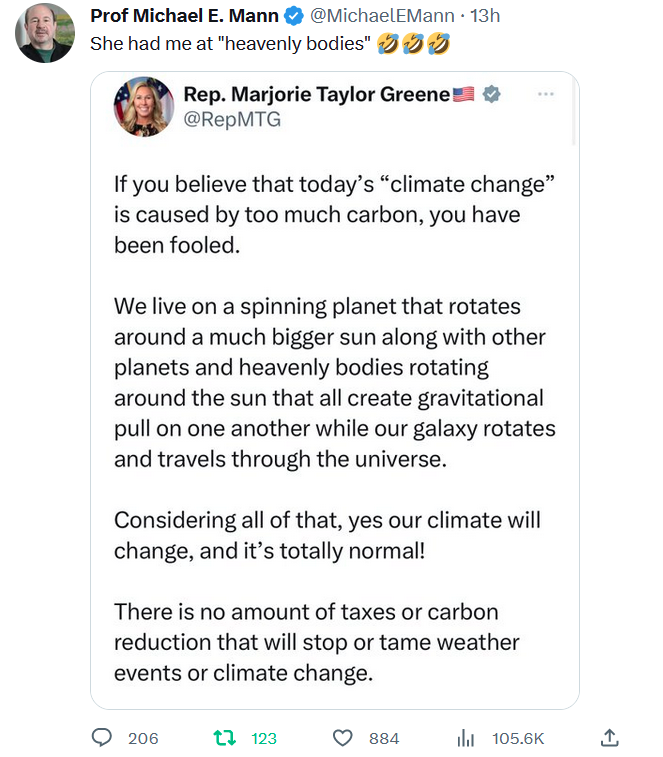
McKibben is not one to use hyperbole. He must realize the downside of doing so. In social media, instead of seeing McKibben’s work promoted, the right-wing spokesmodel for all things cultural was getting attention. Even climatologist and geophysicist Michael Mann snarked about the Georgia congresswoman’s comments.

It is getting difficult to follow the scientific discussion of the climate crisis. Partly, major news media find it too dull a subject for headlines. Partly, the right-wing media noise machine drowns out serious topics in public discourse. Yet we notice temperature anomalies when they happen, and wonder for how long we can go on the way we are.

While we wonder, we’ll need onions, apples and spinach.

Categories
Kitchen Garden

Planting Day

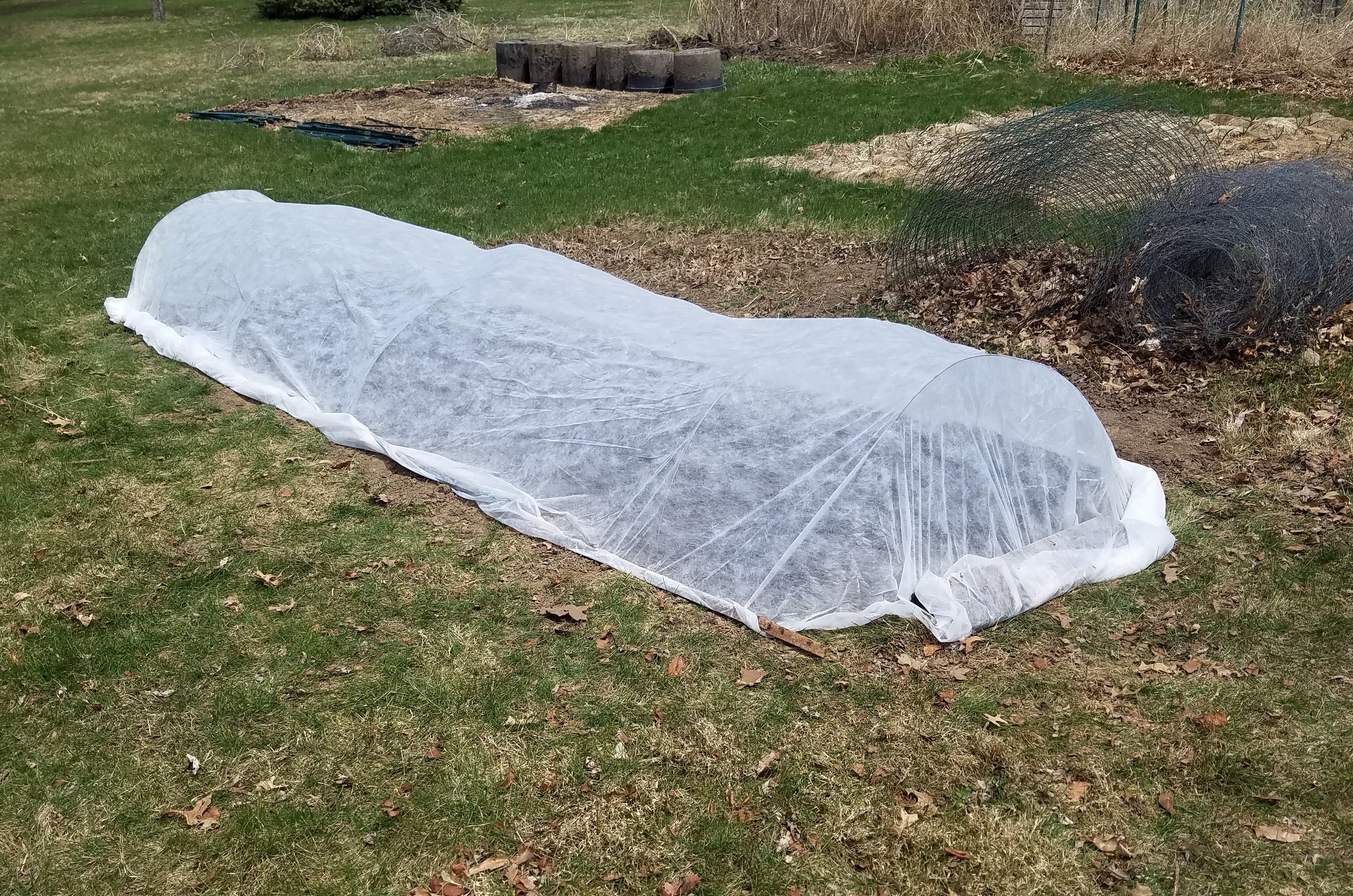
Early vegetables under row cover.

High winds blew the row cover off the frame multiple times on Monday. I went outdoors and fixed it. I ended up using landscaping stakes to secure it in 40+ miles per hour wind. By sundown, the wind slowed. It was too late to get back to the garden.

By the time I return home after a morning appointment in Cedar Rapids, it should be warm enough to try gardening again. The good part about the delay is I had ample time to evaluate how to rearrange the next plot for planting. I decided to move the large composter over the remaining roots of the now gone locust tree to assist in its decomposition. I plan to get rid of the pallets that have been on the plot for a few years and store fence posts in the garage. This will increase the planting area, something sorely needed this year.

If I can get seeds in the ground, tomorrow’s rain will be good for them.

Categories
Kitchen Garden

Garden Cycles

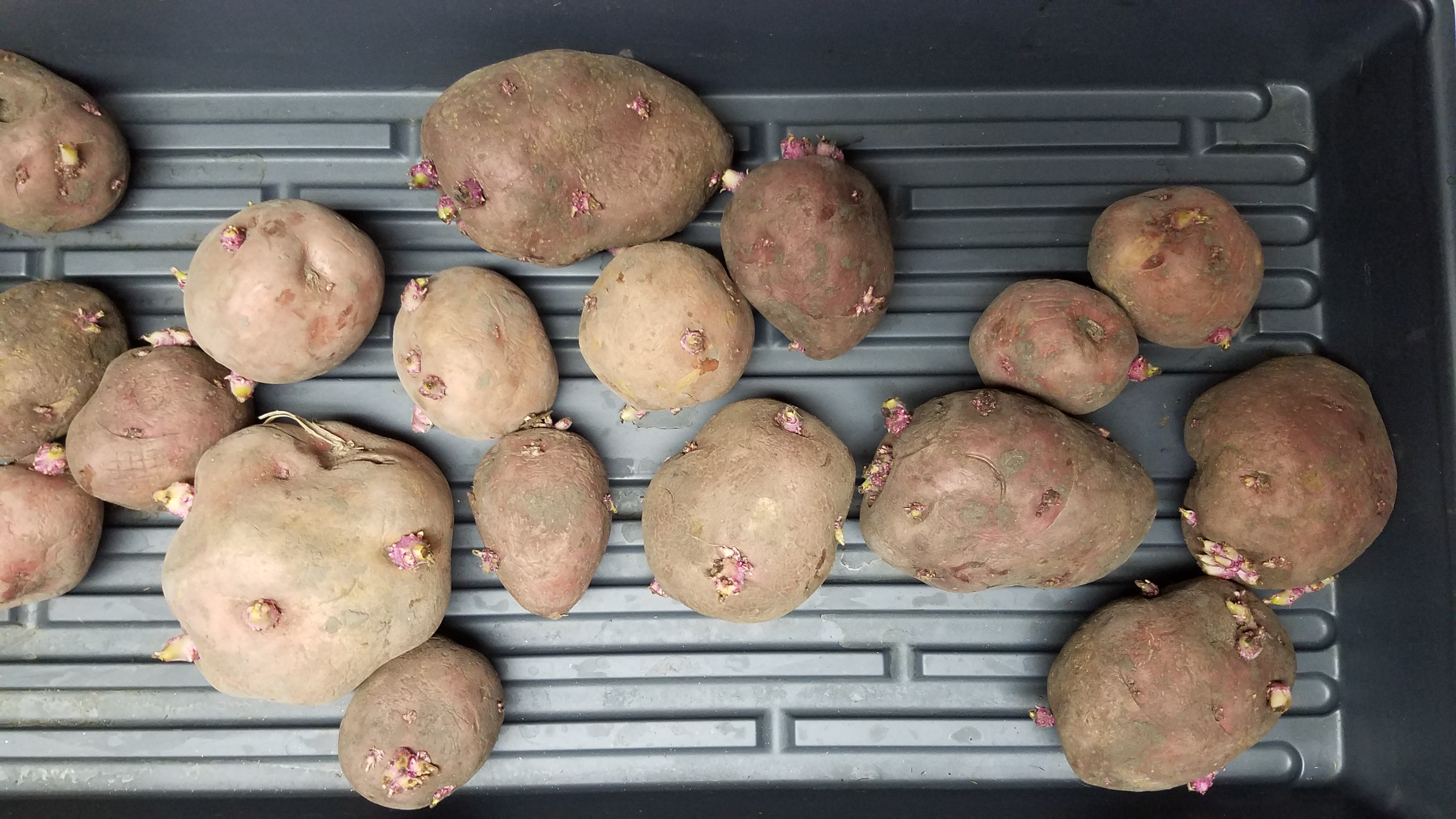
Red Norland seed potatoes.

“Extreme (weather) events are becoming more numerous in every season, so Iowans should anticipate more floods, droughts and heat waves,” Iowa State Climatologist Justin Glisan recently said.

Farmers and gardeners recognize this. What I didn’t realize is a third of the major natural disasters hitting Iowa since 1980 have occurred in the last five years. Tornadoes, derechos, severe thunderstorms, heat waves and drought have become commonplace. While adaptation in small garden plots like mine is possible, the scale of the problem is much bigger than any one person’s experience or ability to cope.

The last few days have been colder that usual. By that, I mean the historical average high has been 52.5 degrees and today the forecast is ten degrees colder than that. There is expected variation year over year, so it’s not time to wig out about extreme weather just yet. All the same, by now I’d have something in the ground besides garlic planted last fall if ambient temperatures were closer to normal. Adaptation serves gardeners as there is a wide range of suitable conditions for growth.

Ten days before Good Friday, I’ll cut seed potatoes for seasoning before planting. I have a notebook of previous gardening years that serves as an indoor planting guide. It is time to start Brussels sprouts, tomatoes, peppers and eggplant, according to last year. Following the agenda is the kind of activity gardeners relish. It creates a sense of understanding that helps us get by in a turbulent society.

When I was working full time, there was no time to work through seasonal climatic variation in the garden. Vegetables either made it or they didn’t. Attention to earning an income in a career blinded me to what was going on around me. We each avoid unpleasantness in order to preserve the secure bubble we create and in which we live most of our lives. This type of insularity is a main reason governments take inadequate action on climate change: people are caught up in their personal world construct. The real world is too ugly to contemplate so we avoid thinking about it and in some cases enable disaster.

Even with climate change and increased frequency of extreme weather events, garden cycles remain. We work through them each year and recognize variations. Producing a harvest is always rewarding. A garden can give us grounding in reality. It’s something sorely needed in this household and in society more broadly. At present, most are oblivious to garden cycles as Earth continues to orbit the sun, grocery stores have food on shelves, and our nest seems protected from the ravages we see on media coming into our devices.

It is easy to turn away from garden cycles, yet we shouldn’t.

Categories
Living in Society

Sleepless Night

Is Spring Coming?

Around midnight I woke with my mind racing. There was a high-pressure fire hose full of news on Monday. It is continuing into Tuesday.

With Ukraine being eight time zones ahead, there were a lot of reports coming in via Twitter when I looked at the mobile device in bed. Much of the information was negative. The fact there is a war in Ukraine at all is negative. If Russian Federation President Vladimir Putin intended to make quick work of conquering Ukraine, he failed.

Putin put Russian nuclear forces on high alert and no one is certain what that will mean, other than creation of an opportunity for unintentional detonation of nuclear warheads. Monday President Biden said people should not fear a nuclear war. He obviously has information I don’t, yet knowing this is happening raised my personal tension a notch.

The Intergovernmental Panel for Climate Change released their latest report yesterday. The last sentence of the 3,675-page report says it all. “Any further delay in concerted anticipatory global action on adaptation and mitigation will miss a brief and rapidly closing window of opportunity to secure a livable and sustainable future for all.”

The U.S. Supreme Court heard oral arguments in West Virginia v. EPA on Monday. Justice questions centered around “major questions” which should be decided by the Congress, not by a regulatory agency. The fear is SCOTUS will severely limit the kind and amount of regulation the Environmental Protection Agency can introduce, sending any action on controlling greenhouse gas emissions back to a stalemated Congress. With a 6-3 conservative tilt, Republicans got what they wanted when President Trump appointed three justices during his term in office.

Republicans in the Iowa Legislature are making laws without regard for dissenting voices. They have a clear majority and are passing whatever laws pop into their heads. The degrading of intellectual standards among lawmakers is obvious and frustrating.

I continue to wait for dust to settle and determine personal next steps. Spring will soon be here, I’m working on income taxes, and once garden planting begins there will be a rush toward Memorial Day. Things seem a bit out of control.

Later this morning I will take a nap. Otherwise, I’m unlikely to make it until supper time. With everything going on, it is hard to sleep and unlikely there is any returning to normal. It is hard to know what the new normal will be.

Categories
Environment

Grassley on Climate Change

This response to my message to U.S. Senator Chuck Grassley has been sitting in a file folder waiting for me to write a response. Upon review, I don’t really have a response as the letter speaks for itself. Shorter Grassley: wind, ethanol and biodiesel are what I have been and am willing to work on going forward.

Dear Mr. Deaton:

Thank you for taking the time to contact me. As your senator, it is important for me to hear from you. 

I appreciate you sharing your concerns regarding climate change with me. I have long said that I acknowledge that a changing climate is a historical and scientific fact. I also recognize that most scientists say manmade emissions contribute to climate change. In addition, it is just common sense to promote the development of clean forms of energy. In fact, throughout my tenure in the Senate, I have been a leader in promoting alternative energy sources as a way of protecting our environment and increasing our energy independence. I’ve been an outspoken advocate of various forms of renewable and alternative energy, including wind, biomass, agriculture wastes, ethanol and biodiesel. As the former Chairman and Ranking member of the Finance Committee, I’ve worked for years to enact tax policies that support the growth of these alternative resources and reduce our dependence on foreign oil. We need to develop a comprehensive energy policy and review the tax incentives for all energy sources. Our goal should be that clean energy alternatives become cost-effective, viable parts of our energy mix to power our homes and businesses for the long term.

To the extent that clean, alternative forms of energy can be made more cost effective than fossil fuels, it will be a win-win situation. In the meantime, any measure that forces a shift from low-cost energy sources to higher cost alternatives will impose hardships on hard working Americans, especially those least able to afford higher prices for home heating, food, and transportation. Higher energy costs also affect jobs, particularly in the manufacturing sector.

I believe we have an obligation to future generations that our environment is both clean and safe. Additionally, I believe it makes economic sense to have a healthy environment. Throughout my tenure in the Senate, I have authored and supported legislation that promotes  renewable   energy  sources to protect the environment, support our economy, and increase our  energy  independence. I’ve been an advocate of various forms, including wind, ethanol, and biodiesel.  

As you may know, Iowa has had much success in the production of these  renewable   energy  sources. As the number one producer of corn, ethanol, and biodiesel, our state leads the nation’s  renewable  fuels industry. This cleaner-burning, homegrown  energy  supports the economy by generating 37,000 jobs and nearly $4 billion of Iowa’s GDP. In 2020, Iowa produced 3.7 billion gallons of ethanol. In regards to environmental benefits, ethanol reduces greenhouse gas emissions by 43 percent compared to conventional gasoline.

As the “father” of the Wind  Energy  Incentives Act of 1993, I sought to give this  renewable   energy  source the ability to compete with traditional, finite sources. Today, wind  energy  supports over 9,000 Iowa jobs and provides 40 percent of our state’s electricity. Like ethanol and other advanced biofuels, wind  energy  is  renewable  and does not obligate the United States to rely on unstable foreign states. Further, the U.S. Department of Energy recently released its annual wind Markets Reports. Within this report are several notable updates about Iowa. Iowa currently leads the U.S. in wind-generated electricity. At 57 percent, Iowa has become the only state where over half of our in-state generated energy comes from wind. Lastly, the wind industry supports over 116,000 U.S. jobs.  

Going forward, I believe the most effective action Congress can take to address this issue is to advance policies that increase the availability and affordability of  renewable   energy  sources. If these  energy  sources can become more competitive, market forces will drive a natural, low-cost transition in our  energy  mix that will be a win-win for American families.  

Again, thank you for taking the time to contact me. Please keep in touch. 

   Sincerely,

  Chuck Grassley
  United States Senator
Email from U.S. Senator Chuck Grassley dated Nov. 10, 2021.
Categories
Writing

Double Dipping on Carbon-Capture

Field Corn

Governor Kim Reynolds mentioned carbon-capture in her condition of the state address during a segment on renewable energy.

I am introducing new legislation that will improve access to E15 and B20 and upgrade Iowa’s fuel infrastructure to offer higher blends. And I’m proposing that we invest in carbon-capture solutions to sustain and build on our leadership position in renewable energy.

Governor Kim Reynolds Condition of the State Address, Jan. 11, 2022.

To be clear, the governor supports carbon-capture to protect Iowa’s investments in ethanol and bio-fuels. It has nothing to do with addressing the climate crisis, and everything to do with continuing to grow corn for ethanol. We are not sure if carbon-capture even works.

“The U.S. Department of Energy invested $684 million in unsuccessful carbon capture and storage demonstration projects at coal plants under the 2009 stimulus package, a U.S. Government Accountability Office audit found,” according to Karin Rives at S&P Global. “This time, the DOE has close to $1 billion from the 2021 infrastructure law earmarked for large-scale carbon capture pilot projects, as well as $2.5 billion for carbon capture demonstrations.”

If DOE spent $684 million on carbon capture and it failed to capture carbon, why would our government increase the amount to be spent? To address the climate crisis, ethanol and bio-fuels need to go out of business. Society should develop true alternative fuels that free farmer fields to grow food crops and don’t rely on release of carbon dioxide to produce ethanol.

Fool me once on carbon capture, shame on you. Fool me a second time, shame on me.

Read all of my posts on carbon-capture at this link.

Categories
Environment

Waiting for Scions

Shallot seeds germinated first this year.

Inconsistent winter weather disrupted fruit tree plans. On Wednesday snow melt began flowing in the gutters and downspout. It felt safe enough to make a trip through melting snow pack to the composter near the garden. A slushy mix returned to the end of the driveway. Weather has been weird.

It takes several days of subzero temperatures in a row to prune fruit trees. I prefer a week of ten or twenty below zero yet we haven’t had that. I also seek to harvest scions, (pencil shaped fruit tree cuttings) to graft on root stock. I would save the Red Delicious apple tree which was damaged in the Aug. 10, 2020 derecho. It served us well while it was whole. Trees need dormancy for scions to work and we haven’t had that either.

This week has been a fake spring. It’s still winter, for Pete’s sake! Yet the buds on trees look healthy, like they are ready to sprout. The lilac bushes were leafing just last month. I wouldn’t mind spring’s arrival yet I want a winter too.

At least the onions and shallots planted Jan. 6 are germinating.

We bunker in to avoid the coronavirus and wait for a deep freeze and dormancy it would bring. These days have been good for writing.

It is difficult waiting for winter and fruit tree work when what we really want is a normal spring. Today, I’d settle for a normal winter so I can harvest scions.

Categories
Writing

Swallowing the CCS Proposition

Field Corn

Two corporations plan to install Carbon Capture and Sequestration technology to collect CO2 emissions at about 40 ethanol and fertilizer plants spread across Iowa. Next, they plan to permanently bury the resulting liquefied CO2 in deep rock formations in North Dakota and Illinois. I don’t know who is swallowing this malarkey. Almost no one is.

The CO2 pipeline is planned to cross Karmen McShane’s family land in Linn County.

“It’s heartbreaking,” McShane told Gannett’s Donnelle Eller for a story. “My dad is 77. My mom needs care. And he feels powerless (to fight the pipeline).”

There is a lot of that going around.

The pace of news articles on CCS is increasing. Eller wrote about it in Monday’s Iowa City Press Citizen and followed it with another article in Tuesday’s newspaper. Erin Jordan of the Cedar Rapids Gazette has been covering CCS as well. When the regular news coverage is frequent, we should read what paid media writers have to say. That’s what I’ll be doing to see how the process unfolds over the end of year holidays. This is my seventh post on CCS.

The Iowa oligarchy of agriculture decided to do this thing, so resistance may be futile unless more people than have become engaged. If McShane is typical, the train left the station and once ground is broken for the pipeline, there will be no stopping it.

As long as Iowa focuses on ethanol, industrial agriculture using manufactured fertilizers, and monoculture row crops and livestock, the environment will get worse. It is pretty bad already if one looks at water and air quality. Implementing CCS does not address any of this and is a distraction from needed action to address Iowa’s water and air quality.

CCS is premised on a vague statement that we must decarbonize the economy. People have written books on this, and just because two companies are spending big bucks on the project, the one-off process in Iowa does not address broader concerns about reducing the amount of greenhouse gases being released into the atmosphere as if it were an open sewer. As far as I can tell, the sole reason for the project is to protect agricultural oligarchs’ two children: corn ethanol production and fertilizer manufacturing.

To read the rest of my coverage of carbon capture and sequestration in Iowa, click here.

~ Written for Blog for Iowa