Categories
Environment

Extreme Weather #2 1988-1990 Drought

It snowed overnight on March 20, leading into spring.

The year we moved to Indiana’s Calumet Region in 1988 marked the onset of the worst U.S. drought since the Dust Bowl. The 1988-1990 North American Drought covered a smaller amount of geography compared to the 1930s Dust Bowl yet it was the most expensive extreme weather event in terms of monetary damages in U.S. history until that time.

Nearby Milwaukee, Wisconsin, set a record 55 consecutive days without measurable precipitation. During summer heat waves, thousands of people and livestock died. The drought led to many wildfires in western North America, including record fires in Yellowstone National Park in 1988.

While living in the Calumet, I understood the region’s activities were adding carbon dioxide to the atmosphere, enhancing the greenhouse effect that causes planetary warming. This includes the enormous Amoco Oil Company refinery located 23 miles from our house.

In 1988, we were turned inward, living our family life. We also had air conditioning. I did not understand how prevalent the deleterious effects of climate change would become in our lifetimes. It was one of what became a series of extreme weather events leading through time to when I wrote this post. We understand now.

The United Nations suggests ten thing we can do to address climate change. They even have an app! It is not too late to begin addressing our contributions to global warming and environmental degradation. Click here to learn more about what you can do.

Categories
Environment

Winter Days

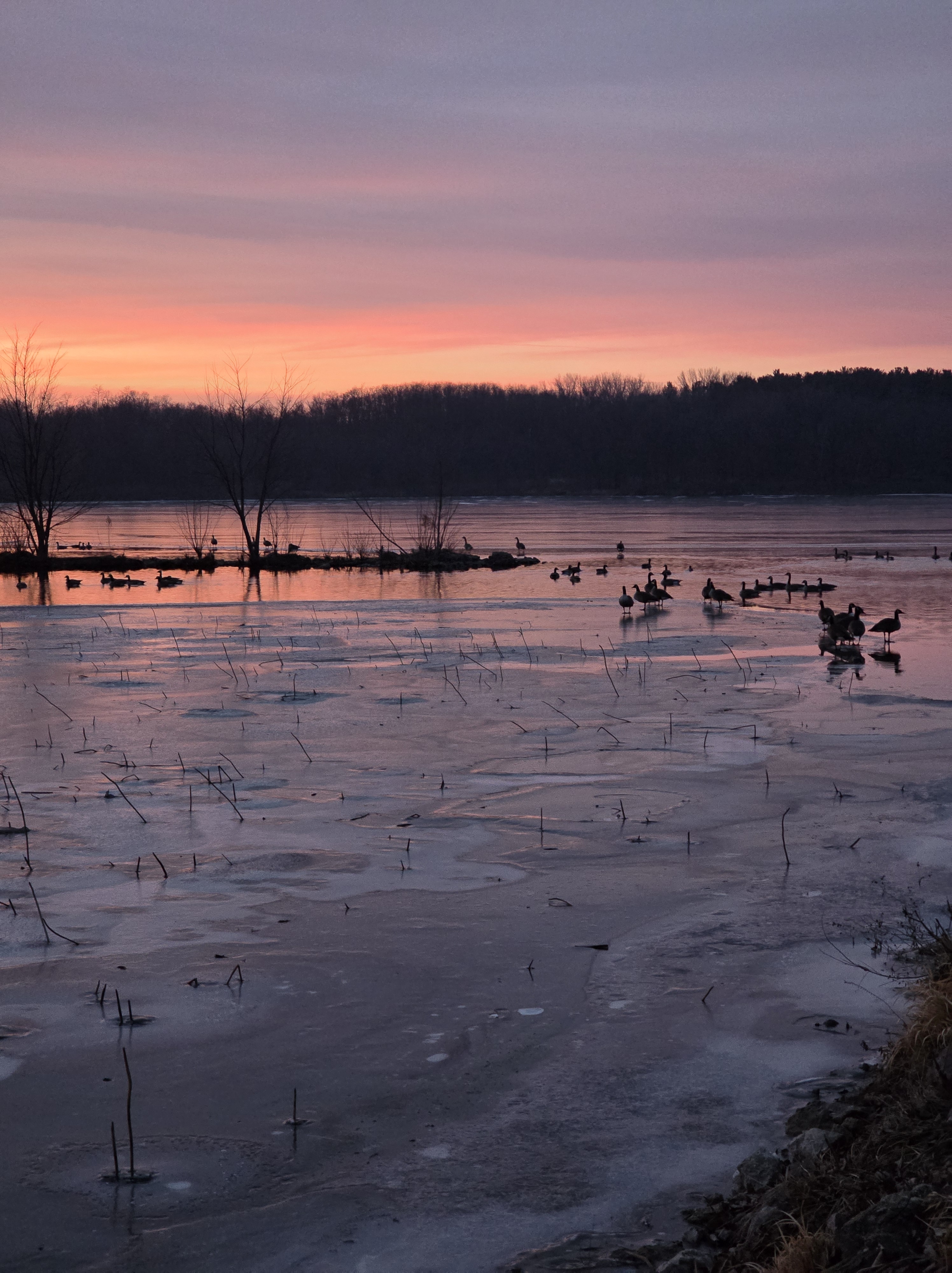
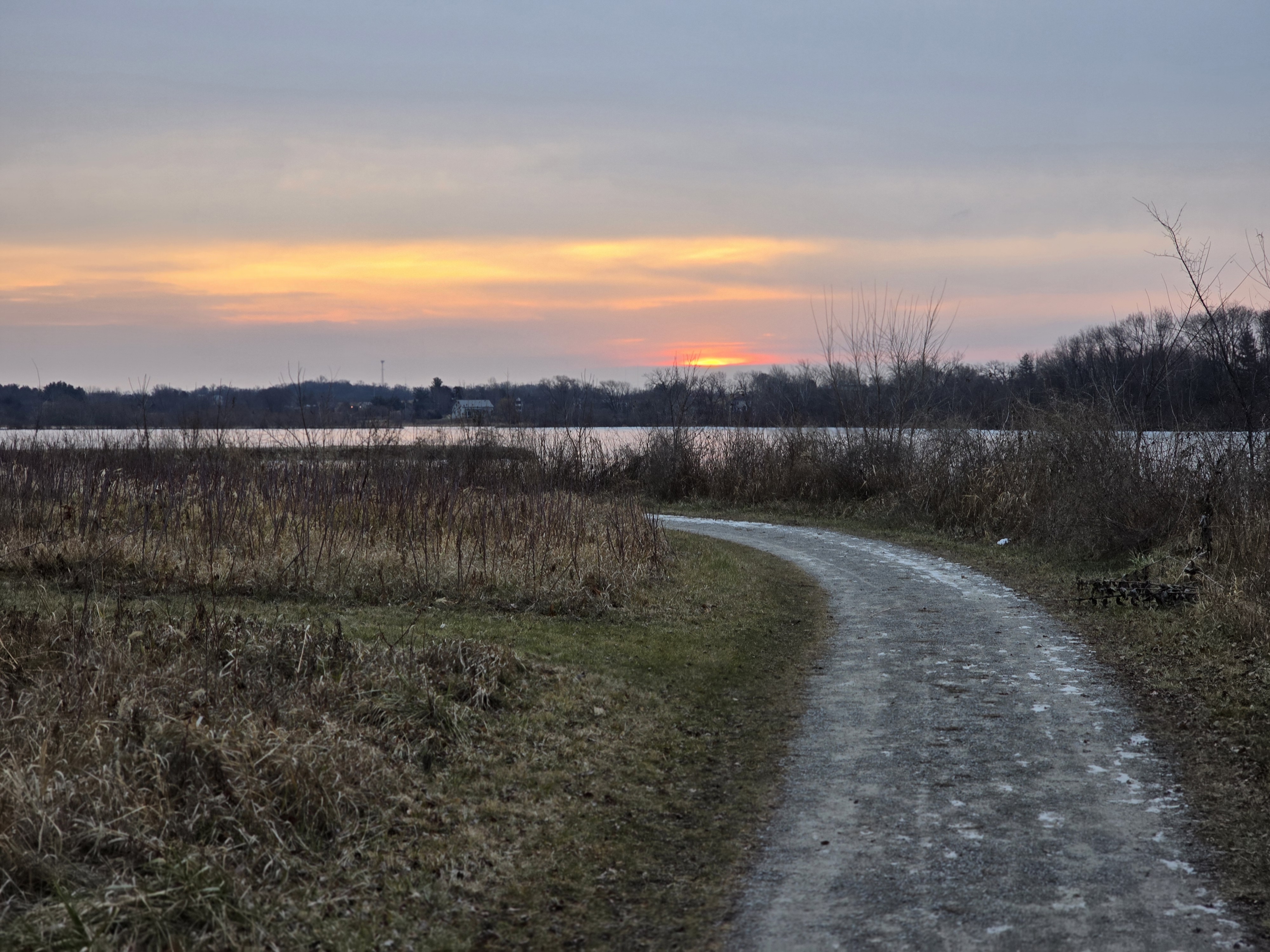
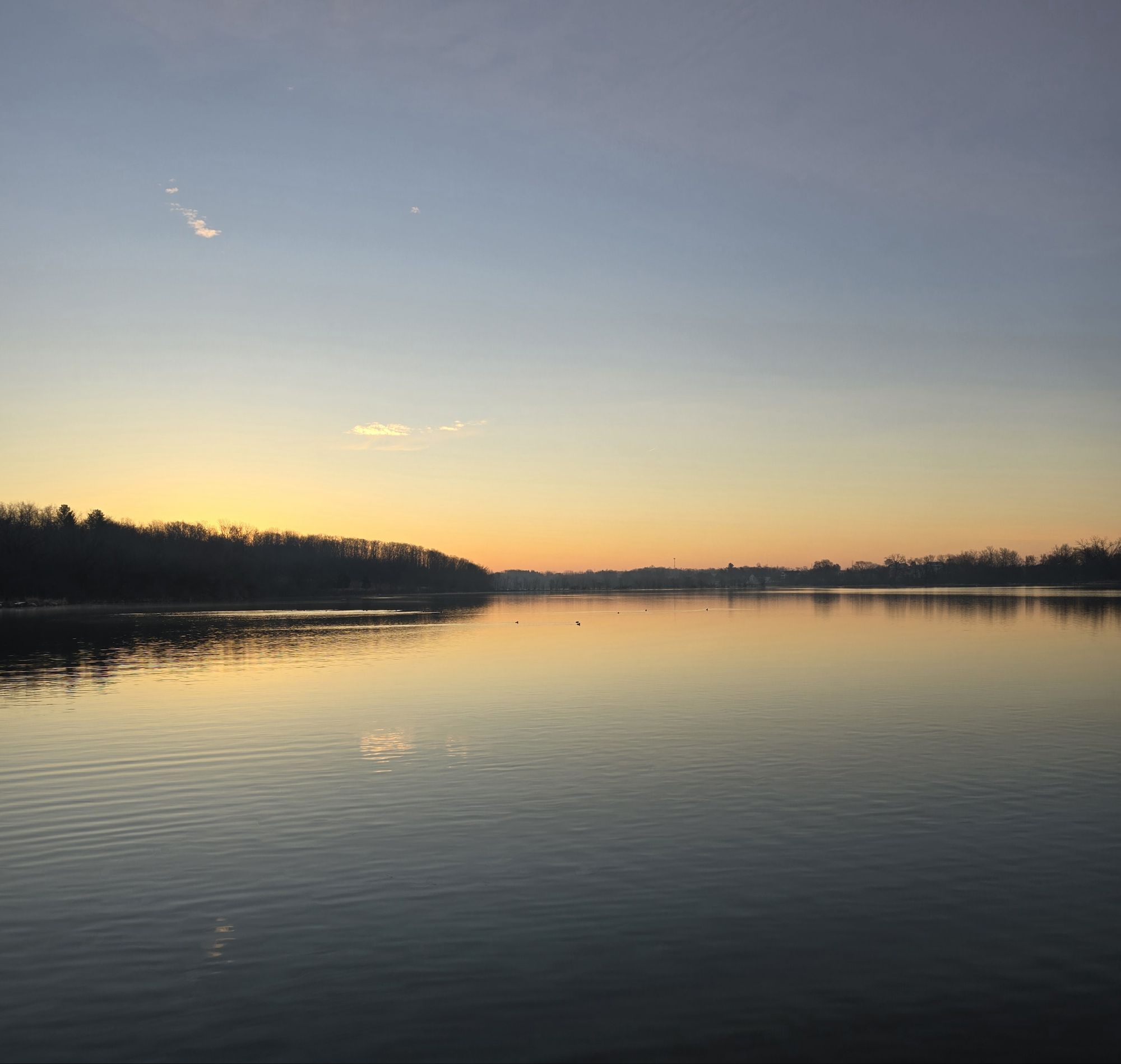
Trail walking at sunrise.

According to the sensor installed on the north side of the house, the ambient temperature was 13 degrees below zero Fahrenheit when I began writing this post. The sun is rising and it warmed up. We’re not at zero yet, although the high is forecast at 25 degrees. Today the weather is weird again.

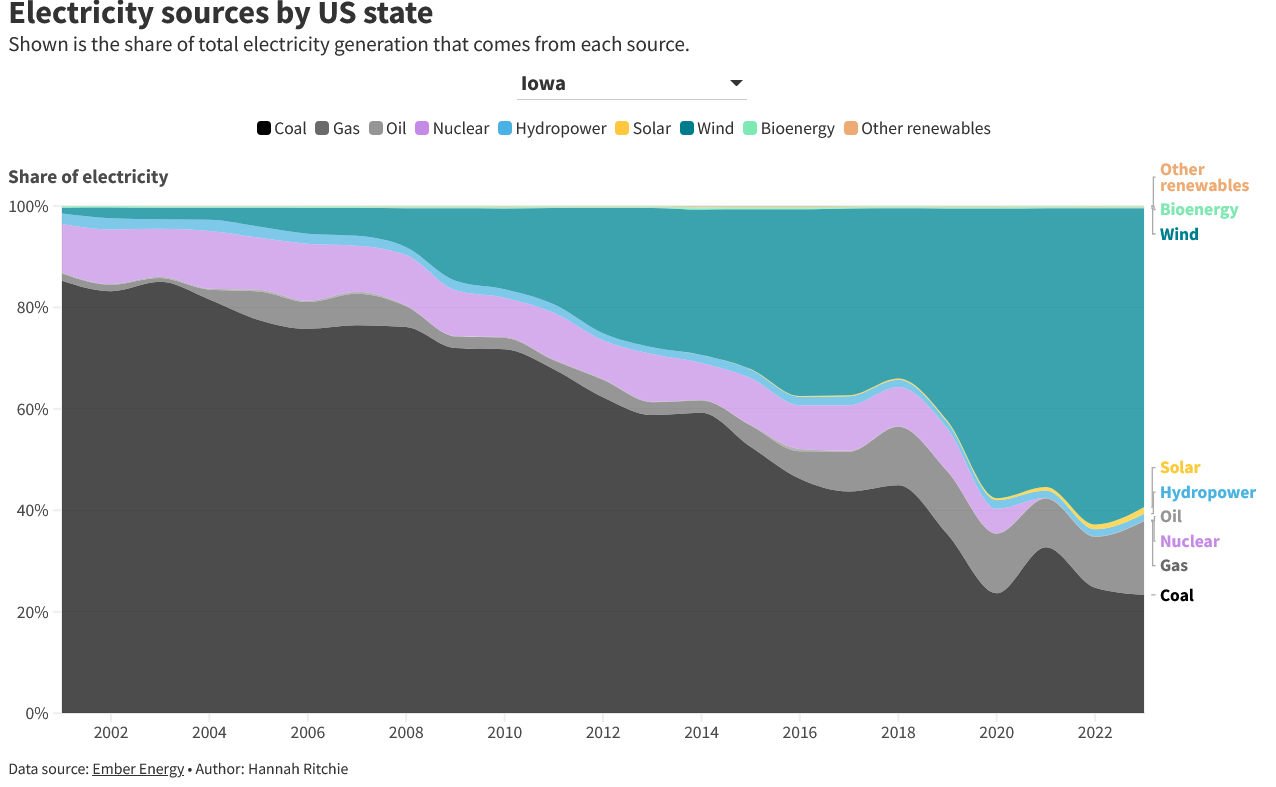
Hannah Ritchie, author of Not the End of the World: How We Can Be the First Generation to Build a Sustainable Planet, posted a widget on the internet with a state-by-state analysis of electricity generation sources. Find it here. Here is where Iowa lands:

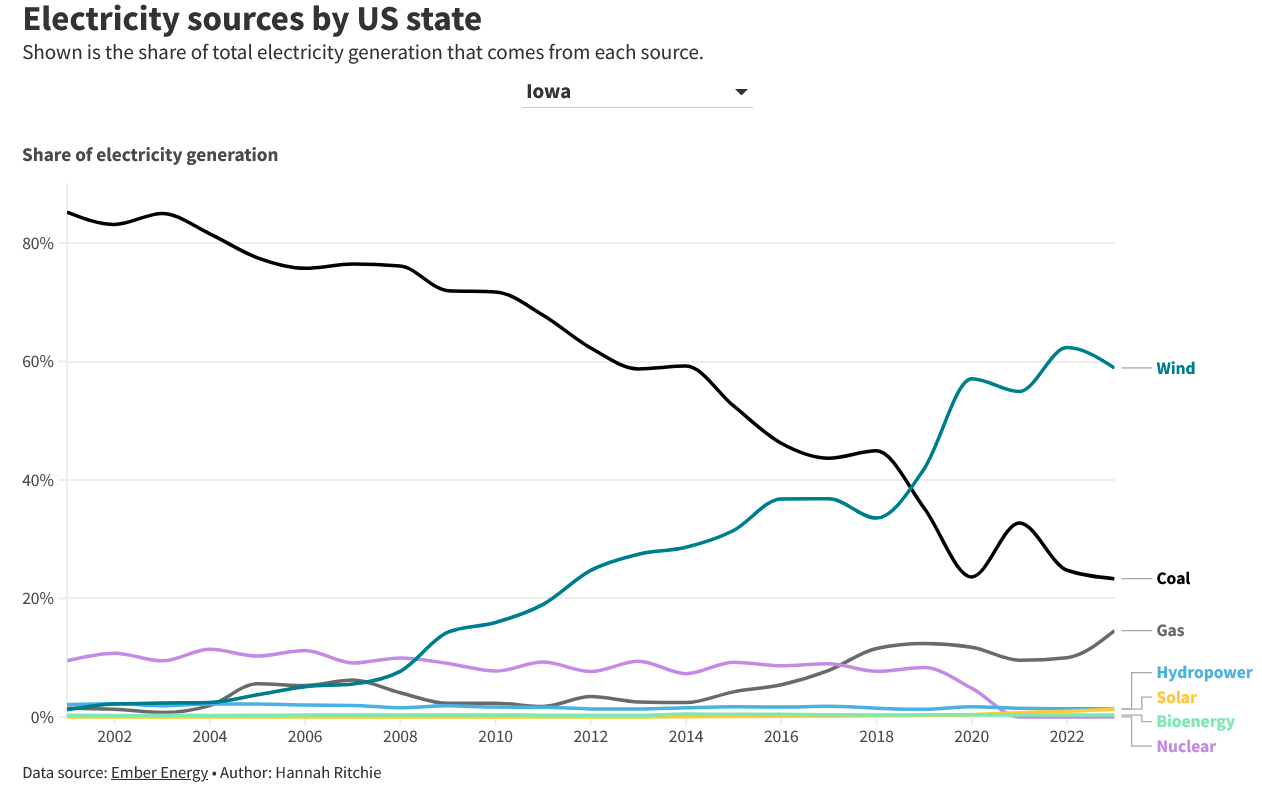
Here is another chart:

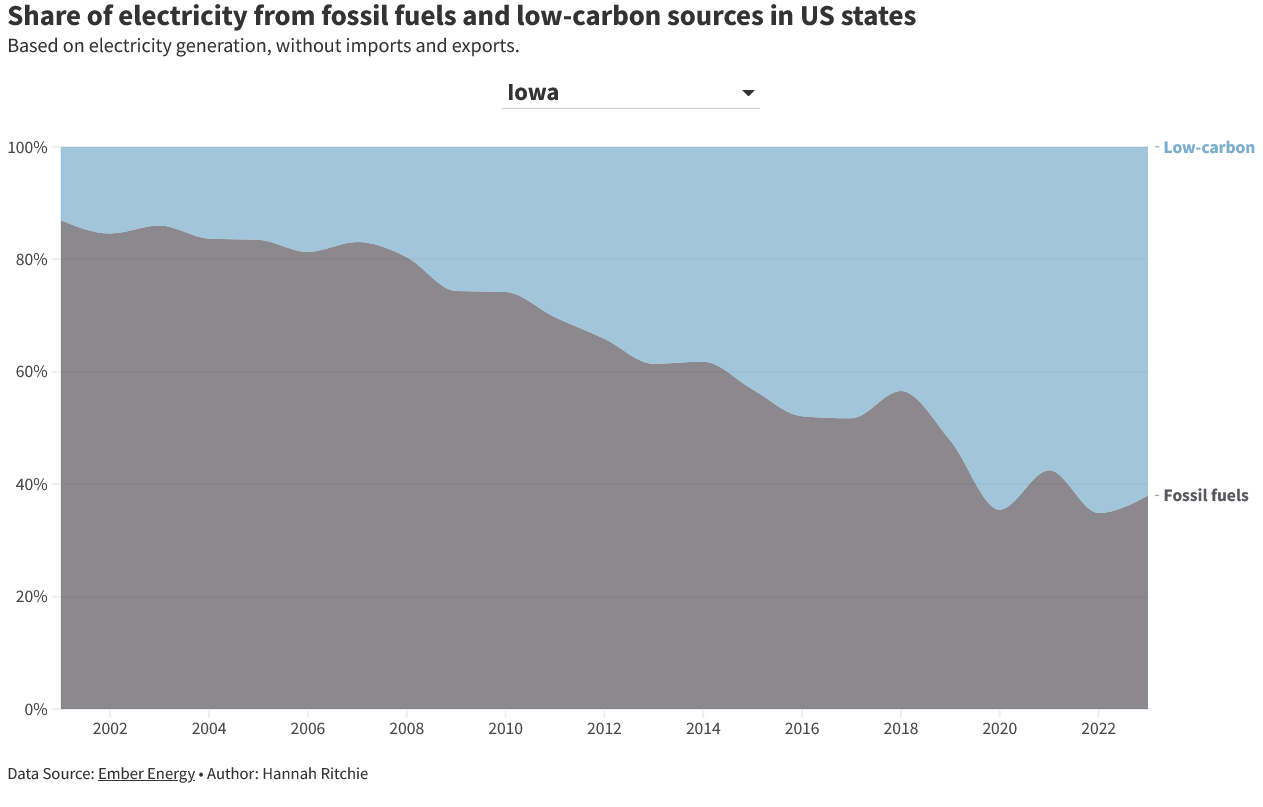
Iowa is a leader in wind energy and has plenty of room to improve our solar capacity. There are environmental issues with every form of electricity production, yet burning fossil fuels is our most immediate danger because of the role of carbon dioxide in enhancing the greenhouse effect. Despite today’s low temperatures, Iowa is simply too darn hot.

The trend on the following chart is the right one. As a state, we need to move more quickly.

It seems obvious to me that to get to zero fossil fuels used to generate electricity Iowa needs to install many more solar panels. There are issues with both wind and solar generated electricity.

The wind doesn’t always blow and the sun doesn’t always shine. They can be addressed. One of the key strategies to deal with intermittency, which is what this is called, is to improve the forecasting and planning of renewable power generation and demand. Another strategy is to invest in storage and integration solutions that can balance the supply and demand. A third strategy is to foster innovation and adaptation. This involves developing and deploying new technologies, designs, and practices that can enhance the performance, efficiency, and resilience of renewables. We need the will to solve these problems.

So the news about electricity generation in Iowa is positive. We just need more renewables and technological solutions to deal with intermittency so we can replace fossil fuels altogether. To a reasonable mind, this can be accomplished. Now we just need our regulatory and governmental authorities to get on board.

Categories
Environment

After COP29

With Al Gore and Company in Chicago 2013. This is about half the attendees. I’m in there somewhere.

The 29th Conference of the Parties was a disappointment. Fossil fuel interests hindered the ability to accomplish constructive things since the beginning of the process. Now, they stopped anything except the most minimal action at COP29. Former Vice President Al Gore summarized the situation in this statement:

November 23, 2024

While the agreement reached at COP29 avoids immediate failure, it is far from a success. On the key issues like climate finance and the transition away from fossil fuels, this is — yet again — the bare minimum. 
 
We cannot continue to rely on last-minute half measures. Leaders today shirk their responsibility by focusing on long-term, aspirational goals that extend far beyond their own terms in office. To meet the challenge of our time, we need real action at the scale of months and years, not decades and quarter-centuries.
 
This experience in Baku illuminates deeper flaws in the COP process, including the outsized influence of fossil fuel interests that has hobbled this process since its inception. The Kingdom of Saudi Arabia has been particularly obstructive. Putting the future of humanity at severe risk in order to make more money is truly disgraceful behavior. Reforming this process so that the polluters are not in effective control must be a priority.
 
On climate finance, our primary task in the coming years must be to not only fulfill and build upon the financial commitments agreed to at COP29, but to unleash even larger flows of affordable and fair private capital for developing countries. 
 
Ultimately, coming out of COP29, we must transform disappointment into determination. We can solve the climate crisis. Whether we do so in time to meet the goals of the Paris Agreement will depend on what comes next.

The climate is changing. Do humans have the capacity to protect all we hold dear from the ravages of the climate crisis? Time will tell. The Conference of the Parties is our last, best hope to stave off the worst impacts of human-caused climate change.

Categories
Sustainability

COP29

Image of Earth 7-6-15 from DSCOVR (Deep Space Climate Observatory)

President-elect Donald Trump is expected to withdraw the United States from the Paris Climate Accords, as he did during his first term. His re-election cast a pall over the 29th Conference of the Parties which began Monday in Baku, Azerbaijan. The United States has been a world leader in mitigating the worst impacts of climate change. Trump’s direction of breaking down the international order where the United States is a leader seems clear.

Azerbaijan is the third consecutive petrostate to host the conference, and arguably intends to stop decarbonization if they can. The work must continue, yet it is expected to slow because of the prospect of the U.S. intentionally hobbling it. In an email this week, the Climate Reality Project said, “Wealthy petrostates and fossil fuel companies are misleading the public, lobbying country leaders, and taking over the COP process, trying to stop progress every step of the way.” Addressing the climate crisis will continue to be an uphill struggle.

Based on the seven days since the election, Trump seems better prepared to implement policies the Heritage Foundation handed him in the form of Project 2025. I must pick which parts of society in which to exert my personal influence. I need more dust to fall and settle before deciding what to do. The climate crisis ranks highly on my list.

Categories
Environment

To EV or Not to EV

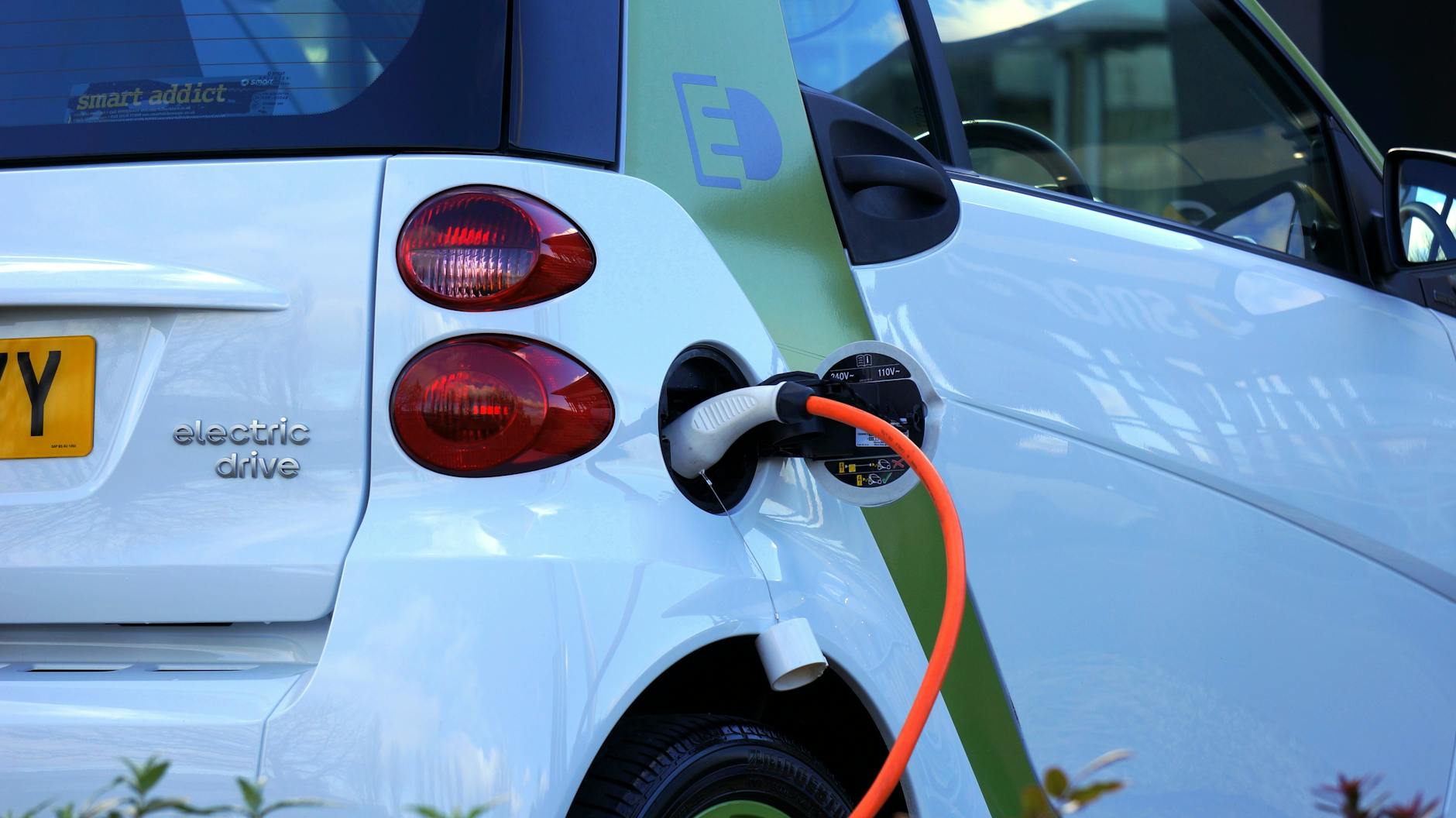
Photo by Mike Bird on Pexels.com

Moving the automotive economy toward electric vehicles is a good thing for multiple reasons. An important benefit is to decrease reliance on burning stuff in an internal combustion engine. In the late 19th Century, Rudolph Diesel invented an engine that could burn almost any liquid fuel, including whale oil, tallow, paraffin oil, naphtha, shale oil, and peanut oil. Despite the initial available diversity, the economy followed a track to perfect the gasoline engine and use it for transportation. To a large extent, that’s where we are now, with Diesel’s namesake fuel relegated to trains, buses, heavy trucks, boats, and power generators.

In 2022, we needed a new car and could not confirm a delivery date on available electric vehicle models. They were in high demand and manufacturing could not keep up. We ended up with a three year old used car that got 38 miles per gallon of gasoline. In addition to supply falling short of demand, there are other problems with electric vehicles.

Electric vehicles reduce emissions and are often much kinder to our planet than gasoline and diesel alternatives. Those are positive attributes. The world is not ready for EVs and people experience barriers to using them in the form of charging station infrastructure, insurance, and affordability, in addition to the ability to timely buy one. The federal government has begun to create an environment for the advancement of EVs and Republicans are fighting it tooth and nail.

The latest conflict between doing what’s right for a majority of U.S. citizens, and Republican support for the fossil fuel industry, occurred after March 20, when the U.S. Environmental Protection Agency released a new tailpipe rule on vehicle emissions. “Joe Biden has launched a relentless onslaught of regulations infringing on American consumer freedom,” Congresswoman Mariannette Miller-Meeks wrote in her weekly newsletter. She decried that the administration’s “heavy-handed mandate forces American automakers to prioritize electric vehicle (EV) production and sales.” Well, yeah. That’s the point, along with preserving a livable world. The member of congress failed to mention all the positive things the president is doing to make EVs affordable for consumers.

The decision to EV or not to EV is not the choice of a single consumer. As individuals we have rights, yet the government must not leave the choice of whether we have a livable world in the hands of personal choice. To move the ball where it is needed regarding EVs, the government can and should be involved in nudging industry and consumers to move toward them. Under Biden, government accepted this role. The scale at which the administration proposes to increase EVs as a percentage of the global fleet is staggering. It is also what is needed to address the climate crisis.

My choice would be to use public transportation for every thing. As long as I have to drive because I live in the country, I expect to eventually convert to an EV and learn to love it. We must support the administration as we can, perfect what is flawed about their approach, and never lose sight of the big picture of slowing the greenhouse effect so we can maintain a livable world. In our current political situation, that means electing Democrats.

Categories
Environment

How Are Things Going Before Earth Day?

Image of Earth 7-6-15 from DSCOVR (Deep Space Climate Observatory)

Earth Day is Monday, so how are we doing? Is the news media helping us create a better environment?

Bill McKibben follows issues centered around the climate crisis better than almost anyone. Here’s the stark truth from his substack, The Crucial Years:

At the most fundamental level, new figures last week showed that atmospheric levels of the three main greenhouse gases—carbon dioxide, methane, and nitrous oxide—reached new all-time highs last year. Here’s how the National Oceanic and Atmospheric Administration reported the figures:

While the rise in the three heat-trapping gases recorded in the air samples collected by NOAA’s Global Monitoring Laboratory (GML) in 2023 was not quite as high as the record jumps observed in recent years, they were in line with the steep increases observed during the past decade. 

The global surface concentration of CO2, averaged across all 12 months of 2023, was 419.3 parts per million (ppm), an increase of 2.8 ppm during the year. This was the 12th consecutive year CO2 increased by more than 2 ppm, extending the highest sustained rate of CO2 increases during the 65-year monitoring record. Three consecutive years of COgrowth of 2 ppm or more had not been seen in NOAA’s monitoring records prior to 2014. Atmospheric CO2 is now more than 50% higher than pre-industrial levels.

Entirely unsurprisingly, the planet’s temperature has also continued to rise.

The Crucial Years, a substack by Bill McKibben, April 10, 2024.

Not long ago, McKibben headed an organization called 350.org, which advocated keeping average surface concentration of CO2 below 350 ppm. At 419.3 ppm, and increasing about 2 ppm per year, we are going the wrong direction.

How do news audiences perceive the climate crisis? A recent study explored this question. Why is it important? How we perceive and receive news about the climate crisis determines, in large part, whether and how we address it.

Around Earth Day, we expect to see more news stories about the climate crisis. Folks at Reuters Institute studied news use and attitudes about climate change, using data from Brazil, France, Germany, India, Japan, Pakistan, the UK, and the USA. The issues are similar to what we see in response to media on any topic: Should we trust scientists? What is misinformation and what isn’t? What news sources are trustworthy? Are direct action protests covered fairly by media? They found a lot:

  • In most of the eight countries there has been a slight increase in climate change news use, with just over half (55%) on average using climate change news in the previous week.
  • Climate news avoidance and trust in climate information from the news media have remained roughly stable, but avoidance has decreased slightly in the UK, USA, and Pakistan, as well as trust in the UK and Germany.
  • Scientists remain the most trusted sources of news and information about climate change, trusted by 73% on average, and respondents more often see them used as sources in the news media than any other source of information.
  • Over three quarters (80%) of survey respondents say they are concerned about climate change misinformation, consistent with data from 2022.
  • Once again, respondents think television and online (including social media and messaging apps) are where they see most climate-related misinformation. Politicians, political parties, and governments are frequently mentioned as sources of false and misleading information.
  • Nearly two thirds of respondents believe that news media play a significant role in influencing climate change decisions, actions by large businesses, government policies, and public attitudes, with particularly strong beliefs in Brazil, India, and Pakistan.
  • There is large variation in how soon respondents think people in their country will face the serious effects of climate change, with significant proportions in every country thinking the consequences are decades away at least. However, people who use climate change news on a weekly basis are considerably more likely to think that people are being affected by climate change now.
  • Significant disparities exist in perceptions of the impact of climate change on public health specifically, with those in Global South countries (Brazil, India, Pakistan) generally perceiving larger effects (50% or more) than those in the Global North (UK, USA, France, Germany, Japan).
  • Just over half of respondents think that climate change has a larger effect on poorer people (53%) and poorer countries (52%), but there is a considerable partisan disagreement on this in France, the UK, and the USA, with those leaning politically right less likely to agree.
  • People are more likely to think that richer countries and more polluting countries should take greater responsibility for reducing climate change, and weekly climate change news users are more likely to hold this view.
  • In the UK, USA, Germany and France opinion is roughly evenly split on whether direct action climate protests (e.g. blocking roads, disrupting sporting events) are covered fairly by the news media. But in Germany, the UK, and the USA opinion varies depending on whether people support or oppose the protests.
  • People in our survey expressed a high level of interest in various types of climate coverage, including news that discusses latest developments, positive news, and coverage presenting solutions. People did not express a clear preference for the type of solutions journalism they are most interested in.

What do these findings mean? Assessing news in media has become a critical skill in 2024. It is important to align our lives with accurate information about the climate crisis. Rich McKibben is a good source of information. So are Katharine Hayhoe and Al Gore. Knowing the truth about the climate crisis will make us better advocates. It will set us free to create a better world for our progeny.

On Earth Day 2024, we are a distance from achieving our goals. Things are not going as well as we need and it is complicated by reliance on media fraught with misinformation. We can do better.

~ The author helped organize the first Earth Day on April 22, 1970 in his home town. He served as chair of the county board of health, and has been advocating and writing on environmental issues all along his journey. He joined Al Gore’s Climate Reality Project in 2013.

Categories
Environment

Earthrise Studio on Fossil Fuels

I met Finn Harries in Cedar Rapids at Al Gore’s 2014 Climate Reality Leadership Corps training. The diminutive Brit showed up only for the days Gore gave his Inconvenient Truth lecture. Harries and his twin brother Jack had millions of subscribers on their YouTube channel JacksGap. With a fame of his own, Finn Harries had specific intent in attending the Iowa training.

During the last ten years, the brothers developed a process to address the climate crisis. Finn is working on regenerative agriculture and Jack started Earthrise Studio. The transformation of their YouTube channel is ongoing at Earthrise Studio.

This channel is currently undergoing an exciting transformation. In 2011 we launched JacksGap, a creative storytelling project featuring short travel films by Jack and Finn Harries. Since then we’ve been on the most incredible journey covering stories all around the world and increasingly learning about the significant environmental issues we face. Today 10 years later we are re launching this channel as Earthrise, a digital media platform and creative studio dedicated to communicating the climate crisis. Earthrise tells stories for a new world. Radical stories of hope, of new possibility. Stories from the future that help us navigate the now. We’re so excited for this next chapter and hope you’ll join us!

Earthrise YouTube Channel

Their channel has grown to 3.63 million subscribers.

On Tuesday, Jan. 16, I received this email with a link to their first video about fossil fuels. Please take 11 minutes to view it. It presents a different picture of the geopolitical impact of fossil fuels and leads into the same discussion about renewables.

A year ago, we set out on a journey to investigate the origins of the global energy crisis, an issue that took the world by storm and resulted in extortionate energy bills for people everywhere.

Fast forward to today, we’re so excited to share that the first episode of POWER has just gone live on our YouTube channel. But first, a quick recap on how we got here…

February: We decided to make a series about fossil fuels.

March: We went to our audience to crowdsource questions.

April: We began writing the series.

July: We kicked off production in our new filming studio.

December: We wrapped filming.

Yesterday: We held an in-person premiere for our community.

Today: We hit upload on Episode 1, and you can now stream it on our YouTube channel using the link below.

Email from Earthrise Studio, Jan. 16, 2024.
Categories
Environment

After COP 28 Keep On The Sunny Side

Dubai, UAE site of COP 28 – Photo by Aleksandar Pasaric on Pexels.com

I met with State Senator Joe Bolkcom before he retired to discuss ways to mitigate the effects of climate change. He told me something important as we finished our conversation. “Join a group and get active,” he said. What does that mean?

With a challenge so big it involves all of the populated regions of the globe, one person’s impact is not as useful as when we work with others to solve the climate crisis. As we face its challenges, it is important for our own sanity to feel like we contribute to solutions as individuals. Actions like reducing gasoline use, reducing natural gas use, reducing electricity use, eating less meat and dairy, and growing some of our own food are all important. These actions matter, yet what matters more is what we, as a society, do collectively. That was Bolkcom’s point.

On Dec. 13, 2023, delegates to the 28th Conference of the Parties (COP 28) agreed to transition away from fossil fuels. This despite heavy lobbying from delegates representing fossil fuel interests to do nothing.

Nearly 200 countries struck a breakthrough climate agreement Wednesday, calling for a transition away from fossil fuels in an unprecedented deal that targets the greatest contributors to the planet’s warming. The deal came swiftly — with no discussion or objection — in a packed room in Dubai following two weeks of negotiations and rising contention. It is the first time a global climate deal has specifically called to curb the use of fossil fuels.

Countries clinch unprecedented deal to transition away from fossil fuels, Washington Post, Dec. 13, 2023.

Is the cup half full or half empty? Citizens engaged in solving the climate crisis should take the positive which this agreement represents even though it falls short of our aspirations.

When I activated an account on Threads, one of the first accounts I followed was climate scientist Katharine Hayhoe who is active on that platform. We had this exchange about COP 28, in which I quote-posted her report from COP 28:

As Hayhoe said in the talk referenced above (Here is a link), the challenge is to move from worried to activated. It is not only possible, it is imperative that advocates for solving the climate crisis do so.

Back to my question, is the cup half full or half empty when progress toward transitioning from fossil fuels saw such resistance at COP 28?

Senator Sheldon Whitehouse (D-RI) said after COP 28 closed, “A small, self-interested minority of states cannot be allowed to block the progress necessary to put our entire planet on a path to climate safety.”

2023 was a disastrous year for our climate. We experienced the hottest year on record and the extended Iowa drought impacted corn and soybean yields. Rivers and lakes began to dry up. What gets overlooked is that just as the climate crisis seems to get worse, actions to tackle the problem are ramping up. There were environmental wins out of COP 28:

  • The cost of solar power has fallen by around 90% and wind by 70% in the past decade.
  • The majority of new energy capacity being added in the U.S. and globally is solar, wind, and battery storage; these renewables already account for nearly 14% of the U.S. energy production and 12% worldwide.
  • Electric vehicles are becoming cheaper and more attractive. For the first time, more than one million EVs have been sold in the United States in a calendar year.
  • At COP28, delegates took a historic step in establishing a loss and damage fund, the latest development in a three-decades-long fight to have wealthy, high-emitting countries compensate vulnerable, developing ones for the harms of climate change.

For more positive news, read Katarina Zimmer’s complete article on Atmos.

Despite its shortcomings, COP 28 marked a major step forward for the environmental movement. For the first time ever, a COP agreement explicitly acknowledges the main culprit responsible for the climate crisis is fossil fuels. While the agreement falls short of what many of us wanted, it still reflects progress in a decades long struggle to address the climate crisis. We should keep on the sunny side and build on this progress by finding other, like-minded people and getting active.

Categories
Environment

Reducing Consumption of Animal Products

Black-eyed peas, rice, and cornbread for first meal of 2024.

An uncomfortable truth about environmentalism — that no one wants to discuss, especially in Iowa — is the amount of land used to feed and husband animals. To say it another way, the best thing we could do to mitigate the effects of ongoing climate disruption is to drastically reduce the amount of animal products consumed by humans. Not by a little, but by a lot… and immediately.

In his recent book, We Are the Weather: Saving the Planet Begins at Breakfast, author Jonathan Safran Foer wrote about this. In the appendix he discusses how he came to the environmental impact animal husbandry makes. It ranges from 14.5 and 51 percent among different experts. How does one even begin to address this? Here in Iowa, someone who suggests humans stop eating animals and their dairy products wouldn’t get one minute of attention. They would be run out of the state.

The State of Iowa developed into an agricultural state and with reason. The prairie that existed after the 1832 Black Hawk War is almost gone. In its place is a grid of once fertile fields and crop land to take advantage of our temperate climate, rich soil, and adequate rainfall. It seems quite organized in 2024. It is. It is organized to extract as many crops from this ground as it can, growing corn and beans fence row to fence row. If the nutritional content of the soil isn’t what it used to be, there are fertilizers to help. While not all of the corn and soybeans is fed to animals, the contribution Iowa-style farming makes to environmental degradation is astounding.

Safran Foer would have the population take collective action to reduce or eliminate consumption of animal products. As the title of his book suggests, he asks us as to eat no animal products before the evening meal. The problem, he points out, is that people will convert to a “plant-based diet” or “go vegan” in order to check a box, assuage guilt, and feel hope, rather than taking more substantial, collective action to mitigate the causes of climate disruption related to agriculture. This is a problem wanting a solution. Because it is controversial, few appear to be working on it.

As we face the climate crisis, it is important for our own sanity to feel like we contribute to solutions as individuals. Actions like reducing gasoline use, reducing natural gas use, reducing electricity use, eating less meat and dairy, and growing some of our own food are all important. These actions matter, yet what matters more is what we, as a society, do collectively.

While I type this post people are working to expand U.S. export of liquefied natural gas. Government support for this is among the crazy things the Trump and Biden administrations have in common. The level of methane pollution of this export operation is mind-boggling and Biden could do something about it. It is just one example of how collective advocacy could make a difference in reducing methane pollution. Few people even realize what is going on and that’s a problem.

The meal shown in the photograph above has no animal products in it. It was satisfying from the standpoint of living a New Year’s Day tradition, and from a save the planet perspective. I checked off the box and feel good. However, there is much more to do to organize our neighbors and encourage our government to take more affirmative climate action. That is just as important as what we eat.

Categories
Environment

Electric Cars and Iowa

Photo by Rathaphon Nanthapreecha on Pexels.com

When we couldn’t get new parts for our 2002 Subaru in 2022, we decided to get a replacement car. First of all, it rots that basic suspension parts are unavailable from the manufacturer of a relatively new and otherwise fine car. Second, we wanted an electric vehicle, yet manufacturers couldn’t even tell us when we could get one. It was more than a year’s wait for some basic models with actual delivery date unknowable, they said. Demand was so high, they apparently didn’t mind missing a few sales. We resolved the immediate crisis by getting a used subcompact that gets 38 miles per gallon of gasoline.

The 45th President had something to say about electric cars during his Christmas message to the nation. He said he hopes supporters of “Electric Car Lunacy… ROT IN HELL.” Our Congresswoman, Mariannette Miller-Meeks is on board with the former president and wrote a column on the topic in our local newspaper, the Solon Economist. Not only does she have her lips busy kissing Trump’s behind, she is unabashedly in favor of the Iowa ethanol and biodiesel crazes. Heaven help us that the Environmental Protection Agency attempt to regulate a livable climate and infringe on our “freedom,” I wrote sarcastically.

Miller-Meeks takes the tone of a serious person, yet she is not one. While her predecessor, Democrat Dave Loebsack supported corn ethanol and biofuels, Miller-Meeks let her membership on the Energy and Commerce Committee, and Conservative Climate Caucus go to her head. She became a parrot for what the oil and gas, and corn ethanol and biofuels lobbies want from Washington. This compared to a legislator that looks out for all of the people she represents.

In her column, she wrote, “For one reason or another, the Biden administration has relentlessly pushed its fixation on electric vehicles (EVs), or vehicles that have an electric motor in place of an internal combustion engine, on everyday Americans.” We know the reason, and I suspect Miller-Meeks does as well. 2023 has been the hottest year in recorded history for our atmosphere and oceans. At this rate, global heating will soar past the recommendations of scientists who study it for a living. The scale of the problem demands bold solutions, which is what the EPA proposed. Is two-thirds of all new vehicles being electric by 2032 the right number? Given the ramp up time and obstruction from the corn ethanol, biofuels, and oil and gas industries, it may not be good enough.

Miller-Meeks took her corn ethanol/biofuels show on the road to COP 28 in Dubai. She had a story to tell which is reprinted below from her weekly newsletter.

At COP, I had the opportunity to speak at the U.S. Pavilion to discuss how our farmers across Iowa and the United States are the backbone of this country and our economy. I highlighted how Iowa is a leading producer of soybeans, corn, pork, and eggs in the United States, even while reducing fertilizer and pesticide use with adoption of sustainable regenerative Ag practices. Further, I mentioned how our farmers help fuel the world with lower carbon, cleaner emissions liquid fuels. 

I had the opportunity to discuss how we have taken advantage of the geographic composition of our state to support the entire gamut of renewables, from wind to solar to ethanol, biodiesel, biomass, manure, and compressed renewable natural gas. 

In Iowa, we can introduce innovative technologies like carbon capture and underground storage to our biofuel refineries. We’ve added hydropower at Lake Red Rock, and advanced nuclear energy is being revisited to provide capacity and dispatchable continual base load to the energy mix. We have the Ames Lab, one of the U.S. national labs, that adds to the exciting research conducted at the University of Iowa and Iowa State. 

We have a story to tell, and I was honored to represent our district and our agricultural priorities at COP28, and I am excited to continue to tell the story about how Iowa is setting the example and creating systems to support and harness clean energy to secure a cleaner, healthier planet for generations to come.

Miller-Meeks Weekly Script, Dec. 17, 2023.

By filling her time at the U.S. Pavilion with all of these things, she avoided addressing the real and increasingly dangerous challenges of a heating planet. While she is good at cramming buzz words into these paragraphs, notably, she avoided mentioning electric vehicles. It may sound like she is saying a lot, but in truth, she is saying nothing but that we should continue the status quo. That is simply not good enough to create a livable world.

Iowans should consider buying an electric vehicle when they need a replacement for an internal combustion vehicle, and vote Miller-Meeks out of office in 2024.