Categories
Writing

Ready to Write

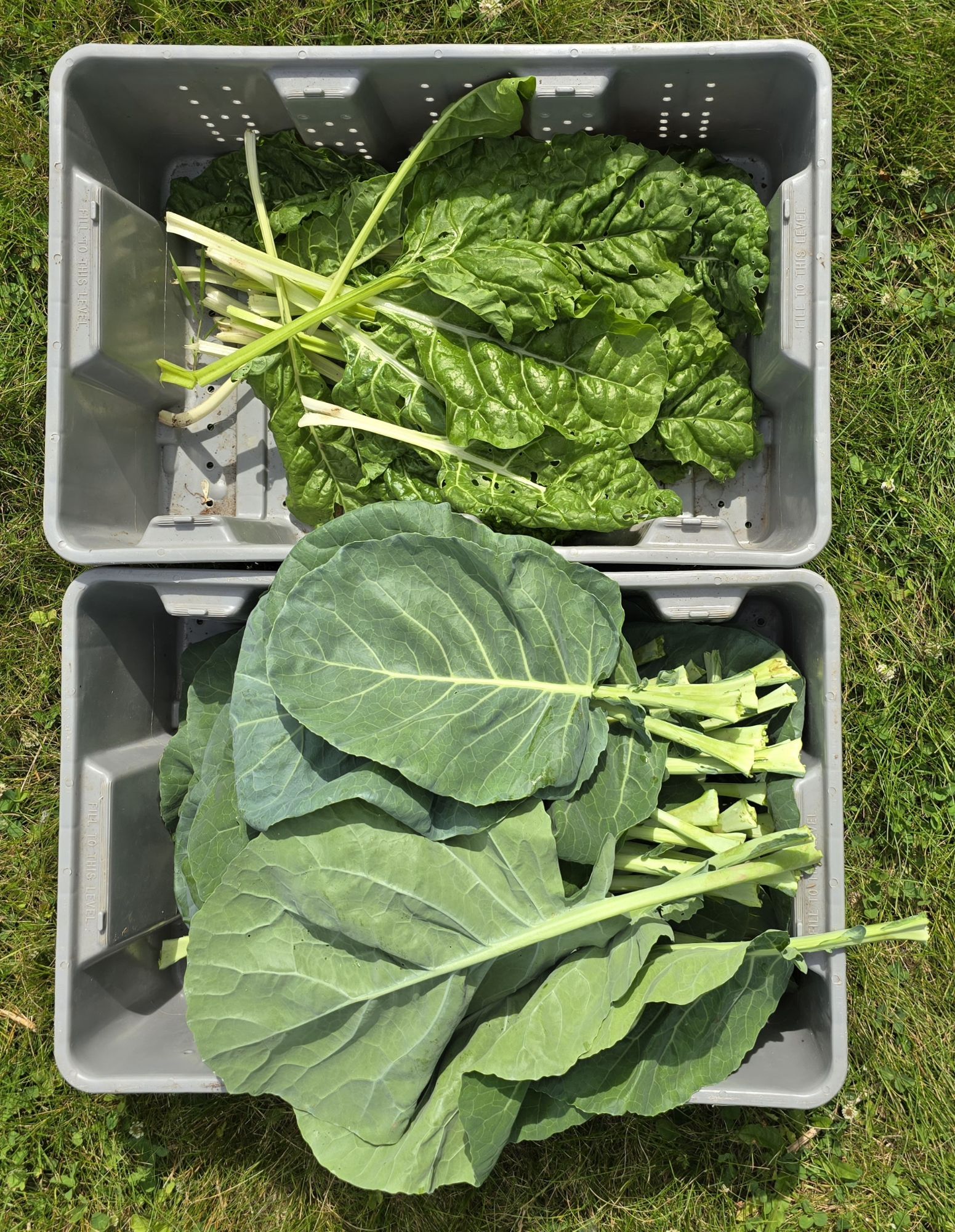
Swiss chard and collards donated to the North Liberty Food Pantry.

After an overnight trip to Chicago to visit family and friends, I’m ready to begin summer writing. Ideas have been percolating all spring. It’s time to get them down and make something of them.

I enjoy the Chicago suburbs of Oak Park, Skokie, and Forest Park where I have been spending more time the last couple of years. It is remarkable how from the ground it looks exactly like you’d expect after seeing it countless times while taking off from and landing at O’Hare and Midway. I stayed with someone who lived his whole life in close proximity to where he was raised in Oak Park.

The main summer writing challenge is determining a schedule. I want to get into the garden early in the day to weed and harvest. I don’t want to spend all my energy there. I plan to shake up my daily outline and routines. The re-engineering process should be fun, and easy to accomplish by Friday.

Tuesday morning I took excess chard and collards to the food pantry. The receiver told me, “Those will go fast.” I always feel good when I donate produce I grew for food insecure people.

There are a lot of positives in the waning days of spring. If we can only take the time to recognize them.

Categories
Kitchen Garden

Spring Kale is the Best

Cart of five varieties of kale picked June 17, 2023.

The best kale is harvested before the characteristic little green worms have a chance to establish themselves. I deter them from getting too far by a couple of applications of Dipel, an insecticide containing toxins from Bacillus thuringiensis kurstaki (Btk), a naturally-occurring bacterium found in soil and plants. Btk is not harmful to humans, to birds, or to most beneficial insects and pollinators. It is widely used by farmers who use organic practices. The truth is one has to do something about the little green worms to have a good crop. This year, because of these applications, the cruciferous vegetable patch of kale, collards, broccoli, cabbage, chard, and cauliflower looks quite good.

The spring greens harvest has two major purposes outside eating fresh kale and collards. I stem the leaves and put as many packages as will fit in the freezer. Less attractive leaves, as well as the stems go into canned vegetable broth. I have been following this practice since we got a small freezer during a power outage. Since then, we upgraded to an upright freezer. This enables us to eat greens all year, until next year’s crop. It is something that goes well in our garden. Something upon which we rely in our everyday cooking.

Based on the number of white butterflies spotted in the cruciferous vegetables yesterday, it will be hard to keep up with them soon.

We like kale, especially in stir fry, soups, and tacos. Many people do not care for it. I learned to grow it from my friend Susan back in 2013. I would stop eating it if I didn’t grow it myself and control all the inputs. Part of aging successfully will be figuring out how to continue the annual kale crop.