Categories
Living in Society

Reading While Aging

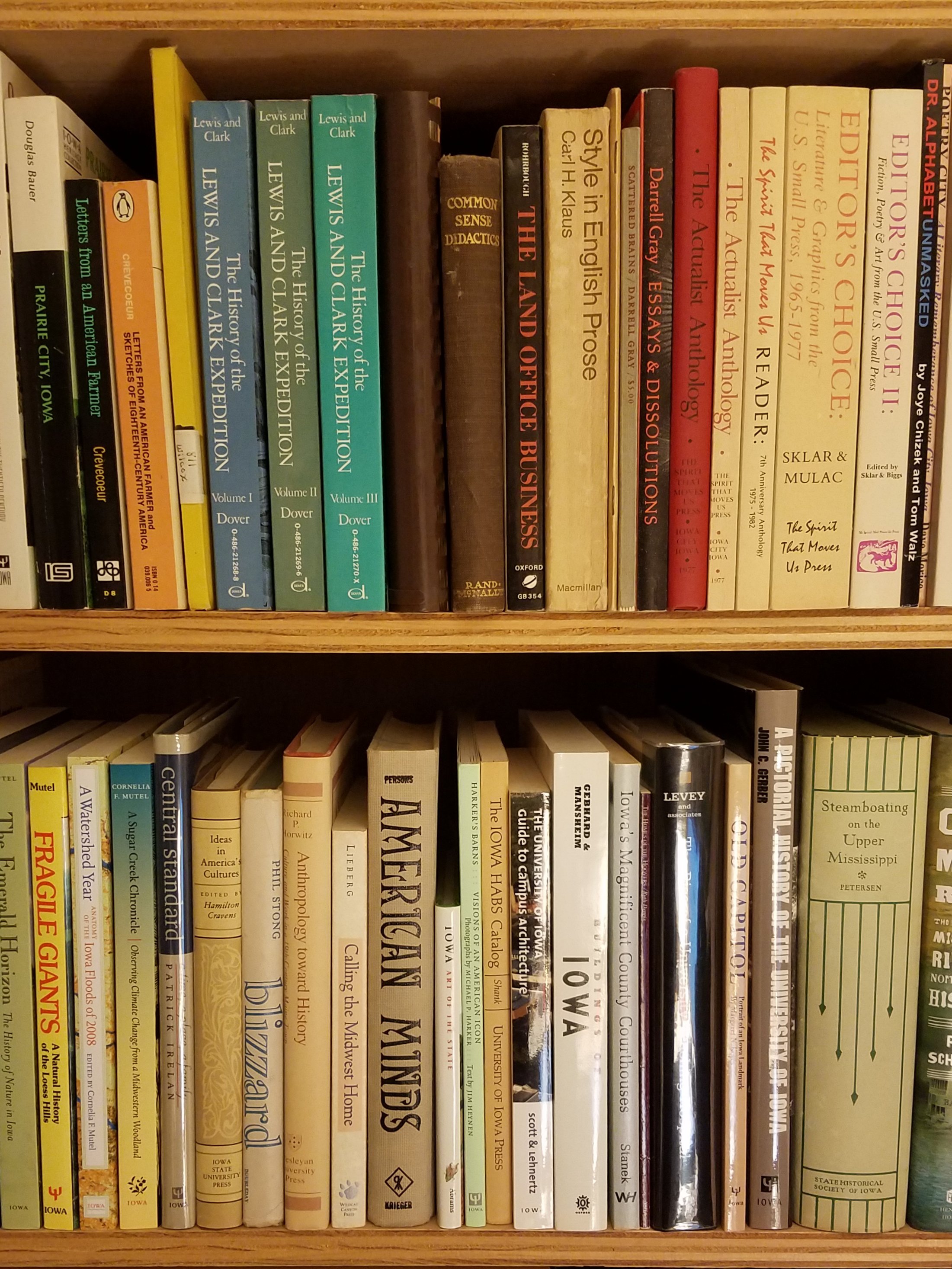
Books by Iowa-connected folks.

On the corner of my sorting table rest piles of recently read books. I am shocked at the level of retention from the experience. It is not as much as I want. Is there an issue with reading while aging, or not?

In an article titled, “Reading in Normally Aging Adults,” authors associated with the American Psychological Association present the following article abstract which describes the physiological and cognitive process. Sorry, it is a bit long, yet everything in it is important.

Skilled reading requires coordination of knowledge about language with a broad range of basic cognitive processes. While changes due to aging have been documented for many of those cognitive processes, the ability to read declines little during healthy aging. Aging is associated with slower reading, longer eye movements and more regressive eye movements, but the qualitative patterns of older adults’ eye movements in response to lexical characteristics (e.g., frequency) and sentence characteristics (e.g., word predictability) largely resemble those of younger adults. The age-related differences in reading behavior are due in part to older adults’ reduced visual abilities. In addition, they may result from compensatory strategies wherein older adults rely more on their intact semantic intelligence and less heavily on perceptual processing of text, or alternatively they may be a consequence of older adults being less adept at effectively coordinating word recognition with processes of oculomotor control. Some age-related declines are seen when reading comprehension and text memory are assessed at lower levels of representation for complex sentences. However, older adults perform as well or better than younger adults when higher-level meanings of a text are assessed. These high levels of performance reflect older adults’ ability to draw on crystalized semantic intelligence that provides well-organized structures in long-term memory of the patterns that tend to occur in natural language. (PsycInfo Database Record (c) 2022 APA, all rights reserved)

Reading in normally aging adults by Gordon, P. C., Lowder, M. W., & Hoedemaker, R. S. APA PsychNet.

My take away is that while my vision has somewhat deteriorated, mental capacity remains strong, and I can draw on information and experience gained in my past to better and more quickly understand what I am reading. According to other articles I read this morning, reading can maintain mental functioning, and stave off common mental illnesses among the elderly like Alzheimer’s disease.

The money quote is, “However, older adults perform as well or better than younger adults when higher-level meanings of a text are assessed.” In theory, these psychologists say, since I have visual acuity, I retain the potential to be as good a reader as anyone.

Why am I worried about the piles of books read yet little remembered?

The abstract points to a borderline area of reading: the interaction between read text and the stored intelligence in my brain. To what extent am I processing what I read in context of past reading experience, and to what extent am I taking in text to gain new experiences? My fear is it is the former. If we read, it should be to expand our knowledge and experience, not to intake words and sentences as a form of confirmation bias.

Because I curate a large home library, I plan to continue reading for as many months and years as possible. My daily reading goal is 25 pages from a book. For the most part, I exceed that amount depending upon how engaging the writing has been. Importantly, I want more than to check off the daily reading goal box on my to-do list. I want to gain knowledge and experience that will help me better cope with society. I want to read to become a better writer.

By year’s end I will have read almost 60 books. If the text is being assimilated into my existing cognitive capacity, there is nothing wrong with that. I take up each new book with hope it will reveal something about society, something specific in life, an answer to a question or something about myself. I also read to see how other authors write. As long as I take a few minutes to appreciate each book after finishing it, I am of an age where everything read becomes part of my world view.
Categories
Living in Society

Reading 2022

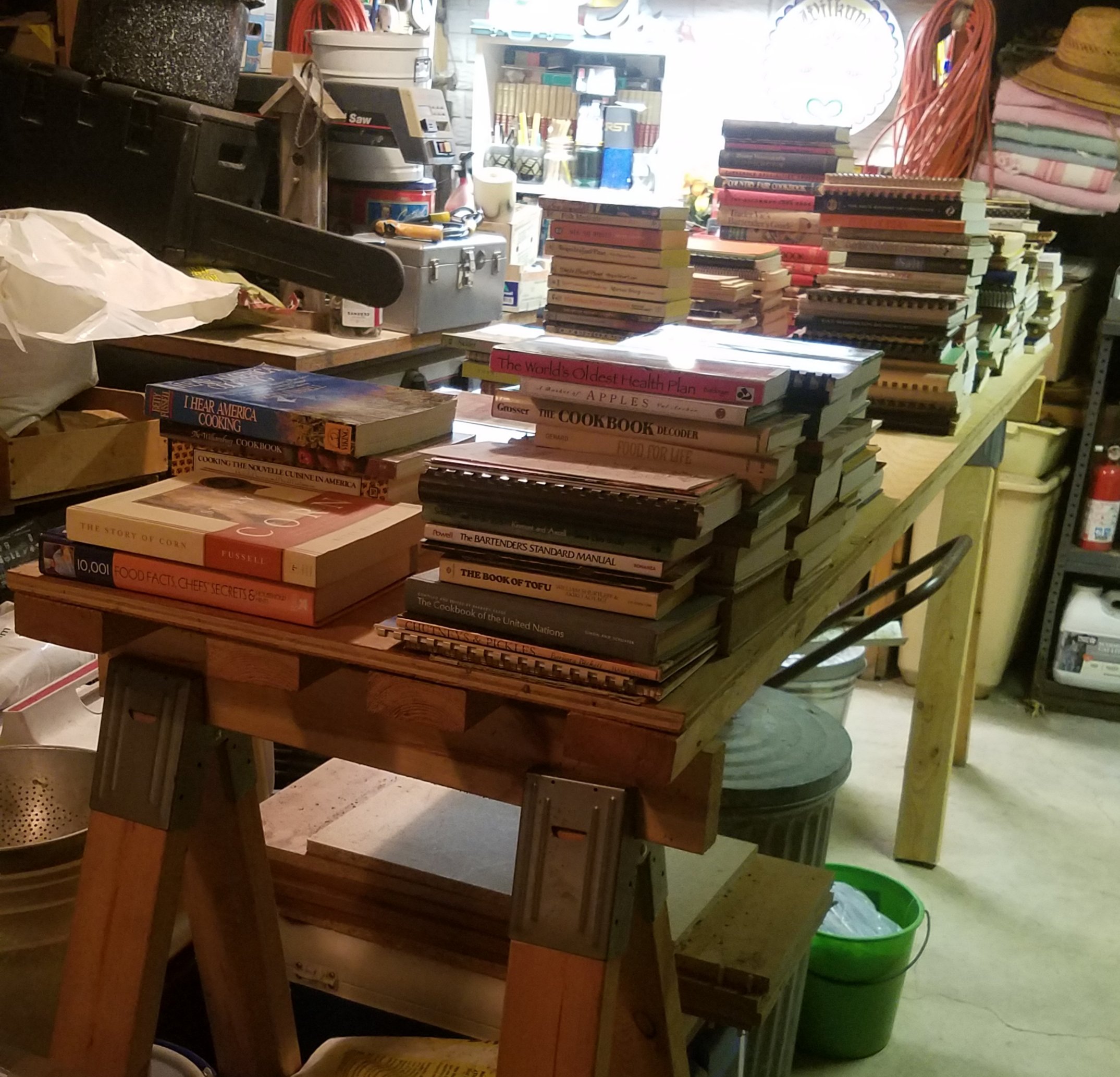
Sorting books for library downsizing.

The garlic rack converts to a table by using a remnant of a 4 x 8 sheet of 3/4-inch plywood used to build our child a loft bed for college. I laid it down on top of the two by fours used to hold garlic as it dries. The rack is tall enough so garlic leaves don’t touch the floor. As a table I can work without bending over. It is a useful space to sort things out.

I read 50 books thus far this year. They are listed on the Read Recently page which is updated after I finish each one. Here are the highlights of this daily activity.

By far, the most interesting book was Year of the Tiger: An Activist’s Life by Alice Wong. She was born with spinal muscular dystrophy and her book stands out as a tale of living an active life with a disease that confines her to a wheelchair. In her discussion of Twitter, she describes how the social media platform is used by disabled persons who may have no other public voice. As Elon Musk acquired and is changing the platform, I hope he improves the disability community’s ability to participate in this aspect of society.

Memoirs and biography were too small a portion of the books I read. As someone writing their own autobiography, I should be reading more in this category. Each of the four I read was important. I enjoyed Loretta Lynn: Coal Miner’s Daughter more than Ted Kennedy: A Life by John A. Farrell and Like a Rolling Stone by Jann S. Wenner. Lynn’s book was relatable in a way Kennedy and Wenner are not. A person can take only so much of the life story of rich people. I associated Joan Liffrig-Zug Bourret, who died in the care center in town this year, with the many cookbooks she published at her Penfield Press. Her memoir, Pictures and People: A Search for Visual Truth and Social Justice tells a story that goes well beyond her chronicling of the Amana Colonies in Iowa.

When We Cease to Understand the World by Benjamín Labatut seemed unique and necessary. The Chilean author presents, as The Guardian put it, “an extraordinary ‘nonfiction novel’ that weaves a web of associations between the founders of quantum mechanics and the evils of two world wars.” It was unlike anything else I recently read.

I read fiction for diversion and to see how other writers do their work. Amor Towles’ The Lincoln Highway was the best of the lot this year.

In poetry, how did I miss Mary Oliver in my life? I don’t know but Devotions: The Selected Poems of Mary Oliver was well-written and engaging. I’ll be returning to this excellent volume.

Rising Tide: The Great Mississippi Flood of 1927 and How it Changed America by John M. Barry tells a story essential to anyone who is from or is writing about life in the Mississippi basin.

Related to my autobiography was The Trader at Rock Island: George Davenport and the Founding of the Quad-Cities by Regena Trant Schantz. This is an essential book about the settling of the Midwest. What was most surprising is it was just published in 2020. I would like to have read this when I was a teenager in Davenport.

There were no real clinkers in this year’s books. What made a difference in reading more was setting a daily goal of reading 25 pages in a book. I hope readers find my review of 2022 reading to be useful. I’d love to hear what you are reading in the comments.

Categories
Reviews

Book Review: The Hidden History of Big Brother in America

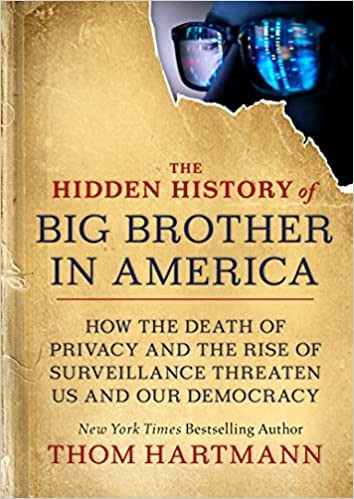
In The Hidden History of Big Brother in America: How the Death of Privacy and the Rise of Surveillance Threaten Us and Our Democracy, author Thom Hartmann focuses on Big Data and its consequences for all aspects of our lives. In the framework of surveillance and social control, Hartmann traces the history of surveillance and the threat of violence to control behavior, thought, and belief by our political and social masters.

Referencing George Orwell’s book 1984, Hartmann wrote, “Orwell was only slightly off the mark. Big Brother types of government, and Thought Police types of social control, are now widespread in the world and incompatible with democracy.”

What makes this book timely is the way Trump campaigns used Facebook and Cambridge Analytica to scrape personal data about tens of millions of voters from the internet, and then custom targeted them with tens of thousands of distinct daily ads designed to either persuade people to vote for Trump or not vote at all. On the day of the third presidential debate in October 2020, Hartmann wrote, team Trump ran 175,000 variations of ads micro-targeting voters. These ads were, for the most part, not publicly seen.

Here in Iowa the Republican legislature seeks to control our behavior with legislation intended to address perceived constituent needs. Iowa Republicans approach it with a dull knife. For example, because of feedback and paranoia about transgender girls, Republicans introduced legislation to ban trans females from Title IX activities. This legislation would create discrimination for sure, and potentially a bullying environment for children. They seek to control our behavior and even such crude attempts at social control are anti-democratic. By using bludgeoning methods, Iowa Republicans were not nearly as effective as Trump’s use of Big Data to spy on voters and use what they found to influence their decisions.

Thom Hartmann

Whether one is liberal, conservative, libertarian or whatever, we have concerns about how Big Data firms like Google, Facebook, Oracle, Microsoft, Amazon, and others surveil and use data we consider to be private. In the beginning we considered such data collection and use to be for advertising like generating sales for a brand of energy drink. Whether it is conservatives who have paranoid feelings that “Big Data” is collecting personal information, censoring and manipulating people, liberals who see companies like Cambridge Analytica violating their privacy, or Amazon Ring customers concerned about law enforcement gaining warrantless access to video from the camera at their doorstep, Big Brother is watching us, eroding our privacy, and threatening our democracy.

In The Hidden History of Big Brother in America, Hartmann uses extensive examples to highlight the consequences of Big Data on our lives. He traces the history of surveillance and social control, looking back to how Big Brother invented whiteness to keep order, and how surveillance began to be employed as a way to modify behavior. “The goal of those who violate privacy and use surveillance is almost always social control and behavior modification,” Hartmann wrote.

Big Data threatens privacy and enables surveillance, Hartmann wrote. The lack of alternatives to lifestyles that involve feeding into Big Data leads to almost forced participation in surveillance by Big Brother. Surveillance and lack of privacy are a threat to freedom, he wrote, because the information gathered can be abused, people have a right not to be observed, and being observed is an intervention that can affect those who are observed.

Are we doomed to live under Big Brother’s watchful eye? How much social and political control should corporations have in society? How much Big Brother will modern people tolerate? For discussion of answers to these timely questions and more, I recommend the Hidden History of Big Brother in America.

Thom Hartmann is a four-time winner of the Project Censored Award, a New York Times bestselling author of thirty-two books, and America’s #1 progressive talk radio show host. His show is syndicated on local for-profit and nonprofit stations and broadcasts nationwide and worldwide. It is also simulcast on television in nearly 60 million US and Canadian homes.

To buy a copy of the Hidden History of Big Brother in America: How the Death of Privacy and the Rise of Surveillance Threaten Us and Our Democracy, click here. The book is available March 8, 2022.

Categories
Reviews

Book Review: Peril

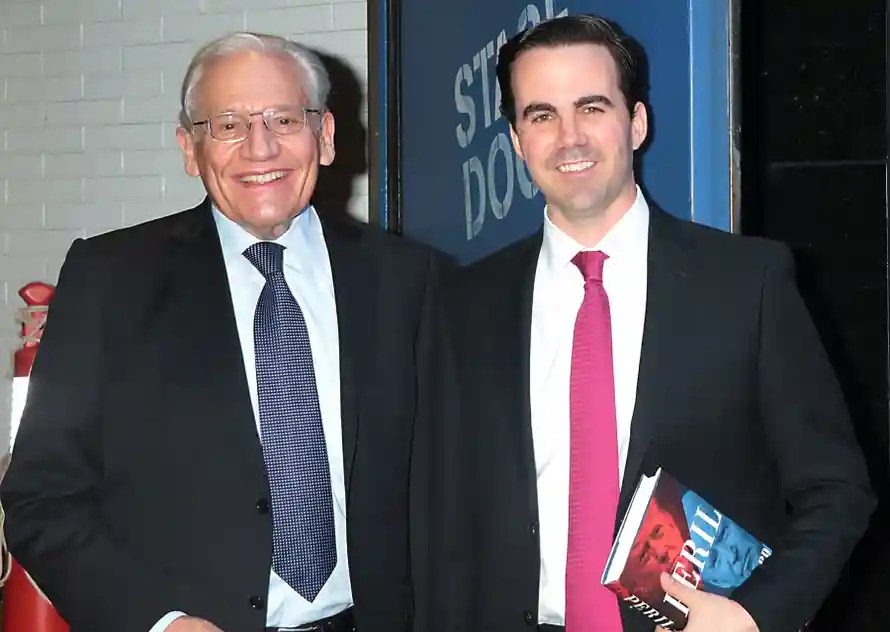
Bob Woodward and Robert Costa. Photo Credit – The Guardian

The effort to disrupt the Electoral College vote counting at the U.S. Capitol on Jan. 6, 2021 was appalling. It was made worse by the fact a sitting U.S. president, in order to overturn a legitimate election and cling desperately to power, organized, led and encouraged a mob. When events turned deadly, the president failed to call off the demonstrators in a timely manner. By any definition, what happened that day was insurrection.

Peril by Bob Woodward and Robert Costa is the first draft of historical narrative of events leading to that day and its aftermath during the first months of the Biden-Harris administration. The authors interviewed more than 200 people for the book and it reads like history. It’s not that. It is more like an extended newspaper article. Discovery of new aspects of the events leading to Jan. 6 have been released almost daily. The pace of new information is expected to accelerate in 2022. This book is what we have now to provide an overview of what happened.

To the extent Peril recounts what happened, it is useful the way a newspaper article is useful. It left me wanting to know more. It is neither the best written political book, nor does it provide meaningful insights. Its narrative is believable yet incomplete.

The good news about Peril is that it took less than 48 hours to read. Combined with our first winter storm and in between snow removal, cooking, and indoor work, it made an engaging companion. There will be better books written about Jan. 6 once the United States House Select Committee on the January 6 Attack finishes its work. For the time being, Peril can accompany us on the journey to determine what happened and what a voter can do to remedy the causes of this doleful day.

As an American the need for action is obvious. Reading Peril is an efficient way to get caught up after the end of year holidays. What comes next is an open question.

Categories
Reviews

Top 2021 Book Picks

I beat my 2021 goal and read 54 books this year. I also developed a process to give prime time, early each day, to reading 25 or more pages. Either book reading is important in our lives or it isn’t, I reasoned. So I read books, almost daily. Book reading is an important part of any writer’s life. Here are those I found most useful and memorable.

Poetry: I re-read A Coney Island of the Mind after Lawrence Ferlinghetti’s passing on Feb. 22, 2021. An important part of my high school reading, it held up well. In addition, I read books of poetry by Amanda Gorman (The Hill We Climb), Gabriela Marie Milton (Passions: Love Poems and Other Writings), Charles Wright (A Short History of the Shadow: Poems), Gary Snyder (Turtle Island), and bell hooks (Appalachian Elegy: Poetry and Place). I read the memoir of poet laureate of the United States Joy Harjo, Poet Warrior.

Current Affairs: Under a White Sky: The Nature of the Future by Elizabeth Kolbert stands out in this category. Her writing is compelling and this book is relevant now. Other current affairs books I’d recommend are Persist by Elizabeth Warren, Running Out: In Search of Water on the High Plains by Lucas Bessire, The Decarbonization Imperative: Transforming the Global Economy by 2050 by Michael Lenox and Rebecca Duff, The New Climate War: The Fight to Take Back Our Planet by Michael E. Mann, and Don’t Even Think About It: Why Our Brains Are Wired to Ignore Climate Change by George Marshall.

Other Favorites:

Wilding: Returning Nature to a Farm by Isabella Tree
Vesper Flights by Helen Macdonald
Turning Pointe by Chloe Angyal
On Earth We're Briefly Gorgeous by Ocean Vuong
Poles in Minnesota by John Radzilowski
What I Mean by Joan Didion

Check out my Goodreads profile for the complete 2021 list by clicking here.

Categories
Reviews

Book Review: Persist

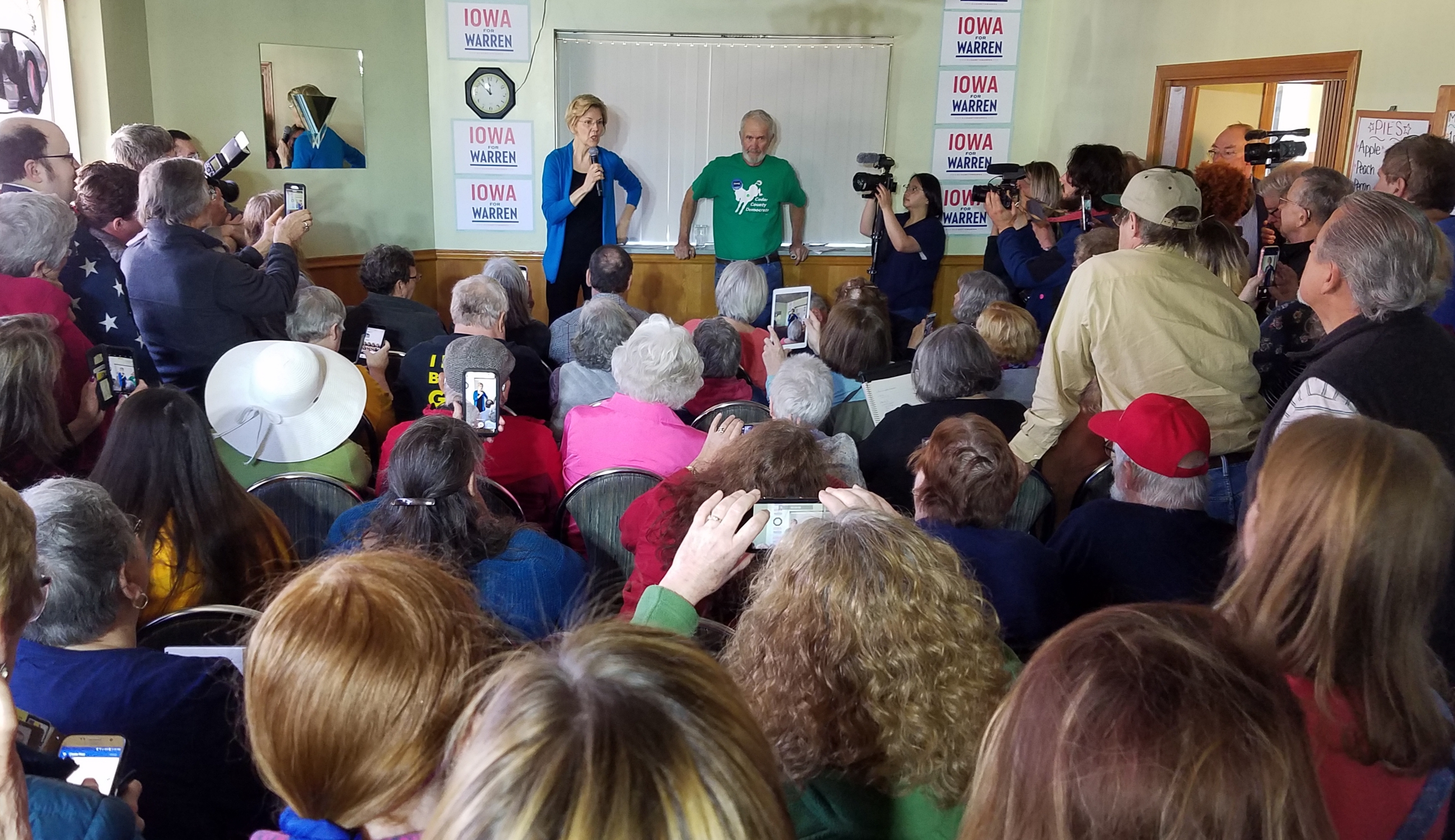
Elizabeth Warren Meet and Greet in Tipton, Iowa. April 26, 2019

I was invested in Elizabeth Warren’s campaign for president and attended some events about which she wrote in Persist, her memoir published this year.

Like tens of thousands of others I waited in a selfie line and got my moment. I don’t recall what we talked about. Of all the things I thought about Warren during the campaign and afterward, the book is about something I hadn’t considered much: she’s a woman living in what largely was and remains a patriarchy.

The book is worth reading whether you are a fan or not. It explains some of her major policies in a way only a teacher could: clearly and rationally. For example, I didn’t understand the importance of child care to society until I read her explanation in Persist. When talking with friends and Democratic acquaintances during the run up to the Iowa caucuses, I heard the discussions about whether we should run another woman for president, whether a woman could win against Donald Trump. Those questions weren’t asked of men. Warren recounts these attitudes and what they meant in detail. I knew there would be wonkish policy stuff yet I didn’t expect the book to be as good as it was.

I couldn’t live the kind of life Warren does, mostly because I’m not as smart and don’t have the same kind of drive she does. The book serves as an example of a life worth living, an example of how to deal with prejudice, sexism, racism, economic injustice and more. It inspires us to dream big, fight hard and be better citizens.

We’ll never know what the United States would have been like with President Elizabeth Warren. For the time being we can be glad she’s in it with a position of power. We can also follow her suggestion and persist.

Categories
Reviews

Book Review: Equity

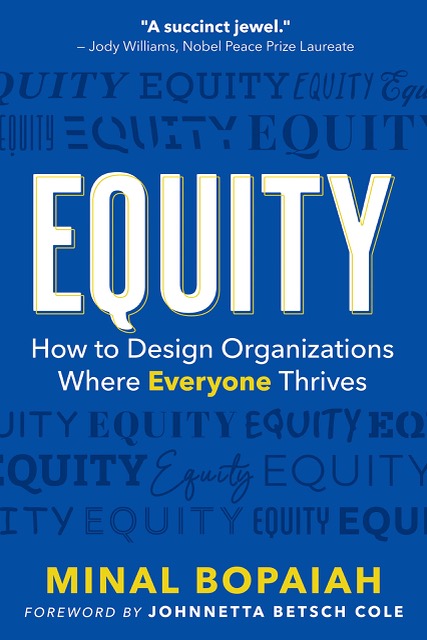
The challenge of creating work places that have inclusion, diversity, equity and accessibility is everywhere. In her new book, Equity: How to Design Organizations Where Everyone Thrives, Minal Bopaiah outlines how to turn lip-service about equity into a real world success story.

“Equality is when everyone has the same thing,” Bopaiah said. “Equity is when everyone has what they need to thrive and participate fully. Equity does not fault people for being different; it makes room for difference and then leverages it.”

The book covers a range of organizations, including for-profit companies and non-profit, non-governmental organizations. She has experience with both and leverages it to strip away buzzwords and conventions often used by management consultants. She reduces the narrative to easily understandable, succinct, and usable language.

Bopaiah introduces us to leaders who have overcome obstacles to equity and led transformative change: 

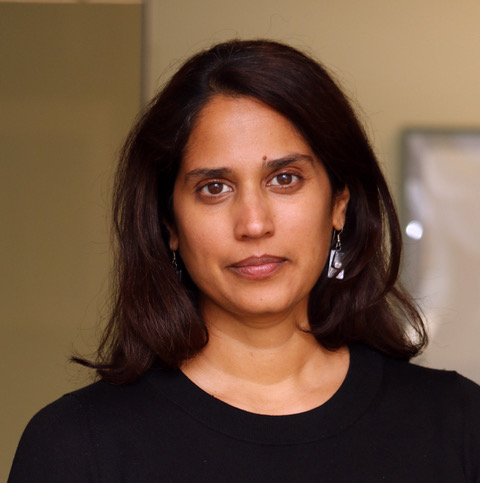
Minal Bopaiah
  • Managing partners at a consulting firm who learn to retell their story of success by crediting the system that supports them. 
  • News managers at National Public Radio who discover how they can create systemic support for diversifying sources on the air. 
  • A philanthropic foundation that collaborates with grantees to better communicate the importance of equity in healthcare to policy-makers. 
  • And creative professionals who have begun weaving inclusion, diversity, equity, and accessibility into the content they create, thereby transforming how customers and audiences view the world.

As a person who spent a career in business with a company experiencing dramatic growth, I found Bopaiah’s discussion of the myth of “rugged individualism” particularly engaging. She defines rugged individualism as “the belief that individuals are independent and unaffected by the system, time, or context in which they live and that their success is the sole result of their hard work and no other factors.”

One truth about organizations, businesses, and society more generally is the “system” can have a tremendous effect on dividing people and promoting more privileged members among them. As Bopaiah wrote regarding her Indian-American parents, the myth of rugged individualism can cast us “as characters in some kind of Horatio Alger tale in which the world is fair and everyone can succeed if they work hard enough.” Our systems favor the rich and privileged. Bopaiah’s concept of equity provides a way to address what can be a false narrative that suppresses an individual’s ability to participate in an organization equally with others.

Time spent reading Equity: How to Design Organizations Where Everyone Thrives will pay dividends in understanding how organizations in which we participate can be better through inclusion, diversity, equity and accessibility. It is a fast read and moves along quickly to key points of Bopaiah’s narrative. Highly recommended for its brevity and focus.

Equity: How to Design Organizations Where Everyone Thrives is scheduled for release on Sept. 7, 2021.

Don’t have time to read Equity? Here’s a brief video in which Bopaiah explains one of the basic concepts of the book, IDEA: Inclusion, Diversity, Equity and Accessibility.

Minal Bopaiah is the author of Equity: How to Design Organizations Where Everyone Thrives. She is the founder of Brevity & Wita strategy + design firm that combines human-centered design, behavior change science and the principles of inclusion, diversity, equity and accessibility to help organizations transform themselves and the world. Bopaiah has written for the Stanford Social Innovation Review and The Hill and has been a featured guest on numerous podcasts and shows. She has also been a keynote speaker for many conferences, inspiring thousands with her credible, authentic, and engaging talks. For more information, please visit https://theequitybook.com

Categories
Living in Society

Summer Reading – 2021

Summer Reading – 2021

My reading pace slows down in the summer. While I used to get summer started by re-reading The Great Gatsby by F. Scott Fitzgerald, the story has become so familiar I leave it on the shelf now. It’s close by in case I change my mind. I wrote about it here on the occasion of its copyright expiration in January. Here are nine books on my to-read list for Summer 2021.

Weather for Dummies by John D. Cox. I spend part of each day studying the weather forecast and living in the climate. I’ve become adept at interpreting available, free weather radar in terms of how the forecast might impact mundane tasks like mowing the lawn, walking or bicycling on the trail, and gardening. I need a more thorough understanding and Bill Gates recommended this book in his recent How to Avoid a Climate Disaster: The Solutions We Have and the Breakthroughs We Need. Gates’ book made me mad in a couple of ways, yet I’m taking his recommendation about this book.

Stuffed and Starved: The Hidden Battle for the World Food System by Raj Patel. In case you missed it, I post about food and the food system quite often. I noted Mark Bittman referenced Patel’s book a couple of times in his recently published Animal, Vegetable, Junk: A History of Food, from Sustainable to Suicidal. Since I already had purchased Patel’s book, I’m moving it into the top nine for this summer’s reading.

Devotions by Mary Oliver. A person needs poetry and there is so much from which to choose. I read Oliver’s American Primitive and liked it a lot, leading me to buy this collection of selected poems. I don’t think I can go wrong.

Land: How the Hunger for Ownership Shaped the Modern World by Simon Winchester. Winchester is among my favorite authors. Every chance I get to read for entertainment, I find one of his books and have not been disappointed. I particularly enjoyed The Alice Behind Wonderland but every one I read was memorable.

Unworthy Republic: The Dispossession of Native Americans and the Road to Indian Territory by Claudio Saunt. There has been much discussion about how terrible Andrew Jackson was toward native and enslaved people. It’s time I learned more than the brief study I gave him in graduate school.

World Vegetarian by Madhur Jaffrey. Of the many cookbooks in my collection what I need most is development of our vegetarian cuisine. I like Jaffrey’s writing and expect to explore her world this summer to find inspiration for our kitchen garden.

Trouble in the Stars by Sarah Prineas. I found this young adult book by my political pal Sarah Prineas surprisingly engaging. There is something about the style of young adult fiction that keeps the story moving quickly along. There is more to this book than the primary narrative. Take a look!

Turning Pointe: How a New Generation of Dancers is Saving Ballet from Itself by Chloe Angyal. Halfway into this book, I find it engaging and a bit of a stretch of my interests. (The only other book I read on ballet was Gelsey Kirkland’s memoir Dancing on my Grave). I met Angyal at a book event featuring Sarah Smarsh and Connie Schultz soon after she moved to the Iowa City area. Angyal spent most of her time here writing this well-researched and informative book. It’s my current read and I look forward to finishing it this summer.

Birds in the Morning, Frogs at Night: Sharing Life Along the Road by Maureen McCue. When Maureen and I met on the Johnson County Board of Health we started a friendship that led to public advocacy on the gravest threats to society: the climate crisis, nuclear weapons, and public health risks of how utilities generate electricity. This is her story. I’ll be sure to write more once I finish it.

What books are you planning to read this summer? If you’d like to share, please leave a comment. Happy reading!

Categories
Reviews

Book Review: Our Time Is Now

If one needs a palate cleansing after the bitter taste of the Trump years, Stacey Abrams’ Our Time is Now is just the book to read.

I didn’t know what to expect going in. I knew of her close Georgia gubernatorial race in 2018. I followed the Georgia U.S. Senate runoff elections last month and knew she played a role in voter turnout after declining to be a candidate herself. If anything surprised me about the book, it was how timely is Abrams’ message as the Biden-Harris administration gets to work.

There are some key takeaways:

She emphasizes the importance of counting everyone during the U.S. Census. Undercounting the poor, persons of color, and other disenfranchised U.S. residents serves to further disenfranchise them. President Trump attempted to politicize the U.S. Census. President Biden reversed Trump’s executive actions and seeks to give the Census Bureau needed time to make the best count possible. That means a delay in states receiving information required for their decennial re-districting process. Biden knows what Abrams suggested: the U.S. Census is important to restoring political power to people.

Abrams emphasizes that people should vote. She also criticized the voter targeting methods use in the 2016 and 2018 Democratic campaigns. Voter registration continues to play a key role in citizens gaining political power. It goes without saying voting does as well. The conclusion I drew from the book was that no voter should be ignored during campaigns.

The book refreshes our collective memory about voter suppression efforts by Republican lawmakers. Abrams’ story was she overcame systemic voter suppression during her Georgia gubernatorial campaign by the sheer number of new voters they activated. The permanent solution is for voters to take control of the electoral process by electing more Democrats at every level. With Democratic control of state legislatures, it is less likely voters will be suppressed.

As a child I learned the importance of civic engagement. Unlike most Americans today, I study the issues and candidates, and vote in every election. I don’t know what happened yet we need to return to that basic tenant of governance. If we seek to retain government by the people, participation is required. That is Abrams’ message.

I read a lot of political books and Abrams’ book is well-written and relatable. If we seek to move our country forward, elect more Democrats. Stacey Abrams has provided a roadmap in Our Time is Now.

Categories
Living in Society

Home Library

Bookshelves, Feb. 2, 2021.

Toward the end of my seventh decade I continue to buy books. I should stop, turn that around, and reduce my stacks each week. I am loathe to do it.

From my earliest days, going back to 1959 at least, I had a small library of books either given to me, or once I started working, ones I bought. The library has grown too big, and in truth, that happened years, maybe decades ago.

The easiest change would be to start reading books on an electronic reader instead of buying paper copies. Readers are convenient and the font size can be adjusted, making words easily legible. Quality of eyesight is increasingly an issue. A reader is better for reading in bed, and in a recliner or comfy chair. It would not be a big change to start reading fiction in that format. Adopting technology is a good thing and it would stop growth of the stacks.

A lot of volumes in my library were written by people I know, with whom I took classes, or did things. Others were special gifts. They have a souvenir value, a remembrance of time together.

For example, I made a driver recruiting trip to Southern Illinois University where, in addition to my recruitment event, I spent time with some teachers who felt isolated in the coal mining area. Students were more interested in getting a job in the trades — truck driving, coal mining, or manufacturing — than in learning. The teachers stuck together as a form of intellectual society. One of the group was Lucia Perillo who wrote a book of poetry, The Oldest Map with the Name America. I return to it often as a reminder of the challenge of intellectual pursuits in our time. I don’t recall if I met Perillo, but she was part of the group and it doesn’t matter to the memory.

The problem with books is they can be used as reference materials for my writing. It is a justification to keep almost any book. The idea I may return to it later for “research purposes” may sound good, but there is so much research and so little time. I need to thin the stacks. That, too takes time.

Our daughter expressed an interest in inheriting my books when I go. It would be a crime to leave her everything because some are more significant than others. If anything, the ideas of an inheritance will force a reckoning, a reduction in quantity, and an improvement in quality.

I started filling boxes that arrived containing mail ordered books with duplicates and others in which I lost interest. The idea is to give them to the public library for their used book sale. I have three boxes so far and it’s a start. I should fill more boxes.

Books are an addiction. In the scope of things, it is an inexpensive addiction. I spend no time on sports, movies and television, and go shopping only when we need something. Books can produce value in our lives. I’m reading more of them. Partly due to the coronavirus pandemic, but also because I realize the limited number I can consume before my inevitable ending. There is an increased urgency to read.

A friend said I should get rid of all the books. So did my late Mother. While I’m not ready to do so, a reasonable goal is to fit all of my books in the writing room. I have a long way to go to accomplish that, if it can be accepted as an operating premise. Today, I’m not sure it can.