Categories
Writing

The Dam Breaks

Checking the Earliblaze apples on June 26, 2023.

The cartomancer drew an Ace of Spades, indicating things that have been in disarray in my life may be coming together. After mild spells of undiagnosed dizziness today and yesterday, I feel the dam breaking and am ready to portage to the other side as the impoundment pool is released. That means I will return to writing my autobiography soon.

I sent the first half to four friends from whom I hope to hear feedback. Two have responded and two are married and will respond together when both finish reading. The feedback garnered thus far has been invaluable.

The next decision is whether to work on the part just reviewed or work to get the rest of it up to the same level of completion. The second part is problematic in that there are multiple narrative threads which represent a lot of work. At the same time, revising what was reviewed makes some sense while the feedback is fresh.

In part two there will be the experiences with family before our child attended formal school. Those are the most important years and they are over before we realize it. It is important to capture some of those fleeting essences while we can. We brought her home from the hospital to Cedar Rapids, Iowa where we lived the first 30 months, then moved to the Calumet region of Indiana where she started Montessori School, followed by public schools. We moved to Big Grove Township in 1993. That’s one narrative.

I lived through the post-Reagan years of turmoil in the workplace and have things to say through the frame of living in the Calumet and recruiting truck drivers and mechanics. More than anything, in interviewing some 10,000 people, I learned and felt directly the pain Reagan’s initiatives put so many working people through. I want to tell that story.

The challenge of being a writer intensified with the advent of computer technology. Of what was this new tool capable? What were realistic expectations? How did it change the way I wrote? How did writing in public change from my first letter to the editor in 1974 until today? Another narrative worth exploring.

During my career in transportation I traveled all around the country. I spent the most time in Indiana, Michigan, Illinois, Georgia, Tennessee, Ohio, Pennsylvania, New York, West Virginia and other states. I used to bring a magnet home from each new place and filled up the front of the home refrigerator with them. I spent time with some of the poorest people in the country and with large corporations far removed from the reality most of us know. Sorting that out will be a big task in itself and seems worth doing.

There is a lot in front of me. It appears to be in the cards for me to get going again. I can feel it. I am ready.

Categories
Writing

Clearer View of Writing

Spring clouds

Should a person be sensible and find a job, or follow their passions? This is a false choice, although one many feel compelled to make. I’m not sure those two options often exist concurrently.

My insight into this choice may be the result of getting a new eyeglasses prescription filled. On Friday they were ready at the warehouse club, the first prescription I filled since before the pandemic. I can see clearly now and it’s a revelation. Well, no. That’s not it. Maybe it’s something else.

At our tenth high school class reunion in 1980, I described myself as a writer. Here’s the entire passage from the booklet the organizing committee issued:

Paul lives in Iowa City and attended U of I, BA 1974, and the United States Army Infantry School. He is a writer. He is also a First Lieutenant in the U.S. Army Reserves. M.A. candidate in American Studies at U of I.

Unpublished journal, Summer 1980.

It was out there. I was a writer. Decision made! Not so fast!!

One of the last nights I spent in Davenport in 1980 was with two friends at a bar called The Mad Hatter. We walked to the Palmer Student Union where another friend was performing with his guitar. We had a discussion about how a person had to give up her artwork after taking a job at John Deere. She was tired after work, raising a child, and found little time or desire to make art. I knew if I took a full time job after graduate school I might find myself in the same situation. I had just declared myself to be a writer! I decided to stick it out at least until I finished graduate school.

I had enough money saved to pay for graduate school with help from the G.I. Bill. After graduation I wanted to remain in Iowa City, so I got an apartment and found a low-level job without benefits working for the university. One thing led to another and I met someone, got married, and together decided we needed more money to afford a house and everything else involved in a long-term relationship. Things happen. I didn’t put my writing on hold.

During that first year after we married I made an earnest attempt to write the book about which I had been talking for so many years. The working title was Going Home, and I summarized it in a journal entry:

Going Home will begin with a descent from high culture – Vienna – to low culture – Davenport – á la William Carlos Williams. Then will come a rebuilding – a putting together of a new life from the pieces. A new ascent, with both feet placed firmly on the ground. So, from Vienna, to Davenport, to Iowa City, to Northeastern Iowa. Descent to the ground, but then both feet planted firmly, beginning a step at a time, making a new beginning.

Personal Journal, Iowa City, June 17, 1983.

I’m not sure today what exactly that meant. The image of “both feet planted on the ground” recurred in my journals. It would also be an argument for a common life, free from external structures. At various times, I called the book the 1969 Novel or Going Home, yet it never became much more than an idea about Iowa contrasted with Europe… or something. I made outlines and wrote passages. I made reading lists and trip itineraries. I made research notes for much of 1983.

In each section of Going Home, I want to provide the reader with two things. First, I want them to be able to relate to the personal experience from which each scene is written, enabling them to say, “I’ve been there.” Second, I want them to be able to see that the given experience functions ideologically in the novel, giving the characters some sort of influence. Too, I want the sections to teach the reader a way of life.

Personal Journal, Iowa City, Iowa, June 27, 1983.

I wrote about the book extensively in my journal without getting anything significant down on paper. I had the idea, likely from Emerson, of turning away from the courtly muses to everyday life. I did extensive reading to form a moral framework for the novel. This is all well and good, yet here’s the issue: I had no clue what it meant to be married.

It is significant that at this crossroads there was no real choice between following my passion to be a writer and doing what was sensible. In seeking to write, I sought realization of who I was regardless of any framework for living. The pent up desire to become a writer compelled me to continue to live as best I could: writing, earning money, having a family life, the whole shebang. It would have been easier if Morpheus had offered me a one-time choice between the blue and red pills.

It is important to refrain from framing life as a choice between options. This seems too simplistic. A dilemma means a choice between disagreeable alternatives, yet devising an arbitrary choice is just that: arbitrary. It would be a false choice.

While we might feel good about defining a choice and making a decision, the results seem unlikely to endure. We owe it to ourselves to accept complexity in life and deal with it outright. We can’t settle for second best when both choices are sub-optimal.

It sometimes helps to get a new pair of glasses, to see clearly, even if they are not responsible for choices we make.

Categories
Writing

Writing Caesura

Writing desk in 1980.

The first draft of part one of my autobiography is finished. The narrative begins with my maternal great, great grandfather’s arrival in 19th Century Minnesota and continues until I finished graduate school in 1981. It is a good place to end winter writing as my focus turns to the garden. Caesura.

I’m not finished with the narrative. I sent part one to a reader, and may send it to one or two more. I needed a break from the writing.

I identified as a writer after returning from military service. It persisted. I diligently worked at writing during the first year of our marriage. I felt the urge to do more to earn money and support our small family, and found a new job by March of year two. The birth of our child in year three changed everything. I found outlets for writing through the years yet it wasn’t until 2007, when our child left Iowa, and I started a blog, that I began to find a consistent voice.

Much research and sorting remains. On Saturday I spent several hours reviewing digital files. I deleted so many, One Drive sent me an email asking if I was sure I wanted to delete them. There were some useful passages and many more hours of this lie ahead.

That’s not to mention the artifacts laying around in boxes. All of it needs review. Yet there is a garden to plant and tend to. I’ll work things out in the pre-dawn hours of each day.

The next chapters will be more challenging, as by the time of our marriage, life had gotten complicated. A spouse, a new job, a child, and the challenges of working in the Reagan era all created demands. I met them as well as I was able.

I wrote the outline for part two and have about 60,000 words. As I find relevant writing and subjects, I can copy and paste them there. Once the garden is in, hopefully by Memorial Day, I can take another look at what I have.

In the meanwhile, I had no idea what a big task this would be. As long as my health remains good, I’ll continue to write and edit until this work is done. There is so much invested in it, I can’t abandon it now.

Categories
Writing

Box of Reality

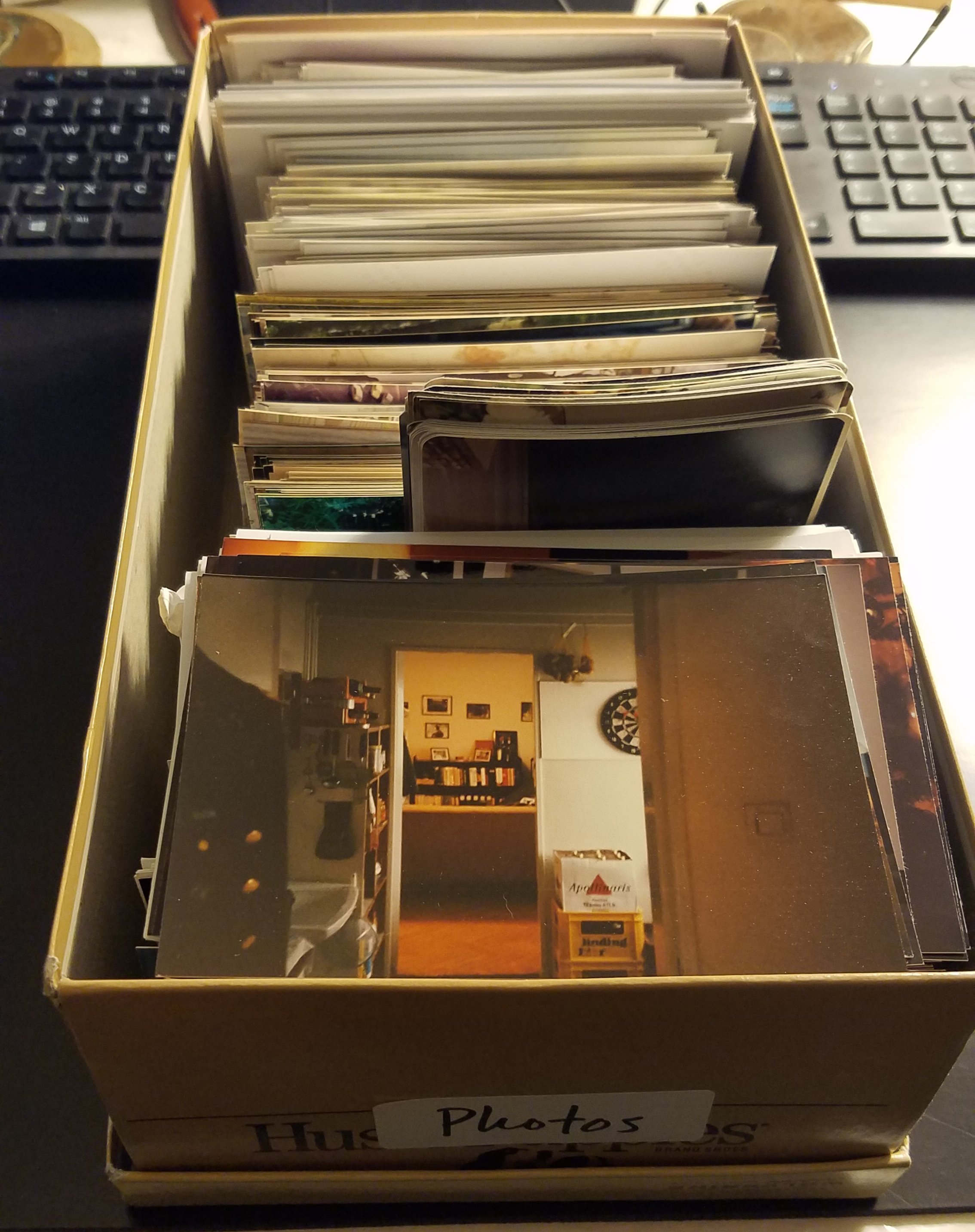
Shoe box full of print photographs, March 21, 2023.

I found a passport I thought was lost in a box of photographs on Monday. It expired in 1983, issued by the American Consulate in Frankfurt, Germany. I put it in the drawer with the previously expired passport it replaced. One less thing nagging at me as a result of the discovery.

I was opening unlabeled bankers boxes to see what was inside. It makes no sense to stuff things in a box without a label, yet that’s where I find myself. Along with some transportation memorabilia, one box contained this shoe box full of photographs. The images covered the entire timeline of the book draft I had finished Sunday. I thought these photos were lost forever.

My habit of making photo albums (using selected images after developing and printing batches of photos) resulted in this collection. It contains remainders of rolls of film from several of those albums. The prints are all mixed up, with different sets of film stuck in the shoe box in what appeared to be random order. At a minimum, I must organize them the way I discussed a few days ago. This is a big and welcome find!

Next will be to organize and edit the images to create another layer of the book narrative. I also want to label them in groups, so I can more quickly find something for my writing. This will take longer than I want, yet it should improve the writing.

I looked through a few hundred photographs yesterday afternoon after chores. I have living memory of taking most of those shots, recognizing them and the place they were taken almost immediately. The harder part is determining what these moments of reality mean in the context of my septuagenarian life. I expect that will be a collaborative project. Already I sent a duplicate of a photo taken in 1981 to the subjects. There will be more of that type of sharing.

It seems best for the autobiography to have been drafted before looking at these photos. Tapping memory and public documents enabled a reasonably researched narrative. Now that I found more photos, we’ll see what else memory dredges up for inclusion in the book.

With Spring arriving yesterday afternoon, it will be challenging to make time for writing. Yard and garden work is also important. After sunrise, I will be drawn outdoors. All the same, how could writing about these memories not be meaningful? I can’t wait!

Categories
Writing

Mixing In Around Town

Paul Engle. Photo Credit – Wikipedia

One election cycle I volunteered on the arrangements committee for the Democratic County Convention. The chairperson passed around a sign-up sheet. When it came to me, I noticed the previous signature was Iris DeMent. I looked to my right and the diminutive singer-songwriter was there, paying attention to the agenda. That’s how things work in Iowa City: the famous among us appear frequently, without apparent structure. I resisted going fan girl over DeMent because she obviously came to help organize the convention. I then turned my attention to the speaker as well

One day I was walking east on Jefferson Street near the Pentacrest. Coming toward me on the sidewalk was an older gent in an overcoat. Once he got closer, I saw it was James A. Van Allen, who discovered the radiation belts that bear his name. He must have come from work at the physics and astronomy department housed in what today is called Van Allen Hall. It was just another day in the county seat.

When I had classes in the English Philosophy Building, chances were I’d run into an author. I saw William Styron there. I believe John Irving as well. One of my undergraduate teachers was David Morrell, who wrote the book First Blood. He was proud of the novel then and had sold the film rights. He officed in EPB as a faculty member for sixteen years.

I ran into Donald Justice once at the UPS Store. He was shipping some books to his new home in Chapel Hill, North Carolina. He didn’t want to carry them on the airplane. I didn’t know him, but he was instantly recognizable because of who he was.

When Louise Nevelson donated the sculpture Voyage to the University of Iowa, I stopped by the Lindquist Center to have a look soon after it was installed. The artist happened to be there inspecting the sculpture in its new space. She approved.

Political figures passed through Iowa City when the state held first in the nation precinct caucuses from 1972 until 2020. Politicians could be found at the grocer, the hardware store, or at just about any public space. It was hard to avoid them. When John Edwards was running for president, he stayed at the hotel on the pedestrian mall and roamed the area, speaking with locals. He’d been cheating on his wife at the time, and the hotel room might have been intolerable with such a thing hanging over him during his presidential campaign.

Soon after the Patient Protection and Affordable Care Act was signed into law, President Barack Obama gave a speech at the Field House. His motorcade then made an unannounced stop at Prairie Lights Bookstore. The visit gained him a lot of publicity. It was another day in the life of Iowa City.

There were countless arranged events, but that’s par for the course at a state university. I met Hal Holbrook, Tillie Olsen, and others too numerous to count. Vance Bourjaily, Paul Engle, Christopher Merrill, and others connected with the Writers Workshop were a constant presence. Perhaps my favorite event was hearing Saul Bellow read from Something to Remember Me By in Macbride Hall.

 James Laughlin, the founding publisher of New Directions, and publisher of William Carlos Williams, held an event at the Lindquist Center. He recalled one of his last meetings with Williams’ spouse, Flossie, before she died.

I never felt too special by these associations. It was more that I was cognizant of living in a society where famous people did too. In Iowa City, there aren’t that many places to be, so we encountered each other.

This is the Iowa City I came to know as I began graduate school in 1979.

~ Excerpt from a work in progress

Categories
Writing

Last Month of Winter

It was a two-cup video conference.

Despite recent rain, snow remains piled around the yard. It felt like spring for a few days, yet it’s clear another month remains in winter. I’m okay with that. We need a hard freeze to kill off bugs and stop the sap flow in our fruit trees for the best pruning. I’m getting a lot done just by staying indoors most of the week.

I went to the home, farm and auto supply store to buy collard seeds. They were out. The cashier caught me up on gossip at my former employer. Two of my managers had tested positive on a newly implemented random drug test program and were fired. The store was busy for a Thursday morning. I bought some okra, tomatillo, scallop squash, and leek seeds.

I asked a farmer friend if they had extra collard seeds, and they do. I’ll pick them up over the weekend, maybe today.

My seedlings are taking shape. Plenty of kale (four varieties), broccoli, and cabbage (two varieties) started. It took forever, but my first stevia seeds finally sprouted this morning. Those are Zone 9, but we plan to keep them inside the house. My second wave of onions sprouted fine and are growing. Should be ready to plant them in April.

The concept of my greens patch is to have a lot of Winterbor and Redbor kale with a mixture of other greens like chard, tatsoi, pac choi, and others. If I had a dozen collard seeds, I’d hope for 5-6 seedlings. Main uses will be cornbread and collards from fresh, stir fry, and an ingredient in canned vegetable broth, and soup. If I had an abundance, I’d give the popular surplus away. I’ll de-stem and freeze whole leaves for winter. It is great fun to smash the plastic bag of frozen leaves to smithereens with my fist just before adding them to soup.

Regular readers may notice the poetry I posted. I appreciate the views. These are poems found in my files from the 1970s when I wrote more poetry. I’ve been lightly editing before posting them here. There are way more bad poems than good in what I’m finding. I also found poetry I wrote in high school My teacher used copious amounts of red ink to critique them. There was not much usable in that batch from 1967.

Posting poetry has given me relief from writing this blog. The number of views has been good, so the endeavor has been worthwhile. I’ll keep it up until I run out of old poems.

During the last month, I added more than 26,000 words to my autobiography. The processing of old documents and files is becoming established. By the time the first draft is finished, I should surpass 200,000 words. I’m more than halfway there. 200k is too long for this book, so I’ll have to edit. I’m won’t get carried away with editing until I go through the remaining boxes of artifacts. I have been constantly finding important memories. Going through the process helps me understand more about myself and how I grew up and lived. I’m satisfied with the progress, although presently awash in memories.

Time to get after today’s work. Another round of seeding, a trip to the eye glasses store and more work on our shared project list. Best wishes for a relaxing and productive weekend!

Categories
Writing

Writing Desk #1

Writing desk purchased in November 1979 in my apartment at Five Points, Davenport.

At this desk I made some of the most consequential decisions of my life. I had just returned from three years living in Mainz, Germany, and rented this one-bedroom apartment at Five Points in Davenport. By the time this photo was taken in December, I knew I could not stay in my home town.

It’s not that I disliked Davenport. I was insulated from seeing how average the city was by a family that welcomed me and tried to do their best by me. As I returned after a long absence, There was little vitality running through the city. I didn’t fit in.

When I sat at the desk and wrote, I felt like a writer.

The early part of my post-high school intellectual development centered around Saul Bellow. “I want,” he wrote and I agreed. At Five Points I became enamored of Joan Didion. I bought The White Album from The Book of the Month Club. After it arrived, I went to the public library and checked out everything Didion had written. I read three of her early books in two weeks about when this film was exposed. I couldn’t get enough of her.

“Didion speaks with a voice, the voice of a person sitting in a sunlit room at a typewriter,” I wrote in my journal. “Her paragraphs seem well-written, her vocabulary is enriched with new words. I particularly like her image of the end of the 1960s. The spread of word of the Tate murders across the valley.”

Didion’s thoughts seemed to evolve before my eyes on the page.

She was from a military family. Her father was an Army finance officer and the family often moved. I found commonality in this experience. “She touches on something it has taken the four years in the military for me to realize,” I wrote in 1980. “It is a feeling more than anything else, but I suspect that it may be something peculiar to the military environment.” I saw how her experiences in a military family influenced her writing and in turn how my service would influence me.

During the following years, I sought out every book Joan Didion wrote and began reading them soon after publication.

I continue to think of Joan Didion while I’m writing.

In every place I lived, I had a desk on which to write. What makes this one different is it rests a few feet from the writing space I established after inheriting my father-in-law’s library table.

At university I struggled to find a path. I was on a trajectory supercharged by the death of Father in 1969. Didion’s writing was something I could look to and see myself. Being successful as a writer wasn’t meant to be my career. Yet Didion gave me hope in dark times.

I needed that at Five Points as the 1970s ended and I began to call myself a writer.

Categories
Writing

Writing Journals

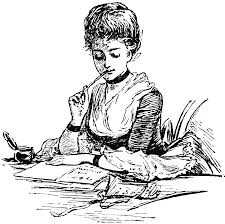
Woman Writing Letter

Writing autobiography is an American endeavor. I studied under Albert E. Stone who was my first advisor in graduate school. He edited an edition of J. Hector de Crèvecoeur’s Letters from an American Farmer.

We Americans, especially in this century, often seem completely self-absorbed. There is a native impulse to write or tell a single, brief narrative of our life. More accurately, it is a combination of essential, defining moments and multiple, broader narratives. At the root of autobiography, we must answer the question Crèvecoeur did, “What then, is the American, this new man?”

This new man, when it comes to journaling, was typified as a woman in the 1970s when I wrote,

Traditionally, it is the girl or female of the family who writes in journals. Sometimes it seemed nothing more than a way to keep a girl busy until she gets old enough, reaches the age of child-bearing, then her true work begins.

Personal Journal, Mainz-Gonsenheim, West Germany, Dec. 12, 1976.

This tradition of female-based diary or journal writing was something I was taught in high school. All I can say in 2023 is, OMG!

Journal writing has a purpose instead of marking time. It gets the writer seated behind a desk or table with pen or keyboard in hand. In such a posture one cannot help but write something. It may be gibberish, yet once in a while it may be profound. It is only through practice one becomes a better writer. Journaling serves this purpose.

Journal writing is a form of therapy in that its performance resembles use of an addictive drug — we take it when ill and continue its use until we are well. In some diarist’s cases the illness never left. My condition of restlessness and loneliness has been with me a long time. Journal writing helps me cope.

A foundational part of autobiography is journal writing. As I work through the timeline of my current book, I find the stories I want to tell were written before, many times over, during the last 50 years. They were often written in a journal, or since 1999, in an email or since 2007 in a blog post. In living life we find certain people, places and things stand out. Those are the narratives that can find their way into a journal. The more we write these stories, the better they can become. They become part of us. In the end, who are we but the stories we tell about ourselves living in society?

I am pleased to report the draft of my book passed 100,000 words today. The journals I kept, beginning in 1974, have been especially helpful in getting this far. Writing emails and blog posts served a similar usefulness. I have been mining them both. The lesson from this story is journaling is important to being a writer. It helps us cope and provides a record in case one is needed. From time to time we must rediscover who was are. Writing in a journal helps us do that.

Categories
Writing

Coping with Being Alone

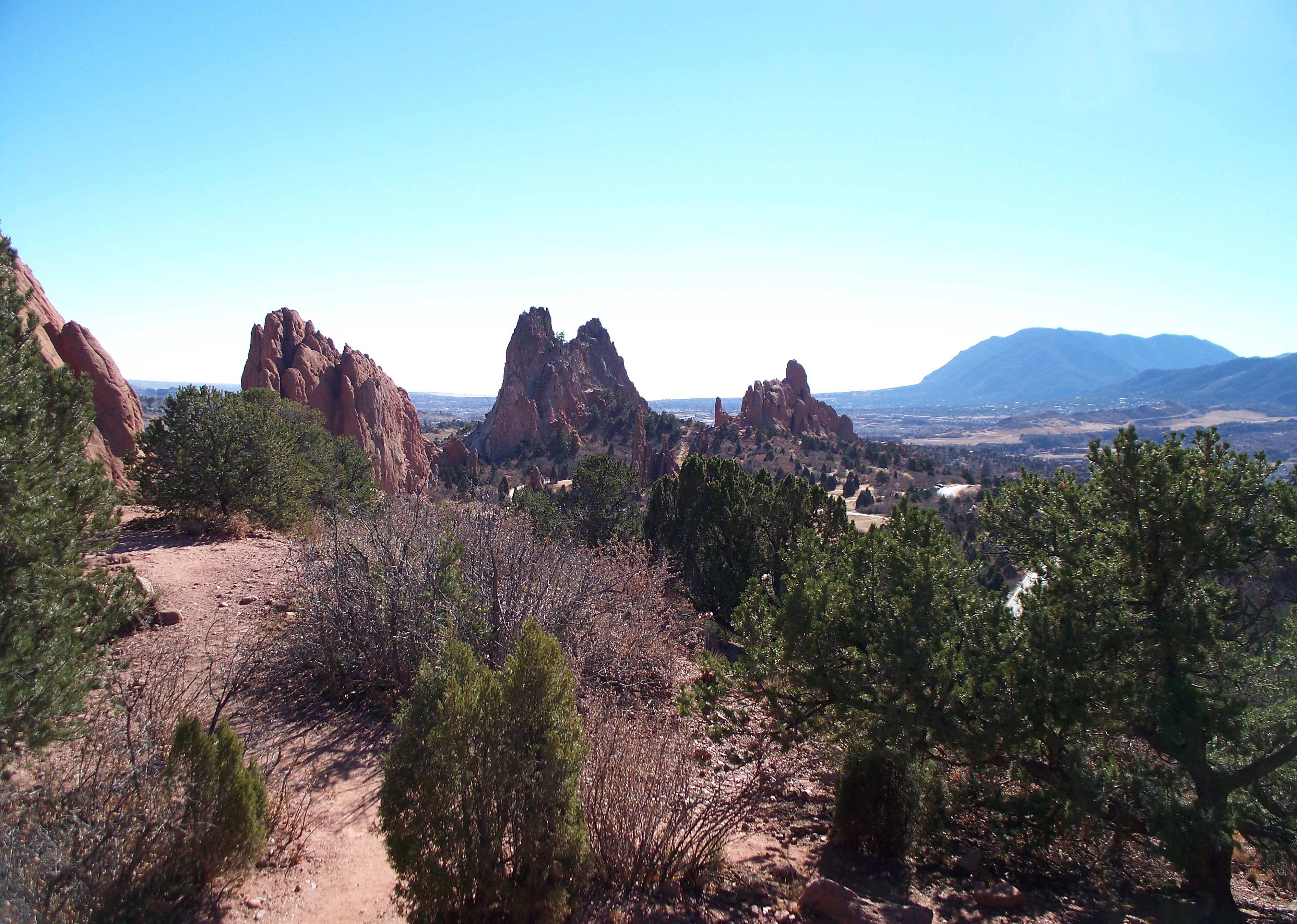
Garden of the Gods, Colorado Springs, Co. Photo by the author.

From an early age I engaged fully in whatever I was doing. When I was in high school, most of my time was spent studying and playing guitar. At university, I would walk the campus in a haze, thinking about what I read in philosophy class. In the military, battalion operations kept me constantly busy with something major happening at least every month. I was constantly busy and had little time for myself. At the time, I didn’t think socialization was needed.

Without my knowing it, full engagement served to separate me from people I knew. I found myself alone much of the time. I needed a way to discuss my life on a regular basis. To cope with this need, I took to journaling. Without others around, I found expression on pages filled with my ink. I recently re-read my early journals and found loneliness stands out as the most common theme, especially when I was living in Germany.

Today I believe a writer needs balance between life in society and putting words down in a document. It seems clear I needed more balance as a 20-something. I don’t know if balance returned, yet as a septuagenarian, being alone is possible and even likely. It is tolerable as a writer. Continuing my long-time writing habit hopefully keeps my mind engaged and helps me cope with separation from society that comes with aging.

Being alone is not without risk. The Centers for Disease Control reported about the health risks of loneliness.

Health Risks of Loneliness

Although it’s hard to measure social isolation and loneliness precisely, there is strong evidence that many adults aged 50 and older are socially isolated or lonely in ways that put their health at risk. Recent studies found that:

  • Social isolation significantly increased a person’s risk of premature death from all causes, a risk that may rival those of smoking, obesity, and physical inactivity.
  • Social isolation was associated with about a 50% increased risk of dementia.
  • Poor social relationships (characterized by social isolation or loneliness) was associated with a 29% increased risk of heart disease and a 32% increased risk of stroke.
  • Loneliness was associated with higher rates of depression, anxiety, and suicide.
  • Loneliness among heart failure patients was associated with a nearly 4 times increased risk of death, 68% increased risk of hospitalization, and 57% increased risk of emergency department visits.
Centers for Disease Control website.

While I have written dozens of journals, tens of thousands of letters and emails, and countless blog posts, it is important to tend to alone-ness. In part, it comes with the territory of aging. By being aware of the cultural phenomenon, and doing something to cope, we can avoid the risks. We may be separated from society as we age, but we are not helpless.

Categories
Writing

Food Branding

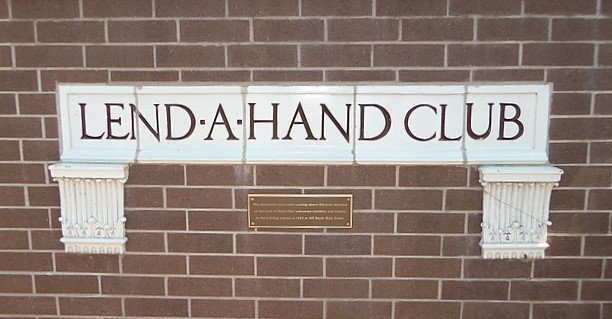
Photo Credit – Wikimedia Commons.
Davenport, Iowa
Nov. 27, 1976

Today I visited my grandmother at the Lend-A-Hand and we ate ravioli from LaSalle, Illinois. They hand pack it there and it is a treat for us whenever we get a chance to make some.

I wonder sometimes about the brand names that grace our pantry - Kraft, Nabisco, Campbell's, Carnation, Betty Crocker, Aunt Jemima, Libby's, Quaker Oats, Folgers, Post, Hershey's - and marvel at the simplicity of the containers in my grandmother's shared kitchen.

There are milk cartons with all the ladies' names on them, and bulky, shapeless packages, with the owner's names written on them, old butter dishes covered and taped shut, white and tan boxes each with only the owner's name on them. It seems fitting that the name of the consumer rather than the producer, or canner appear on the foods awaiting the pot.

Perhaps these women are not swayed by the numerous labels enticing them from the shelves of the supermarkets, maybe they have learned that a carrot is only a carrot no matter who has laid hands on it.

But food is food and when one has it, one is grateful.

Editor's Note: This passage is from my personal journal. The Lend-A-Hand Club was established in Davenport, Iowa in 1886 as a chapter of the International Order of the King's Daughters and Sons. It became an affiliate of the national network of Lend-A-Hand Clubs launched during the 1870s by Edward Everett Hale, a Unitarian minister who had risen to nationwide prominence as an abolitionist and writer for the Atlantic Monthly prior to the American Civil War. The club was a place for young women who lived and worked away from home to associate in a safe environment.