Categories
Living in Society

First Library Card

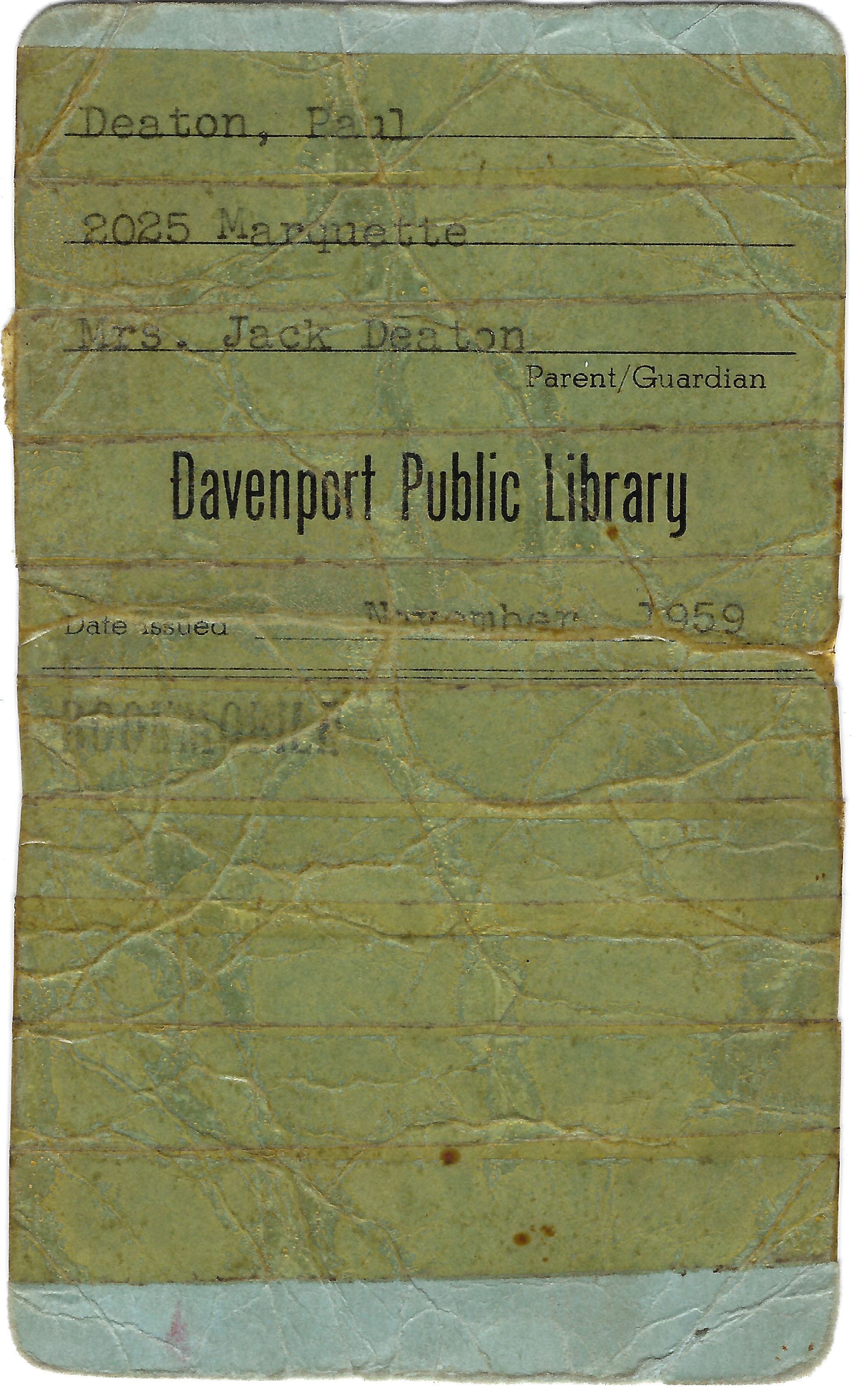
First Library Card, November 1959.

The public library has been important in my life. It began in 1959 at the American Foursquare the first year we moved there. I was in the second grade. The bookmobile made weekly rounds near us, at first to the church parking lot, later to the drug store parking lot at Five Points. I became a regular customer.

Entering from the back, we browsed the stacks, usually Mother and me joined by my sister when she got older. Before there was the Bookmobile I relied on books and magazines Mother gave me for reading.

There were biographies of the Ringling Brothers, Thomas Edison, George Washington Carver, the Wright Brothers and others which expanded my world. The first thing I checked upon arrival was whether there were any new ones in the series. We enjoyed Dr. Seuss books when they were available, which wasn’t always. All the kids who frequented the Bookmobile liked Dr. Seuss so when they were returned they immediately went back out.

When ready to check out, we made our way to the front, where the driver sat in the same seat he used to drive the Bookmobile. He voice-recorded the check outs into a microphone then we left. It wasn’t my last library experience.

The idea the city had a library, and the economics of one organization buying books that could be shared, was part of understanding cooperation and fair play. It was a lesson learned early in my life, part of getting along in the city.

Today our community of about 6,000 has a great public library. We gave money, built it, and then donated the finished building to the city. The irony is I rarely check out a book there. My main use of the library is to socialize. I check the new book shelves from time to time, use the meeting rooms, donate books, and attend the Friends of the Library used book sale. During the coronavirus pandemic I donated some new puzzles for kids to check out. With the pandemic most library activity ceased. Maybe the library will open again this year or next. I hope so.

I still have memories of the Bookmobile and my blue, hand-typed library card. That sustains me for now.

Categories
Social Commentary

What We Are Not

1940s War Diary, anonymous author.

I came across a war diary from the 1940s. While not sure how it came to be mine, it likely came from a box of odds and ends at an estate auction or from the used book section of a thrift shop. The first entry, tells a story of an Iowan at the time of U.S. entry into World War II:

I’m not much of a writer and don’t suppose I even will be but this isn’t supposed to be a great work of literature but rather a common down to earth story of a common down to earth boy.

Undoubtedly you know him. He is any of those numerous boys who left the farms, villages or cities — the fresh smelling earth of the farms or the clamoring errands of the city — to take up for you and me, the battle of survival between right and wrong.

The boy joined the Army.

Discarded 1940s Iowa Journal, Author unknown

The views reflected in these paragraphs were commonly held.

A single life was the story of broad society. There was a need to record that story in writing. Individual will was suppressed in favor of a greater good. People had an innate ability to understand each other. Right and wrong were easily definable and commonly held views. The relativism that infected our society a couple of decades later is absent and makes the journal entry stand out.

When people speak with gauzy reverence of the generation of men and women who fought World War II, I get a bit nauseous. I knew men and women who participated in the war effort and if you asked them, they wouldn’t want special treatment. Most of them hardly talked about the sacrifices they made or about the war. None of them paraded around in uniforms afterward. If they kept their service uniforms, they were packed away and seldom, if ever, mentioned. Many women worked in domestic defense plants and wore no uniforms. They are often forgotten.

What struck me about this journal entry was its clarity. One notices where the author fit into society. There were shared beliefs and those beliefs were positive and affirming. 21st Century society has no such clarity. It may no longer be possible.

It took a lot to decipher the script yet I think I accurately captured it. I would never write the sentence, “Undoubtedly you know him,” about myself. We’ve become a society where no one seems to know anyone outside a small clique of friends, relatives and co-workers. The idea there are common goals? Just look at U.S. reaction to the coronavirus pandemic to see the absence of a common response. We no longer are common, down to earth people and that’s one source of today’s social problems.

What we are not may define who we should be.

Categories
Writing

Resolved in 2021

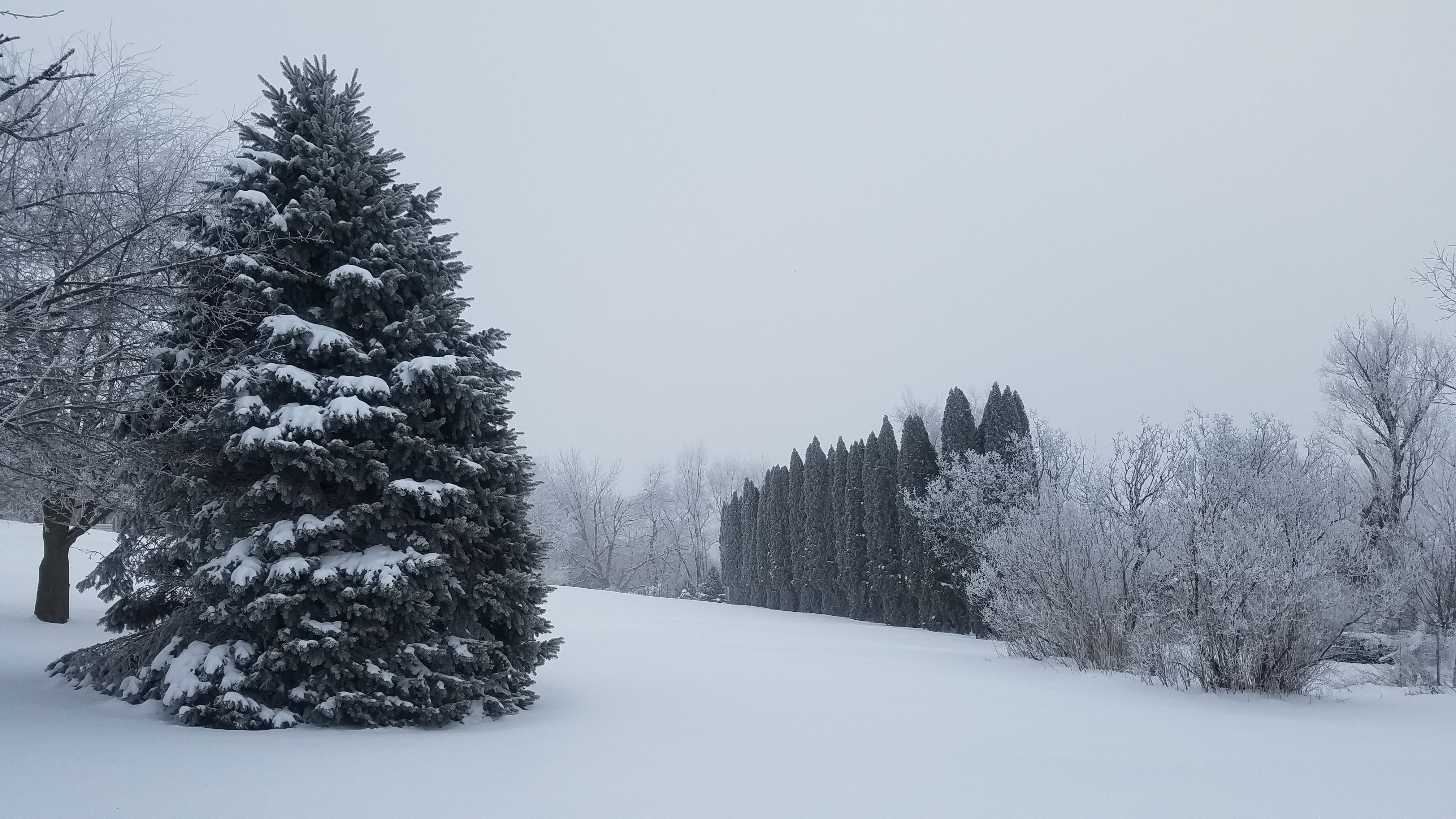
Winter wonderland, Jan. 3, 2021.

During the coronavirus pandemic I resolved to make something of the raw material of life, a week at a time, going forward. Not a New Year’s resolution, subject to artificial pressure and expected failure — a structured, new life.

After decades of working jobs, the school years — mine and our daughter’s, political election cycles, and growing seasons, those patterns were blown apart by the pandemic. This year it’s time to put everything back together in a way that creates something familiar yet new.

The endless, unstructured days have been wearing and wearying. My daily routine, with its check list of recurring tasks and framing to accomplish something, is fine. For the first ten months of the pandemic I thought it would soon be over. Today I know it won’t.

I won’t dwell on this long, but American reaction to the virus has been pitiful. While other nations knew and followed protocols needed to stop spread of the coronavirus, our society is not so educated or disciplined. As a result, as of today, more than 20.6 million people contracted COVID-19 and more than 351,000 deaths were attributed to it. The projections are for multiple hundred thousands of additional deaths from COVID-19 before the pandemic is declared over.

Vaccines have been created and approved in record time. That’s good. Our government has done little to organize a distribution network. Last week, vaccine producers reported warehouses full of vaccine that had not entered the distribution pipeline. They were waiting for direction. Not only are Americans pitiful, so is our federal government in its response to the coronavirus pandemic. It’s not that hard. Develop a plan to get the vaccine into people’s arms.

Set all the crazy aside, though. If we can’t get our individual house in order, there is little hope of surviving the pandemic, let alone helping family, friends and neighbors who need it.

I want a week back. You know, one with weekends where we do special stuff. Leading up to it would be hard, diligent work for useful purpose. The kind after which we could take it easy for a while… over a weekend. Most of my working life I didn’t have that, so why now? Because it’s possible, and with the pandemic, needed for structure.

I built a weekly schedule to write the first draft of my autobiography by the end of 2021 as a first priority. There are Monday through Friday writing shifts that produce 1,000 words each. On Saturday, that same time of day will be devoted to editing the week’s rushes. Once I’m done with editing, I’ll take the rest of Saturday and all day Sunday off from writing. Sounds simple. It’s made possible thanks to FDR (Social Security) and LBJ (Medicare).

Writing these blog posts is quick. I haven’t counted how many I’ve written but more than 3,000. An autobiography grounded in history will take longer to produce the same number of words. I don’t know how daily writing will be organized, and the research materials are definitely not easily accessible. Figuring all this out is a process and by the end of it, when the first draft is in hand, artifacts will be well organized, I predict. By setting a daily word count goal there is a measure of success.

There is other work to schedule in my work week, not the least of which is working on household projects, gardening, cooking, and eventually returning to social activity and advocacy. All that can wait for the end of winter while I focus on being a writer. I’m resolved some good will come from this project. The end result is made easier to accomplish by having a realistic plan.

Categories
Reviews

Fitzgerald and The Great Gatsby

F. Scott Fitzgerald, 1917. Public Domain Photograph

The copyright of The Great Gatsby expired yesterday and a flurry of news articles spammed the channels. If Gatsby is the great American novel, like the country, it is far from perfect.

It remains a good book to read at the onset of summer, as I did for many years. It takes a certain experience of what summer meant in Midwestern culture to appreciate the book. That culture of my youth faded years ago. I no longer read the book annually although I keep a copy where I can find it.

What impressed me most about F. Scott Fitzgerald was seeing an 8 by 10 photograph of him at Fort Leavenworth, Kansas during a reunion with fellow Army officers. Organizers of the event were attending the U.S. Army Command and General Staff College. The future author of The Great Gatsby was stationed at Leavenworth and the photo commemorated his stay. As we know, Fitzgerald was not a good soldier. He worried he would die in the world war without publishing anything. He later regretted not serving in combat. Such worries being part of what characterized his short life.

Upon reflection, it occurred to me Fitzgerald was not much different in his humanity. While I haven’t the drive or interest in being published he did, the army is a great equalizer and created a bond with him that was no abstraction.

I know The Great Gatsby well. Now that it’s in the public domain others are latching onto it, to revise or rewrite it. As someone suggested, there may be a Muppet version of the novel. The truth I increasingly face is whatever summer meant 50 years ago doesn’t exist any longer. There is no going back. This renders Fitzgerald’s fiction less relevant than it once may have been.

That people write about this copyright expiration with so many words is a sign that nothing like Fitzgerald exists in contemporary fiction. Writers are more like Gatsby himself not realizing what was important about the book is rooted in a time now gone. There is no green light at the end of the dock toward which to reach. It’s just us in the dark, craving something more than the commerce of society, yet not knowing what that might be.

I think I’ll read The Great Gatsby again this year and consider how to soldier on. Maybe I’ll learn something this time.

Categories
Living in Society

Looking Ahead

We had a snow storm in Iowa overnight Tuesday. Jacque and I spent yesterday morning clearing the driveway and steps of 11 inches that accumulated so we could get the car out if there were an emergency. Not that we were planning to go anywhere for a while.

She took this photo outside when we finished.

Thank you to the thousands of visitors to this site during the past year. I appreciate your views, likes, comments and follows more than you know.

Good things will come in 2021, of that, I’m certain. A politician said we are stronger together. Another said we should dream big and fight hard. Both represent good advice I plan to follow in the coming years.

Happy New Year! May there be peace on Earth, our only home.

Categories
Social Commentary

2020 In Review

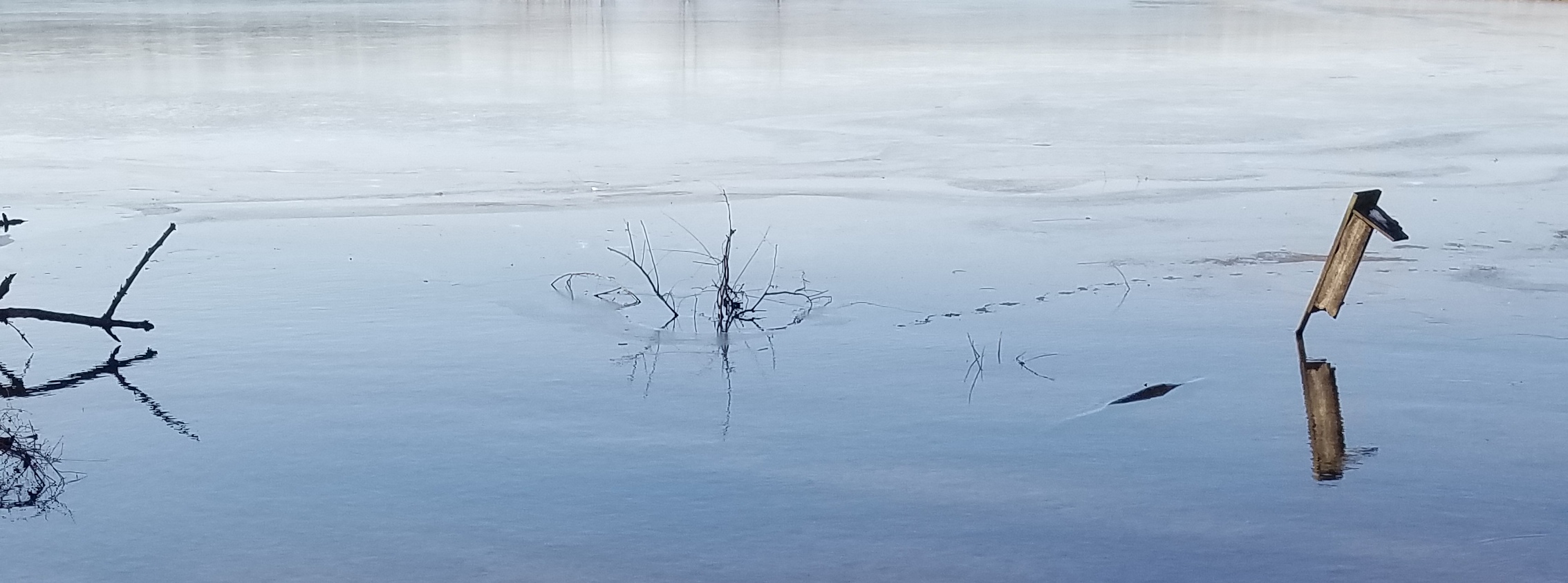
Lake Macbride

There was life before the pandemic, then there is now. Everything got scrambled, some things literally during the Aug. 10 derecho. Yet the biggest event, the one that brought the most change, has been adjusting to the coronavirus pandemic.

It is a pandemic. A next door neighbor got the virus. So did one across the street. It’s hard to do a census of contagion because people don’t talk about the coronavirus. When people are sickened, they stay isolated at home or are taken away from the community to hospitals where they either recover or die, for the most part alone. It remains out of sight and mind.

While working outside I often forgot and approached a neighbor without a mask even though I had one in my pocket and knew better. We don’t know everyone who is infected and may never know in advance who will be affected next.

A former mayor who lived near us died from complications of COVID-19. The minister who officiated at our wedding did too. My cousin Don died of it Christmas eve. Other friends and relatives got the virus and recovered. It is everywhere. We have worked hard and smart to avoid getting infected and so far our efforts paid off. We never know, though.

Here’s a short list of what happened after the Iowa governor signed a proclamation of disaster emergency regarding COVID-19 on March 9:

  • Last restaurant meal on March 13.
  • Moved the sewer district and home owners association monthly meetings to conference call because of the pandemic.
  • Final shift at the home, farm and auto supply store on April 2 because of the pandemic.
  • Interviewed by Andrew Keshner of MarketWatch for an article about the impact of the pandemic on gardening, April 16.
  • Eliminated in-person political meetings beginning April 23 because of the pandemic.
  • Had three COVID-19 screenings, all negative.
  • Left the Johnson County Food Policy Council at the end of my term.
  • Began bicycling for exercise June 27.
  • Began donating garden extras to the local food rescue organization on July 23
  • Published a guest opinion in the Cedar Rapids Gazette on the 75th anniversary of the atomic bombings in Hiroshima and Nagasaki, Aug. 9
  • Derecho, Aug. 10.
  • Started a website for The Prairie Progressive.
  • Informed the chief apple officer I would not return to the orchard for the apple season because of the pandemic.
  • Got haircuts at home because of the pandemic.
  • Observed the Jupiter – Saturn conjunction.

I did a lot of the cooking, trying to integrate the kitchen with the garden. That’s a work in progress. It was a good year for gardening, with a variety of crops, plenty of rain, and a productive, abundant harvest.

I read 56 books. More of the books were poetry this year.

I wrote more emails, made more phone calls, and stayed active on my socials. I craved human interaction that used to be taken for granted as a natural part of life. I began writing letters on paper and sending them via U.S. Postal Service. Some wrote back.

I had more interaction with people I’ve known for years, including my sister who joined me at home a long time ago. There was processing and grieving to do for Mother. I also grieved for friends and for people I’d come to know, but didn’t realize how much they would be missed when they died.

It was a good year for doing what was important. The coronavirus was a constant companion reminding us of what that is.

Like many, I didn’t expect 2020 but took it as it unfolded. It looks like I’ll make it another year. Regardless of the ongoing pandemic, may we all make 2021 a Happy New Year.

Categories
Writing

1981 Reunion

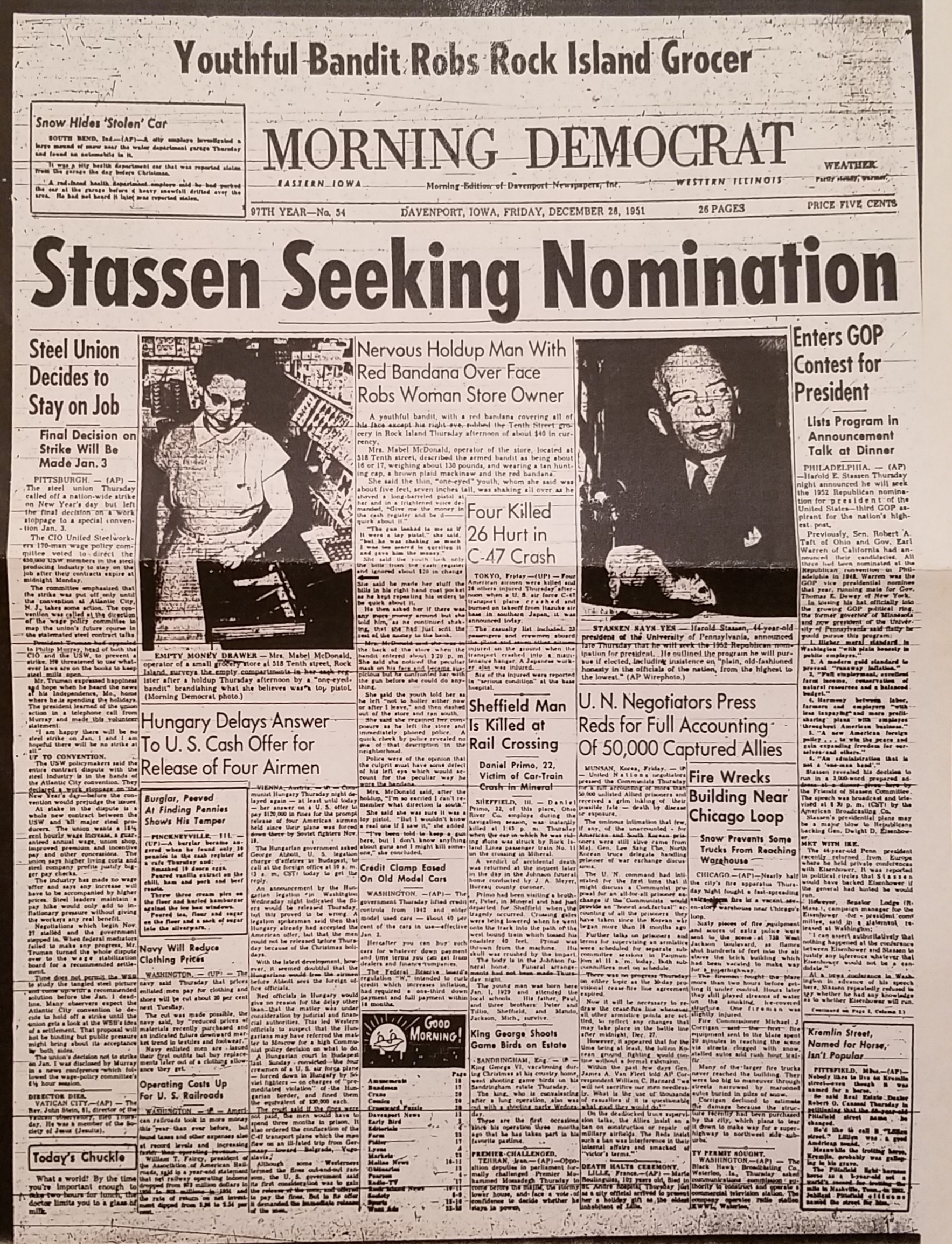
Davenport, Iowa Morning Democrat front page, Dec. 28, 1951.

Well, it’s happy #30 for me with a trip to Gettysburg and a reunion with old Army buddies. It is an occasion for reliving old memories and returning to Iowa to finish the unfinished business of my life.

Journals, Carlisle, Penn., Dec. 28, 1981.

Today is my 69th birthday and I’m happy to be among the living. It’s especially true given the alternative. We have no celebrations planned, no special meals, no gifts. That’s normal in our two-person household. We would enjoy getting back to normal.

With the coronavirus pandemic we’re even more inclined to stay home and indoors — to take care of ourselves. I didn’t want to retire from my part time jobs this year, yet here I am because of risk of contracting COVID-19. If I drew a map of our neighborhood, the houses I know that had at least one case of the virus surround ours like a fortress. According to yesterday’s news the pandemic in the United States has not peaked and one of every thousand Americans died of COVID-19. I’m learning about the term “excess deaths.”

My blood pressure was normal this morning. My weight has been the same since before Thanksgiving. There have been no dietary surprises to throw the vitals out of whack. At a certain stage one wants life to be normal. Better usage at age 69 is “as normal as it gets.”

Today’s forecast is for wintry weather, although the snow is mostly west of us. Even though I am home most days there is a feeling of the holidays during this quiet time between our wedding anniversary and New Year’s Day. Just like it was 39 years ago, “It is an occasion for reliving old memories and returning to Iowa to finish the unfinished business of my life.” There remains a lot of living to do.

Categories
Writing

On the Cusp of a New Life

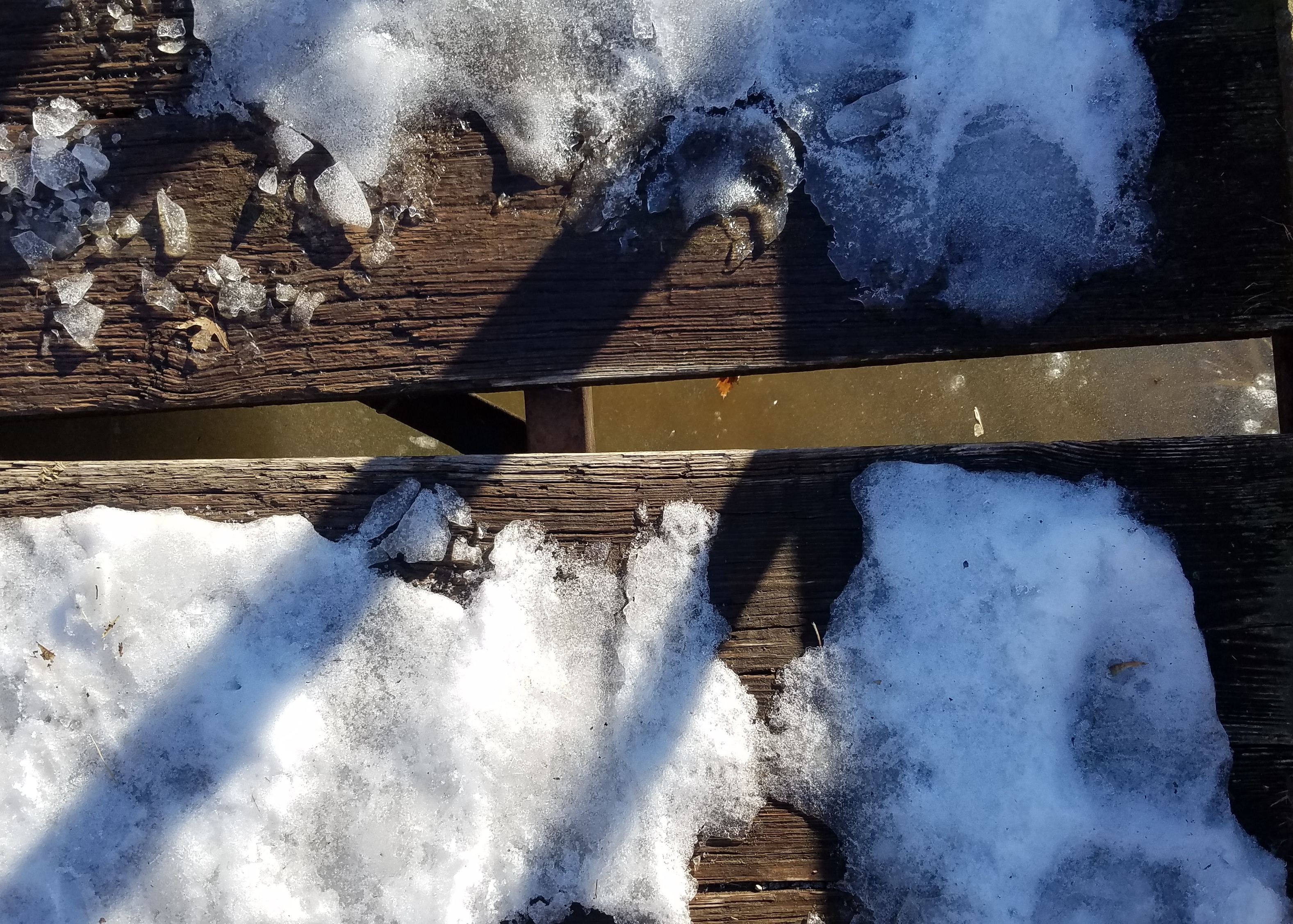
Bridge on the Lake Macbride State Park trail, Dec. 21, 2020.

I am alone, with a glass of Benedictine and Brandy beside my bed, a book nearby, and a desk of work undone. I write in this green notebook and am not sure what purpose it serves. Maybe someday a student will look at the pen flow and say, “Ahah! He changed pens between the pages!” But all of this is pettifoggery of minutia.

I don’t suppose anyone will be interested. Especially if I don’t get going here. I am nearing the completion of my application for graduate school. This has been quite a difficult procedure for me. I have labored and labored over the intellectual biography, to include what I wanted in three pages. To write it so I might be accepted, not rejected.

I am going to need every edge to get in. I have three recommendations on the way but expect they will be pretty much standard. Nothing unusual. The two from the military will be the ones I wrote for signature, more likely than not.

Returning to graduate school, while not being the most important thing in my life, would make my final adjustment into being a participating Iowan complete. If I am not accepted, I will get a degree for teaching English and concentrate on being a novelist full time, a continuation of the time in which I now find myself.

But I should leave negative thoughts by the wayside. I will be able to live a rewarding life. In fact, I live a rewarding life as it is. Deo Gracias.

Journals, Davenport, Iowa, Dec. 27, 1979.

I was accepted to the University of Iowa Graduate College and entered the program in American Studies the January semester.

Categories
Writing

All God’s Children

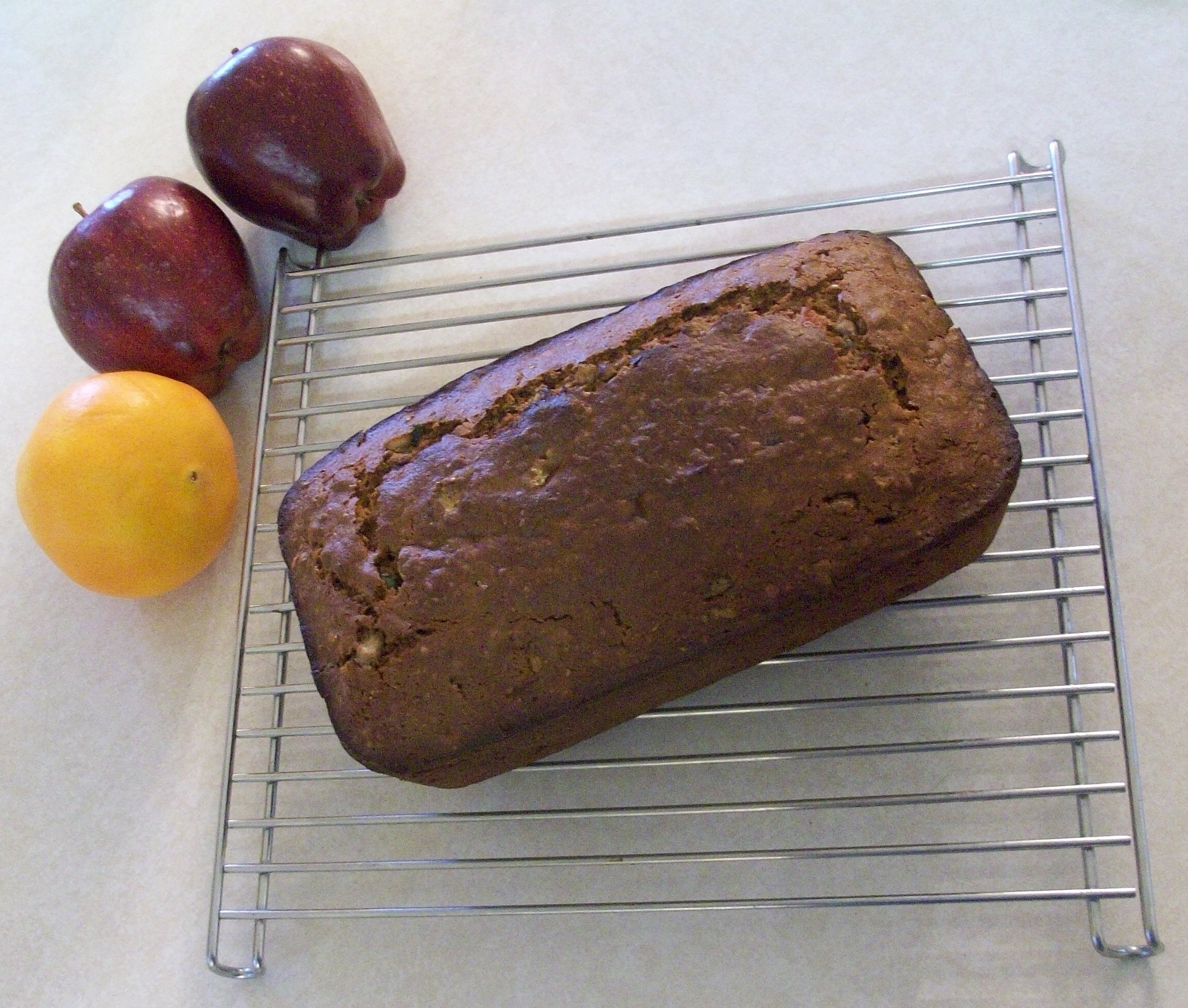
Sweet bread.

The rented house on Grande Avenue was in a tough neighborhood. It stood at the end of a street that had very nice homes to the East of ours and rundown homes to the West. From time to time we would hear gunshots in the neighborhood at night. There were mysterious visitors seeking a previous occupant. Our outlook was that people were basically decent, and we were still cocooned in our life together, so the outside world did not matter that much, even when it came knocking at the door.

We brought our daughter home from the hospital to that house. Our parents came to visit, we harvested black walnuts from the two trees in the driveway, and bought new furniture from a real furniture store. My sister-in-law and her family came over for dinner at least once and that August I canned 15 pints of tomatoes from my mother and father-in-laws’ garden in Ames.

We attended services at the People’s Church, which was down the street. We established routines couples do, trying to contribute to our lives and to life in society. I remember feeling a new life was beginning with our settlement on the southeast side of Cedar Rapids.

I was fortunate to have the upstairs of the house for a study. I spread out my books, typewriters and papers to work on a novel in my spare time. No novel was completed in the wake of a new job, a new home, and a newborn who depended upon us.

The past 18 months have been physically taxing and mentally exhausting. I weigh in at 212 pounds, more than ever in my life. I have been spending a majority of my time outside work laying on the couch, digesting meals, and watching television. I need to stop this now, improve my family life, and proceed on the intellectual path that has been my calling from earliest days.

Journals, Cedar Rapids, Iowa, June 29, 1985.

Taking a few days vacation, I found time to retreat in my study and write in the journal. I asked, “Where is my life heading?”

This is the question to be answered in the next few days. I am not happy with it now, and I seek a change in daily life that will focus on daily events and find meaning in them. Too, I seek a meaning beyond the surface of things. I believe an individual’s actions have consequence in society and in the larger realm. Though our voice may not be heard beyond our solar system, each life on earth has consequence. We are all God’s children and this spiritual part of every life has been neglected too long, both in my life and in the life of society. Here on the pages of this journal I can begin to work out an answer to this problem.

Journals, Cedar Rapids, Iowa, June 29, 1985.

I’m not sure answers were forthcoming.

Our time at Grande Avenue centered around our daughter’s new life with us. There were visits from family and friends, and a focus on our lives together. I learned how to change a diaper and earned enough money to finance the household. We weren’t there long enough to start a garden.

There are two black walnut trees by the garage… this year the crop was hearty, my father-in-law said that if the summer is particularly dry then there is a sensibility in the trees that causes them to produce a large number of nuts, as if the species were in danger, and there was a need to propagate itself.

I gathered two bushels of nuts after a wind storm blew them to the ground in mass, early in the fall. I spread them on the front porch to dry. I left many more for the squirrels to eat and hoard.

Journals, Cedar Rapids, Iowa. 1985.

The walnuts dried for about a month. I then took plastic buckets of them to the basement and cracked them with a hammer. They are hard. Squirrels must have sharp teeth to eat them. After cracking I put them in a large bowl for a quick sorting, then turned them over to Jacque for the final sort of shells from nut meats. The crop produced about three pints which I put in a storage room along with the canned tomatoes.

Jacque used them to make banana bread with barley flour, wrapping each loaf in foil to set overnight. I was in the basement cleaning up from the walnut operation when she brought down one of my canning jars. We opened the storage room and a pot of narcissus had sprouted.

She was happy. And she took it into the sun room. We thought that store bought narcissus only produced one season, but no, we’ll have another season of them.

Journals, Cedar Rapids, Iowa, 1985.

Our home became a collection of raw materials waiting to be used in singular production to create a life. Some days we were better at it than others. Some days we found unexpected flowers. Just like all of God’s children.

Categories
Writing

Christmas Morning

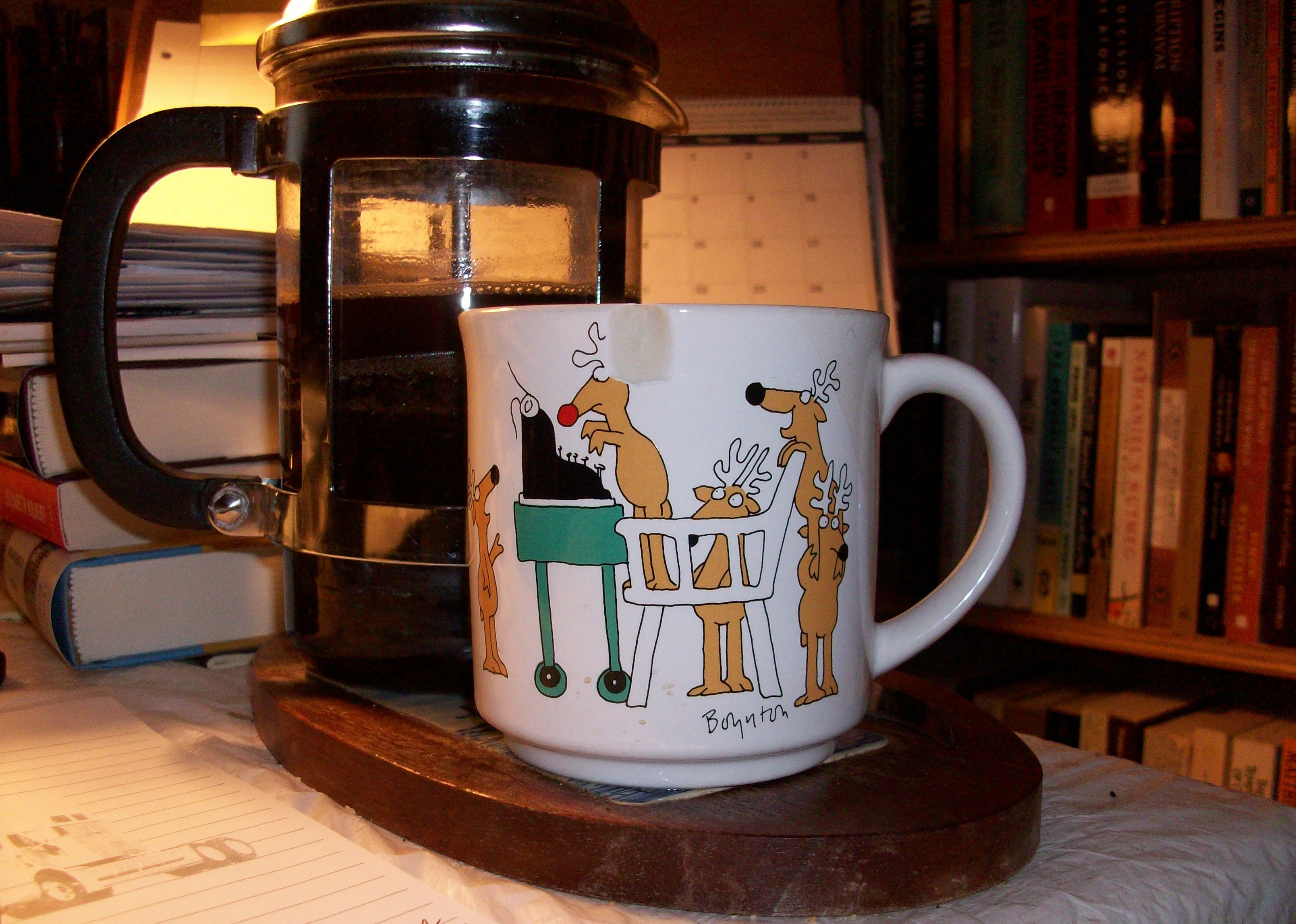
Christmas Coffee

This is the first blog post I made about Christmas on Dec. 25, 2007.

The meaning of Christmas is derived from my remembrance of the priests at Holy Family Catholic Church in Davenport genuflecting while reading John 1:14 “And the Word was made flesh and dwelt among us…” There are many translations of this verse and the idea that an omniscient God would take human form remains a compelling idea. In order for our lives to have meaning, we should live them as Jesus did, through acts in human society.

If Jesus was the incarnate God, we are something less.

If the meaning of Christmas can be found in John 1:14, how should that affect us with our imperfections?

My Christmas story is about the coffee cup that we keep in our bins of Christmas decorations. It was a gift from Jacque and printed in the glaze are five reindeer around a typewriter consulting on a message. The reindeer at the keyboard has a red nose, and must be Rudolf. On the other side of the mug are misspelled the words “Merry Christmas,” presumably typed by Rudolf. At some point I chipped the cup and each year we discuss whether we should get rid of it because of the chip. I have always said no, although I should probably let go. The chipped cup with the animals trying to put a message into human language using human technology has become part of our Christmas tradition. Because it is so similar to the meaning of Christmas, I have trouble letting go of it. We have always ended up keeping the cup and I am using it now to hold the coffee I made this morning.

We humans can use some coffee on Christmas morning, and we need to put it in something.

Merry Christmas reader!