Categories
Living in Society

Dr. James Zogby Joins Veterans For Peace on Armistice Day

Dr. James Zogby.

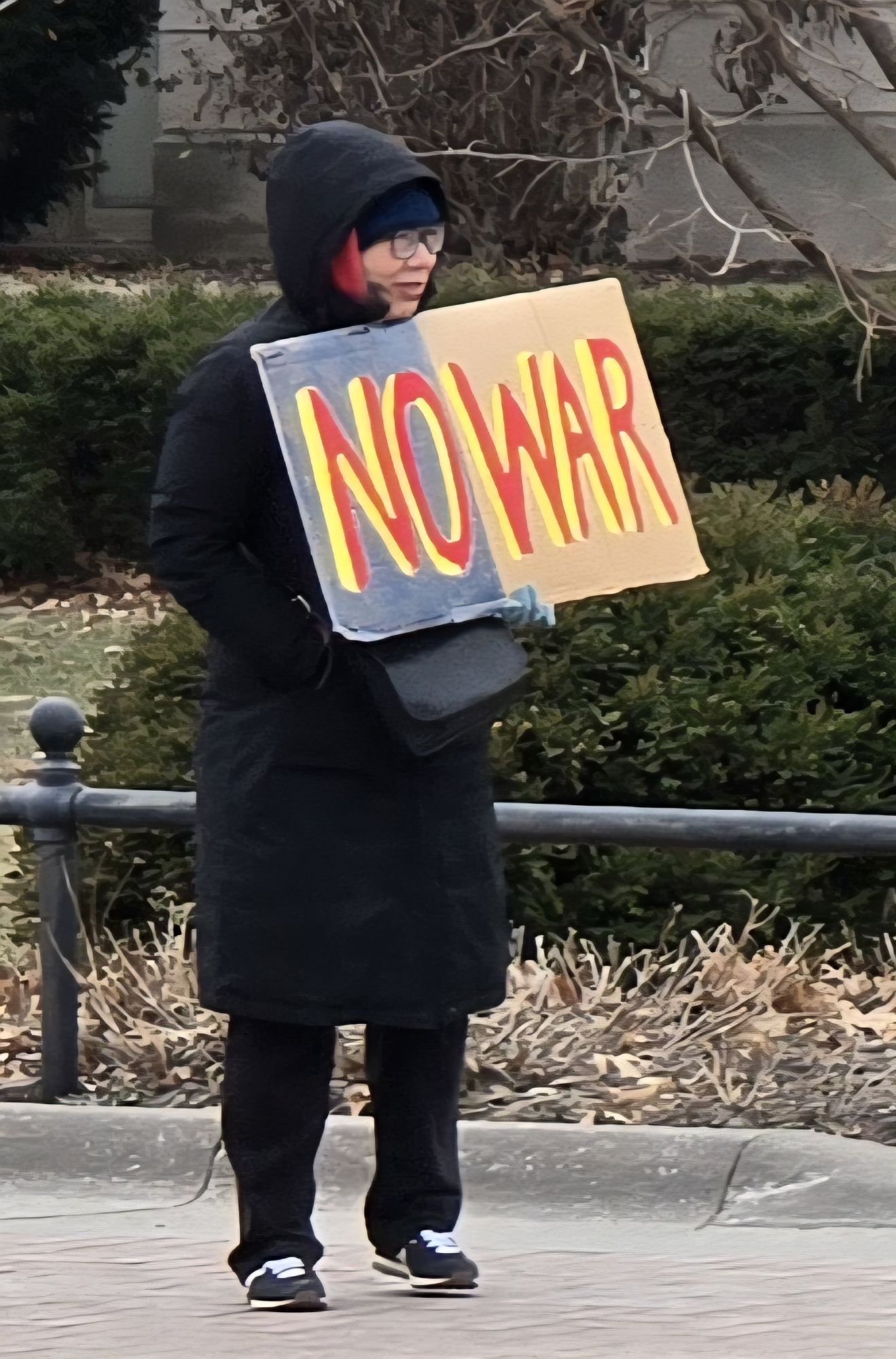
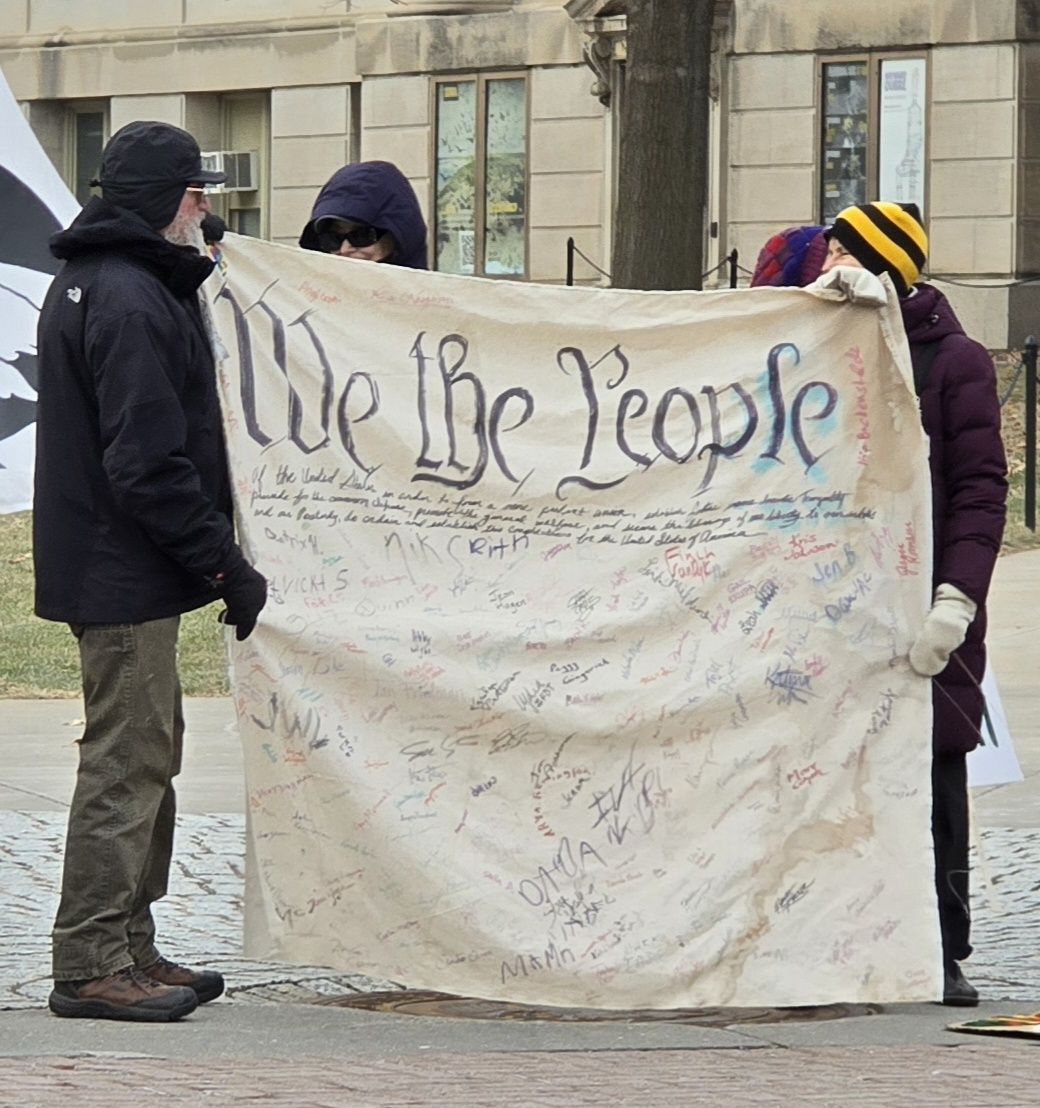
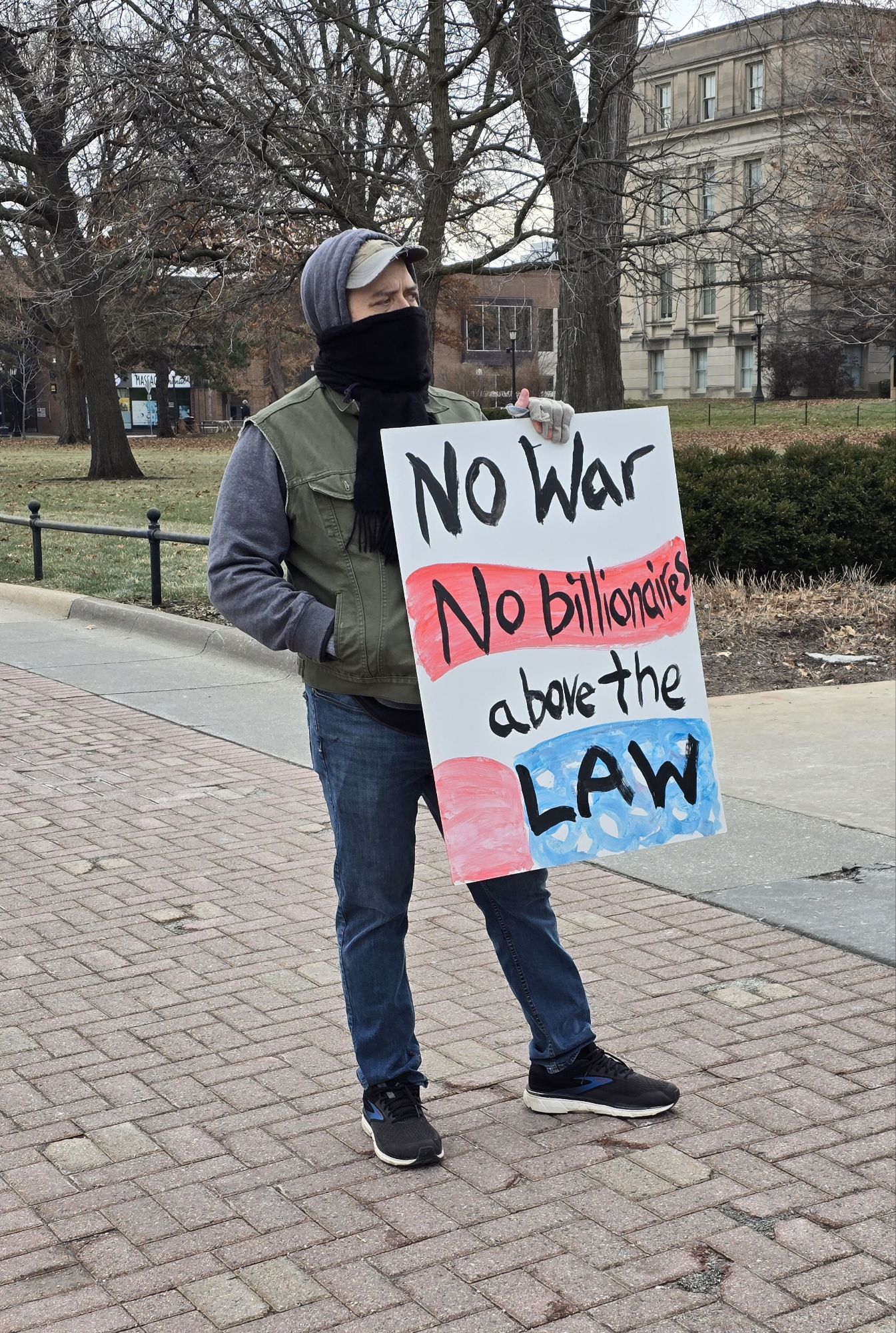
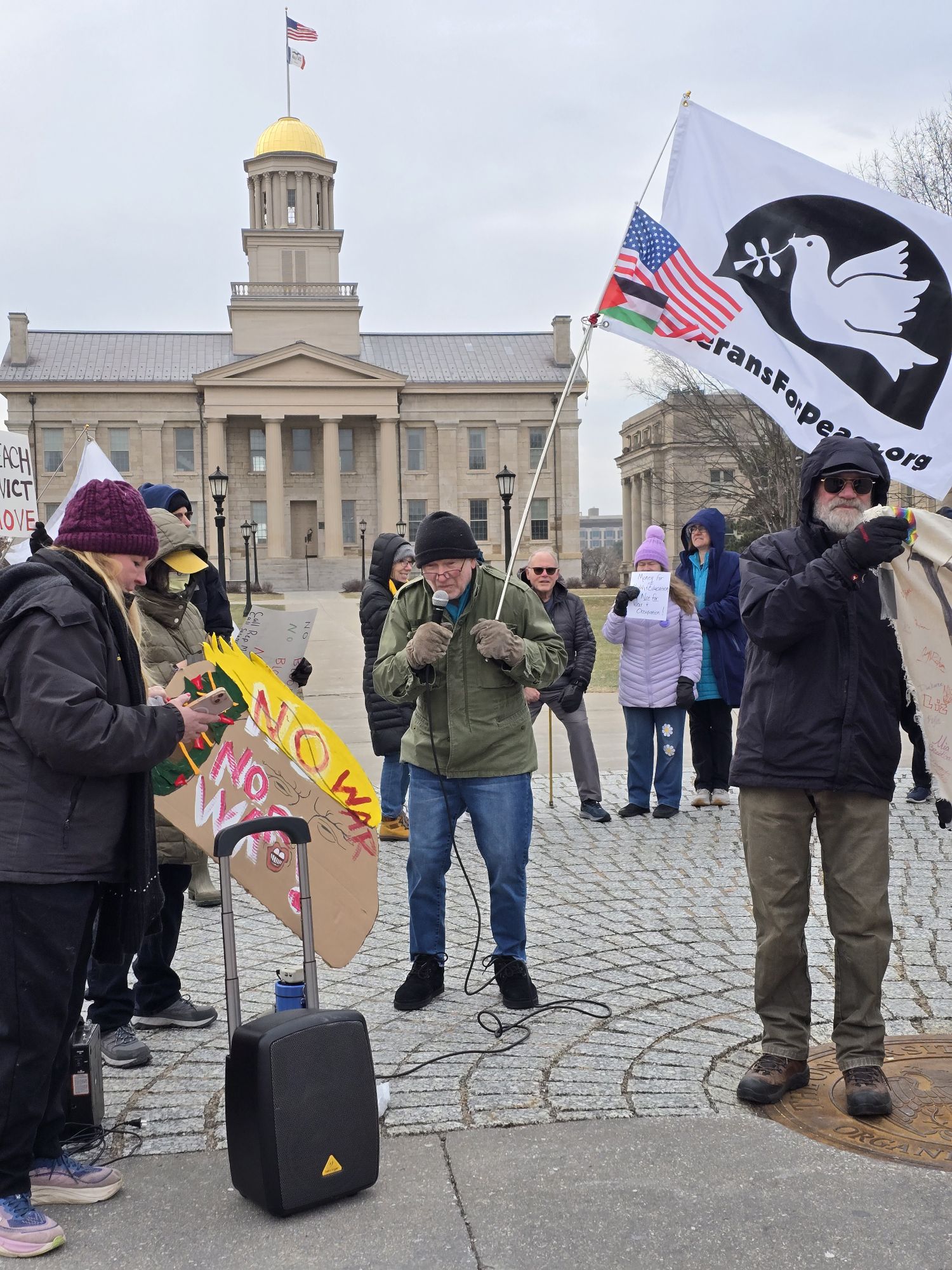
IOWA CITY — On Tuesday, Nov. 11, 2025, beginning at 11 a.m. CST, the local chapter of Veterans For Peace will hold three public events in Iowa City to re-dedicate ourselves to the work of peace. Members of the public are invited.

Beginning at 10:45 a.m., we will assemble at the Iowa City Ped Mall. Bells will ring at the 11th hour, 11th day, 11th month, as is tradition. Dr. James Zogby will present brief remarks.

In 1985, Zogby co-founded the Arab American Institute, a Washington, D.C.-based organization which serves as the political and policy research arm of the Arab American community. He continues to serve as its president. Zogby is also Director of Zogby Research Services, a firm that has conducted groundbreaking surveys across the Middle East.

Immediately following the outdoor observance, Veterans For Peace will host a free luncheon at the Iowa City Public Library. Dr. Zogby will address the group in a longer format. His topic is “The war that didn’t end all wars and instead launched a century of conflict.”

At 6:30 p.m., Veterans For Peace will sponsor a screening of the new film Earth’s Greatest Enemy at Iowa City FilmScene, 404 East College Street, Iowa City. This is a documentary exposé of the world’s biggest—and most unaccountable—polluter: the US military. Learn the environmental cost of having a military empire. The film was written and directed by Abby Martin and Mike Prysner. Prysner will attend and introduce the film. Afterward he will host a question-and-answer period. Tickets are pay-what-you-can.

This is the sole Armistice Day observance in the State of Iowa.

More about Dr. James Zogby from the Arab American Institute website:

James Zogby co-founded the Arab American Institute, a Washington, D.C.-based organization which serves as the political and policy research arm of the Arab American community, in 1985 and continues to serve as its president. He is Director of Zogby Research Services, a firm that has conducted groundbreaking surveys across the Middle East.

In September 2013, President Obama appointed Dr. Zogby to the United States Commission on International Religious Freedom. He was reappointed to a second term in 2015 and concluded his service in May 2017. He was twice elected Vice Chair.

Zogby is featured frequently on national and international media as an expert on Middle East affairs. Since 1992, he has written a weekly column that is published in 12 countries. In 2010, Zogby published the highly-acclaimed book, Arab Voices. His 2013 e-books, “Looking at Iran: The Rise and Fall of Iran in Arab Public Opinion” and “20 Years After Oslo,” are drawn from his extensive polling across the Middle East with Zogby Research Services. His most recent book is, “The Tumultuous Decade: Arab, Turkish, and Iranian Public Opinion – 2019-2019” analyzes the fascinating transformations taking place across the Middle East region following the US withdrawal from Iraq and the Arab Spring.

Dr. Zogby has also been personally active in U.S. politics for many years; in 1984 and 1988 he served as Deputy Campaign manager and Senior Advisor to the Jesse Jackson Presidential campaign. In 1988, he led the first ever debate on Palestinian statehood at that year’s Democratic convention in Atlanta, GA. In 2000, 2008, and 2016 he served as an advisor to the Gore, Obama, and Sanders presidential campaigns.

For the past 3 decades, he has served in leadership roles in the Democratic National Committee. He currently serves as Chair of the DNC Ethnic Council, an umbrella organization of Democratic Party leaders of European and Mediterranean descent. He served on the DNC’s Executive Committee from 2000 to 2017 and for more than a decade served as Co-Chair of the party’s Resolutions Committee.

In 1975, Dr. Zogby received his doctorate from Temple University’s Department of Religion, where he studied under the Islamic scholar, Dr. Ismail al-Faruqi. He was a National Endowment for the Humanities Post-Doctoral Fellow at Princeton University in 1976 and is the recipient of a number of honorary doctorate degrees.

Categories
Reviews

Book Review: Dear Marty, We Crapped in Our Nest

Art Cullen is the kind of writer I have to watch what I write about him in public. Chances are, unless the Good Lord takes him from us, I’ll run into him in some unforeseen context to experience consequences for writing anything too negative. Not that I would, Dear Marty, We Crapped in Our Nest: Notes from the Edge of the World is a well written narrative with a compelling story. Readers should buy a copy and read it.

I recognize many of the players, like Henry Wallace, Norman Borlaug, Fritz Haber, Carl Bosch, Frank Zybach, Aldo Leopold, Ricardo Salvador, and others. These men orbit the sun in an array of stories with which I was already familiar. Thanks to Cullen they were pulled together in a way that has me nodding in agreement. Even the politicians he mentions, Terry Branstad and Tom Vilsack particularly, make their planetary circle around the main theme of Iowa’s extractive agriculture. It’s not a particularly happy story, yet the confirmation bias I experienced created a positive afterglow that lasted the rest of the weekend as I finished the book.

What Dear Marty accomplished is an Iowa narrative, one of many out there, some of which are unknown. We need such narratives. They teach us how to live based on lessons learned or not learned from a tangible past and present. We need that as we live in a time when the U.S. Department of Agriculture set aside billions of dollars to pay for SNAP benefits in the event of a government shutdown. The government shut down, and Republicans refuse to use the money as intended. They instead politicized food insecure people to show they are in control. What are we, as a society, even doing here? I look forward to Cullen’s next column about things like this.

Cullen displays his skills as a newspaper writer in the book. That he could pull together this Iowa story can be attributed to research done to write weekly articles for his newspaper. He shared many of those articles in social media and I read them. This makes the story in the book familiar. It gave him a leg up on anyone else trying to write such an Iowa narrative.

The author makes a lot of sense in the chapter “Finding Center.” There are plenty of things we have in common with people in our neighborhoods, he said. We should just begin pursuing those common interests. This is such common sense, people are missing it. That or they are too busy working more hours, both paid and unpaid, and can’t take their noses up from the grindstone to catch a breath, much less engage in new things. I appreciate common sense. It’s value has diminished in the broader society.

This book reminded me of the late Donald Kaul’s How to Light a Water Heater and other War Stories. In it Kaul reprinted a bunch of his columns in a way that makes it look like they are in a newspaper. The difference between Washington D.C., where Kaul lived, and Spirit Lake is that Cullen actually used his columns to make something new and worth reading. Donald Kaul was no Art Cullen. Many of us are thankful the latter lives in Iowa.

Categories
Living in Society

Eating Alone – Mexican Fare

Home Made Tacos

When my spouse is away, I haul a small boombox upstairs and crank the volume up. I find myself digging out old compact disks and audio cassette tapes, listening to Iowa Public Radio more, and tuning into the local classical music station. Classical music is more interesting on the radio than in other media because of the announcer. While I wouldn’t call it “going wild,” it’s as wild as I get regarding music these days.

How I prepare Mexican food is different when she is away. When cooking for two I avoid use of ingredients that contain capsaicin, a.k.a. 8-methyl-N-vanillyl-6-nonenamide. According to Wikipedia:

Capsaicin is an active component of chili peppers, which are plants belonging to the genus Capsicum. It is a potent irritant for mammals, including humans, for which it produces a sensation of burning in any tissue with which it comes into contact. Capsaicin and several related amides (capsaicinoids) are produced as secondary metabolites by chili peppers, likely as deterrents against eating by mammals and against the growth of fungi. Pure capsaicin is a hydrophobic, colorless, highly pungent (i.e., spicy) crystalline solid.

It’s hot. Lots of people don’t care for it or are allergic to it, including family members.

When we are together I get my spice by adding hot sauce as a condiment. When I cook and dine alone, I’m free to add it while cooking. Mexican fare is flexible in preparation so the lack of heat while cooking has not been an issue. My process for using chili peppers continues to change. I wrote about the basics in 2019:

The recipe for hot sauce evolved over time from one Juan San Miguel explained in 1977 when we both garrisoned in Mainz, Germany. Those were days before a four-foot section of assorted hot sauces became standard in supermarkets.

I lost contact with him yet the recipe persists. It is a rare day when there is no hot sauce in the ice box.

We carried the condiment in plastic milk jugs and put it on our army rations while on maneuvers in the Fulda Gap. It made our eyes water and changed regular food into edible fire. We laughed a lot in that peace-time army… and ate sandwiches of bread and hot sauce. I continue to make it mostly the way Juan taught me. (Meditation on Hot Sauce, Oct. 20, 2019, Paul Deaton).

This week included making hot pepper paste, dehydrating Cayenne peppers for red chili flakes, blending jars of powdered hot peppers from the pantry to use in shakers, and using a fresh jalapeno when making enchiladas. I found less is more: reducing the number of preparations to just a few that will be used. October is the month to do this as hot peppers are the most abundant late harvesting vegetable. Getting all this kitchen work done while she is gone is a plus. Even I had to wear a KN-95 face mask while mixing the powdered hot peppers. I should be wearing a pair of surgical gloves yet don’t and my hands sting for several hours after preparing fresh chilies. I know I’m alive.

A typical difference when I am eating alone is taco filling. The main recipe I use is a blend of black beans, kale, onions, garlic, bell peppers, tomato sauce and Mexican oregano. When cooking alone, instead of tomato sauce, I make a sauce of dried guajillo chilies. These chilies are not that hot but when allergic to capsaicin, any amount is too much.

Enchiladas are in the refrigerator waiting to bake for dinner. Tuesday is for tacos when I’ll use fresh chilies. I am not a heat nut, yet have a more developed use of chilies grown in the garden than most Iowans. The use of chilies characterizes my kitchen-garden.

Categories
Home Life

End of the Season

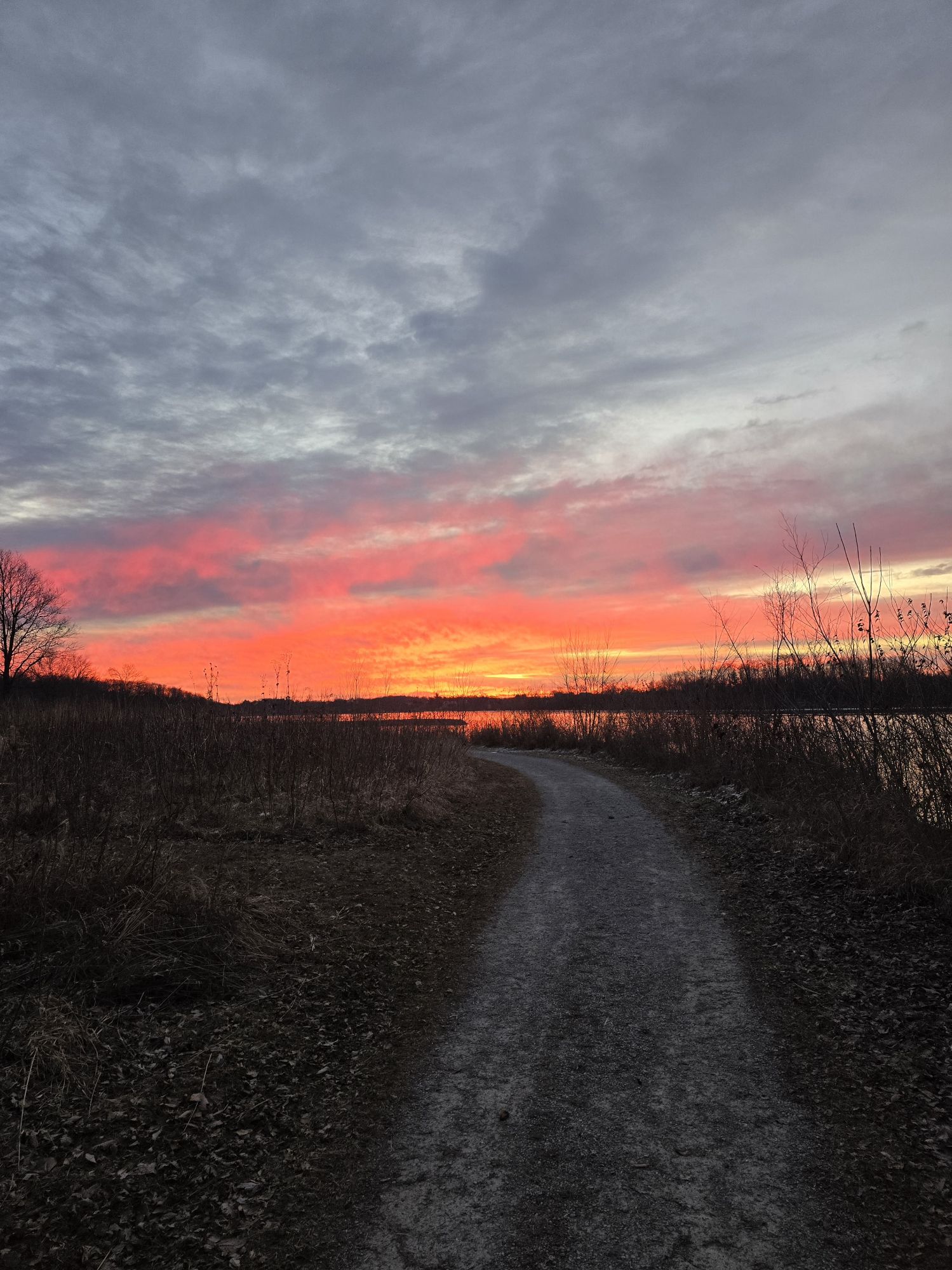
Lake Macbride on Oct. 24, 2025.

We have been expecting the first hard frost. I was awake when it hit in the wee hours of Friday morning. The average date is Oct. 13, so we are 11 days behind. Nothing to say about that other than that is where the day began.

It was chilly indoors so I turned on the furnace when I couldn’t stop shivering. I set the thermostat at 65 degrees and that took care of the shivers. When I went for my morning walk I donned my winter coat and needed it. I saw the sunrise light show from the dining room windows, yet had things to do and didn’t get out until daylight. The way light falls on the trail is always a show in its own right.

I felt like crap when I woke. It is likely the COVID vaccination on Thursday. By evening I felt myself again. The main accomplishment this week was going through clothing to see what I want to keep and what goes to the thrift store. I reduced the number of blue blazers to the one that fit best. I kept only one pair of slacks to go with it. The others will go into the back seat of the car with other clothing donations until I drive by the drop off point.

On the to-do list was fix the short garden hose attached to the spigot in back. For whatever reason the hose washers came up missing and I got quite a spray yesterday. I found two new ones in the first drawer I opened. Hose washers are not something for which to make a special trip to the hardware store. The main hose is stored in the garage until spring.

I aired the front left tire on the John Deere, stored the grass catcher for winter, and fueled. I mowed one last time for the season. It went quickly and looked okay when finished. That tire needs replacing so I backed the tractor into the garage so I can get at it, jack the front end up, and remove the tire and rim. The thrift store is not far from the tire shop, so I’ll put the old one in the back seat so it can be dropped off on the same trip.

Before sunrise I made a dish of enchiladas. I’m not sure when I will bake them, yet likely over the weekend. The refrigerator and pantry are full of food so there are plenty of meal options. Thank goodness my Social Security pays for most basic stuff of living.

Now that the garden is finished attention turns to the two dead ash trees. My chainsaw is kaput so I need to get to the hardware store and see about a new one. I noticed the Ace Hardware in Mount Vernon is a Stihl dealer. I’ll likely start there and see where it takes me. I hate the expense for a tool to use two or three times a year. However it is more expensive to pay a tree service to remove dead trees.

It has been quiet in the neighborhood. As if the whole world is preparing for winter and can’t be bothered. Days like this I notice my mobile device usage is pretty low. There is plenty of work to do as the season turns in the real world.

Categories
Living in Society

Eating Alone – Convenience Store Food

Photo by Robert Nagy on Pexels.com

While returning from my sister-in-law’s home I stopped at the Casey’s convenience store in Colfax. Visits to Casey’s are my nod to Iowa corporatism. They sell stuff that is convenient. My usual purchases are lottery tickets, gasoline, coffee, salted snacks, and something from their warming/display ovens. Back in the day I used to buy a slice of their famous pizza to serve as a meal, yet I gave that up. Once in a while I buy a bottle of Yoo-Hoo Chocolate Drink as a throwback to when I lived in South Georgia. Tuesday I needed a lottery ticket, gasoline, and something to substitute for a missed dinner. I bought a fancy version of Tater Tots from the oven. It served.

I spend most of the time in the car alone. I do the majority of in-the-store shopping although trips to get groceries are outnumbered by trips to Casey’s to gamble. I spend about $24 per month on Powerball tickets. I usually don’t buy anything else when I want a lottery ticket. Iowa gambling is another concession to corporatism, this one run by the state through The Iowa Lottery Authority.

I ritualized my ticket purchases, taking into consideration what ticket I buy — always only one “Powerball, no extras,” the people who sell me the ticket, and the path I drive to run errands beginning with a stop at Casey’s. I don’t need to gamble. I enjoy the ritual. It’s kind of like going to church would be, only no one is telling me how to live my life. One day I asked about the prominent checkout display of small alcoholic drinks for a fixed price. They said most of their sales come in the morning when people are on their way to work.

I eat convenience store food alone. Sometimes parked in the Casey’s lot, and sometimes while driving. Rarely do I eat it outside the car. I enjoy it while it lasts. I understand most of what I buy is not good nutrition. “Everything in moderation, including moderation,” Oscar Wilde reportedly said. My main weakness for convenience store food is when I’m making a long trip.

As my recent use of the calorie counter app My Fitness Pal revealed, everything we put in our mouths adds calories. By being cognizant of caloric content, I have been successful in meeting the first half of my weight loss goal. The main change inside the convenience store is walking out immediately after buying a lottery ticket without a food purchase. I won’t be buying that Tater Tot item again now that my curiosity is sated.

I still drink one or two servings of Coca-Cola per year. I’ll likely get that at a convenience store.

Categories
Living in Society

Eating Alone – The Refrigerator

Refrigerator the day after my spouse left on a trip.

This week I am eating alone because my spouse left on a trip to visit her sister. The first thing to do was go through the refrigerator and study the contents.

There were two leftover servings of tofu-vegetable stir fry and a jar of chili. That’s three meals right away. I made both dishes to share for dinner, and leftovers should be equally good.

There are a dozen eggs, fluid milk, butter, sour cream, cheeses, pickles, three kinds of bread — a commercial loaf, sour dough, and locally baked burger buns. The two drawers have storage apples in one, and an array of fresh vegetables in the other. Nothing to compost here as we keep the veg moving. I need to use the last two garden eggplants soon.

The bottom drawer has loads of fresh greens, uncooked flour tortillas, and more cheese. The doors have a partly empty carton of oat milk, a gallon jug of skimmed cow’s milk, the rest of a half gallon of fresh apple cider, and countless jars of mustard, ketchup, sauces and condiments. We are well-stocked!

To sum it up, there are three easy meals of leftovers and diverse sandwich-makings. Eggplant lasagna or something similar is in the works. Tacos are always possible. I have three small heads of Romaine lettuce, so a big salad for dinner could be done. Without doing much of anything, I’m halfway through the solitary eating period. I needed to go to the grocer.

My shopping trip was typical. I spent time in the fresh fruit and vegetable section studying what was available and comparing it to what we need. I bought some grape tomatoes on special pricing, a bag of red radishes, and a bunch of green onions. I get organic celery here because celery is at the top of the list of pesticide-laden vegetables. Buying organic celery makes sense.

In the specialty cheese section I bought some Wisconsin-made Gruyère to melt on something. Next I went to the cereal aisle and added a small box of Post Grape Nuts to the cart. I had been reading about using it as a crunchy topping on salads and thought I would try it. I also got a box of store-brand Raisin Bran because it was on special pricing. (I know! Impulse purchase). I picked out a big bag of Halloween candy for trick or treaters and everything else I got was replenishing staples in the pantry.

My spouse is vegan, so the dairy is for me. That I remain an ovo-lacto vegetarian sets me on a deliberate path to separate us in eating. I learned to make delicious vegan meals we share. The difference is also part of why I sometimes cook for myself even when she is around.

So I have a plan to eat alone this week. It is essential work for the period of physical separation. Because this is no different from any other day, it suggests I eat alone often. I do.

Categories
Living in Society

Eating Alone

Photo by Amateur Hub on Pexels.com

Most of the meals I take are eaten alone. It’s just the way my spouse and my schedules work out. I am an early riser and have coffee around 3 a.m. with breakfast a couple of hours later. Lunch is not really a meal in our house. I graze bits and nobs throughout the day, maybe warm some leftovers or make a sandwich, and keep track of calories consumed. We plan and share dinner, which usually involves shopping, food preparation, and cooking. Sometimes I cook and sometimes we both cook a meal. Until I read Deborah Madison and Patrick McFarlin’s book What we eat when we eat alone, I had not given much thought to eating alone.

Eating is fundamental not only to survival and health, but also to how humans organize their social lives. Eating together with others is often seen as the healthy ideal, while eating alone is highlighted as a risk factor for negative health outcomes, especially among older adults. (“The impact of eating alone on food intake and everyday eating routines: A cross-sectional study of community-living 70- to 75-year-olds in Sweden,” by Amanda Björnwall, Patricia Eustachio Colombo, et. al. Aug. 14, 2024).

Healthy ideal or not, I feel set in my ways. As I age, it seems likely I will continue to eat more meals alone than together. Well, maybe until I move to a facility where residents take all of their meals in a group setting. We increasingly don’t like talking about those institutions as we age.

My spouse is heading over to stay with her sister for a week to ten days. This will give me an opportunity to consider all that eating alone means. From the gitgo some questions come to mind.

  • Do I cook a meal or grab something already prepared?
  • Are cooking alone and eating alone the same thing?
  • Why is what I eat different when eating alone?
  • What role do restaurants and food outlets play in eating alone?
  • Eating in the car. What’s that about?
  • How do I shop differently to eat alone?
  • What role do leftovers play in eating alone?

This could be a rich field of inquiry. As of this writing, I don’t know where I am going with this. Stay tuned to find out.

Categories
Living in Society

Tuesday Miscellany

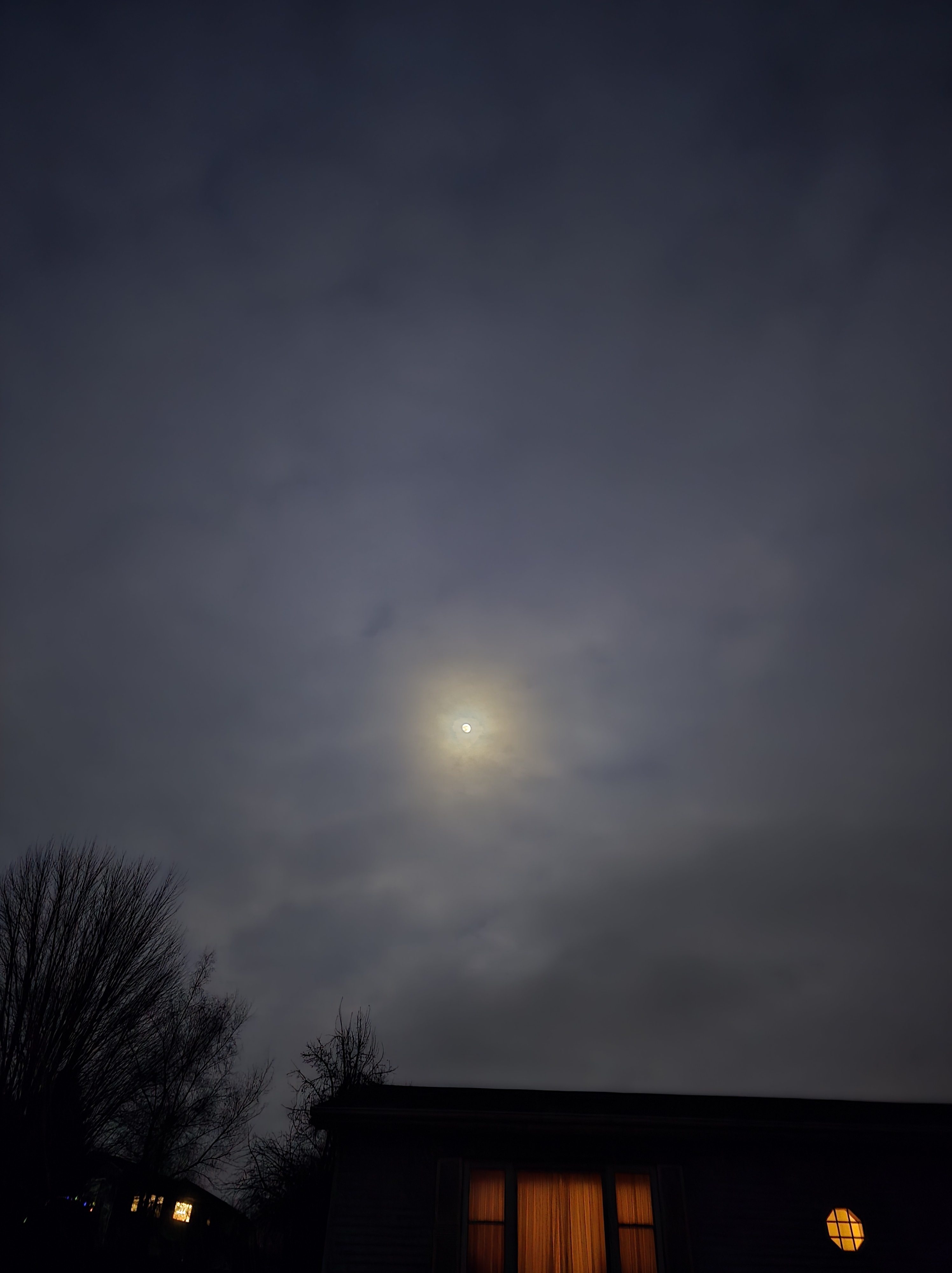
After moon rise and before sunrise on the state park trail.

Like with many Americans, a lot is on my mind these days. Not enough for a full post, yet the flotsam and jetsam of living a life in the Republican dominated United States.

The No Kings rally was fun, yet it is over. It was good to catch up with people I know. By studying the terrain in advance, I think I did a better job capturing photographs. It is important to live engaged lives and mass organizing events like this, combined with a modicum of thoughtful photographic work make it easy.

After much study of my October activity, I determined the thousands of views of this blog originating in China are likely a Bot or Bots scraping me to train artificial intelligence.The views are neither human activity, nor do they necessarily originate in China, whose “Great Firewall” blocks WordPress. Combine that with posting my high school class reunion photos the same month, and I received more October views than I did in the five previous years combined. I don’t feel good about it because the rate is not sustainable. Once the Bots have their way with me, I will be jettisoned like an empty chewing gum wrapper.

I planted garlic last week, so the garden is done except for the gleaning. For some reason, it took a lot more energy this year. I truly needed Sunday as a day of rest as in I took four naps during daylight hours. I feel more rested now, and pulled out the manuscript of my autobiography.

I reread the chapters last written and they stand up okay. I decided to write through my work at the transportation and logistics firm I called home for 25 years to clear space for topics I find more interesting: things like cooking, gardening, political activism, and such. I’ve been toying with ending the second volume after becoming an empty nester, yet reconsidered. I’ll write all the way to the end and see the word count. In any case, due to some unforeseen expenses, I’m not as liquid as I’d like and don’t have the money to publish volume two or any volume. It is possible I will push through the draft of the entire story by end of year. I changed while writing it and that means a rewrite of a couple of big sections. I do want to publish the rest. At the same time, I expect to start drafts of the entire story to which I will add on a continuing basis as I find new material and gain new insights. It will become a never ending story.

That’s all for now. Thanks for reading!

Categories
Living in Society

The Span of Wired Telephony

Last dusty telephones remaining in our home in 2025.

When my parents and I moved from Grandmother’s rented duplex they bought our first home. Recently a realtor posted room-by-room photographs of it on a website when the single family residence was on the market. I looked at each photograph, taking time for memories to rise. I have living memory of things that happened in most of the rooms. Very little remodeling was evident since we lived there. We moved before I entered first grade.

That time in the mid-1950s was for new beginnings, including being when Mother and Father first had a telephone account in their name. Mother remarked it was our own line, not a party line, what was called single party service. She had had a party line on the farm, so she was familiar. Having our own dedicated, direct line felt luxurious. It was private. I hardly remember either of them using the telephone in that house, although I am certain they did.

When my spouse and I built a new home in Big Grove Township, we felt very modern by specifying a telephone wall jack in almost every room. To even have had that discussion with our builder seems remarkable in 2025. Soon we came to rely on other communications devices.

First, my spouse had a bag phone while she closed her parents’ estate. I followed with a flip phone with which I took a photograph of Barack Obama in 2006. When the phone company could not resolve a hum in our land line, we discussed it and cancelled the account, moving our telephony to mobile devices. In 2012 I bought an Android smart phone while working on a political campaign. It freed me from the leash of wired telephony. The transition from wired service was complete.

We inherited a book from my in-laws who owned and operated a small telephone company in Western Iowa. Lines Between Two Rivers: A History of Telephony in Iowa tells the story of Iowa’s pioneers in leading the nation in the number of telephone companies. In it, the authors wrote:

The thrill of having the first phone in your home before the turn of the century must have been something, but in reality, we take it for granted today. From the whoop and hollar days, the Iowa telephone communications business has continued a tremendous growth, both in numbers and technology. The rural and small town areas have the same modern services as the larger populated cities. (Lines Between Two Rivers: A History of Telephony in Iowa, Iowa Telephone Association, Tom Griffith Chapter, Independent Telephone Pioneer Association).

Telephony was a marvel of technology, yet it was never more than a means to an end. It changed how people communicated with each other forever. Even the party line Mother did not like blurred boundaries between public and private life. Eavesdropping became part of early rural telephone culture. More frequent and easy contact, made us a society of gossips as connection to the rest of society became faster. It seems trite to refer to the telephone as the first social media yet comparisons are apt.

From farmers checking commodity prices in real time, to merchants ordering and tracking the status of shipments, to allowing faster access to emergency services when needed, telephony added something positive that we now take for granted. Mother was a telephone operator in her post-high school graduation life, providing her a source of income and personal prestige. She likely used the telephone more than Father, giving her a new kind of influence at home and in society. Being tied to a land line was part of how this culture evolved. When the cord cut loose, things went global.

My process of going through collected belongings in retirement is slow. What to do with the four telephones in the photo? We discussed it and will keep one of the Trimline sets for old time sake. It is branded ITT and has a sticker with the name of the phone company my in-laws owned. The other three? I will call the county landfill and ask about disposing of them. If they have a process to spare the landfill, I will follow it.

Who would have thought land line telephony would end? It seems unlikely we will return to wire telephony yet we will have a device if we do. Being ready seems like a good thing.

Categories
Living in Society

No Kings Rally – Oct. 18

No Kings Rally – Oct. 18, 2025.

The second No Kings Rally in Mount Vernon, Iowa, on Oct. 18, 2025, was much better attended than the previous one. I did not count yet there were at least 500 people participating. The rally started off with a gathering outdoors at the First Street Community Center, then walked a block or so to line the streets at Highway One and First Street. Here’s what the rally looked like.

About all I heard from the speaker was, “something, something, Heather Cox Richardson.”

I found some farmer friends with whom I talked about apple trees. Former Iowa House member David Osterberg was there. He represented us when we first moved to Big Grove Township. Former Congressman Dave Loebsack arrived early to get a good perch. We reminisced about his first election to the Congress in 2006. Here are Dave and Terry Loebsack with their flags.

Terry and Dave Loebsack at the No Kings Rally in Mount Vernon, Iowa on Oct. 18, 2025.

There were hundreds of people, and many signs.

The crowd stretched for blocks.

And these…

The clear autumn day was a backdrop for everyone to feel good about standing up for our rights. A lot of work remains to take back our government for everyone. Days like this make us hopeful. The feeling is infectious.