Categories
Living in Society

Social Media Into 2025

Photo by Buro Millennial on Pexels.com

It’s no secret I use a mobile device. I recently discovered a metric in settings called Digital Wellbeing which tallies the number of minutes of screen time on my device. I was shocked to see I averaged 5 hours, 50 minutes of screen time per day during the previous seven days. Just by being aware of my time I reduced it from 6 hours, 30 minutes on Friday to 4 hours, 29 minutes on Saturday. I need a more organized approach to reduce screen time.

Eschewing social media completely is not a good option. I rely upon the interactions with “friends” and “followers” and the relationships they have grown into. On Threads, these are mostly people I know only through the platform. On BlueSky, these are people I know in person or others I followed during my long time on X (2007- 2023). Threads is about art, photography, and sharing each others’ work. BlueSky is about staying tuned to whatever we call the national discussion inside a liberal bubble. Facebook is still there, although I am paring that group down to people with whom I have a tangible, in-person link. In most cases, I know Facebook friends from personal interaction. I have a couple of active friends on Instagram, but mostly I view posts by people I don’t know. I also view short videos there, something I hadn’t intended yet takes a lot of my screen time today. These four programs represent the as-is situation with social media.

Six hours of screen time in a day is not acceptable. While the entertainment value it provides is already baked into our monthly budget, the cost is in how my brain accommodates the input. Without completely understanding it, I know it has a deleterious effect. That is reason enough to cut back.

Killing time is not an interest of mine. So what am I seeking from screen time? I’ll just make a list:

On Threads, I curated a feed that informs me about what our small community is doing. Mostly, we share photos of cups of coffee, and daily, regular posts which are habit forming. One person showcases a different pair of socks each day. I see photographs, works of art, and short posts about how the day is starting across multiple time zones. When I wake, the Australian and New Zealand accounts are already on morning of the next day. While I’m doing this, I make my own daily post with the outdoors ambient temperature, time, a brief composition, and a photo of my coffee cup. I drink coffee while scrolling to see what followers are doing today. We all have morning routines, and this is mine. I return for updates a couple of times each morning and afternoon. By 6 p.m. I shut my mobile device off for the day.

After the November election there was a movement of people from X to BlueSky. A lot of the folks I followed on X made the transition. Some I followed on Threads decided BlueSky was a better platform. In any case, I’m there and posting a couple of times each day. It has been easy to regulate how much time I spend there because I am less interested in any “national discussion.” Threads is my go-to.

My sights are set on reducing time on Instagram. The number of accounts I follow there is small and only a handful post regularly. It has become a site with two main functions: automatically cross post photos I upload to Facebook, and following a few accounts that offer something unique. If I reduce screen time, the largest initial share of cuts will come from Instagram. I went into settings and set a timer to notify me when I spend 90 minutes in a day on Instagram. We’ll see how that goes.

Facebook used to be great, but now it has been reduced the way a balsamic reduction is made. Besides publicizing my work, I belong to two groups: my high school class group I founded to facilitate organizing a couple of reunions, and a group I started for our home owners association. These two useful functions are likely the reason I still have a Facebook account.

The gist of this is to cut way back on Instagram time, and not dally when I’m doing something purposefully. In theory, everything I do on social media should be purposeful. I’ll give that a week or so and see if my screen time is reduced. What I would much rather be doing is spending time face-to-face with my friends. Here’s an example:

I had a chance to spend an hour with a dear friend in a deserted cafe this week. We were bathed in sunlight, although I preferred a seat that was shaded. We talked about our books, our health, and our plans. It was an oasis of calm and warmth in the increasingly turbulent world in which we live. I need more time spent like that. Likely we all could use it.

Categories
Living in Society

Best Reading in 2024

Trail walking at sunrise.

Like with so many other parts of my life, my reading was punk in 2024. I had to cut back on my goal to 52 books because I picked some long ones that weren’t that interesting. There were some real winners this year and a bit of ticket punching. Here is the best of the lot. I’m on Goodreads so you can find me here.

The best book I read was Lessons in Chemistry by Bonnie Garmus. I recommended it to others repeatedly, and would likely read it again once a bit more water goes under the bridge. The combination of discrimination against women in science, a single mother, a cooking show, and daring women who view her television program to change the status quo was irresistible. I don’t often read a book twice, but expect this will be an exception.

I read multiple books that attempt to write the history of our times and forecast our immediate future. The best of these was Ari Berman’s Minority Rule: The Right-Wing Attack on the Will of the People―and the Fight to Resist It. I’ve been following Berman since he emerged from his home in Fairfield, Iowa to become more prominent on the national stage. Few people have written about the Trump administration as he does in this book. It is worth reading just for that. Other books I would categorize with Berman include something lost, something gained by Hillary Clinton, Nuclear War by Annie Jacobsen, and Attack from Within: How Disinformation is Sabotaging America by Barbara McQuade.

Important memoirs and biographies I read this year include On Call: A Doctor’s Journey in Public Service by Anthony Fauci and The Art of Power: My Story as America’s First Woman Speaker of the House by Nancy Pelosi. All told, I read ten books in the memoir/biography category in 2024. None of them was a dog.

I read a number of books from my “To Be Read” pile. Noteworthy are the ones that serve as historical artifacts: In the Spirit of Crazy Horse by Peter Mathiessen, Narrative of Sojourner Truth by herself, Starved Rock: A Chapter of Colonial History by Eaton G. Osman, Wakefield’s History of the Black Hawk War by John Allen Wakefield, and Chief of Scouts, As Pilot to Emigrant and Government Trains, Across the Plains of the Wild West of Fifty Years Ago by William F. Drannan. While the to be read pile is not as glamorous as getting new books, it is valid work to be done. These were all worth the work.

Not the End of the World: How We Can Be the First Generation to Build a Sustainable Planet by Hannah Ritchie is a new book by what I would call a young person (She was born in 1993). Ritchie brings a new perspective to environmental and nuclear weapons issues that has been wanting in the current literature. To say the book was refreshing would be an understatement.

The Cooking of Provincial France by M.F.K. Fisher discussed the cuisine of French provinces and provides many traditional recipes from these regions. More than that, it made the case for cuisines that rise up from the geography of soil, water, terrain, and animal husbandry to create foodstuffs, and by association, people, distinct to a region. This stands in sharp contrast to homogenized food ingredients as are available in grocery stores, or whose seeds are planted locally even though the environment has not nurtured them as if they were native to the region. The lesson from this Time-Life book was unexpected: when people are tied to food produced in a specific, local region, they gain a resilience some in the United States find wanting in our food culture.

I also read from my close circle of friends and acquaintances. Thom Hartmann published The Hidden History of the American Dream: The Demise of the Middle Class―and How to Rescue Our Future. Maureen McCue published Dancing in a Disabled World in October. I believe we have a duty to read books written by people we know. The conversations I have with Hartmann and McCue about their books inform my own writing.

The whole list of books I read this year is posted as a Reading Challenge on Goodreads. If you are on that platform, I hope you will follow me so I can follow back to see what you are reading.

Happy reading!

Categories
Living in Society

Mass Deportations

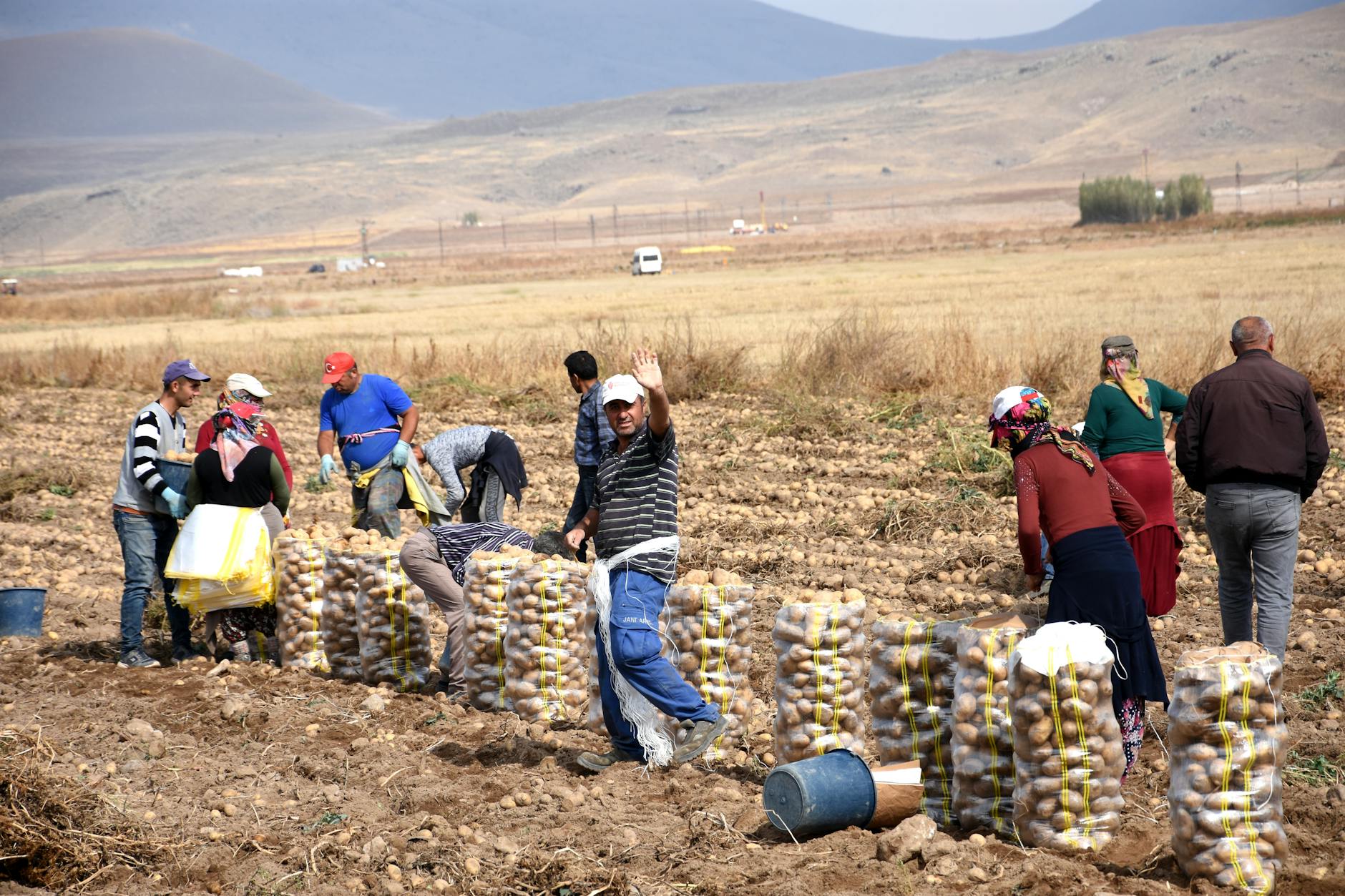
Photo by enes u00e7imen on Pexels.com

The reason the president-elect’s plan to deport millions of immigrants will fail has little to do with his ability to strong-arm law enforcement, and potentially the U.S. military, into corralling people in large, fenced-in Texas prisons. He may be able to do that. Missing is that immigrants are a part of the fabric of American society in a way that promotes and values the individual nature of people. While Trump talks about mass deportations of millions of people, each of the targeted people will have a name, a face, and a presence in the community in which they find themselves. To treat them as a fungible commodity, thus dehumanizing them, goes against the American grain and Trump will encounter that. I believe this is a significant enough obstacle that whatever the plan is, it will fail.

Where will federal officers find all these undocumented immigrants? They may have some records, like those Iowa Secretary of State Paul Pate is trying to obtain regarding non-citizens who registered to vote. Voter fraud is so rare that will not fill Texas stockades.

When children of immigrants attend public schools, they are visible. Will teachers turn them over to federal authorities? It’s an open question. I suppose they are counting on people to snitch on their neighbors. In my neighborhood, I suspect that fellow who flies the Gadsden flag near his Trump 2024 flag might serve as a MAGA snitch. I hope not, yet this sounds a bit like North Korea, actually. It is like the North Korea portrayed in Barbara Demick’s book Nothing to Envy: Ordinary Lives in North Korea where neighbors snitch on neighbors. Maybe that’s what Republicans want in the United States.

In his book, The Audacity of Hope, then Senator Barack Obama recounted the story of how in 2006, Senator Chuck Grassley and he worked together on immigration reform. According to Obama,

Under the leadership of Ted Kennedy and John McCain, the Senate crafted a compromise (immigration reform) bill with three major components. The bill provided much tougher border security and, through an amendment I wrote with Chuck Grassley, made it significantly more difficult for employers to hire workers illegally. The bill also recognized the difficulty of deporting twelve million undocumented immigrants and instead created a long, eleven-year process under which many of them could earn citizenship.

The reasonableness of this story makes it seem more like a fairy tale than actual behavior of U.S. Senators.

Locally, the story we hear in the community is more granular and personal. There is an increase in the number of immigrants from countries other than Mexico. Parts of Iowa, especially university centers are international communities. We find landlords rent to immigrants more often and schools enroll more immigrant children. People who work in social safety net organizations like free medical clinics, food banks and neighborhood centers see a large number of immigrant clients. Public Health workers in Northwest Iowa require some staff members to speak Spanish to work effectively with immigrant communities. An increasing number of churches are being founded by immigrants. These are some of the things we see. The point is we know these people as individuals with a personality and a life woven into ours.

Because of the way Trump framed mass deportations, people are running scared, and I don’t mean undocumented residents. If the expectation is that undocumented residents will be found harboring kilos of fentanyl, there will be disappointment, especially here in Iowa. Anyone who has read Methland by Nick Reding or Dream Land by Sam Quinones knows that’s not how illegal international drug trafficking works.

The problems caused by a flawed immigration system are many. Native born workers have seen a decline in standard of living. Businesses want access to inexpensive labor provided by immigrants. Undocumented workers compete with native born/naturalized workers on an uneven playing field for jobs. Guest workers and work visa programs replace permanent jobs with temporary jobs without benefits or the legal protections guaranteed to most U.S. workers. Undocumented immigrants are most likely to receive abuse and mistreatment in social situations and in housing and employment. There is a language barrier and skin color may be different. Non-Christian religious backgrounds result in discrimination and mistreatment. All of these are symptoms. So what can we do?

Whatever that is, I expect the Trump administration to pay it little attention. Remember, Trump was the person who begged Republican Senators to kill the long negotiated immigration reform bill because he wanted to use the issue to get elected. Well, Mr. Trump. When your program deteriorates into chaos, what then? We all know you aren’t concerned about immigration. Let’s hope some of the real people involved as targets in the proposed mass deportations get a lifeline from the rest of us.

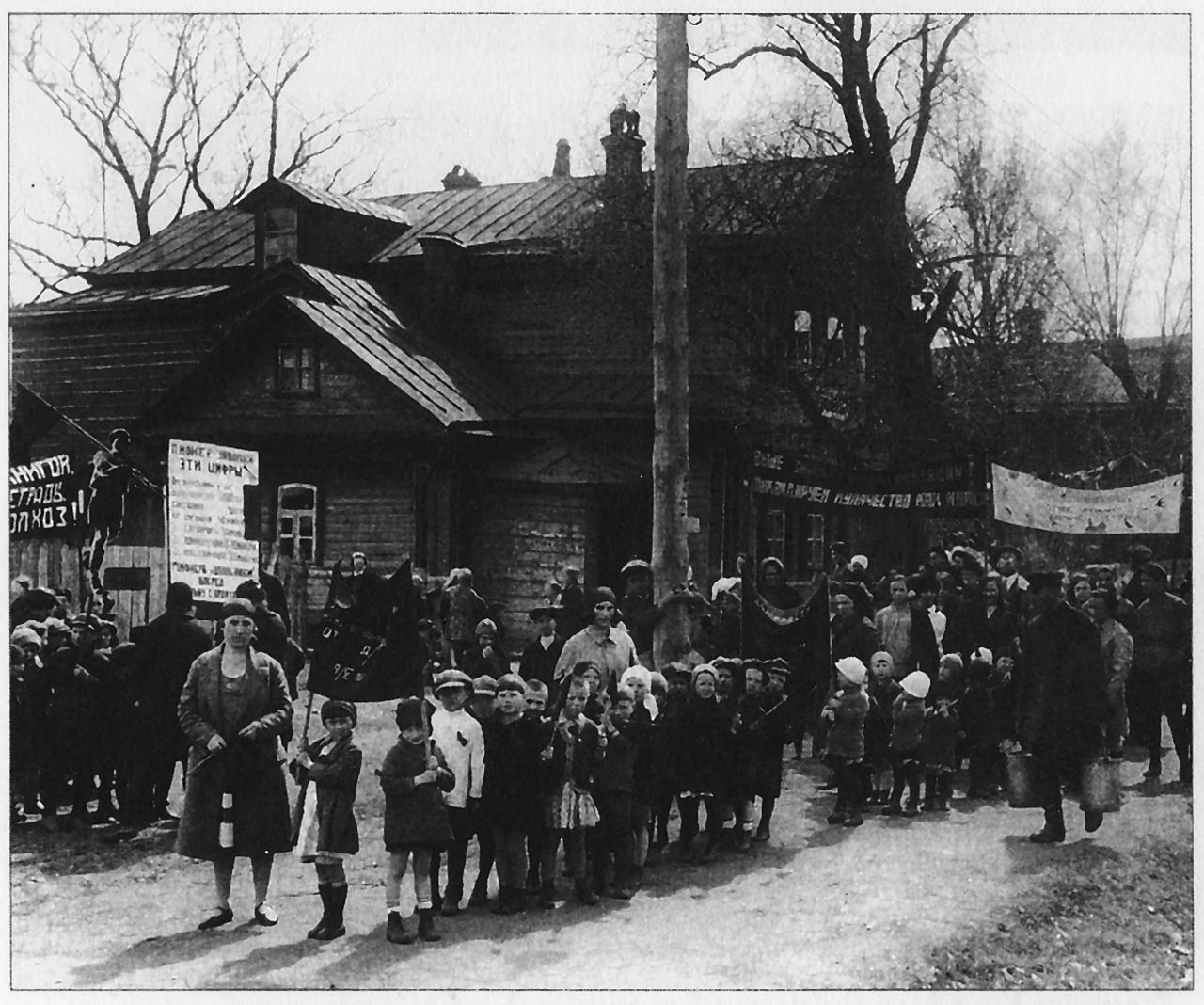
Dekulakisation. A parade under the banners “We will liquidate the kulaks as a class” and “All to the struggle against the wreckers of agriculture”. Photo Credit: Wikipedia.
Categories
Living in Society

Small Business Saturday

Pastries from The Eat Shop, a small, locally owned business. A Small Business Saturday purchase to support them.

Shopping small local businesses is challenging. Before dawn I went to town and got cash at a locally owned ATM, bought gasoline after my trip to Des Moines at a local franchise of the Iowa Casey’s convenience store company (definitely not a small business), and then splurged for a box of four pastries at the locally owned The Eat Shop in Solon. No one local is getting rich from my purchases, but that’s not the point of Small Business Saturday.

The Saturday after Thanksgiving as Small Business Saturday began in 2010, promoted by the American Express Company. The following year the U.S. Congress passed a resolution recognizing the day. It adds to the post-holiday shopping trend retailers hope to generate. Black Friday needs no explanation, and I just explained today. Next is National Secondhand Sunday, then Cyber Monday, and Giving Tuesday. Weeping Wednesday is supposed to be the day you receive the bill for all the shopping. In the days of online banking, we can tally the expense before then and regulate how much we spend.

The ATM I used is locally owned yet my money is kept at a bank in Texas. I have been a member of an automobile insurance company since 1976 and in the 1990s they started a bank. I joined and have been with them ever since. By having everything immediately available online once the internet came along, I have been able to stop bank fraud by crooks before it happens. I met and like both the local banker and his father. In a small city one gets to know all the bankers. I’m glad my bank contracted with the one they did.

Don’t get me started about the gasoline I bought to refill the tank after the Thanksgiving trip to Des Moines. Who really knows who makes money and how much on that commodity. The major oil companies have the system rigged so they make money every step of the way from pumping it out of the ground overseas, to managing the ocean vessels carrying it to the U.S., to refining, and pipelines, and truck transport, to the local station. Each step in the journey of a barrel of crude oil is a pricing point for the oil company. The locals work on a tight margin and make their money by selling convenience items, gas station pizza and sandwiches, and drinks.

At least there is hope for the bakery, which is owned by a woman with six or so area locations. The goods are all made from scratch and a bit pricey for everyday eating. They call themselves a boutique bakery, which means fancy stuff intended for purposes other than nourishment. Their philosophy, according the their website, is

In today’s world, people are increasingly health-conscious. It seems nearly everyone diets or allows themselves to have that coveted “cheat day.”

So, when you do indulge, it better be worth it. Worth the calories. Worth the sugar. Worth the carbs.

I do buy things from them a couple times a year, so why not on Small Business Saturday? Cheat day or no.

Couple of bits for the ATM transaction, buck or so margin on the gasoline sale, and $18.70 for the pastries is about it for my Small Business Saturday. At least I feel like I did something.

Locally owned hotel in Solon, Iowa on Small Business Saturday, Nov. 30, 2024.
Categories
Living in Society

The War is Over

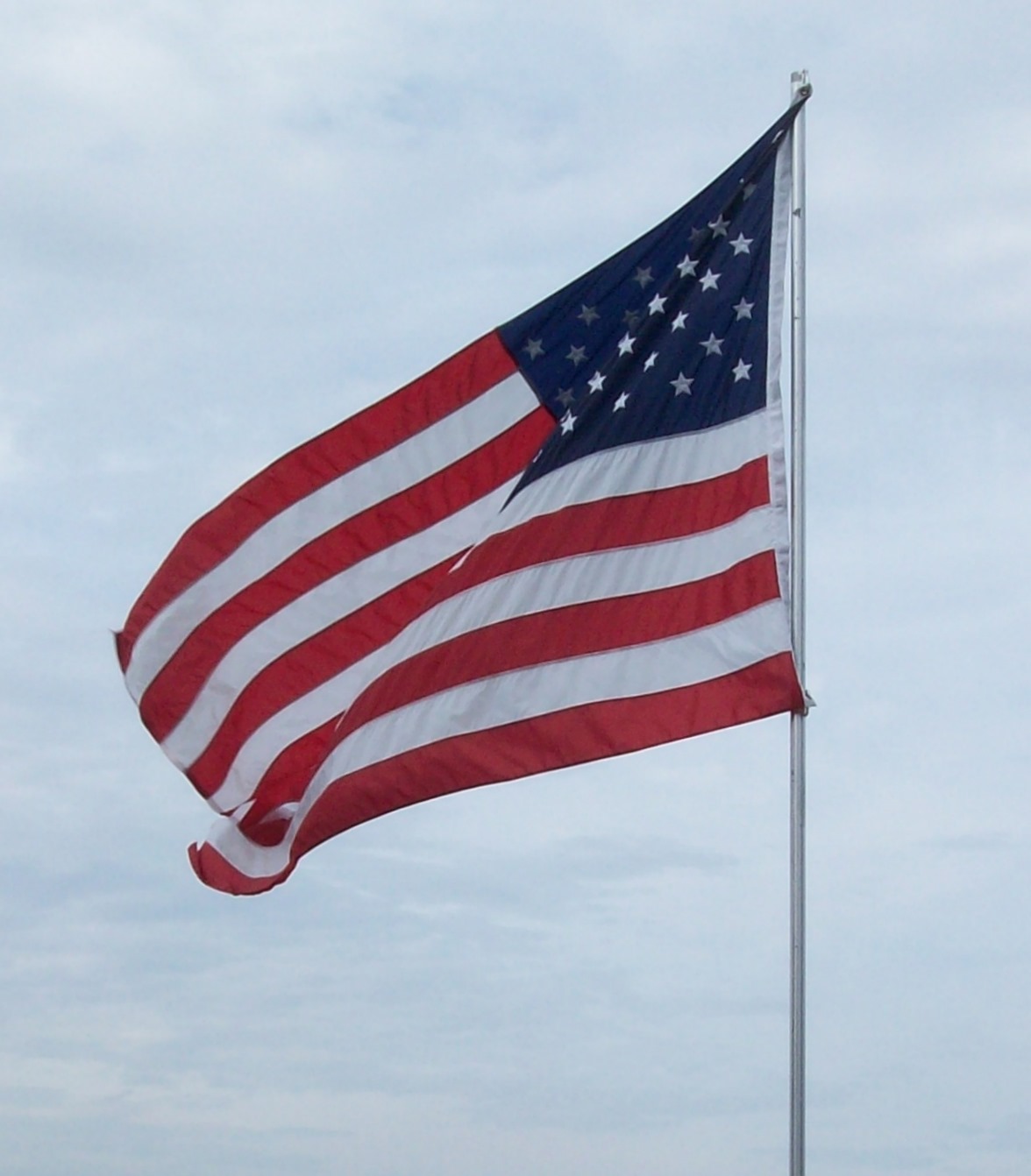
American flag.

A Confederate flag is on display near where I live. These flags are sprinkled around the state like confetti from a party with too few guests. I have this to say.

I served in the U.S. Army and protected the right to free speech. Flyers of these flags can go on. I protected their right to do so. That doesn’t protect them from criticism.

I understand fascination with the Civil War. My great, great grandfather served in the Confederate Army. The Confederate flag was part of my family history. As a child, I bought one and hung it in my bedroom.

The Civil War was fought over property rights: the right to enslave human beings as chattel. Catholic nuns taught us about Robert E. Lee in grade school. They said what a great military tactician he was. They omitted the fact he enslaved human beings: he owned them, rented them out, and inherited them as property on his plantations. I set their lesson about Lee aside, and took down my flag.

Nuns also taught 1 Corinthians 13:11, which is:

When I was a child, I spake as a child,
I understood as a child, I thought as a child:
but when I became a man, I put away childish things.

Confederate flag flyers should become adults, revere Iowans who fought for the Union in the Civil War, and join the rest of humanity, including the descendants of slaves. The war is over, take down the flag.

~ Published in the Cedar Rapids Gazette on Nov. 28, 2024.

Categories
Living in Society

View Toward Tomorrow

Canadian geese feeding in morning light.

We all have access to the news, so I need not recap what happened during the Nov. 5 election. Suffice it the front face for the Heritage Foundation, which is the front face for right-wing billionaires like Charles Koch and his club, was elected president. The Republican win was so deep it was and will be disabling for a while. It’s time to begin getting over the loss and move forward.

In a Nov. 20 article originally published in Hankyoreh, John Feffer provides a possible future as progressives pick up the pieces of our shattered dream of continuing the successes of the Biden administration with Kamala Harris. The entire article is printed here.

The challenge of navigating uncharted political waters is we don’t always know what to expect or what it might look like. Feffer provides some ideas toward envisioning the future as follows:

  • In 2016, Trump himself was surprised by his own victory, and his team was ill-prepared to take power. In 2024, his team is ready to hit the ground running on day one.
  • A demoralized Democratic Party is busy trying to figure out why it lost so badly in the elections.
  • The next four years promise to be chaotic, vengeful, and dangerous.

What can be done to prevent the new administration from doing its worst?

At the global level, many countries will step into the vacuum created by U.S. withdrawal—from the Paris agreement, the effort to supply Ukraine, and various global human rights institutions. European powers will likely step up their assistance to Ukraine if the Trump administration ends all military support for the besieged country. Europe, too, will continue to take the lead in terms of a clean energy transition. China, Brazil, and India are also producing a growing amount of electricity from renewable sources.

Inside the United States, the greatest resistance will come from the states. These states controlled by Democrats—California, Washington, Massachusetts—are already preparing to work together to block Trump from executing his extremist agenda. This resistance will likely take the form of filing suits that tangle up the new administration in court.

States have authority to set policy. For instance, in the wake of the Supreme Court’s repeal of Roe v. Wade, a number of states preserved access to abortion services through court rulings, legislative policy, or popular referenda. Regarding mass deportations, some Democratic governors have already said that they will not allow state police to assist federal authorities with the removals. Democrat-led states will do their best to create islands of sanctuary against the overreach of federal authorities.

NGOs and social movements will also mount resistance. A women’s march in Washington, DC just after Trump’s inauguration in 2017 demonstrated the depth and breadth of anger at the new president’s attitudes and proposed policies toward women. A comparable march is planned for January 2025.

The resistance is organizing to push the Democratic Party toward economic populism. The goal is to highlight the economic costs of Trump’s early moves—mass deportations, tariffs, corporate tax cuts—to build momentum to win the 2026 midterm elections. As we crawl out of our cave, and the outrage at Trump’s actual policies explodes, new movements will emerge to mobilize public anger.

While I am as guilty as the next person in being shocked and angry about the choices of the U.S. electorate, it would be a mistake to accept the next four years as set in stone. When Trump’s policies begin to bite, the anger will return and, with it, a new determined resistance. I, for one, want to be a part of that.

Categories
Living in Society

Staying Home

Home baked bread.

I ran out of bread and didn’t want to leave home to go shopping. I baked a loaf instead. We need more of this as the Republican sh*t storm approaches. We must get along in society, conserve resources, pay down debt, use the automobile less, and eat from our garden and pantry. A bug out bag would not hurt. We must go into survival mode until the dust settles, if it ever does. It will be a while before we can see where we might impact the new society.

Last week a podiatrist said I have to start wearing shoes indoors if I want my feet to heal. Not any shoes, but special shoes that are more expensive than what I usually buy. I bought a pair of these expensive, special shoes. Buying cheap shoes may be part of the original problem. My feet feel better already and my outlook is on the mend. After discussing process with my spouse we developed a solution to prevent tracking dirt all over the house.

The problem is I am a creature of habit and can’t remember to keep them on. When I leave my downstairs writing space, five or ten minutes can elapse before I realize that comme d’habitude I took off my indoors shoes at the bottom of the stairs. My habits are so ingrained, I don’t turn on lights when I get up in the middle of the night, finding my way by memory. Breaking some of my habits is also in the works in the new Republican society.

As Americans , politically, we are sailing into uncharted waters. At home we try to get by, increasingly drawing on friends and acquaintances in multiple virtual and physical communities. For now, we withdraw, resupply, refit, and get ready for what maelstrom is next.

Categories
Living in Society

Democrats are Positive

Blue Heron catching breakfast.

Below are two constituent newsletters received after each incumbent congresswoman won their re-election on Nov. 5. The first is from Democrat Jan Schakowsky of Illinois’ 9th District. The second is from Republican Mariannette Miller-Meeks of Iowa’s First District. The first is positive. The second is crabby, and full of lies. Which woman would you prefer in the Congress?

Jan’s Plans & Pans – November 18, 2024

Thank you to the people of Illinois’ 9th Congressional District for once again choosing me to be your voice in Congress. It truly is the honor of a lifetime! The fight for equal rights for all, an economy that works for everyday Americans, not just the rich, reproductive rights, and environmental protections goes on. Keep the faith. Let’s get to work.

Just a friendly reminder, if you need advice on navigating the Social Security Administration, help on an immigration case, aid in obtaining a passport, or assistance with the IRS, my staff and I are here to help, no matter your political party or beliefs. We will personally cut through the red-tape for you, and if we are unable, we will connect you with the agency or level of government that best suits your needs. Do not worry, my office can often save you a lot of time and stress. 

If you have not done so already, please be sure to follow me on Instagram, X, and Facebook, where my handle is @JanSchakowsky, to keep up with my latest updates.

Be well, Jan Schakowsky

Rep. Miller-Meeks: A Mandate for Change – November 17, 2024

November 5th, 2024 is a day that will forever be remembered as the day the American people voted for a mandate—a mandate for change.

After nearly four years under the Biden-Harris administration, it is clear that America stands at a crossroads. The failures of the current administration have left our nation grappling with challenges on multiple fronts – with soaring inflation seen by high interest rates, gas and grocery prices, this economic hardship felt by families is undeniable.

At the same time, this administration has overseen an unprecedented border crisis, with millions of illegal immigrants crossing our southern border. This flood of people has brought deadly synthetic fentanyl, gang activity, individuals on the terror watch list, and placed a severe strain on public resources.

Beyond these crises, the administration’s policies have further weakened the fabric of our society. Rising crime rates plague our cities, often driven by left-wing policies that coddle criminals while undermining law enforcement and often at the expense of victims. Americans, especially women, don’t feel safe and secure.

Adding to this are the multiple wars that have erupted around the world following Biden’s attempts to re-enter the Iran nuclear deal and the disastrous withdrawal from Afghanistan, which resulted in the tragic loss of 13 service members and emboldened our adversaries. It’s no surprise, then, that Americans are demanding change.

The Biden-Harris legacy is one of confusion, failure, and an abandonment of the values that have made America exceptional. But on November 5th, 2024, the American people voted for a new direction.

It is now time for America to return to the principles that have made it the greatest nation in the world: a strong economy, strong military, secure borders, safe communities, and a commitment to fairness and equal opportunity for all through merit. 

With President Trump’s leadership and majorities in the House and Senate, we can restore our nation’s greatness. Together, we will secure our borders, revive our economy, and put an end to the ongoing wars that have drained many of our resources and undermined our national security. More importantly, we will restore hope for the millions of Americans who have felt forgotten under the Biden-Harris leadership. The American Dream is not dead – together, we can and will revive and restore it. 

As we look to the future, I pray for President Trump’s health and success. I look forward to working with his administration to implement policies that will bring stability, security, and prosperity back to our nation. God bless him, and may God bless the United States of America.

Sincerely, Mariannette

I’m not ready to move to Illinois… yet.

Categories
Living in Society

Angering the Gods

Tulsi Gabbard in the author’s neighborhood. Photo by the author.

Tulsi Gabbard was one of the first female members of the U.S. Congress with combat experience. I interacted with her twice: once at a 2016 event hosted by then Congressman Dave Loebsack, and again in 2019 when a neighbor hosted an event within walking distance of my driveway. Gabbard’s campaign for president was gasping for oxygen the day I last saw her. I baked an apple crisp for the event. She took the leftover dessert with her and dropped out of the race the following week.

That Gabbard is a combat veteran, and was a member of the House Foreign Affairs Committee, the House Armed Services Committee, and House Homeland Security Committee, does not qualify her to be Director of National Intelligence (DNI) as was announced this week. In 2022, Vladimir Solovyov reported on Russian media Gabbard was Vladimir Putin’s agent in the U.S., according to Julia Davis who monitors Russian media.

The staffing announcements by the president-elect this week were a continuous showing of bad hires for jobs that take real skills. It is no wonder he bankrupted so many of his businesses. That Gabbard is suspected of being a spy while potentially being DNI is just scratching the surface of how bad the next administration will be for the United States.

What does that mean? We engaged activists need a new approach to dealing in public with the new administration.

On Feb. 1, 2017, my guest opinion, “What if the jobs don’t come back?” appeared in the Cedar Rapids Gazette. The mistake I made then, and won’t make again, is treating Donald Trump like a normal president, instead of the criminal he is.

In her Nov. 13, Letters from an American, Heather Cox Richardson said this about the president-elect:

Trump has made it clear that his goal for a second term is to toss overboard the rule of law and the international rules-based order, instead turning the U.S. government into a vehicle for his own revenge and forging individual alliances with autocratic rulers like Russian president Vladimir Putin.

With four years of experience and frustrations, the president-elect can now move immediately to implement his agenda. With Republican majorities in both the U.S. House and Senate, and with the full backing of right wing billionaires and the Heritage Foundation, I expect he will move quickly. He already asked the U.S. Senate to forego confirmation hearings on his nominees so they can be appointed according to Article II, Section 2, Clause 3 of the U.S. Constitution:

The President shall have Power to fill up all Vacancies that may happen during the Recess of the Senate, by granting Commissions which shall expire at the End of their next Session.

That means without the advice and consent of the U.S. Senate. Or, as Rachel Maddow put it:

I hope not to anger the gods and get on the president-elect’s or his minions’ hit list of people against whom he wants revenge. I have enough energy to roll this thing forward one more time, so I’d better make the most of it. So, should we all.

Categories
Living in Society

Armistice Day 2024

Flags at Oakland Cemetery in 2012.

Remarks as prepared for the Armistice Day observance in Iowa City on Nov. 11, 2024.

Thank you for joining us during this observance of Armistice Day. My name is Paul Deaton. I was a founding member of the Iowa Chapters of Veterans for Peace. When we organized the chapter, we had veterans from every armed conflict going back to World War II. Some of our members have died, and I ask for a moment of silence in their honor.

I intend to keep my remarks brief. Some of you who know me may realize how difficult that will be for me. Nonetheless, let’s get started.

In World War I we find the beginnings of the misinformation and disinformation that became so prevalent in our society. There are 5 things I would like to say about that.

Point 1: There were conspiracy theories about the war.

Was World War I a hoax? No, yet conspiracy theories were prevalent. During the War, the American home front was awash with them alleging internal German enemies were intentionally spreading disease among both human and animal populations, most egregiously during the 1918 influenza pandemic. While false, these stories nevertheless revealed Americas’ shifting relationships to the environment, warfare, and the federal state. They channeled immediate fears over what type of war, and what type of enemy, the nation faced, as well as deeper, Progressive-era anxieties related to the dramatic expansions of government and scientific expertise in American life. It underlines how the war permitted individuals to discuss, denounce, and contest state and scientific authority at this moment in the early twentieth century. In my view many of the conspiracy theories we hear today have their roots in this.

Point 2: Allied Propaganda

Propaganda was used by both the allies and the Germans during the World War.

Allied governments launched propaganda efforts in the days after the invasion, pushing out terrifying, often untrue tales, published in newspapers, fliers, and pamphlets. There were stories of bayoneted babies, mass rape of girls, and old men who obediently turned over useless rifles, and were shot on the spot by heartless “barbarians.” No doubt the intent was to stoke the fire of support for the war.

Point 3: German propaganda.

For the Germans, the goal of propaganda was to make the war seem less devastating than it was. More soldiers were needed at the front, so government officials downplayed the number of casualties to recruit them. The truth about the scale of casualties – an estimated 40 million civilian and military personnel dead and wounded – could only be kept secret using propaganda. The total number of deaths includes more than 9 million military personnel. The civilian death toll was between 6 and 13 million. Disease, including the influenza pandemic, took about a third of these lives. World War I ranks among the deadliest conflicts in human history. Suppression of this fact was a goal of German propaganda.

Point 4: The Armistice.

I visited the Glade of the Armistice while I lived in Europe. It’s in the French Forest of Compiegne where the Germans and Allied Supreme Commander signed the Armistice we commemorate today. They used a rail car for the ceremony. Years later, in 1940, Hitler used the same rail car to accept the French surrender. Hitler had obvious propaganda reasons for doing so. I saw a similar rail car in France while I was there, although not the same one used in 1918. The original disappeared after the Nazis took possession of it. I remember how quiet it was in the forest that day. It was a day filled with meaning.

Point 5: Living History

Veterans of World War One are deceased. The veteran I knew was my Grandfather who never spoke to me of the war. We were more concerned with his black lung disease contracted during decades of coal mining in Illinois. Family lore is Grandfather arrived in France shortly before the Armistice and did not see conflict. He was there six months waiting to return to Illinois. If you have a memory of the war and its veterans like mine, today is a day to remember.

As living memory fades let us hope and pray that the World War I dead shall not have died in vain.

In conclusion, I’d like to read a poem used by the allies to recruit soldiers. The idea was for new people to take up arms to replace the fallen. You may know this one. In Flanders Fields is by Canadian physician John McCrae, published December 8, 1915.

In Flanders fields the poppies blow
Between the crosses, row on row,
That mark our place; and in the sky
The larks, still bravely singing, fly
Scarce heard amid the guns below.

We are the Dead. Short days ago
We lived, felt dawn, saw sunset glow,
Loved and were loved, and now we lie,
In Flanders fields.

Take up our quarrel with the foe:
To you from failing hands we throw
The torch; be yours to hold it high.
If ye break faith with us who die
We shall not sleep, though poppies grow
In Flanders fields.