Former U.S. Senator from Virginia Jim Webb and former Maryland Governor Martin O’Malley kicked off the run up to the Iowa Caucuses on Friday at the Polk County Democrats Spring Awards Dinner in Des Moines. Polk is a Democratic county where Bruce Braley won the 2014 U.S. Senate race with 50 percent of the vote. Democrats presented former Congressman Neil Smith with a lifetime achievement award at the pork chop dinner.
My press credentials were not approved, so I live-streamed the speeches of Webb and O’Malley on C-Span. The view was actually better than what I may have had in person. Someone in the room direct messaged me on twitter to ask where I was sitting, which was funny.
We all get to describe the event using the same English language, including depiction of “hoots and hollers,” usage of which I did not swipe from this CNN person I never heard of until last night.
Biggest O’Malley applause line of the night comes after he stresses the importance of unions. Hoots and hollers, standing ovation.
— Dan Merica (@danmericaCNN) April 11, 2015
@GovernorOMalley pushing the needed issue buttons. Hearing hoots and hollers from audience. #iacaucus
My takeaway from the speeches was that O’Malley told a better story, but Webb had the better story, one worth paying attention to as the run up to the caucuses unfolds.
This Democratic event felt less like a scene from Alice in Wonderland as the mad tea party of Republicans often does.
According to multiple anonymous sources, Hillary Clinton will announce her second bid to become president in a twitter message on Sunday. Because of Hillary’s prominence in American society, there will be a media frenzy which may eclipse whatever good Webb and O’Malley did yesterday.
Some of my neighbors vote only in presidential election years.
How do I know? Using the county auditor records, which can be purchased in spreadsheet form for around $10, I’ve studied their voting patterns since reactivating in politics in the wake of the Gore v Bush election.
It’s not that I’m snooping, although in a way I am. As a precinct activist, it was important that everyone in the neighborhood be accounted for in every campaign. It still is.
I know who to ask what when it comes to politics, and have to live with my neighbors the rest of the year. There is a social courtesy as important as winning elections. What’s wrong with Iowa Democratic politics is a lack of focus on this basic aspect of living in society.
Jerry Crawford exemplifies the worst of it. He was on Iowa Press with Bonnie Campbell and Jessica Vanden Berg last Friday.
“In all the races I’ve been involved with of various kinds it’s not how you start, it’s how you finish,” Crawford said. “Iowa, the Iowa Democratic Party, our ticket in this state desperately needs the general election assets that Hillary Clinton will bring as our party’s standard bearer. That’s the way we recover from what was a very, very tough 2014 election.”
This quotation epitomizes the top-down strategy that has done some good things in Iowa Democratic Party history, but has become outdated and should be blown up.
Crawford’s bias toward party insiders is clear in his statement about the Democratic congressional race to challenge Rod Blum in the first district:
“Monica Vernon was first in up in the first congressional district,” he said. “There’s now some noise about Ravi Patel and somebody from Saturday Night Live whose name I can never remember, which is a clue. I do think Monica has an advantage going in up there because of the service she provided to the party as the lieutenant governor nominee when everybody knew that was going to be a tough slog.”
It is easy to review and criticize statements by public figures. No doubt Democrats would be suppressed if substantial financial resources were not forthcoming from a national candidate. Yet winning has become more difficult in an era where the Republican ground game has improved since the 2004 general election. Winning takes more than money.
What’s a person to do?
Giving up on the party is not a good option, but a change is needed. Just read this profile of Crawford by Ben Terris in the Washington Post or the article by Zalid Jilani on Alternet about his corporate clients and tell me why someone like Crawford represents the best direction for Iowa Democratic politics. He is the past.
Vanden Berg’s views on Iowa Press represent our future.
“There may be a difference between what Hillary needs to do to win and what Iowa democrats need to build our party,” Vanden Berg said.
What have Democrats done lately to build the party?
There is stuff going on. Bill Gluba, mayor of Davenport, State Senator Bob Dvorsky, House minority leader Mark Smith and Senate majority leader Mike Gronstal supported the recent trip to Iowa by Martin O’Malley in separate events. This is part of party building whether one supports O’Malley or not. More events like this would be helpful.
What matters more is the regular conversations individuals have with neighbors, friends and family about politics. It’s harder because people don’t want to talk about politics. At the same time, there is an open question of who might join an electorate that will support what’s best for Iowans.
Anymore, party identification isn’t the best indicator of who may join in supporting a candidate. People who will win elections will also engage anyone and everyone at some level. In the end, we all have a stake in every election.
Winter persists—mostly because of its recent vigor.
Half a dozen bald eagles stood on the ice at the Coralville Reservoir yesterday while I drove to work. Perhaps they were fishing a section of open water near the bridge. Perhaps they were waiting for spring to arrive before departing. They were still there on the drive home.
I planted the first seeds in trays last week: broccoli, basil and celery. I’ve been parking my car in the driveway leaving the garden workshop set up inside. It will be that way for a few weeks, although I hope to accomplish a lot during the work day planned for Friday.
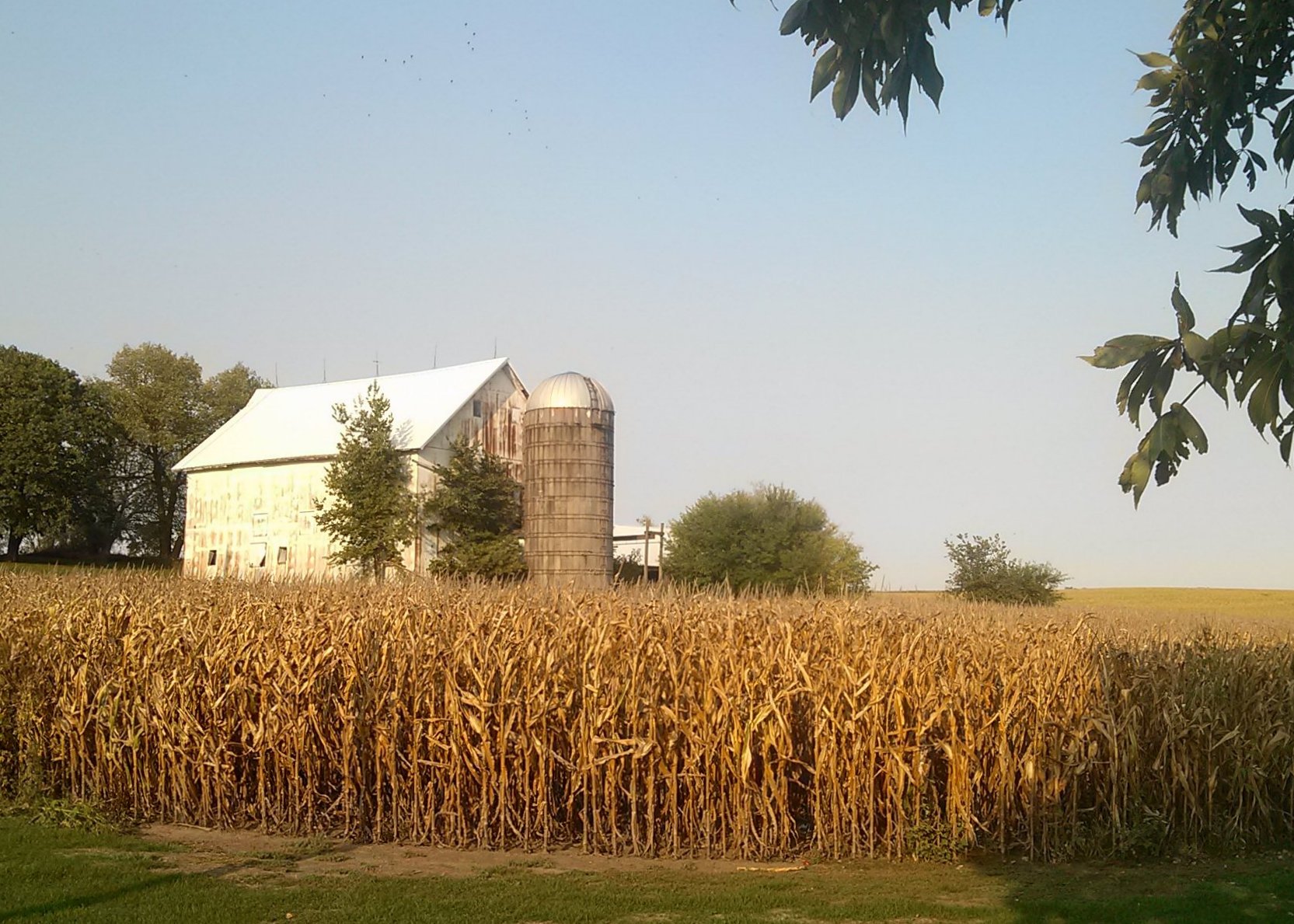
It feels like elected officials, especially those from fossil fuel producing states, have crawled into the barn of my life over the winter.
Mitch McConnell (R-KY), a proponent of coal mining and use, is not new, but there’s more. Ted Cruz (R-TX) is now overseeing NASA and wants to focus more on space than on studying Earth. Perhaps he want to seek a Planet B where we can live after his ilk have thoroughly pillaged this one. James Inhofe (R-OK) heads up the Environment and Public Works Committee, and halted any possible action to mitigate the human causes of climate change. Sen. Tom Cotton’s (R-AR) letter to Iran meddles with negotiations that have been years in the making, involving substantial coalition building. The Senate Foreign Relations Committee under Bob Corker (R-TN) seeks to pass a law to force the administration’s hand in Iran. Corker did not sign the Cotton letter in hope of building a veto-proof bill in the senate.
Maybe we should invoke Saint Patrick to drive the snakes out.
The trouble is even a saint would be pressed to deal with this crowd.
Elections matter, and the public doesn’t really care unless it affects them personally. That’s one take that provides a bit of sanity, but only for a while.
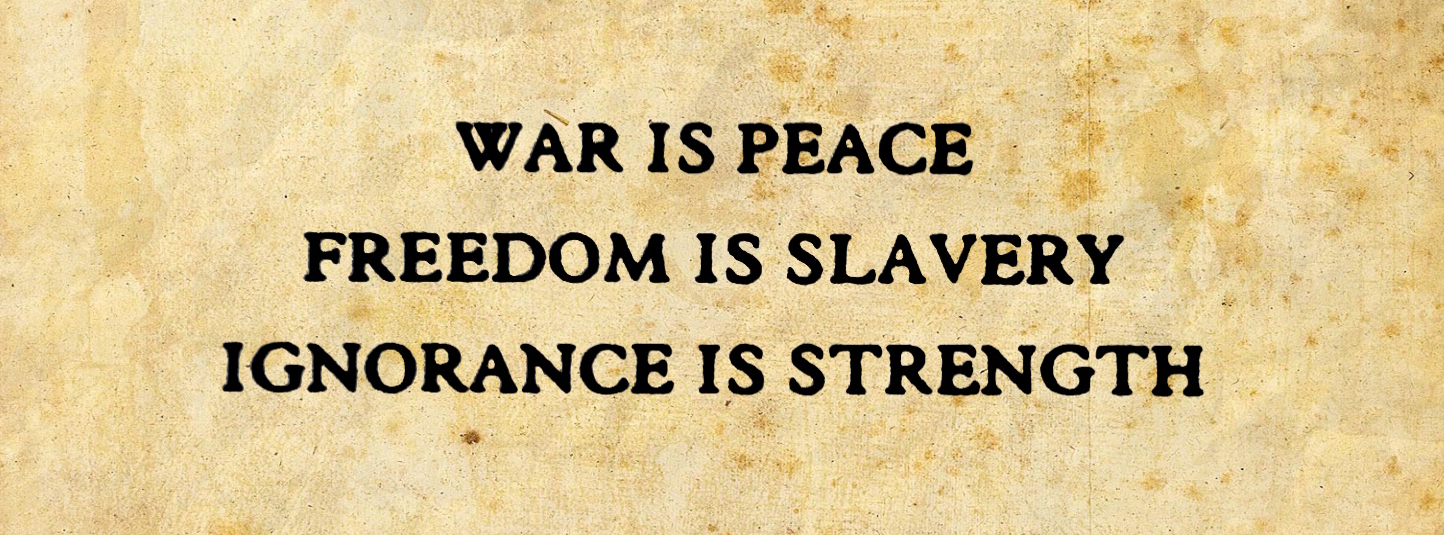
It is like we are in a dream in which the meaning of everything is unhinged. “War is peace. Freedom is slavery. Ignorance is strength,” as George Orwell wrote in 1984. “In a time of universal deceit—telling the truth is a revolutionary act.”
We are not yet revolutionaries, although maybe we need to be.
Theodore Roosevelt said it well.
“No man can be a good citizen unless he has a wage more than sufficient to cover the bare cost of living and hours of labor short enough so that after his day’s work is done he will have time and energy to bear his share in the management of the community, to help in carrying the general load.”
The power in Washington and on Wall Street is everywhere endeavoring to suppress this basic American instinct.
As punctuation to my article Why Bakken Oil is Dirty, last Thursday’s BNSF oil train derailment in a remote area near Galena, Ill. tells the story better than I could.
It is the third Bakken oil train derailment in the last three weeks according to National Public Radio.
Carrying light sweet crude to market from the Bakken field, the train derailed on tracks inaccessible to first responders, rupturing at least five tank cars of 21 that left the tracks, igniting a pyre that could be seen for miles. No one was injured and officials are investigating the causes. Because of the location, accessible only via a bicycle path, fire fighters decided to let the fire burn itself out. Remediation of the oil spill will be difficult because of the location, but no oil has made its way to the Mississippi River yet. As I write, the fire is still burning.
BNSF was quick to report the rail cars were a newer, safer model voluntarily designed to be less prone to rupture. Critics say it’s not good enough. Being a level headed Iowan, I’m willing to wait until the investigation is complete before condemning anyone but ourselves and our addiction to fossil fuels.
“In the coming days, we need to look at not just the safety of the rail cars, but the safety of what is being put into those cars,” U.S. Senator Dick Durbin told NPR. “There is mounting evidence that stricter standards are needed in the handling of Bakken crude which appears to be particularly volatile. We can’t wait. The safety of our communities depends on it.”
News coverage of the accident revealed that the State of North Dakota will require oil producers to remove excess natural gas from the crude oil before shipping it by rail to help reduce volatility, according to NPR. What exactly that means, and whether it will make a difference is uncertain. It confirms what I said in my last article about the volatile nature of the Bakken crude oil being shipped, and the role the refining process plays in its volatility.
Photo Credit: Quad City Times
While the Galena fire burned, Bruce Rastetter’s Des Moines Ag Summit proceeded on schedule, serving up Republican nostrums the way cattle in a CAFO are fed. All twittering eyes were on the summit, leaving a void among Democrats. Democrats don’t have anything similar to this, so it was a great way for Republicans to build party support. Disagreement and agreement with looney ideas is part of Republican party-building, and they are getting better at it with each election cycle.
Iowa Citizens for Community Improvement, who demonstrated at the Ag Summit and held their own event, are neither Democrats nor lefties, despite repeated corporate media attempts to characterize them that way. In my experience, they are issue-oriented individuals who band together to make points about life in Iowa, using visible, direct action tactics in their advocacy. The reason they receive media characterization at all is Democrats cede the space to Republicans on these presidential candidate cattle calls. There is nothing else for political reporters and bloggers to cover.
Rastetter contributed over $60,000 to the Branstad-Reynolds re-election, and $1.49 million to various candidates over the last 16 years according to FollowtheMoney.org. Who is the Democratic equivalent? Maybe Fred Hubbell, who gave $60,000 to the Hatch-Vernon campaign.
Hubbell may be well known to political insiders but most Democrats only know vaguely that he is an attorney, if they even know that. He would be no useful substitute to the hated, loved, and very public Rastetter.
Democrats had the Harkin Steak Fry as a comparable event, although last year’s was to have been the last. Maybe it will return, but that’s up to Harkin, not us.
For the first time in a long while, I didn’t hear that our county party was having an off-year caucus last week until after it had begun. I arrived home from work just as it was finishing. If a couple of people hadn’t been covering it on twitter, it would have passed unseen. That’s a train wreck of a different kind.
As we hope for spring, society begins to make more sense. For now, winter’s cold remains, and there’s plenty to keep us busy as we sustain our lives on the Iowa prairie.
In Iowa, the Democratic Party organizes the nuts and bolts of statewide campaign operations around something called the “coordinated campaign.”
The coordinated campaign has been a blessing and a curse.
On the short list of preparations for 2016, one hopes the coordinated campaign is blown up and re-invented into something that can win against what has become a better organized Republican campaign operation. 2014 brought us Senator Joni Ernst, Governor Terry Branstad, and continues to re-elect incumbents each election cycle. Iowans deserve better than that.
As much as one believes that Democratic elected officials would provide better policy and governance for the vast majority of Iowans, the message is not getting out and Republicans are suppressing the wackiness found in extreme elements of their party enough to garner substantial, and winning support in the electorate. Most active Democrats I know are good people, willing to do the work of a political campaign. The problem has been with the way party leadership organizes each cycle’s effort, and what work is getting done.
What is the coordinated campaign, exactly?
It is a pooling of resources through the Iowa Democratic Party from campaigns up and down the ticket into a unified field effort.
Candidates pay to play, and the focus is usually on the big ticket races: president, governor and members of the U.S. Congress.
A manager and central staff have been hired to run the program and develop campaign options for approval by stakeholders in coordinated campaign.
The coordinated campaign organizes a field program with a paid canvass and targeted mail campaigns designed to help turn out Democratic voters and persuade targeted voters to vote for Democratic candidates.
In addition to statewide candidates, the coordinated campaign works on statehouse races in an effort to build a Democratic majority in the Iowa House and Senate.
Political insiders might nit pick with some of this, or add additional details, but this is the broad picture of what has been the coordinated campaign in the years since 2004 when I have engaged more actively in politics.
Why do I say the coordinated campaign should be blown up?
Democrats require some organizing mechanism, but continuing to repeat the past will produce the same results. Here are four reasons to blow up the coordinated campaign:
1. There is limited buy-in from local activists to what the coordinated campaign has planned. Campaign choices—locating resources like paid staff, offices, house parties and mailers—are made by others and local activists talk among themselves that some decisions don’t make sense. They have been asked to participate, but that participation has been framed as staffing a shift at an established phone bank or door-knocking event outside our precinct. It has been a clear disconnect from precinct politics that used to be a Democratic strength.
2. Republicans were stunned by the Democratic organization of the 2006 and 2008 campaigns, and they caught up. I used to laugh at Team Nussle’s efforts to organize phone banks and canvasses in 2006, but no more. The Republicans—partly due to the political leadership of Terry Branstad and Republican Party of Iowa chair Jeff Kaufmann— have caught up and surpassed Democrats, as evidenced in the results of the 2014 general election.
3. Democrats failed to articulate their message. Where Republicans made significant inroads is their effectiveness of identifying stakeholders in government and offering solutions. They framed solutions as bipartisan, but the core message that won elections is the sense of belonging their campaign helped create. Because the coordinated campaign focuses canvasses and get out the vote efforts on targeted voters, it left messaging to others, and a broad sector of the electorate on the table. Republicans have been Hoovering these voters up.
4. Democrats don’t get the role of third party resources. Because of its structure, the coordinated campaign made poor use of third party resources. As if when the check wasn’t deposited in the bank account, it didn’t exist. Tom Steyer’s NextGen Climate took a drubbing from liberal bloggers in the 2014 campaign, and some of the criticisms were rightly placed. However, liberal bloggers are not the coordinated campaign. In a time of the Citizens United ruling, Democratic leaders must figure out how to better balance outside resources to advance Democratic issues, while walking the legal tightrope of campaigns not coordinating with third parties. Some accuse Republicans of coordinating with outside groups illegally. Unless lawsuits are forthcoming and prevail, the role of third party resources in campaigns has been a Republican advantage. As annoying as it is that Senator Ernst wears an Americans for Prosperity pin at public events, Republicans have become masters of campaign finance laws, giving them an advantage the coordinated campaign can’t match.
Few others have taken the coordinated campaign to task in public. While there are no solutions offered here, I invoke the rule of 1,000 words. Ideas toward a better process will be the subject of a future post.
There is a piece to be written about education and how it is supported in Iowa, although not the one that comes to mind.
It is a timely topic because the way our K-12 schools receive government funding includes what is called “State Supplemental Aid,” or as some slow to cultural adaptation legislators call it, “allowable growth.” The legislature is supposed to set the amount of SSA within 30 days of the presentation of the governor’s budget. They don’t always do that.
We know, with some certainty, that the bulk of a child’s education is not about school time. In fact, children do better in formal schools if they have a broader context of learning that includes family time, formal outside activities, and other social constructs to engage them. It’s not just me saying this.
“One in every five students drops out of high school and roughly 1.2 million students fail to graduate from high school each year,” reported the United Way in a 2012 issue brief titled, “Out-of-School Time.”
“Local United Ways and their partners must ensure that children and youth from birth through young adulthood have meaningful supports and opportunities across all settings (e.g., families, schools, communities).”
Education begins at home, and includes the society in which we live. The Iowa K-12 schools are a subset of that, and one doesn’t have to be a home schooler to appreciate it.
For some, it never gets far from there. Family life becomes an unending series of coaching, sharing, counseling, correction and stimulus moments injected, intentionally or not, into the arc of a child’s life. School becomes one more thing.
In our family, going to school was positive. Not only did we purchase special clothing and gear, and update our immunizations, the prospect of learning with other neighborhood children provided a broadening experience—one we couldn’t replicate at home.
There was some stress and uncertainty, and we didn’t agree with everything the schools taught, or the social environment they created, but the overall impact was positive. We learned how to get along in a diverse society, and that was and remains important. That applies to my own schooling and to my perceptions of our daughter’s time in K-12.
The other day I encountered a very young child in a stroller looking toward a conversation between the presumed mother and a store clerk. Silent and intent, the soon to be toddler took it all in. What unscripted learning took place? What observations did the child have and from what framework? The child focused on speech coming from the boisterous one. It was a look of wonder that is hard to forget.
Enter my Catholic upbringing and the concept of “free will.”
The question of free will ranks among the most important philosophical problems. The view adopted in response to it will determine a man’s position in regard to the most momentous issues that present themselves to the human mind.
On the one hand, does man possess genuine moral freedom, power of real choice, true ability to determine the course of his thoughts and volitions, to decide which motives shall prevail within his mind, to modify and mold his own character?
Or, on the other, are man’s thoughts and volitions, his character and external actions, all merely the inevitable outcome of his circumstances? Are they all inexorably predetermined in every detail along rigid lines by events of the past, over which he himself has had no sort of control? This is the real import of the free-will problem.
The progressive view is that life is not predetermined by circumstances of family or acculturation. Environmental factors may come into play, but every American can have the opportunity to share in the American dream, and the role of government is to give people a hand up in what often is a struggle toward an equitable and secure life in society. Public school funding is an important way governments do that.
This gets lost in the public debate on school funding. The Iowa House Republicans view setting SSA as a negotiation. They passed a bill—along party lines—to set the figure at 1.25 percent. This was a starting point, they said, intentionally set very low, and in line with the governor’s budget.
The Senate is expected to pass a bill setting the figure between four and six percent. One doesn’t have to be Jeane Dixon to see a settlement around three percent.
Interested parties will advocate for an SSA number and the process will be ugly. The schools will uniformly say it is not enough and cut budgets in response to the final amount. That will be ugly too.
School funding is one more reason elections matter and people should get involved in the political process. That they don’t is a problem our K-12 school system helped create. There is no bigger indictment than yesterday’s Des Moines Register headline, “only 23 percent of millennials can name their state’s senators.”
In our community, people remember attending the one-room schoolhouse Big Grove Township School #1, now called the Stone Academy. It closed recently, in 1953. Whenever there is talk at the legion or at public events about the school, an old timer or two will say, “I went there,” and recap who else did.
There is no going back to the one-room school house, and that’s a good thing. Living in Iowa, our schools have great facilities and well educated teachers and administrators. Yet something is missing.
As a society, we spend a lot on education. Details for Iowa can be found in the 2014 Annual Condition of Education Report. It’s not about the money, it’s about our priorities.
What is missing is a sense of connection. People may be connected to a local community the way a Stone Academy graduate is, but many won’t live here that long. They don’t want that type of connection.
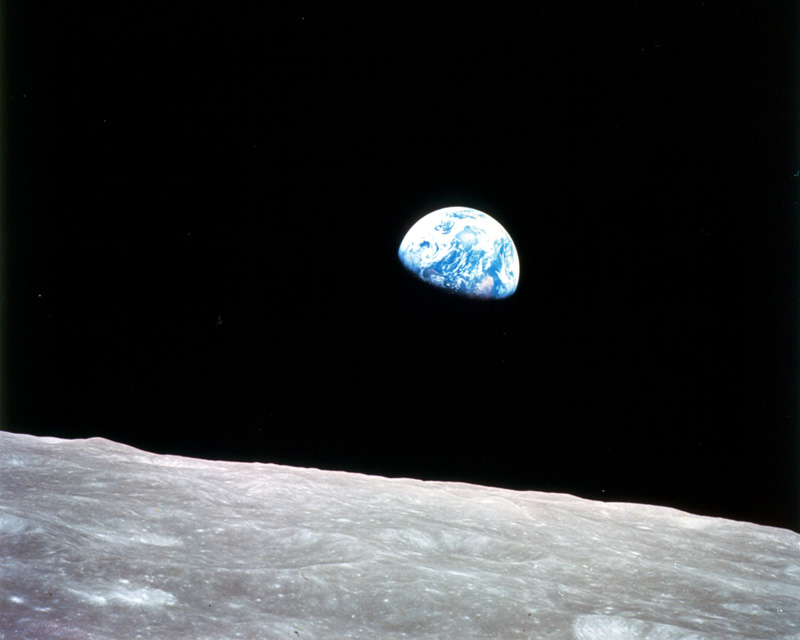
It is not for me to say what people want, or how they get there, except to say I have hope that as a society we recognize we are not in the world alone. The interdependence of societies, cultures and resources on this blue-green sphere is becoming increasingly important. Education can and must play a role in bringing this outlook to the fore.
For the most part we tolerate diverse views. However, relativism has proven to be a false path toward resolving conflict and isolation. There is no right answer, just a notion that when we support education, it means a lot more than government budgets to support public schools. It means a type of engagement the creates hope for more than the success of an individual at the expense of community.
We are a long way from that type of sustainability, and it is unclear that education, in schools, at home and in society, is getting the job done.
That’s why I believe we should support education more than financially and more than we have.
Twelve participants in the Great March for Climate Action made a reprise visit to Washington, D.C. last Wednesday.
Ed Fallon, march founder, tried to get meetings with the White House and the Environmental Protection Agency to coincide with the end of the march last September, however, key people were unavailable at the time.
The White House meeting did happen, with Dan Utech, special assistant to the president for energy and climate change; Rohan Patel, special assistant to the president and deputy director of intergovernmental affairs, and Angela Barranco, associate director for public engagement at the White House Council on Environmental Quality. My story about the meeting in the Iowa City Press Citizen is here.
Fallon was unable to attend the meeting with EPA later that day. Marchers met with Joseph Goffman, senior counsel, assistant administrator for air and radiation and Mark Rupp, deputy associate administrator for intergovernmental relations. After the EPA meeting, marchers fanned out and met with their congressional representatives.
The Great March for Climate Action was not a stroll in the park for the core group of 35 marchers who made some or all of the way from Los Angeles to Washington. There were physical challenges including weight loss, foot and leg problems, fatigue and stress. They dealt with extreme weather events physically, notably in Nebraska where they encountered a giant hailstorm unlike any they had previously experienced. More than anyone I know, Fallon and company walked the walk, experiencing personal hardship to do so. The meetings in Washington were both a culmination and a new beginning for participants in advocating for climate action.
“Officials recognize that climate change is difficult for many people to grasp,” Fallon said. “The eight months along the march route allowed us to experience the situation directly, and this places us in a unique position of credibility.”
In addition to the White House meeting, Fallon called on Senators Chuck Grassley and Joni Ernst, and Representatives Dave Loebsack (IA-02) and David Young (IA-03) to advocate for climate action. While the results of the meetings were mixed, marchers had the ear of their elected representatives. All four politicians voted for a bill to build the Keystone XL pipeline, something the marchers adamantly oppose.
Last night, Fallon posted a photo of himself and Miriam Kashia of North Liberty with Senator Joni Ernst on his Facebook page.
“Between driving, meetings and presentations, I’m behind on getting these posted,” Fallon wrote. “Our meeting with White House staff on climate change: very encouraging! Our meeting with Senator Joni Ernst: not so much.”
Having gained standing by walking the walk on climate change, it opened doors. What marchers found on the other side wasn’t all they had hoped. While they were away from Iowa, the electorate brought to power our most conservative congressional delegation in a while, notably absent Senator Tom Harkin.
In effecting progressive change there are two important parts. Electing people who represent our views and advocating for our causes with them. In 2014, progressives did not fare so well on the former, which makes the latter more difficult.
While some may not like looking at photos of Fallon and company posing with these politicians, they are doing their part for progressive change. If we don’t like the current crop of politicians, we can’t give up.
“Obviously we were all disappointed with the outcome of the last election, and there are a lot of reasons for it and I’m happy to take on some of the blame,” said President Barack Obama at the House Democratic Issue Conference on Thursday. “But one thing I’m positive about is, when we’re shy about what we care about, when we’re defensive about what we’ve accomplished, when we don’t stand up straight and proud… we need to stand up and go on offense, and not be defensive about what we believe in.”
It’s an open question whether progressives will get organized for the next election. It’s clear we won’t unless we emulate the Great March for Climate Action and walk the walk—beginning now.
Yesterday the U.S. Senate voted 98-1 that climate change is real. More specifically, “to express the sense of the Senate that climate change is real and not a hoax.” Senator Roger Wicker of Mississippi was the lone vote against the amendment to the Keystone XL Pipeline bill.
The Senate wouldn’t go so far as to say that climate change is influenced by human activity, thus providing wiggle room for the climate deniers who voted for this amendment.
Senator James Inhofe (R-OK) wrote the book on climate change as a hoax, co-sponsored and voted for the amendment. Once he took the gavel as chairman of the Senate Environment and Public Works Committee Inhofe proceeded to lay out his view of the matter on the Senate floor, including explaining what he meant by a climate change hoax. Emily Atkin took apart his presentation on Climate Progress, but here we are—a climate denier is now in charge on an important Senate committee.
This week, NASA released the largest photographic image of the Andromeda Galaxy ever, rendering the meaning of the Senate votes small by comparison. Comedian George Carlin said “the planet is fine, the people are fucked.” This too gets lost in the scope of the universe in which we live.
Nonetheless, life as we know it continues and where we’re bound is rarely certain. This week’s lesson is to be cautious about inflating our relevance as we endeavor to sustain our lives in a turbulent world.
With sun shining and temperatures above freezing, yesterday was a pleasant day to be out and about in the county seat.
Four interviews for the newspaper, a stop at a used bookstore, and afternoon conversation with friends over coffee. We discussed the world as we know it… and politics.
There was news in the political world. Governor Terry Branstad gave his inaugural address after omitting any mention of a key local issue—supplemental state aid to the K-12 school system—in his condition of the state address earlier in the week. He left it to analysts to figure out he plans to underfund schools this budget cycle. One of the local school districts is advocating for a six percent increase in funding. The governor proposed roughly one percent depending upon how the numbers are interpreted.
The Iowa legislature is open for business after the formalities of the first week, and K-12 funding is one of many issues they will consider this session.
Today, the Iowa Democratic party is expected to elect a new chair to replace outgoing Scott Brennan. Not having a dog in the race, I wish them well.
On Tuesday the president delivers his state of the union address to a joint session of congress. The television audience is expected to be the lowest of any of his state of the union speeches. Iowa’s junior Senator Joni Ernst has been selected by congressional Republicans to deliver a rebuttal immediately following.
There has been a lot of very public political action this month, but what I would like to know is what area families have to say about this political window dressing. I’d also like to identify the voters who were for both Dave Loebsack and Joni Ernst in 2014. I believe unlocking their motivations is key to understanding the electorate and determining a path forward after a disastrous general election.
During the 2012 campaign we door-knocked an enclave in northwest Cedar County. Because of the low number of homes, I decided we would knock on every door, rather than the lists created by algorithms in the party’s voter database. It was eye-opening.
What we found was families who were giving considered thought about candidates before voting. They were willing to listen and debate and be open minded. There was no presumption of voting for one or the other candidate, even if the voter had a party affiliation. If we had followed the algorithm, we would never have found them and the lesson therein.
The model used by Democrats to target voters has outlived its usefulness. The idea that outside organizers can invade the high population areas of the state and produce a victory may have worked for a while, but has grown stale and ineffective. What must happen is a return to the basics, where community political organizers—people who live in the community and are not hired consultants—canvass every voter in their geography and look for supporters. We haven’t been doing that for a couple of cycles.
The simple truth is Republicans have gotten effective at exploiting the every voter canvassing method, and the 2014 election results stand as evidence. Democrats are in a position of playing catch up, and my sense is in many cases they don’t realize what is going on.
So before we lock into the political stress and storm of the 114th Congress and the 86th Iowa General Assembly, let’s pledge to spend some part of each week talking to people in our neighborhood. By identifying issues important to people, we will gain information that can work toward winning the next general election, where like the one just past, a lot will be at stake.
The ambient temperature dropped four degrees since waking. Morning’s gray light brightened the plains as the new day arrived without fanfare.
One of the dozens of viruses and colds making the rounds has me feeling punk. That’s understating it. The arc of disease seems to be on the downside: there is energy to post a few items.
In what seemed like a fragmented, hesitantly delivered speech, Governor Branstad today reported “the condition of Iowa is strong.” It is hard to argue with the general topic areas of his initiatives for the coming legislative session: moving the economy forward, education reform, strong and healthy families, agricultural production, protecting our resources, transportation, safety and security, and open government. It was Branstad’s 20th condition of the state address, and we’ve heard much of it before.
A couple of progressive web commenters complained that Branstad used fallacious job creation numbers and made no mention of “middle class priorities” like increasing the minimum wage. There was a decided lack of interest in the speech, so few were likely listening to the commentators or the governor.
No protests in the Capitol rotunda ahead of governor’s condition of the state. Quietest I’ve seen it… #iagovpic.twitter.com/Jldx8ORq37
No one is listening. There is a lack of interest in government among a middle class that makes up most of 3.1 million Iowans. If some have their interests, written on a legislative agenda, most do not. The disinterest goes beyond what the 86th Iowa General Assembly does or does not accomplish.
The bubble in which we Americans live is real and is becoming the ridicule of the world. It is as if we took what’s best about our country and locked it up in a strongbox to protect it from those who might steal it. We venture from our borders to loot planetary resources, wage war and assert hegemony where we can. We have become exceptional in these things and our culture is the less for it.
The near term prospects for making a change are not good.
That’s not to say it is hopeless. In a world that has grown increasingly small during my lifetime, global cooperation is more important than ever. The rest of the world is coming together around a few issues—the environment, nuclear abolition, and poverty—but like in the French rallies over the weekend, the U.S. has been noticeably absent.
The current debate over Iran is a good example. Much of the world has come together to bring Iran’s nuclear program into compliance with their obligations under the Nuclear Non-proliferation Treaty to which they are a party. A deadline was set to conclude the talks, but the State Department asked for more time. Political hawks believe this is a stalling tactic on the part of the Iranians to further develop enriched uranium for nuclear warheads. The State Department and those who watch it believe negotiations are almost finished and a resolution at hand.
Rather than give the negotiations more time, the Republican majority in congress is poised to pass new sanctions against Iran.
“If we pull the trigger on new nuclear-related sanctions now,” Samantha Power, U.S. ambassador to the United Nations said, “we will go from isolating Iran to potentially isolating ourselves.”
The political hawks don’t mind, because to them, all that matters is assertion of American hegemony and sovereignty.
The late Howard Zinn points us in the right direction for action.
“History is instructive,” Zinn said in a 2005 interview.
And what it suggests to people is that even if they do little things, if they walk on the picket line, if they join a vigil, if they write a letter to their local newspaper. Anything they do, however small, becomes part of a much, much larger sort of flow of energy. And when enough people do enough things, however small they are, then change takes place.
This short piece may not be much—it is a little thing. But what ails me is not a virus contracted while living in society, or the cold weather. It is the disinterest in things that matter: a reversion to what in the Siouan language was Ioway—the sleepy ones. We must wake up and soon.
You must be logged in to post a comment.