The Democratic primary election is June 7 and I’m supporting retired three-star admiral Michael Franken for Iowa’s next U.S. Senator.
To learn more about Mike Franken, his experience, and what he stands for, visit his website here.
The Democratic primary election is June 7 and I’m supporting retired three-star admiral Michael Franken for Iowa’s next U.S. Senator.
To learn more about Mike Franken, his experience, and what he stands for, visit his website here.

Sandy is the spark plug of our community, especially when it comes to services for senior citizens, yet more than that. We met Saturday morning at a political event at the public library. A primary election is coming up on June 7 and there is stuff to discuss.
I asked Sandy about donating garden produce to the food bank again this year. She said the food bank would welcome the contributions and local donations were an important part of providing fresh food to people who need it. “I’m trying to slow down,” she said, explaining that some younger people were now taking donations on Mondays. Sandy turned 87 last September so there is nothing to say about her slowing down, other than she earned it. No one can replace what she has done for the community. We are grateful for any time with her.
For dinner I pulled something from the freezer and noticed the item was not hard, as it should be. The thermometer registered 50 degrees, precipitating “oh noes!” I spent an hour emptying everything into five-gallon buckets for composting. A lot of work went into preserving the food. Such is life: eventually our efforts become compost.
The two apple trees planted in 2020 are in bloom. That means a few apples, we hope. When one plants trees it is hard to avoid a long-term perspective. If there are apples, we’ll enjoy them.
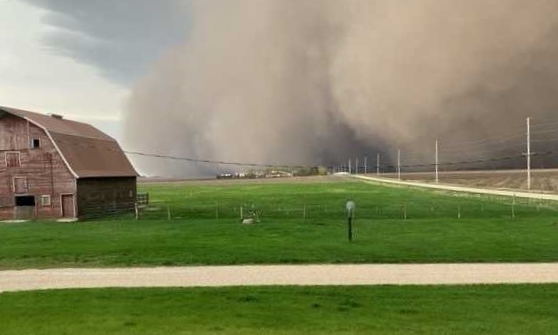
I tapped the brakes as we drove home from Des Moines on Monday, May 9. A farmer was discing a field and wind blew large clouds of dust from behind him across Interstate 80. It obscured the view, rendering driving unsafe.
Losing valuable topsoil might be cause for concern, except that corn and soybeans are grown mostly by application of commercial fertilizer and insecticides to ground with hybrid seeds. Tilling the ground where seeds, fertilizer, water and bugs meet, to create a suitable growing medium, matters more than actual topsoil in Iowa. High winds blowing topsoil away doesn’t seem to matter much to today’s Iowa farmers.
A network of farming hums in pre-dawn hours this time of year. Beginning well before sunrise, farmers call each other from kitchens and barns to discuss and decide what they will do that day. If they prize their individualism and freedom, they also speak and act more or less uniformly about crop decisions. There is a fixed ideology of modern agriculture involving corn, soybeans, hogs and cattle. Long delayed this year, this week’s decision was to get corn in the ground.
On Wednesday, May 11, Eleanor Hildebrandt posted an article, “Iowa’s prime corn yields likely gone.”
At the beginning of the second week of May, Iowa farmers were two weeks behind the average planting schedule to the past five years. It was the slowest planting pace in nearly a decade. Only 14 percent of seed corn was in the ground on Sunday, as April weather made it particularly difficult to plant potentially successful seedlings. Research on corn yield from Iowa State University shows the most successful corn crops are planted before middle May.
Iowa’s prime corn yields likely gone by Eleanor Hildebrandt, May 11, 2022
Experts don’t believe the 2022 corn crop will break any records.
It has been a windy week. While no news source is discussing the relationship between the 2022 corn planting season and a somewhat unique weather phenomenon called a haboob, it seems clear that hundreds of farmers plowing, discing, and planting corn loosened thousands of acres of topsoil. When combined with high winds, topsoil blew away in gigantic clouds like those in the image above.
When weather outlets began using the word “haboob,” I immediately thought of Desert One and the failed 1980 attempt during the Carter administration to rescue 52 American hostages from the Iranian embassy. The helicopters unexpectedly encountered haboobs in the desert, which disrupted their flight plans toward Desert One, a staging area. The Atlantic tells the story of the haboobs during the operation here.

The other image that came to mind after reading “haboob,” was of Farm Security Agency photographs of Kansas dust storms in 1935. These storms were attributable to the sod busters who broke up the prairie and farmed the land to exhaustion after the Homestead Act of 1862. These iconic images are a part of our history.
The disconnect of yesterday’s haboob from the large scale farming that made it possible is a sad statement about the nature of our news media and its influence over how we view our lives. Television viewers and radio listeners marvel at the use of a “different” and “peculiar” word to describe the weather phenomenon rather than discuss the causes of this loss of topsoil. At some point the loss of topsoil will matter more than it seemingly does. Yet we have dumbed down the way we take in information, and seem prepared to swallow anything as long as it doesn’t upset the equilibrium of how we currently understand the world.
Don’t get me started on education, though. On Thursday, May 12, there was a League of Women Voters candidate forum in Tiffin where four of six Republican Iowa House District 91 primary candidates spoke about education. This is from the Iowa City Press Citizen.
Education and what is taught in schools to children quickly became one of the main topics of the night as candidates were asked by audience members about the teaching of critical race theory and gender and sexual orientation in schools. Most of the candidates argued against teaching both, often making transphobic remarks in addition to their answers.
GOP District 91 debate includes education, conspiracy theories by George Shillcock, Iowa City Press Citizen, May 14, 2022.
Maybe my expectations are too high for Iowa.

I heard this morning security officials have begun to install non-scalable fencing around the U.S. Supreme Court. Lines are being drawn as the future of Supreme Court decisions with three Trump appointees on the bench clarifies. I agree with my Blog for Iowa colleague, Trish Nelson, who wrote today, We Are Going Back.
In this tumultuous time I’m reading C. Bradley Thompson’s America’s Revolutionary Mind: A Moral History of the American Revolution and the Declaration that Defined It. The founders were concerned with a tyranny of the majority. These days it is the tyranny of a minority of voters that gives us pause.
Nothing about the coming changes is new. On Aug. 17, 2016 I wrote:
What makes August part of the summer of weird normal is the lack of political talk about almost anything but the Republican nominee for president. It is normal that a lot of voters activate during presidential election years. What is weird is a combination of things including regular people cozying up to Donald Trump; people who would bleed Democratic if cut saying they won’t vote for Hillary Clinton no matter what; and controversial issues, including climate change, abortion, school funding, incarceration rates, water quality and government spending, being sidelined to watch the national political show.
Journey Home, Aug. 17, 2016.
With Neil Gorsuch, Brett Kavanaugh and Amy Coney Barrett on the high court, there seems no limit to what fundamental parts of our lives in common can be rolled back. Key issues that matter in millions of American lives are no longer being sidelined. The whole thing seems likely to be dismantled. It is unsettling.
The undoing of modern society began with Citizens United v. FEC and Shelby County v. Holder. The court is expected to be supercharged to toss aside decades of precedent and decisions to get us to a form of the society The Federalist Society, who recommended Trump’s justices, envisions for us. Instead of being governed by “We the people,” the few have taken over the joystick of power in society.
The question we have to ask ourselves is whether our grievances are sufficient cause to revolt against our government. We can either vote Republicans out of office or do something else. My sense is we are not at the “something else” phase yet.
Changes at the Supreme Court took place in front of our eyes. The rejection of Hillary Clinton by some Democrats marked the onset of what we are seeing today, even if the roots of it lay further back. There are no quick or easy fixes. Posting such grievances I have on this blog or in social media does little to effect the change we need to stop the bleeding of our rights and privileges. We need to stop the bleeding.
We also need to rise up, although it’s not clear what that means in 2022. It is time to figure it out. Let’s hope the fence around the Supreme Court is temporary.

A highlight of the new electoral districts is State Senator Kevin Kinney is in Senate District 46 which includes where I live in Big Grove Township.
Senator Kinney is a quiet, competent member of the state legislature who farms in Johnson and Iowa Counties. If he is reelected in November, he would be one of the only full-time farmers in the legislature. This is Iowa. We can use an experienced farmer with a commonsense approach to lawmaking.
With Kinney’s past experiences in the Johnson County Sheriff’s Office, he focuses on important issues that are not flashy or in the news.
For example, Kinney recently told me the Civil Statute of Limitations for sex crimes should be extended to match the Criminal Statute of Limitations. This may be a bit in the weeds for most, yet if his idea becomes law, a teenage victim of sex crimes might be able to seek justice where today they can’t. Kinney will work with anyone to change the law.
I have known him since he was first elected and can say he’s an honest person, not afraid to do legislative work Iowa needs. I will vote for him in November. You should consider him too.
~ Submitted as a letter to the editor of the Solon Economist and other newspapers.
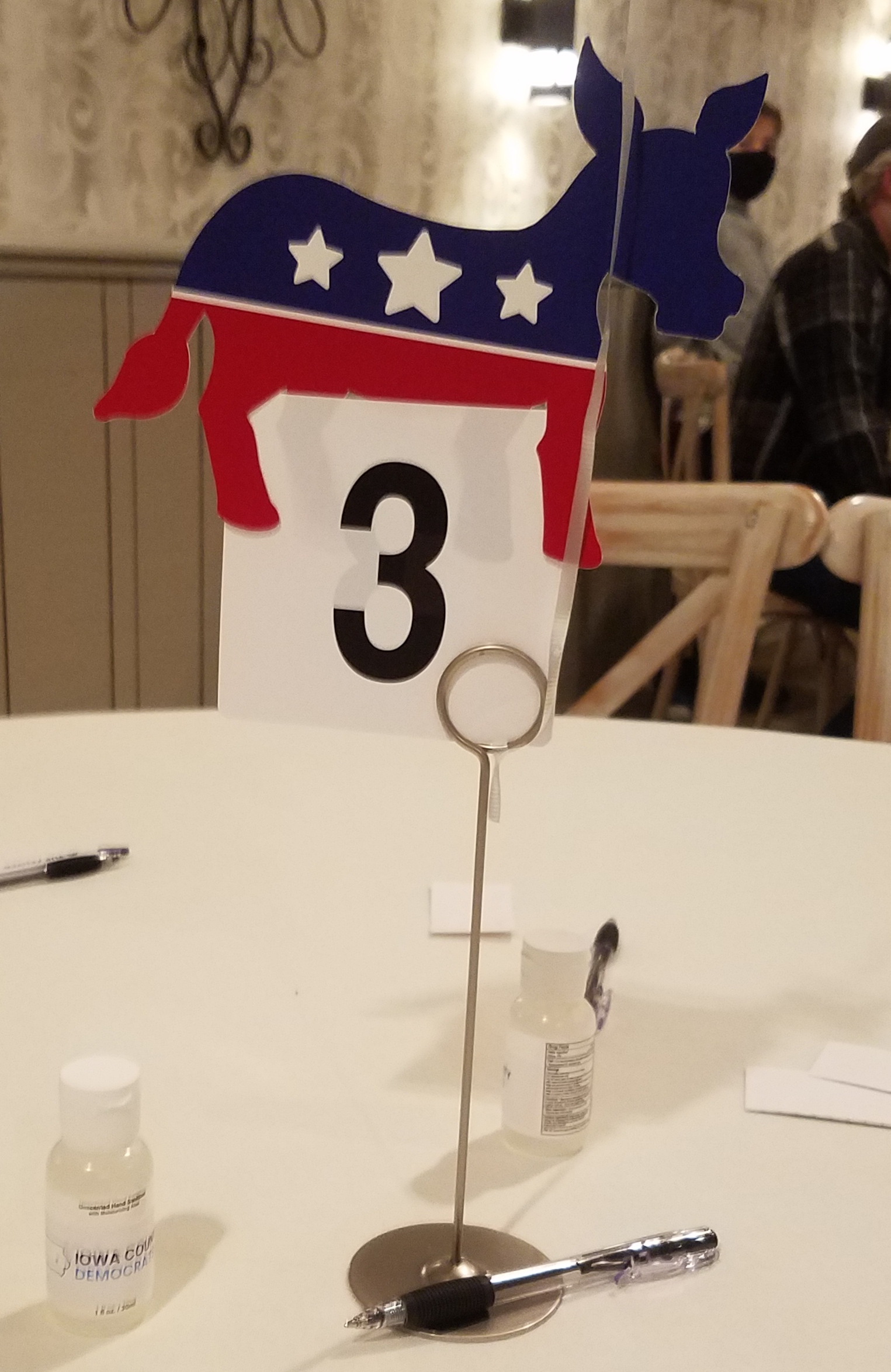
Now that I live in a house district that includes Iowa County, I participate in some Iowa County Democrats’ activities, including yesterday’s Cupcakes, Cookies and Candidates event in Amana. It was a good time for people interested in politics.
The idea of the event was to divide attendees into table groups and have the candidates rotate between tables and answer questions posed by each person. I would prefer to hear all of the answers in the room, yet the format proved to be a success. I enjoyed the efficiency of short answers to many questions. The small groups facilitated getting to know candidates and their personality. The dynamic made it easy to tell who knew their policy, who was full of political malarkey, and who wasn’t ready for prime time.
Democratic candidates present were:
Of these, only Franken and Hurst have a primary contest on the June 7 ballot. The third U.S. Senate candidate, Abby Finkenauer, was invited to the Amana event and did not attend. This is the time for counties to get organized for the general election. Events like this kick off the process.
When I returned home, I cancelled my registration to participate in a Zoom event with the three U.S. Senate candidates. One can take only so much of politics in a weekend. I would have preferred to be working in the garden. There was standing water there Sunday morning so I went to this event. What else would I do?
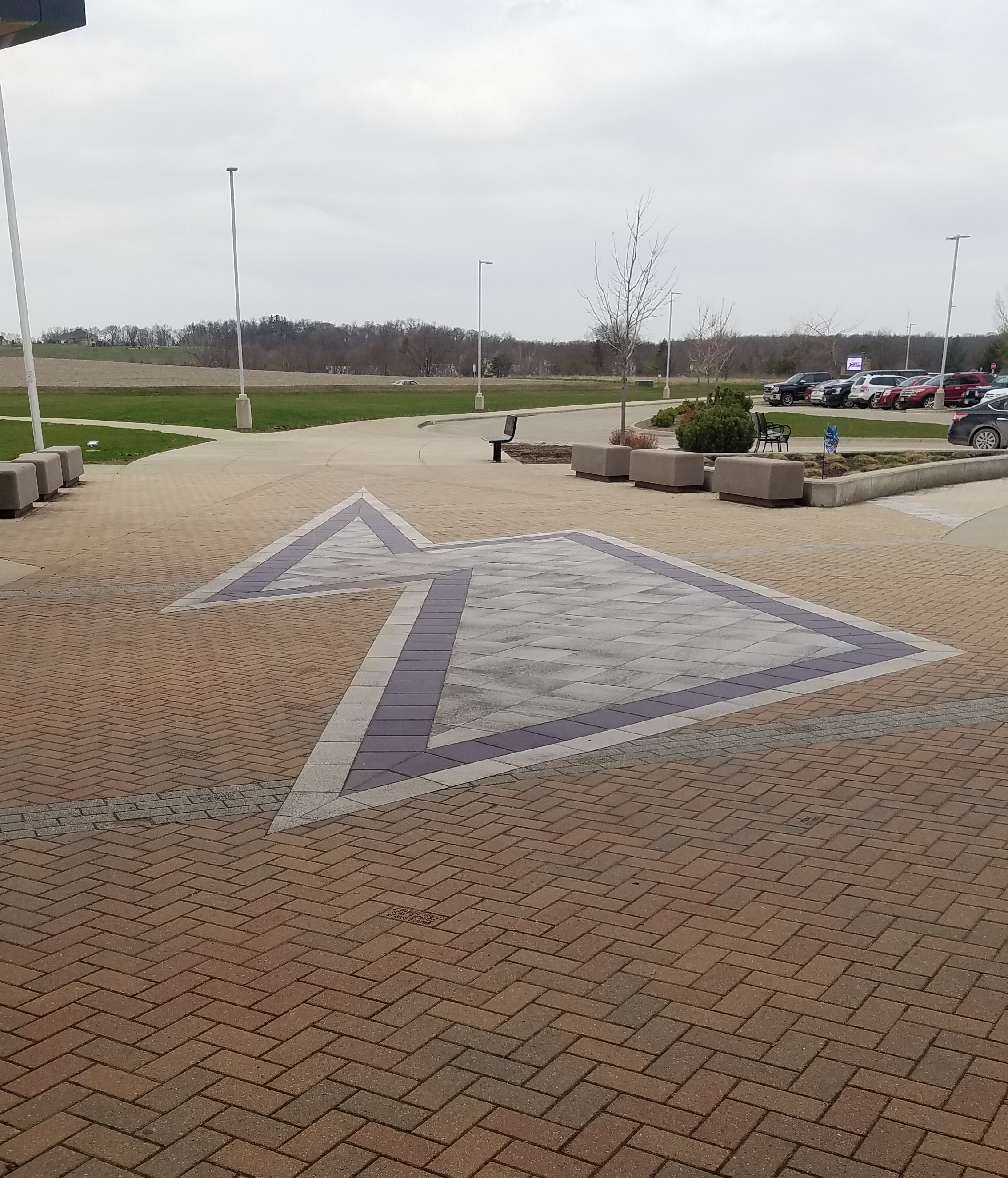
The Iowa First District Democratic convention was held at North Liberty High School on Saturday, April 23. It was a hybrid affair with 50-60 attendees on Zoom and another 85 or so people in person. The technology worked and could serve as a model to make Democratic gatherings more inclusive going forward.
I attended in person and was thankful to connect with people I’ve known since 2004 yet haven’t seen since the beginning of the coronavirus pandemic. The garden was too wet to work the soil, so what else would I do?
Reports from around the district were that traditionally Democratic strongholds flipped to Republican in 2020. It’s a problem for Iowa Democrats. My precinct in Johnson County flipped to red, although as a whole, the county remains a liberal bastion. Attendees had ideas about how to address this issue, yet there were no definitive answers.
A number of candidates sent a video message that played on screens. Among them were Deidre DeJear for Governor, Rob Sand for State Auditor, and John Norwood for Secretary of Agriculture. Christina Bohannan, presumptive nominee and whose district this is, chose to drop a video and skip the convention while campaigning with former Congressman Dave Loebsack in Lee County. If there were only video messages, it would have been better to join the delegates on Zoom.
Three remaining Democrats in the race to become the party’s nominee for U.S. Senate — Abby Finkenauer, Michael Franken and Glenn Hurst — spoke in person and worked attendees. Of the three, Franken and Hurst seem more grounded in the reality of what needs to be done to win the general election. Franken recounted likely parts of his resume Republicans are expected to attack, including his rural roots, military service and even his coaching a Special Olympics team. Hurst is a physician and member of the Minden City Council. He is also chair of the Iowa Democratic Party rural caucus and well versed in what faces Democrats working to regain a foothold in Iowa. Both of them have an active schedule of events around the state.
Finkenauer’s way of speaking may play well among liberal audiences, yet there are not enough liberals in the state for Democrats to win without bringing like minded non-Democrats into the fold. To the extent urban areas favor Democrats, Finkenauer has a strong base there. She is leading the primary race in recent polls.
I would feel better about a Finkenauer nomination if she had won her last congressional race. I do not support her campaign position of term limits. If we get a good, Democratic U.S. Senator, why would we arbitrarily say after two terms they are done. Each election could limit time in office. It was annoying that she disregarded the time limit on her speech to the convention, but she’s a politician. What are you going to do? She is not my first choice. I told Franken I would be in his corner for the primary.
Whoever is our nominee, Republicans are expected to rally around incumbent Chuck Grassley, and political action committees will dump millions of dollars into a campaign. If Grassley doesn’t die first, he will be difficult to defeat.
I ate lunch with a number of long-time Democrats, including John Dabeet who is well-known for promoting international cooperation and understanding. He recently received the Palestinian Person of the Year award from the Palestinian Lady of the Earth Foundation. His brother, who lives in Palestine, accepted the award on his behalf due to travel restrictions during the coronavirus pandemic.
We shared stories of our interaction with Grassley and my question was whether the senator was his own person on international affairs or took his guidance from others. At an event, Grassley told me he took his advice on nuclear weapons issues from then Senator Jon Kyl who was the Republican advocate during Senate ratification of the New START Treaty. Grassley said he didn’t invest much time in the issue and followed Kyl’s lead. Dabeet said he had been having personal conversations about Palestinian issues with Grassley for 20 years. Dabeet believes Grassley takes his guidance on Palestine from others, including the pro-Israel lobby AIPAC. No argument at our lunch table that Chuck Grassley needs to go.
The two Democratic Secretary of State candidates running in the June 7 primary also spoke in person. Joel Miller of Robins spoke first and had good ideas to undo parts of recent Republican restrictions on voting. Eric Van Lancker of Clinton spoke later and assessed how to fix voting laws Republicans passed. Van Lancker discussed issues with delegates in the convention hall for quite a while after his speech. I am leaning toward Van Lancker yet could support either in the general election. Incumbent Paul Pate needs to go.
After voting for state central committee members I packed my bag and headed home. The only remaining item was platform, something which seems increasingly irrelevant in 21st Century politics. The electorate has become so diverse, and we need substantial support from non-Democrats to win elections. The usefulness of having a platform has seen better days.
I can’t say I read the entire platform since the ancient days when I was newly married and on the platform committee. Once we regain a more permanent majority in governance we can talk meaningfully about having a platform. It wont be during the 2022 election cycle.
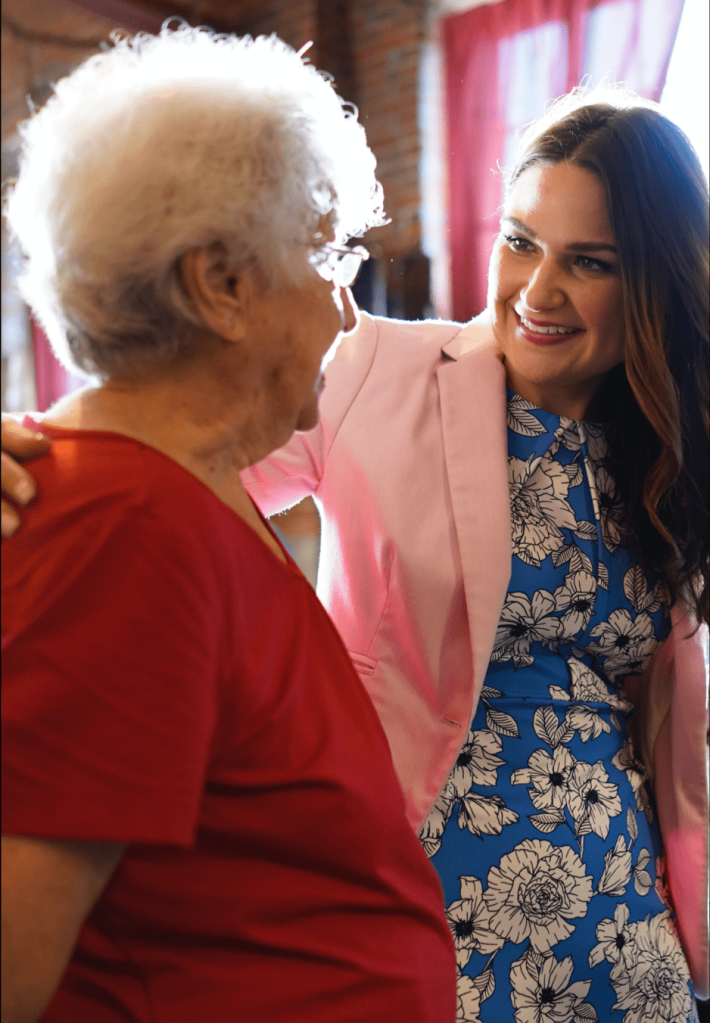
On Friday, April 15, the Iowa Supreme Court overturned a lower court decision to remove U.S. Senate Candidate Abby Finkenauer from the June 7 Democratic primary ballot. The court was concerned with three signatures on Finkenauer’s nominating papers. There is plenty of news coverage about the 7-0 decision to put her back on the ballot so I won’t go into those details. I’m getting tired of the courts having to be involved in close calls regarding our elections.
Partly, my upbringing brought me to this place. My father worked hard to elect John F. Kennedy president in 1960. We discussed his neighborhood canvassing at the family dinner table. When he finished our neighborhood, the meat cutters union gave him another geography to canvass. It was my first awareness of elections and although Richard Nixon won Iowa that year, JFK won the presidency and I felt we benefited from having a Democrat in the White House.
When JFK was assassinated, and Lyndon Baines Johnson assumed the presidency, it was a shock. LBJ decided to run for reelection in 1964 and won in a landslide the likes of which have not been repeated. They didn’t need courts to decide diddly squat in 1964 because the margin of victory was so large. LBJ went on to pass a stunning amount of significant legislation. I assumed voters had seen the light and every presidential election would be like the one in 1964. I was young.
There have been recent close races. The 2000 election stands out as the one in which the U.S. Supreme Court got involved, stopped vote-counting in Florida, and effectively gave the win to George W. Bush. Those of us in Iowa’s Second Congressional District still feel the burn from the 2020 election in which Mariannette Miller-Meeks won by six votes over Rita Hart. Hart wisely decided to give up her appeals once it became clear the U.S. House of Representatives did not have the votes to pursue every legal recourse in her case. In retrospect, Hart had the votes to win, although she couldn’t get them recognized in time for state certification of the election, which prevailed. It rots when the vote is so close and the courts get involved.
I came of political age at a time when the basic tenant of elections was a campaign needed 50 percent of votes cast plus one to win. A win is a win, after all. I didn’t recognize it at the time, yet that was a turn for the worse. We became acculturated in the numbers and techniques of campaigning rather than standing for things as a first priority. My reeducation in this process began in 2004 and it has been a downward spiral ever since. That is, until I realized that Republicans had developed a better ground game and that Democrats couldn’t continue the way we were going and win.
Some progressives couldn’t believe Finkenauer had so few signatures on her petition that challenging three of them would get her thrown off the ballot. If 19 counties with at least 100 signatures in each is the bar, get 25 counties with 150 signatures in each, some opined. What else were Democrats doing in the weeks before the filing deadline?
I am neutral about Republicans challenging some of the petition filings. Was it political? Of course it was. Shame on the party that doesn’t review the opposition’s work for compliance. Finkenauer’s campaign took an unfortunate hit because of the incident. Can she recover and win the primary? She’s been leading in the polls and rank and file primary voters will likely take the lawsuit with a grain of salt and not change their voting plans. We’ll know for sure on June 8. If I were Finkenauer, I’d be working now to make sure she gets enough votes to win the primary outright and avoid a convention.
To be of any use to the electorate, Democrats should win every election outright, without needing courts to get involved. Finkenauer’s case highlights we are not there yet.
~ Written for Blog for Iowa.

I woke to the sound of rain falling on the roof. The furnace was off with its quiet mechanicals accentuating the gentle sound. After a restless Monday night, I slept straight through to Wednesday.
Weather was sub-optimal for gardening yesterday. Wind gusts up to 45 miles per hour drove me to abandon tear-down of the garden plot planned for cruciferous vegetables, peas and greens. I managed to move the kitchen composter to a new location and tear down weed infested fencing. A lot of work remains.
This plot was the first dug after moving to Big Grove in 1993. I remember that initial work like it was yesterday. Our lot is 0.62 acres and I envisioned a big garden even if my work in transportation kept me away from the daily work of planting, weeding and managing crops. I became a better gardener by sticking with it. The plot became filled with sunken potato tubs, two composters, and pallets of miscellaneous stakes and other essential garden junk. It was a hodge-podge. I plan to clear all of it to gain planting space. I don’t know to where I’ll move the garden composter yet.
In late afternoon I drove to town and met with our candidate for state house, Elle Wyant. Her seventh grader was participating in a track meet at the high school. It provided an opportunity to talk about politics.We had more in common than I knew.
I don’t understand track and field. There were 400 people at the stadium, mostly milling about between events from what I could determine. It is the stuff of modern society: boring most of the time, injected with deep engagement in brief flashes. How did we come to that as a way to live?
Congresswoman Mariannette Miller-Meeks’ recent statement about common sense would make sense if she demonstrated it in her votes.
She said she was “fighting for Iowan common sense values.” Instead of common sense, Miller-Meeks adopted right-wing policies of her Washington, D.C. colleagues.
The lack of common sense shows in her no votes on the American Rescue Plan Act, Build Back Better Act, Invest in America Act, Infrastructure and Jobs Act, and on raising the minimum wage. The votes are a total disconnect from Iowans she represents.
If Miller-Meeks is interested in common sense, here are a few suggestions:
There are plenty of additional suggestions. Miller-Meeks’ votes demonstrate a different meaning of “common sense.” It’s not the commonsense approach we need. I will vote for Christina Bohannan for Congress this November. You should too.
~ An edited version of this post was submitted to several newspapers and was first published by The Little Village on April 12, 2022.

 Journey Home
You must be logged in to post a comment.