Editor’s Note: The following letter was emailed to Iowa U.S. Senators Chuck Grassley and Joni Ernst on Sunday, Feb. 23, 2025. If they reply, I will post below the original letter.
Dear Senators Grassley and Ernst,
A citizen has to work hard these days to stay up with what the federal government is doing. I do my best, and based on my studies, ask you to avoid the reconciliation process to pass a budget. Both Democratic and Republican led Senates have used it. Now is not the time. Here are my reasons.
There are not enough votes to overcome a filibuster of the tax cuts expected from ongoing reconciliation talks. Plain and simple, a majority of voters do not support them. Our senators should consider the will of voters in this regard.
As you know, the House Speaker has not come up with enough savings to offset the $4.5 Trillion expense the proposed reconciliation bill’s tax cuts are expected to incur. Let’s say Speaker Johnson meets his $2 Trillion savings goal. We would still add at least $2.5 Trillion to the national debt to pay for the tax cuts. We would be digging a deeper hole when we need to be filling it in.
From which programs do these proposed savings come? I understand cuts to Medicaid account for about $880 billion, and all are from programs people need and use to survive. Providing tax cuts to the well-off in Iowa and in the country at the expense of programs less well-off people depend upon is the wrong direction.
Those are my main points. To summarize, do not use the reconciliation process to pass the budget. Regular order provides stability I have come to expect from the Congress.
Thank you for your consideration. Regards, Paul Deaton
I am a Cold War warrior. I was in the U.S. Military during the period NATO stood down Soviet forces at the West German border. Based on intelligence received from friends who spied on Soviet troops, we believed we could whip their collective asses on any given day. That was likely our youth speaking. In 2024, Russian progress in Ukraine brings me chills. Russia could win that conflict, annex Ukraine, and commit genocide on the Ukrainian population. To a Cold War warrior, those are real and concerning possibilities. They should be the same for every American.
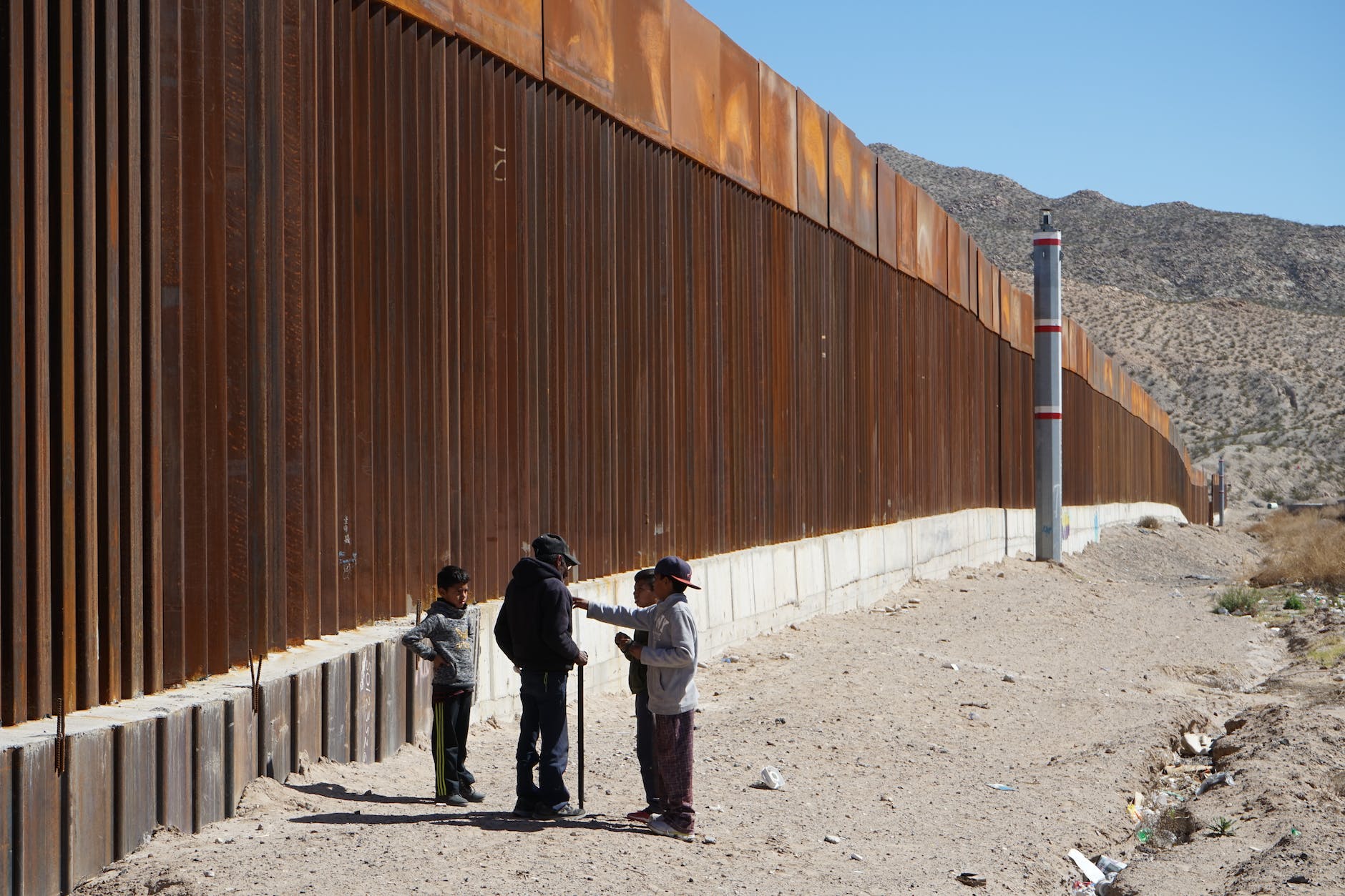
I wrote my U.S. Senators, Chuck Grassley and Joni Ernst, about the stalled supplemental aid bill for Ukraine, Israel, Taiwan and other items. Congressional Republicans insisted on tying passage to immigration reform and when they did, the supplemental hit a logjam. After emphasizing to my senators the importance of aid to Ukraine, I wrote they should sever the immigration portion of the bill and pass it separately to free up passage of the military aid bill. I’m not the only one with this opinion.
“It’d be nice to change the status quo on the border, but if there’s not the political support to do that, then I think we should proceed with the rest of the supplemental,” Sen. John Cornyn, R-Texas, told reporters. “I don’t think we have any real choice (but to do so).” A Thursday headline in the Cedar Rapids Gazette read, “Deal on wartime aid and border security stalls in Congress.”
What is going on? Grassley spilled the beans Wednesday on NBC while answering reporter questions about a tax bill.
“Passing a tax bill that makes the president look good — mailing out checks before the election — means he could be re-elected, and then we won’t extend the 2017 tax cuts,” Grassley told a reporter.
The bill does not include checks for Americans; what it includes is a tax credit. Republicans don’t want President Biden to “look good” on any front, including by passing aid for Ukraine and immigration reform, both of which have strong bipartisan support.
It is irritating Grassley and Ernst dodged the supplemental aid issue in their response to my note. I told each of them I needed no response, that I would watch how they voted. They quickly responded with a full page of comments without mentioning Ukraine, Israel or Taiwan.
I have had reasonable interaction with both Senators Grassley and Ernst. I don’t always agree with them, yet they usually respond to my queries and if we disagree, they tell me why. They have been courteous when we interacted personally, even when disagreeing. In a red state that’s the best we can expect.
For her part, Ernst acknowledged the oversized role played by drug cartels on the southern border, and listed some legislation she introduced or sponsored to address the situation. She asserted there is a humanitarian crisis at the border. I don’t disagree, only it’s not the kind she’s talking about.
Chuck Grassley has been my Iowa U.S. Senator all the time since I married in 1982. I left the state for six years, and he was still there when I returned. I lost count of how many times I met with him or his staff.
Grassley’s approach is similar to Ernst. He lists legislation he supports to address issues at the southern border. He briefly mentioned the House Speaker’s concerns about the border bill, and accused the Biden Administration of “abusing the parole system” to enable admission to the country of large groups of people outside “established pathways.” In a self-serving way, he times the start of the border problem as beginning when Biden took office. As I wrote in my note to him, immigration has been an issue in the United States almost since he was first elected to the Senate. We seem no closer to changing it in a way that will make sense to most Americans. We’ll recognize something went right when Dreamers have a path to citizenship.
Author Tom Nichols summarized the political situation in The Atlantic.
At this moment, the United States is on the verge of failing a challenge of will and commitment, much to the delight of the neo-fascist Russian regime that has turned Ukraine’s fields and homes into an immense abattoir. President Joe Biden, most of NATO, and many other nations recognize the crisis, but the world could face a Russian victory—and an eventual escalation of Russian aggression against Europe—solely because of the ongoing drama and inane bickering within the Republican Party.
Immigration reform is a distraction from the importance of America’s leadership role in the world and our support for Ukraine. For those of us who wore a uniform and remember the wind-swept hills and plains of the Fulda Gap, it is critical we pass the current supplemental.
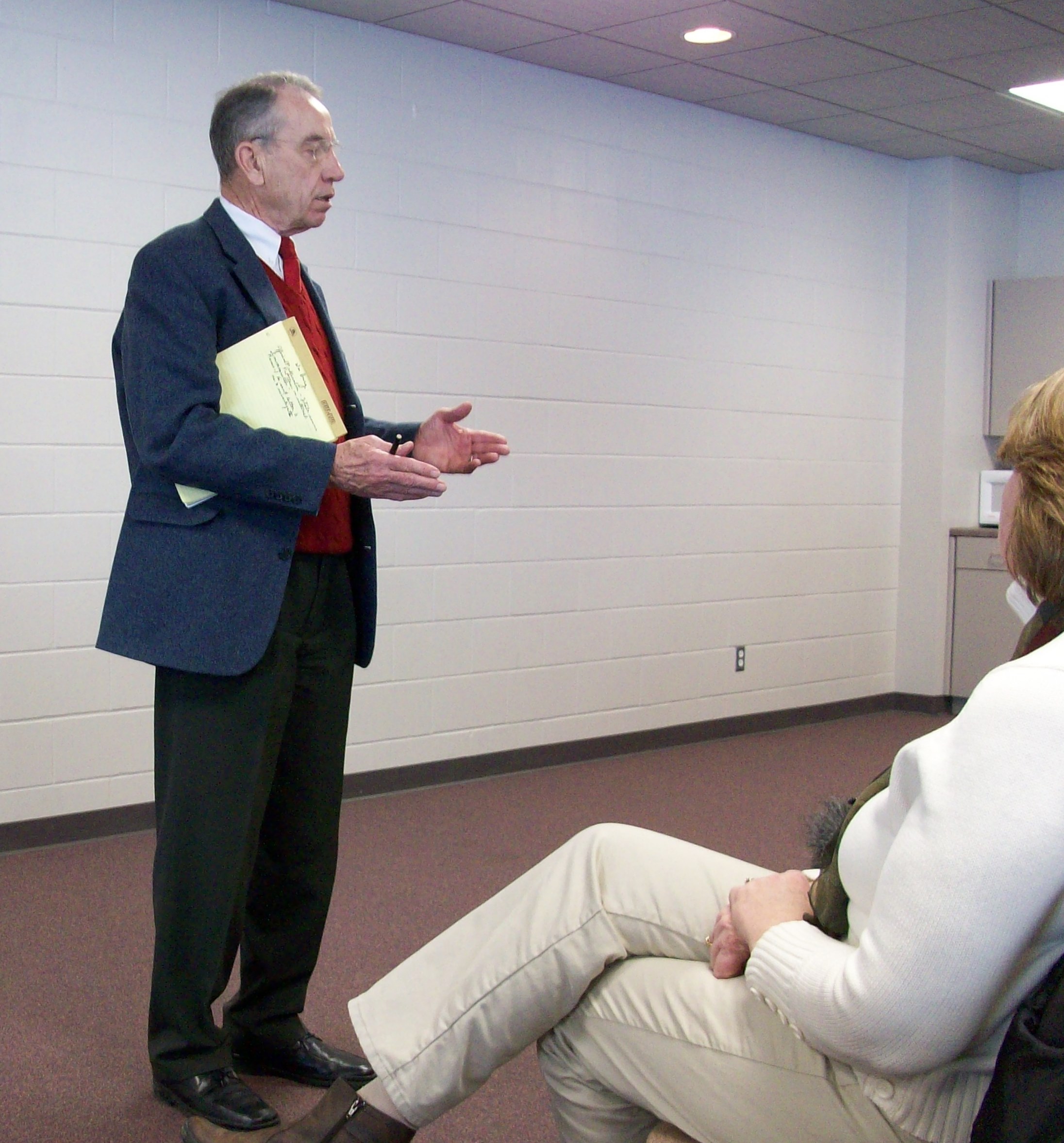
Senator Grassley in Williamsburg, Iowa. Jan. 12, 2010.
If Democrats repeat the campaign strategy and tactics of the 2020 Theresa Greenfield campaign, we are destined to lose any challenge to U.S. Senator Chuck Grassley.
Greenfield was a good candidate, despite the loss. She had the best advice and raised a lot of money. If Democrats are engaged, we should now understand support from highly paid consultants, combined with stellar fund raising, did not get the job done. A repeat seems futile as we take on the incumbent’s campaign machine.
What makes Grassley so potent a campaigner? He is like a 1949 Ford 8N tractor. He may look old and out of date yet he’s still working, and for his Republican constituents, gets the job done. I attended a couple of his events over the years and he has been well-familiar with the turf everywhere he spoke. He knows the county margin of victory or loss from the most recent election at each town hall. He has deep connections to local Republicans. His campaign staff provides support to state house candidates in the form of analyzing local voter databases and targeting key voters with his folksy direct mail. Whoever is the Democratic nominee will have a lot of catching up to do.
I supported Mike Franken in the 2020 Democratic primary and am inclined to do so again. There are too many shades of Greenfield with Democrat Abby Finkenauer, who could not win reelection to her congressional seat. While Franken served decades in the U.S. Navy away from Iowa, we are at a point where a high level military veteran and Washington insider could best represent our interests as U.S. Senator. There are other Democratic candidates running to beat Grassley. None of them is as strong a candidate as Franken.
Is this an endorsement? Endorsements of baby boomers matter less each election cycle. It is time for my cohort to let go the grip we had on the Iowa Democratic Party. While I’m saddened to see long-time Iowa senators and representatives with whom I worked call it quits, it is time to move on and let the next generation work on campaigns. If successful, they should take the reins of power. Given the shellacking Democrats took in 2020 there is no case for letting old timers run the show.
One might say, “isn’t Franken old?” What matters more than age in the race to beat Chuck Grassley is policy and experience. The only Federal office holders with whom I spent more time than with Mike Franken are Dave Loebsack and Tom Harkin — I know him. Franken is right on policy and his experience is relevant, timely and evident. I don’t know if others will like him, but I do. I believe he could win the seat.
If I have been enamored of a political campaign for the experience alone, that time is past. Like most people I seek a secure, livable future. I believe Iowa Democrats can beat the incumbent if we avoid mistakes of recent campaigns, if we adapt to the times. I believe Franken is here for that.
In the meanwhile, we have a primary next year in which we will have to choose sides. I hate the distraction yet it’s part of the Democratic process. Here’s hoping we can rally around the winner and defeat Chuck Grassley next November. Our chances are better with Mike Franken as our candidate.
It is abnormally dry in our part of Iowa. Just as we are needing rain, we are not getting it. A home gardener can irrigate new trees, fruits and vegetables, but the massive scale required to hydrate Iowa’s main commodity crops and livestock is not available. Creating the infrastructure to pump water from ancient aquifers is doable, yet an unsustainable practice. It seems like we are heading into a drought. (The map is from the state climatology website which provides data about precipitation, temperature and other aspects of the climate).
Iowans are familiar with drought. In the 2012 drought corn yield per harvested acre was 123.1 bushels compared to the average of the seven following years at 170.4 bushels. The drought decreased corn production by 27.8 percent according to USDA numbers.
There is a relatively finite amount of water on Earth which cycles through the atmosphere, on land, and in the oceans. Some of it rests in deep underground aquifers where it has been since prehistoric times. An increasingly warm climate impacts how water cycles and it is getting hotter. “Earth’s global average surface temperature in 2020 tied with 2016 as the warmest year on record,” according to an analysis by NASA. The oceans are getting warmer too.
Rising air and water temperatures and changes in precipitation are intensifying droughts, increasing heavy downpours, reducing snowpack, and causing declines in surface water quality, with varying impacts across regions. Future warming will add to the stress on water supplies and adversely impact the availability of water in parts of the United States.
The problem goes beyond Iowa. The Hoover Dam, located on the Colorado River near the Nevada-Arizona border, is suffering the consequences of drought. Lake Mead, the artificial lake created by the dam, is at a lower water level than was when it was built. The water shortage will impact 25 million people including in the cities of Los Angeles, San Diego, Phoenix, Tucson and Las Vegas.
Farmers are abandoning crops, Nevada is banning the watering of about one-third of the lawn in the Las Vegas area, and the governor of Utah is literally asking people to pray for rain.
Firefighters are facing worsening conditions this summer — after nearly 10,000 fires in California alone during the last wildfire season burned 4.2 million acres (1.7 million hectares), an area nearly as large as Kuwait.
Water in California’s Lake Oroville will fall so low this summer that its hydroelectric power plant may be forced to shut down for the first time.
We must do something more than pray for rain. It begins with recognition.
The Lakota phrase “Mní wičhóni” (“Water is life”) was the protest anthem from Standing Rock heard around the world, but it also has a spiritual meaning rooted in Indigenous world views. For Native Americans, water does not only sustain life, it is sacred.
Action to prevent drought must include acknowledging that climate change is real, something Senators Chuck Grassley and Joni Ernst have both done. The next step is addressing the climate crisis through policy and legislation and that’s been the rub. The climate crisis is more complicated than any single policy or law.
Peter Rolnick of Citizen’s Climate Lobby wrote a guest opinion in the Cedar Rapids Gazette on June 15, 2021. He commended the Iowa senators and Rep. Cindy Axne for supporting the bipartisan Growing Climate Solutions Act. If passed, the law would engage farmers in storing more carbon in our soil instead of emitting it into the air in the form of carbon dioxide or methane. The relationship to drought is clear. A molecule of CO2 or methane sequestered in the ground is one that does not get into the atmosphere and increase warming. Even the American Farm Bureau is in favor of this bill, which on its own raises red flags. One bill is not enough.
We need much more in the way of policy and legislation. The Biden administration’s approach of embedding work on climate change in each of the executive branch departments is important. It is up to each of us to encourage those in government to work toward viable climate solutions. There are personal actions we can take to reduce our carbon footprint, yet the most effective action is in the government arena. If constituents don’t remind members of our governing bodies to act on the climate crisis, they seem likely to forget.
We’ll know it when we hit the drought this year. News media has been forthright in reporting it because so many Iowa livelihoods depend upon the weather. When will we wake up to take action to address what is causing the drought? Not soon enough.
You must be logged in to post a comment.