Categories
Sustainability

Bunker Busted… or Not?

Morning of a new day, filled with potential for good.

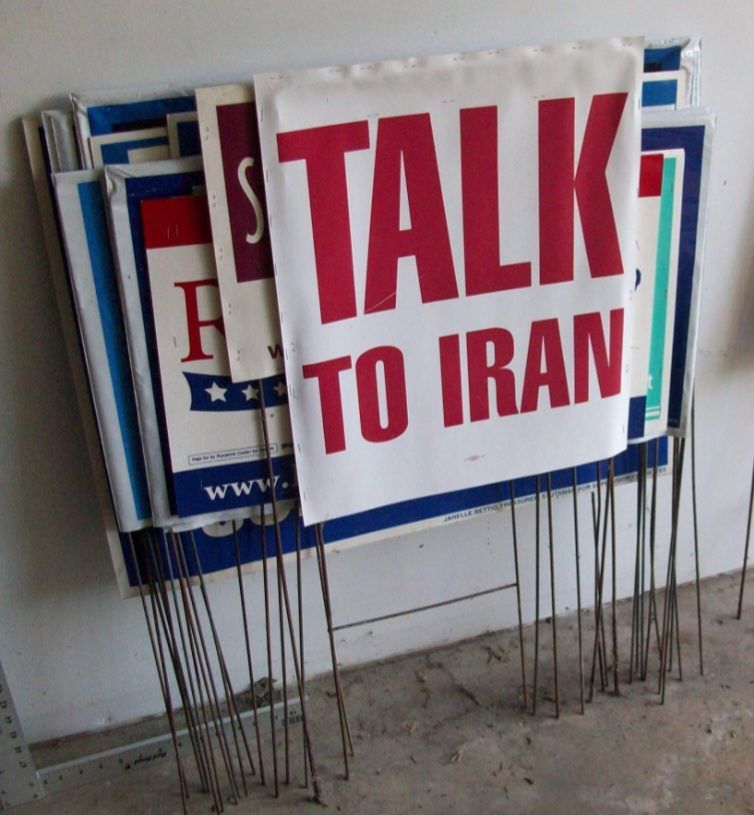
The hubris of the United States is on clear display on a day like today, where late Saturday, we used so-called bunker buster bombs to attack the uranium enrichment capacity of Iran at three sites: Fordow, Natanz and Isfahan. The president said in an address Saturday night, “Iran’s key nuclear enrichment facilities have been completely and totally obliterated.” I’m calling bullshit. So are a lot of folks who know more than I do.

“It is impossible to know at this stage whether this operation accomplished its objectives,” ranking member of the House Intelligence Committee Jim Himes (D-Conn.), said in a statement.

Gen. Dan Caine, chairman of the Joint Chiefs of Staff, said in a news conference Sunday that the Fordow, Natanz and Isfahan nuclear facilities “sustained extremely severe damage” but it was too early to tell the scale of destruction, according to the Washington Post.

Dr. Ira Helfand addressed the question at the heart of this:

What if the United States attacks Fordow with a GBU-57 “bunker buster” bomb and the bomb does not take out the deeply buried site? Does the United States escalate up to the use of a nuclear weapon?

A 2005 report issued by Physicians for Social Responsibility examined the effects of an attack on the Iranian nuclear facility in Isfahan with a 1.2-megaton B-83 thermonuclear warhead, then under consideration for use in a Robust Earth Nuclear Penetrator (the “bunker buster”). The study used software known as the Hazard Prediction and Assessment Capability—developed by the Defense Threat Reduction Agency—to model nuclear weapons explosions’ effects. The study found that the attack could kill 3 million people—half of them from radiation sickness—and that the radioactive fallout would spread over a wide area of Iran, Afghanistan, and Pakistan.

The population near Fordow is much smaller than in Isfahan, but the death toll and radioactive contamination resulting from the use of a nuclear weapon there would still be catastrophic. (“Why Congress and the people should stop Trump from attacking Iran,” by Dr. Ira Helfand, Bulletin of the Atomic Scientists, June 19, 2025).

The American hubris to which I referred is our decades long failure to comply with Article VI of the Treaty on the Non-proliferation of Nuclear Weapons. Both we and Iran are parties to the treaty. The idea the U.S. could escalate this situation to include use of nuclear weapons would not be an option if we were in compliance with the treaty.

The irony of Saturday’s bombing is it may cause Iran to withdraw from the treaty and develop a nuclear program which includes nuclear weapons. This is something that according to people who read the intelligence before the bomb-dropping, was not previously on the table.

As Daryl Kimball of the Arms Control Association put it, “The U.S. military strikes on Iranian nuclear targets, including the deeply fortified, underground Fordow uranium enrichment complex, may temporarily set back Iran’s nuclear program, but in the long term, military action is likely to push Iran to determine nuclear weapons are necessary for deterrence and that Washington is not interested in diplomacy.”

My initial reaction to news of the bombing persists: “The bombing of Iran’s fuel enrichment sites was an illegal, useless act that makes the world less safe.”

Categories
Living in Society

Insider View of D.C.

Editor’s Note: Our main news sources do us a disfavor in the way they reported the first three weeks of the new administration. I’ve been following Laura Rozen for many years and found her to be a reliable source of information. Not as famous as other pundits are, but much better, especially in reporting what’s going on in U.S. diplomacy. Here is the first part of her Feb. 7 substack. Read the whole thing here.

Split Screen by Laura Rozen

From close up, here in Washington, D.C., as someone who regularly covers the U.S. federal government, the sweeping assault that unelected billionaire Elon Musk and his unvetted DOGE team are committing on U.S. government agencies and personnel is alarming.

Alarming, not because there should not be reforms or cuts to federal agencies’ budgets, programming or staffing; but because their anti-government jihad is being conducted without any oversight, legal mandate, organizational plan, knowledge of the workings of the government, or security vetting of the Musk/DOGE staff barging into federal agencies and demanding access to sensitive government payment and IT systems and personnel databases. In short, without any respect or accountability for the damage they could wreck on systems that American citizens and federal workers rely on to protect their security, privacy, and functional governance.

And there is growing evidence today that the DOGE team infiltrating these systems was not properly vetted. Click here to continue reading.

Recommend you subscribe to Diplomatic by Laura Rozen on substack as part of your news about foreign affairs.

Photo: People protested Wednesday against the so-called Department of Government Efficiency outside of the Department of Labor in Washington, D.C., as concerns grow about the unprecedented power that President Donald Trump has handed over to Elon Musk, the world’s richest man.DREW ANGERER/AFP VIA GETTY IMAGES
Categories
Living in Society Writing

Diplomacy Winds Down

U.S. State Department. Photo Credit – Wikimedia Commons

Efforts to advance diplomatic goals are grinding to a halt with the U.S. election seven weeks away. Among the key initiatives that slowed are negotiating an end to Russia’s invasion of Ukraine, and updating a deal to curtail Iran’s nuclear program, according to Laura Rozen.

As the United Nations General Assembly opens next week, President Joe Biden is expected to give his last speech before the body. He is perceived by other members to be not that interested in the U.N. as he closes his storied career in politics. A lot in diplomacy world depends on the results of the Nov. 5 election and everyone knows it.

Our choices for president couldn’t be more stark when it comes to diplomacy and foreign affairs. With Kamala Harris, we expect a continuation of Joe Biden’s rebuilding of international relations made worse by the 45th president. With election of Donald Trump, we expect another disaster with open grifting on the part of the billionaire convicted criminal.

Diplomacy and America’s stature in the world matter to most of us. There really is no choice but to elect Harris if we want to continue to address world problems in which the United States is deeply engaged. I know that’s what I will do.

Categories
Living in Society

Thoughts About Gaza While Enroute to the Capitol City

Sprouted Iowa Field Corn

If a person wanted to know how the Iowa landscape changed, a trip along Interstate 80 from Iowa City to Des Moines will provide the information. Thursday, while picking up my spouse, the green of emerging corn and beans was visible under large cumulus clouds set against a vast expanse of blue sky. Nothing remotely like the prairie that was here in 1830 remains. While indigenous people called Iowa “beautiful land,” there is nothing beautiful about the extractive economy of row crops, eggs, hogs, and cattle. It is ironic half the corn crop is used to make ethanol which is blended with gasoline that fueled my vehicle on this trip.

The round trip was uneventful, if the interstate was crowded with Class 8 truck traffic. I was so intent on traffic, I forgot to turn on the BBC News Hour on public radio. No worries. I have plenty of other sources for news.

A news alert hit my inbox in the wee hours of Friday reporting the U.S. military began Gaza aid deliveries from a floating pier President Biden directed be installed in the Mediterranean Sea. That such a facility is needed speaks to the problems in the Hamas-Israel War. There is no logical reason Israel couldn’t let aid vehicles through to Gaza via land routes. In fact, I would argue they are required to do so. However, they won’t.

South Africa asked the International Court of Justice in The Hague to order Israel to cease all military operations in Rafah. Israel’s closure of land routes into Palestinian territory aim to destroy “the essential foundations of Palestinian life,” South Africa asserted. Israel’s belligerence toward the Palestinians has been on display in Gaza for many years. As Al Jazeera said in October 2023, “What is happening in Palestine can no longer be described as genocide, or even ethnic cleansing. It is beyond mass extermination – it is total erasure.” Israel is set to respond to the court.

Most Iowans I know believe the Oct. 7, 2023 Hamas attack on Israel was uncalled for. The coordinated armed incursions from the Gaza Strip into the Gaza envelope of southern Israel, the first invasion of Israeli territory since the 1948 Arab–Israeli War, had its reasons according to the combatants. If a person knows anything about Israel, they would be expected to respond. However, that Israel would knowingly uses artificial intelligence to target Hamas operatives in a way that included children and women in their blast zones violates our common humanity.

There are rules in warfare. Article 77 of the Geneva Convention of 1949 states:

Children shall be the object of special respect and shall be protected against any form of indecent assault. The Parties to the conflict shall provide them with the care and aid they require, whether because of their age or for any other reason.

Knowingly targeting Hamas operatives and indiscriminately killing children along with them seems a clear violation of the Geneva Convention. It is also just plain wrong.

Iowans can’t hide from the conflict in Gaza in traditional farm country. It affects us all. What is happening to the Palestinian population may be a war crime. What is the complicity of the U.S. government with Israel in perpetrating this atrocity? People have their opinions. Mine is the U.S. Government should do everything possible to collar Israel’s undo belligerence, including pressing for a change in their government. We can’t let what Israel is doing to the Palestinian people stand.

Categories
Sustainability

Time to Take a Step Back from the Brink

Actor Slim Pickens as Major T.J. “King” Kong in Dr. Strangelove or: How I Learned to Stop Worrying and Love the Bomb. Photo Credit – Getty Images

Iowans are legitimately worried about the risk of detonation of nuclear armaments as a result of increased tensions in the world. The war in Ukraine is perceived by some as a proxy war between the United States and Russia. While it’s true our two countries have the majority of nuclear weapons that exist in the world, both Putin and Biden have said they seek to avoid a nuclear exchange. The assertions about a proxy war do not seem accurate.

Dr. Robert Dodge, posted the following article at Common Dreams on Friday. It explains how I feel: We need to take a step back from the brink.

Ukraine, Existential Threats, and Moving Back From the Brink
We can no longer continue to wage war over finite resources and survive in a nuclear-armed world.

First published on Common Dreams by Dr. Robert Dodge.

This spring, as those before, beckons a season of renewal and opportunity for the future. We have just witnessed the major religions of the world celebrate Easter, Passover, and Ramadan and in the words of Ambassador El Yazidi of the Coordinating Council of Muslims in Germany, “We are all siblings in humanity and must work together for good.”

This is also a time when the world celebrates Earth Day with a heightened awareness of the fragility of our world and the intersectionality of mankind’s actions on the survival of our planet. Yet our world is in peril with many intersecting crises from the continued global pandemic, now in its third year, to climate crises that continue to inflict progressive epic storms and devastation. Add to that the two-month-old Russian war on Ukraine with threats and nuclear posturing by the superpowers bringing us closer to nuclear war by intent, miscalculation or cyber-attack portending the greatest threat of a global near-death event since the end of the last Cold War.

Against this backdrop, it is also tax season in the United States when the nation funds its priorities as we look to the future. In the words of Rev. Jim Wallis, founder of Sojourners magazine, “Budgets are moral documents.” And so what are those priorities and how do nuclear weapons factor in?

The 2022 fiscal year budget, the first by President Joe Biden, will see the U.S. rob our communities of precious resources spending nearly $77 billion on all nuclear weapons programs, exceeding the expenditures of the last budget from the Trump administration. In total, the U.S. will have spent approximately $219 billion on all nuclear weapons programs in the last 3 fiscal years while fighting a global pandemic. To see the costs to your community, see the annual Nuclear Weapons Community Costs Project just released by Physicians for Social Responsibility Los Angeles.

Current global nuclear arsenals contain about 12,700 nuclear warheads, with the United States and Russia having near 90% of those. The use of even a tiny fraction of these weapons threatens life as we know it. A regional nuclear war using 100 Hiroshima size weapons (less than half of one percent of the global nuclear arsenals) over cities in India and Pakistan—South Asia’s nuclear powers who have had a tumultuous relationship for decades—could cause a global famine threatening 2 billion people due to the devastating nuclear winter and climate change that would follow. A larger nuclear war between the U.S. and Russia targeting the major cities in each nation could possibly lead to the extinction of the human race.

This is not a situation that has to be. The existence of nuclear weapons and the continued dependence on fossil fuels with the destruction of our environment result from our way of thinking and behavior. We cannot continue to wage war over finite resources and survive in a nuclear-armed world. We must end our dependence on fossil fuels that threaten destruction of our life sustaining ecosystems. Instead, we must recognize our interdependence as one human family. Nuclear weapons have been made by man and can only be eliminated by man. Ending the subsidy and our dependence on fossil fuels while transitioning to sustainable renewable resources is also in reach given the political will.

The United States can and must lead on these issues. There is a rapidly growing national intersectional movement in the U.S. called Back from the Brink. It is a coalition of individuals, organizations, and elected officials working together toward a world free of nuclear weapons and advocating for common sense nuclear weapons policies to secure a safer, more just future. Endorsed by over 400 organizations, 326 U.S. elected officials, 58 municipalities and 6 state legislative bodies, it calls on the United States to lead a global effort to prevent nuclear war by:

  • Actively pursuing a verifiable agreement among nuclear-armed states to eliminate their nuclear arsenals.
  • Renouncing the option of using nuclear weapons first.
  • Ending the sole, unchecked authority of any U.S. President to launch a nuclear attack.
  • Taking U.S. nuclear weapons off hair-trigger alert.
  • Cancelling the plan to replace the entire U.S. nuclear arsenal with enhanced weapons.

All are invited to endorse and join this movement. We have a way out. There is hope for the future and that of our children’s children. At this moment in history we must understand the threat and opportunity before us. Let this be a time when we choose hope for all of humanity.

Our work is licensed under Creative Commons (CC BY-NC-ND 3.0). Feel free to republish and share widely.
Robert Dodge

Robert Dodge, a frequent Common Dreams contributor, writes as a family physician practicing in Ventura, California. He is the Co-Chair of the Security Committee of National Physicians for Social Responsibility and also serves as the President of Physicians for Social Responsibility Los Angeles.

Categories
Living in Society

Ukraine Weekend

Kyiv, Ukraine on Feb. 12, 2022. Photo Credit – Matthew Luxmoore, Wall Street Journal.

Long-time readers of this blog know I could care less about the annual Super Bowl. The rest of the world is much more engaging.

Before the coronavirus pandemic, I would use the time as people made final preparations to view the game for shopping in almost deserted retail establishments. This year, I already provisioned for the next two weeks, so there’s nowhere to go. It’s one change among many in my post-pandemic behavior.

A reporter posted a photograph on Twitter of an almost deserted square in Kyiv, Ukraine. Ukrainians do not seem concerned with Russian troops massed at the border. The United States, European Union, and NATO are on high alert, waiting to see what happens in the way countries do when war seems imminent. The two situations are difficult to reconcile.

President Biden is planning a phone call with Russian President Vladimir Putin today. There may be a readout of the call and we’ll just have to wait to confirm there is and what it says. There is more to worry about if there is no readout or public statement. (The readout is here).

Ukraine’s exports have increased since 2016. It is a regional leader in production of wheat, corn, sunflower oil, and other agricultural products. They also export iron, steel, mining products, chemical products and machinery. If Ukraine is annexed by Russia, then it’s possible such exports could be directed internally rather than being sold in global markets. I believe the foodstuffs production is the main prize here.

It’s difficult to forget the Russian wheat crisis of 2010 when Russia stopped exporting wheat due to poor production made worse by climate change. Restricting wheat exports disrupted global markets and the food shortage was a contributing factor in the Arab Spring uprisings that followed. Annexing Ukraine would be good for Russian food supplies.

When we consider Ukraine in the context of the 2013 Chinese Belt and Road Initiative, a cornerstone of Xi Jinping’s foreign policy, annexation is a way for Russia to gain access to Ukraine’s production capacity without all the fuss of formal agreements. Russia is no China. The idea that the United States and European Union can rely on open markets to meet internal needs seems quaint in light of the direction Russia and China are taking.

As tensions rise in media depictions of evolving events, we wait. It’s an occasion to consider the broader world and how what happens in it affects our daily lives. It is a chance to gain an understanding of whether American pursuits are sustainable. Because of a media that serves corporate interests, we citizens are receiving a much distorted picture of what is going on in the world. We can’t be distracted by annual, meaningless rituals like the Super Bowl.

Categories
Living in Society

Retro Post: When I Met Colin Powell

Colin Powell and Jin Roy Ryu at dedication of Korean War Memorial in Cedar Rapids, Iowa, June 1, 2010. Photo Credit: Cedar Rapids Gazette.

This post first ran on June 4, 2010. It was a relatively small gathering and I had a chance to shake Powell’s hand. Powell’s view of the Korea-United States Free Trade Agreement was illustrative of his mainstream political and economic values. Powell died yesterday of complications from COVID-19 at age 84.

Colin Powell and Free Trade in Iowa

This week former Secretary of State Colin Powell came to Cedar Rapids, Iowa to dedicate a memorial to 507 Iowans who died during the Korean War. It is past time for such a memorial, and the event brought out Korean War Veterans, legionnaires, politicians and citizens of every stripe. While I was walking from the parking lot at Veteran’s Memorial Park to the seating area, an old van pulled up, windows open and Aaron Tippin’s song about eagles, the flag and “if that bothers you, well that’s too bad” booming into the air, shaking the pavement. A parking lot attendant in a military uniform told the driver, “Don’t turn that off.” It typified the gathering as predominantly working class, veteran and plain folks like us.

PMX Industries, Inc. was the host and funding source for the memorial. PMX is headquartered in Cedar Rapids and is an affiliate of the South Korea based Poongsan Corporation, whose tagline is, “Poongsan Corporation can, and will, contribute to human progress through our superior products.” PMX makes the copper and brass alloys that go into things we use every day, such as coinage, ammunition casings, electrical connectors and lock sets. Poongsan’s Chairman and Chief Executive Officer, Jin Roy Ryu, was present for the dedication, posing for photos with dignitaries and assisting with the unveiling of the memorial. Chairman Ryu is politically well connected in the United States. He translated and published a Korean edition of Colin Powell’s autobiography, My American Journey. The author believes most in the audience had not heard of him. It also seems likely Ryu’s long standing relationship with Colin Powell brought him to Cedar Rapids for the ceremony.

Sid Morris, President of the Korean War Association Iowa Chapter, spoke and PMX President, S. G. Kim, gave a well written speech to mark the occasion. Many of us had come to hear Colin Powell speak.

In a world where cynicism is commonplace, when Powell advocated for ratification of the Korea-United States Free Trade Agreement (KORUS FTA), it was unsettling. It was unsettling partly because of the potential for additional off-shoring of jobs a free trade agreement with South Korea would represent. According to the Office of the U. S. Trade representative, the treaty is signed but not ratified, with the status, “the Obama Administration will seek to promptly and effectively address the issues surrounding the KORUS FTA, including concerns that have been expressed regarding automotive trade.” The author is not the first to be concerned about the treaty’s encouragement of off shoring jobs to South Korea.

More than this reaction, what was bothersome was the way this advocacy was raised in the context of recognition of our Korean War Veterans. Why does there have to be a political agenda behind everything? When I look at the people sitting next to the podium, Cedar Rapids Mayor Ron Corbett, S.G. Kim, Colin Powell and Chairman Ryu, I believe all of them to be decent people. At the same time, in an economy where increasing the number of jobs has proven to be difficult at best, why politicize this dedication to fallen soldiers?

Powell’s assertion was that Korean investments in the United States have created jobs, like the ones at PMX Industries. His reasoning is that presumably there would be more investment by Korean companies in the US with a Free Trade Agreement. No guarantees of that. There would also be a trickle down of jobs related to new access to South Korean markets by U.S. companies. With U.S. productivity on the skids, some of these sales could be serviced through increases in productivity more than through expansion. In any case, the benefits of a Korea-United States Free Trade Agreement cannot be easily reduced to something that would fit in an Aaron Tippin song.

I am thankful that PMX Industries donated the funds for the Korean War memorial. At the same time, the interconnectedness of local politics, jobs and foreign affairs, as represented by the relationship between Jin Roy Ryu, Colin Powell and the Korea-US Free Trade Agreement, indicate again that the powerful influences at work in our lives have their own agenda. That agenda does not always fit the needs of working people.

Long after the applause at their private luncheon at the country club is forgotten, we’ll continue to be here, living our middle class lives in the post-Reagan era.

Categories
Living in Society

Who Has Standing on Military Affairs?

Mariannette Miller-Meeks on the Iowa State Fair Political Soapbox on Aug. 13, 2010. Photo credit: Wikimedia Commons.

The Republican approach to oversight of our military is curious and ineffective. On the one hand they vehemently criticize the administration’s handling of our country’s withdrawal from Afghanistan. On the other, Senator Tom Cotton sponsored legislation ending U.S. funding for Afghan refugees brought here as a result of the withdrawal, something they said they wanted. Cotton was joined by the 49 other Republican senators, yet their measure failed.

Republicans, and some Democrats, don’t think twice about spending $7.7 trillion on the U.S. military over 10 years without scrutinizing details of where the money goes. They reject an audit of the Pentagon. At the same time, Republicans reject the $3.5 trillion Build Back Better Act which would help everyday Americans at half the price.

Cotton appeared with Second District congresswoman Mariannette Miller-Meeks at her re-election announcement fundraiser in Iowa City.They then co-wrote an op-ed piece for the Des Moines Register in which they laid out their grievances about the Afghanistan withdrawal. It was pure politics in our red state. As far as I’m concerned, Senator Cotton should resign and return to Arkansas to peddle snake oil. Apparently that’s what he might be good at.

Mariannette Miller-Meeks was an ophthalmologist during military service. How does that qualify her to evaluate the Biden administration on military and foreign affairs? It doesn’t.

Unlike Democrats who are held to a higher standard of truth, Miller-Meeks can spew anything that comes to mind without regard to accuracy. If what she says is unhinged from reality, she thought it, asserted it with confidence, and therefore among Republicans it must be right. As a freshman in congress she’s proving to be little more than a parrot for what the moneyed class seeks: destruction of American democracy.

Whatever flaws the administration may have in military and foreign affairs, Joe Biden himself doesn’t have many vulnerabilities going into the midterm elections. First of all, he’s not on the ballot. More importantly, the man got the most votes of any candidate for president ever, 81,268,924 votes and 7,052,770 more than the next closest candidate. Despite the mad raving of pillow merchants and such, it was the most secure election ever. The results are not in doubt.

What galls me about members of congress like Miller-Meeks and Cotton is they have no respect for the authority embodied in the presidency that transcends administrations. We all get it. When they grandstand, it’s to make some political point rather than solve any of our pressing problems.

Neither respects the chain of command in civilian leadership of our military. They daily disrespect the president. Chain of command is a lesson both should have learned while serving in the Army. They assert what they present as factual about the military when the fact is they spin a yarn that ventures from the truth from its beginnings. Life in the military and management of foreign affairs is more complicated than the sawdust laden beef they peddle as hamburger.

A majority of Americans like Biden’s policies. The American Rescue Plan Act, which Miller-Meeks voted against, provided needed relief during the run up to distributing a viable vaccine for the coronavirus. Miller-Meeks did her part to add to quackery about the vaccine, including support for hydroxychloroquine treatment and misstatements about children getting sick with COVID-19.

We need members of congress with a grip on reality. Not those like Miller-Meeks who would say anything that comes to mind without regard for truth and logic. If she wants to opine about military and foreign affairs, that’s her right. She should stop taking talking points from conservative think tanks like the Heritage Foundation, do her own homework, and level with the American people.

~ Written for Blog for Iowa

Categories
Living in Society

Afghanistan Persists

War is Not Healthy

The headline in today’s Washington Post was “Afghanistan to be ruled under sharia law, Taliban commander confirms.” No surprises here. What did we expect if not that?

As the coronavirus surges in the county where I live, people have become more isolated. If we don’t stay on media constantly, we are checking it often and the news about Afghanistan is grim.

NBC News Chief Foreign Correspondent Richard Engel began yesterday on Twitter by tweeting, “At kabul airport, military side, more order than before. Evacuations picking up. Seeing more Afghan families being taken through. Planes taking off. Base well guarded.” That was reassuring news midst the media claims of “chaos” in the country. I am deeply skeptical about media claims.

Someone asserted, “the reason all these people are stuck in Afghanistan right now is because the visa program that was created to get them here was purposely shut down by Donald Trump and Stephen Miller.” Like most Americans, I don’t recall enough of the last administration to remember this. What I do remember is the national news media, for the most part, gave Trump a pass on any hard questioning. This is being resolved by President Biden saying he assumes responsibility for the mess. Exiting our long-standing war was never going to be easy. Four presidents made the problems we see, and all of them are culpable for where we are today.

I don’t want to write about Afghanistan, yet it is on everyone’s mind. There is no avoiding the conversations, so we have them. It is not what we want to be talking about, yet we are considering a lock down again, leaving home only to exercise nearby and to secure provisions. We are stuck talking about what dominates the national news media.

A few people in the public eye take some of the pressure from us. Heather Cox Richardson writes an almost daily newsletter which explains what’s going on in the news from a historian’s perspective. Justin King, who goes by Beau of the Fifth Column, reacts to the news on YouTube almost daily from the perspective of a “Southern journalist” and former military contractor. Octogenarian and former CBS news person Dan Rather publishes an almost daily newsletter in which he brings perspective to news events. None of these writers are perfect and I suppose each has their issues. The calm demeanor with which they put things in perspective, what they choose to get upset about, and what they publish goes a distance to bring perspective to a cyclone of news that is terrible more because the reporting is inept than because events in Afghanistan are concerning.

Afghanistan persists and it is difficult for Americans to get a grip on it. Partly this has to do with the bubble in which most of us live our lives. What seems clear is the news media plays an active role in creating a narrative about ending our war. Some of these narratives are not accurate. Many of them distort the view we get of what’s going on on the ground there. Some of them are plain false. It is difficult to understand the relevance of daily events. Not all daily events presented by the news media are relevant.

As Afghanistan turns again to sharia law it is assured Westerners will not like it. To the extent our culture penetrated Afghan society, it will create problems for local citizens with the Taliban in charge. What is our responsibility? Like it or not, we have to stop propping up values that are not shared by locals and as effectively as possible withdraw our military from the country. We also need to protect those who supported us over the last 20 years. From Iowa it appears President Joe Biden is doing that. It’s messy, yet we have to support him in this endeavor.

Categories
Living in Society

Inscrutable Afghanistan

Detail of White House photo of President Biden and Vice President Harris.

I want to understand the draw down of the U.S. military and diplomatic presence in Afghanistan. I want to be assured people who assisted U.S. personnel during the conflict get proper protection. I want to feel like the 2,448 deaths among U.S. soldiers and more than a trillion dollars were not wasted. As Mick Jagger and Keith Richards wrote, “You can’t always get what you want.”

There are no brilliant takes. The situation in Southeast Asia is too complex for that. What I present instead are my reactions to what I am seeing and hearing from my perch in Iowa.

My friend Ed left a voicemail to call him on Sunday. When I did the next day we talked for 15 minutes and agreed we had to support President Biden’s decision to end the war. After Ed, me, and eight others organized the Iowa Chapter of Veterans for Peace we protested our endless war in Afghanistan many times–in rallies, in letters to the newspapers, and by bringing speakers to Iowa to discuss this war and other U.S. military engagements around the world. Either one wants the war to end or one doesn’t. Either choice can get ugly.

I listened to President Biden’s speech Monday afternoon. It was a good speech that addressed the issues from the perspective of someone who knows U.S. foreign policy better than any president since George H.W. Bush. A couple of things stood out.

  • “Our only vital national interest in Afghanistan remains today what it has always been: preventing a terrorist attack on American homeland.”
  • “Our mission in Afghanistan was never supposed to have been nation building. It was never supposed to be creating a unified, centralized democracy.”
  • “I stand squarely behind my decision. After 20 years, I’ve learned the hard way that there was never a good time to withdraw U.S. forces.”
  • “I will not repeat the mistakes we’ve made in the past — the mistake of staying and fighting indefinitely in a conflict that is not in the national interest of the United States, of doubling down on a civil war in a foreign country, of attempting to remake a country through the endless military deployments of U.S. forces.”
  • “Our current military mission will be short in time, limited in scope, and focused in its objectives: Get our people and our allies to safety as quickly as possible.”

Biden’s speech is unlikely to convince the naysayers. There is no hope for them anyway.

Before the speech I received an email from U.S. Senator Joni Ernst. She “fervently disagreed” with the decision to withdraw from Afghanistan. Among things she said was this: “Women and girls who were just starting to enjoy their freedoms are again faced with oppression and subjugation by a ruthless Taliban regime.” What of that?

The concern is the Taliban will re-establish a caliphate which will repress Afghan citizens, forcing women into traditional roles. It is a legitimate concern. However, if Ernst valued the “freedoms” of women, she would support a woman’s right to choose right here in Iowa. Instead, in early 2020, she joined an amicus brief with 206 other members of congress calling on the U.S. Supreme Court to reconsider its decision in Roe vs. Wade. The hypocrisy of conservatives like Ernst is thick.

The way President Trump negotiated the draw down of U.S. Troops and equipment created an opportunity for the Taliban to resume control of the country. By releasing 5,000 Taliban prisoners, including key leaders, President Trump set the stage for the group to organize to retake the country. The negotiated ceasefire created an environment for the Taliban to approach members of the Afghan army to gain their support. In the end, the Taliban demonstrated competence by using what they were given by the Trump administration. While the international media drew a picture of chaos in Afghanistan, describing a “backlash” to U.S. execution of the withdrawal plan, the Taliban knew exactly what they were doing and effectively, mostly peacefully, ousted the U.S. backed government.

Where does this leave my desire to understand Afghanistan? Unsatisfied. I recall that throughout history others have had the same problem, going back to the Persian empire of Darius the Great. Seven months into his first term, President Joe Biden recognized the challenge of Afghanistan. With our mission there long accomplished, he did what three previous presidents would not. He initiated withdrawal of U.S. forces and, for now, closed the embassy. It was the right thing to do.