Categories
Environment

Keystone XL — Bright Shiny Object

Dave Loebsack
Dave Loebsack Voted for Keystone XL

LAKE MACBRIDE— Yesterday the U.S. House of Representatives passed a bill directing the federal government to move forward on the Keystone XL pipeline on a 252-161 vote. It was less than the number of votes needed to override a presidential veto, but Barack Obama has been holding his cards close to the chest on Keystone. What he would do if a bill reached his desk is uncertain.

According to the New York Times, the U.S. Senate scheduled a vote on the bill for Tuesday, and Senator Mary Landrieu (D-LA) believes there are already 59 of 60 votes required to overcome a filibuster when the vote comes up. If the senate can get past a filibuster, the bill’s passage is assured, although getting 67 votes needed to override a presidential veto is less certain than it is in the the house. It’s all political theater.

Our Representative Dave Loebsack voted for the bill, reversing his last vote on Keystone XL. He sent social media atwitter with shock and disappointment framed in terms that appeared to help the authors vent frustration more than say anything coherent. I am disappointed with the vote, but what politician ever consistently voted my way?

I know a couple of things.

When people talk about “environmentalists” I no longer have a clue to whom they refer. Is a farmer who plants a buffer zone based on a government grant an environmentalist? Is a non-governmental organization’s local staff member—overly dependent upon funding sources—an environmentalist? Is a Washington lobbyist for a large NGO an environmentalist? What about members of the defense department working toward a lower carbon footprint for the military? What about my neighbors who protest building a subdivision near Lake Macbride? There aren’t real answers to these questions, and that’s the problem with vague references to “environmentalists.” There is no club to which they all belong, and fewer common denominators. The idea is actually a right wing talking point, and the frame “environmentalists” is used to demonize advocates for the U.S. Environmental Protection Agency, and against production of electricity using coal, natural gas and nuclear fuels. Keystone XL is not a common denominator among environmentalists.

The failure of environmentalists was targeting the pipeline at all, instead of the tar sands. The tar sands is a bigger problem because of humanity’s inexhaustible thirst for oil and natural gas. This is the same problem for the Bakken, West Texas and Eagle Ford formations. Because oil and gas are in demand, there is direct financial return, subsidized by our government, in exploiting these resources. The environmental communities have been unable to adequately articulate the unrecognized costs in terms of human health of these exploration, discovery and production operations—even if a small number of people are working on it. Successful efforts have taken a targeted, NIMBY approach, like the fight against frac sand mining in Allamakee County. By targeting Keystone XL, environmentalists set themselves up for failure. As a friend wrote me last night, “there are hundreds of pipelines in this country already—what’s one or two more?”

I also know unions favor building pipelines. Ken Sagar and Bill Gerhard laid out their position in a Dec. 11 opinion piece in the Des Moines Register. Only a cynic would say that Loebsack’s vote on Keystone XL was quid pro quo for union financial and canvassing support during the 2014 midterms. It is likely more complicated than that, but it had to have been a factor. Part of being Democratic is the fact that Democrats don’t always agree. Keystone XL and Iowa’s proposed Bakken Oil Pipeline are a prime examples of that. Loebsack’s framing of the explanation for his vote makes his sympathies for the union’s legislative priority clear.

“I was skeptical of side stepping the normal processes, but the jobs attached to building the Keystone Pipeline are too important and can no longer be tied to D.C. gridlock,” Loebsack said, according to Ed Tibbetts of the Quad-City Times.

What I also know is October 2014 was the hottest month recorded on the planet since record-keeping began, according to the Washington Post. Yes, you skeptics, the world’s temperatures may have been higher or much colder in some prehistoric era. But what matters more is our civilization, and the changes produced by the industrial revolution are at risk. The underpinnings of basic facts about our lives, when the first frost comes, the amount of rainfall in a region, how we produce electricity, how we sequester carbon in the land, water sourcing, and others are all being undone.

It will take more than one vote in one governmental body to address these broader challenges. What I know is that is unlikely to happen in my lifetime unless we stop focusing on bright and shiny objects like Keystone XL.

Categories
Sustainability

U.S. to Attend Vienna Nuclear Abolition Conference

Iowa City Nuclear Free SignIn a carefully worded press release, the U.S. State Department indicated it would attend the Dec. 8-9 conference on the humanitarian impact of nuclear weapons in Vienna. (The full release appears below).

What that means is uncertain, but the press release language indicates inherent skepticism about potential outcomes of the conference, and that the U.S. won’t be distracted from it’s own nuclear agenda.

The conference could easily have come and gone without U.S. participation, and no one here except a select group of NGOs would have noticed, even if the rest of the world would.

Despite the large number of countries participating in the two previous conferences, the idea of nuclear abolition, for any reason, has not penetrated American society with any depth.

On Friday I attended a local Rotary Club meeting. When asked what brought me there, I pointed to the Rotarian Action Group for Peace‘s recent embrace of the humanitarian campaign, saying I wanted to be a part of it. The response was “I hadn’t heard of that.” There is a lot of work to do to raise awareness of the humanitarian impacts of nuclear weapons in the U.S.

At the same time, the fact that we are sending an official delegation is a small step in a positive direction. For if we don’t discuss the humanitarian impacts of nuclear weapons, and what we as a society should do to abolish them, we will linger on in a twilight between fear and uncertainty.

Here’s hoping this news will lead to something more positive.

Office of the Spokesperson
Washington, DC
November 7, 2014

The United States will attend the Vienna Conference on the Humanitarian Impact of Nuclear Weapons this December. Following a careful review of the agenda, as well as discussions with the conference host Austria, the United States concluded there were real prospects for constructively engagement with conference participants.

The United States fully understands the serious consequences of nuclear weapons use and gives the highest priority to avoiding their use.

The United States is committed to seeking the peace and security of a world without nuclear weapons. As we have said previously, the Nuclear Non-Proliferation Treaty (NPT) is the focus of our efforts on disarmament, as well as on nonproliferation and the peaceful uses of nuclear energy. However, this conference is not the appropriate venue for disarmament negotiations or pre-negotiation discussions and the United States will not engage in efforts of that kind in Vienna.

We look forward to presenting the U.S. perspective at the Vienna Conference. This event will be a useful opportunity to highlight the significant progress the United States has made and the resources it devotes to create conditions under which nuclear weapons are never again used.

Categories
Sustainability

Letter to John Kerry on Nuclear Abolition

Iowa City Nuclear Free SignDear Secretary Kerry,

With the rise of Islamic State and  Boko Haram; Ebola; persistent drought in California and Texas; persistent tension between India and Pakistan; and continuing inaction over our relationship with Latin America, Russia and China, it is clear that nuclear weapons can’t solve our biggest problems.

If they can’t solve our biggest problems, they become more liability than asset.

Please accept Austria’s invitation to send an official U.S. delegation to the Humanitarian Impact of Nuclear Weapons conference in Vienna, Dec. 8 and 9.

The Humanitarian Impact initiative is a growing international movement to understand the consequences of nuclear war and build momentum toward nuclear disarmament.

President Obama said that America seeks “the peace and security of a world without nuclear weapons.” I completely agree with him, and believe the United States must be represented at this conference. We need to eliminate nuclear weapons before they eliminate us.

There is no cure for a nuclear war, only prevention. U.S. participation in this conference would be a step in that direction.

Categories
Environment

Outside

Garden Work Day
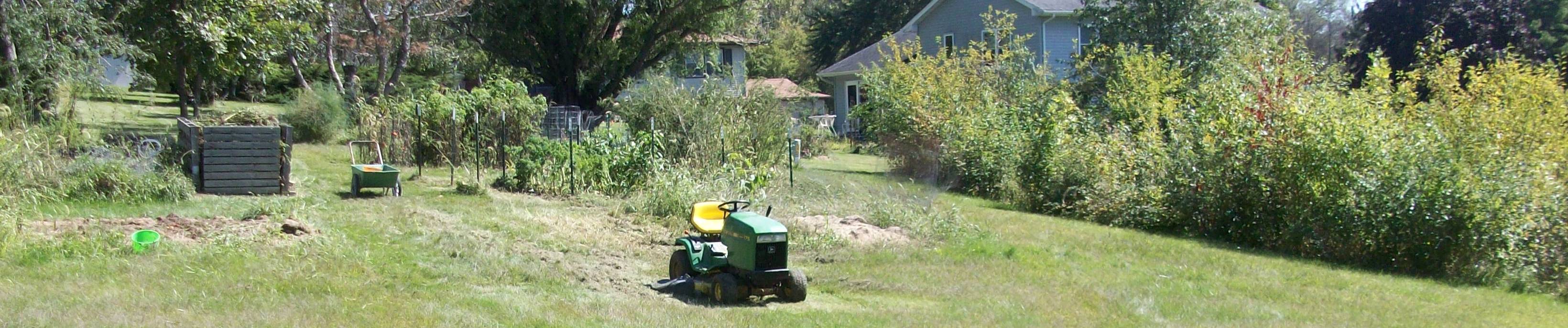
Garden Work Day

LAKE MACBRIDE— It is hard not to engage in the news from outside Big Grove Township. U.S. and partner states are bombing Syria, the United Nations is taking up the expiration of the Kyoto accord, and more than 100 world leaders will address security issues at the U.N. It has already been a busy week.

Today, the U.N. Climate Summit 2014 convenes on an optimistic note:

Climate change is not a far-off problem. It is happening now and is having very real consequences on people’s lives. Climate change is disrupting national economies, costing us dearly today and even more tomorrow.  But there is a growing recognition that affordable, scalable solutions are available now that will enable us all to leapfrog to cleaner, more resilient economies.

There is a sense that change is in the air. U.N. Secretary-General Ban Ki-moon has invited world leaders, from government, finance, business, and civil society to Climate Summit 2014 this 23 September to galvanize and catalyze climate action.  He has asked these leaders to bring bold announcements and actions to the Summit that will reduce emissions, strengthen climate resilience, and mobilize political will for a meaningful legal agreement in 2015. Climate Summit 2014 provides a unique opportunity for leaders to champion an ambitious vision, anchored in action that will enable a meaningful global agreement in 2015.

While many states recognize the validity of what Ban Ki-moon has said, in the U.S., a positive outcome in the form of a binding and meaningful legal agreement seems unlikely. Even if some of us are pessimistic about U.S. participation, it will be worth our attention today and in coming days, to see what the Climate Summit produces. It is noteworthy that President Obama will be trying to get a resolution on counterterrorism passed by the U.N. Security Council rather than making any bold announcements on mitigating the causes of global warming.

In the universe of a single life, there can be hope. So that’s how I will spend this day on earth. Believing that we can sustain our lives in peace despite so much evidence to the contrary.

Categories
Sustainability

Autumnal Equinox

Campaign Nonviolence Rally

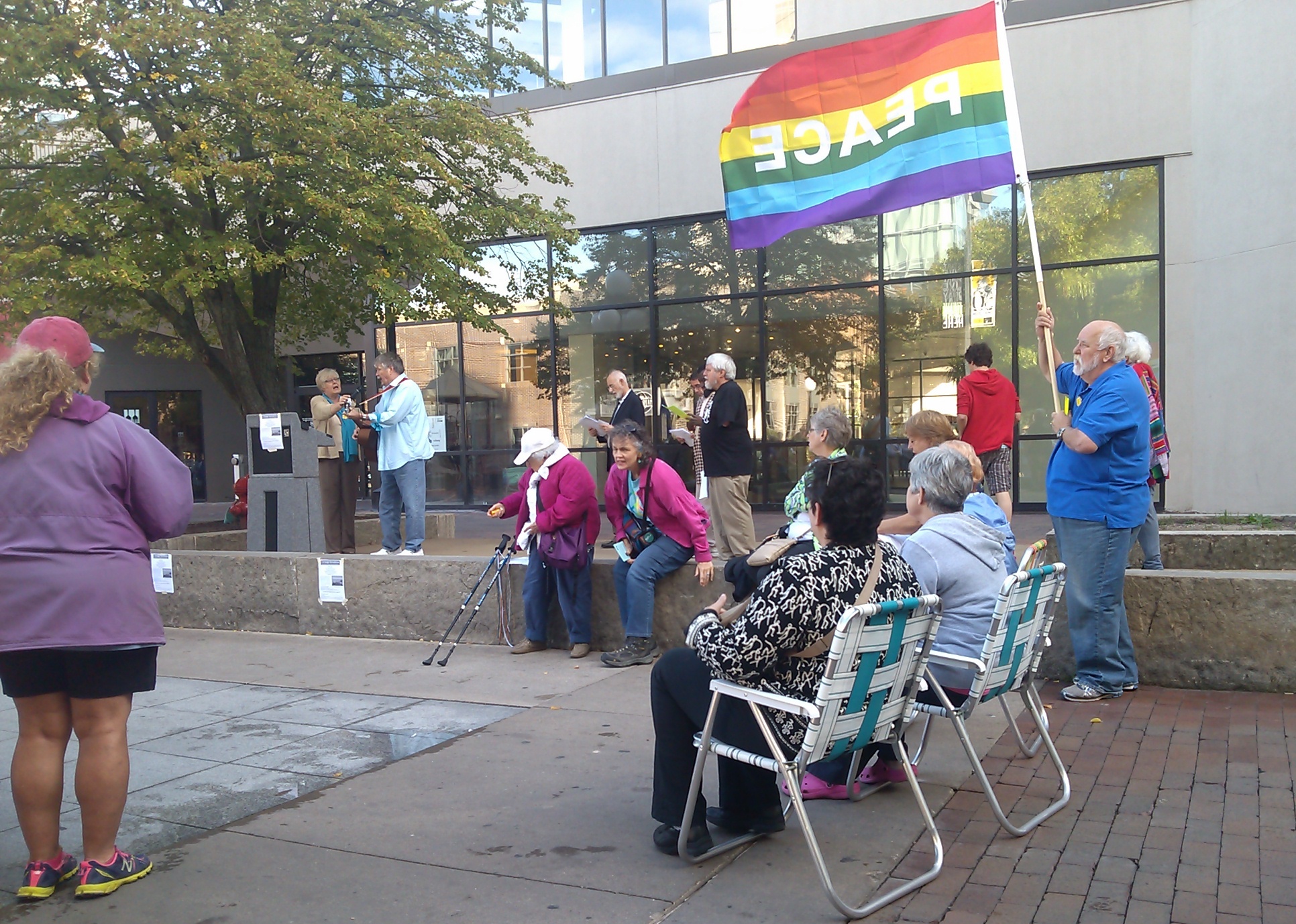
LAKE MACBRIDE— I gave the speech on nuclear abolition, representing Physicians for Social Responsibility, without notes.

If the issues around nuclear abolition are not part of me now, they may never be. While fretting a bit beforehand about what to say, my five minutes on stage at the Iowa City Pedestrian mall on Sept. 21 went well without notes.

I made three points.

The nuclear explosions at Hiroshima and Nagasaki are those we all know about. What is less considered is the more than 2,000 test explosions that killed thousands and sickened millions. I referred to the radioactive fallout from the Nevada test site that drifted and fell over Iowa, contaminating our soil. I spoke about President Obama’s commitment to submit the Comprehensive Nuclear Test Ban Treaty to the U.S. Senate for ratification. It was a promise made in Prague in 2009, and still not kept.

President Obama will chair the United Nations Security Council this week, with the hope of passing a resolution regarding counterterrorism. The five nuclear club members on the security council won’t be debating nuclear weapons, but should. Obama had bicameral support for pursuit of the Islamic State in the U.S. Congress last week, and now he is rolling it out to the world.

Finally, when we consider our biggest problems, Islamic State, Al Qaeda, Yemen, the Ebola virus, South Sudan, Pakistan, Afghanistan, Iraq and Iran, Palestine and Israel, the drought in California, and others, nuclear weapons won’t help solve them. Since we don’t need nuclear weapons for our biggest problems, let’s get rid of them, I concluded.

It was a cool, crisp day leading into the autumnal equinox. While the actions of the aging crowd may not get done what should regarding abolition, it was good to see so many friends and try once again.

Categories
Sustainability

Campaign Nonviolence Event in Iowa

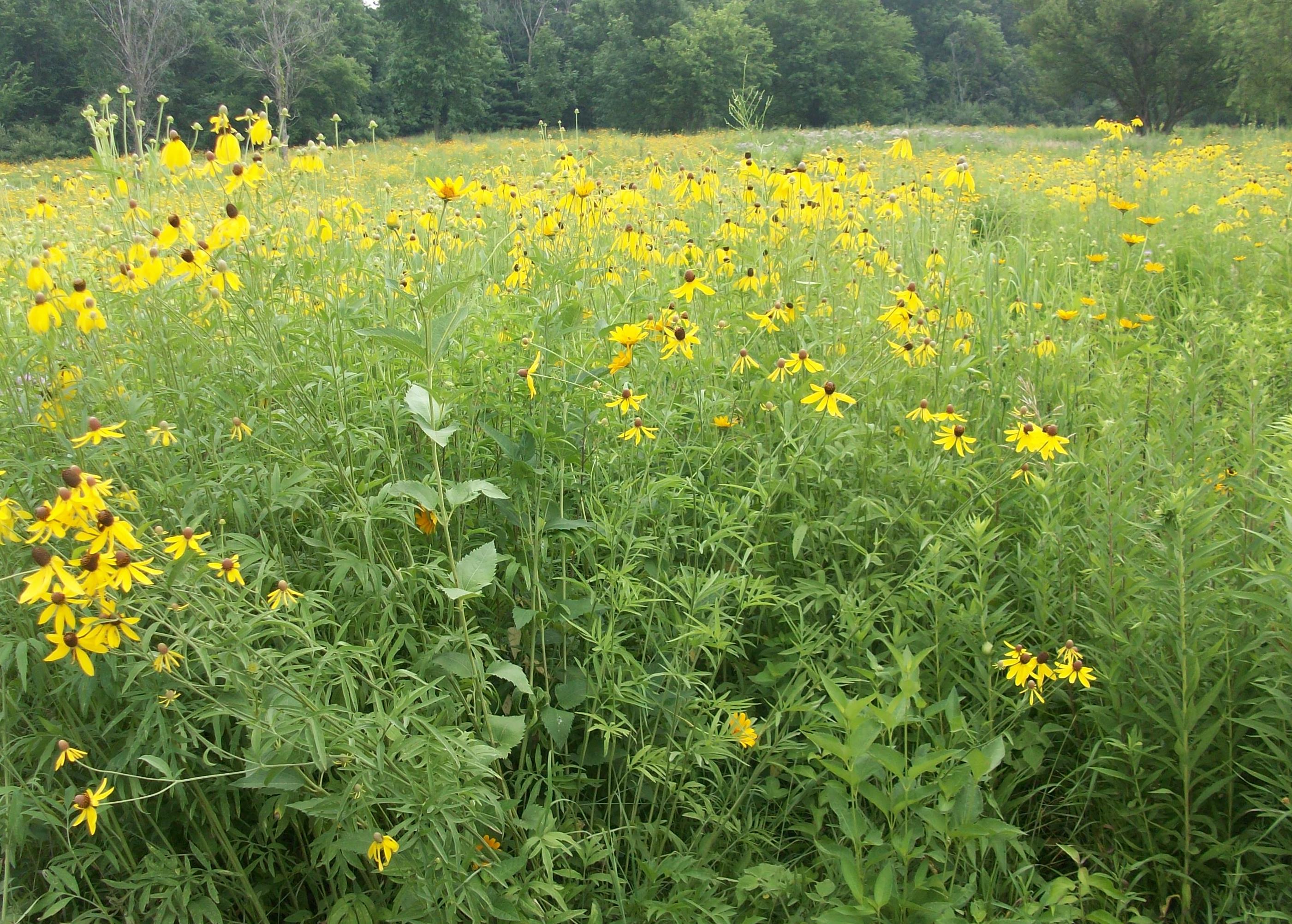
Field of Yellow Flowers

Many eyes will be fixed upon the discussion of climate change during the debate that begins Sept. 24 at the United Nations 69th General Assembly.

There is another topic of interest to the peace and justice movement.

President Obama is expected to preside over the U.N. Security Council meeting and a discussion of counterterrorism. He will have a draft resolution in hand for consideration and debate by the council. ThinkProgress covered the story:

Specifically the meeting will cover the phenomenon of foreign fighters traveling to conflict zones and joining terrorist organizations, as seen in the surge in foreigners joining ranks with such groups as Jahbat al-Nusra in Syria. “Certainly the problem of terrorists traveling to foreign conflicts is not new, but the threat posed by foreign terrorist fighters has become even more acute,” a U.S. Mission to the U.N. official told ThinkProgress when asked about the meeting. “The Internet and social media have given terrorist groups unprecedented new ways to promote their hateful ideology and inspire recruits. The conflicts in Syria and Iraq have highlighted this threat, with an estimated 12,000 foreign terrorist fighters joining that conflict.”

As part of its Campaign Nonviolence, Pace e Bene has organized a series of nonviolent actions to take place concurrent with the U.N. General Assembly and Security Council meeting, including one in Iowa City on Sept. 21.

“To launch this movement, over 100 nonviolent actions will take place Sept. 21-27 in cities and states across the U.S. and beyond, taking a stand against all violence and calling for concrete first steps toward peace, economic justice, healing the earth, and mainstreaming active nonviolence,” according to the campaign website. “These first steps include: an international treaty for swift, verifiable action to reverse climate change and taking nonviolent action for a culture of peace; ending the military drone program; establishing a $15 minimum wage for all; K-12 nonviolence education everywhere; and practicing nonviolence toward ourselves, toward all others, and toward the planet.”

Blog for Iowa contributor and local peace activist Ed Flaherty sent this invitation along:

Please join us on Sunday, Sept. 21, at 4 p.m. on the Pedestrian Mall in Iowa City for the first Campaign Nonviolence event. There will be many organizations involved, including Veterans for Peace, PEACE Iowa, Dancers for Universal Peace, Physicians for Social Responsibility, and several faith groups. Come help us celebrate the ways of non-harming towards self, others and our world.”

Campaign Nonviolence Order of Events:

Welcome (Dorothy Whiston)
Opening Song (Blowing in the Wind)
John Ivens (Veterans for Peace)
Rabbi Jeff Portman (Agudas Achim)
Barbara Schlacter (100 Grannies for a Livable Future)
Gospel Explosion Ministry
Paul Deaton (Physicians for Social Responsibility)
Yasur AbuDagga (Iowa City Mosque)
Ed Flaherty (PEACE Iowa)
Virginia Melroy (Dancers for Universal Peace)
Mary Kay Kusner (Ghandi prayer)
Kerry Batteau (Native American Blessing of the Four Directions)
“Peace, Salem, Shalom”

~ Written for Blog for Iowa

Categories
Home Life Sustainability

A Humanitarian Campaign

Iowa City Nuclear Free SignThis is the first in a series of new posts about the humanitarian campaign to abolish nuclear weapons.

“Since the end of the Cold War we have acted as though the problem of nuclear war has gone away. Unfortunately it hasn’t.” ~International Physicians for the Prevention of Nuclear War (IPPNW)

“I am very worried that people don’t think there is a real danger that nuclear weapons will be used. I hope you will read these materials in order to truly understand how bad a nuclear exchange of any kind will really be. Nuclear weapons are a real and present danger. A nuclear detonation can happen, and in fact will happen, if we don’t get rid of the weapons.” ~Rotarian Action Group for Peace

“Nuclear weapons are unique in their destructive power, in the unspeakable human suffering they cause, in the impossibility of controlling their effects in space and time, and in the threat they pose to the environment, to future generations, and indeed to the survival of humanity.” ~International Federation of Red Cross Red Crescent Societies

“The willingness of the world as a whole to move forward in a constructive manner to eliminate nuclear weapons has never been more evident.  Yet a very small number of States stand in the way, trying to block progress and to find a comprehensive solution to the problem that goes on year after year in paralysis and obfuscation.” ~The Holy See

Here is a brief video framing the discussion, narrated by Ira Helfand, co-president of IPPNW:

To read more about the international campaign to abolish nuclear weapons, click here.

Categories
Environment

Friday in Iowa: Climate March

Climate March Leaving Coralville

This week, the Great March for Climate Action headed east through Iowa and Blog for Iowa marched a small part of the route with them. About 150 people gathered in Coralville on Wednesday, Aug. 20, and marched leisurely to the Iowa City pedestrian mall. We marched down the Coralville Strip, past Carver-Hawkeye arena, the University of Iowa Colleges of Medicine and Nursing, the Veterans Administration Hospital, the university’s coal-fired power plant, Old Capitol, and ended in front of the Sheraton Hotel in the pedestrian mall where we were greeted with applause upon arrival. Speeches followed.

It was a chance to meet some of the marchers, and here are some of the people BFIA interviewed and heard:

Ed Fallon, "People need to be thinking of what changes they can make in their own life."
Ed Fallon, “People need to be thinking of what changes they can make in their own life.”
Berenice Tompkins and Andre Nunez. She's walking barefoot (mostly) and he's not talking.
Berenice Tompkins and Andre Nunez. She’s walking barefoot (mostly) and he’s not speaking.
Blair Frank "I'm here because of the shift that's happening around the planet in climate change.
Blair Frank “I’m here because of the shift that’s happening around the planet in climate change.
Miriam Kashia, Mayor.
Miriam Kashia, Mayor. “Imagine the audacity of a small group of ordinary citizens who believe they have to power to change the course of history.”
Ed Fallon, Jeffrey Czerwiec, Miriam Kashia and John Abbe at the marshaling area in Coralville
Rosella Lala Palazzolo selling raffle tickets. Rosella is a veteran of the Great Peace March for Global Nuclear Disarmament in 1986
Mike Carberry and Jimmy Betts
Mike Carberry, “How we deal with climate change is the defining issue of our generation,” with Jimmy Betts
Jeffrey Czerwiec, "I'm walking every step of the way."
Jeffrey Czerwiec, “I’m walking every step of the way.”
David Osterberg, "We need to make renewable energy 100 percent."
David Osterberg, “We need to make renewable energy 100 percent.”
State Senators Rob Hogg and Joe Bolkcom

And finally, here’s the whole gang crossing Burlington Street on Iowa Avenue in Iowa City.

Follow the Great March for Climate Action here, or better, join them.

~ Written for Blog for Iowa

Categories
Sustainability

To the County Seat

Tonkin Gulf 50th Anniversary

IOWA CITY— My skills at ordering a beer failed to keep up with the times. We were meeting at a bar in the county seat, one recognizable from infrequent visits for meetups over 40 years. I arrived first and took a seat at the bar.

“What do you have on tap?” I asked. The trouble began.

Expecting the bartender to name two or three brands manufactured by large brewers, she handed me a menu with a long list of draught beers.

“Do you make any of them here?”

“No, we don’t.”

Distracted when I saw two modern-day hipsters drinking tall PBRs a few feet away, I said to myself, “it’s not that simple any more.” I should have ordered one of those.

The bartender stood waiting, then left while I pondered.

Memories came. Of the Chief Tavern on Seventh Street in Davenport where I went when things got a bit rowdy where I rented a room during the summer of 1975. I’d take a book, walk the half block, and nurse a beer at the bar, reading and waiting for things to quiet down at home.

“Do you have pilsener?” I asked when she returned. She did.

As U.S. Army officers in Germany, we secured cases of Pilsner Urquell through the U.S. embassy in Prague. It was hard to get the Czech beer in the late 1970s, although the brand is widely available today— even in our rural Iowa town.

Resolved that pilsener shall be my standard order to avoid having to memorize ever changing options. Keep things simple and cope with change.

A few minutes later she brought a tall glass with an inch and a half of foam. I paid six dollars and a buck for a tip, and nursed the beer until my friends arrived.

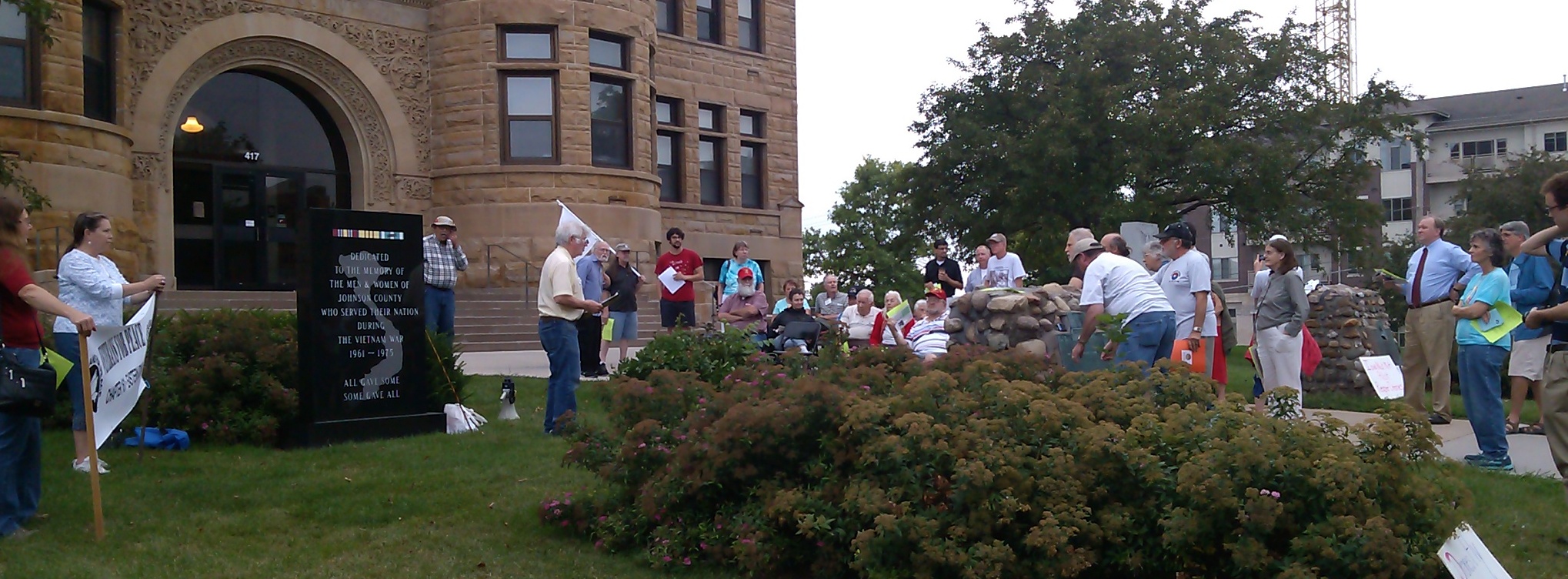
Our local chapter of Veterans for Peace was commemorating the 50th anniversary of the Tonkin Gulf Resolution that gave congressional authorization for the war in Vietnam. It is a resolution we now know was premised on a falsehood. It is not news that in war, truth is the first casualty.

The most powerful part of the event was the witness of five members of our chapter who are Vietnam veterans. I tried recording the speeches, but my device shut down when some of their voices were softer than its range of perception.

Tom Kelly
Tom Kelly

Former marine Tom Kelly spoke of black ops in Vietnam, Laos and Cambodia, something we knew at the time was going on. The reality of his experience spoke louder than his voice ever could.

“I did things I’m not proud of,” he said, wearing a ball cap commemorating his veteran status as a marine. It was sobering to hear his words as the sun set on a beautiful Iowa summer day.

None of the Vietnam War needed to have happened. The American deaths and injuries; the far greater number of Vietnamese deaths and casualties. It did happen, and as the memorial at the court house is inscribed, “all gave some; some gave all.” It is not only about us.

Our country’s propensity for war, and the deceptions and falsehoods about it, make determining what to do more challenging than ordering a beer could ever be. It seems critical that we move on from our personal problems to effect change. In a society possessed of personal choices, our government is on a course of militarism that could jeopardize all we hold dear.

To say I am glad to know the veterans in our group couldn’t be more true. To say we can continue with our nationalistic pandering to the gods of war is the lie. One we can’t afford to repeat as we sustain our lives in a turbulent world.

Categories
Sustainability

Letter to the Solon Economist

Iowa City Nuclear Free SignCommemorating Hiroshima and Nagasaki Day

Aug. 6 marked the 69th anniversary of the atomic bombing of Hiroshima, Japan when between 60,000 and 80,000 people were killed instantly, with a final death toll estimated at 135,000.

Aug. 9 will mark the anniversary of Nagasaki where about 40,000 people were killed instantly by an atomic bomb, with a final death toll of about 50,000.
We won the war and the world changed forever.

What has become of our nuclear weapons program?

The report isn’t good.

Late night comedians ridicule the state of our nuclear complex, the foibles of its officers, and the many accidents it produced. An example was Vice Admiral Tim Giardina, the STRATCOM deputy chief in Bellevue, Nebraska, who was fired by President Obama last October after being caught passing counterfeit poker chips at a Council Bluffs casino. Comedy is not reality, and Giardina’s situation isn’t that funny.

Last week Russia violated the Intermediate Range Nuclear Forces (INF) treaty, which was signed by President Reagan, and ratified in 1988, by testing a ground-launched cruise missile. Cruise missiles are delivery systems for nuclear warheads.

While the treaty violation does not comprise a new threat in the tense relationship between the U.S. and Russia, it is troubling.

“It suggests that Russia is moving away from a long U.S.-Russia tradition of restraining the most dangerous weapons even as they have serious disagreements on all sorts of issues,” said Daryl Kimball, of the Arms Control Association.

Life is scary enough without nuclear weapons, so what’s an Iowan to do?

It’s time to prevent what we cannot cure, and call for nuclear disarmament.

~ Paul Deaton is a member of the Iowa Chapter of Physicians for Social Responsibility, U.S. affiliate of International Physicians for the Prevention of Nuclear War, a 1985 Nobel Peace Prize Laureate.