“Earlier this year, the European Union was celebrated in headlines across the world when renewable energy surpassed the use of fossil fuels on the continent for the first time in history,” wrote Majlie de Puy Kamp for CNN.
The European Union pledged to reduce greenhouse gas emissions and approved burning biomass as an alternative to coal, categorizing it as a renewable fuel. They found wood pellets were a suitable, renewable fuel to produce electricity and searched the globe for enough of them.
“The American South emerged as Europe’s primary source of biomass imports,” de Puy Kamp wrote.
Enter companies like Enviva, the world’s largest producer of wood pellets, with four wood pellet manufacturing plants in North Carolina.
The world’s leading authority on climate science, the Intergovernmental Panel on Climate Change, explicitly recognizes bioenergy as a renewable energy source that is critical to our low-carbon future. The IPCC also concludes that sustainable forest management is critical to prevent forest conversion to non-forest uses.
We need bioenergy both to replace fossil fuels and to keep forests as forests.
The IPCC states in its guidelines “do not automatically consider or assume biomass used for energy as ‘carbon neutral,’ even in cases where the biomass is thought to be produced sustainably.”
As I wrote in 2015, while the carbon cycle of renewable fuels can eliminate putting fossilized carbon into the atmosphere, and reduces emissions of particulate matter, the amount of CO2 released when burning biomass is about the same as with burning coal. What makes burning wood pellets and other biomass “sustainable” is we would leave more fossilized carbon in the ground.
Burning stuff to release energy that is made into electricity remains problematic in terms of emissions. While windmills, solar panels and hydroelectric generators are not without issues, these forms of electricity generation better serve our future energy needs as we work to reduce greenhouse gas emissions.
As we contemplate the EU’s path to reducing reliance on fossil fuels, there is another issue that gets lost. The quest for wood pellets has greater impact on marginalized communities near forests that are being harvested for fuel. Read de Puy Kamp’s article for more information about these climate justice issues.
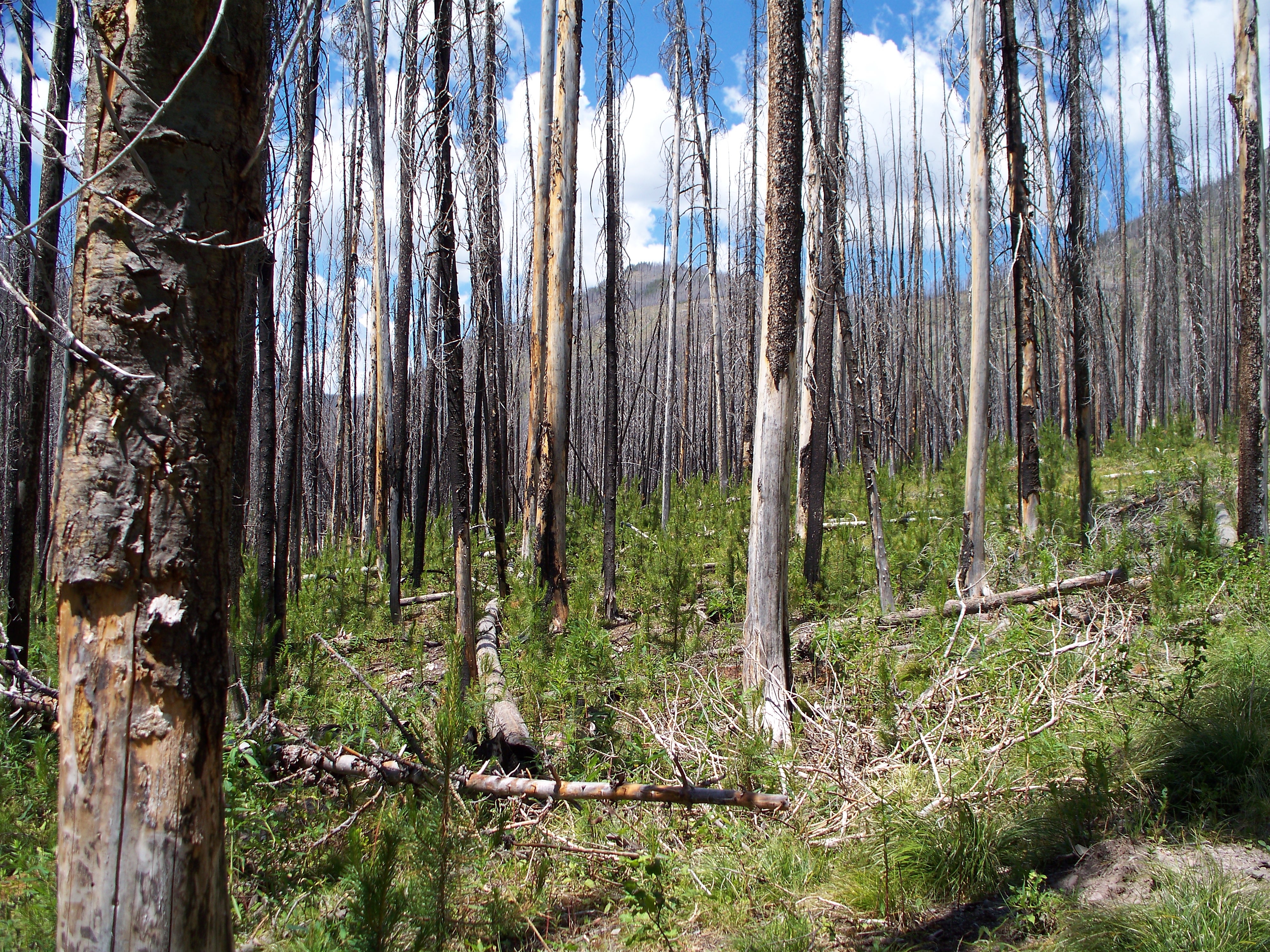
“I can’t think of anything that harms nature more than cutting down trees and burning them,” said William Moomaw, professor emeritus of international environmental policy at Tufts University.
While the EU may meet an arbitrary goal of reducing its carbon footprint, by using wood pellets to generate electricity the achievement is more paperwork drill than actual reduction of greenhouse gases in the atmosphere.
In 2014 and 2015 I worked as a freelance reporter for three area newspapers. I refer to this article published on Oct. 7, 2015 in the Iowa City Press Citizen frequently in my work on the climate crisis and post it here for easy reference.
UI study finds benefits in burning oat hulls for thermal energy
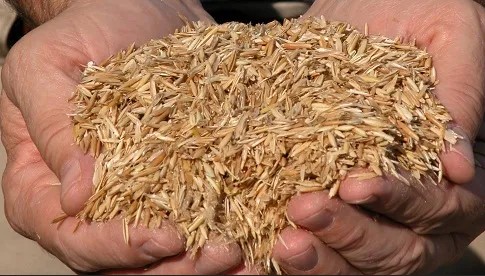
Biofuel use is a well-known contributor to meeting sustainability goals at the University of Iowa. Since 2003, UI has used oat hulls sourced from Quaker Oats in Cedar Rapids to generate electricity, heating and cooling on campus.
Several chemistry department faculty and students recently completed a study of gas and particle emissions from co-firing coal and two types of biomass versus straight coal at UI’s main power plant.
Researchers also found that using oat hulls with coal reduced carbon-dioxide emissions by 40 percent and significantly reduced the release of particulate matter, hazardous substances and heavy metals.
“The UI is working toward meeting a goal of using 40 percent renewable energy by 2020,” said Betsy Stone, an assistant professor in UI’s chemistry department. “Part of their plan to achieving that goal is the use of biofuel, which is a renewable source of energy, instead of fossil fuel, in this case coal.”
The group was interested in understanding how using biomass instead of coal changed emissions released into the atmosphere, Stone said.
“When burning 50 percent oat hulls and 50 percent coal, we saw a big reduction in criteria pollutants compared to burning 100 percent coal,” she said. “When I say ‘criteria pollutants,’ I’m talking about things like fossil carbon dioxide, sulfur dioxide and particulate matter.”
Use of the 50/50 mixture reduced the mass of particulate matter by 90 percent, Stone said.
While overall CO2 emissions were constant among the three fuels used in the study — straight coal, 50/50 oat hulls/coal, and 3.8 percent wood chips/96.2 percent coal — the use of plant material makes the process more sustainable, Stone said. Biomass takes CO2 out of the atmosphere and incorporates it into the plant. When it’s burned, CO2 is released.
“It’s considered to be a renewable fuel because we have that carbon cycle going on,” Stone said. “With fossil fuels, we’re releasing fossilized carbon. It goes into the atmosphere and takes millions of years to get back to fossilized form again.”
The major take-home message is there is a significant reduction in fossilized CO2, sulfur dioxide and particulate matter, which is beneficial to people living near the power plant, Stone said.
“I thought the study was definitely encouraging and in line with our thoughts that biomass is good for the environment,” said Ben Anderson, UI power plant manager. “Overall, the results are encouraging and provided assurance we are going the right way with the biomass project.”
The biomass project brings the renewable component to the plant, but is also a component of fuel diversity, he said.
“That’s really important for reliable operations,” Anderson said. “Natural gas markets have been known to spike from a cost perspective. If there is a problem with pipeline transport, we can use the biomass and still keep this plant online.”
Maureen McCue, coordinator for Iowa Physicians for Social Responsibility, noted important considerations of this study, including locally sourced fuel options and the avoided cost of buying and shipping coal. McCue called UI’s biofuel efforts “a good use of a resource that might otherwise go to waste.”
“The mixture avoids some of the known adverse health effects associated with burning more coal,” McCue said in an email. “There is no health benefit to anyone unless you assume burning coal is obligatory/unavoidable and thus count as benefited the person(s) who would have been impacted by more coal.
“It’s like saying not hitting your head with a hammer is a health benefit,” she added. “No one wants to risk their health breathing coal emissions or headaches by hammer if there are alternatives.”
I met Finn Harries at the May 2015 Climate Reality Leadership Corps training in Cedar Rapids, Iowa. He and his identical twin brother Jack had turned their attention, and that of their large YouTube following, to work on the climate crisis.
In July 2020, a group including Finn, Jack and Alice Aedy formed Earthrise Studio to produce work related to mitigating the effects of the climate crisis. It is “a way of combining their shared interests in film making, photography and design,” according to the website. It operates as a full service creative studio with a dedicated team of designers, filmmakers, and writers addressing the climate crisis in their work.
To learn more about Earthrise Studio, Follow them on Instagram or check out their website and its content about addressing the climate crisis at https://www.earthrise.studio.
In March I wrote my U.S. Senators Chuck Grassley and Joni Ernst about the climate crisis as follows:
I hope you will support the efforts of the Biden administration to act to mitigate the effects of our changing climate. Naturally I’m curious about your views on how you might address the effects of climate change while in the U.S. Senate. The approach of the Biden administration regarding mitigation of climate change is such there should be many areas in which to work with them without supporting an overarching environmental bill. I look forward to hearing your policy stances and how you can help address climate change while you are in the Congress. Thank you for your public service.
During a recent conference call with Ernst and a group of environmental activists, she touted her support for the then upcoming vote on the Growing Climate Solutions Act, the first bill to specifically address climate change since Biden was sworn in. Grassley and Ernst joined the 92-8 Senate majority to pass the bill on June 24. (Booker, Hawley, Inhofe, Lee, Markey, Merkley, Sanders and Warren were nays). Storm Lake journalist Art Cullen opined in the Washington Post, “Ignore the chatter. Stuff is getting done. And both parties are helping.“
After familiarizing myself with the bill, I can only ask of the legislators, “What else you got?”
Below are the Iowa senators’ unedited responses to my query. Grassley’s is first because he is our senior senator. Ernst replied first. I’m glad to hear from our elected representatives.
April 14, 2021 Dear Mr. Deaton:
Thank you for taking the time to contact me with your concerns about the environment. As your senator, it is important to me that I hear from you.
I appreciate hearing your concerns about climate change. In contacting me, you shared your support for climate-related legislation. While I believe a changing climate is a historical and scientific fact, I also recognize that most scientists say man-made emissions contribute to these changes. With that being said, it is just common sense to promote the development of clean forms of energy. Throughout my tenure in the Senate, I have been a leader in promoting alternative and renewable energy sources as a way of protecting the environment and increasing our energy independence. I’ve been an advocate of various forms, including wind, biomass, agriculture wastes, ethanol and biodiesel.
I’m proud to let you know that Iowa has had much success in renewable fuels and wind energy production. As the number one producer of corn, ethanol, biodiesel and cellulosic ethanol, Iowa has the opportunity to lead our nation’s renewable fuels industry. This cleaner-burning, homegrown energy supports the economy by generating 47,000 jobs and nearly $5 billion of Iowa’s GDP. In 2018, Iowa produced 4.5 billion gallons of ethanol. In regards to environmental benefits, ethanol reduces greenhouse gas emissions by 46 percent compared to conventional gasoline.
Iowa’s wind industry ranks second in the nation behind Texas. Wind energy supports over 9,000 jobs in Iowa alone and provides 40 percent of the state’s electricity. As the “father” of the Wind Energy Incentives Act of 1993, I sought to give this alternative energy source the ability to compete against traditional, finite energy sources. Like ethanol and other advanced biofuels, wind energy is renewable and does not obligate the United States to rely on unstable foreign states.
The most effective action Congress can take to address this issue is to advance policies that increase the availability and affordability of alternative and renewable energy sources. If alternative energy sources can become more competitive, market forces will drive a natural, low-cost transition in our energy mix that will be a win-win for American families. I will keep your thoughts in mind as the Senate considers related legislation in the future.
Again, thank you for taking the time to contact me. I appreciate hearing your concerns and encourage you to keep in touch. Sincerely,
Chuck Grassley United States Senate
March 25, 2021 Dear Mr. Deaton,
Thank you for taking the time to contact me about the issue of climate change. It is important for me to hear from folks in Iowa on policy matters such as this.
As you may know, on January 21, 2015, during the Keystone XL Pipeline debate, I voted in support of S.A. 29, an amendment offered by Senator Sheldon Whitehouse (D-RI) that acknowledged the existence of climate change. I do believe that the climate is changing, however, the science surrounding climate change continues to develop, and additional, objective research needs to be done to conclusively identify the root causes. Our climate is experiencing a period of changing temperatures, but it is important to note that not all scientists agree on the cause.
I believe that government can take reasonable and concrete steps to protect and improve the environment. This includes encouraging the utilization of a diverse mix of energy resources and improving energy efficiency. We can also make personal choices that have a positive impact on the environment—I am a committed recycler.
I support an all of the above energy approach that increases America’s energy independence and domestic production. Iowa is a national leader in alternative energy sources. As a result, nearly 40% of electricity generated in our state is by wind. I believe America can responsibly take advantage of our nation’s abundant resources while also emphasizing conservation and efficiency.
We all care about clean water and clean air, but any efforts to reduce pollution must be done in a thoughtful manner that involves the communities, businesses, and families that will be most affected by changes to rules and regulations. Climate change is an international issue, not one limited to the United States. Any policies designed to mitigate the effects of climate change should take into consideration the impact they will have on American consumers and also on our businesses and their ability to compete globally and create jobs.
Please know that I will continue to keep your views in mind as the Senate works on this issue. Feel free to contact my office with any further information, as I always enjoy hearing from Iowans. Sincerely,
What can we do when confronted with the climate crisis? The answer is everything. If climate change is developing faster than human solutions, what then?
During the last few months we have been assaulted with news about the climate crisis getting worse. Lake Mead is at its lowest level since the Hoover Dam was built, threatening downstream communities with loss of needed water. People are dropping dead on the street in the Pacific Northwest which is experiencing record high temperatures. President Biden called a White House meeting with Republican and Democratic Western Governors about the continued heat wave and wild fires it caused. Above the Arctic Circle in Siberia, ground temperatures approach 120 degrees, melting the permafrost. 2020 was the hottest year in recorded history for Antarctica, causing a record 1,600 square mile iceberg to calve off the Ronne ice shelf into the Weddell Sea. Drought continues in Iowa, the worst in 20 years. This is what I mean by being assaulted.
Professor Julia K. Steinberger offers a toolkit for would-be climate activists in info graphic format here. It is pretty cool and accessible. It offers things a person can do to address the climate crisis. It is something, not everything. It is not enough.
The next step in taking effective action to address global climate change is to understand where we are. According to Bill McKibben in the New Yorker, we’re not in a good place.
“The earth won’t simply keel over and die like a human being might, but it is now changing in substantial ways in real time,” McKibben wrote. “If you’re used to thinking that the earth changes in the course of geological epochs, and that fundamental shifts require thousands or millions of years, think again.”
“The speed with which this happens is remarkable,” he said. “And it is dramatically outpacing the speed at which humans—our governments, our economies, our habits, our mind-sets—seem able to adapt.”
In a piece in the New York Times, Farhad Manjoo opined, “Democrats have a year to save the planet.”
We’d better get going.
While we need to do everything possible to avert the worst effects of the climate crisis, the longest, most complicated journey begins with a single step. Click on the links in this post. Read the articles. Discuss them with friends. Figure out how you can contribute to solutions to the climate crisis.
While watering the garden it started to rain. It wasn’t much, a sprinkle really. I turned the sprayer nozzle off, pulled the mobile device out of my pocket, and looked at the weather application. The forecast was rain, maybe three tenths of an inch toward midnight. I decided to wait and went inside to prepare dinner.
We need rain for a lot of reasons, importantly for the farming community. Large farm operations can capitalize the loss of a major drought, spreading the financial loss of a period of years. Small scale farmers, like the vegetable farmers in my community, not so much. Something is afoot in this spring’s weird weather.
Jonas Morgan of Fairfield opined in the Cedar Rapids Gazette that farmers are between a rock and a hard place.
A Des Moines Register poll found that among those who make their living working Iowa’s fertile soil, 81 percent believe our climate is changing but only 18 percent accept the overwhelming scientific evidence that humans are the cause.
Why the disparity? On the one hand, farmers are experiencing firsthand that long-term weather patterns are changing, changes that threaten not only their livelihoods, but the viability of the farms they hope to leave to their children and grandchildren, as well.
On the other hand, like all of us, farmers are under the sway of their political tribe.
Jonas Morgan, Cedar Rapids Gazette, June 21, 2021.
That tells part of the story. The same farmers to which Morgan referred might accuse him of falling under the influence of his own political tribe, noting he lives in Fairfield. I used to pen opinion pieces like this, which while accurate, don’t do much to move the needle toward acceptance of the realities of the climate crisis, much less the potential to do something about it before it’s too late.
A farmer friend wrote about the weird weather in their newsletter to CSA members:
The thing that has stood out to me the most this spring has been the extreme temperature swings, both hot and cold. […]
Extreme temperature swings (either hot or cold) are generally hard on vegetable crops, and the way different crops respond can also be somewhat unpredictable. Since we had two months that included periods of both unseasonable heat and cold, I feel like things were especially unpredictable. Some of the cool season greens have been bolting (sending off shoots to flower) early, which means that we have to harvest them smaller and earlier than we had hoped. The small Napa Cabbage in the share last week is an example of that. On the other hand we have struggled in the past to grow Hakurei turnips in the spring, and they have been mysteriously doing very well with this weather.
Local Harvest CSA Newsletter, June 21, 2021.
There has not been enough rain. Last night’s rainfall is welcome, but not enough to make up for the dry spring. Weird weather is not just in Iowa.
“In Siberia the ground surface temperature is a shocking 118 degrees Fahrenheit (47.8 degrees Celsius),” wrote Eric Mack in Forbes. “That’s bad news for permafrost.”
It’s not just farmers between a rock and a hard place. We go on living, aware the climate has changed and is changing. Our political leaders don’t have the will to mitigate the effects of the climate crisis. The good intentions of the Biden administration seem unlikely to become reality given the current political climate in Washington, D.C.
In the meanwhile, we’ll deal with weird weather as best we know how.
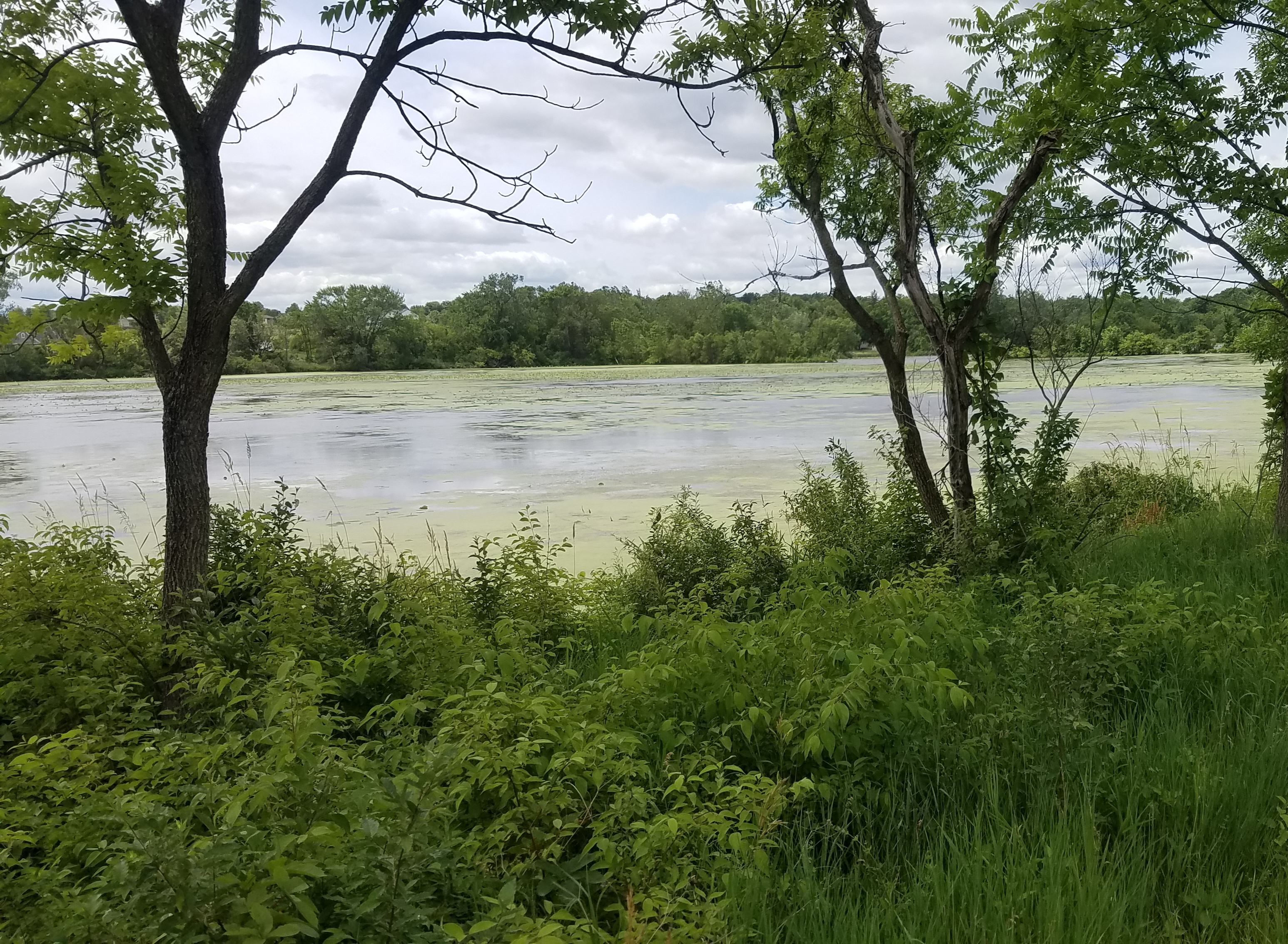
Nutrients in the Lake Macbride watershed created an environment where algae thrive. Blue-green algae covers much of the lake surface in the photo. The public beach a few miles to the west has been closed this season because of the presence of e.coli bacteria. There are likely patches of cyanobacteria where there is so much blue-green algae. During my morning walkabout every pond of water along the trail had algae covering most of the water surface. It didn’t used to be this way.
In Iowa there is discussion about whether the nutrients come from home application of fertilizer or from farm fields where chemical fertilizers are applied along with drainage tile which pushes them toward the Gulf of Mexico. It is a ridiculous discussion. Of course modern farming created this problem. Farmers depend on free contamination of downstream water systems to make margin on their investment in crops.
Despite reminders of civilization, I enjoy trail walking. Foremost, it is needed exercise. Even though one can hear automotive engines in traffic not far away, there is a relative quiet on the trail. On a Monday morning there were not a lot of other people out. Add cooler ambient temperatures and a partly cloudy sky, a trail walk serves as a suitable getaway from what ails a person. It also makes opportunities for photos like this:
Trail walking in Big Grove Township, June 21, 2021.
It is abnormally dry in our part of Iowa. Just as we are needing rain, we are not getting it. A home gardener can irrigate new trees, fruits and vegetables, but the massive scale required to hydrate Iowa’s main commodity crops and livestock is not available. Creating the infrastructure to pump water from ancient aquifers is doable, yet an unsustainable practice. It seems like we are heading into a drought. (The map is from the state climatology website which provides data about precipitation, temperature and other aspects of the climate).
Iowans are familiar with drought. In the 2012 drought corn yield per harvested acre was 123.1 bushels compared to the average of the seven following years at 170.4 bushels. The drought decreased corn production by 27.8 percent according to USDA numbers.
There is a relatively finite amount of water on Earth which cycles through the atmosphere, on land, and in the oceans. Some of it rests in deep underground aquifers where it has been since prehistoric times. An increasingly warm climate impacts how water cycles and it is getting hotter. “Earth’s global average surface temperature in 2020 tied with 2016 as the warmest year on record,” according to an analysis by NASA. The oceans are getting warmer too.
Rising air and water temperatures and changes in precipitation are intensifying droughts, increasing heavy downpours, reducing snowpack, and causing declines in surface water quality, with varying impacts across regions. Future warming will add to the stress on water supplies and adversely impact the availability of water in parts of the United States.
The problem goes beyond Iowa. The Hoover Dam, located on the Colorado River near the Nevada-Arizona border, is suffering the consequences of drought. Lake Mead, the artificial lake created by the dam, is at a lower water level than was when it was built. The water shortage will impact 25 million people including in the cities of Los Angeles, San Diego, Phoenix, Tucson and Las Vegas.
Farmers are abandoning crops, Nevada is banning the watering of about one-third of the lawn in the Las Vegas area, and the governor of Utah is literally asking people to pray for rain.
Firefighters are facing worsening conditions this summer — after nearly 10,000 fires in California alone during the last wildfire season burned 4.2 million acres (1.7 million hectares), an area nearly as large as Kuwait.
Water in California’s Lake Oroville will fall so low this summer that its hydroelectric power plant may be forced to shut down for the first time.
We must do something more than pray for rain. It begins with recognition.
The Lakota phrase “Mní wičhóni” (“Water is life”) was the protest anthem from Standing Rock heard around the world, but it also has a spiritual meaning rooted in Indigenous world views. For Native Americans, water does not only sustain life, it is sacred.
Action to prevent drought must include acknowledging that climate change is real, something Senators Chuck Grassley and Joni Ernst have both done. The next step is addressing the climate crisis through policy and legislation and that’s been the rub. The climate crisis is more complicated than any single policy or law.
Peter Rolnick of Citizen’s Climate Lobby wrote a guest opinion in the Cedar Rapids Gazette on June 15, 2021. He commended the Iowa senators and Rep. Cindy Axne for supporting the bipartisan Growing Climate Solutions Act. If passed, the law would engage farmers in storing more carbon in our soil instead of emitting it into the air in the form of carbon dioxide or methane. The relationship to drought is clear. A molecule of CO2 or methane sequestered in the ground is one that does not get into the atmosphere and increase warming. Even the American Farm Bureau is in favor of this bill, which on its own raises red flags. One bill is not enough.
We need much more in the way of policy and legislation. The Biden administration’s approach of embedding work on climate change in each of the executive branch departments is important. It is up to each of us to encourage those in government to work toward viable climate solutions. There are personal actions we can take to reduce our carbon footprint, yet the most effective action is in the government arena. If constituents don’t remind members of our governing bodies to act on the climate crisis, they seem likely to forget.
We’ll know it when we hit the drought this year. News media has been forthright in reporting it because so many Iowa livelihoods depend upon the weather. When will we wake up to take action to address what is causing the drought? Not soon enough.
In March I wrote Congresswoman Mariannette Miller-Meeks about the climate crisis as follows:
I hope you will support the efforts of the Biden administration to act to mitigate the effects of our changing climate. Naturally I’m curious about your views on how you might address the effects of climate change while in the U.S. Congress. The approach of the Biden administration regarding mitigation of climate change is such there should be many areas in which to work with them without supporting an overarching environmental bill. I look forward to hearing your policy stances and how you can help address climate change while you are in the Congress. Thank you for your public service.
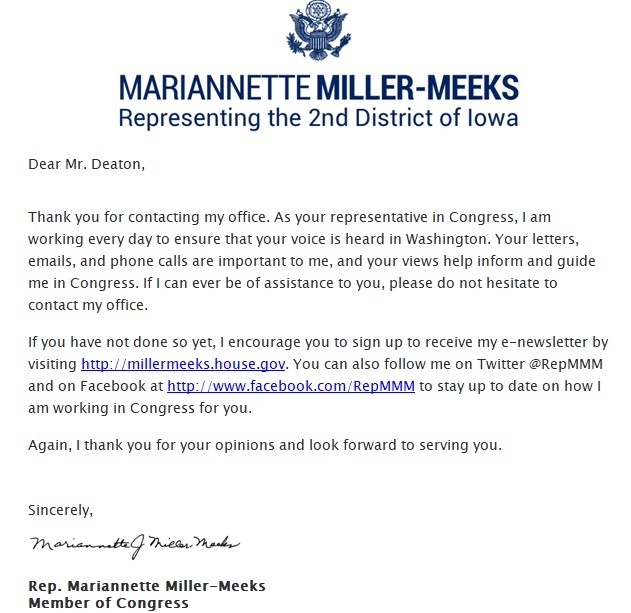
Here is her unedited response. It is not what I expected.
This is the text of an email sent this morning to the small group of Climate Reality Leadership Corps participants I am mentoring this spring. Every time I introduce myself, it seems like I am re-inventing who I am. Eventually all the stories will add up.
Welcome to the spring 2021 Climate Reality Leadership Corps training. I am Paul Deaton and will be your mentor. We’re looking forward to your participation!
Before I get too far, if you received this email and no longer plan to participate in the training just hit reply and let me know. As of last night’s mentor training, more than 4,700 people had RSVP’d for the training. There are 300 mentors.
I will be your mentor for both the training and as you begin to perform acts of leadership after the training. I use the pronouns he/him. I was born in Iowa and now live in a rural, Eastern part of the state.
I participated in the first Earth Day on April 22, 1970 and have been working on environmental issues, in addition to a career, ever since. I completed a career in transportation and logistics in 2009 and fully retired during the coronavirus pandemic. I attended the 2013 Climate Reality Leadership Corps training in Chicago and was a mentor at the 2015 Cedar Rapids, Iowa training. For me, Climate Reality has been a portal to diverse climate action all over the planet. I learned a lot and am here to help you do the same.
In retirement I spend more time writing. I started a blog in 2007 and am currently working on a book-length project. I am an avid gardener and last night I had to put a space heater in my small, portable greenhouse because of a frost warning. I start most of my own seedlings and spend a lot of time in my kitchen garden.
During my career I spent time in Texas, which is where everyone in our small group lives. One consulting project was near Sweetwater where I stayed on a 5,000 acre cotton farm during the rattlesnake roundup. (All the motel space was booked). I learned Texas is a large, diverse state. I look forward to getting to know you and other group members.
I plan to follow the lead of the Climate Reality staff as a mentor. I’m here to help as much or as little as you want. The Climate Reality staff continues to release information about the training and will up until the first day. As they do, I’m reading it and asking questions to prepare for our experience. One of the main things I will do is host the small group sessions via Zoom after each of four streamed general sessions. I want to assure you everyone’s voice is welcome to be heard during our small group meeting.
If you have questions, email is the best way to reach me. As the training takes shape, I may send an additional group email with any update. Staff will be emailing a lot, so I will keep mine to a minimum.
I hope you are as excited as I am for the training. Let me know how I can help.


.jpg)





 Journey Home
You must be logged in to post a comment.